
6 Space-Saving Tricks For Growing Fuller Geraniums In Pots On A Tiny Patio Or Balcony
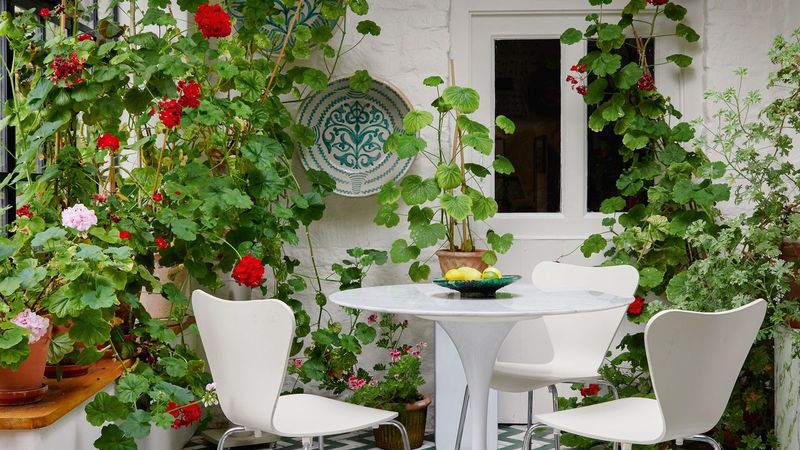
A tiny patio or balcony does not mean you have to give up on lush, colorful geraniums. With a few clever choices, you can grow plants that spill over with blooms even when floor space is at a premium. The secret is thinking upward, choosing the right pots, and giving your plants a little extra care where it counts. Here are six tricks that help small-space gardeners get big, bushy geraniums without crowding out every inch of their outdoor spot.
1. Pinch Early and Often to Force Branching
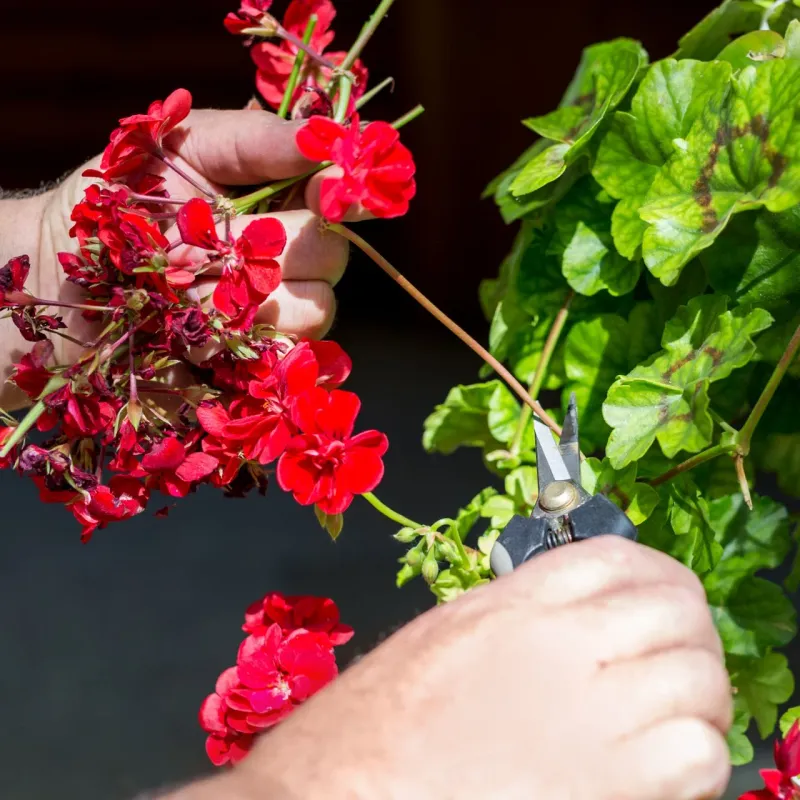
Snipping the tips off your geraniums feels a little scary the first time, like you are undoing your own hard work. Yet that single move is what turns a tall, leggy plant into a rounded, flower-packed mound that fits neatly on a crowded balcony.
When you pinch off the growing tip above a leaf node, the plant responds by pushing out two or more new stems from below. Do this a few times during the growing season and one skinny stalk becomes a dense bush covered in blooms. Use clean fingers or small scissors, and aim to pinch when young plants reach about six inches tall.
Fun bit of trivia: geraniums sold at US garden centers are often already pinched once before you buy them, which is why they look so tidy on the shelf. Keep that habit going at home and you will get far more flowers from the same small footprint. The clippings can even be rooted in water to make free new plants for a friend.
2. Go Vertical With Wall-Mounted and Railing Planters
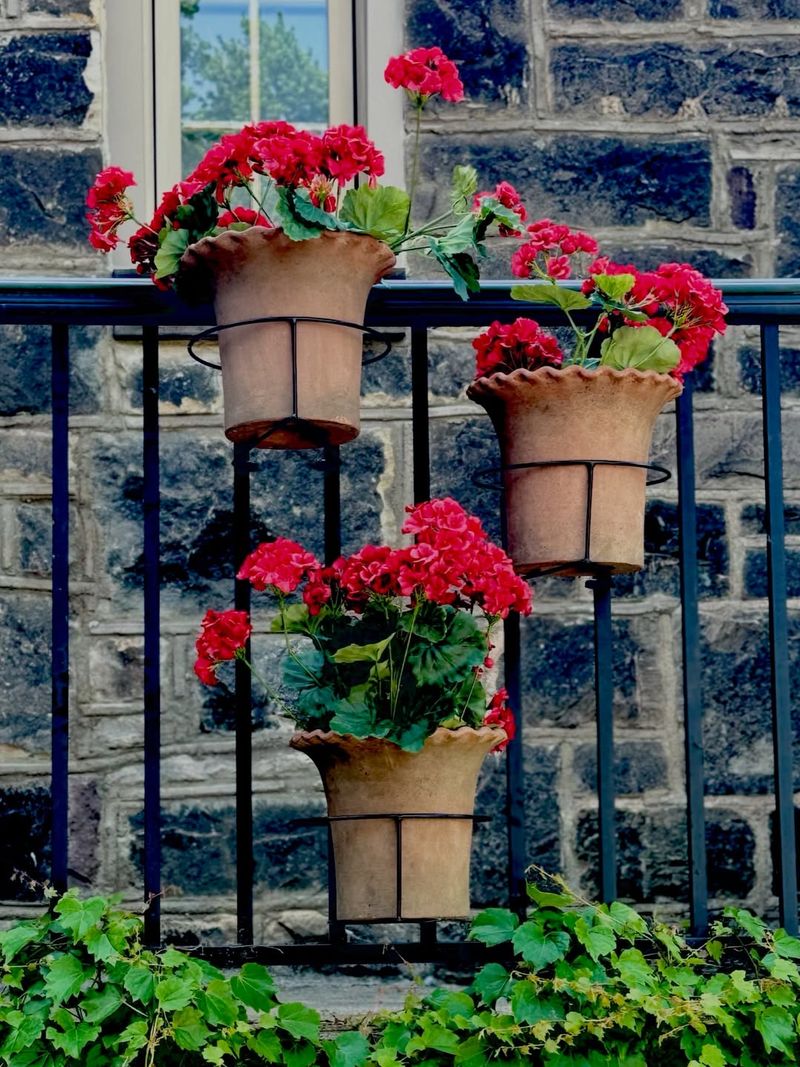
Floor space runs out fast on a balcony, but the walls and railings are usually just sitting there empty. Hanging your geraniums up high frees the ground for a chair or a little table while still giving you a wall of color.
Railing planters hook right over a standard balcony bar, and wall pockets mount flat against brick or siding so nothing sticks out into your walkway. Because geraniums naturally arch and trail a bit, they look fantastic tumbling down from above eye level. Group a few at different heights and the whole area reads as a lush garden rather than a couple of lonely pots.
One tip for renters: use over-the-rail brackets or freestanding tension-pole systems so you do not drill into walls you do not own. Just make sure whatever you hang is secured well, since wet soil gets heavy and summer storms can bring gusty wind.
3. Choose Deep, Narrow Pots Over Wide Shallow Ones
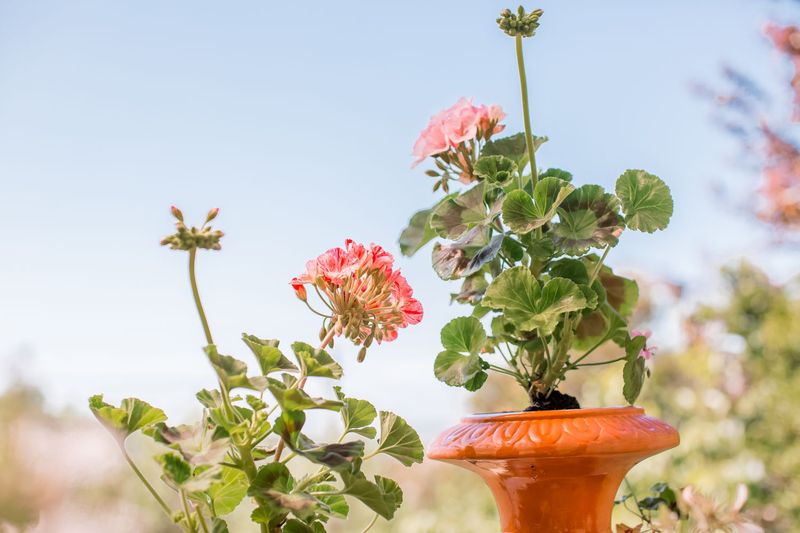
Not all containers are created equal, and the shape you pick makes a surprising difference when space is tight. A tall, narrow pot takes up a small circle of floor yet still gives roots plenty of room to dig down and support a full, healthy plant.
Geraniums are not fussy about spreading sideways, so a wide bowl mostly wastes precious patio real estate. A deeper container also holds moisture more evenly, which helps during hot stretches when a shallow pot would dry out by noon. Look for something at least ten inches deep with drainage holes so the soil never turns into a soggy puddle.
Terra cotta breathes well and looks classic, though it dries quickly, while glazed or plastic pots hold water longer for busy gardeners. Whatever material you choose, matching a slim profile to a leggy-prone plant lets you line several up against a wall and grow a real collection in almost no space.
4. Feed Lightly but Regularly for Nonstop Blooms
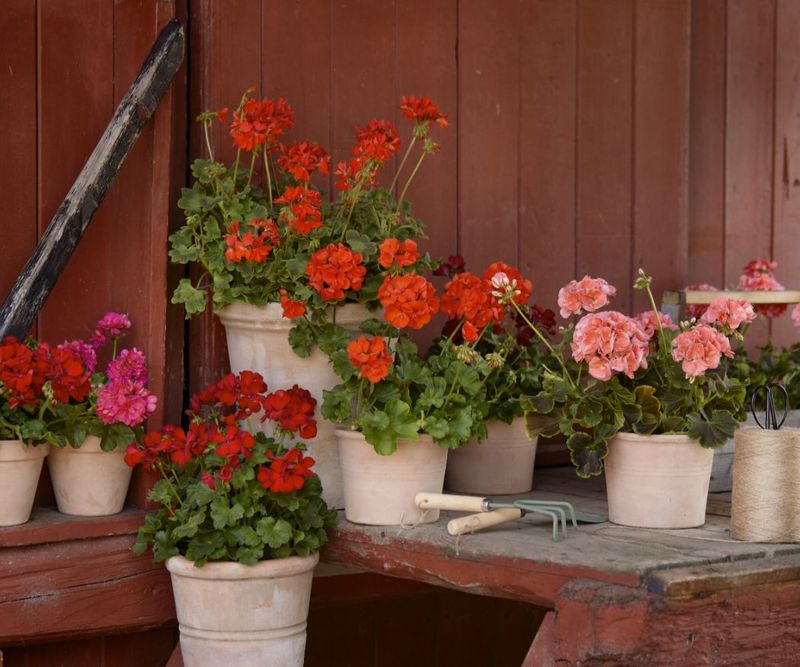
Container plants live in a closed world, and they eat through the food in their soil far faster than anything growing in a backyard bed. A geranium that suddenly stops flowering and starts yellowing at the lower leaves is often just plain hungry.
A steady, gentle feeding schedule keeps blooms coming without pushing out floppy growth you do not want in a small area. Many balcony gardeners use a diluted liquid fertilizer every couple of weeks during the warm months, cutting the strength in half so they never scorch the roots. Look for a formula higher in phosphorus, the middle number on the bag, which supports flowers rather than leafy overgrowth.
Watch the plant and let it guide you. Deep green leaves and plenty of buds mean you are on track, while pale foliage says feed a little more often. Ease off as fall cooling sets in so the plant can slow down naturally instead of being forced to keep sprinting.
5. Deadhead Spent Blooms to Redirect Energy
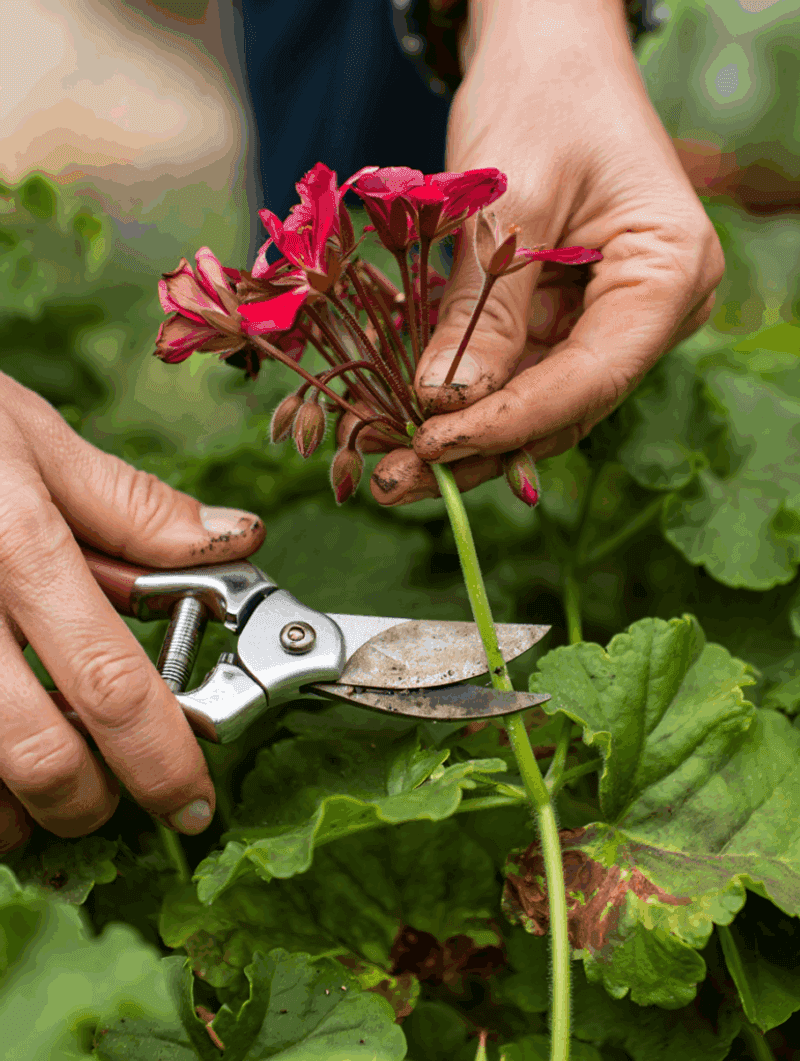
Ever notice how a geranium slows down right when it should be at its showiest? Faded flower heads left on the plant quietly steal energy as they try to set seed, and that energy could be building your next round of blooms instead.
Removing those tired clusters is one of the quickest jobs in the garden and one of the most rewarding. Snap or snip the whole flower stalk down to where it meets the main stem, not just the browning petals, so you tidy the plant and prevent hidden rot. A quick pass every few days keeps the display looking fresh from a foot away, which matters a lot when your garden is right outside the door.
The bonus for small spaces is neatness. Regular deadheading stops soggy petals from dropping onto your patio floor and keeps mold and pests from moving in. A cleaner plant simply looks bigger and healthier, even when it is packed into a modest pot.
6. Cluster Pots to Create a Fuller Combined Look
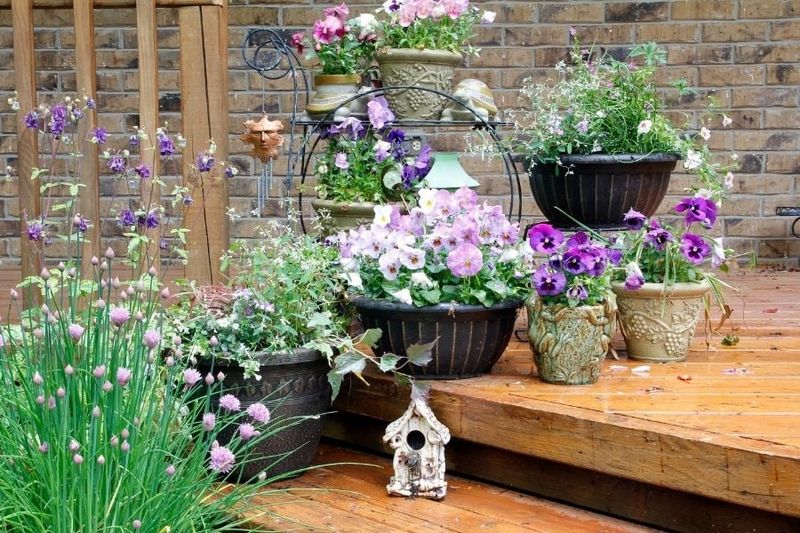
A single geranium in the corner can look a bit lonely, but three or four grouped together read as one generous, overflowing display. Clustering is a designer trick that makes a tiny space feel intentionally lush rather than sparse.
Set your pots close, mixing a couple of heights by placing some on a low stool, an overturned crate, or a tiered plant stand. The taller ones give a backdrop while the shorter ones fill the front, and the eye blends them into a single mass of color. Grouping also creates a little pocket of shared humidity, which helps the plants shrug off the dry heat that bakes exposed balconies.
Play with pot colors and textures to match your patio style, then tuck a trailing companion like ivy or lobelia between the geraniums to soften the edges. The result feels like a full garden bed that just happens to be sitting on a few square feet of concrete.