
9 Bright Red Flowers Hummingbirds Dive For The Second They Spot Them In Your Yard
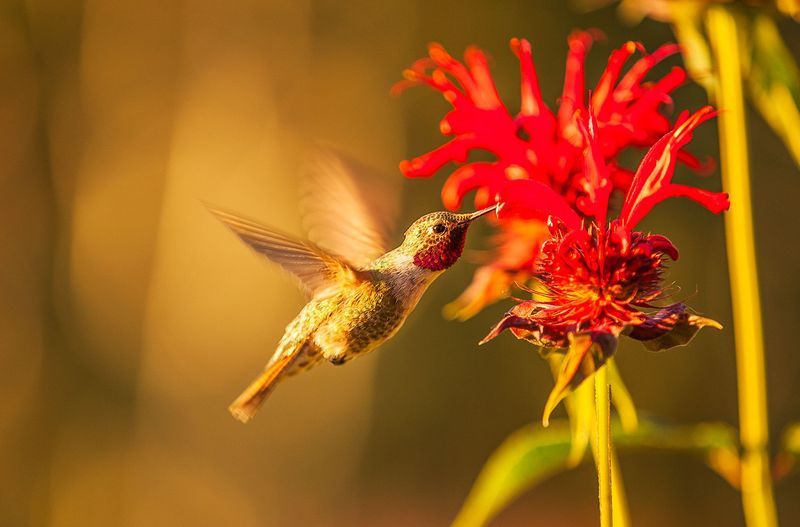
Hummingbirds have amazing eyesight, and the color red practically shouts their name from across the garden. If you want to turn your backyard into a busy little pit stop for these tiny fliers, planting the right red blooms is one of the smartest moves you can make. The nine flowers below are proven favorites that pump out nectar and catch a hummingbird’s eye from far away. Grab a coffee, find a sunny spot, and let’s match your yard with the reds these birds simply can’t resist.
1. Cardinal Flower (Lobelia cardinalis)
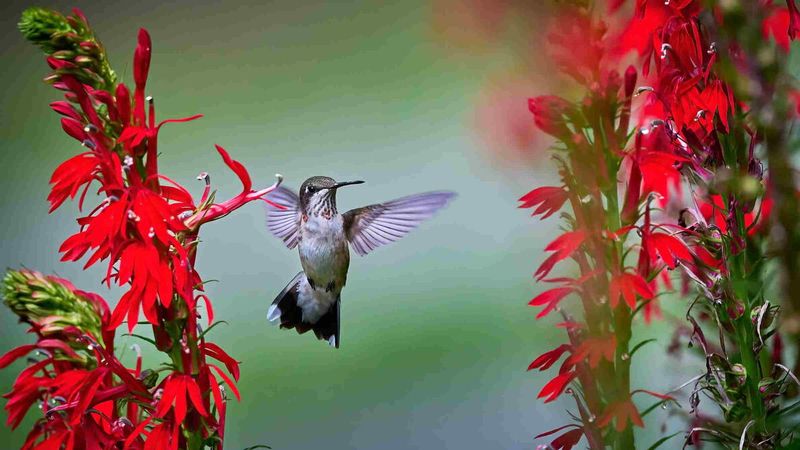
Few native plants light up a damp corner the way cardinal flower does. Its spikes shoot up two to four feet tall and glow a red so intense it almost looks fake, which is exactly why hummingbirds lock onto it from across the yard.
The tubular shape is the real secret here. Long, skinny flowers keep out most short-tongued insects, so hummingbirds get the nectar mostly to themselves, giving them a reliable reward every time they visit.
Native across much of the eastern and central United States, this perennial loves moist soil near ponds, rain gardens, or low spots that stay soggy. Give it part shade to full sun and it will return summer after summer. Fun bit of trivia: it was named after the red robes worn by Catholic cardinals, and the color match is honestly spot on.
2. Bee Balm (Monarda didyma)
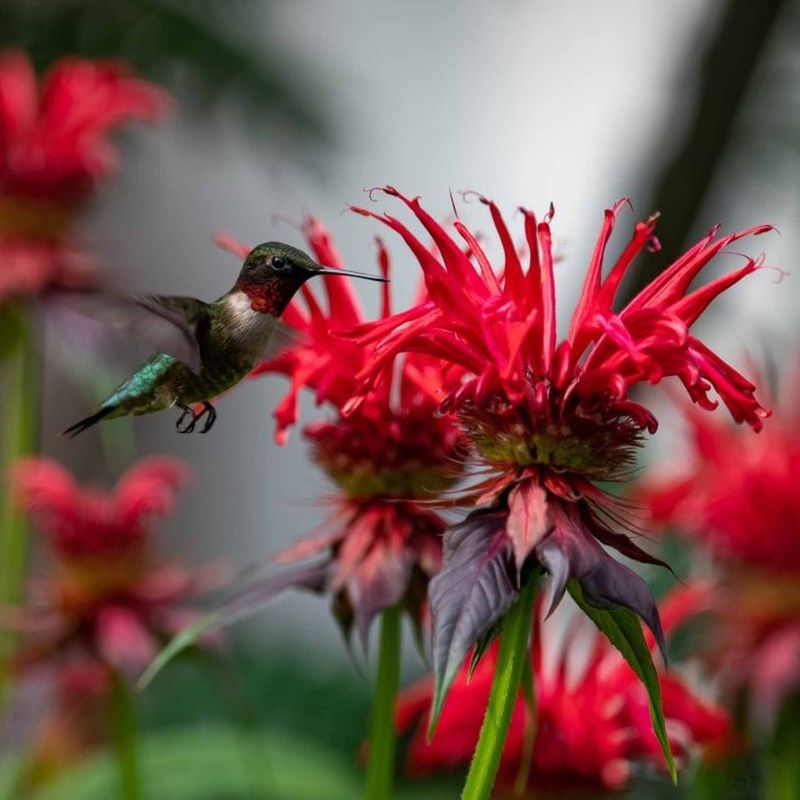
Shaggy, firework-shaped, and impossible to ignore, bee balm brings a wild energy to any bed it lands in. The scarlet variety is the one hummingbirds circle back to all summer long.
Beyond the looks, its ragged petals hold plenty of nectar, and the plant blooms for weeks in mid to late summer when many other flowers are fading. That timing makes it a dependable food source right when hungry birds need it most.
Crush a leaf and you will catch a sharp minty scent, since bee balm belongs to the mint family. Some gardeners say that same aroma may help keep certain nibbling pests at a polite distance. It spreads happily in full sun with decent moisture, so give it room and pinch it back if it gets pushy with the neighbors.
3. Trumpet Vine (Campsis radicans)
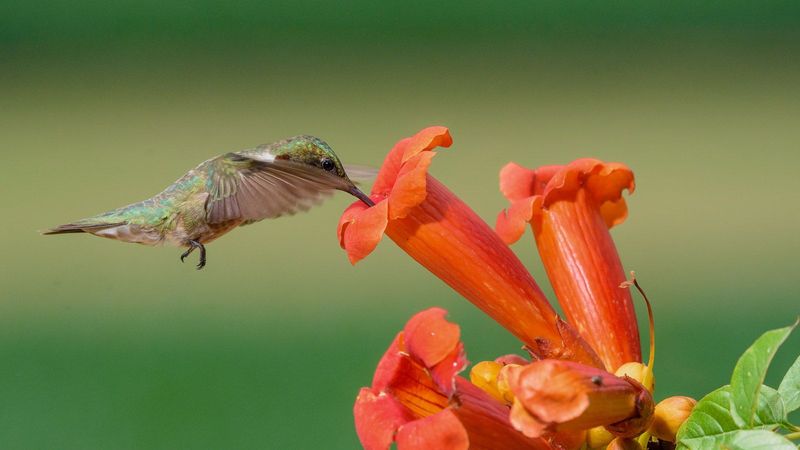
Want a hummingbird magnet that doubles as a privacy screen? Trumpet vine climbs fences, arbors, and mailboxes with wild enthusiasm, dangling clusters of big red-orange trumpets that seem custom-built for a hummingbird’s beak.
Each bloom is roomy and deep, holding a generous pool of nectar. Birds will visit the same vine dozens of times a day once it hits full flower in summer.
A word of honest caution: this plant is a powerhouse and can take over if you ignore it. Plant it where you can prune hard, keep it off your house siding, and it rewards you with years of nonstop hummingbird traffic. In warmer parts of the country it spreads by underground runners, so a spot bordered by lawn or pavement helps keep it in check.
4. Red Salvia (Salvia splendens)
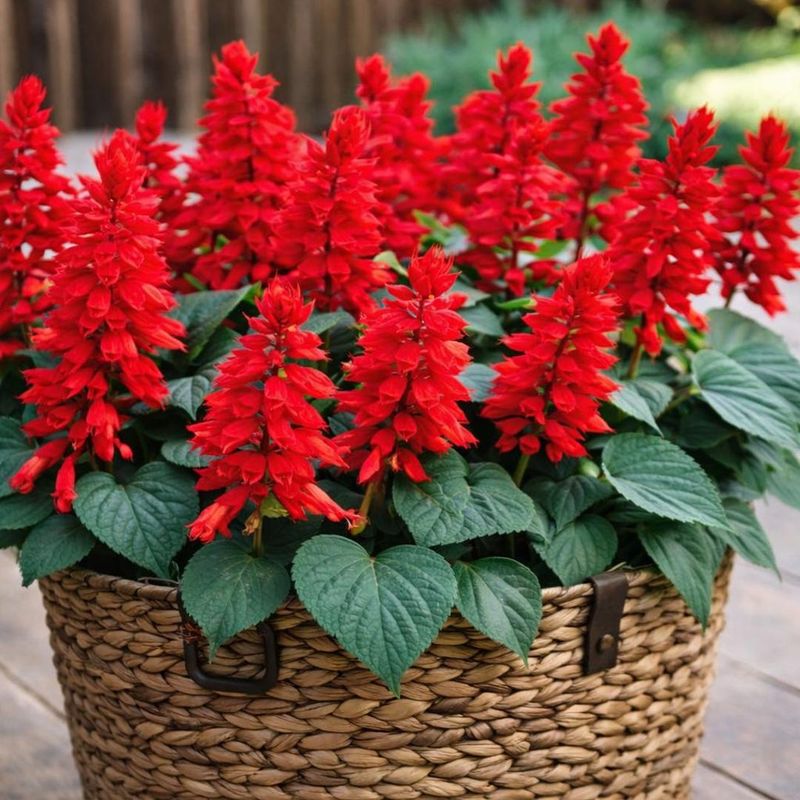
If you garden in pots or want quick color, red salvia is the friendly workhorse that never seems to quit. Those upright spikes stay vividly red from early summer clear through the first frost.
Hummingbirds treat a patch of salvia like a favorite diner. The tubular florets line up neatly along each stem, so a bird can hop from bloom to bloom without wasting a wingbeat.
Grown as an annual in most US yards, it thrives in containers, window boxes, and sunny borders alike. Deadhead the spent spikes now and then and it keeps pushing fresh flowers with almost no fuss. For beginners hoping to attract their first hummingbird, this one delivers fast and forgives a lot of mistakes.
5. Crocosmia ‘Lucifer’
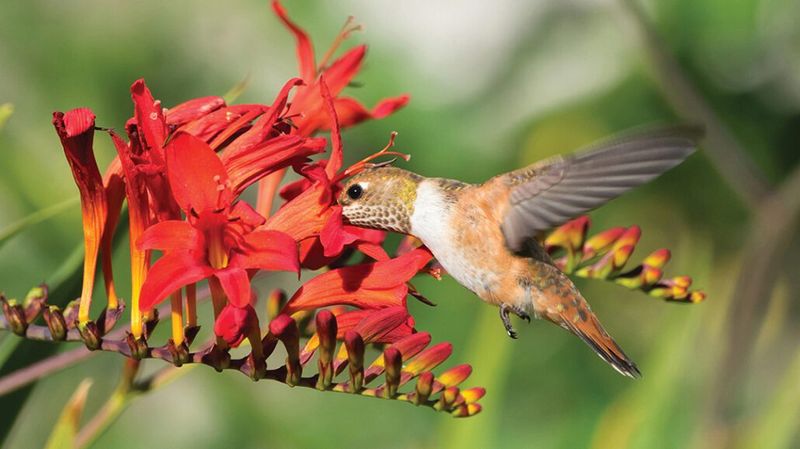
Named after the fallen angel of light, Crocosmia ‘Lucifer’ certainly earns its dramatic title. Fiery red flowers dangle along gracefully arching stems, waving above blade-like leaves that look almost tropical.
The nodding, tube-shaped blooms are perfectly angled for a hovering hummingbird, and the plant flowers heavily in mid-summer. Once the birds discover it, they patrol it like clockwork.
Hardy through much of the US, this corm-based perennial multiplies underground and comes back bigger each year. Plant it in full sun with well-drained soil and let the clumps fatten up. Cut a few stems for a vase and you will notice the flowers keep opening indoors, a bonus that flower arrangers quietly adore.
6. Red Columbine (Aquilegia canadensis)
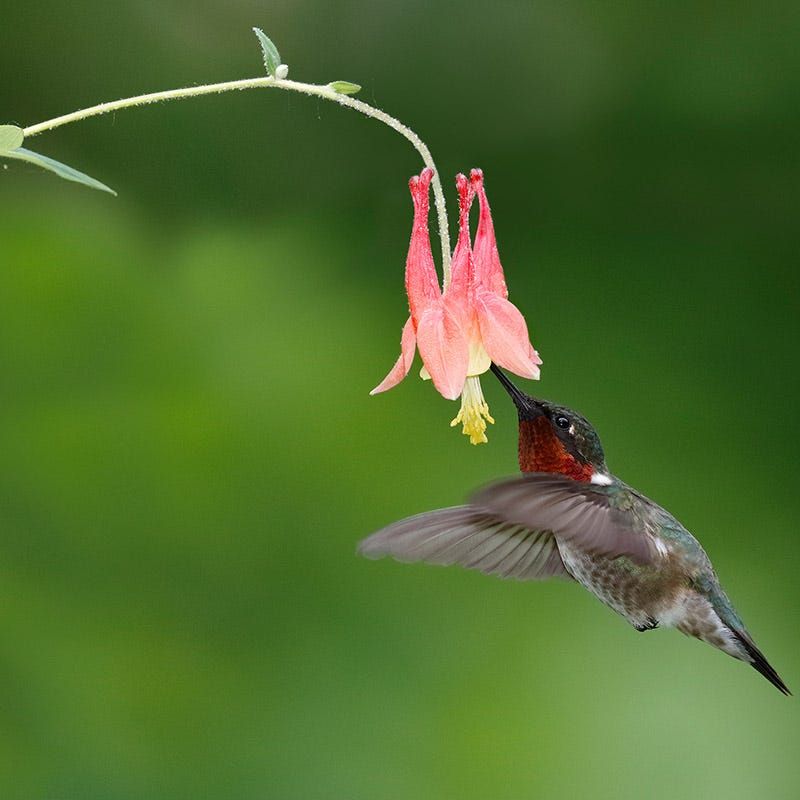
Spring gardens sometimes leave early-arriving hummingbirds short on food, and that is where red columbine steps in as an unsung hero. Its dainty red-and-yellow bells nod on thin stems, blooming well before most of the summer stars wake up.
Look closely and you will spot the long backward spurs behind each flower. Those tubes tuck the nectar deep where mainly hummingbirds can reach, so the timing and the design work hand in hand.
A gentle native for part shade and woodland edges, columbine self-sows politely, popping up in new spots each year without becoming a bully. It asks for very little and shrugs off dry shade once established. For anyone building a garden that feeds birds from the very first warm days, this is a quiet must-have.
7. Scarlet Runner Bean (Phaseolus coccineus)
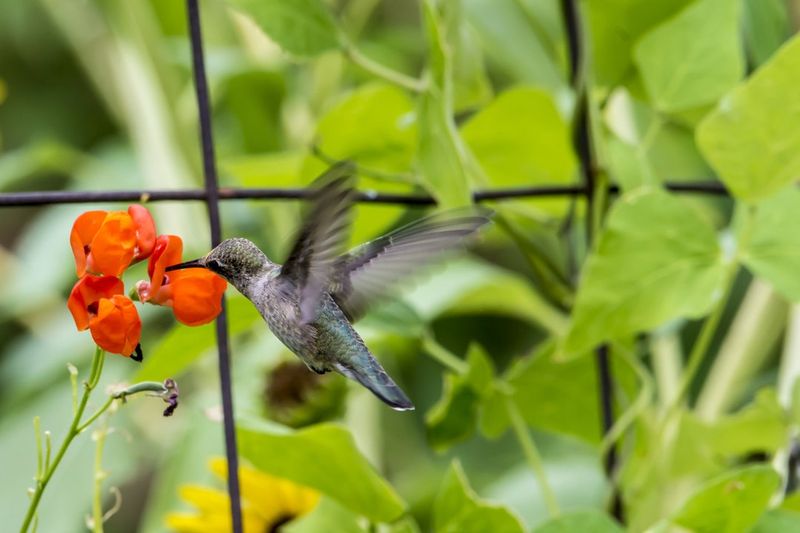
Here is a plant that feeds you and the hummingbirds at the same time. Scarlet runner bean scrambles up any trellis or teepee you give it, draping the whole structure in clusters of bright red pea-shaped flowers.
Hummingbirds work the blossoms eagerly, and every visit helps pollinate the crop. Later in the season those same flowers turn into edible beans you can harvest for the kitchen.
Grown as a fast annual across the US, it germinates easily from seed dropped in warm spring soil. Kids love watching it race up a string in a matter of weeks. Give it sun, something to climb, and a little water, and you get a double harvest of bird activity and dinner ingredients from one tidy vine.
8. Pineapple Sage (Salvia elegans)
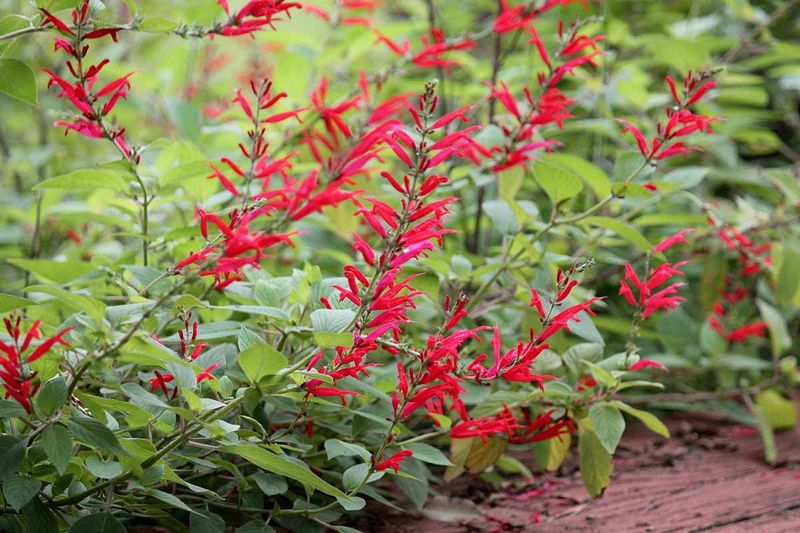
Brush against pineapple sage on a fall afternoon and you get a burst of sweet tropical fragrance, which is a treat all its own. Come autumn it sends out slender scarlet tubes right as most gardens are winding down.
That late timing is exactly why it matters so much. Migrating hummingbirds fueling up for their long southbound trip find a fresh nectar buffet when other blooms have already called it a season.
The leaves smell unmistakably of pineapple and can flavor teas, drinks, and desserts, making this a favorite of herb gardeners too. It grows fast in full sun and behaves as an annual in colder zones, a tender perennial in mild ones. Tuck it near a path where you will bump the foliage and enjoy that scent on repeat.
9. Hardy Hibiscus (Hibiscus moscheutos)
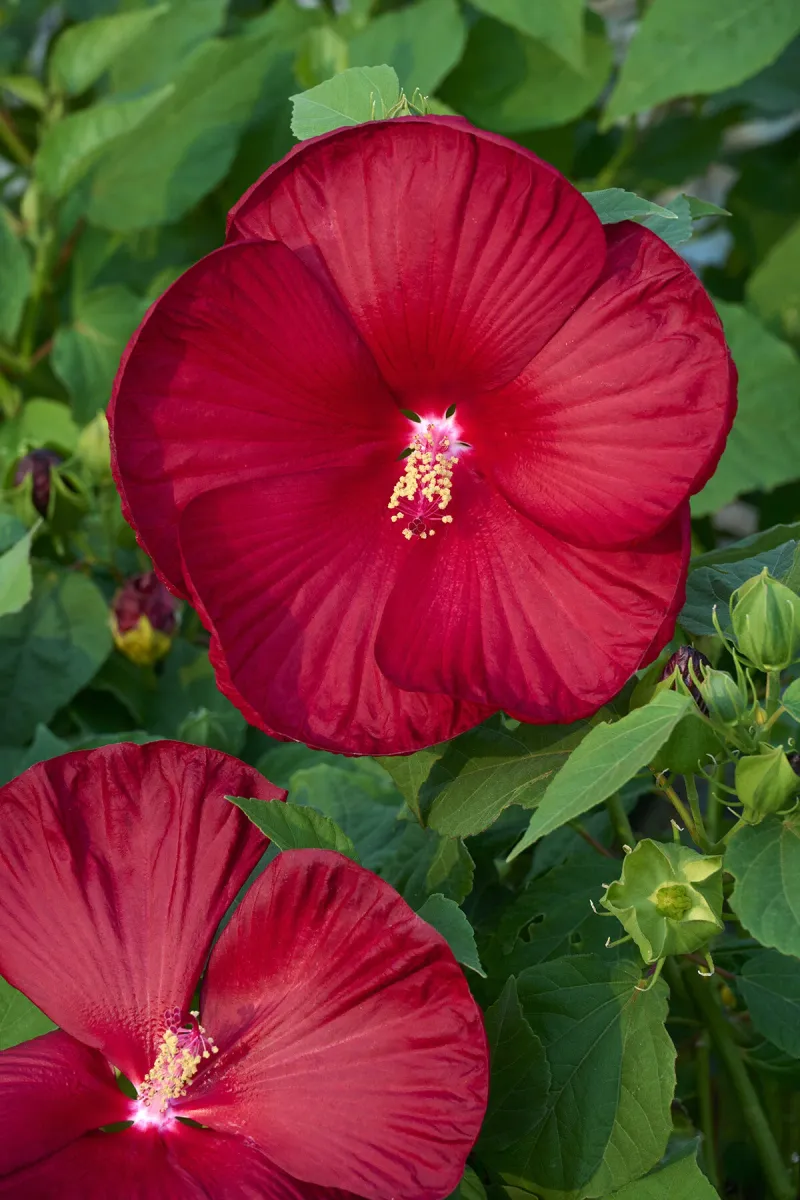
Go big or go home is basically the motto of hardy hibiscus. The red variety unfurls blooms the size of dinner plates, and a single flower can stop a passing hummingbird in its tracks.
Those enormous petals surround a tall central column loaded with nectar and pollen. Birds cruise from one giant bloom to the next, and the sheer size makes the plant a landing beacon visible from far across the yard.
Unlike its tropical cousins, this hibiscus is winter-hardy through much of the country and dies back to return each summer. It loves moist soil and full sun, thriving even in spots that stay a little wet. Patience pays off here, since it emerges late in spring, then rockets up and blooms like it is making up for lost time.