
26 Invasive Clematis Varieties You’ll Regret Planting—And How To Keep Them In Check
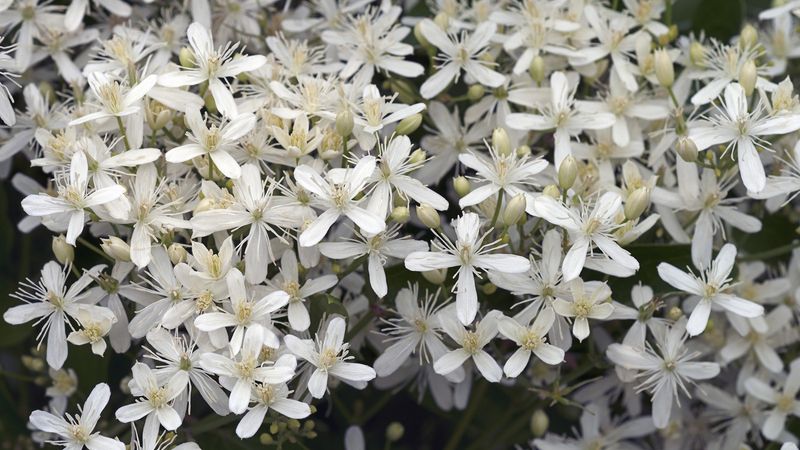
Clematis vines can look like a dream when they bloom, but some kinds spread so fast they take over fences, trees, and whole flower beds before you know it. A few of these climbers drop thousands of seeds or send out roots that pop up far from where you planted them. Knowing which ones cause trouble helps you enjoy the pretty flowers without letting your yard get swallowed. Below you will find 26 clematis types that can turn pushy, plus simple ways to keep each one under control.
1. Sweet Autumn Clematis (Clematis terniflora)
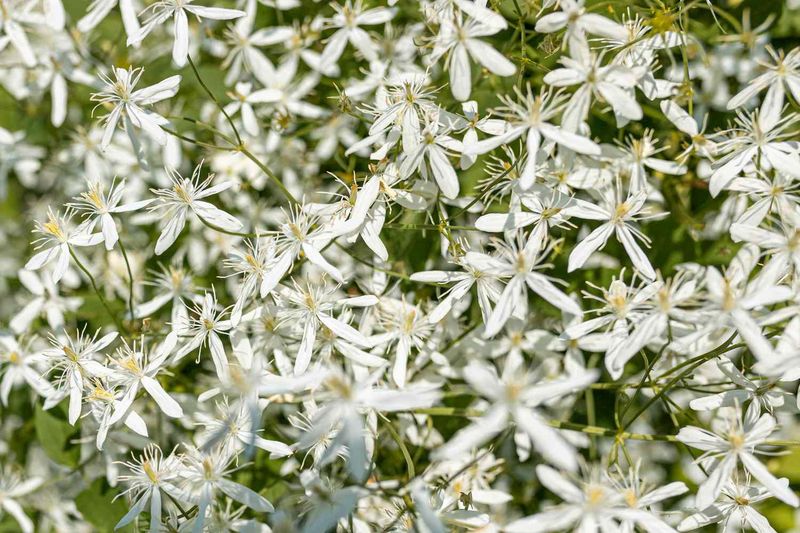
Picture a fence buried under a blanket of tiny white blooms every September, smelling like vanilla and honey. That dreamy scene is exactly how Sweet Autumn Clematis wins gardeners over, and it is also how it takes over.
Native to Japan, this vine escaped gardens across the eastern and southern United States and now climbs wild over roadside trees. A single plant can throw out thousands of fluffy seeds that ride the wind into your neighbors’ yards.
Keeping it honest means cutting the flowers off before they turn to seed heads in late fall. Chop the whole vine to the ground each winter, and pull up any surprise seedlings the moment you spot them in spring. If you grow it near woods, watch the tree line closely, because it loves to smother saplings.
2. Old Man’s Beard (Clematis vitalba)
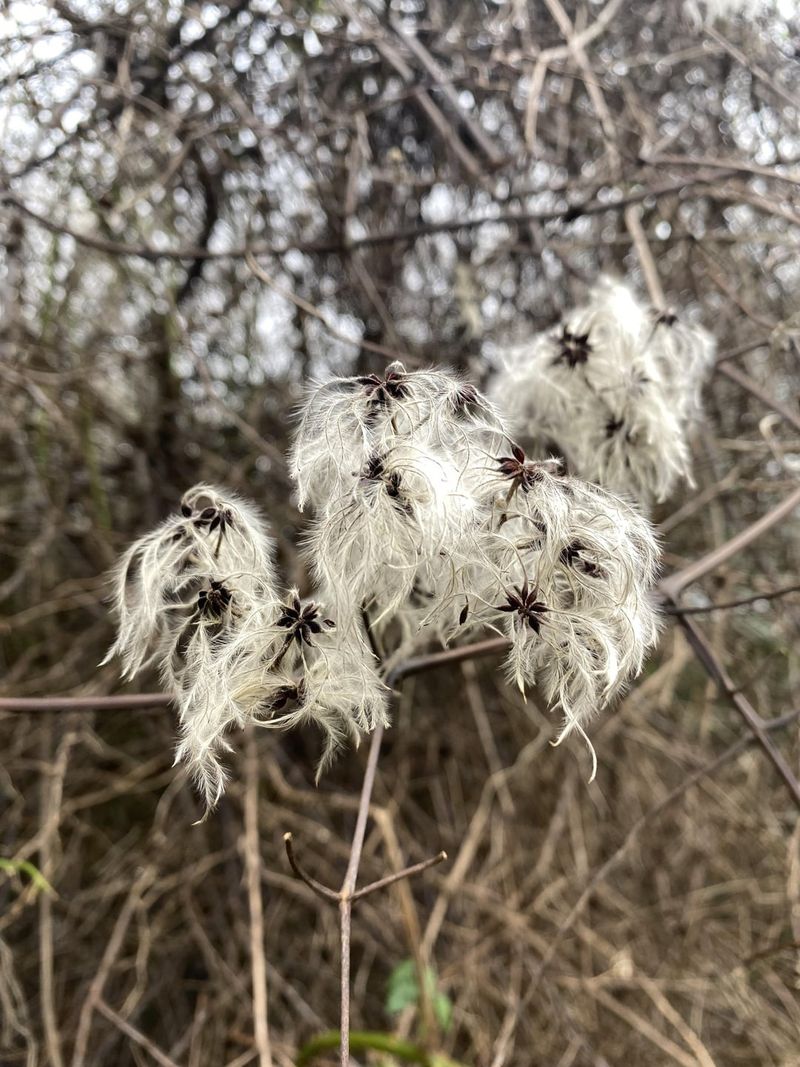
The wispy silver seed heads that give this vine its nickname look charming in a photo, but they signal serious trouble. Old Man’s Beard grows fast enough to bury an entire shrub in a single season.
Brought over from Europe, it has naturalized in parts of the Pacific Northwest, where it drapes over forests like a heavy net. Stems can grow woody and thick, snapping branches under their weight.
Cut the vines at the base and dig out the roots, since broken pieces left in the soil can resprout. Bag every seed head instead of composting it, because those fluffy tufts scatter easily. Stay on top of new growth for two or three seasons before you can relax.
3. Japanese Clematis (Clematis apiifolia)
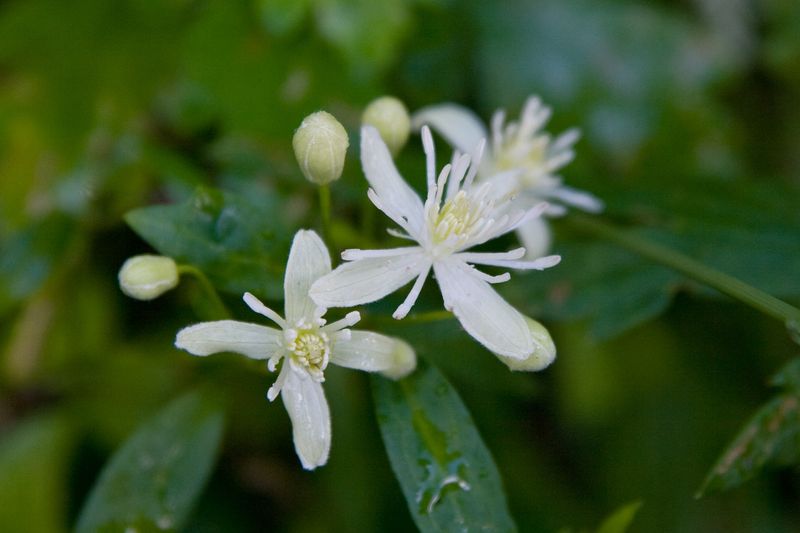
Delicate clusters of creamy blooms make this Asian climber a magnet for pollinators, and that popularity with bees means plenty of pollinated seeds. Japanese Clematis reseeds with an enthusiasm most gardeners underestimate.
Its leaves resemble parsley, which is where the species name comes from, and it climbs quickly over trellises and hedges. Once established in warm US regions, volunteers show up in beds several feet away.
Deadheading right after the flowers fade cuts off most of the reseeding problem. Grow it against a hard surface like a wall so escaping roots have nowhere friendly to land. A yearly hard prune keeps the tangle manageable and the vine easier to inspect.
4. Virgin’s Bower (Clematis virginiana)
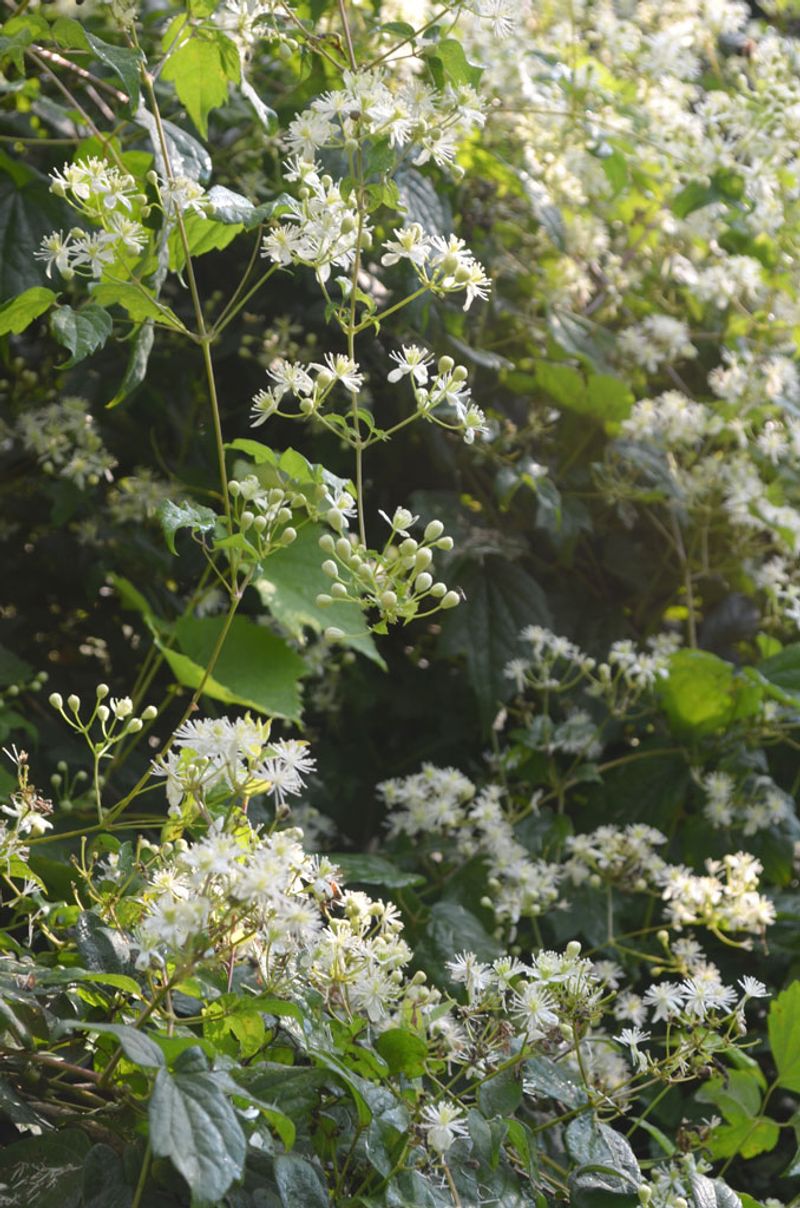
Here is a tricky one, because Virgin’s Bower is actually native to North America, yet it still behaves like a bully in the garden. Gardeners often mistake it for Sweet Autumn Clematis since both foam with white flowers in late summer.
Wildlife value gives it a pass in natural areas, but inside a tidy bed it romps over everything and self-sows generously. Along stream banks and moist fence lines it can form dense mats.
Since it is a native, the goal is control rather than eradication. Trim seed heads before they mature, and thin the stems each spring to keep airflow moving. Plant it where it can scramble on a dead tree or an old fence, away from your prized perennials, and it becomes a helpful pollinator plant instead of a headache.
5. Yellow-Leaf Clematis (Clematis orientalis)
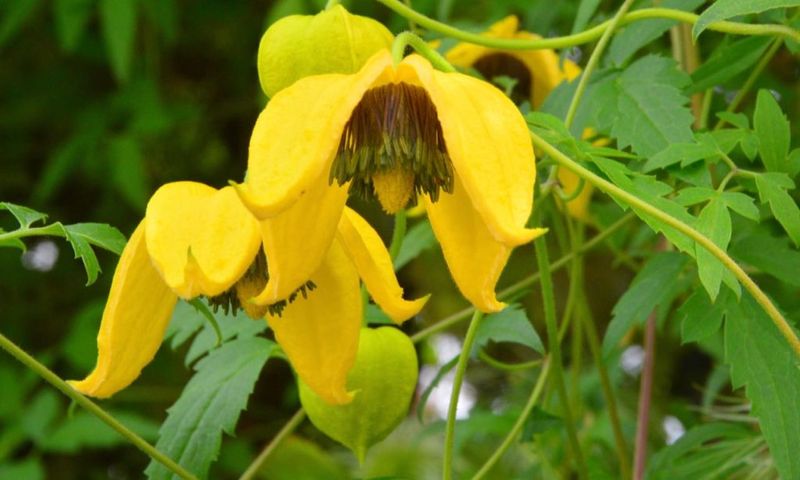
Bright lemon-yellow lantern flowers hanging like little bells trick many gardeners into thinking this one is too pretty to cause harm. Yellow-Leaf Clematis proves otherwise, especially across the drier western states.
Originally from Asia, it thrives in poor soil and full sun, spreading through both seed and creeping roots. In parts of the Rocky Mountain region it has jumped fences into open range and streamsides.
Because it tolerates neglect so well, you cannot just ignore it into submission. Snip off the flowers before the silky seed heads form, and dig root runners as they appear. Growing it in a large buried container limits the underground escape route.
6. Golden Clematis (Clematis tangutica)
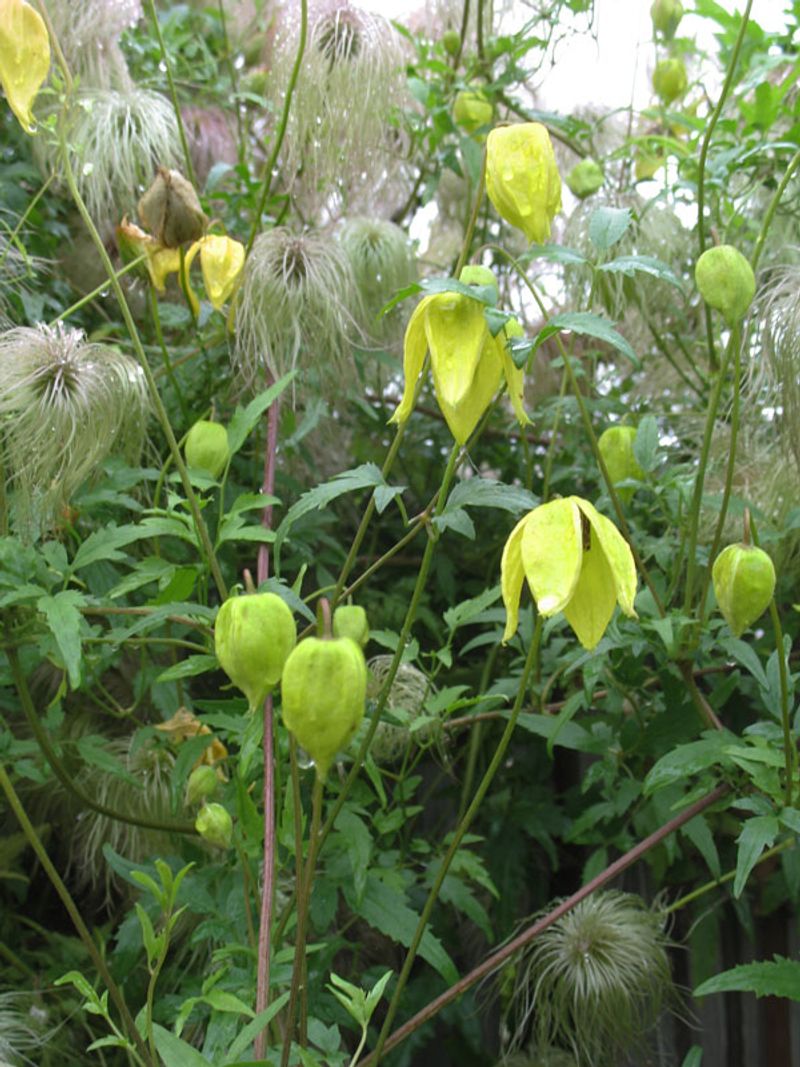
Nodding golden blossoms followed by feathery pom-pom seed heads make Golden Clematis a two-season show-off. That double act of heavy flowering and heavy seeding is exactly what makes it a spreader.
A relative of the yellow-leaf type, it comes from the mountains of central Asia and handles cold winters with ease. Northern US gardeners love it right up until the seedlings start marching across the yard.
Cutting the plant back hard in late winter removes old seed heads and forces fresh growth. Rake up the fluffy debris rather than letting it blow around. Keep a close eye on gravel paths and disturbed soil nearby, since that is where new plants love to sprout.
7. Italian Leather Flower (Clematis viticella)
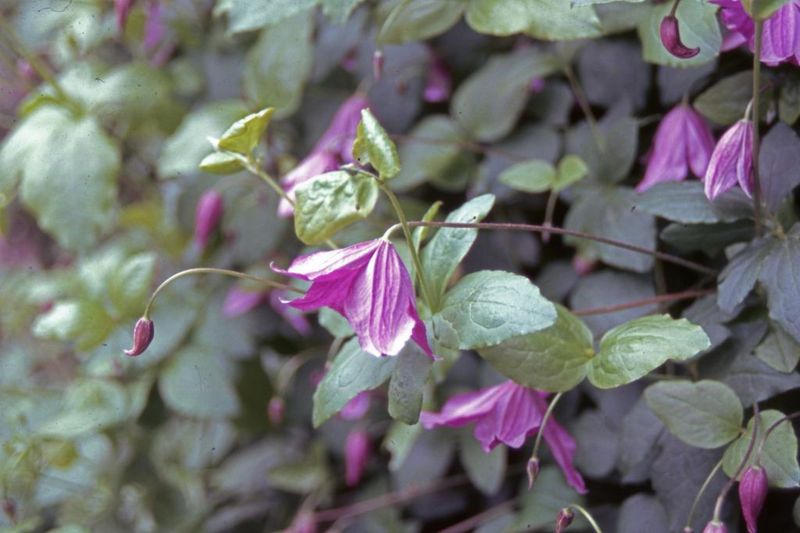
Gardeners adore this one for its nodding purple bells and reliable reblooming, and honestly it is one of the better-behaved species on this list. Still, in mild climates the Italian Leather Flower can seed itself around more than you bargained for.
Native to southern Europe, it has naturalized in scattered spots across the US where summers stay warm and long. Left unpruned, its stems pile into a heavy thatch that shades out shorter plants.
The fix is refreshingly simple. Cut it to about a foot tall every late winter, since it blooms on new wood anyway. Deadhead through the season and pull the occasional volunteer, and this vine stays a pleasure rather than a problem.
8. Fragrant Virgin’s Bower (Clematis flammula)
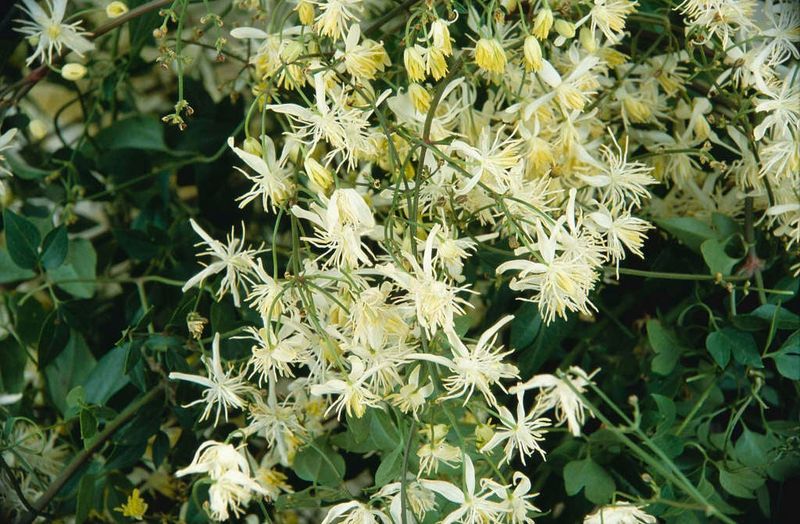
The almond-sweet perfume rolling off this vine on a warm evening can stop you in your tracks. Fragrant Virgin’s Bower puts on a snowstorm of tiny white flowers, and that abundance turns into an abundance of seed.
Hailing from the Mediterranean, it settles happily into warm, sunny US gardens and reseeds with gusto. The long flexible stems weave through neighboring shrubs and are tough to untangle later.
Shearing off the spent blooms before they ripen is your best defense. Give it a sturdy structure of its own so it does not colonize your roses or lilacs. A hard cutback each winter keeps the sweet scent coming without the sprawl.
9. Mountain Clematis (Clematis montana)
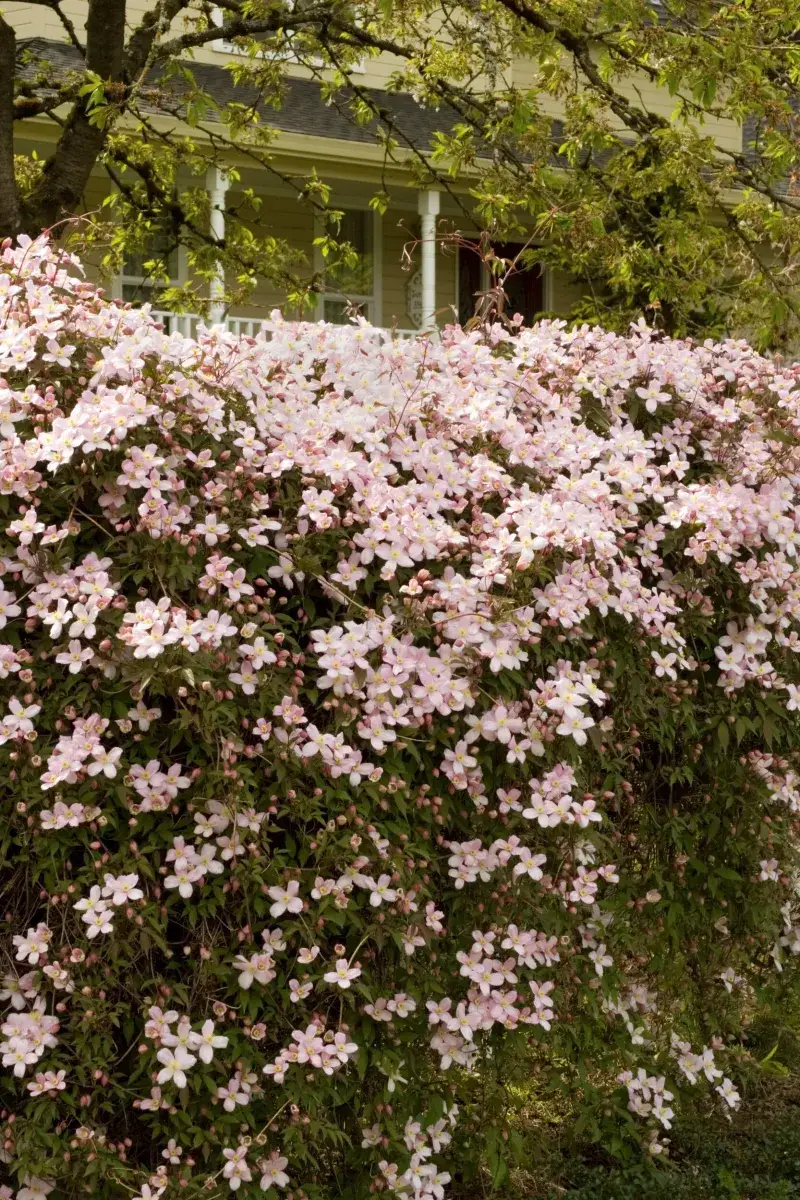
Come spring, this vine erupts into a waterfall of pink or white flowers so thick you can barely see the leaves. Mountain Clematis grows with a speed that thrills new gardeners and alarms experienced ones.
From the Himalayas, it can add twenty feet of growth in a single season once it settles in. In mild coastal US zones it climbs into trees and rooftops without any encouragement.
Prune it right after the spring flowers fade, because it blooms on old wood and a late cut costs you next year’s show. Keep it far from gutters and small trees, and thin the woody core regularly so the whole thing does not collapse under its own weight.
10. Armand Clematis (Clematis armandii)
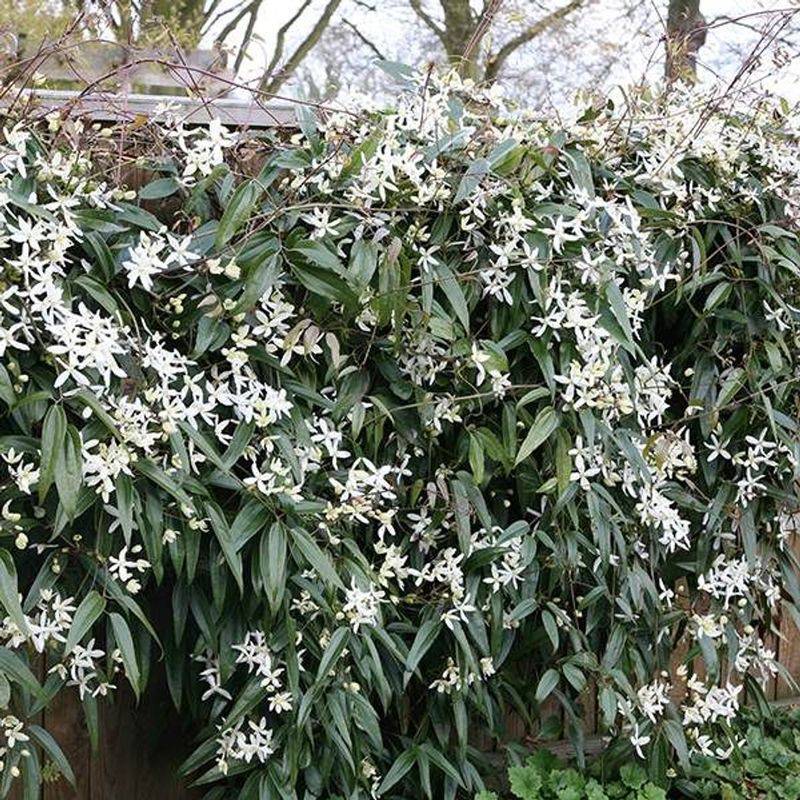
An evergreen clematis with glossy leathery leaves and fragrant white flowers sounds like a garden win, and in the right spot it is. Armand Clematis simply does not know when to stop growing in warm regions.
Native to China, it thrives in the mild South and West Coast, where it can smother a fence or arbor in a couple of years. The heavy evergreen mass gets so dense it topples flimsy supports.
Only prune it after the early spring bloom, thinning tangled stems back to strong buds. Build it a genuinely strong structure from the start, since retrofitting later is miserable. Watch for layering, where trailing stems root wherever they touch damp ground.
11. Anemone Clematis (Clematis montana var. rubens)
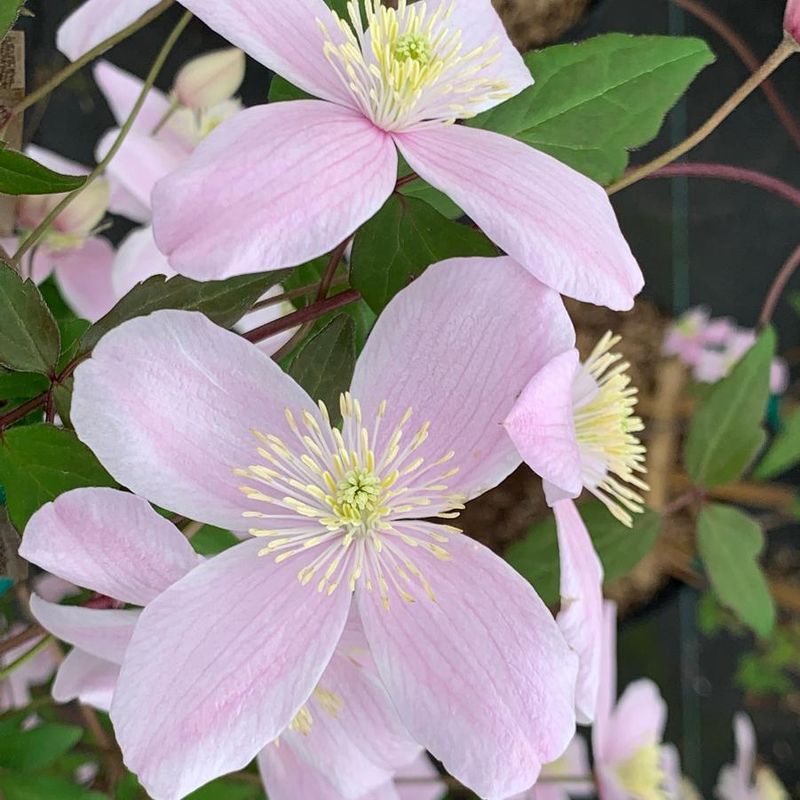
Rosy-pink blooms paired with bronze-tinted new leaves give this montana cousin an extra dose of charm. All that beauty comes wrapped in the same runaway vigor the whole montana clan is famous for.
Gardeners in mild US zones plant it to hide an ugly shed and end up with the shed, the fence, and half a tree covered. It layers readily, meaning stems root themselves wherever they flop down.
Prune hard right after flowering and lift any rooted stems before they anchor. Choose a spot with room to sprawl on purpose, like a long stretch of chain-link. Feeding it less actually helps, since rich soil only fuels faster takeover.
12. Bush Clematis (Clematis heracleifolia)
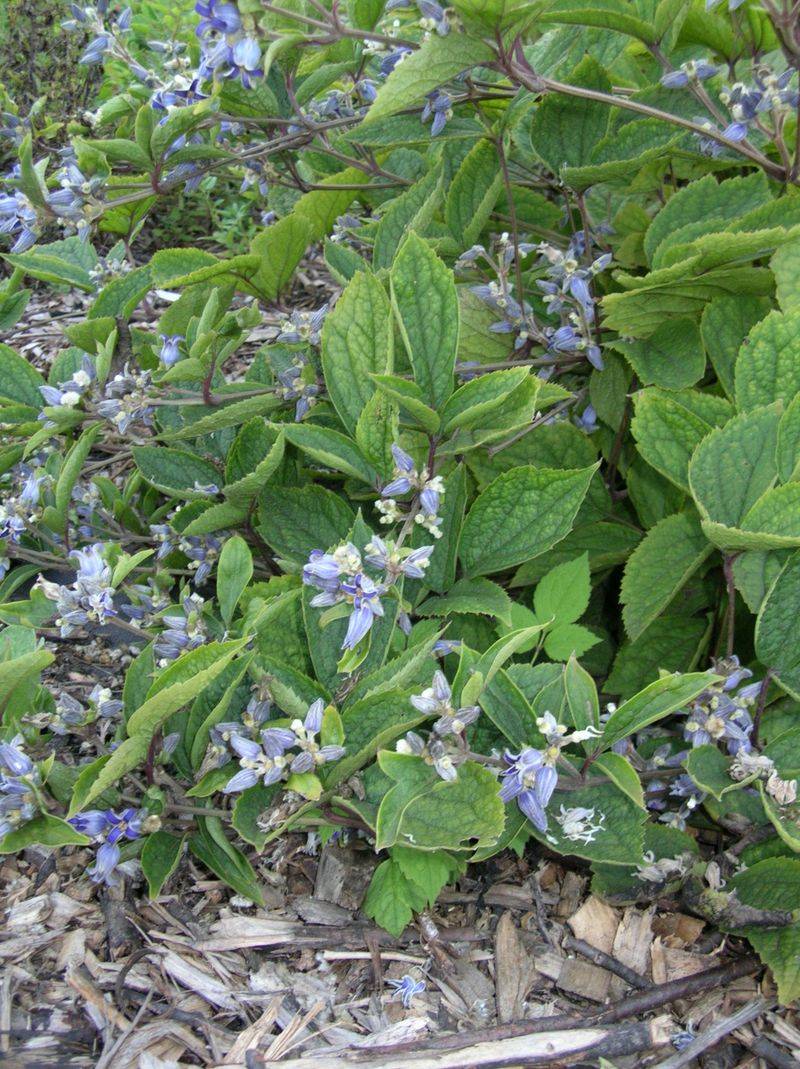
Not every troublemaker climbs, and this one proves it by growing as a sprawling shrubby clump instead. Bush Clematis sends up scented blue tubular flowers, but it spreads outward through steadily creeping roots.
Coming from China, it settles into perennial borders and then quietly widens its territory year after year. Before long it is crowding out neighbors you planted with careful spacing.
Dividing the clump every couple of years both refreshes the plant and lets you cut back its footprint. Slice off outer runners with a sharp spade in spring. Deadheading also trims down the self-sown seedlings that appear around the base.
13. Ground Clematis (Clematis recta)
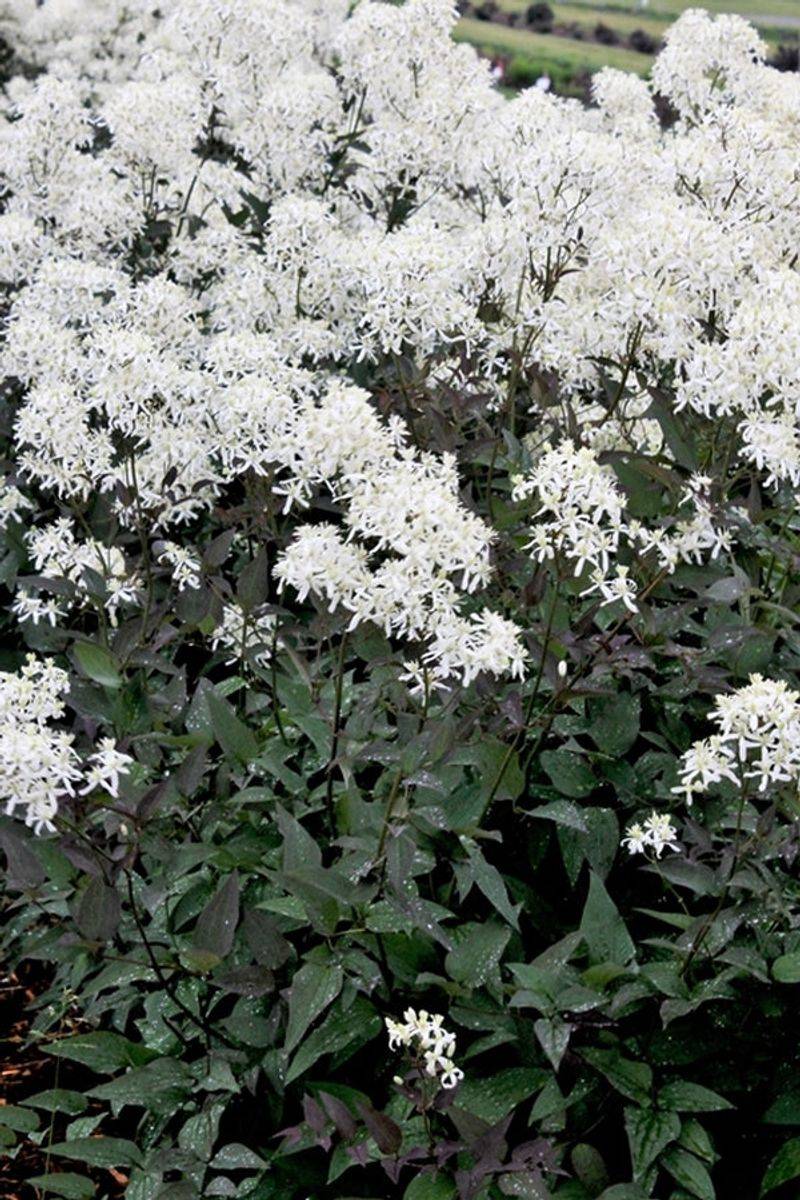
Standing upright without a trellis, this unusual clematis forms a bushy mound topped with airy white flower clouds. Ground Clematis looks tidy in the catalog photo and then flops and reseeds all over the border.
A European native, it settles comfortably into US gardens and scatters seed into every open patch of soil nearby. The lax stems also root at the joints when they sprawl onto damp ground.
Staking the clump keeps stems off the ground and easier to manage. Cut it back after flowering to stop the seed set cold. Pulling volunteers while they are small saves a much bigger fight later on.
14. Purple Clematis (Clematis jackmanii)
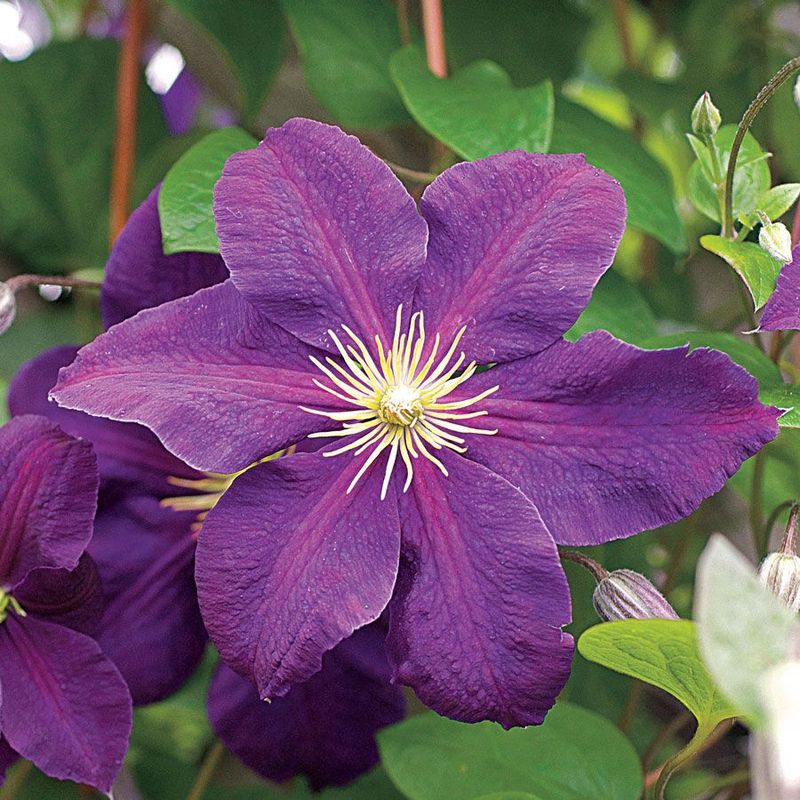
Ask someone to picture a clematis and they probably imagine the huge velvety purple flowers of Jackmanii. Its fame is well earned, yet in ideal conditions this classic hybrid gets far pushier than expected.
Bred in England back in 1862, it climbs eagerly and can bury a mailbox post or lamppost in one summer. The dense tangle of stems shades and weakens whatever it grabs onto.
Since it flowers on new wood, cut it right down to about a foot each late winter without guilt. Guide the fresh stems onto a support you actually want covered. Regular thinning keeps the mass light enough that it will not crush a delicate trellis.
15. Scarlet Clematis (Clematis texensis)
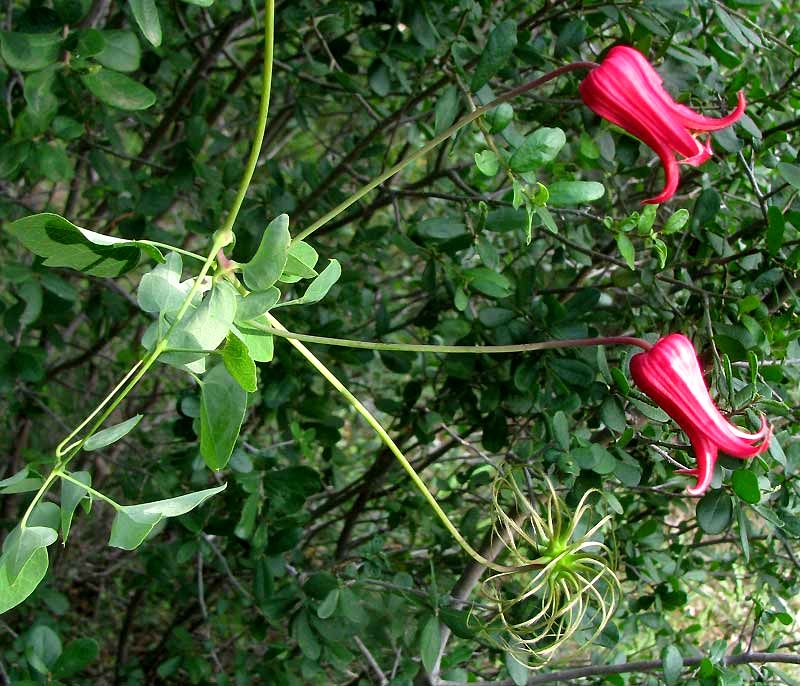
Tiny tulip-shaped flowers in glowing scarlet make this Texas native a hummingbird favorite. Being homegrown does not stop it from seeding itself around warm southern gardens with real determination.
Adapted to heat and lean soil, it shrugs off conditions that stop fussier vines. That toughness means volunteers pop up in cracks, gravel, and beds far from the parent plant.
Trimming spent flowers before seed heads form keeps the wandering in check. It dies back and reblooms on new wood, so an early-spring haircut suits it perfectly. Since it is native, letting a few grow for the hummingbirds is fine, just not everywhere.
16. Alpine Clematis (Clematis alpina)
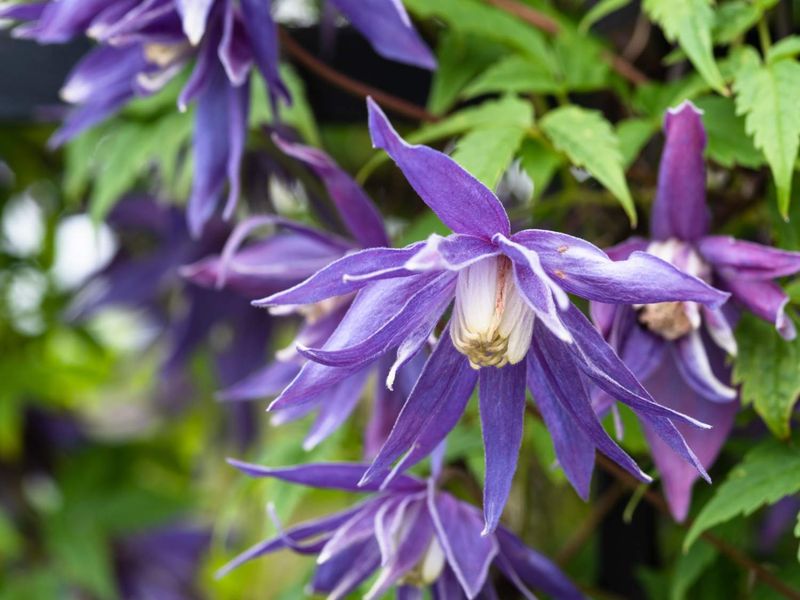
Dainty nodding bells in blue and purple appear early, making Alpine Clematis one of the first vines to greet spring. Its polite reputation slips in cool, moist US regions where it seeds and layers more than gardeners expect.
A mountain plant from Europe and Asia, it favors the cooler northern states and coastal fog belts. Left alone, it weaves through low shrubs and roots wherever stems touch down.
Light pruning right after the spring flowers keeps it neat, since it blooms on old wood. Snip off the feathery seed heads before they ripen. Lift and clip rooted stems each spring, and this early charmer stays welcome.
17. Downy Clematis (Clematis macropetala)
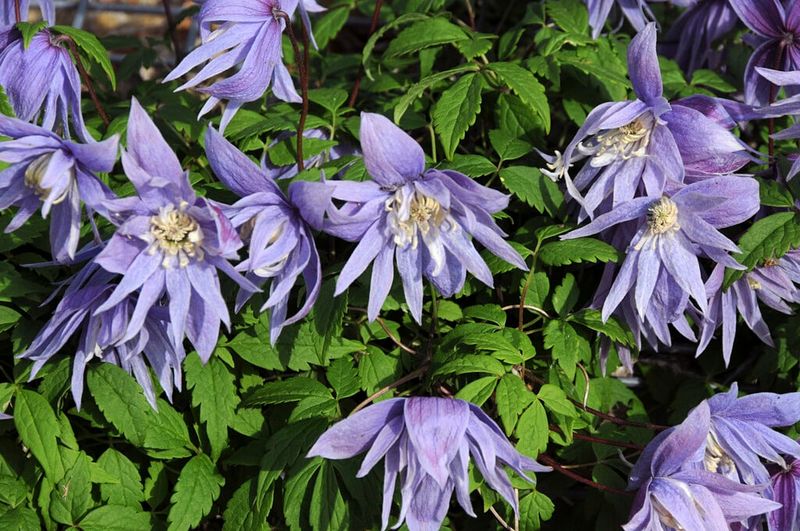
Frilly, semi-double blue flowers give this vine a ruffled, almost fluffy look that photographs beautifully. Downy Clematis charms its way into small gardens, then spreads by both seed and creeping stems.
Native to China and Siberia, it laughs at cold and keeps expanding where winters would stop a lesser plant. The silky seed heads scatter easily on a breezy day.
Prune lightly after flowering to protect next year’s buds, and remove seed heads while you are at it. Keep it off the ground where stems could root. In tight spaces, a container with a small obelisk lets you enjoy the ruffles without the wandering.
18. Chinese Clematis (Clematis chinensis)
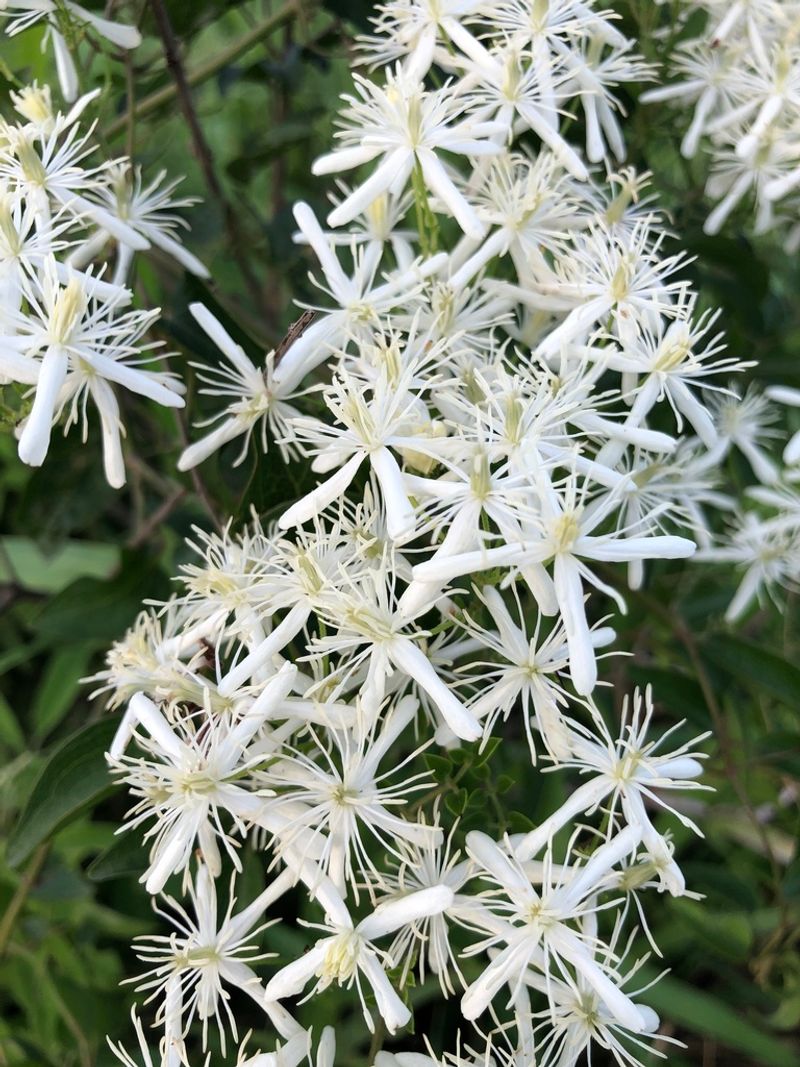
Grown for centuries in traditional medicine, this species carries history along with its cloud of small white flowers. Chinese Clematis brings the same heavy seeding habit that makes so many white-flowered species troublesome.
In warm US zones it establishes fast and sends seedlings drifting into surrounding beds. The rambling stems knit through hedges and are a chore to remove once woody.
Cut back the flowers before seeds set, and give the vine a dedicated support away from valued shrubs. An annual hard prune keeps the growth young and easy to inspect. Pull stray seedlings promptly, especially along fence lines where they hide.
19. Curly Clematis (Clematis crispa)
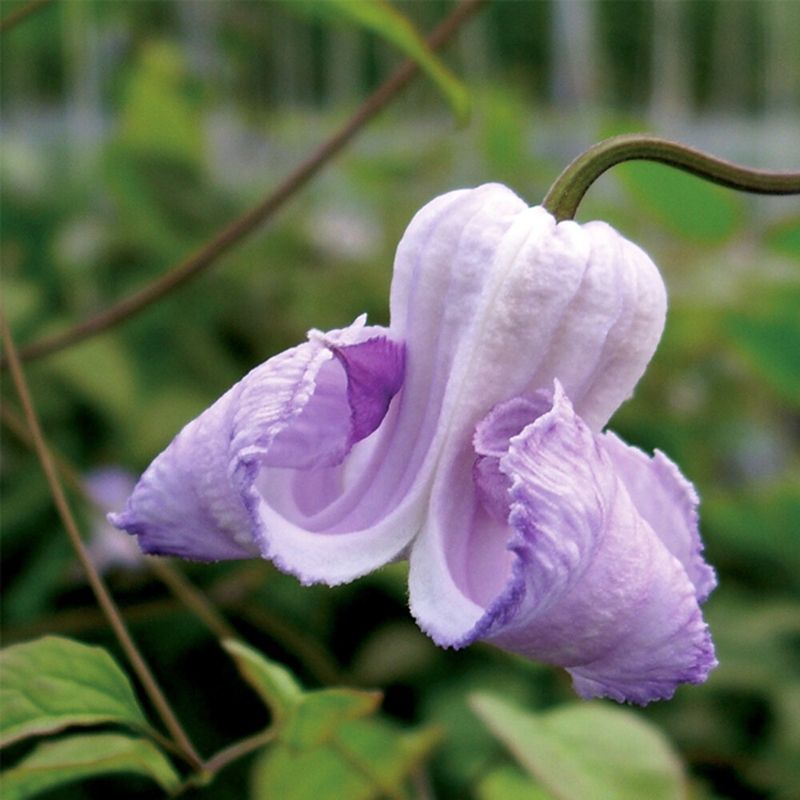
The bell-shaped lavender flowers with curled, ruffled edges look like tiny dancing skirts. Curly Clematis is a US native of southern wetlands, and in the right damp spot it spreads faster than tidy gardeners like.
It thrives in moist, boggy ground where many vines would sulk, sending up new shoots from wandering roots. Near a rain garden or pond it can quickly outgrow its welcome.
Managing it means dividing the roots and pulling runners in spring. Trim seed heads to slow the self-sowing. Because it supports native pollinators, keeping a controlled patch is a nice trade-off rather than a total removal.
20. Erect Clematis (Clematis stans)
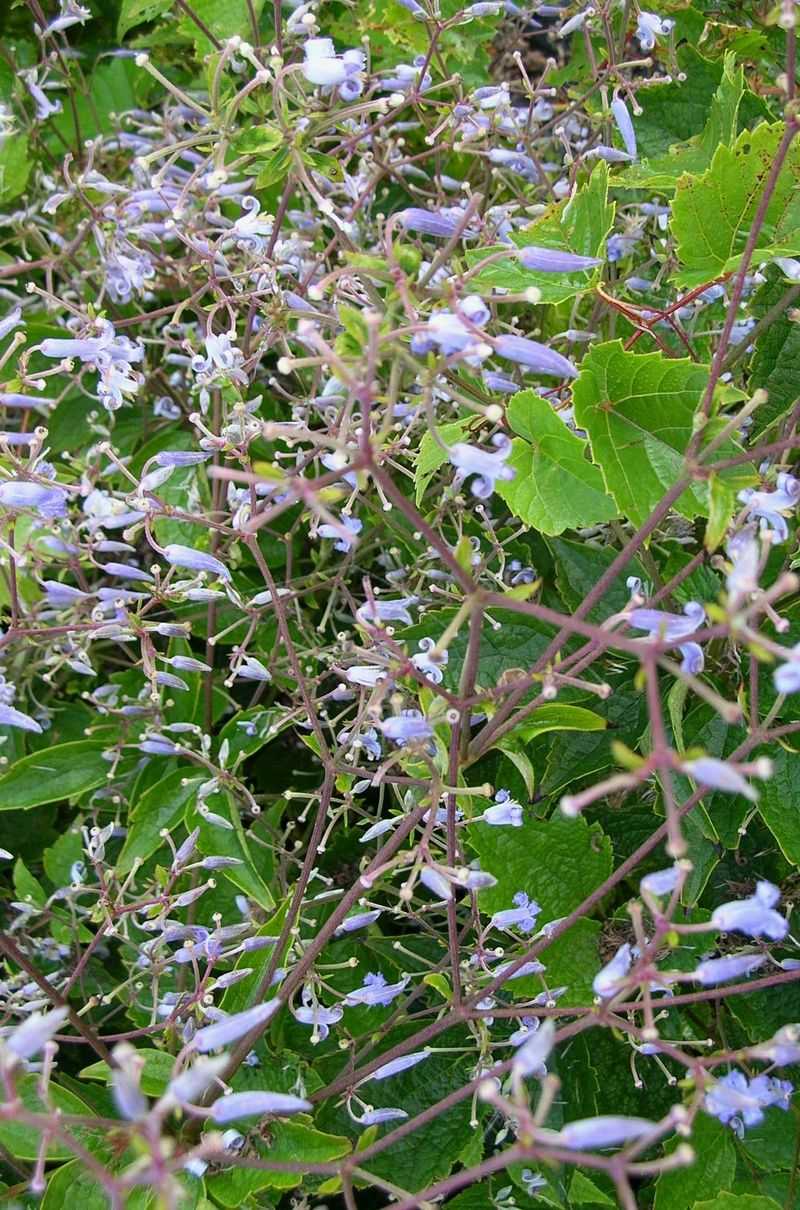
Rather than climbing, this Japanese species stands up like a loose shrub topped with pale blue tubular blooms. Erect Clematis fools people into thinking a non-climber must be safe, but it creeps and reseeds all the same.
Its roots widen the clump each year while seeds fill in the gaps between your other perennials. The soft stems flop outward, rooting where they land on bare soil.
Staking and an after-bloom trim keep it contained and upright. Dig the spreading edges back with a spade each spring. Removing faded flowers before seed drop cuts the volunteer problem down to almost nothing.
21. Solitary Clematis (Clematis integrifolia)
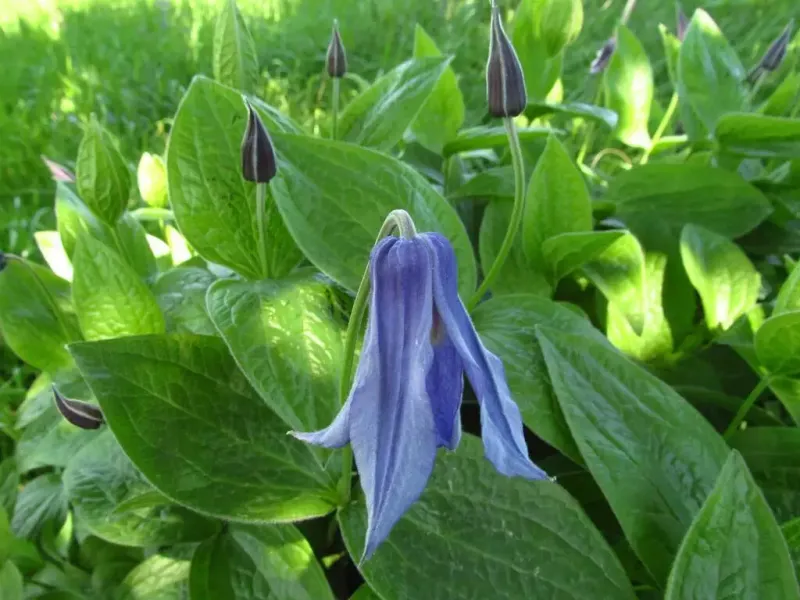
Low and non-climbing, this one produces single nodding bells in blue or violet on stems that lean and sprawl. Solitary Clematis sounds modest, yet it steadily expands its clump and seeds into open ground.
From central Europe and Asia, it settles into borders and slowly pushes past its planned spot. The flopping stems root at contact points, creeping the plant sideways.
Cutting it back after bloom keeps it neat and blocks most seed set. Divide the clump every few years to hold its size. A short support ring stops the sprawl and makes the whole plant tidier to manage.
22. Tube Clematis (Clematis heracleifolia var. davidiana)
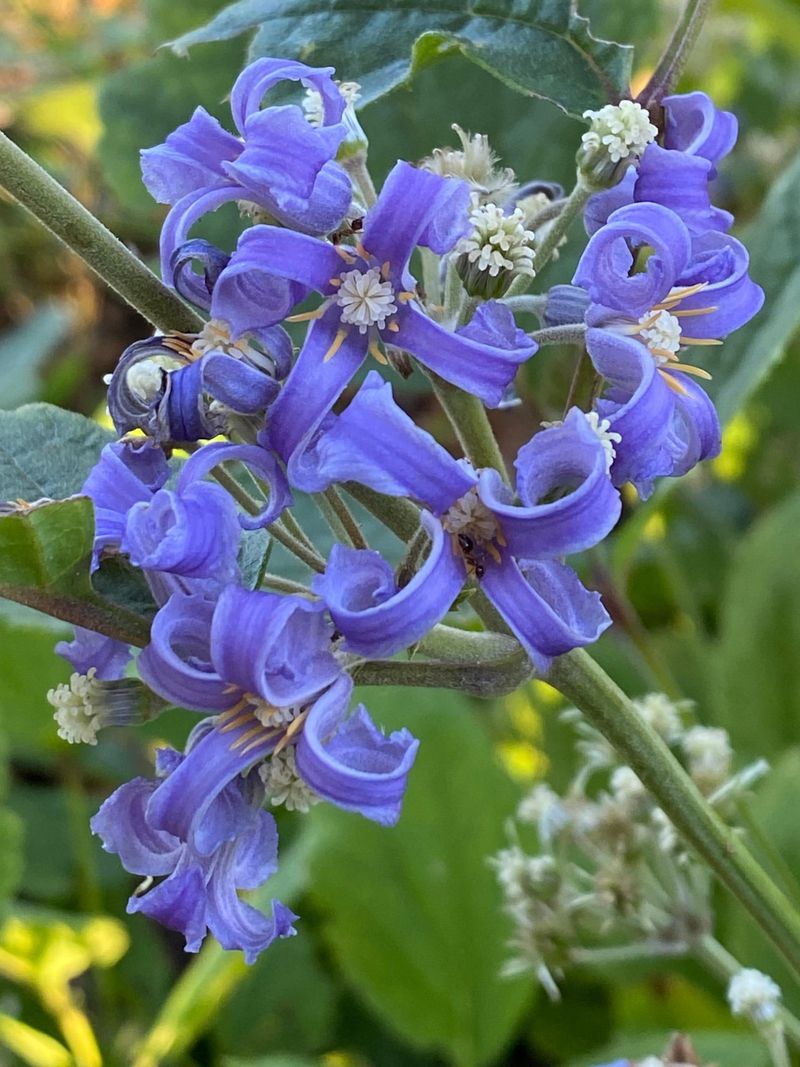
Clusters of hyacinth-scented blue flowers wrap this shrubby variety in sweet perfume come late summer. The davidiana form spreads by tough, expanding roots that quietly swallow border space.
Popular for its fragrance, it lulls gardeners while its clump doubles and its seedlings scatter nearby. The heavy stems lean and smother lower plants under their weight.
Keep it in bounds by dividing every two or three years and trimming spent flowers before seeds mature. Cut the whole plant near the ground in late winter for fresh, controlled regrowth. Edge the clump with a spade each spring to redraw its boundaries.
23. Fern-Leaf Clematis (Clematis cirrhosa)
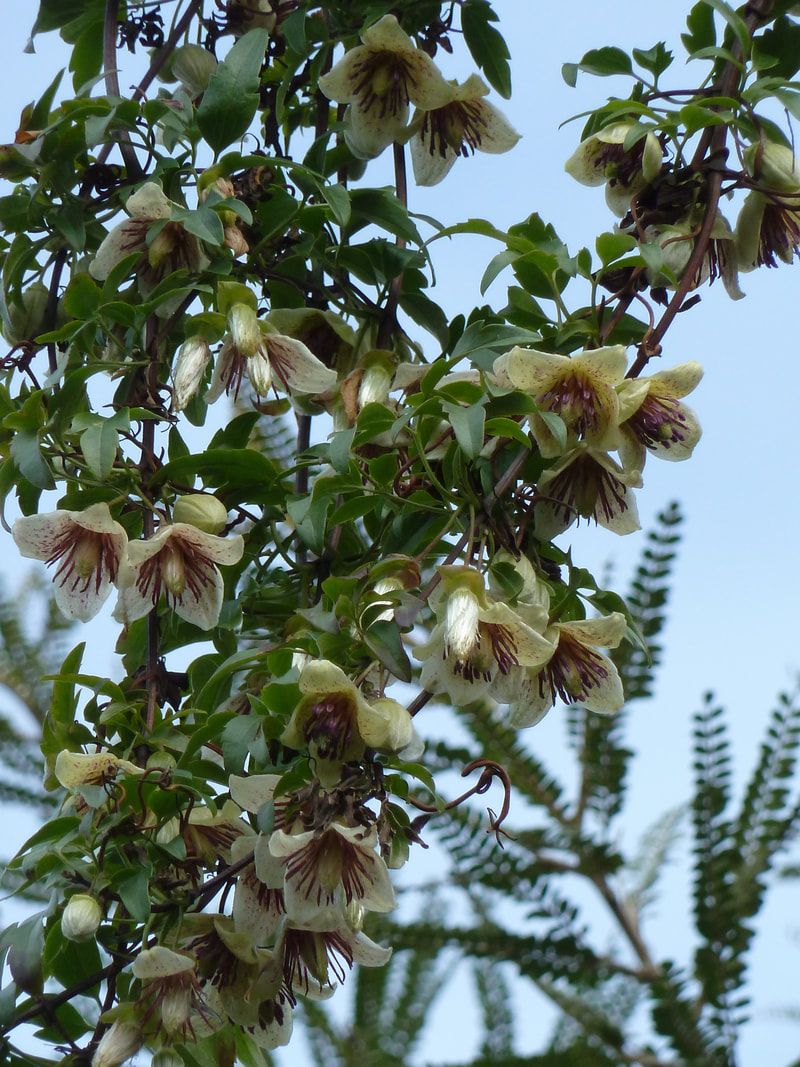
Winter-flowering and evergreen, this Mediterranean vine dangles creamy freckled bells when little else is blooming. Fern-Leaf Clematis earns love for that off-season color and then repays it by rambling hard in mild US zones.
Along the West Coast and Deep South it stays green year-round and grows almost nonstop. The evergreen tangle gets dense enough to hide, and eventually damage, whatever holds it up.
Prune it right after the winter-to-spring bloom finishes, thinning old stems to open the plant up. Give it a strong frame and keep it clear of gutters and eaves. Watch for stems rooting where they touch soil, and snip those before they anchor.
24. Rock Clematis (Clematis columbiana)
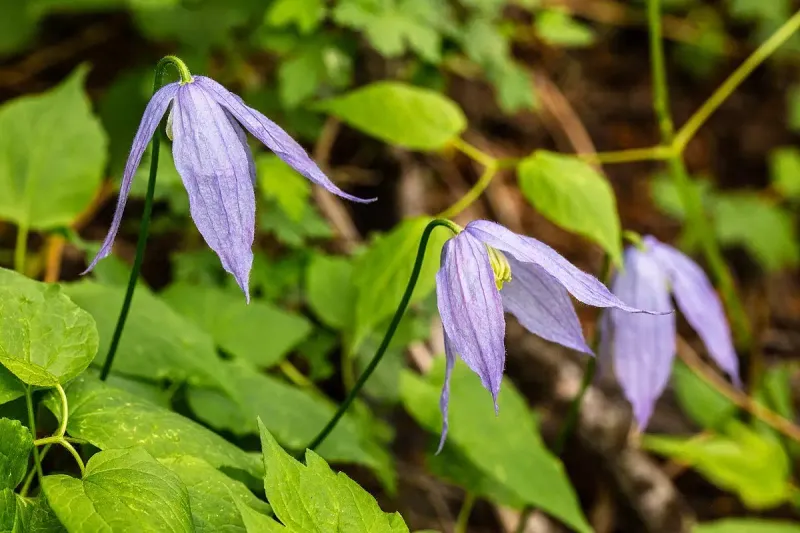
Tucked into the mountain West, this native scrambler bears delicate blue-purple bells and thrives on rocky slopes. Rock Clematis behaves in the wild but can wander when pampered in a home landscape.
Native across the western states, it appreciates good drainage and self-sows into gravel and disturbed soil with ease. The thin stems weave into shrubs and low fences quickly.
Since it belongs to the region, aim for polite control rather than removal. Clip seed heads before they blow around, and thin the stems after flowering. Planting it in a rockery where it can be watched keeps a native asset from becoming a nuisance.
25. Ligusticifolia Clematis (Clematis ligusticifolia)
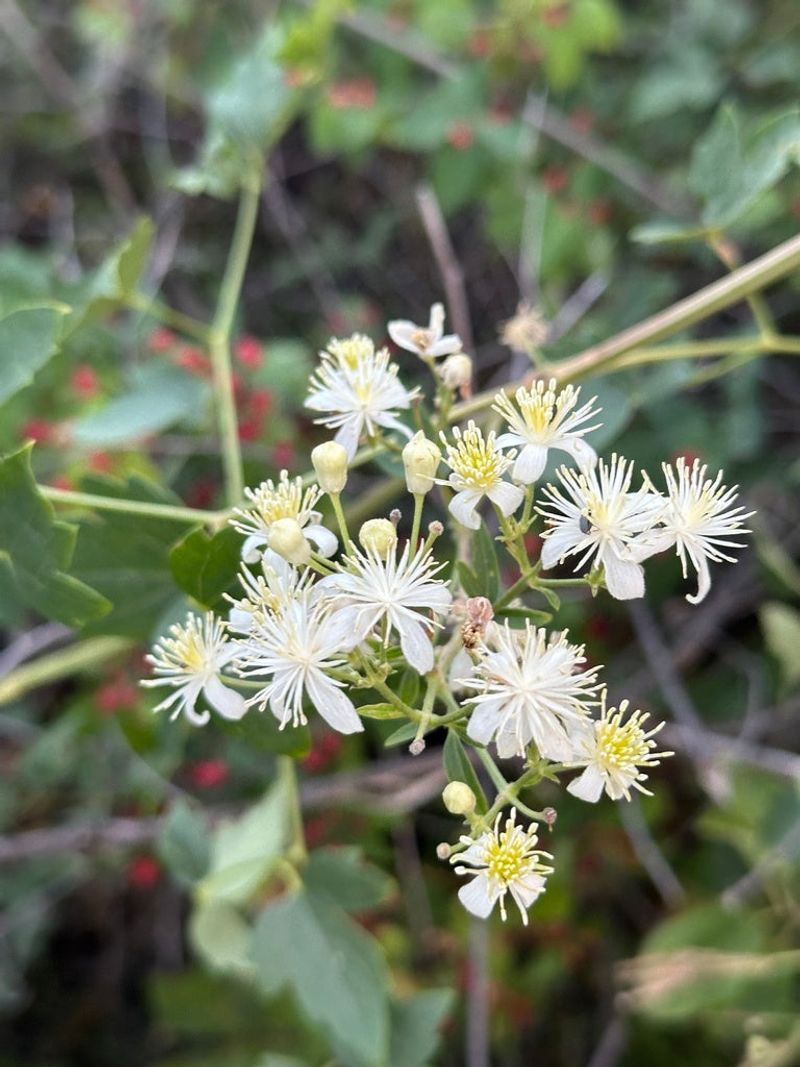
Known out West as Western Virgin’s Bower, this native throws up frothy white flowers and then endless silky seed. Ligusticifolia Clematis is one of the most vigorous native climbers in the western US.
Found along rivers and irrigation ditches, it races up cottonwoods and fences wherever there is moisture. Its seed production rivals any of the imported troublemakers on this list.
Cut seed heads before they ripen if you want to slow the spread, and thin the stems each dormant season. Being native, it feeds wildlife, so a managed patch along a back fence works well. Just keep it away from young trees you actually want to keep.
26. Pitcher’s Clematis (Clematis pitcheri)
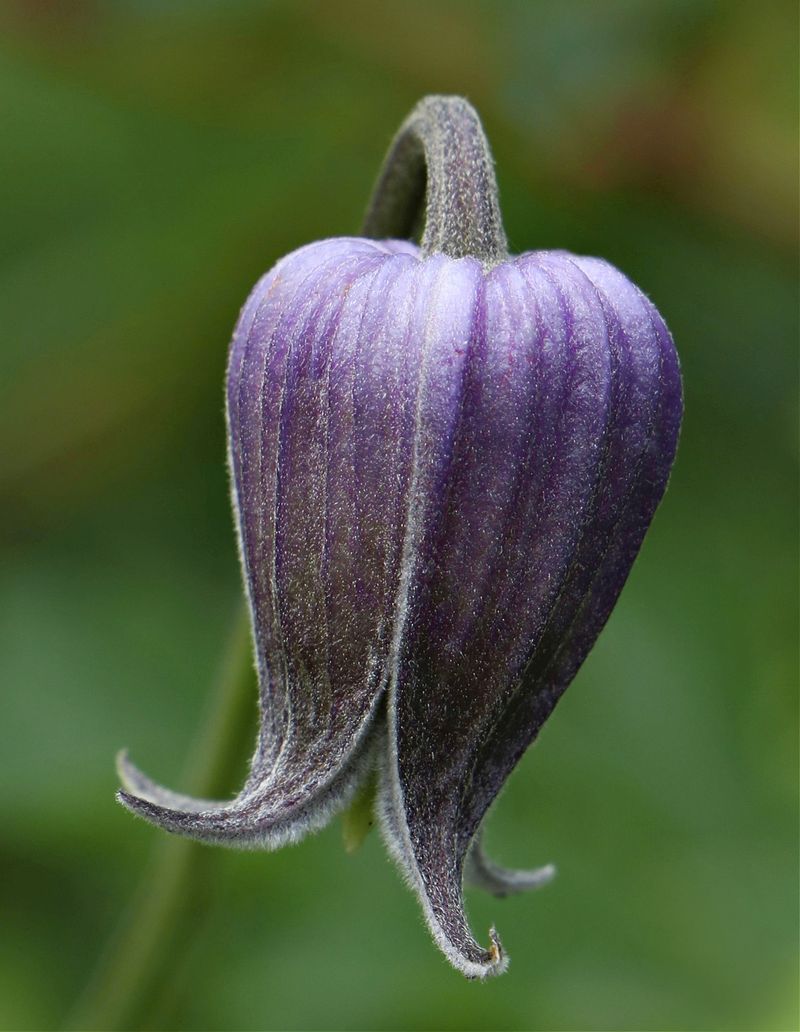
Small urn-shaped flowers in dusky purple give this native climber a quiet, almost secretive charm. Pitcher’s Clematis is well behaved in the wild, yet in a rich garden bed it reseeds and clambers more than you might guess.
Ranging across the central US, it scrambles over fences and low shrubs and self-sows into open soil. The leathery flowers turn into seed heads that spread nearby if left in place.
Removing spent blooms before seed set keeps the volunteers in check. Give it a support of its own and thin the stems each spring. Because it is a regional native, a controlled patch adds pollinator value without taking over the whole garden.
Managing any pushy clematis really comes down to three habits: prune on schedule, cut seed heads before they fly, and pull volunteers while they are young. Do those, and even the boldest vines earn their place on your fence instead of ruling your entire yard.