
The Cucumber Watering Mistake That Turns Your Fruit Bitter – And How To Get Sweeter Ones
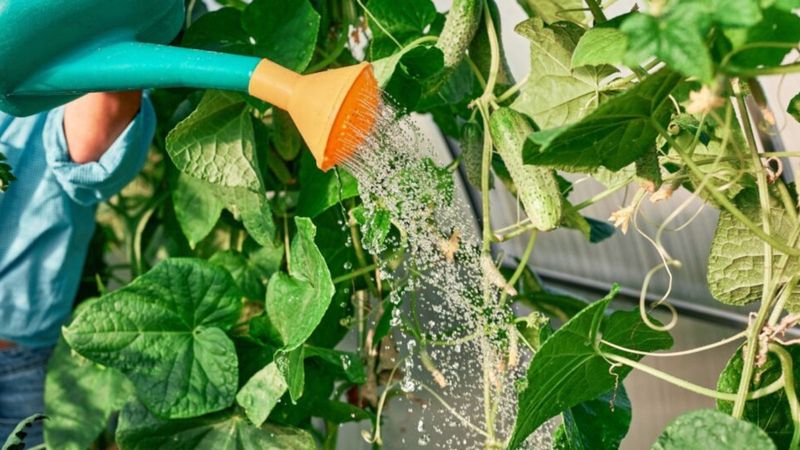
Biting into a cucumber you grew yourself, only to get a mouthful of something that tastes like a bitter pill, is one of the most frustrating surprises in the backyard garden. That sharpness is not random bad luck, and it does not mean you chose the wrong variety. Water stress is one of several things that can push cucumber plants to produce more of the bitter compounds inside their fruit, and understanding how that works puts you back in control. Getting a handle on your watering habits, along with a few other growing conditions, can meaningfully reduce the chances of bitter cucumbers in your next harvest.
What makes a cucumber bitter—and why watering matters
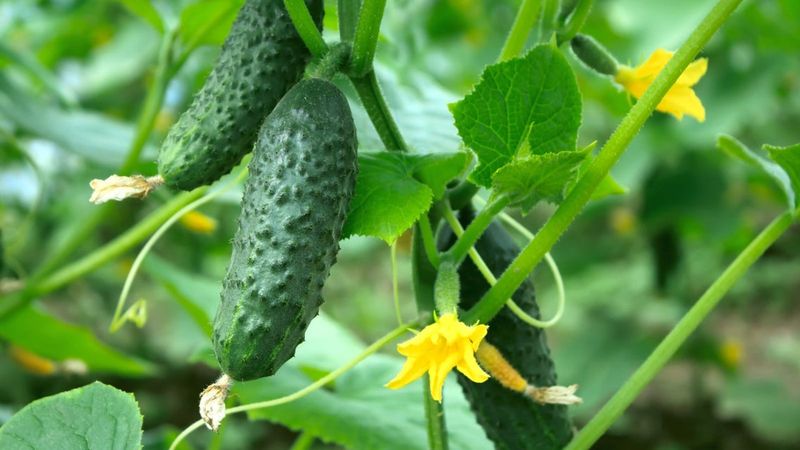
Cucumbers produce a group of chemical compounds called cucurbitacins, and those compounds are what make a fruit taste bitter. Every cucumber plant carries the genetic instructions for making cucurbitacins, but how much actually ends up in the fruit depends on a combination of genetics and growing conditions. Published research on cucurbitacin biosynthesis confirms that environmental stressors can activate or amplify the pathways that produce these compounds, which is why two plants of different varieties growing side by side in the same stressed bed can end up with noticeably different levels of bitterness.
Drought, uneven watering, high temperatures, and wide temperature swings are among the conditions most commonly associated with elevated cucurbitacin levels. That does not mean one missed watering session is guaranteed to ruin your harvest. The concern is cumulative or recurring stress, the kind that happens when soil repeatedly dries out completely between waterings, or when the root zone swings from bone dry to waterlogged over and over across several weeks.
Variety matters too. Some cultivars are bred to produce far less cucurbitacin than standard types, and those plants tend to stay milder even under moderate stress. But no cultivar is completely immune to environmental pressure, so variety selection and watering practices work best together rather than as substitutes for each other.
Keeping root-zone moisture reasonably consistent is the main practical step you can take to reduce stress-related bitterness. Utah State University Extension guidance on cucumbers links steady, adequate moisture to better fruit quality. That consistency will not guarantee sweet fruit every time, because heat, genetics, and other stressors can still play a role, but it removes one of the most controllable triggers from the equation.
Protect moisture during flowering through ripening
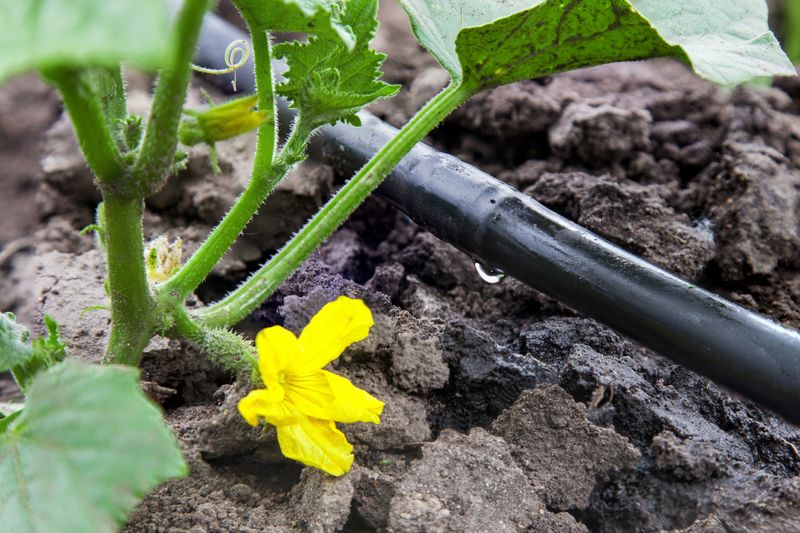
Once your cucumber plants start flowering, the stakes for consistent watering go up noticeably. Flowering, fruit set, fruit sizing, and ripening are the stages when the plant is directing the most energy toward the developing cucumbers, and moisture shortages during any of those windows can affect fruit quality and flavor. Utah State University’s cucurbit irrigation guidance specifically identifies these production stages as the periods when water stress is most likely to reduce quality.
A practical way to think about it: before flowering, a cucumber plant that dries out a bit will likely recover without much lasting impact on flavor. After flowers appear and fruit begins to form, that same dryness carries more risk. Paying closer attention to soil moisture from the moment you see the first flowers is a straightforward habit that can make a real difference by harvest time.
That does not translate into watering on a rigid daily calendar. The goal is to keep the root zone from going dry, not to follow a fixed schedule regardless of what the weather or the soil is telling you. A cool, overcast week after a decent rain might mean your plants need very little from you. A hot, breezy stretch can drain soil moisture quickly, and those are the days when checking the root zone matters most.
Press a finger or a small trowel two to three inches into the soil near the plant’s base. If it feels dry at that depth, water thoroughly. If it still feels slightly damp, you can usually wait another day and check again. That simple soil check, done regularly once fruit production begins, is more reliable than any calendar rule.
Water deeply without creating soggy soil
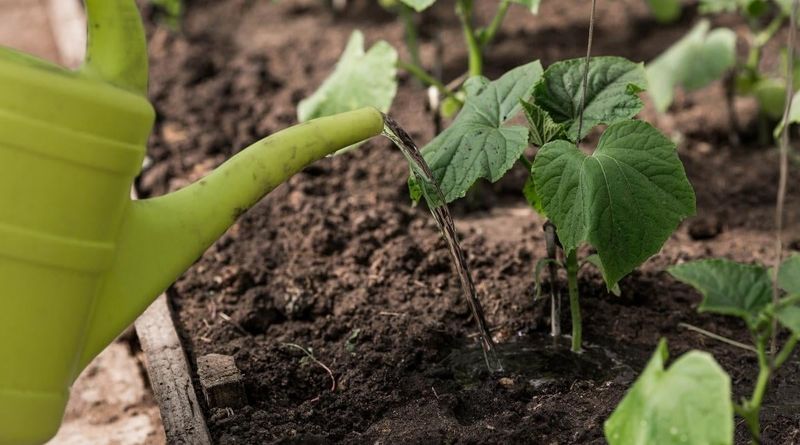
Thorough, deep watering beats frequent shallow watering almost every time for cucumbers. When you wet only the top inch or two of soil, roots stay near the surface where they are exposed to faster drying and more temperature swings. Watering deeply encourages roots to grow further into the soil, where moisture is more stable and temperatures are more moderate.
A starting range of about 1 to 2 inches of water per week is a reasonable benchmark, but treat it as a flexible guideline rather than a firm rule. University of Minnesota Extension’s vegetable irrigation strategies make clear that actual water needs shift with soil texture, plant size, air temperature, wind, and the stage of growth. Sandy soil drains quickly and may need more frequent irrigation than clay-heavy soil that holds moisture longer. A large, leafy plant on a 95-degree day needs more water than a small seedling on a mild afternoon.
The practical method is to water until moisture has moved several inches into the root zone, then wait until the top two to three inches begin to dry before watering again. Avoid the habit of giving plants a light sprinkle every day, which can lead to shallow roots and uneven moisture in the deeper zone where most root activity happens.
Overwatering carries its own problems, and those are worth knowing. USU’s cucurbit irrigation resource notes that excess water can contribute to root problems, fruit cracking, and belly rot. The target is consistent, adequate moisture throughout the root zone, not constantly saturated soil. Letting the surface dry slightly between waterings is fine and actually helps signal to you when it is time to water again.
Adjust the routine for beds, soil, and containers
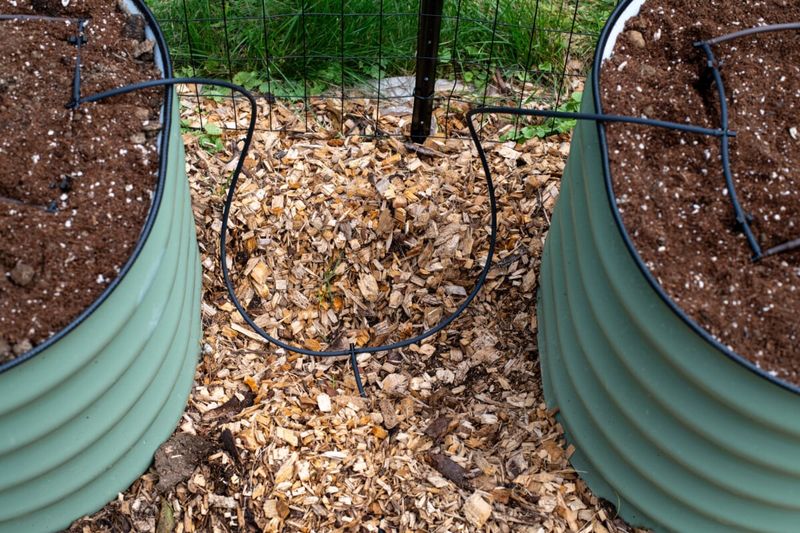
Where you are growing cucumbers changes how often you need to water, sometimes dramatically. In-ground beds with loamy or clay-leaning soil hold moisture longer than raised beds filled with lighter mixes, and raised beds in turn hold more than containers. A cucumber in a five-gallon pot on a sunny patio can dry out completely in a single hot afternoon, while the same plant in a shaded in-ground bed might go two or three days between waterings without stress.
University of Minnesota Extension’s guidance on container plants notes that containers may need daily attention or even more frequent watering during hot, dry weather, and that gardeners should avoid both prolonged dryness and waterlogged potting mix. Check containers by pressing a finger into the mix at least an inch or two deep. If it feels dry there, water thoroughly until it drains from the bottom.
Sandy soil in any setting drains faster than heavier soil, so gardens with sandy ground often need more frequent checks during warm stretches. Wind speeds up evaporation from both leaves and soil surfaces, adding another variable that can catch gardeners off guard during breezy summer days. Larger, leafier plants also pull more water from the soil than younger ones, so needs increase as the season progresses.
Organic mulch is one of the most effective tools for stabilizing soil moisture between waterings. University of Minnesota Extension’s mulching guidance recommends applying organic mulch about 2 to 4 inches deep while keeping it a few inches away from plant stems to avoid rot. Straw, shredded leaves, or wood chips all work well. A good mulch layer slows evaporation, moderates soil temperature, and reduces the dramatic wet-dry swings that can trigger stress in cucumber plants during peak summer heat.
Choose an irrigation method that supports the root zone
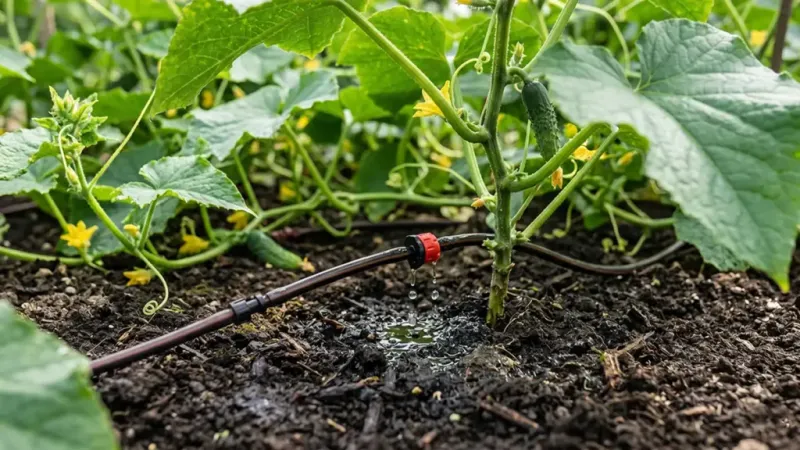
Getting water to the right place matters as much as how much you apply. Drip irrigation and soaker hoses deliver water slowly and directly to the root zone, which is exactly where cucumber plants need it. Because the water goes into the soil rather than onto the leaves, foliage stays drier, and that drier canopy is less hospitable to the fungal diseases that thrive on wet leaf surfaces.
University of Minnesota Extension’s guidance on managing plant diseases recommends drip or soaker irrigation over overhead watering specifically because keeping foliage dry helps reduce disease pressure in the home garden. Fungal problems like powdery mildew and downy mildew can weaken cucumber plants and affect overall plant health, so reducing leaf wetness is a practical benefit beyond just water efficiency.
If overhead watering with a hose or sprinkler is your only option, timing helps. Watering in the early morning gives leaves several hours to dry before nighttime temperatures drop and moisture tends to linger. Evening watering leaves wet foliage through the night, which increases disease risk. Early morning watering also means less evaporation loss compared to watering in the heat of the afternoon.
No irrigation method on its own prevents cucumber bitterness. Drip lines and soaker hoses make it easier to deliver consistent moisture to the root zone, but if the plant is under heat stress, nutritional stress, or genetic pressure to produce cucurbitacins, the delivery method alone will not override those factors. Think of irrigation method as one piece of a broader approach to keeping plants comfortable rather than a single solution.
Separate watering stress from other explanations
A cucumber plant that is getting regular, deep waterings can still produce bitter fruit. Heat is a separate stressor from drought, and a well-watered plant on a stretch of 95-degree days can still experience enough heat stress to push cucurbitacin levels higher. Wide swings between daytime and nighttime temperatures carry similar risks. These are not watering problems, and watering more will not fix them.
Cultivar genetics play a significant role as well. NC State’s cucurbit breeding research on bitterness explains that the genes controlling cucurbitacin production vary across cucumber varieties, which is why some types are far more prone to bitterness than others under similar growing conditions. Choosing low-bitterness cultivars such as Sweet Slice, Sweet Success, or Marketmore 76 can meaningfully reduce the problem. Those varieties still respond to severe stress, but they start from a lower baseline of cucurbitacin production.
Poor nutrition is another factor that can contribute to plant stress, though it should be approached carefully. Oregon State University Extension’s cucumber growing guide lists nutrition among the conditions that can affect fruit quality. If you suspect a nutrient issue, diagnose it carefully before adding fertilizer, because overfertilizing can damage roots and create new stress rather than relieve it.
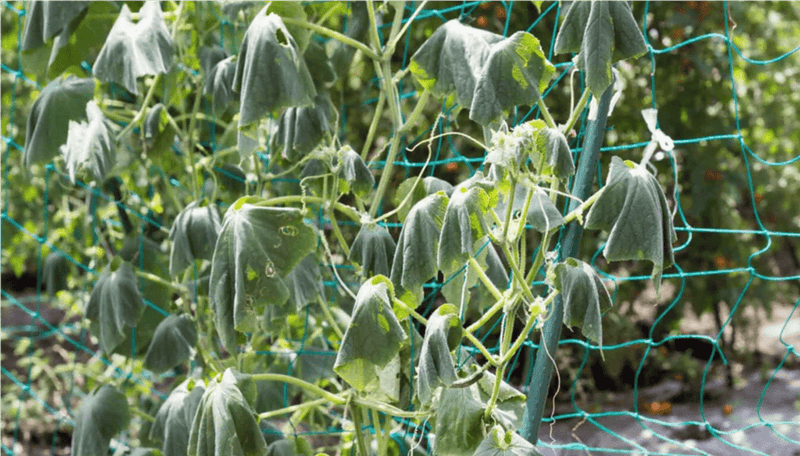
Wilting is worth a closer look before you assume the plants need more water. University of Minnesota Extension’s cucumber growing resource notes that cucumber beetles, bacterial wilt, spider mites, viruses, and fungal diseases can all cause wilting or leaf damage. If your plants wilt even when the soil feels adequately moist, inspect leaves and stems carefully for insects, lesions, or other signs of disease before adjusting your irrigation routine. Treating a pest or disease problem as a watering problem will not help the plant and may make things worse.
Harvest young and assess bitterness carefully
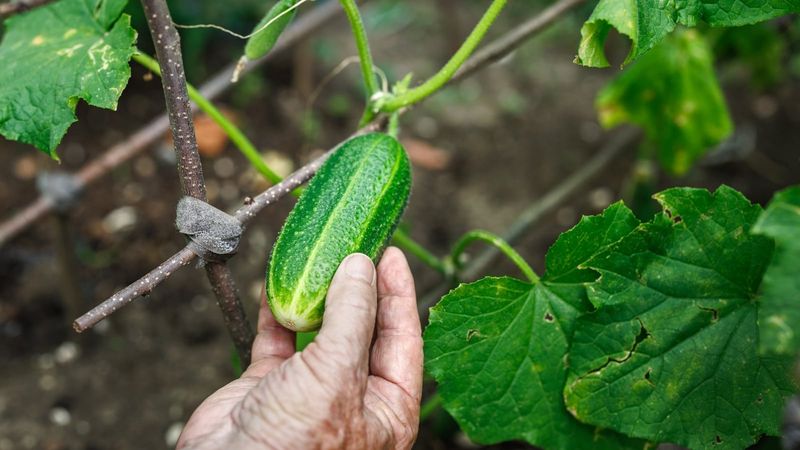
Picking cucumbers at the right stage is one of the simplest ways to improve flavor and keep the plant productive. Young cucumbers that are still firm and fully green, well before the skin starts to yellow or the seeds become hard, tend to be milder and crisper than fruit left on the vine too long. Oregon State University Extension’s cucumber guide specifically recommends harvesting regularly and while fruit is young, noting that frequent picking also encourages the plant to keep producing.
When you bite into a cucumber that tastes noticeably bitter, a few steps can help you get more out of it. Taste a small piece first to gauge how strong the bitterness is. Bitterness tends to concentrate near the skin and toward one end of the fruit, though extension sources differ on whether the stem end or the blossom end is more commonly affected. Because of that variation, the safest approach is to peel the cucumber deeply and trim both ends, then taste again before eating or serving it.
If the bitterness is mild and the cucumber is otherwise in good shape, removing the skin and trimming the ends often improves the flavor enough to make it enjoyable. If the bitterness is sharp and unpleasant even after trimming and peeling, discard the fruit rather than trying to salvage it. Oregon State Extension’s guidance on cucurbit safety notes that very high cucurbitacin levels have been associated with gastrointestinal illness, so exceptionally bitter cucurbit fruit should not be eaten.
Pickling is sometimes suggested as a way to deal with bitter cucumbers, but it does not neutralize dangerous levels of bitterness and should not be treated as a safety workaround for fruit that is extremely bitter. When in doubt, compost it and focus on the next flush of fruit from a less stressed plant.
Build a consistent routine for better future harvests
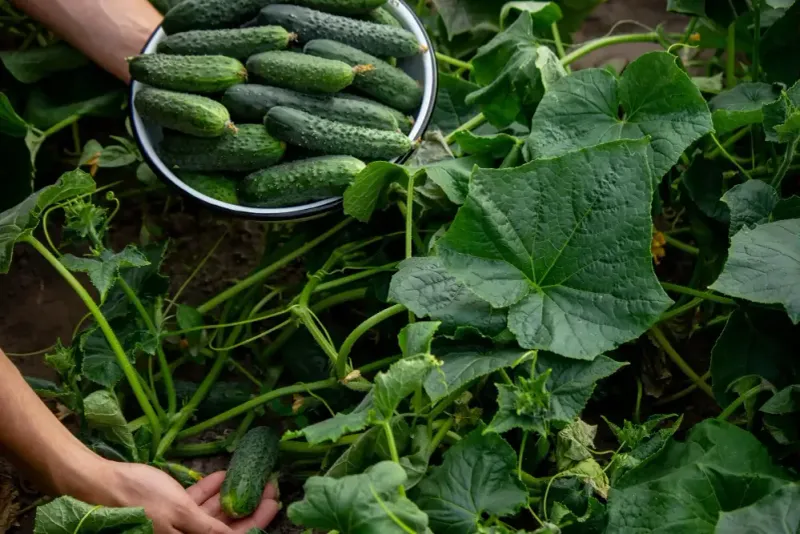
The most reliable path to better cucumbers is a repeatable routine rather than a single fix. Check soil moisture at root depth every day or two once flowering begins, water deeply when the top few inches feel dry, and let the soil surface dry slightly between sessions. Mulch the bed to slow evaporation and buffer temperature swings. USU’s cucurbit irrigation guidance reinforces that steady root-zone moisture across the whole growing season, especially during fruit production, is the core of good cucumber care.
When your watering is already consistent and bitterness persists, shift your attention to the other variables. Check whether the variety you planted is prone to bitterness, look for signs of heat stress or temperature swings, inspect leaves and stems for pests or disease symptoms, and consider whether soil nutrition has been addressed. Each of those factors can contribute independently of irrigation.
A run of bitter cucumbers does not mean the plant is permanently damaged. Oregon State Extension notes that if growing conditions improve, later fruit on the same plant may be less bitter, though fruit already on the vine will not change after the fact. The best harvest is almost always the next one, grown with a little more information than you had before.