
9 Petunia Mistakes That Are Quietly Costing You A Whole Season Of Blooms
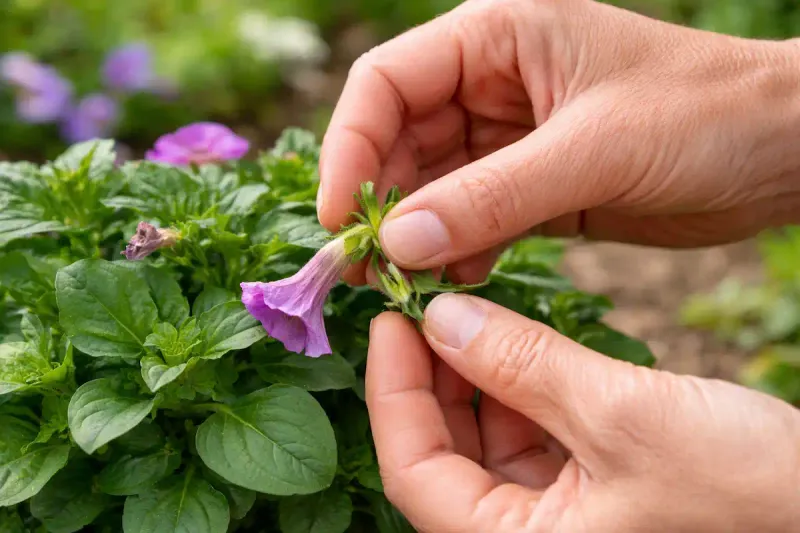
Petunias are one of the most rewarding flowers you can grow, but even experienced gardeners sometimes watch their plants slow down, stretch out, and stop producing the color they expected. The good news is that many of the reasons petunias underperform come down to specific, fixable conditions rather than bad luck. Working through a short checklist of possible causes, from light and drainage to pests and disease, gives you a real shot at turning a struggling plant around. Keep in mind that genetics, weather, transplant stress, and where you live can also shape how your petunias flower, even when your care routine is solid.
Start with the site: light sets bloom potential
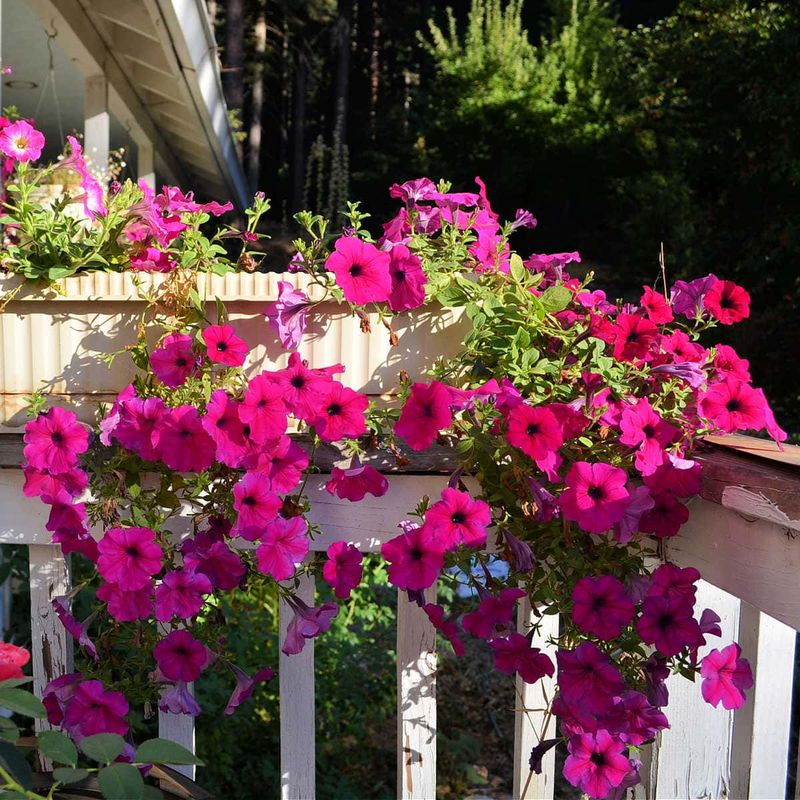
Sunlight is the first thing worth checking when petunias disappoint. University of Minnesota Extension guidance on growing petunias states that petunias generally need at least five to six hours of good sunlight and tend to flower more heavily when they receive full sun through most of the day. Plants placed in shadier spots often produce fewer flowers and longer, leggier stems as they reach toward available light.
Walk your planting site at different times of day and count the actual hours of direct sun the spot receives. Shadows from fences, trees, or neighboring structures shift through the season, so a location that seemed sunny in early spring may lose an hour or two of light by midsummer when surrounding foliage fills in. If your count consistently falls below five hours, that mismatch may be limiting your plants more than anything else you are doing.
A couple of caveats are worth keeping in mind. Newly transplanted petunias can benefit from a few days of partial shade while they recover from the stress of being moved, and extreme heat, wind, or drought can still push even well-sited plants into a temporary slump. Full sun is a strong general recommendation, not a guarantee of perfect flowering in every regional climate.
Adjusting your site or moving containers to a sunnier position is one of the more straightforward corrections available. If moving the plant is not practical, improving every other cultural factor, including drainage, moisture, and feeding, can help, but those changes cannot fully substitute for adequate light. Getting the site right from the start gives all your other care choices a better foundation to build on.
Give roots moisture without waterlogged soil
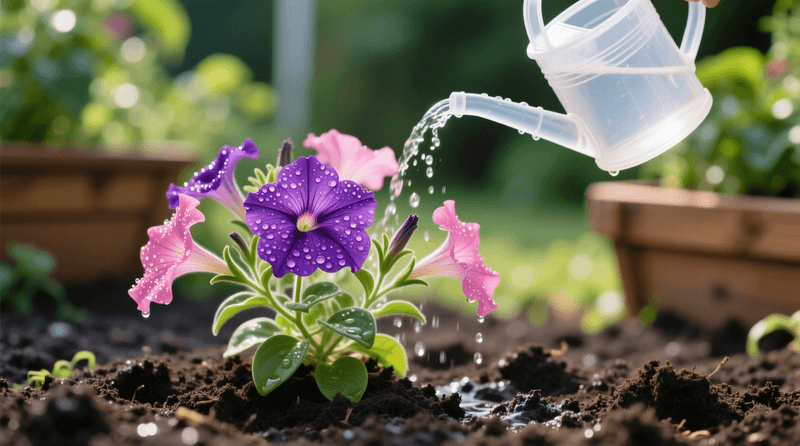
Drainage and watering are related but separate problems, and confusing them leads to the wrong fix. Illinois Extension’s petunia growing guide recommends moist but well-drained soil, and for good reason: heavy or waterlogged conditions can suppress growth and set the stage for root, stem, and crown rots that are difficult to reverse once established.
Saturated soil pushes oxygen out of the spaces around roots. When roots cannot access oxygen, they struggle to take up water and nutrients even though the soil feels wet. The result can look like drought stress: yellowing leaves, wilting, and stunted growth. Virginia Cooperative Extension’s guidance on container plant watering makes clear that these symptoms do not automatically mean the plant needs more water.
Before reaching for the hose, check whether the soil or growing medium is already saturated.
A simple drainage check for a garden bed involves digging a hole about a foot deep, filling it with water, and watching how quickly it drains. If water sits in the hole for several hours, the underlying soil structure may be restricting drainage. Mixing organic matter into heavy clay soil, building up the grade slightly, or switching to a raised bed with a quality growing medium are all practical ways to improve the situation.
For containers, check that drainage holes are open and not blocked by a saucer holding standing water. A container sitting in a puddle of its own runoff keeps the root zone wet long after watering, which creates the same oxygen-depleted conditions as poorly drained ground soil. Correcting drainage does not require starting over from scratch, but it does need to happen before watering frequency becomes a useful variable to adjust.
Water by checking the root zone, not the calendar
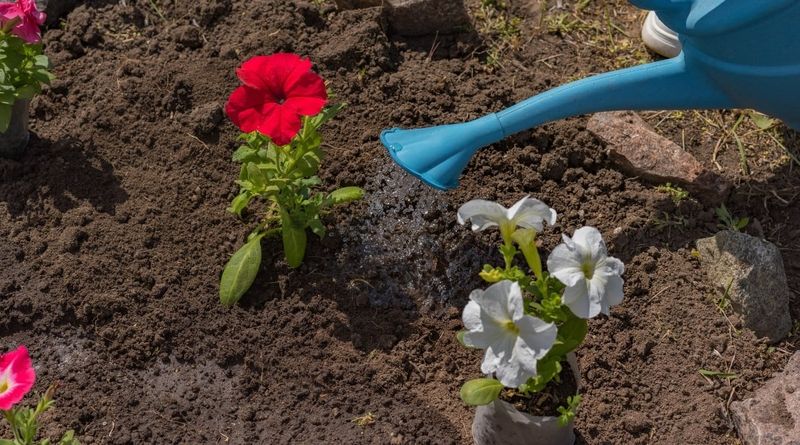
A fixed watering schedule feels tidy, but petunias in different situations dry out at very different rates. Garden beds, hanging baskets, and small containers each behave differently, and the same day’s weather can make one situation urgent while another needs nothing at all.
For petunias growing in garden beds, University of Minnesota Extension recommends watering deeply enough to wet the root zone rather than applying frequent, shallow sprinkles that only moisten the top inch or two. Shallow watering encourages roots to stay near the surface, where they are more vulnerable to heat and drying. Spreading petunia types tend to have higher water needs than upright forms, so they may require more frequent attention even in beds.
Containers present a different challenge entirely. UMN’s guidance on fertilizing and watering container plants notes that hanging baskets and small pots hold limited soil volume and can require daily watering or even more than once a day during hot, dry, or windy weather. The best approach is to check the growing medium by pressing a finger an inch or two into the mix before each watering session rather than following a preset interval.
Wilting is the symptom that confuses most gardeners. A plant that droops in the afternoon heat may simply be responding to high transpiration demand, and it often recovers on its own as temperatures drop in the evening. Before adding water, check the soil: if it feels moist an inch down, the plant is probably not underwatered. If it feels dry and the soil has pulled away from the container edges, water thoroughly and make sure the water drains freely from the bottom.
As Virginia Cooperative Extension explains, saturated media can cause the same wilting symptoms as drought, so distinguishing the two before acting protects roots from further damage.
Feed consistently, but do not force blooms with fertilizer
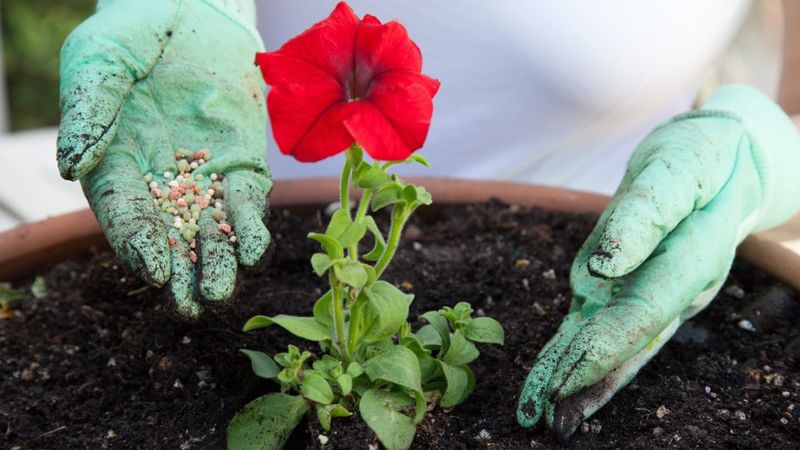
Petunias are reasonably hungry plants, especially when grown in containers where repeated watering washes nutrients out of the root zone faster than they can be replenished. University of Minnesota Extension recommends incorporating a timed-release fertilizer at planting and then supplementing with liquid fertilizer during the growing season, following the product label for rates and timing. Spreading petunia types, which grow quickly and cover a lot of ground, may need more frequent feeding than upright forms.
The other side of the feeding problem gets less attention but causes real damage. Excess fertilizer can build up as salts in the growing medium, injure roots, and produce the kind of leaf-margin burn that looks like a disease problem at first glance. UMN’s container plant guidance stresses label-directed applications and cautions against overfertilization, noting that it can cause salt buildup and root damage.
High-phosphorus “bloom booster” fertilizers are often marketed as a quick fix for flowering problems, but Extension guidance does not support using them as a universal solution. Starting with a balanced, all-purpose fertilizer and adjusting based on how the plant responds is a more reliable approach. If yellowing or poor growth persists despite consistent feeding, a soil test can identify whether a specific nutrient is actually short before you add more of anything.
The practical takeaway is consistency rather than intensity. A plant that receives steady, appropriate nutrition throughout the season is better positioned to flower well than one that gets occasional heavy doses separated by long gaps. Feed regularly, follow the label, and treat fertilizer as one part of a balanced care routine rather than a lever for forcing flowers on demand.
Deadhead according to the petunia’s type
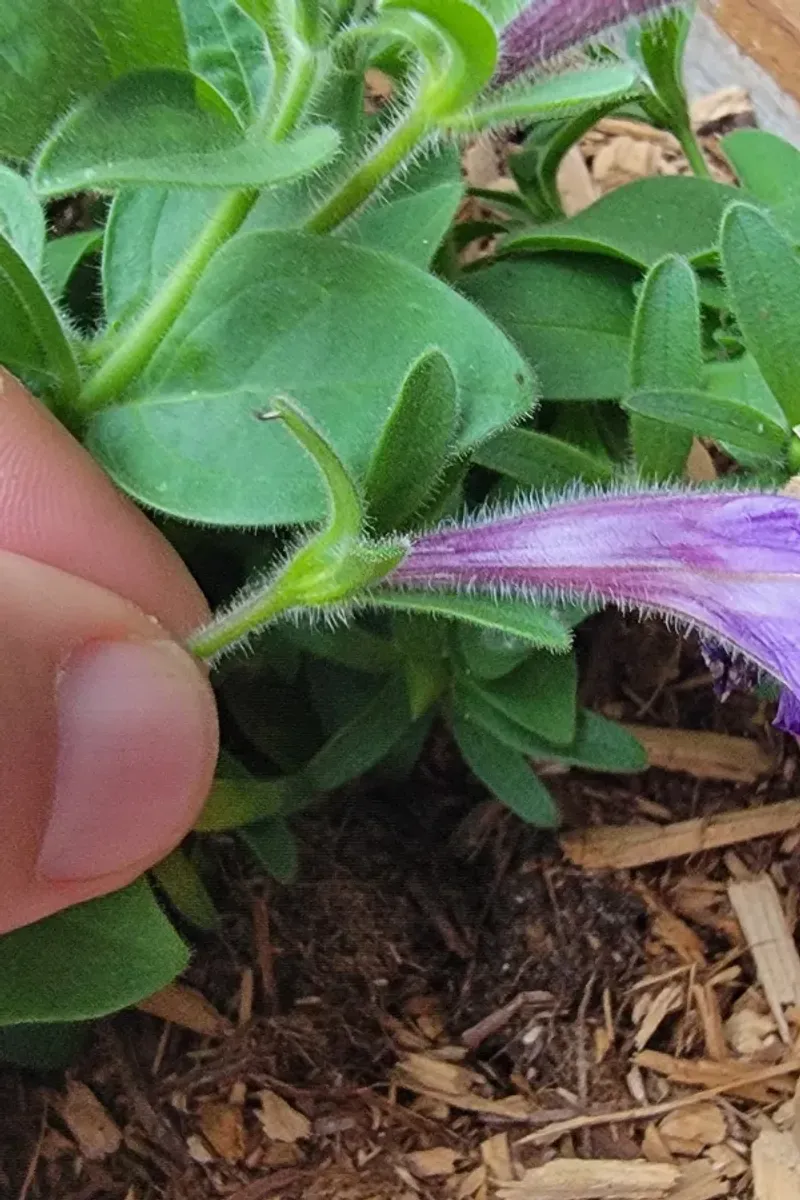
Spent flowers left on certain petunia types redirect the plant’s energy toward making seeds rather than producing new blooms. Removing those faded flowers, along with the stalk or seed-forming structure beneath them rather than just the petals, can help keep the plant flowering longer. University of Minnesota Extension specifically identifies this technique as beneficial for older grandiflora and double petunia types and for plants in container displays where appearance and continued flowering matter most.
The important qualifier is that not all petunias need this treatment. University of Wisconsin-Madison Extension’s petunia reference notes that some modern spreading and milliflora cultivars are self-cleaning, meaning they shed their spent flowers on their own and continue producing new buds without intervention. Deadheading these types regularly is not harmful, but it is also not necessary. Illinois Extension’s container garden maintenance guidance reinforces this point, advising gardeners to check plant tags or cultivar descriptions before making deadheading a fixed part of their routine.
If you are unsure which type you have, look at the plant tag from when you purchased it or search the cultivar name online. Grandiflora petunias, which have large single or double flowers, and older heirloom types tend to benefit most from regular deadheading. Wave and Supertunia series, along with most milliflora varieties, are generally bred to keep going on their own.
Deadheading is a useful grooming habit for the right plants, but a declining petunia that is otherwise well-sited, properly watered, and adequately fed may not be struggling because of missed deadheading. Treat it as one diagnostic check rather than the automatic answer to any bloom problem.
Prune leggy growth with a cultivar-aware plan
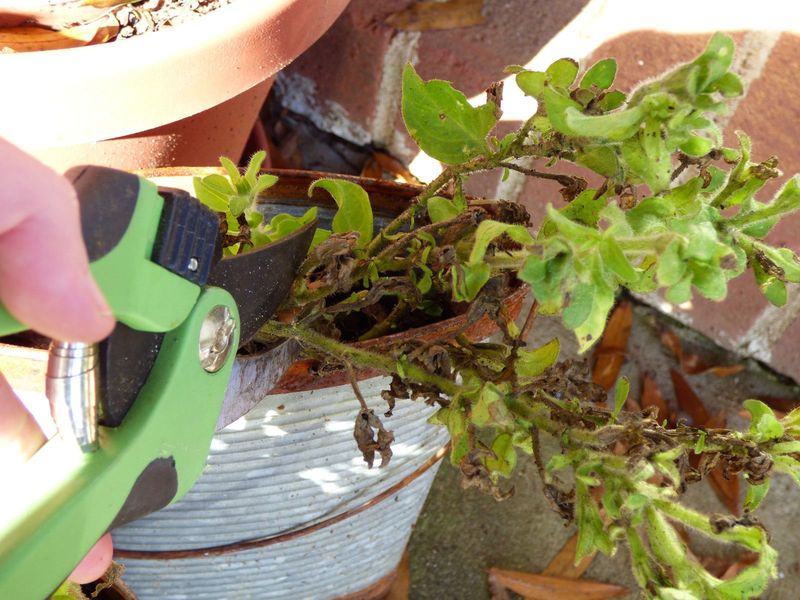
Petunias that have grown tall, floppy, or sparse through midsummer are not necessarily failing; they may just need a reset. Pinching or shearing can encourage new branching and restore a fuller, more compact shape, but how aggressively you cut and when you do it should depend on the type of petunia you are growing.
University of Minnesota Extension specifically cautions against pinching milliflora and spreading types at planting, noting that these cultivars are bred to branch on their own and may be set back rather than helped by early pinching. For upright and grandiflora types that have become leggy by late June or July, cutting stems back by roughly a third to a half can stimulate new growth and fresh flower buds, though the plant will look sparse for a week or two while it recovers.
University of Wisconsin-Madison Extension reinforces that petunia types differ substantially in their growth habits, which means a pruning approach that helps one variety may not suit another. Before cutting, identify whether you have a trailing, mounding, or upright form, and consider how far along the season is. Pruning in early to midsummer gives the plant time to regrow and rebloom before fall; a hard cut in late August may not leave enough season for a meaningful recovery in cooler climates.
Aggressive cutting also temporarily removes flowering tissue, so expect a brief pause in blooms after any significant trim. That pause is normal and usually short-lived on healthy plants. The goal is to match the severity of the cut to the plant’s actual condition and cultivar rather than treating pruning as a universal restart button that works the same way on every petunia.
Check whether the container has run out of root room
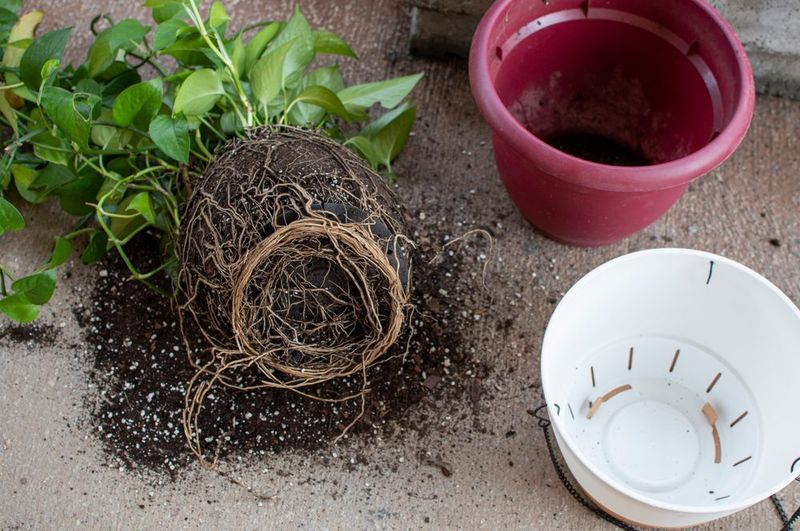
Root restriction is one of the quieter reasons a container petunia slows down. When roots have filled the available soil volume, the plant struggles to take up enough water and nutrients to support active flowering, even if you are watering and feeding on a reasonable schedule. The soil dries out faster than usual because there is less of it relative to the root mass, which can make the plant seem perpetually thirsty.
A few observable clues point toward a root-bound situation. Roots emerging from the drainage holes or visibly circling the bottom of the pot when you tip it out are the clearest signs. Smaller-than-normal new leaves, wilting that appears sooner than expected after watering, and a soil mass that feels dense and holds very little water are also worth noting. Illinois Extension’s repotting guidance describes these as the practical indicators that a plant has outgrown its container.
The fix is to move the plant into a container that is somewhat larger than the current one, using fresh potting mix to fill the extra space. A dramatic jump in pot size is not necessary and can actually slow recovery by leaving too much unamended soil around the roots. An increase of one to two inches in diameter is usually enough to give the root system room to expand without overwhelming it.
Separating root restriction from a simple watering need requires a quick check. If the soil still feels moist but the plant is wilting, and if the drainage holes show roots, root restriction is the more likely explanation. More frequent watering into a root-bound container without repotting just delays the problem rather than solving it.
Use poor flowering as a prompt to inspect for pests
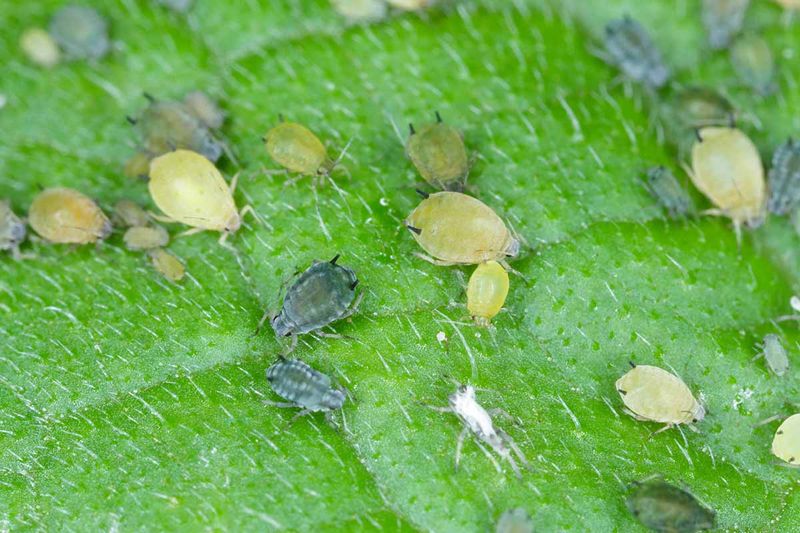
Declining blooms on their own are not a reliable sign that pests are present. Poor flowering can reflect nutrition problems, environmental stress, disease, root restriction, or a combination of factors, and jumping to a pest treatment without looking first is likely to miss the actual cause. That said, fewer flowers than expected is a reasonable reason to take a close look at the plant before assuming the problem lies elsewhere.
Documented petunia pests include aphids, spider mites, thrips, and caterpillars. UF/IFAS Gardening Solutions identifies thrips as a pest of particular concern on petunias because they feed on buds and flowers and can transmit plant viruses while doing so. Aphids tend to cluster at growing tips and on new foliage, while spider mites leave fine webbing on the undersides of leaves. Caterpillars chew visible holes in petals and leaves.
Check the undersides of leaves, growing tips, buds, and open flowers rather than only looking at the plant from above.
Integrated pest management calls for identifying the pest before choosing any response. Penn State Extension’s guidance on diagnosing crop disorders emphasizes that symptom patterns matter: a problem affecting only new growth points to a different cause than one affecting older leaves or the whole plant uniformly. Once you have identified what is actually present, monitor whether the population is growing, consider whether physical removal or cultural adjustments are enough, and reach for a labeled treatment only when the infestation warrants it.
Choosing a pesticide requires reading the label carefully for the specific pest, plant, and application site. Never apply a product just because flowering has declined without confirming a pest is actually there and present in numbers that justify treatment.
Recognize when disease changes the recovery plan
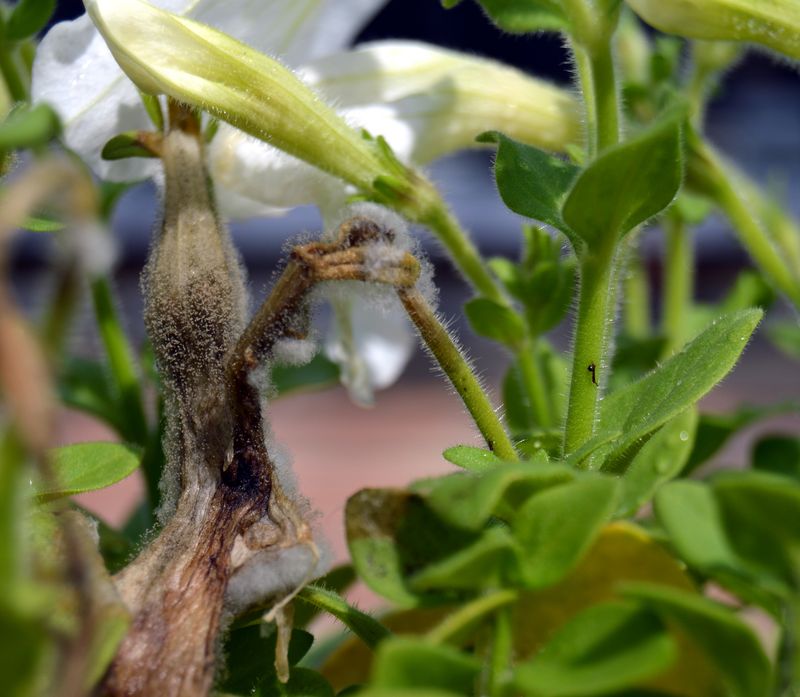
When cultural adjustments do not explain a petunia’s decline, disease may be reshaping what recovery looks like. Two categories of disease show up regularly in petunias and call for different responses.
Botrytis, a gray mold, tends to attack flowers and foliage during periods of high humidity, cool temperatures, and poor air circulation. It appears as grayish, fuzzy growth on petals and stems and spreads quickly through wet, crowded plantings. Penn State Extension’s petunia disease guide recommends removing affected tissue promptly, improving air circulation around plants, and avoiding prolonged leaf wetness from overhead irrigation or crowded spacing. Root and crown rots, often associated with Phytophthora and related pathogens, cause rapid wilting or plant collapse and are directly connected to poor drainage.
Correcting drainage and removing severely infected plants are the practical responses when rot is suspected.
Viruses present a different situation entirely. Thrips can transmit impatiens necrotic spot virus and other viruses to petunias while feeding, and the resulting symptoms, which may include distorted growth, color breaking, and unusual leaf patterns, can look like nutrient problems or environmental stress. UC IPM’s overview of floriculture virus diseases is clear that pesticides do not cure viral infections. Affected plants may need to be removed and discarded rather than treated, to reduce the risk of spread to nearby plants.
Accurate diagnosis matters before any response. As Penn State Extension’s pattern-based diagnosis guidance explains, the distribution of symptoms across a planting, whether damage is random, uniform, or concentrated in one area, helps separate disease from cultural problems. A useful inspection sequence runs from light and drainage through moisture, nutrition, roots, pests, and finally disease, with genetics, weather, and transplant stress acknowledged as factors that can limit flowering even when everything else checks out. A petunia that flowers modestly despite sound care may simply be doing what its cultivar and climate allow.