
The One Simple Move That Wakes Up A Tired Geranium And Floods It With New Blooms
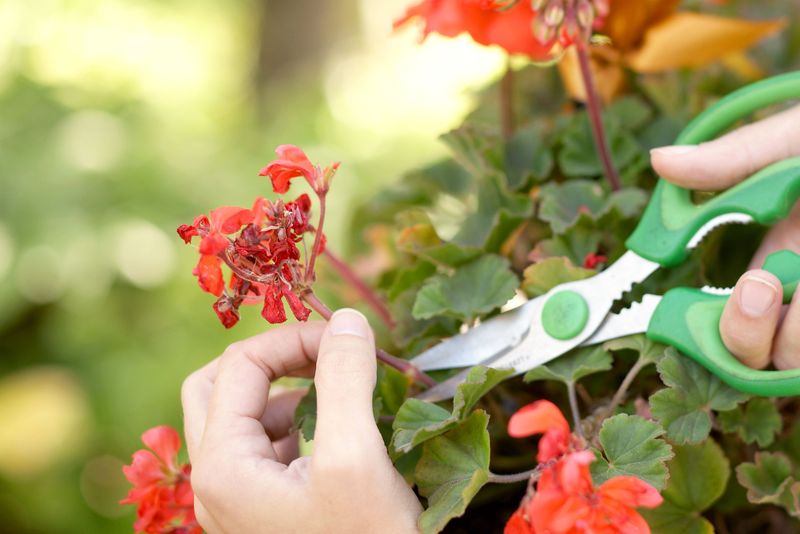
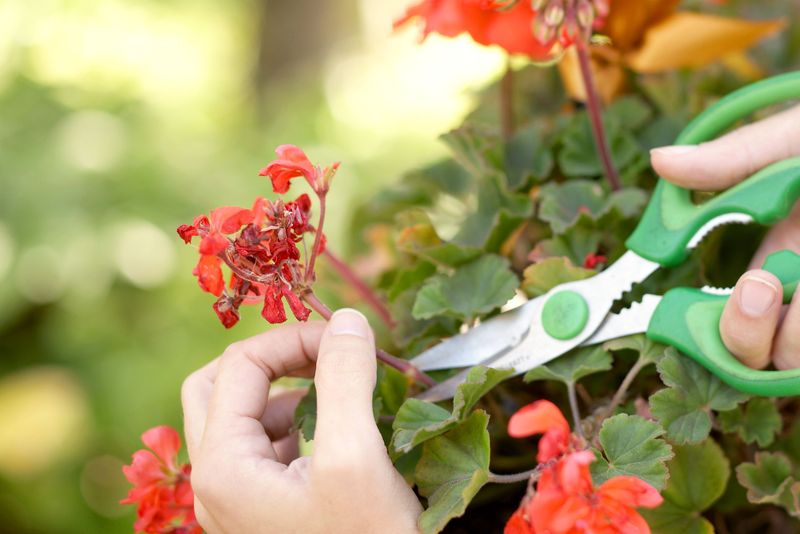
Your geranium looked great in spring, but now the flower clusters are fading and the plant feels stuck. A small, low-effort maintenance step called deadheading can help encourage it to keep going. By removing spent flower clusters the right way, you give the plant a better chance to put energy toward new growth rather than old, dying blooms. Read on to find out exactly how to do it and what else to check when your geranium needs more than just a quick tidy-up.
The Simple Reset: Remove the Spent Flower Stalk
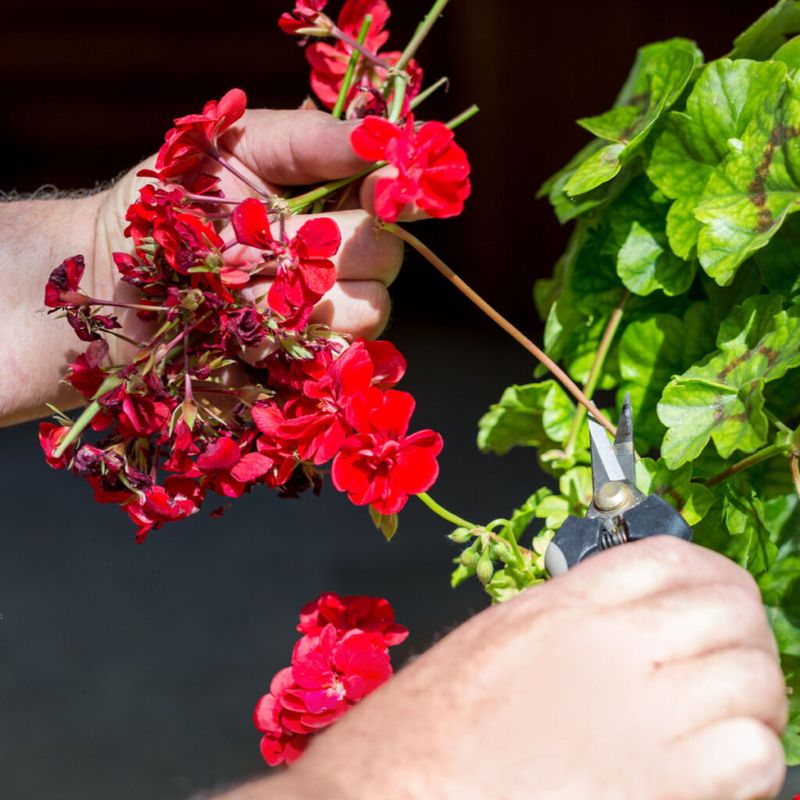
Regular deadheading is the maintenance step most likely to help a fading Pelargonium geranium continue flowering. University of Illinois Extension guidance on geraniums recommends removing spent flower clusters to support continued flowering and keep the plant looking its best. The University of Florida IFAS Extension echoes the same advice for common bedding types, particularly the zonal Pelargonium x hortorum grown in containers, window boxes, and backyard beds across the US.
The key detail is what you remove. The recommended target is not just the loose petals that drop on their own but the entire spent flower cluster together with its flower stalk. Plucking only fallen petals leaves the stalk and withered cluster attached to the plant. Removing the whole structure is the deadheading procedure that extension sources describe, and it leaves less dead material behind for the plant to deal with.
What deadheading cannot promise is a dramatic, guaranteed flood of new blooms on every plant. Kansas State Extension notes that some plants respond with more profuse flowering after spent flowers are removed, but that result is not guaranteed across every cultivar or growing condition. Think of deadheading as a recommended upkeep step that removes old material and can encourage the plant to channel its energy forward, rather than a trick that overrides problems like poor light, soggy soil, or heat stress.
For most hobby gardeners growing common bedding geraniums, this simple practice is worth building into regular plant care. The sections below explain exactly how to do it, when to do it, and what to reassess if the plant still seems reluctant to bloom.
How to Remove a Spent Bloom Without Harming the Plant
Knowing exactly where to make the cut matters more than it might seem. Start by looking at the flower cluster itself. When the blooms in a cluster have clearly faded, turned brown, or begun to drop petals, that cluster is ready to come off. Do not wait until every single flower in the cluster has collapsed; once the majority have faded, it is time to act.
From the cluster, trace the flower stem downward through the plant. Follow it all the way to where it meets the main stem or emerges from a leaf node near the base of the plant. That junction is your target. Kansas State Extension explains that spent flower stems on many plants can be pinched off cleanly by hand, which works well when the stalk is young and relatively soft.
For tougher or woodier stalks, a pair of clean scissors or small pruning shears will give you a neater cut without tearing the tissue.
Whichever method you use, aim to remove the stalk close to its base rather than cutting it partway down and leaving a stub. A stub of dead stem serves no purpose and can become an entry point for disease organisms over time. Make your cut or pinch as close to the main stem or base as you can without nicking healthy tissue.
Two things to protect as you work: unopened buds and healthy green leaves. Geranium stems often carry both fading flowers and developing buds at the same time. Take a moment to identify each before you pinch or cut. If a bud is still tightly closed or just beginning to show color, leave it alone.
Removing it by mistake shortens the flowering window you are trying to extend. Keep the scissors away from any foliage that is firm, green, and undamaged, since healthy leaves are what power the plant’s recovery.
Inspect the Plant Regularly and Clear Away Dead Material
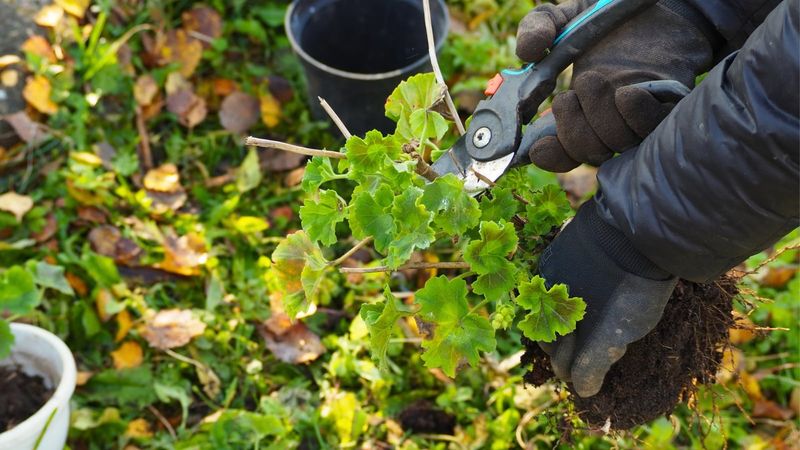
Timing deadheading well is less about following a fixed calendar and more about paying attention to the plant. Check your geraniums whenever you are already outside watering or walking through the garden. Kansas State Extension recommends removing spent flowers regularly rather than waiting for a scheduled day, because blooms fade at their own pace rather than on a predictable timetable. Some weeks you may find one or two clusters to remove; during a flush of activity you might find several.
The goal is to catch fading clusters before they fully collapse and scatter debris around the plant. Removing them while they are still intact is easier and tidier than chasing fallen petals across the soil surface. That said, do not skip the follow-up step of clearing the area around the base of the plant. Fallen petals, yellowed leaves, and bits of dead stem that collect on the soil or in the crown of the plant create conditions that favor fungal problems.
Botrytis gray mold is the disease most commonly associated with decaying flower material on geraniums. It tends to develop in cool, wet, poorly ventilated conditions, and old blossoms sitting on the soil or trapped against stems give it a foothold. UC IPM guidance on geraniums recommends removing old blossoms and dead plant parts where practical as part of managing this risk. A quick sweep of the soil surface and a check of the lower stems each time you deadhead adds very little time to the task but meaningfully reduces the amount of decaying material that could invite trouble.
Deadheading Is Not a Hard Cutback
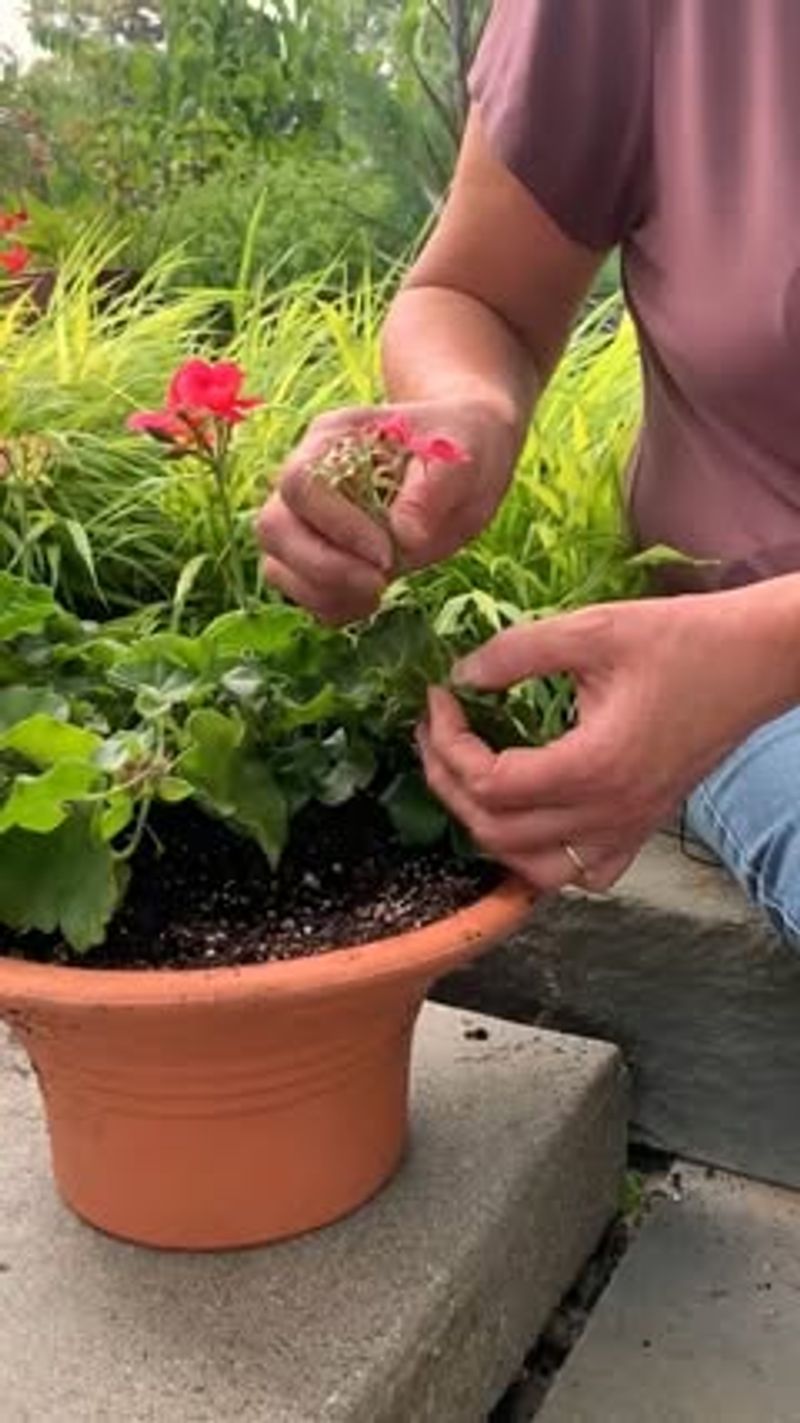
One of the most common mistakes after reading about deadheading is going too far. Removing spent flower clusters is a light maintenance task. Cutting the plant back hard is a different procedure entirely, and confusing the two can set a healthy plant back rather than moving it forward.
When you deadhead, the only material that comes off is the fading flower cluster and its stalk. Healthy leaves stay on the plant. Unopened buds stay on the plant. University of Minnesota Extension guidance makes clear that leaves are essential to the plant’s ability to photosynthesize and sustain itself.
Stripping away large amounts of green foliage while chasing dead flowers removes the very capacity the plant needs to produce new growth. If you accidentally take off a leaf or two near a stalk, that is fine. Systematically pulling foliage is not.
Structural pruning, which involves cutting back leggy or overgrown stems to encourage branching, is a separate step with a different purpose. Minnesota Extension notes that pinching or cutting a stem just above a leaf node can promote a bushier habit on a plant that has grown long and spindly. That technique has its place, but it is not what you do when you are simply removing a spent flower cluster on an otherwise compact, healthy-looking plant.
A practical way to keep yourself from overdoing it: before you remove anything, pause and ask whether the piece you are about to take off is dead, fading, or fully healthy. Dead and fading flower stalks come off. Green, firm, actively growing stems and leaves stay. When in doubt, remove less.
A geranium that loses a few extra dead stalks will recover easily; one that loses most of its leaves needs considerably more time to rebound.
Check Light, Drainage, and Moisture Before Expecting More Flowers
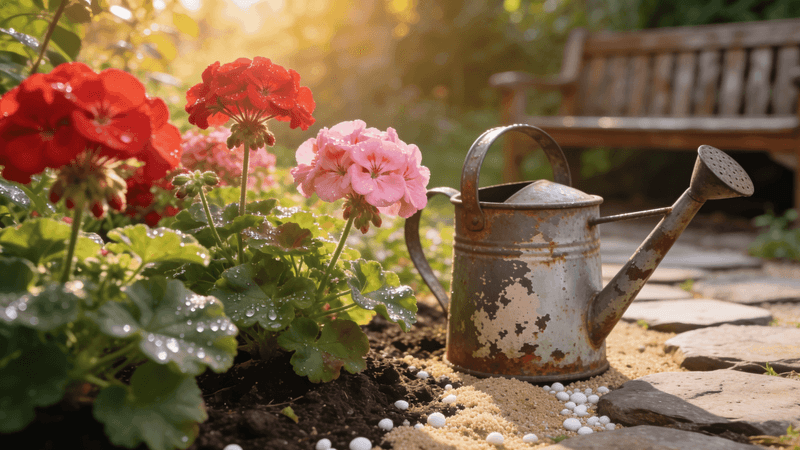
Deadheading can help a healthy geranium keep flowering, but the plant’s growing conditions determine whether new buds form in the first place. If the basics are off, removing spent flowers will not compensate for them. Before expecting a noticeable improvement, run through a short checklist of what the plant is actually experiencing day to day.
Light is the first thing to assess. University of Minnesota Extension reports that geraniums need full sun outdoors and that reduced sunlight directly reduces flower production. A plant tucked under an overhang, shaded by a nearby shrub, or moved to a dimmer indoor spot will produce fewer flowers regardless of how diligently you deadhead. Six or more hours of direct sun per day is the standard target for most common bedding types.
Drainage and moisture come next. Minnesota Extension recommends watering geraniums thoroughly but then allowing the top one to two inches of soil to dry out before watering again. Roots that sit in constantly wet soil struggle to function properly, and a plant with stressed roots will not flower well. Check that containers have working drainage holes and that in-ground beds are not collecting standing water after rain.
Fertilizer is worth mentioning because more is not better here. Minnesota Extension specifically warns that overfertilized geraniums may not bloom well. Geraniums generally do not need heavy feeding. If you do fertilize, follow the product label carefully and resist the urge to apply extra with the hope of forcing blooms.
For potted plants grown indoors, the extension recommendation is a half-strength fertilizer during active growth, not a full or doubled dose.
Once light, drainage, and moisture are in reasonable shape, deadheading has a much better foundation to work from. These conditions are not add-ons to the technique; they are what make the technique meaningful.
Identify the Geranium Before Applying the Same Routine
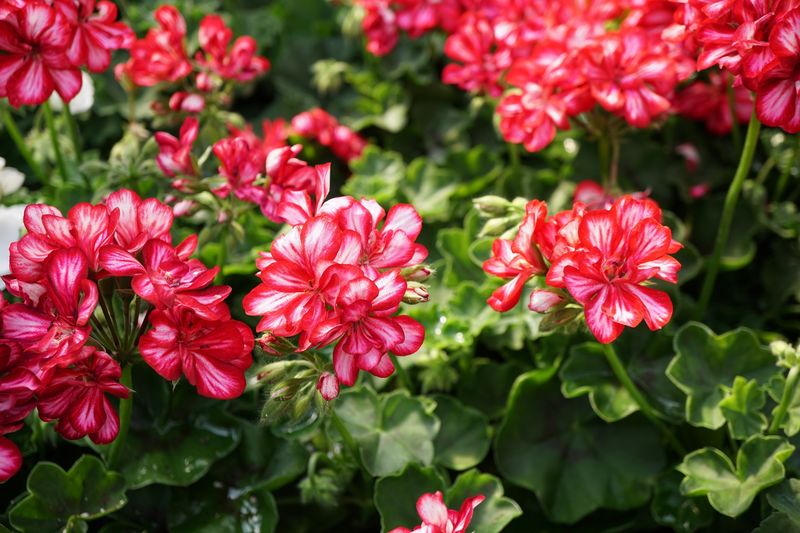
Not every plant sold under the name geranium behaves the same way, and applying a single routine across all of them can lead to missed blooms or accidental damage. University of Minnesota Extension explicitly distinguishes between Pelargonium, the tender plants most US gardeners grow as annual bedding geraniums, and true hardy Geraniums, which belong to a different genus entirely and have their own pruning and flowering patterns. The deadheading guidance in this article applies primarily to common Pelargonium types, particularly zonal bedding geraniums.
Ivy-leaf geraniums (Pelargonium peltatum) are a popular exception worth knowing about. Iowa State University Extension notes that some ivy geranium cultivars are described as self-cleaning, meaning they shed spent blooms on their own without requiring manual deadheading. Other cultivars do benefit from deadheading and tip pinching to encourage more blooms. Because cultivar behavior varies, check the tag or description for your specific ivy geranium before assuming it needs the same routine as a zonal type.
Iowa State also notes that ivy geraniums prefer moderate temperatures and can struggle when heat climbs above 85 degrees Fahrenheit, so reduced flowering in summer heat is often a temperature issue rather than a deadheading problem.
Regal geraniums, sometimes called Martha Washington geraniums, need a different approach entirely. Washington State University Extension guidance explains that these plants have a distinct bloom period centered in spring and naturally produce fewer flowers as summer progresses. Late pinching or pruning on regal types risks cutting off developing flower buds rather than spent ones, which shortens the bloom period instead of extending it. If you have a regal geranium that seems to stop flowering in summer, that may simply be its natural pattern rather than a sign that something has gone wrong.
Know When Deadheading Is Not the Fix
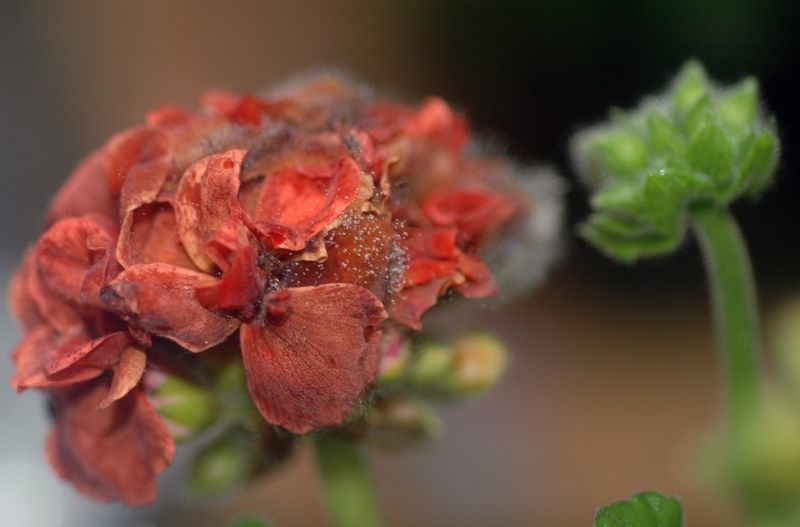
Spent flower removal is a maintenance step, not a cure. When a geranium has stopped blooming or looks genuinely unwell, deadheading the remaining flowers will tidy the plant but will not address the underlying cause. Running through a short diagnostic check saves time and prevents frustration.
Poor flowering that persists after you have been deadheading regularly usually points to a growing-condition problem. Minnesota Extension identifies low light, excess moisture, poor drainage, and nutrient imbalance as factors that can suppress flowering independently of spent blooms. Heat stress is another common cause in US gardens during mid-to-late summer, particularly for ivy geraniums that prefer cooler conditions. None of these problems respond to deadheading; they require adjustments to the plant’s environment or care routine.
Physical symptoms on the plant itself are a separate category of concern. Wilting that does not recover after watering, stems that have turned black or soft at the base, leaf spots that are spreading quickly, or a gray fuzzy coating on plant tissue are all warning signs that disease may be involved. UC IPM’s geranium disease resources cover bacterial blight, root rot, Botrytis gray mold, and other infections that affect Pelargonium. Removing spent flowers from a plant with a systemic disease will not stop the infection from progressing.
If you notice any of these symptoms, focus on identifying the disease and addressing its cause rather than continuing routine deadheading as though the plant is simply tired.
One practical note for gardeners with sensitive skin: North Carolina Extension lists Pelargonium peltatum as capable of causing minor skin irritation or contact dermatitis in some people. Wearing gloves when handling ivy geranium foliage is a reasonable precaution if your skin tends to react to plants.
Make the Small Reset, Then Reassess the Plant
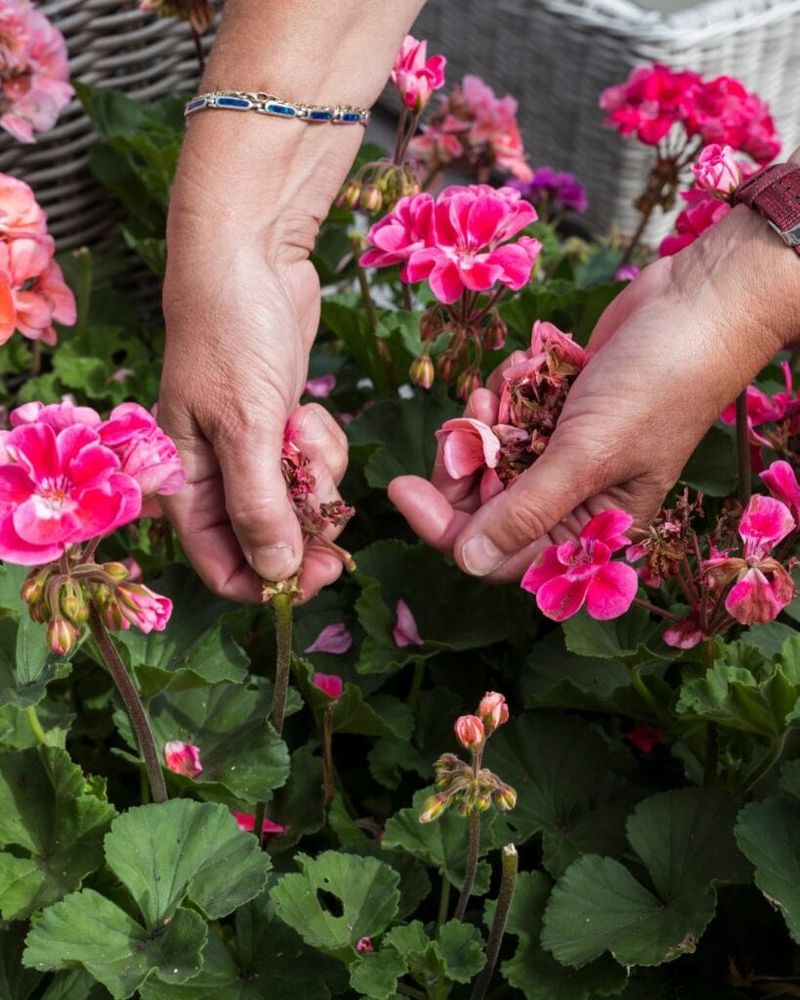
Deadheading a geranium comes down to one clean action: find each fading flower cluster, trace its stalk to the base, and remove the whole thing close to the main stem. Leave every healthy leaf and unopened bud in place. University of Illinois Extension and University of Minnesota Extension both recommend this practice for common bedding Pelargoniums as a way to support continued flowering and keep the plant looking tidy.
After a few rounds of deadheading, step back and look at the whole picture. If the plant is still producing few new buds, check light exposure, soil drainage, watering habits, temperature, and whether any disease symptoms have appeared. Kansas State Extension notes that some plants respond with more profuse flowering after deadheading, but the result depends on the plant being otherwise healthy. A well-tended geranium that gets regular deadheading, adequate sun, and proper watering gives itself the best chance to keep blooming through the season.