
The One Watering Change That Finally Gives Your Tomatoes Their Best Yield
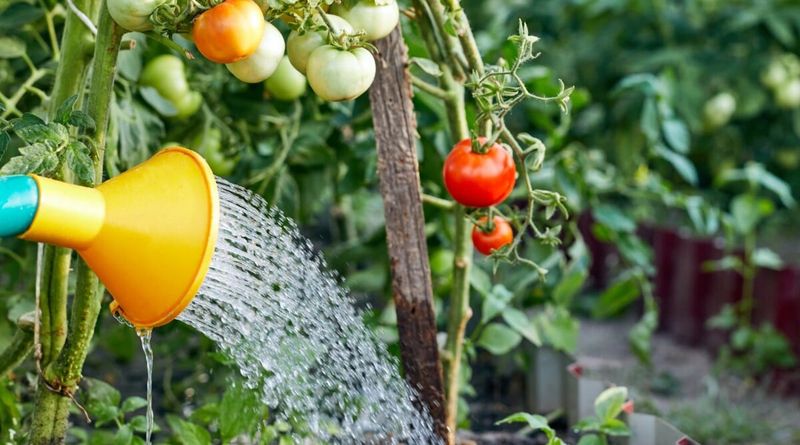
Most tomato growers who end up with cracked fruit, blossom drop, or disappointing harvests are not necessarily watering too little – they are watering unevenly. Swinging between dry soil and sudden soakings puts real stress on developing fruit right when the plant needs steady support most. A single shift in how you water, not how much, can make a noticeable difference in fruit quality and reduce some of the most frustrating moisture-related problems home gardeners face.
The key watering change is steadier moisture, not more water
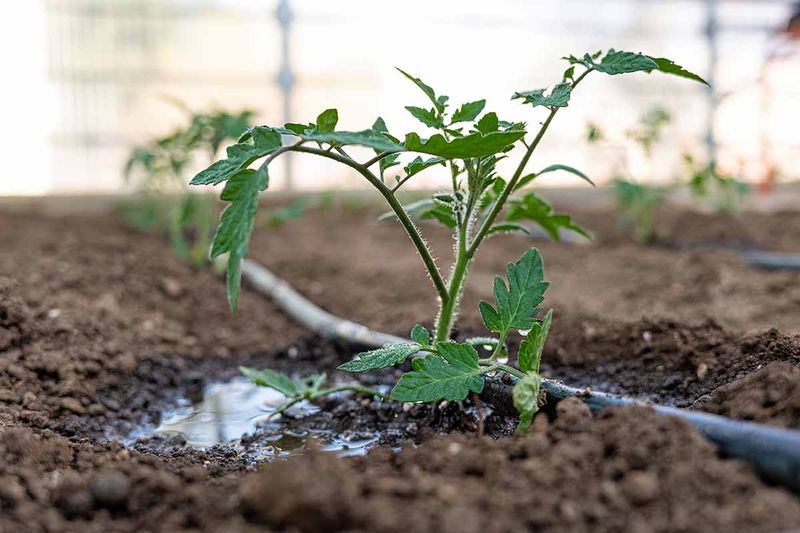
Plenty of tomato gardeners assume a struggling plant just needs more water. The evidence points somewhere else: the pattern matters far more than the total volume. The well-supported change is to replace alternating shallow sips and rescue soakings with slow, thorough watering that keeps the active root zone evenly moist throughout the growing season.
University of Minnesota Extension guidance on growing tomatoes consistently links uniform soil moisture with better fruit quality and fewer moisture-related disorders. The goal is not soggy soil – saturated ground deprives roots of oxygen and can contribute to root and crown problems. The target is soil that stays consistently moist at root depth, drying slightly between waterings rather than cycling through extremes.
What changes here is the watering pattern and method, not necessarily the total amount of water applied over a season. Shallow, frequent sips wet only the top inch or two of soil, training roots to stay near the surface where they are most exposed to heat and drought. Slow, thorough application pushes moisture several inches down into the active root zone, where it stays available longer and supports the plant through the gaps between irrigation sessions.
UMN irrigation guidance for vegetables notes that tomatoes are especially sensitive to moisture fluctuations, and that keeping moisture consistent during fruit development supports better outcomes. Utah State University Extension reinforces that steady moisture supports fruit quality and reduces drought stress. Neither source promises a record harvest from watering alone – yield also depends on cultivar, sunlight, fertility, temperature, pollination, disease pressure, and root health. The change is meaningful and worth making; it just works best as part of good overall plant care.
Moisture swings matter most when tomatoes are forming fruit
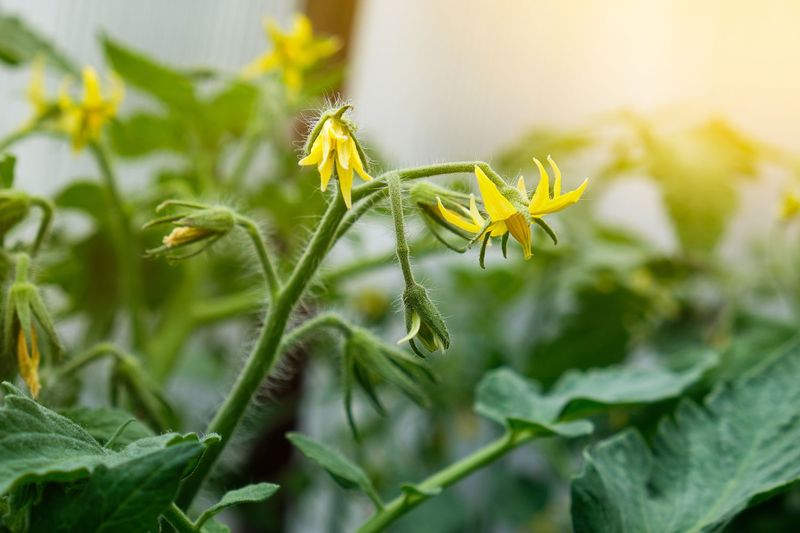
Tomato plants are not equally sensitive to water stress at every point in their life. The windows that matter most are flowering, fruit set, fruit enlargement, and maturation – and during those stages, inconsistent moisture can interfere with development in ways that show up weeks later as cracked skins, dropped blossoms, or undersized fruit.
UMN’s irrigation strategies for vegetables explains that water stress during these critical periods can reduce fruit development and contribute to blossom drop and fruit abortion. When soil dries out sharply and then receives a heavy soaking, the sudden surge of water into rapidly developing fruit can cause the skin to split before it has time to expand gradually. Keeping moisture even through those growth stages reduces the pressure swing that drives cracking.
Blossom-end rot is another disorder that often tracks back to moisture inconsistency. UMN’s guide to tomato disorders describes it as a physiological problem involving localized calcium deficiency in developing fruit – but the soil calcium level is often not the real culprit. Drought, fluctuating moisture, and root damage can all interfere with how calcium moves through the plant, even when the soil test looks fine.
Utah State University Extension adds that steady watering addresses one important source of plant stress but cannot prevent every problem. When temperatures push well above 90 degrees Fahrenheit, tomato flowers may fail to set fruit regardless of how well the soil is managed. Steady watering supports the plant through normal summer heat, but it is not a shield against every weather-related setback.
Water slowly enough to wet the active root zone
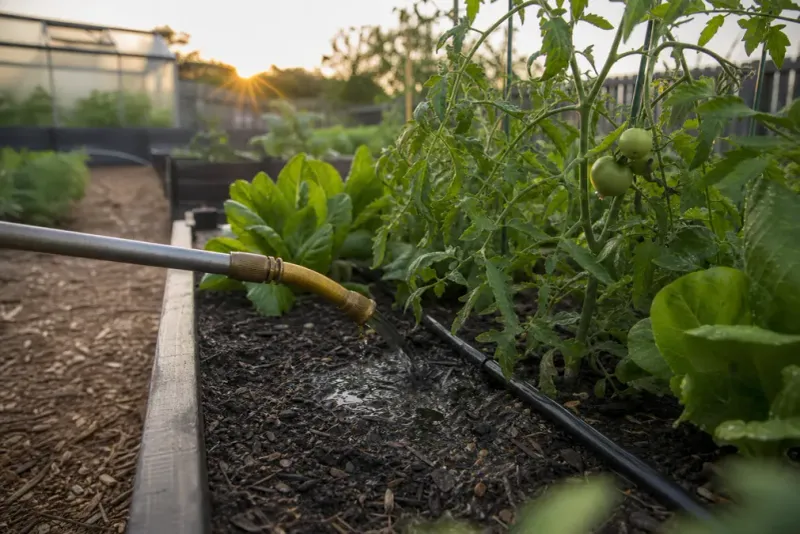
Thorough watering sounds straightforward, but many gardeners underestimate how much water it actually takes to push moisture several inches into the soil. Running a hose at the base of a plant for 30 seconds wets the surface and leaves the root zone dry. Slow, sustained application is what gets water where it can actually do something useful.
UMN’s tomato growing guide recommends a simple trowel check: after watering, push a trowel or finger into the soil near the plant. If the soil is wet only 1 to 2 inches down, keep watering. The active root zone for established tomatoes typically extends 6 to 12 inches or more below the surface, and that is the depth range you are trying to reach.
Soil texture changes the math significantly. One inch of applied water may penetrate roughly 10 inches into sandy soil, but only about 6 inches into heavy clay. Gardeners working in clay-heavy beds need to apply water more slowly and for longer to achieve the same root-zone penetration, because clay absorbs water at a slower rate and can shed fast-moving water as runoff before it soaks in. Raised beds with loose, well-amended soil often fall somewhere in between.
The method of application matters less than the result. UGA Extension’s disease management guide for home vegetable gardens recommends directing water to the soil at the plant base rather than overhead, which also helps limit the leaf wetness and soil splash that can encourage disease spread. Drip irrigation and soaker hoses make slow, targeted application easier, but a hose wand or watering can pointed at the soil surface works just as well when applied patiently. The key is giving water enough time to move down rather than run off.
Use soil moisture—not the calendar—to time the next watering
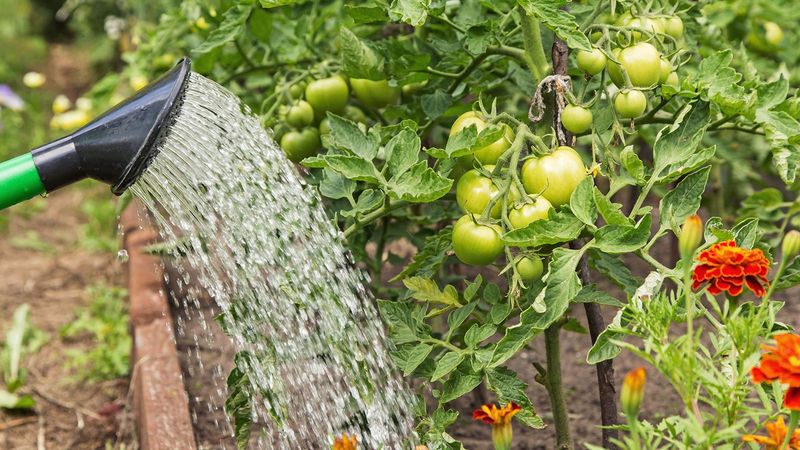
Watering on a fixed schedule feels organized, but the soil does not follow a calendar. A stretch of cloudy, humid weather after a rain can leave the root zone adequately moist three days after the last irrigation. A hot, windy afternoon can pull that same moisture out in 24 hours. Watching the soil rather than the clock keeps you responsive to what the plant actually needs.
A repeatable starting check: push a finger about 2 inches into the soil near the plant base. Penn State Extension’s tomato growing guide suggests that if the soil feels dry at that depth, it is time to water thoroughly. If it still feels moist, wait and check again. This is a useful starting signal, not a universal rule, because soil texture, plant size, and weather all affect how quickly that 2-inch layer dries.
As a general benchmark for in-ground tomatoes, UMN’s growing guide puts total water needs at roughly 1 to 1.5 inches per week from rain and irrigation combined. Some Extension sources give a range of 1 to 2 inches and emphasize adjusting for conditions. During a hot, dry stretch, demand can climb well above that range. UMN’s guidance on gardening in hot weather notes that vegetable gardens may need daily or every-other-day watering during extreme heat, depending on conditions – not because a schedule says so, but because the soil dries that fast.
One trap to avoid: do not reach for the hose just because a plant looks wilted at noon on a hot day. UMN’s heat garden care guidance explains that tomatoes can wilt temporarily from heat and high evaporative demand even when the root zone holds plenty of moisture. Check the soil first. If it is still moist 2 inches down, the plant likely just needs the temperature to drop, not another round of water that could saturate already-wet soil.
Containers dry faster and demand dependable drainage
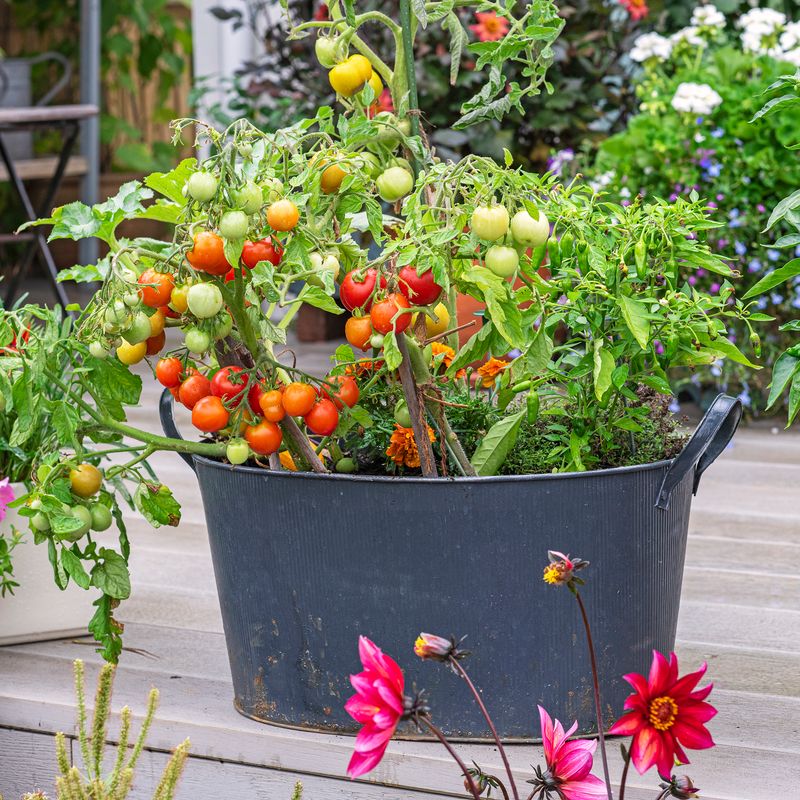
Container-grown tomatoes play by different rules than in-ground plants. The limited soil volume heats up faster, dries out faster, and offers roots nowhere to go searching for additional moisture. What works as a watering rhythm for a raised bed can leave a potted tomato wilting by mid-afternoon during a hot stretch.
Penn State Extension’s container vegetable gardening guide states that container vegetables may need watering at least once daily during hot summer weather. UMN’s container plant care guidance goes further, noting that some containers may need watering more than once per day when heat and plant demand are both high. The size of the container matters – a 5-gallon pot in full sun on a concrete patio will dry out far faster than a 25-gallon grow bag in a partially shaded spot.
The same goal applies regardless of container size: an evenly moist root zone, not waterlogged soil. Water until you see drainage flowing freely from the bottom holes, which confirms moisture has moved through the entire root zone. Then let the excess drain completely rather than letting the pot sit in a tray of standing water for extended periods. UGA Extension’s vegetable disease management guide cautions that saturated conditions around roots can contribute to disease problems, so drainage holes need to be functional and unobstructed.
Check containers more often than you think necessary during a heat wave. The finger test works here too – if the top 2 inches feel dry, water thoroughly right away rather than waiting until the plant shows visible stress.
Base watering and mulch help stabilize conditions
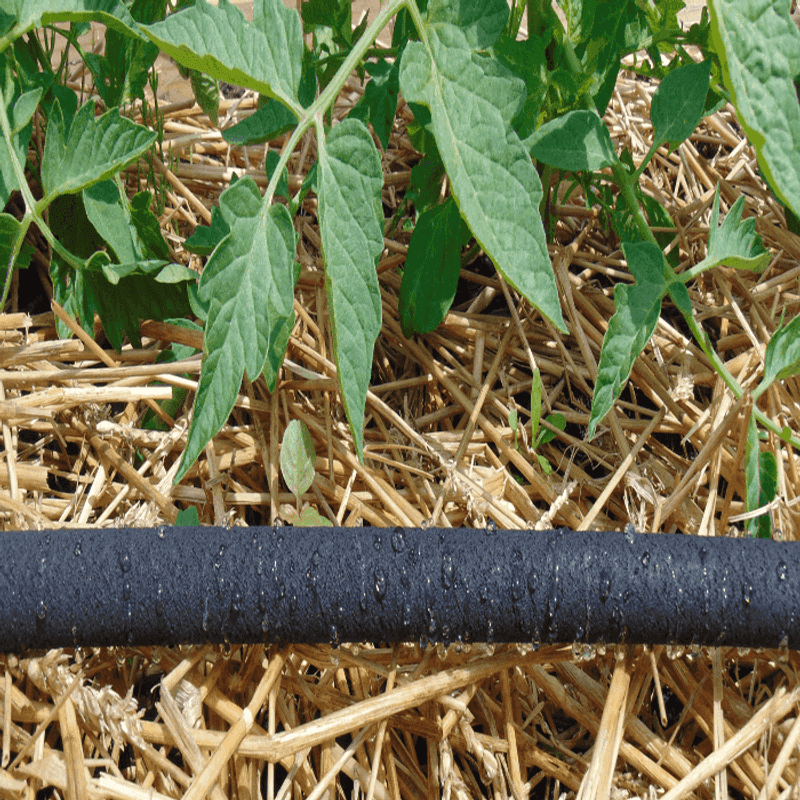
Getting moisture to the root zone consistently becomes much easier when the watering method and a layer of mulch work together. Neither requires specialized equipment or a large budget, and both reduce the amount of active management needed between waterings.
Applying water at the soil surface rather than overhead keeps foliage dry, which matters because wet leaves and soil splash create conditions that help fungal and bacterial diseases spread. Colorado State University Extension’s tomato growing resource recommends directing water to the base of plants, and UGA Extension’s disease management guide explains that limiting foliage wetness and soil splash reduces opportunities for disease spread. Drip irrigation and soaker hoses make this easy because water seeps directly into the soil at a slow rate. A hose wand or watering can aimed at the base of the plant works just as well – the key is patience, not the tool.
When overhead watering is unavoidable, morning is the better time. Foliage that gets wet in the morning has hours of sunlight and airflow to dry before evening, which limits the window for disease organisms to take hold.
Penn State Extension’s tomato guide recommends spreading 2 to 3 inches of seed-free straw or bark mulch around plants to slow evaporation, moderate soil temperature, and reduce soil splash. Keep mulch a few inches away from the main stem to allow airflow at the base and avoid creating a moist environment right against the plant. A good mulch layer does not eliminate the need for regular moisture checks, but it does extend the time between waterings and smooths out some of the moisture swings that cause problems during hot, dry stretches.
Blossom-end rot is not simply a calcium shortage
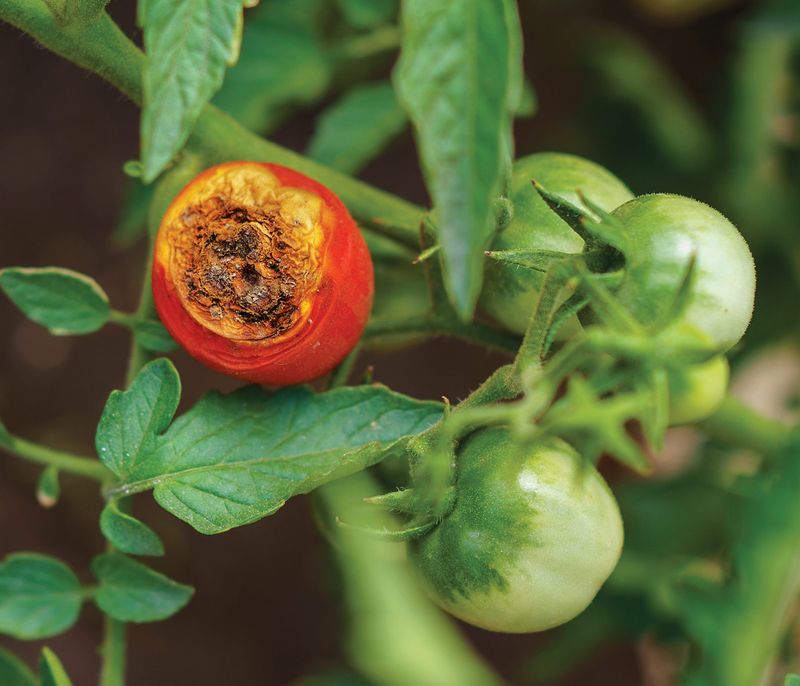
Blossom-end rot is one of the most discouraging things a tomato grower can find on a nearly ripe fruit. That dark, leathery, sunken patch on the bottom of the tomato is not going away, and the instinct to reach for a calcium supplement is understandable – but often misses the actual problem.
The disorder does involve a localized calcium deficiency inside the developing fruit. Oregon State University Extension’s blossom-end rot fact sheet explains that the issue typically reflects disrupted calcium delivery to the fruit rather than a shortage of calcium in the soil. Drought, fluctuating moisture, root damage, excessive nitrogen fertilizer, extreme heat, and waterlogged soil can all interfere with how the plant moves calcium from roots to developing tissue, even when a soil test shows plenty of calcium present.
Penn State Extension’s blossom-end rot guide notes that correcting moisture inconsistency is the most practical first step, because steady moisture supports normal calcium uptake and transport through the plant. University of Illinois Extension reinforces that improving watering habits is the primary management strategy for most home gardens.
Once a fruit shows the characteristic damage, that tissue cannot be repaired. UMN’s tomato disorders guide recommends removing severely affected fruit from the plant. Adding eggshells, lime, gypsum, or foliar calcium sprays without a soil test is not a reliable fix – Clemson Extension’s review of calcium spray claims and UGA Extension’s soil amendment guidance both caution that these approaches often have poor or inconsistent effectiveness. If a soil test shows calcium is genuinely low, amendments have a place – but stabilizing moisture is the starting point, not a bag of lime.
Steady watering supports harvest potential but cannot control every variable
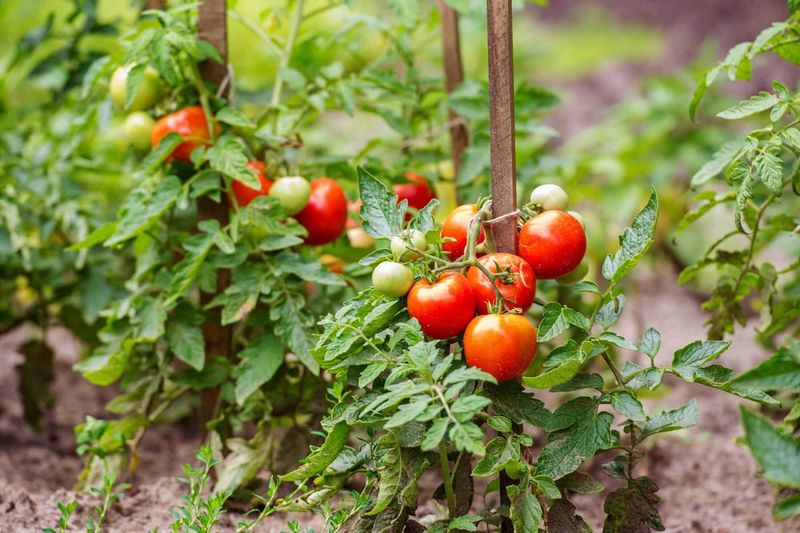
Research on irrigation and tomato yield is real and worth taking seriously, but it comes with important context. Studies conducted in commercial fields, greenhouses, and controlled research plots have found that irrigation amount and timing affect both yield and water-use efficiency. A peer-reviewed irrigation study and findings from controlled tomato irrigation research support the general principle that how and when you water shapes outcomes – but the best approach shifts with soil type, cultivar, climate, growth stage, and growing system.
Additional controlled research on deficit irrigation illustrates that timing and conditions change the result considerably, which is why commercial findings do not translate directly into a universal backyard schedule. Greenhouse experiments often use fertigation, precise sensors, grafted plants, and controlled substrates that home gardeners simply do not have access to.
Extreme heat is one factor steady watering cannot fully offset. When temperatures push well above 90 degrees Fahrenheit, tomato flowers may fail to set fruit regardless of soil moisture status, with the threshold varying by cultivar and conditions. Utah State University Extension notes that heat-related blossom drop is a separate problem from moisture stress, and water management alone cannot prevent it.
Sunlight hours, soil fertility, pollinator activity, disease pressure, root health, and plant support all shape the final harvest independently of how well you water. Consistent moisture is a key management principle and genuinely worth the effort – it just works alongside those other factors, not instead of them.
Turn even root-zone moisture into a repeatable routine
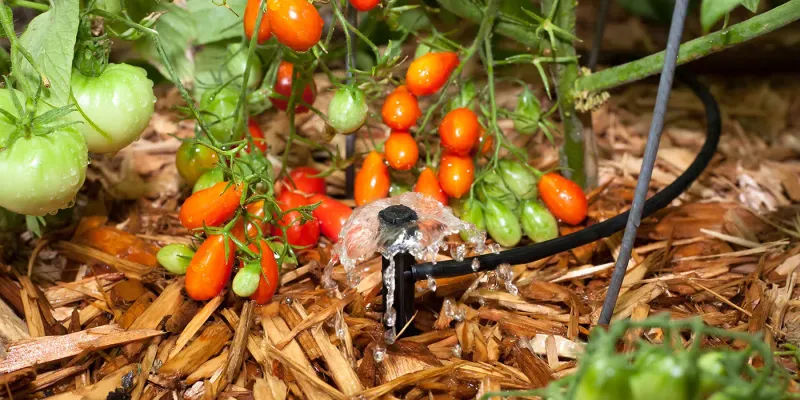
Putting this into practice does not require a new irrigation system or a rigid schedule. The routine has four steps: check the soil moisture before reaching for the hose, water slowly at the plant base until the root zone is thoroughly wet, allow any excess to drain freely, and revisit the soil as weather and plant size change through the season.
UMN Extension’s tomato guide and Penn State Extension’s seedling-to-fruit resource both point back to the same underlying principle: consistency in the root zone, adjusted by observation rather than locked to a fixed day of the week. Hot spells, rain events, and the increasing water demand of a maturing plant all call for recalibration.
The useful shift here is consistency rather than excess. Steadier moisture can better support fruit development and reduce some of the most common moisture-related problems home gardeners encounter – but it is one piece of a larger picture, not a guarantee of a record harvest. A plant that gets the watering right and also has good sun, decent fertility, and healthy roots is simply in a better position to do what tomato plants are built to do.