
If Your Hydrangeas Look Weak And Floppy, This One Overlooked Mistake Is Usually Why
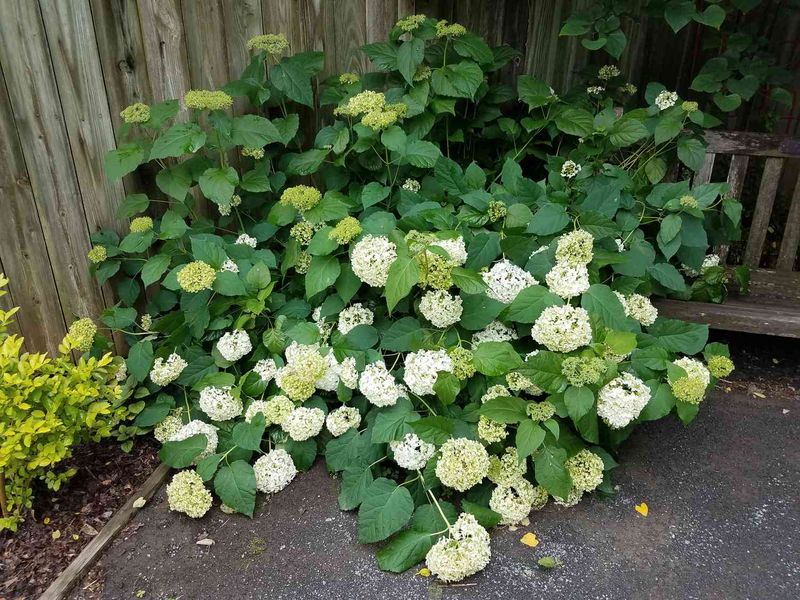
Floppy hydrangeas are one of the most frustrating sights in a summer garden, especially when the blooms you waited all season for are dragging toward the ground. Many gardeners blame the heat and reach for the hose, but that reflex can actually make things worse. Overfertilization, especially from high-nitrogen products or nearby lawn runoff, is one commonly missed cause worth checking first, though it is far from the only explanation. Before you change anything, a quick look at what is actually drooping and why can save you from fixing the wrong problem.
First, identify what is actually flopping
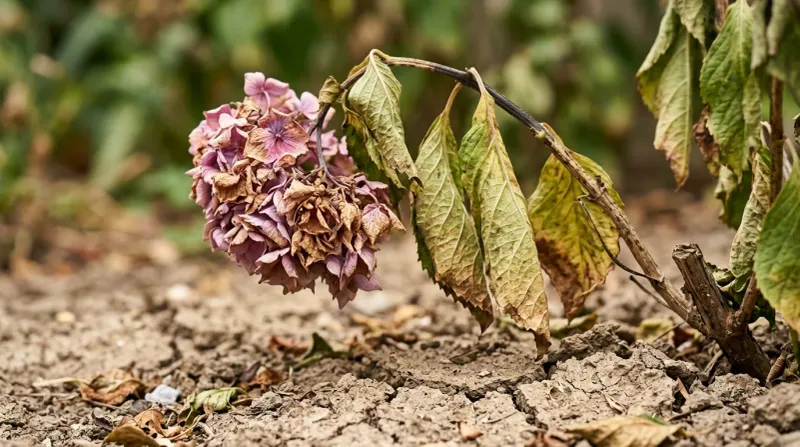
Grab a cup of coffee and take a slow walk around your hydrangea before you do anything else. There is a meaningful difference between a stem that is bending beneath a heavy, fully opened flower head and a plant whose leaves and stems are limp all at once. Those two pictures look similar from across the yard, but they point toward completely different causes.
Structural flower-stem flopping typically shows up on plants that otherwise look healthy. The foliage is firm and green, the stems are upright lower on the plant, and the bending happens where the bloom is heaviest, often after a rain event. Rutgers Extension notes that flower-head weight after rain is a recognized trigger for stem bending, even on plants that are otherwise growing well.
Whole-plant wilting looks different. Leaves go limp, sometimes curl, and the droop runs from the tips down to lower stems. You may also notice yellowing, leaf drop, or soft tissue near the crown. Oregon State Extension specifically flags that hydrangeas dislike sitting in wet soil, and that symptoms like brown leaf edges and leaf drop can point toward overwatering rather than thirst.
A plant wilting from a root-zone problem needs a completely different response than one bending under a heavy bloom.
Check the foliage first. Then look at the soil, the pattern of the droop, and when it tends to happen during the day. Morning droop that firms up by afternoon often signals something different from a plant that stays limp all day. Getting this distinction right is the foundation for every other step in this diagnosis.
Could too much nitrogen be contributing to weak stems?

When floppy stems show up alongside unusually lush, fast-growing foliage, excess nitrogen is worth putting on your short list of suspects. High-nitrogen fertilizer pushes plants to produce soft, rapid vegetative growth, and that kind of growth tends to be weaker structurally than slower, more measured development. Extension experts have specifically identified lawn fertilizer runoff or nearby-bed applications as a source of soft, rapid growth and weak stems in panicle hydrangeas.
The connection between fertilization and flopping does not stop at stem strength. When a plant is pushed to produce more vegetative growth, flower heads can also become heavier, adding more weight to stems that are already less rigid than they should be. Rutgers Extension notes that excessive fertilization can worsen the flopping problem by contributing to heavier panicles on already-soft stems.
Here is the important conditional: floppy stems by themselves do not diagnose nutrient excess. Plenty of hydrangeas bend under heavy blooms for reasons that have nothing to do with fertilizer. The signal worth acting on is a combination of factors, specifically lush, rapid vegetative growth paired with weak stems, or a recent history of high-nitrogen feeding or proximity to a lawn that gets regular fertilizer applications.
If those conditions apply to your plant, the practical step is to pause routine fertilizing while you investigate further. University of Maryland Extension warns that excessive high-nitrogen fertilization can reduce flowering and contribute to weak growth. Stopping additional feeding gives the plant a chance to firm up without adding more of what may be causing the problem. If the lush-growth pattern is absent, hold off on changing your fertilizer approach until you have worked through the other possible causes.
Check the fertilizer path before you feed again
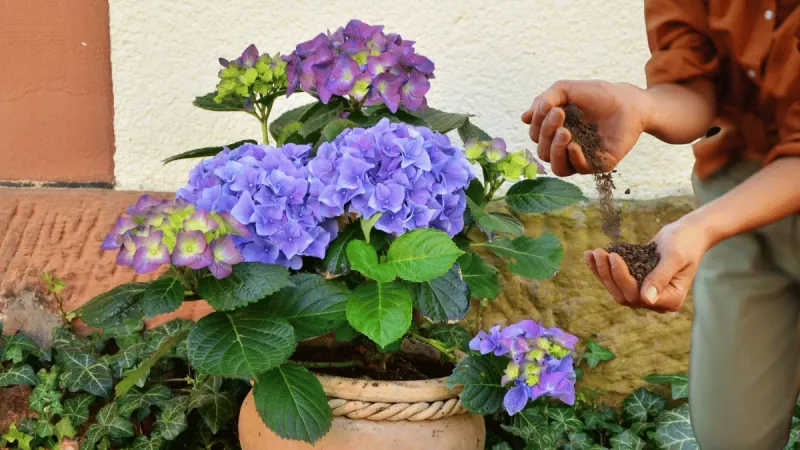
Before reaching for any product, trace the fertilizer history around your hydrangea. Pull out whatever you used last and read the three numbers on the label. The first number represents nitrogen, and a high first number on a product applied frequently is the combination most likely to push soft growth. Also consider what is happening within ten to fifteen feet of the plant: if your lawn gets regular fertilizer treatments and the hydrangea sits along that border, runoff and soil migration can deliver nitrogen the plant never received directly.
Walk the area after a heavy rain and notice where water moves. Low spots, slopes toward the bed, and compacted lawn edges can all funnel fertilizer-laden water into your planting area without you ever applying a product to the hydrangea itself. Extension guidance on hydrangea stem problems points to exactly this kind of indirect exposure as a source of the soft, rapid growth associated with weak stems.
Resist the urge to layer on a different product in response to weak stems. Bloom boosters, potassium supplements, bone meal, and similar products are not supported by extension sources as general treatments for structural flopping. Adding them without knowing your current soil nutrient levels is guesswork that can create new imbalances. University of Minnesota Extension recommends soil testing as the best way to determine actual nutrient levels before applying any fertilizer or amendment.
Most cooperative extension offices process tests for a modest fee and return results with specific, actionable recommendations for your soil.
If the investigation turns up a plausible fertilizer source, the immediate action is simply to stop adding more and let the plant grow without that extra push for the rest of the season.
A wilted hydrangea may have a wet-root problem
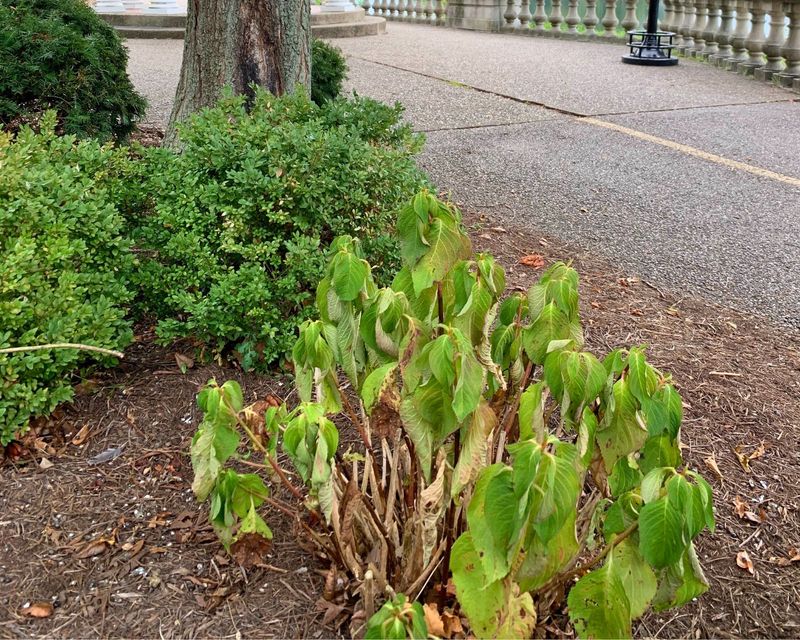
Reaching for the hose when you see a wilted hydrangea is a natural reaction, but it is one worth pausing before you act. The soil at the surface can look and feel dry while the root zone a couple of inches down is holding plenty of moisture. That gap between surface appearance and actual root-zone conditions is where a lot of overwatering starts.
Push a finger or a narrow trowel about two inches into the soil near the drip line of the plant. Oregon State Extension recommends checking soil moisture below the surface rather than watering on a fixed schedule or by appearance alone. Dry soil at that depth, combined with a plant that stays limp through the cooler part of the morning, is a reasonable signal that watering is appropriate, assuming drainage is working normally and the rest of the plant looks otherwise healthy.
Persistently wet or soggy soil tells a different story. Oregon State’s hydrangea care guidance notes that roots sitting in standing water can suffocate and develop rot, producing above-ground symptoms that look almost identical to drought stress: wilting, brown leaf edges, and leaf drop. If the soil stays wet days after a rain and the plant continues to look limp, drainage is the problem to address, not water volume. Penn State Extension’s watering guidance reinforces that soil type, sun exposure, plant age, and rainfall all affect how often any plant actually needs water, making a fixed schedule unreliable.
When watering is appropriate, direct it at the soil line rather than overhead, and water in the morning when possible so the foliage dries before evening. UMass Extension recommends applying about two to three inches of quality mulch over the root area to moderate soil moisture between waterings, but keeping it pulled back from the crown so moisture does not collect against the base of the stems.
Sometimes the plant is healthy but the flowers are too heavy
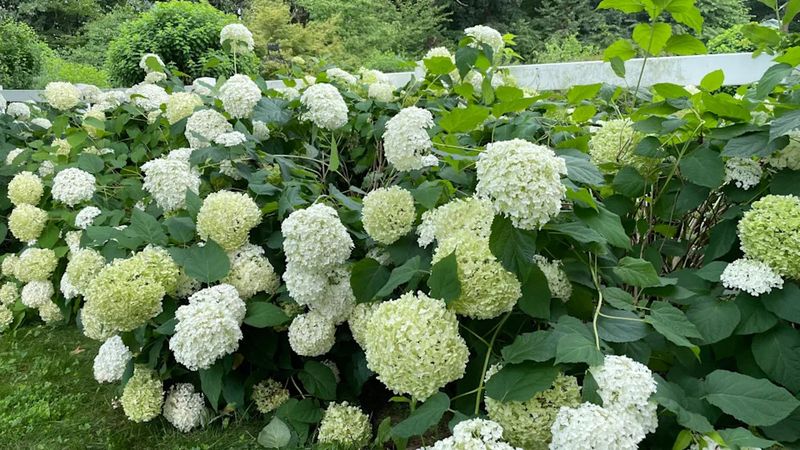
Not every floppy hydrangea is the result of something you did wrong. Some plants are simply built that way. ‘Annabelle’ and similar smooth hydrangeas (Hydrangea arborescens) are well known for producing flower heads that can grow to the size of a dinner plate, and those blooms are heavy enough to bend stems even on a plant that is otherwise completely healthy and well cared for.
Iowa State Extension and Penn State Extension both acknowledge that this flopping tendency is a characteristic of the species, not a symptom of a problem. When a bloom that weighs several ounces sits at the end of a stem that grew quickly during the season, gravity is doing most of the work. Rain makes it worse: water-saturated flower heads can weigh considerably more than dry ones, bending stems that held up fine the day before.
Plant breeders have responded to this trait over the years by developing cultivars with stronger, more upright stems. A University of Illinois Extension native hydrangea trial evaluated smooth hydrangea selections specifically for landscape performance, including stem strength and resistance to flopping. Newer selections like ‘Incrediball’ and ‘Strong Annabelle’ were developed with improved stem rigidity compared to the original ‘Annabelle.’
Knowing your cultivar matters before you change anything. If you are growing an older selection of smooth hydrangea and the rest of the plant looks vigorous, the flopping may simply reflect the plant’s natural form. Confirming the variety helps you decide whether the right response is support, a future cultivar swap, or a pruning adjustment rather than a change in fertilizer or watering.
Light and weather can reveal the real pattern

Timing and location are two of the most useful diagnostic tools you have. A hydrangea that wilts reliably between 1 and 4 in the afternoon and then firms back up by evening is giving you a specific clue: it is reacting to heat and afternoon sun intensity, not signaling a chronic root-zone problem. That pattern is common in bigleaf hydrangeas, which can wilt visibly in hot afternoon sun even when the soil moisture is perfectly adequate.
UMass Extension and University of Maryland Extension both note that light requirements vary by hydrangea species and cultivar. Too much shade reduces flowering and can contribute to weaker, leggier stems as the plant reaches for light. Too much intense afternoon sun can trigger wilt even in a well-watered plant. The right balance depends on which type of hydrangea you are growing.
Weather events can also trigger flopping that has nothing to do with your care habits. A heavy rain after a dry stretch can add enough weight to flower heads to pull stems to the ground overnight. Wind can do the same. Rutgers Extension identifies post-rain flower-head weight as a recognized cause of stem bending, separate from fertilization or structural weakness.
Oregon State Extension points out that some bigleaf hydrangeas may show afternoon wilt as a temporary stress response rather than a sign of lasting damage. Keeping a brief log of when the drooping happens and what the weather was doing beforehand can help you separate a one-time weather event from a pattern that needs a real fix.
Support this season’s blooms without making a rushed cut
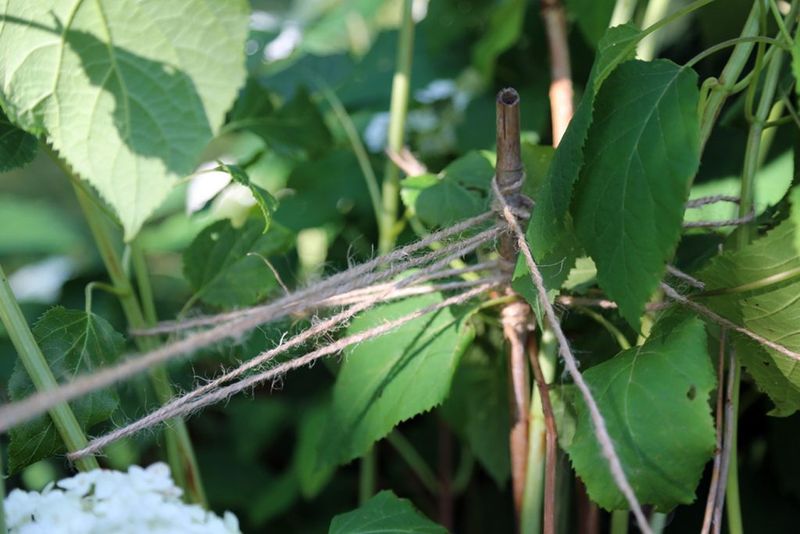
When stems are already bending under the weight of open blooms, the lowest-risk response is physical support rather than any change in care. A few bamboo stakes and soft garden twine, or a wire hoop placed around the plant, can hold flower heads upright without cutting, stressing, or changing the plant’s nutrition. Penn State Extension’s guidance on supporting flowering plants recommends placing supports early in the season when possible, but mid-season support is still worthwhile for stems that are actively bending.
One detail matters here: keep any tie or loop loose enough that it does not press into expanding stem tissue. Stems continue to increase in diameter through the growing season, and a tie that fits comfortably today can constrict growth within a few weeks. Check supports every week or two and adjust as needed. Rutgers Extension notes that structural support is a practical management tool for flower-head flopping, particularly after rain.
Resist the urge to cut the plant back dramatically in the middle of the season just to force a stronger re-flush of growth. An in-season hard cut on a blooming hydrangea removes the flowers you have been waiting for and may not produce the firmer stems you are hoping for before the season ends.
For smooth hydrangeas specifically, there is a longer-term pruning adjustment that can help with flopping in future seasons. UConn Extension advises pruning smooth hydrangeas back to approximately 18 to 24 inches rather than cutting them nearly to the ground each year. Leaving older stems in place allows them to increase in diameter over time, giving future flower heads a sturdier base to sit on. That adjustment belongs in late winter or early spring, not mid-season.
Pruning only helps when it matches the hydrangea
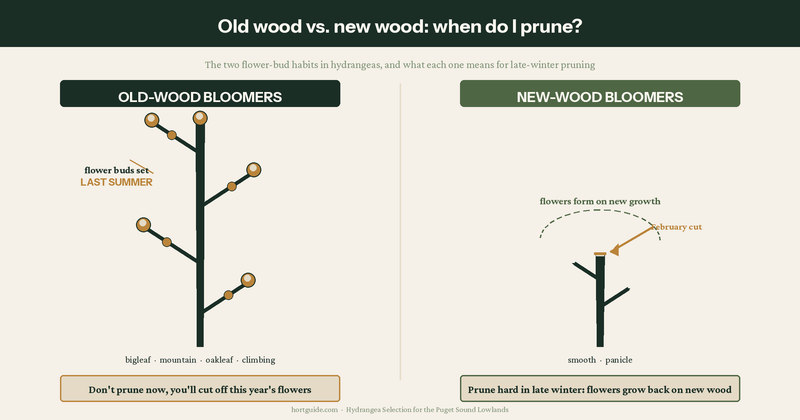
Pruning is one of the most powerful tools for improving hydrangea performance over time, and also one of the easiest to apply at the wrong moment. The single most important rule: identify the species before you cut anything. Getting this wrong can mean removing next year’s flower buds entirely, leaving you with a healthy-looking plant that produces no blooms the following season.
Smooth hydrangeas (Hydrangea arborescens, the ‘Annabelle’ group) and panicle hydrangeas (Hydrangea paniculata) both flower on new wood, meaning they produce their blooms on growth that emerges in the current growing season. University of Illinois Extension and RHS pruning guidance both confirm that these types are generally pruned in late winter or early spring, before new growth begins. Cutting them at that time does not sacrifice blooms.
Bigleaf hydrangeas (Hydrangea macrophylla, the classic mophead and lacecap types), oakleaf hydrangeas (Hydrangea quercifolia), mountain hydrangeas, and some others flower primarily on old wood, meaning buds set on stems from the previous season. University of Minnesota Extension advises pruning these types shortly after they finish flowering rather than in late winter, because a winter or early-spring cut removes the buds that would have opened that summer.
UConn Extension reinforces that smooth hydrangeas pruned to a moderate height of 18 to 24 inches rather than cut nearly to the ground develop thicker, more supportive stems over multiple seasons. Here is a practical checklist to carry forward: pause routine feeding only if lush rapid growth or recent high-nitrogen applications are part of the picture; check soil moisture two inches down before watering; identify whether the symptom is flower-stem flopping or whole-plant wilt; confirm your cultivar before changing pruning timing; use loose supports for heavy blooms this season; and schedule any pruning changes for the right window next year. Getting the species right is what turns a good intention into a result you can actually see.