
Everything You Do Now Decides Your Tomato Harvest Long Before The First Fruit Shows
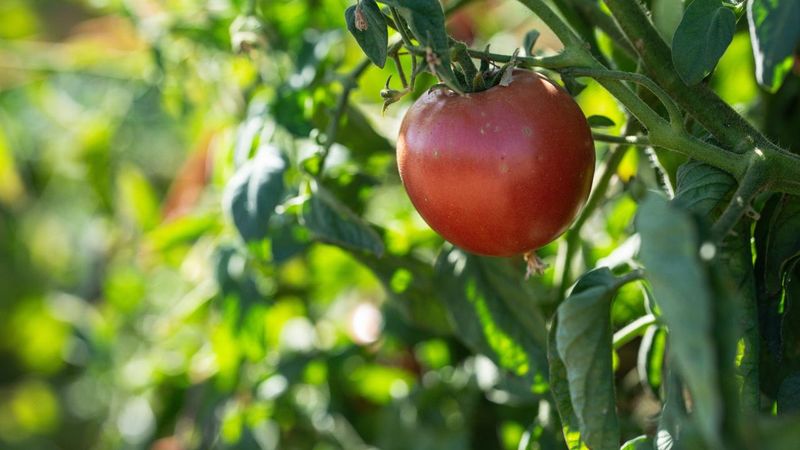
Most gardeners think the tomato harvest happens in August, but the truth is that a lot of it gets shaped weeks or months earlier, in the choices made before the first flower even opens. Picking the right variety, planting at the right time, and setting up the soil and support system correctly all influence how well plants establish, how freely they flower, and how long they keep producing. Those early decisions do not lock in a specific outcome, because weather, disease, and later care still play a big role, but they do change the odds in your favor. Getting the fundamentals right early is one of the most practical things a backyard grower can do.
Early choices influence the harvest before it appears
Harvest problems rarely appear out of nowhere. Most of them trace back to a decision made weeks or months earlier, whether that was putting a plant in cold soil too soon, skipping a support cage, or choosing a variety that did not suit the space. The connection between those early choices and the fruit you eventually pick is real and worth taking seriously.
What early decisions actually do is shift the odds. A plant that goes into warm, well-fed soil with good sun, proper spacing, and a support structure already in place has fewer obstacles between it and a productive season. University of Minnesota Extension guidance on growing tomatoes makes clear that variety selection, soil preparation, transplant timing, spacing, and support all affect establishment, disease pressure, and how long plants remain productive. Skipping any one of those steps does not guarantee failure, but it does introduce a problem that could have been avoided.
The key word there is “influence.” Early choices shape harvest potential without fully deciding it. Weather, cultivar behavior, unexpected disease, and corrective care you apply later in the season still matter. UMN’s home-garden disease management guidance notes that plants with some disease can still produce a bountiful harvest, which is a useful reminder that a rough start does not always mean a lost season.
What the early window does is preserve the plant’s ability to produce. A well-established plant with a healthy root zone, good canopy structure, and consistent moisture enters flowering in a stronger position than one that spent its first weeks stressed by cold, competition, or poor drainage. The urgency around early decisions is not about perfection. It is about not giving up ground you did not have to give up.
Your variety helps shape the kind of harvest you can build
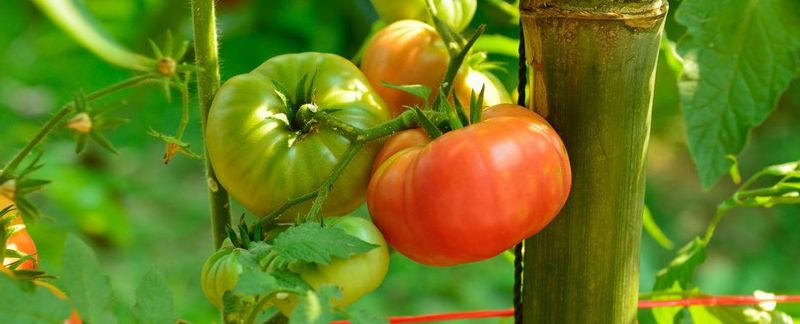
Variety selection is the first practical decision in the tomato calendar, and it sets the frame for nearly everything that follows. Not because cultivar alone determines the outcome, but because the plant’s growth habit shapes when fruit arrives, how concentrated that arrival is, and how much space and support the plant will need to perform.
The clearest distinction is between determinate and indeterminate types. Determinate tomatoes, sometimes called bush types, stop growing after the plant sets a terminal flower cluster. They tend to ripen a concentrated crop over a shorter window, which suits canners and preservers who want a lot of fruit at once. Indeterminate tomatoes keep growing and flowering until cold weather stops them, which suits gardeners who want a steady supply across a longer season.
UMN Extension’s tomato growing guide explains that bush-type determinates generally need less pruning and staking, while indeterminates benefit from consistent support and may respond to selective pruning depending on the goal.
Matching the variety to your actual conditions matters more than picking the most popular name at the garden center. A large indeterminate plant in a small container or a short-season variety in a long-season climate will underperform regardless of how well everything else is managed. Consider your available space, your local frost dates, how you plan to use the fruit, and whether tomatoes, peppers, eggplants, or potatoes have had disease problems in that spot before.
Disease resistance is worth factoring in, but it should be understood accurately. A variety labeled resistant or tolerant to a specific disease is less likely to suffer severe damage from that pathogen, not immune to it. UMN’s disease management guidance explains that resistance reduces risk or severity rather than preventing infection entirely. Choosing a resistant variety in a garden with a known disease history is a smart first line of defense, as long as it is paired with the other practices that actually keep plants healthy.
Transplant timing can protect momentum or lose it
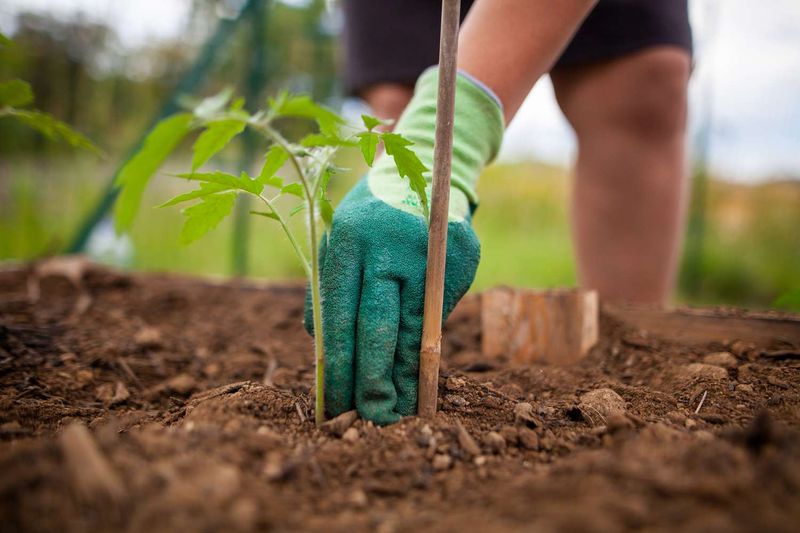
Putting a tomato plant in the ground on a specific date because the calendar says spring has arrived is one of the most common ways to lose momentum before the season even starts. Tomatoes are frost-sensitive and cold-intolerant in ways that matter well beyond the last freeze date. Soil temperature, nighttime lows, and how the plant was grown before transplanting all factor into whether the move goes smoothly or sets the plant back by weeks.
The practical rule is to wait until frost danger has genuinely passed and the soil has warmed, not just the air. Illinois Extension’s tomato guidance notes that plants exposed to cold nights may take up to two weeks to resume normal growth, which means an early transplant can actually produce a later first harvest than one put out under better conditions a week or two later. Cold stress stalls root development and delays flowering, which is the opposite of the head start most gardeners are hoping for.
Plants started indoors need a hardening-off period before going outside permanently. Penn State Extension’s transplanting guidance explains that sudden exposure to outdoor sun and wind can damage foliage and reduce plant vigor. Gradually increasing outdoor time over seven to ten days lets the plant adjust without the setback that comes from moving directly from a warm windowsill to a windy garden bed.
When buying transplants rather than starting from seed, the plant itself carries risk. Penn State’s seedling-to-fruit guide and UMN Extension both recommend choosing short, sturdy transplants with pencil-thick stems and closely spaced leaves. Avoid plants that show leaf spots, suspicious discoloration, or any damage to the stem base and roots. A diseased transplant can introduce pathogens into the garden before you have harvested a single tomato.
Build a root zone that feeds fruit, not just foliage
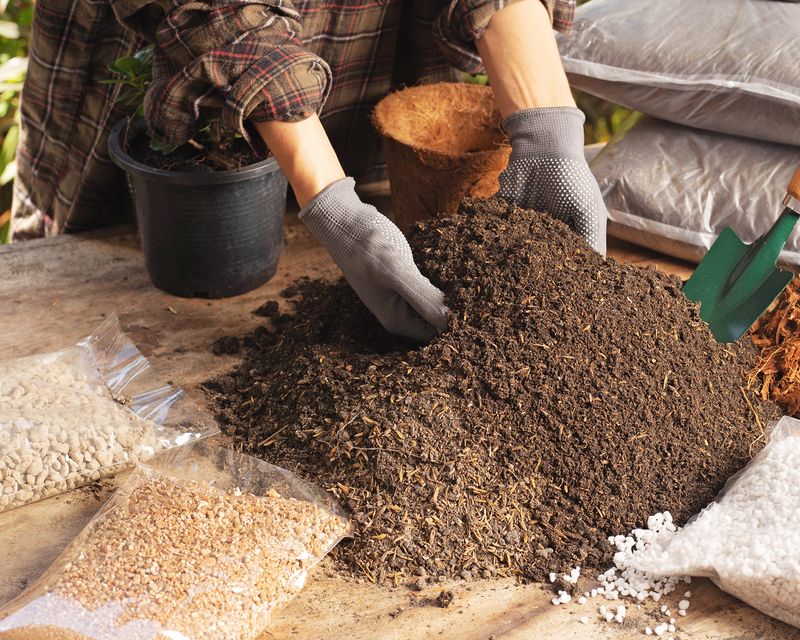
Soil preparation is where fruit quality gets set up or undermined. A plant growing in poor or unbalanced soil can still look healthy for a while, but it will struggle when flowering and fruit development demand more from the root zone than the soil can deliver. Getting the foundation right before planting is far easier than trying to correct it once a full-grown plant is in the way.
Full sun is the non-negotiable starting point. Penn State Extension’s tomato guide specifies at least six hours of direct sun daily, with daytime temperatures around 70 to 80 degrees Fahrenheit preferred for healthy growth. A shaded site will produce a plant, but not a productive one. If the best sunny spot in the yard is also the most convenient spot, that alignment makes every other preparation step more effective.
Fertilizer should follow a soil test, not a guess. UMN Extension recommends using soil-test results to guide phosphorus and potassium applications, and warns specifically that excessive nitrogen leads to vigorous, leafy vines that are slow to produce fruit. More fertilizer does not mean more tomatoes. Nitrogen applied beyond what the soil actually needs pushes the plant toward vegetative growth at the expense of flowering and fruit maturity.
Oregon State University Extension’s tomato and tomatillo guide reinforces that fertilizer should be applied according to the product label and actual soil needs. Adding organic matter is beneficial, but the source matters. Fully composted organic material improves soil structure and feeds soil biology without the risks that come with fresh manure, which can introduce harmful bacteria and weed seeds. A well-prepared root zone that supplies what the plant actually needs is the best investment a grower can make before the first transplant goes in.
Use spacing and support to shape a healthier canopy
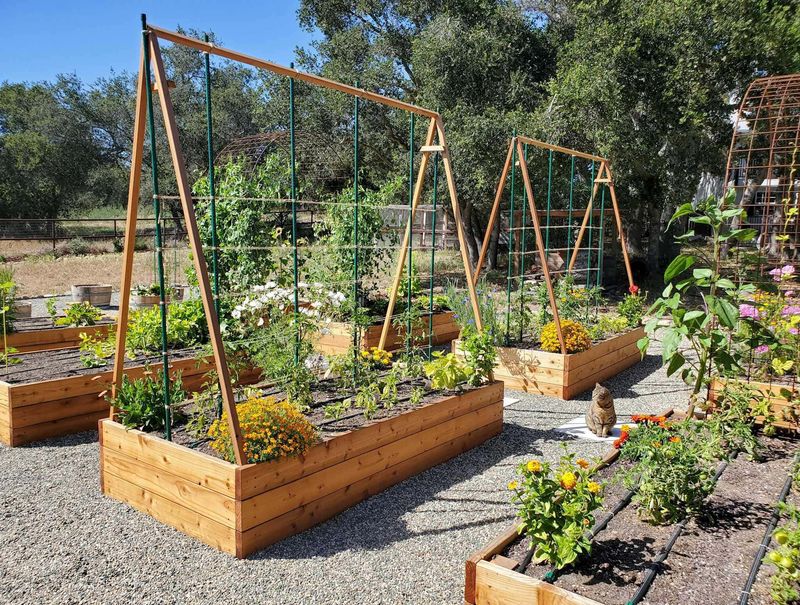
Garden layout decisions often get treated as a matter of fitting plants into available space, but spacing and support are actually crop-health decisions with real consequences for disease pressure, fruit quality, and how easy the garden is to manage through the season.
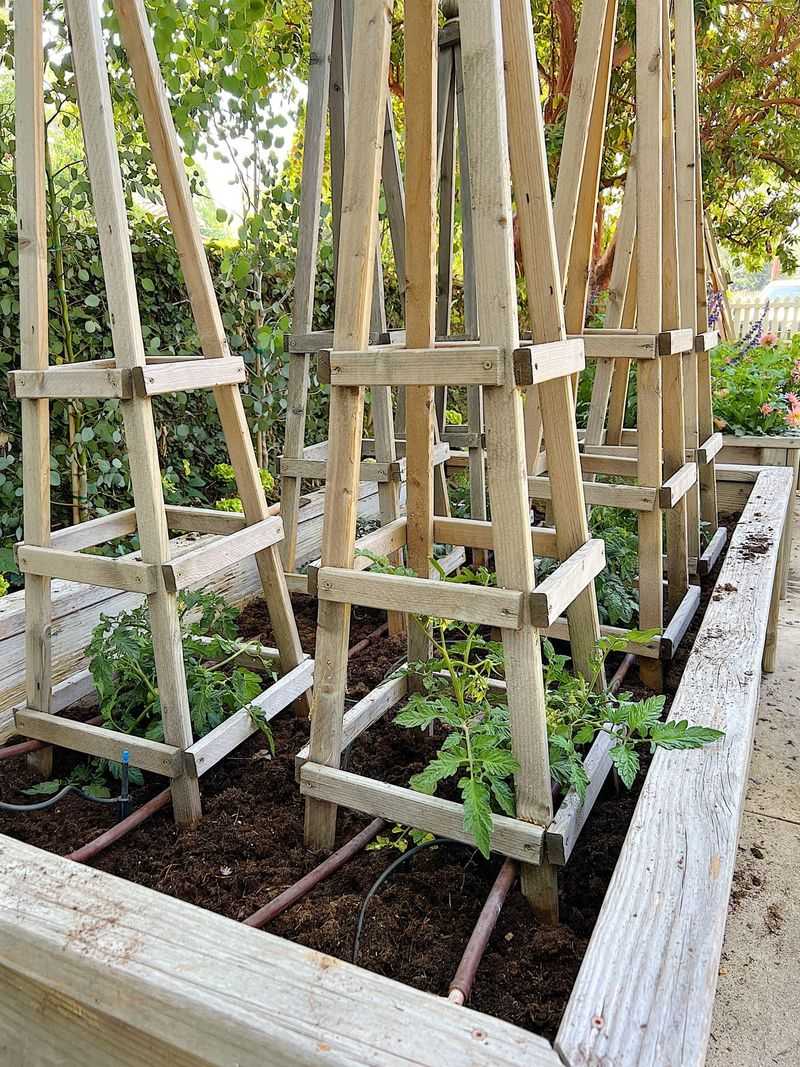
Support structures belong in the ground at planting time, not after the plant has grown large enough to need them. Installing cages, stakes, or trellises early avoids disturbing roots later, and it means the plant grows into a structure rather than collapsing against one. UMN Extension and OSU Extension both point out that support keeps fruit off the ground, improves access for inspection and harvest, and can improve air movement through the canopy. All three of those benefits reduce problems that would otherwise require intervention later.
Spacing is where many gardeners underestimate how much room tomatoes actually need. Crowded plants dry out more slowly after rain or irrigation, which extends the period when foliage stays wet and fungal pathogens can establish. Penn State Extension’s tomato disease guide connects poor air circulation to increased disease pressure, and Penn State’s heat stress resource notes that canopy structure affects how plants handle high temperatures.
Recommended spacing varies by growth habit and support system. Extension sources commonly suggest roughly 18 to 36 inches between plants, with wider spacing for unsupported or sprawling varieties and tighter spacing possible when plants are well-caged and pruned. The goal is a canopy that gets good airflow, dries reasonably quickly, and lets you see what is happening at the base of the plant. A crowded, tangled canopy hides early disease symptoms and makes every subsequent management task harder than it needs to be.
Stabilize moisture and prevent disease before symptoms spread
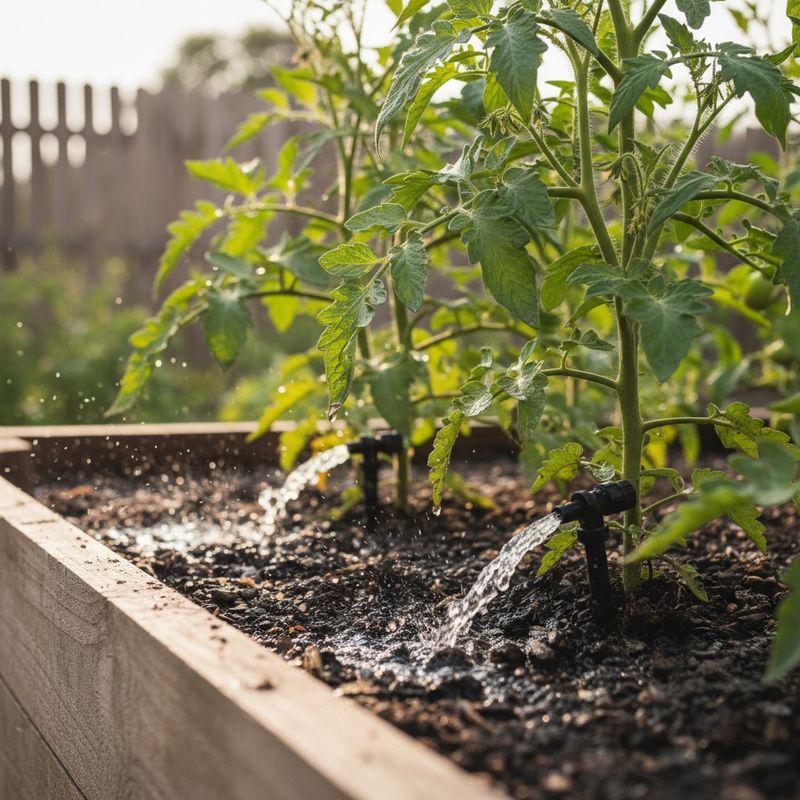
Water management and disease prevention are not two separate tasks. They are tightly connected, and the decisions made about how and when to water affect both fruit quality and how quickly fungal problems take hold. Getting the approach right early is far less work than managing a disease outbreak or dealing with cracked or blossom-end-rotted fruit later in the season.
The target for irrigation is consistent moisture in the root zone, not a fixed schedule. Soil type, container size, mulch depth, temperature, rainfall, and irrigation method all affect how quickly the root zone dries out, so a universal watering interval does not apply across all U.S. backyard conditions. Penn State Extension’s seedling-to-fruit guide and OSU Extension both describe consistent root-zone moisture without waterlogging as the practical goal. Swings between dry and saturated soil are associated with fruit cracking and moisture-related disorders, so steady moisture matters more than a specific number of days between watering events.
How water is applied affects disease risk as much as how much is applied. Drip irrigation or watering at the soil line, preferably early in the day, keeps foliage dry and reduces the time leaves spend wet. UMN Extension’s disease management guidance points to wet foliage as a key factor in fungal disease development, and recommends watering methods that avoid wetting leaves whenever possible. Overhead watering late in the day leaves foliage wet overnight, which is exactly the condition many pathogens need to establish.
Mulch does two jobs at once. It reduces soil splash during rain or irrigation, which is one of the main ways soil-borne pathogens reach lower leaves, and it buffers the root zone against moisture swings. Crop rotation adds another layer of protection. UMN Extension recommends avoiding the same plant family in the same bed location for two to four years, with tomato-family crops including tomatoes, peppers, eggplants, potatoes, and tomatillos.
Rotation does not eliminate disease risk, but it reduces the pathogen load in the soil before the season begins.
Prune only when the plant and goal justify it
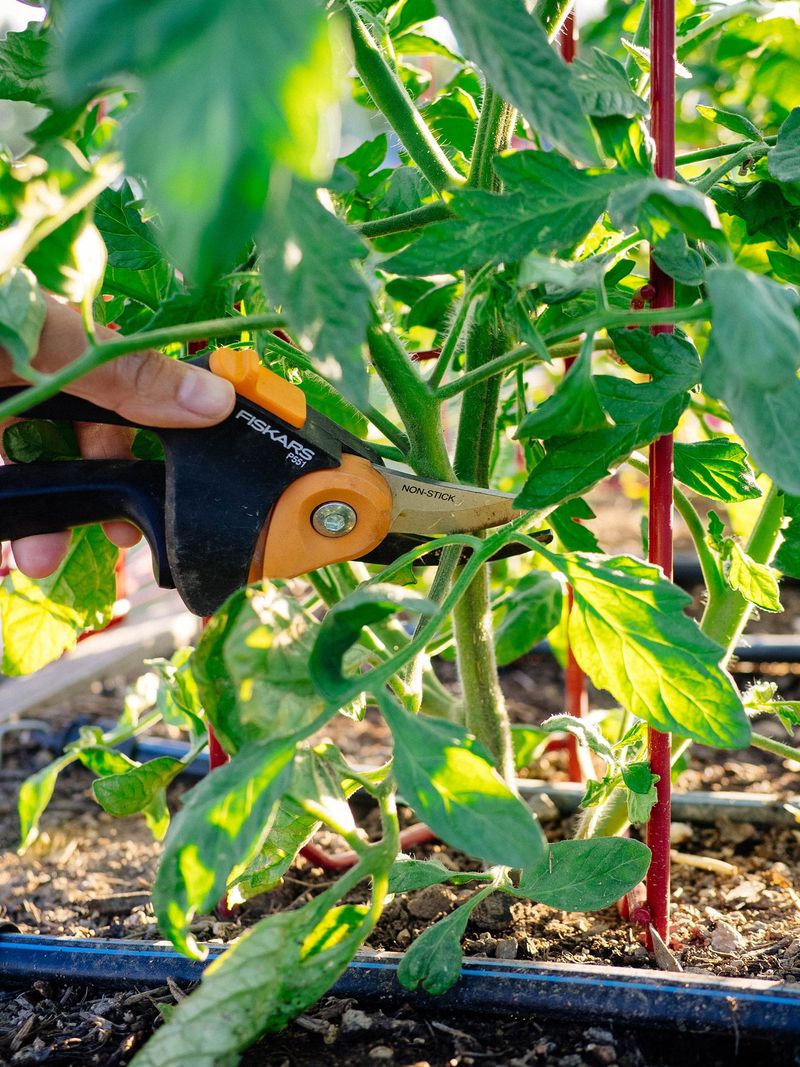
Pruning advice for tomatoes tends to get passed along as a universal rule, usually some version of “remove all the suckers” or “cut off the lower leaves.” Neither of those instructions holds up well across all tomato types, growing conditions, and gardening goals. Pruning decisions that make sense for one situation can reduce yield or damage plant health in another.
The first question before touching a plant is what type it is. Determinate tomatoes set their terminal flower cluster and stop growing, which means their overall structure is self-limiting. UMN Extension notes that bush-type determinates generally do not need pruning, staking, or trellising. Removing suckers from a determinate plant can reduce the number of fruiting stems without providing the benefits that pruning offers indeterminate plants.
Indeterminate plants are a different case. OSU Extension describes selective pruning of indeterminate plants as useful in short growing seasons where the goal is to push the plant toward earlier or larger fruit rather than maximum total production. Removing some suckers can concentrate the plant’s energy into fewer fruit-bearing stems, but it also reduces the total number of flowers and potential fruits. Whether that trade-off makes sense depends on your climate, season length, and whether you want a few large tomatoes or a long steady supply.
Leaf removal carries its own risks. Removing healthy leaves reduces the plant’s photosynthetic capacity, and research on tomato leaf removal published in the Journal of Horticultural Science found that severe or poorly timed defoliation can reduce yield. For disease management, UMN Extension’s tomato leaf spot guidance recommends removing no more than about one-third of the plant’s leaves at once. Targeted removal of diseased, ground-touching, or severely obstructive foliage is safer and more effective than stripping the lower half of the plant in one session.
Selective cuts that improve airflow and reduce soil contact are a reasonable approach. Aggressive defoliation is not.
Heat can interrupt fruit set despite good care
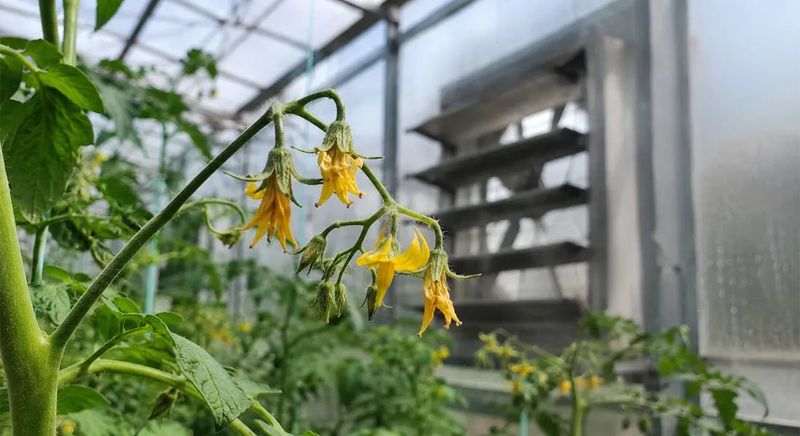
A stretch of hot weather can stop fruit set on a well-managed plant, and that failure has nothing to do with technique. Temperature is one of those variables that sits outside the grower’s direct control, and understanding what heat actually does to tomatoes helps avoid the frustration of blaming every dropped flower on something that could have been done differently.
Illinois Extension identifies night temperatures below 55 degrees Fahrenheit and daytime temperatures above 95 degrees with drying winds as conditions associated with blossom drop. When temperatures fall outside the range tomatoes need for successful pollination, flowers abort before fruit can set. This can happen even on plants that were transplanted correctly, spaced well, and watered consistently. The plant is not failing.
It is responding to conditions it cannot work around.
Heat also affects the fruit already on the plant. Penn State Extension’s heat stress resource explains that during very hot weather, tomatoes can soften faster while color development slows. Harvesting once color has begun to develop and finishing the ripening process indoors protects fruit quality during heat events, rather than leaving tomatoes on the vine to overripen or crack in extreme conditions.
Blossom-end rot is another heat-season problem that is frequently misunderstood. The dark, sunken patch at the bottom of the fruit is a physiological disorder, not a contagious disease. OSU Extension’s blossom-end rot guide describes it as involving calcium deficiency within the developing fruit combined with moisture stress, particularly during rapid growth and high heat. Penn State Extension notes that the soil itself rarely lacks calcium and that dry periods, heat, and calcium transport problems are more often the culprits.
Stabilizing irrigation and testing soil before adding any amendments is the right response, not reaching automatically for eggshells, lime, or calcium sprays.
Treat the planting window as influential, not irreversible
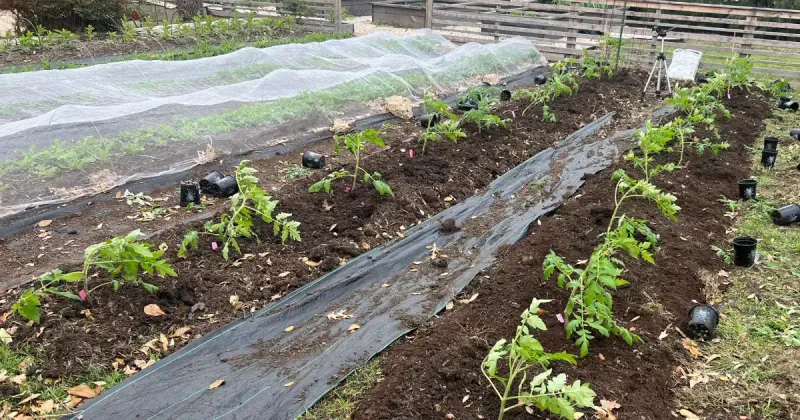
A useful way to carry everything in this article forward is to think of the planting window as influential rather than final. Choices made now can preserve or reduce future productivity, but they do not lock in a specific harvest. Later weather, cultivar behavior, unexpected disease, and corrective steps you take through the season all remain part of the picture.
A practical priority order helps when time and attention are limited. Start with a variety that fits the space, the season, and any known disease history in the bed. Wait for genuine transplant conditions, meaning frost danger has passed and the soil has warmed. Prepare the root zone based on a soil test rather than a guess, add fully composted organic matter, and place support structures before the plant needs them.
Space plants for airflow, water at the soil line, mulch to buffer moisture and reduce splash, and rotate crops when the layout allows. UMN Extension and UMN’s tomato growing guide both support this kind of layered, early-season approach as a way to reduce avoidable problems rather than guarantee a specific result.
When something does go wrong, respond with a targeted fix rather than an extreme one. Illinois Extension reinforces that plants with some disease or stress can still produce well, which means a problem spotted in July is not necessarily a lost season. The grower who sets up conditions carefully and then intervenes selectively is in a better position than one who either ignores problems or overcorrects with heavy fertilizer, aggressive pruning, or automatic calcium treatments. Getting the early decisions right is the most reliable way to keep future options open.