
The One Deadheading Mistake That’s Quietly Stopping Your Petunias From Reblooming
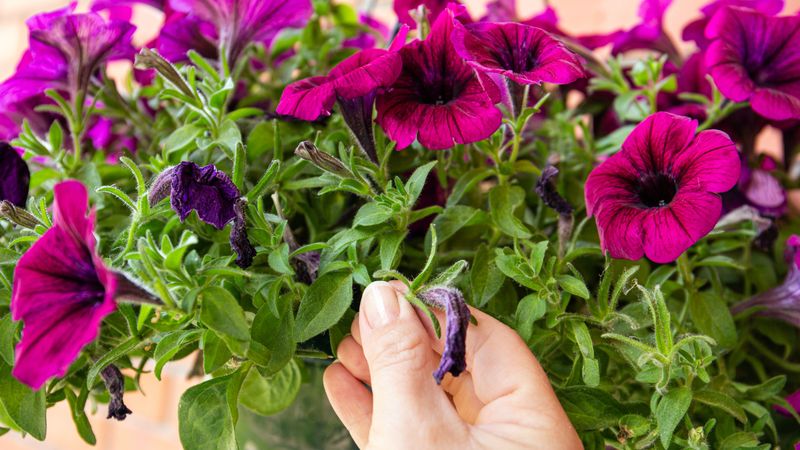
Most gardeners who deadhead their petunias think they’re doing everything right, and that’s exactly what makes this mistake so frustrating to spot. You pull off the faded petals, toss them aside, and wait for fresh blooms that never quite come. The fix is simpler than you might expect, but it only applies to certain types of petunias, and it won’t solve every slowdown you see. Understanding what you’re actually removing, and what you’re leaving behind, is where the real difference starts.
The petals are not the whole spent flower
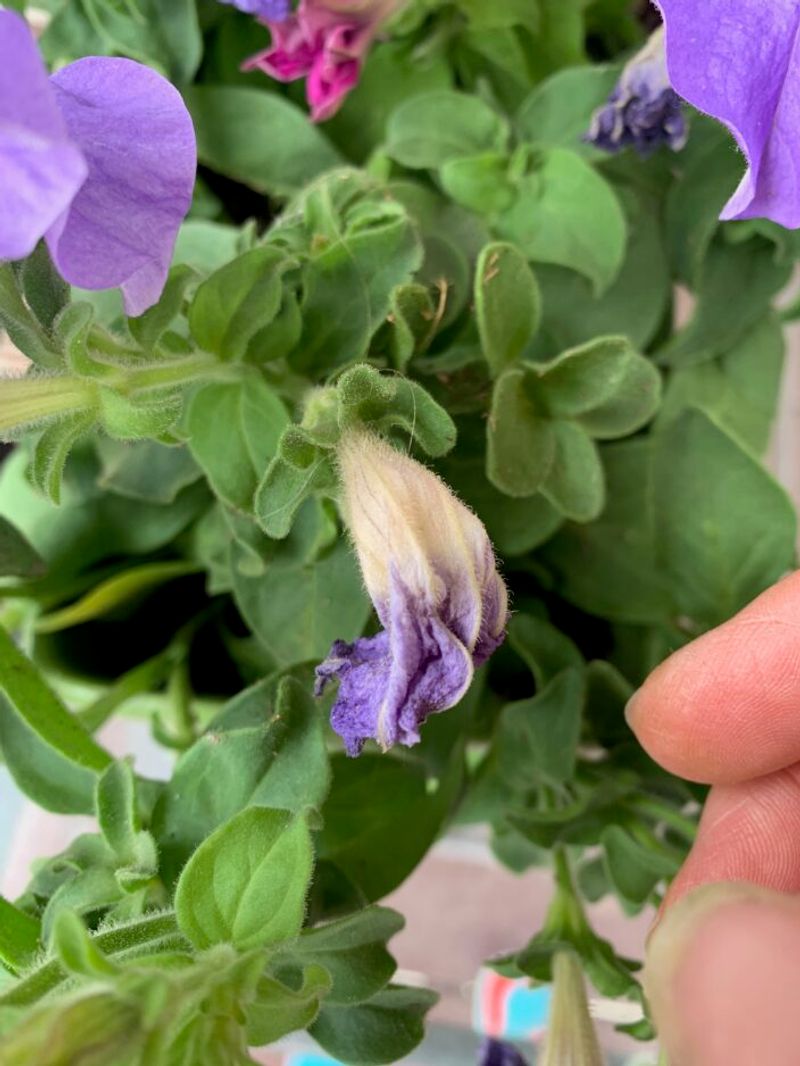
Pinching off the faded petals of a petunia feels like the logical move. The color is gone, the flower looks tired, and pulling the soft tissue away takes almost no effort. The problem is that the colorful petals are only part of the spent flower, and what stays behind can quietly work against you.
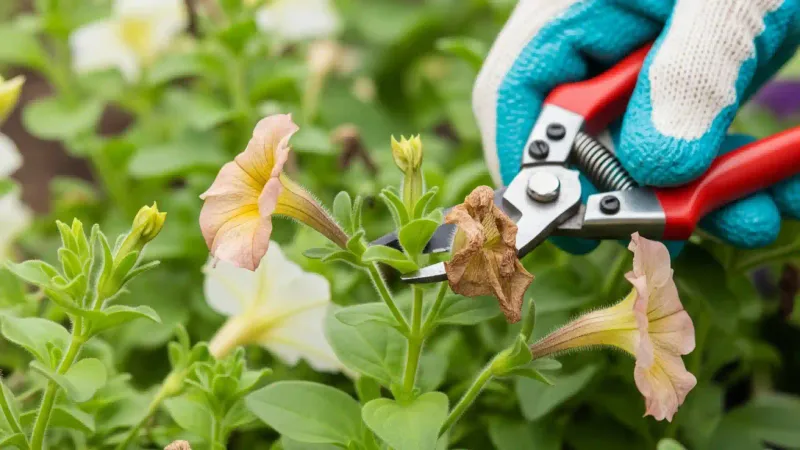
Look closely at a faded petunia bloom before you remove it. Just beneath the wilted petals, you’ll find a small, firm, green structure that wraps around the base of the flower. That’s the calyx, and nestled inside it is the ovary, which can develop into a seed pod if left in place. Mississippi State University Extension guidance on deadheading petunias recommends removing the faded flower together with the portion immediately below it, because preventing seed formation can help prolong flowering.
When you remove only the petals, that green base stays on the stem and can continue developing. On traditional, seed-producing petunias, especially large-flowered and double types, this leftover structure is exactly what you’re trying to prevent when you deadhead. The plant has already begun shifting its attention toward that developing seed, and leaving the base attached means that process continues whether or not you’ve cleaned up the visible color.
That said, petal-only removal isn’t the answer to every petunia that slows down. It’s one possible issue that matters most for seed-producing varieties. If your petunias are a self-cleaning type, or if they’re struggling with poor light, dry soil, or nutrient problems, removing the whole base won’t be enough to restore a full flush of color. The technique is a meaningful correction in the right situation, not a guaranteed fix for every case of weak flowering.
Which petunias benefit most from complete deadheading?
Not every petunia on the market needs the same care, and treating them all the same way is a good way to waste time or cut back plants that were already doing the work themselves. Before adding a deadheading routine to your schedule, it helps to figure out which type of petunia you’re actually growing.
Large-flowered grandiflora petunias and double-flowered types are the varieties most likely to benefit from complete deadheading. UF/IFAS Gardening Solutions guidance on petunias identifies large-flowered and double forms as varieties that require deadheading, while noting that many smaller-flowered cultivars are self-cleaning. These big-bloomed types produce flowers that persist on the plant after they fade, and without removal, the seed base can remain active on the stem for an extended period.
Smaller-flowered, spreading, and wave-type petunias often behave quite differently. Iowa State University Extension’s guide to deadheading herbaceous ornamentals notes that many petunias are self-cleaning and do not require deadheading at all. These cultivars naturally shed their spent flowers without holding onto the base, so routine pinching doesn’t add much to their performance.
Branded self-cleaning types deserve their own mention. Proven Winners’ care guidance for Supertunias explains that these petunias naturally shed spent flowers and do not need deadheading to stay in bloom, though occasional trimming can help plants that become open or tired over the season. That guidance applies specifically to Supertunias, not to every petunia sold at your local garden center under a different name.
If you’re not sure what you have, check the plant tag or look up the variety name. Knowing whether your petunia is a seed-producing type or a self-cleaning cultivar saves you from either skipping a helpful practice or performing one that isn’t needed.
Follow the bloom down to a healthy node
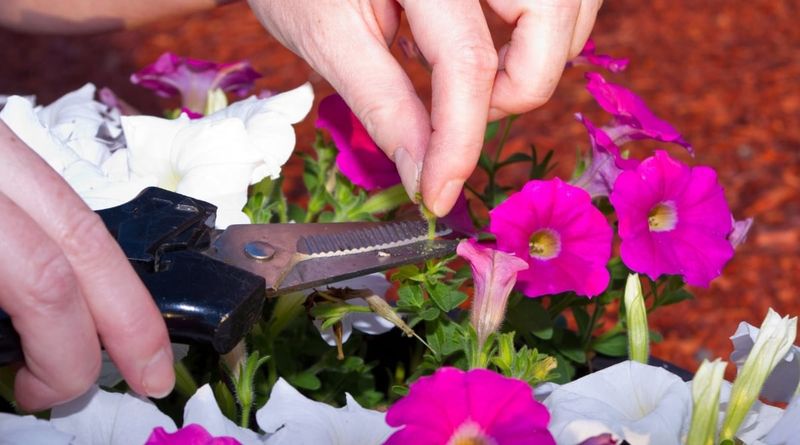
Correcting the technique doesn’t require any special tools or a complicated process. The adjustment is small but specific, and once you do it a few times, it becomes second nature.
Start by finding a faded bloom on the plant. Rather than grabbing just the wilted petals, trace the flower down its short stalk to the point where it meets the main stem. You’ll feel or see the small green base sitting right there. That’s the structure you need to include in your removal.
Mississippi State University Extension’s deadheading guidance recommends pinching or snipping off the faded flower together with the attached stalk and base to prevent the seed structure from continuing to develop.
Before you make the cut, look just below that base for the nearest healthy leaf node or side shoot. A node is the point on the stem where a leaf or pair of leaves attaches, and it’s often where a new shoot will emerge. Your goal is to cut just above that node, removing the spent flower and its base without taking a long section of healthy, active stem along with it.
Cutting “at the base” is sometimes misread as cutting back deep into the plant. Iowa State University Extension’s deadheading guidance recommends cutting spent flowers above the next healthy leaves or buds, which keeps the plant’s productive growth intact. A short, targeted removal is the goal, not a hard prune.
For soft stems, your thumbnail and index finger can handle the job cleanly. For thicker or woodier growth, a pair of small snips or bypass pruners works better and reduces the chance of tearing. Either way, a clean removal just above a healthy node gives the plant a clear point to push new growth from, while stopping the reproductive cycle at the spent flower rather than letting it continue below the surface.
A weekly check is a practical maintenance option
Knowing how to deadhead correctly is one thing; fitting it into a realistic schedule is another. For traditional container petunias, going through the plants about once a week is a reasonable approach that keeps spent blooms from piling up without turning into a daily task.
Mississippi State University Extension’s petunia care guidance suggests checking plants roughly once a week as a convenience guideline. That interval works well for most container situations because petunias in pots and hanging baskets tend to cycle through blooms at a steady pace during the growing season. A weekly pass lets you catch spent flowers before the seed base gets too far along, while keeping the time commitment manageable.
Containers and hanging baskets make deadheading especially worthwhile. A window box or a 12-inch pot might hold just three or four plants, and those plants carry the entire visual weight of the display. University of Minnesota Extension’s growing guide for petunias notes that deadheading may be impractical across large beds but is important for flowering annuals in containers, where keeping plants producing is more visible and more consequential to the overall look.
If you’re growing petunias across a wide landscape bed, the calculation changes. Colorado State University Extension’s deadheading resource acknowledges that removing every spent bloom from a mass planting can be impractical. For large beds, a general tidying pass or occasional light grooming may be a more sensible approach than trying to deadhead every individual flower.
Weekly isn’t a magic number, and skipping a week won’t ruin your plants. Think of it as a rough rhythm that keeps the task approachable rather than a schedule with hard consequences for missing it.
When deadheading is not enough, consider a trim for leggy plants
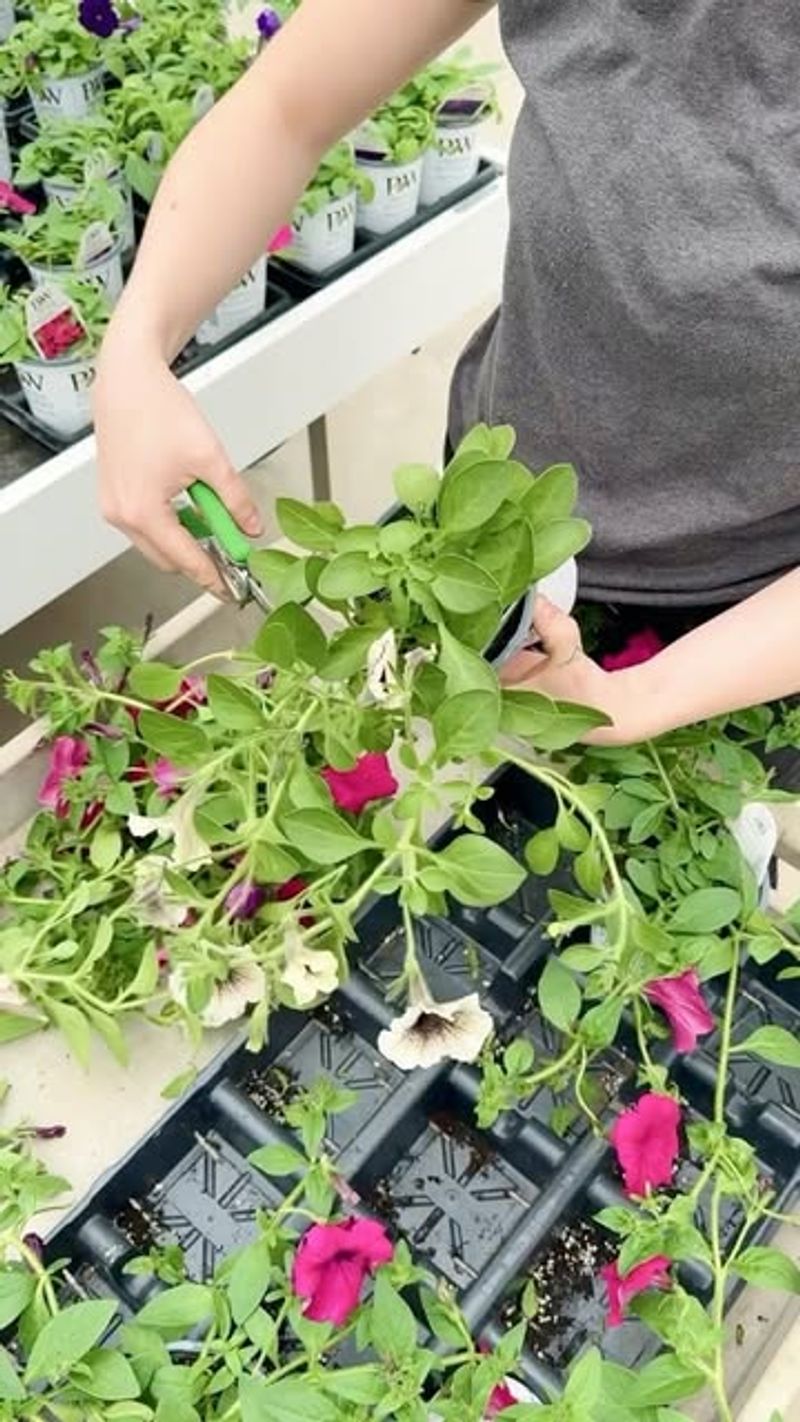
Deadheading and trimming are two separate practices, and mixing them up can lead to the wrong fix at the wrong time. Removing spent blooms targets the seed-forming base on individual flowers. Cutting back stems is a different operation that addresses how the plant is growing overall.
A petunia that stays compact and leafy through the season may need very little intervention beyond regular deadheading. The plant keeps branching naturally, and new buds appear along healthy stems without any extra encouragement. Proven Winners’ Supertunias care guidance describes trimming as cutting back much of the stem growth, and distinguishes it clearly from deadheading as a separate, occasional practice for plants that become open or tired.
When a plant gets leggy, with long bare stems and flowers clustered only at the tips, deadheading alone won’t fix the shape. A midseason trim that cuts stems back to a healthy node can encourage the plant to branch and fill in. Iowa State University Extension’s guide to deadheading ornamentals notes that shearing is a separate rejuvenation technique and can temporarily reduce the number of open flowers. That’s a normal and expected result, not a sign that something went wrong.
Timing and plant condition matter a great deal here. University of Minnesota Extension’s petunia growing guide cautions against aggressive pruning when plants are already under stress. If your petunia is wilting from drought, showing signs of disease, or has very little foliage left, cutting back hard can remove active buds and set the plant back further. In those situations, address the underlying problem first, whether that’s water, shade, or a pest issue, before reaching for the scissors.
A midseason trim is a useful tool for leggy plants in good health, not a routine step for every petunia or a shortcut around other cultural problems.
When color still stalls, check the growing conditions
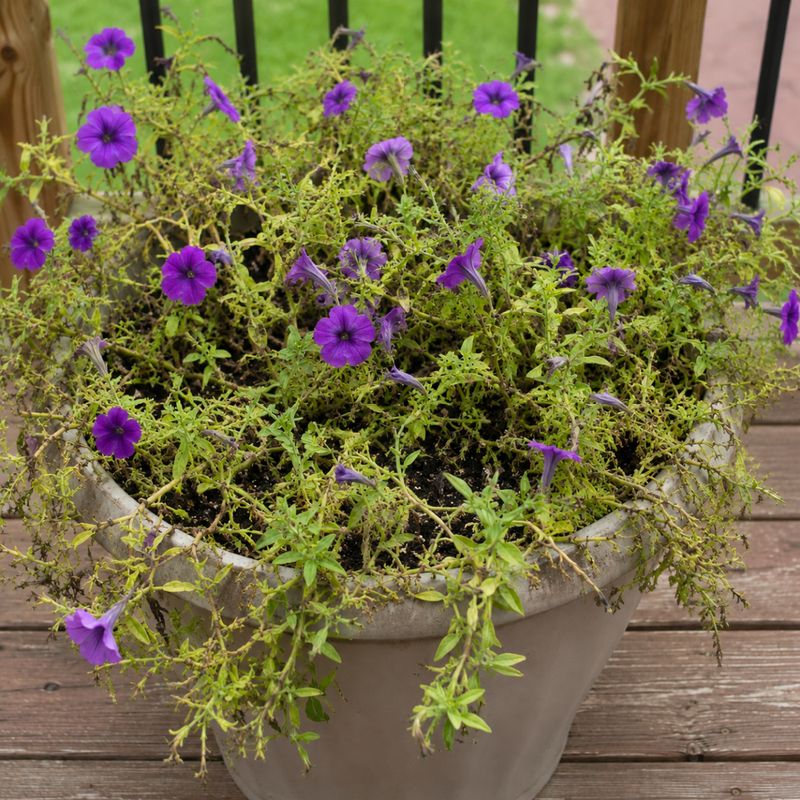
Fixing the deadheading technique is worth doing, but it won’t restore color if the plant is struggling with something deeper. Petunias that still bloom poorly after you’ve corrected your pinching method are telling you to look elsewhere.
Sunlight is the first thing to evaluate. University of Minnesota Extension’s petunia guide notes that petunias generally flower best with at least five or six hours of good sunlight, with more blooms in full sun conditions. A plant getting less than that, whether because of a fence, a tree canopy, or a porch overhang, will simply produce fewer flowers regardless of how carefully you deadhead it. If shade is the issue, moving containers to a sunnier spot is a more effective solution than any amount of pinching.
Water is the next check. Containers and hanging baskets dry out much faster than garden beds, and University of Minnesota Extension notes that container petunias can require watering as often as daily depending on container size, soil volume, and summer temperatures. A petunia that dries out repeatedly between waterings is under stress, and stressed plants cut back on flowering. Check the soil by pressing a finger an inch into the mix.
If it feels dry at that depth, the plant needs water before it needs any cutting.
Nutrition matters too, especially for container plants that can’t draw on reserves in surrounding soil. University of Minnesota Extension recommends regular liquid fertilizer for container petunias, following the product label rather than applying a stronger dose. A plant that hasn’t been fed in weeks may look healthy but flower poorly, and that gap won’t close with deadheading alone.
Beyond the basics, look the plant over for signs of pest damage, such as stippled or distorted leaves, or disease symptoms like spots, mold, or sudden wilting. Deadheading cannot correct any of those problems. Running through this short checklist – light, water, drainage, nutrition, pests, disease – before making more cuts gives you a clearer picture of what the plant actually needs.
Match the fix to the petunia and the problem
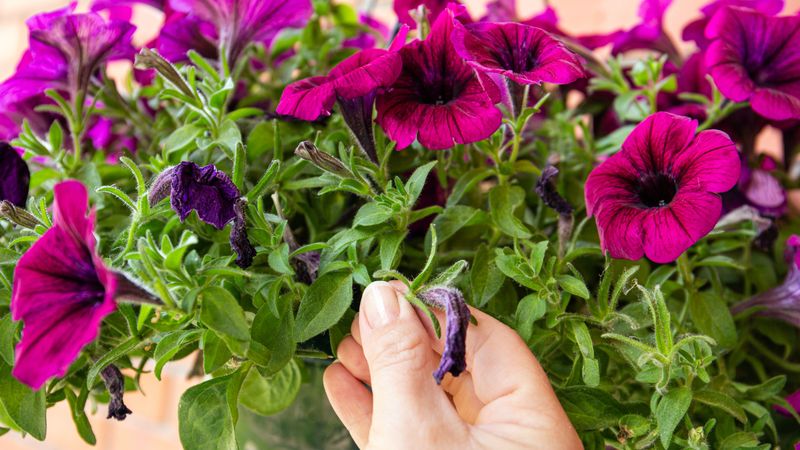
Getting petunias to keep blooming through the season comes down to matching the right response to the actual problem. A simple decision process helps avoid the common trap of applying the same fix to every situation.
Start by identifying what type of petunia you have. If it’s a large-flowered or double variety, Mississippi State University Extension’s deadheading guidance supports removing the whole spent flower, including the base, just above a healthy leaf node. If it’s a self-cleaning cultivar, Proven Winners’ Supertunias care page makes clear that routine deadheading isn’t needed and that occasional trimming serves a different purpose for plants that become open or leggy.
Once the technique is right, give the plant a week or two and then reassess. If flowering remains weak, work through the short diagnostic list from the previous section: sunlight hours, soil moisture, drainage, feeding schedule, and any visible signs of pests or disease. University of Minnesota Extension’s petunia guide is clear that shade, drought, poor drainage, nutrient gaps, and weather stress can all reduce flowering independently of deadheading.
For leggy plants in good health, a midseason trim is the appropriate tool, not more aggressive pinching. For stressed plants, address the root cause before making any cuts. Complete deadheading can help prolong color in the right petunias under good growing conditions, but it’s one piece of a larger picture. The headline of this article points to a real and correctable mistake, and fixing it genuinely helps in the right situation.
Just don’t expect a single technique change to override everything else a plant needs to thrive.