
Prune Your Tomatoes This One Way And Grow The Biggest, Healthiest Fruit You’ve Ever Picked
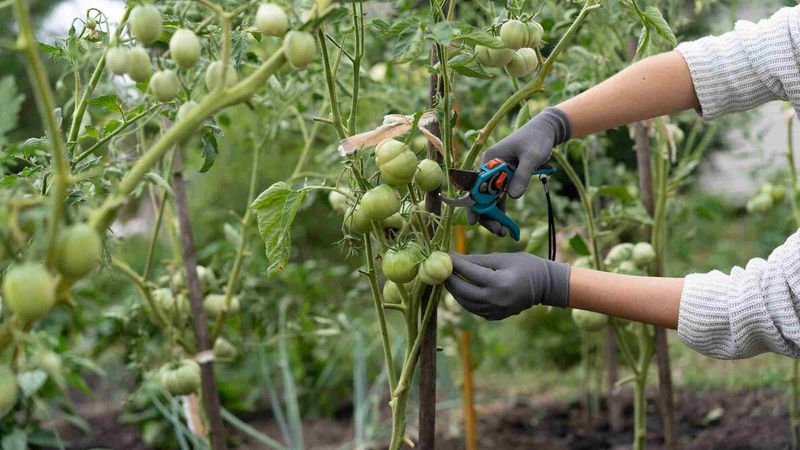
Most backyard gardeners have stood in front of a tomato plant so overgrown it looked more like a jungle than a garden. Pruning can help cut through that chaos, and for the right type of tomato, a focused approach to removing extra shoots may lead to larger, earlier fruit. The catch is that not every tomato benefits the same way, and a few common cutting mistakes can quietly work against you. Understanding which cuts to make, and which to skip, is where the real payoff starts.
Start by identifying the kind of tomato you are growing
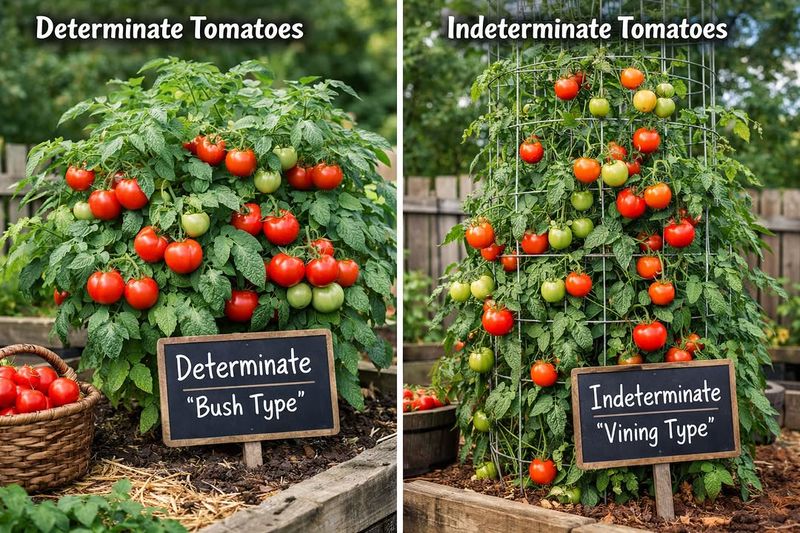
Before any pruning tool touches your plant, the single most useful thing you can do is figure out what type of tomato you are growing. Tomatoes fall into two broad categories, and that distinction shapes every pruning decision you will make this season.
Determinate tomatoes, sometimes called bush tomatoes, grow to a set height and then stop their main vertical growth once terminal flower clusters form at the shoot tips. Because their branches carry most of the fruit, removing suckers from determinate plants can reduce the number of fruiting sites and ultimately shrink your harvest. As Illinois Extension’s tomato growing guide explains, determinate varieties generally do not benefit from sucker pruning the way vining types do.
Indeterminate tomatoes keep growing, flowering, and setting fruit all season long until cold weather or another environmental limit stops them. These are the vining types, including most heirlooms, most large beefsteak varieties, and popular hybrids like Better Boy or Early Girl. University of Minnesota Extension notes that indeterminate plants continue growing throughout the season, which is exactly why managing their extra shoots makes sense on a staked or trellised plant.
Check the seed packet, plant tag, or variety description online. Look for the words “indeterminate” or “vining” before applying the sucker-pruning method described in the following sections. If the tag says “determinate” or “bush,” the right move is much more limited: clear any leaves that drag on the soil, remove clearly diseased or badly damaged foliage, and leave the rest of the plant alone. Illinois Extension’s pruning guidance supports this limited approach for determinate types, even while recommending more active management for indeterminate ones.
Use a moderate one- or two-stem structure on indeterminate plants
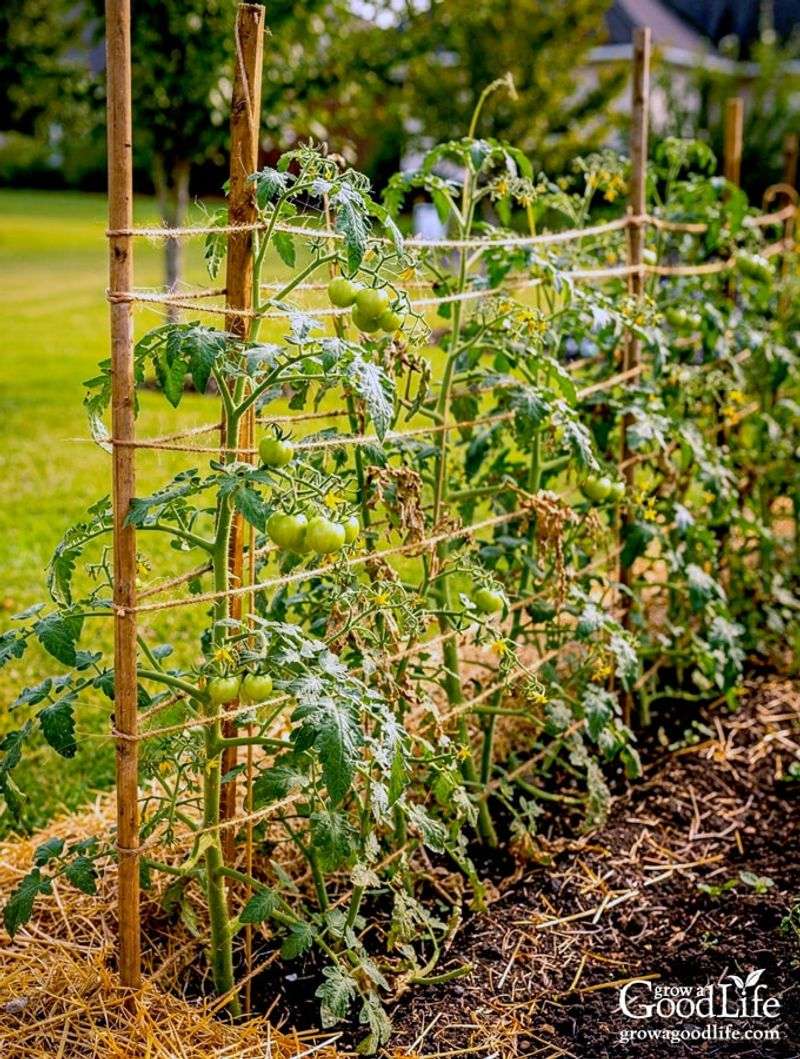
Once you have confirmed that your plant is an indeterminate variety, the next practical step is deciding how many main stems to keep. This is where the method gets concrete, and where it differs from simply cutting everything that looks extra.
The approach recommended by University of Wisconsin Extension is to keep one or two strong main stems on a staked or trellised plant. For a two-stem setup, retain the original central stem plus the sucker that emerges immediately below the lowest flower cluster. That particular sucker tends to be vigorous, well-positioned, and easy to train alongside the main stem. All other suckers that develop below or between those two stems are candidates for removal while they are still small.
One stem gives you the tightest plant, the easiest management, and possibly the earliest fruit on a short-season setup. Two stems give you a bit more production potential while still keeping the plant manageable on a stake or trellis. Some gardeners growing in large cages or with plenty of horizontal space let three or four stems develop, especially with sprawling heirloom varieties. Oregon State Extension notes that indeterminate plants are commonly trained to one to four main stems depending on the support system and the grower’s goals.
There is no single stem count that works best for every cultivar, support structure, climate, or garden size. A compact stake in a raised bed calls for a different approach than a heavy-duty trellis in a large in-ground plot. UC IPM’s pruning guidance frames the stem decision as a management choice rather than a fixed rule, which is a useful way to think about it. Choose a structure that fits your support, your space, and how much time you want to spend maintaining the plant through the season.
Find the suckers and remove only the ones you do not need
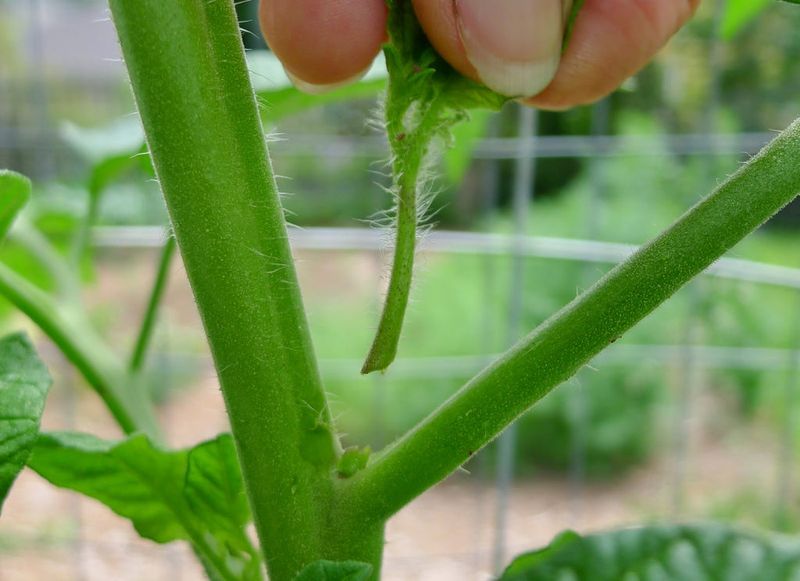
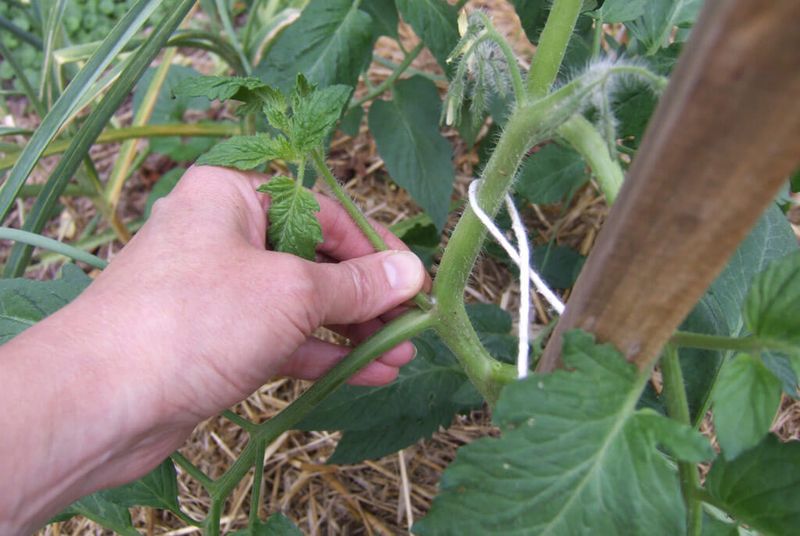
Knowing which shoots to remove starts with knowing exactly where to look. A sucker is the small shoot that grows from the leaf axil, which is the V-shaped angle formed between a leaf branch and the main stem. Given enough time, every sucker will grow into a full branch, complete with its own leaves, flowers, and eventually fruit. On a staked or trellised plant, that unchecked growth quickly creates a tangled, hard-to-manage structure.
Start at the base of the plant and work upward. Locate the lowest flower cluster on the main stem. The sucker growing just below that cluster is the one to keep if you are using a two-stem approach, as described in the previous section. Mark it mentally or with a small tie so you do not accidentally remove it during your first pruning pass.
Every other sucker growing from the main stem below that point, and any competing shoots that develop between your two chosen stems, are candidates for removal.
Small suckers, roughly an inch or two long, can usually be pinched off cleanly between your thumb and forefinger. Wisconsin Extension’s home tomato guide favors pinching over cutting for small suckers because it is quick, leaves a clean break, and requires no tools. If a sucker has grown longer and woody, use clean pruners rather than forcing it off with your fingers.
While you are working through the plant, also clear any leaves that rest directly on the soil. Illinois Extension recommends removing these lower leaves to reduce contact with soilborne pathogens and improve airflow near the base. This step applies to both determinate and indeterminate plants. Remove clearly diseased or badly damaged leaves as well, but leave healthy foliage in place.
The goal is selective pruning, not a stripped stem.
Inspect regularly to help manage new sucker growth
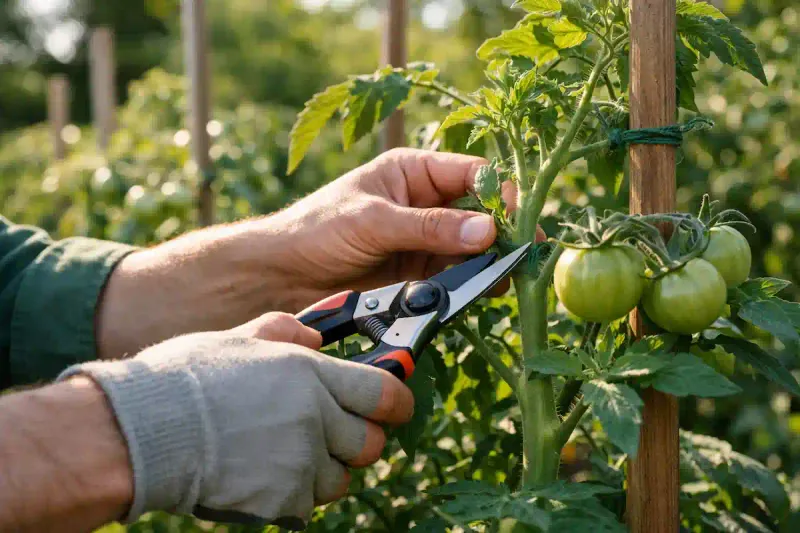
Pruning a tomato plant is not a one-and-done task. New suckers emerge from the leaf axils continuously as the plant grows, so a single early session will not hold the plant’s structure through the entire season. Building a simple inspection routine makes the work manageable and keeps small suckers from becoming large, woody branches that are harder to remove cleanly.
A practical starting point, supported by Wisconsin Extension’s pruning guide, is to begin when the first flowers open on the plant. At that stage the plant is actively growing and suckers will be appearing regularly. From there, return to the plant roughly every 10 to 14 days as needed to check for new growth. That interval is not a strict rule; a fast-growing plant in warm, humid weather may need attention sooner, while a slower plant in a cooler climate might go a bit longer between checks.
Stop major pruning about one to two weeks before you expect to pick your first ripe tomatoes. By that point the plant’s canopy is mostly set, and cutting back stems or large leaves close to harvest can leave developing fruit exposed to direct sun at a vulnerable stage. Oregon State Extension notes that managing side shoots is primarily a plant-management choice tied to the growing season’s length and conditions.
Each time you inspect the plant, also check that your chosen stems are properly supported. As indeterminate plants climb, unsupported stems can lean, snap, or twist in a way that damages the plant more than any sucker would. Secure new growth with soft ties, clips, or garden twine, keeping stems upright without constricting them. Adjust the routine to match your plant’s actual growth rate, your support setup, and the pace of your local growing season.
Keep enough healthy foliage to feed and shade the fruit

A common pruning instinct is to open up the plant so tomatoes get more direct sunlight. The logic sounds reasonable, but stripping away healthy leaves to expose fruit can backfire in more ways than one.
Leaves are the plant’s photosynthetic engine. They convert sunlight into the sugars and other compounds that drive root growth, stem growth, and fruit development. Removing too many healthy leaves does not redirect energy toward the fruit; it reduces the total amount of energy the plant can produce. Research on leaf area and tomato performance supports this: a greenhouse study found that moderate basal leaf removal did not significantly affect yield, but intensive removal that cut leaf area by roughly half reduced fruit yield by about 17%.
Those results came from controlled commercial conditions, so exact percentages should not be treated as backyard thresholds, but the direction of the finding is clear.
Beyond photosynthesis, foliage provides shade that protects developing fruit from sunscald. Sunscald shows up as pale, papery patches on the sun-facing side of a tomato, and it happens when fruit is suddenly exposed to intense direct sunlight after being shaded by leaves. University of Minnesota Extension lists sunscald as a common result of overpruning or heavy leaf loss, particularly in hot or dry weather. UC IPM similarly advises preserving enough canopy to shade the fruit as it develops.
Moderate pruning of crowded shoots can improve airflow within a dense canopy, which may make conditions slightly less favorable for some fungal and bacterial diseases. That is a real benefit, but it is a supporting one. Iowa State Extension’s disease management guidance is clear that pruning alone cannot substitute for proper plant spacing, careful watering practices, garden sanitation, resistant variety selection, and prompt removal of infected material. Think of the airflow benefit as a bonus from thoughtful pruning, not the primary reason to cut.
Avoid aggressive cuts that create new problems
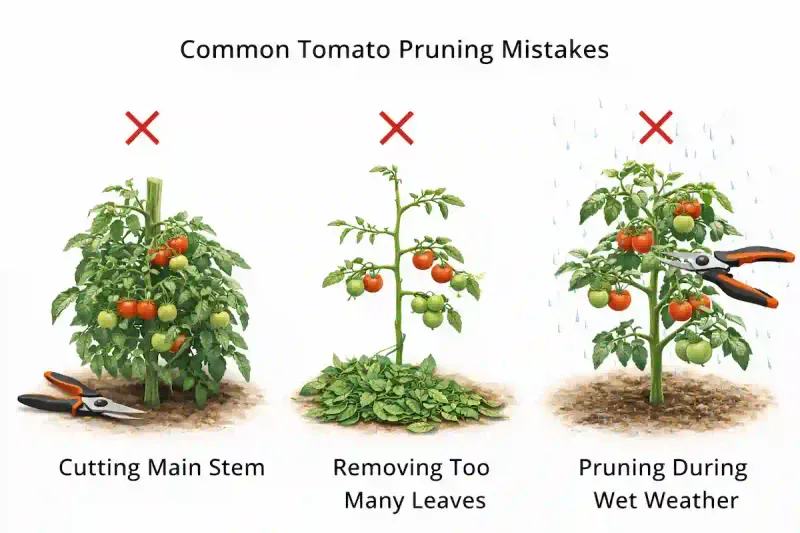
Pruning mistakes tend to follow predictable patterns, and most of them come from applying the right idea too broadly or to the wrong plant. Knowing what not to do is just as useful as knowing the correct cuts.
Applying sucker pruning to a determinate plant is one of the most common errors. Pull every sucker from a bush-type tomato and you are removing the branches that would have carried most of its fruit. Illinois Extension’s pruning guidance is specific on this point: sucker removal is appropriate for indeterminate, vining varieties, not for compact determinate plants. If you are not certain of your variety, skip the sucker pruning and limit yourself to clearing soil-touching or diseased leaves.
Cutting away large amounts of healthy foliage in a single session is another mistake with real consequences. Beyond the photosynthesis loss described in the previous section, sudden exposure of previously shaded fruit to strong afternoon sun can cause sunscald within days. Minnesota Extension and Utah State Extension both identify heavy pruning or leaf loss as a leading cause of sunscald on home-garden tomatoes, with Colorado State Extension noting the same risk in hot, dry conditions.
Using dirty tools between plants is a risk that is easy to overlook when you are moving quickly through a row. Pruning wounds are open entry points, and contaminated pruners can carry bacterial or viral pathogens from one plant to another. Minnesota Extension’s tomato virus guidance recommends sanitizing tools between plants, particularly when disease is suspected. Their tool cleaning guide outlines a straightforward disinfection process using a diluted bleach solution.
When suckers are small enough to pinch by hand, doing so avoids the tool-contamination risk entirely and is generally the preferred approach.
Set realistic expectations for size, timing, and total harvest
Pruning an indeterminate tomato plant can genuinely improve how manageable it is, and under some conditions it may lead to larger individual fruit or earlier ripening. Those are real, worthwhile benefits. What pruning cannot do is guarantee a record-breaking harvest or override the other factors that determine how big and healthy your tomatoes actually become.
The most important distinction to keep straight is the difference between individual fruit size and total harvest weight. Removing suckers reduces the number of fruiting sites on the plant. Fewer sites often means each remaining tomato has less competition for the plant’s resources, which can push individual fruit size upward. But the plant may also set fewer tomatoes overall.
Illinois Extension describes this tradeoff directly: pruning typically produces fewer fruits that average larger, while an unpruned plant tends to produce more total fruit. Neither outcome is universally better; it depends on what you want from your garden.
Research on specific varieties underlines how variable results can be. A two-year Rutgers study of ‘Mortgage Lifter’ and ‘Prudens Purple’ heirloom tomatoes found that some pruning treatments improved midseason fruit size in one year but results were not consistent across years or harvest periods. That kind of variability is typical in garden research and is a good reason to treat pruning as a tool to experiment with rather than a formula that delivers the same outcome every time.
Fruit size is shaped by much more than pruning. Cultivar genetics set the ceiling on how large a tomato can grow; no amount of cutting will turn a cherry tomato into a beefsteak. Water availability, soil temperature, overall fruit load on the plant, and the plant’s photosynthetic capacity all play roles in final fruit size, as supported by published research on tomato fruit development and Utah State Extension’s tomato growing research. Fruit thinning, which means reducing the number of fruits per cluster, is a separate practice from sucker pruning, and University of New Hampshire research confirms it does not necessarily increase marketable total yield even when it increases individual fruit size.
Oregon State Extension frames sucker removal primarily as a plant-management choice, particularly useful in short-season climates where concentrating the plant’s energy may nudge ripening earlier. That framing is honest and practical: pruning is one lever among several, and its effect depends on the full picture of how you are growing your tomatoes.
Match the final cuts to your plant and your goal
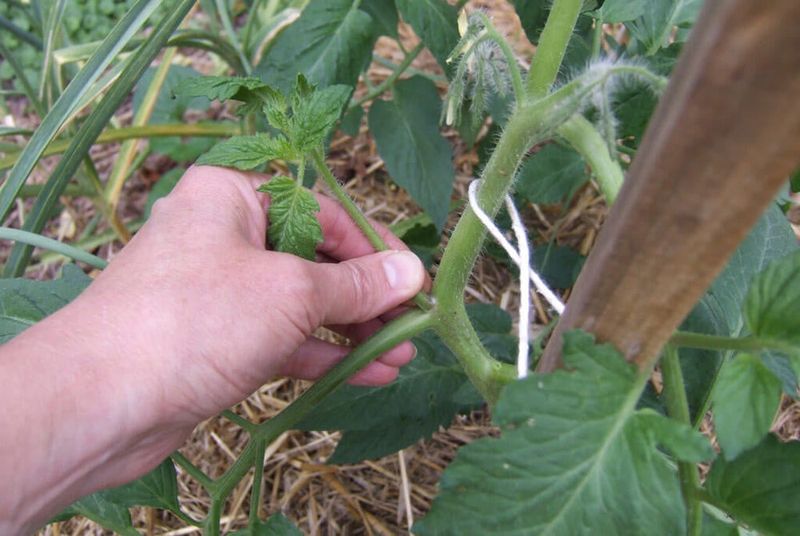
Putting this all together at the plant comes down to a short sequence of checks and actions that you can run through every time you step into the garden during the growing season.
Confirm the variety is indeterminate before removing any suckers. Choose a supported one- or two-stem structure that fits your stake, trellis, or cage. If you are using two stems, identify and protect the sucker growing just below the lowest flower cluster, as Wisconsin Extension recommends, and let it grow alongside the main stem. Pinch out other small suckers with your fingers while they are still easy to remove.
Clear any leaves that touch the soil and remove foliage that is clearly diseased or badly damaged, but preserve the healthy green canopy that shades your developing fruit. When disease is a concern or you need cutting tools for larger suckers, clean and disinfect them between plants.
Adjust the approach as you go. UC IPM and Oregon State Extension both treat stem count and pruning intensity as grower choices shaped by support, space, cultivar, and season length, not fixed prescriptions. Stop heavy pruning a week or two before first harvest, keep an eye out for sunscald or other stress signs, and let what you observe guide the next session. Restrained, consistent pruning can make an indeterminate plant easier to manage and may produce larger individual tomatoes under the right conditions, but the garden itself will always have the final say.