
8 Reasons Your Hydrangea Blooms Are Turning Brown Long Before They Should
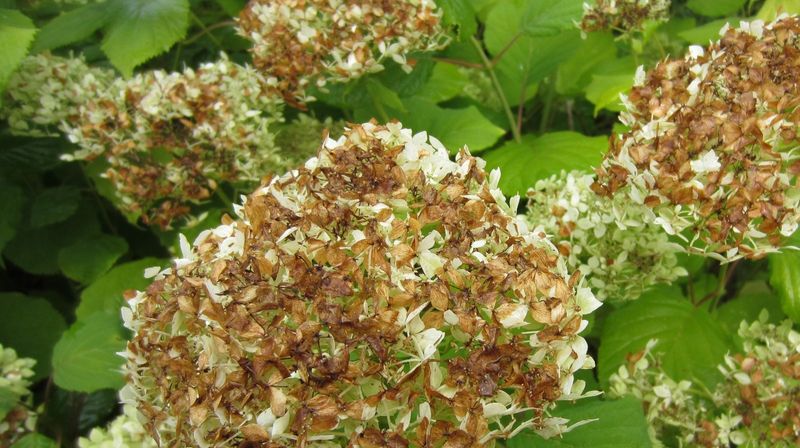
Hydrangea flowerheads are some of the showiest things in a summer garden, so it stings when they go brown before you feel ready to let them go. The good news is that brown petals are not automatically a sign that something has gone wrong. Some hydrangeas are simply aging on schedule, while others are reacting to heat, thirst, disease, or a late frost. Knowing which situation you are looking at changes everything about how you respond.
Brown may be the flowerhead’s normal next color
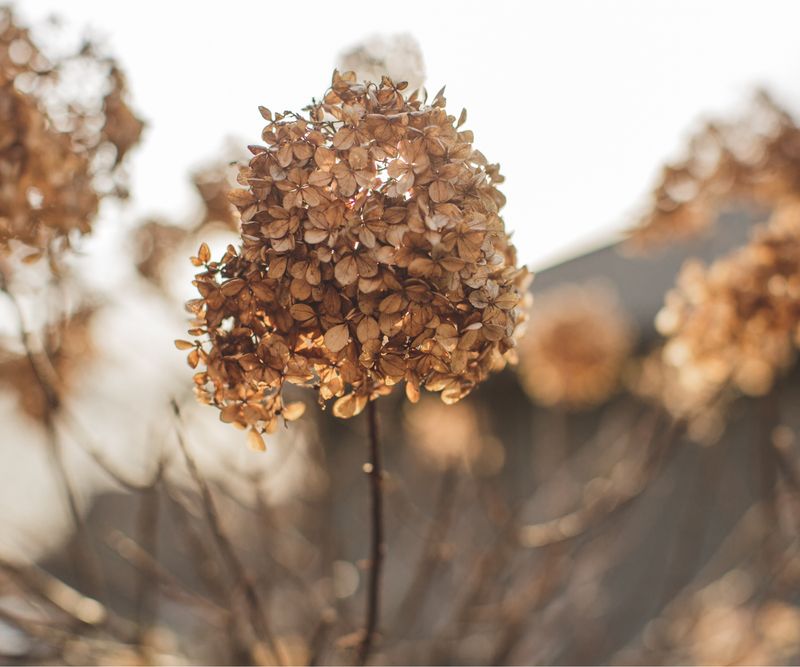
Not every brown hydrangea flowerhead is a problem. Many hydrangeas follow a built-in color arc, shifting from their peak white, blue, or pink toward green, then beige, then a warm tan or brown as the season progresses. That change is part of the plant’s biology, not evidence of stress or disease.
Panicle hydrangeas are a well-known example. RHS hydrangea paniculata trial observations document how many cultivars shift from creamy white toward pink, rose, or eventually a warm beige or brown as the flowerheads mature. That color evolution is considered part of their ornamental appeal, and some gardeners leave the dried heads standing through winter for structure and seasonal interest.
Oakleaf hydrangeas follow a similar pattern. University of Illinois Extension notes on oakleaf hydrangea describe the flowerheads aging attractively through the season, making them worth keeping long after the peak bloom period has passed. Bigleaf hydrangeas can also shift toward pinkish or greenish tones before eventually fading, though their display can be cut short by environmental stress more readily than panicle types.
The key visual test is uniformity. Natural aging tends to be a gradual, relatively even color change that moves across the whole flowerhead without spots, gray fuzz, collapsing petals, or lesions on nearby leaves. When the color change is smooth and the surrounding foliage looks healthy, aging is almost certainly the explanation. Concern is more warranted when browning is patchy, concentrated on one side, accompanied by crispy edges, or paired with unusual symptoms on stems or leaves.
Use that baseline as your starting point before moving on to the causes that actually cut a display short.
Heat and direct sun can crisp exposed tissue
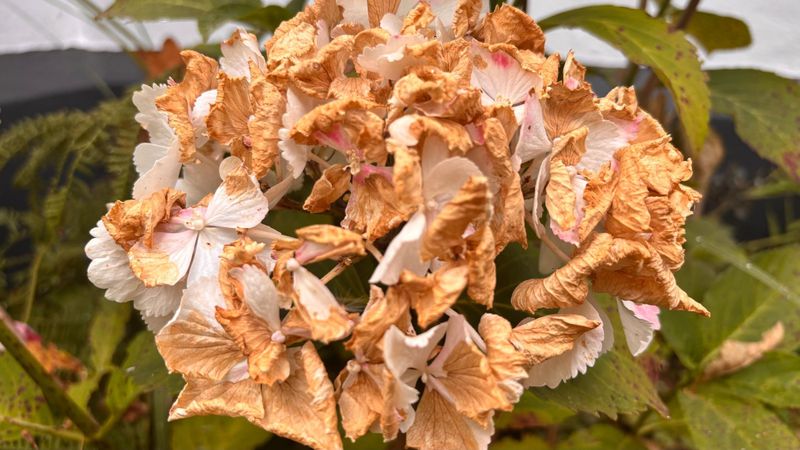
Afternoon sun and high temperatures can do visible damage to hydrangea flowers before those flowers have had any chance to age naturally. The tissue in a flowerhead is relatively thin and holds water poorly once the air turns hot and dry. When heat and sun combine, the result is often brown, papery patches concentrated on the side of the bloom that faces the sun or the direction of reflected heat from pavement, walls, or light-colored fences.
Oregon State University Extension guidance on helping hydrangeas through a heat wave points out that bigleaf hydrangeas in particular can show rapid wilting and flower damage during heat events, and that site exposure plays a major role in how quickly that damage appears. Panicle hydrangeas handle sun better when the soil stays moist, but even they can show scorch under prolonged heat.
The pattern is the giveaway. Heat scorch tends to produce dry, brittle margins or patches, not soft, collapsing petals or spots with defined edges. Compare the most exposed blooms to ones growing in shade on the same plant or a nearby plant in a shadier spot. If the shaded flowers look noticeably better, the site conditions are doing most of the damage.
Illinois Extension’s overview of heat stress in plants reinforces that symptom pattern, describing scorched tissue as typically dry and bleached rather than soft or discolored in the way disease tends to present.
Wind adds to the problem by accelerating water loss from flower tissue. A location that receives afternoon sun plus a regular breeze from a gap between structures can produce scorch much faster than sun alone. Before adjusting anything else, note when and where the sun hits, whether there is reflected heat nearby, and whether the damage is always on the same side of the plant.
Drought cycles can shorten the display
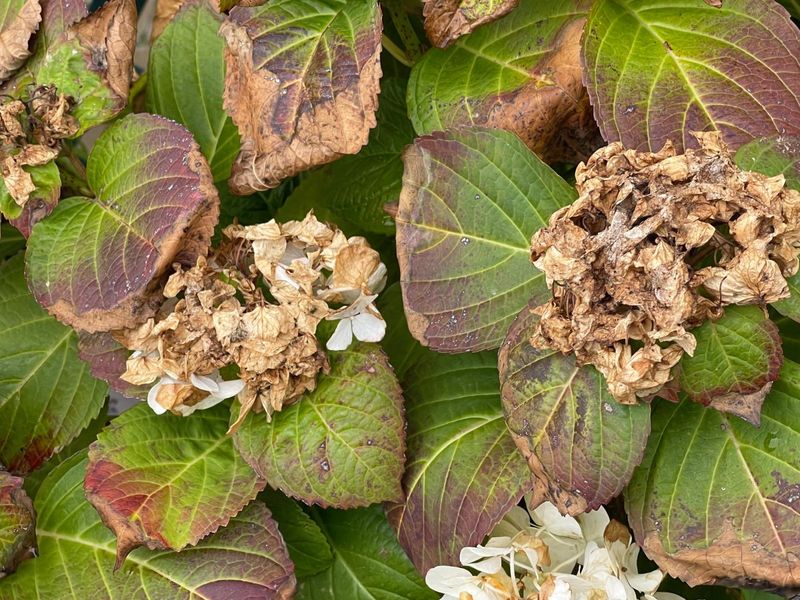
Hydrangeas carry a reputation for wilting dramatically at the first sign of dry weather, and that reputation is mostly earned. The large flowerheads and broad leaves lose water quickly, and when the root zone dries out repeatedly, flower tissue can die well before the bloom would naturally age. The tricky part is that the soil surface can look fine while the root zone several inches down is already dangerously dry.
Colorado State University Extension’s explanation of water’s role in plant growth describes how water loss from leaves and flowers exceeds uptake from roots during hot, windy conditions, creating tissue stress even in plants that were recently watered. A shallow watering the evening before may leave the top inch of soil damp while the deeper root zone stays dry.
Rather than watering on a fixed schedule, push a finger or a thin tool several inches into the soil near the drip line. If the soil at that depth feels dry or barely moist, the plant is likely running short. Illinois Extension’s drought guidance recommends checking root-zone moisture before assuming a plant needs water, because overwatering a plant that is already stressed from poor drainage can make things worse rather than better.
When the root zone genuinely is dry during hot weather, water deeply enough to wet the entire root zone rather than just the surface. Early morning is the better time, both because it reduces evaporation and because foliage and flowers dry out during the day, lowering disease risk. Shallow, frequent sprinkling keeps roots near the surface and makes the plant more vulnerable to the next dry spell. Repeated drought cycles, even moderate ones, can shorten the bloom period noticeably even when the plant eventually recovers.
Poor drainage keeps root stress in the picture
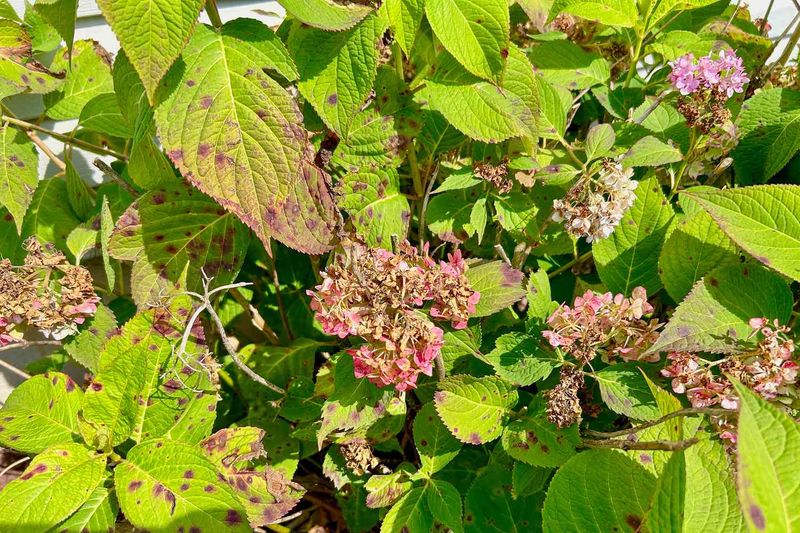
Waterlogged roots and drought-stressed roots can produce surprisingly similar symptoms at the top of the plant, which is one reason a brown bloom alone is not enough to confirm a watering problem either way. When soil stays saturated for extended periods, roots lose the ability to absorb oxygen and can begin to decline. That root damage reduces the plant’s capacity to move water upward, so the flowers and leaves show stress even though the soil around them is wet.
Oregon State University Extension’s general care guidance for hydrangeas describes the plant’s preference for consistent moisture in well-drained soil, making clear that both extremes, too dry and too wet, can undermine performance. A container without adequate drainage holes or a bed in a low spot that holds water after rain are common setups for this kind of root stress.
Before assuming the plant needs more water or less water, check the actual conditions below the surface. Lift a small amount of soil several inches down and squeeze it. Soil that holds its shape and feels wet rather than just moist may be draining poorly. Look also for other signs: yellowing leaves, a sour or musty smell from the soil, or roots that appear brown and soft rather than firm and pale.
OSU Extension’s overview of hydrangeas in garden settings notes that site selection and soil drainage matter as much as watering frequency for keeping these plants healthy season after season.
Brown flowers in a plant with otherwise healthy-looking foliage and good drainage are much less likely to reflect a root problem. When drainage is genuinely poor, improving it through amended soil, raised planting, or adjusted site selection will do more lasting good than any change to the watering schedule alone.
Cool, wet weather can reveal gray mold
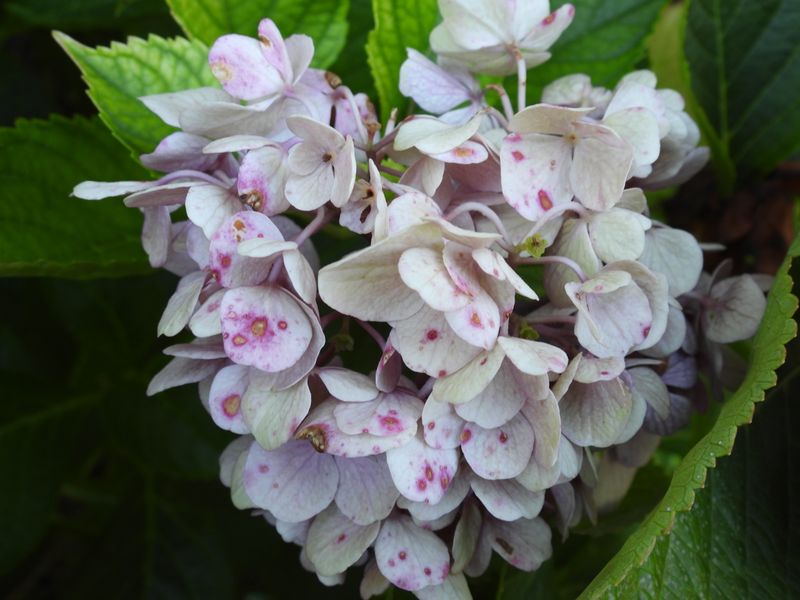
Botrytis gray mold is one of the more recognizable hydrangea diseases, but only when you know what to look for beyond brown petals. The color change alone is not a diagnosis. Gray mold announces itself through a combination of clues that, taken together, point clearly toward a fungal cause rather than sun, age, or water stress.
Penn State Extension’s guide to hydrangea diseases describes the characteristic signs: brown or gray petals, buds that collapse before they open, soft petal tissue that drops rather than drying in place, and the appearance of fuzzy gray spore masses on affected tissue. Those spores are the most reliable visual confirmation, and they tend to appear during cool, humid, wet stretches of weather when air circulation around the plant is poor.
Check beneath the flowers as well. University of Minnesota Extension’s hydrangea diagnostic tool notes that brown spots can develop on leaves where infected petals have fallen, which is a detail that distinguishes gray mold from simple aging or scorch. An aging flowerhead does not typically leave lesions on the leaves below it.
UMN Extension’s broader guide to gray mold in flower gardens recommends removing infected flowers and all fallen debris promptly, improving air circulation by thinning crowded stems or nearby plants, watering at the base of the plant rather than overhead, and avoiding late-day watering that leaves foliage wet overnight. These cultural steps address the conditions the fungus needs to spread, and they are the right first response before any other treatment is considered. A cool, rainy week with soft, collapsing petals and fuzzy growth is the scenario that makes gray mold worth investigating. Dry, crisp brown edges on a sunny afternoon are not.
Brown or sunken spots make disease more plausible
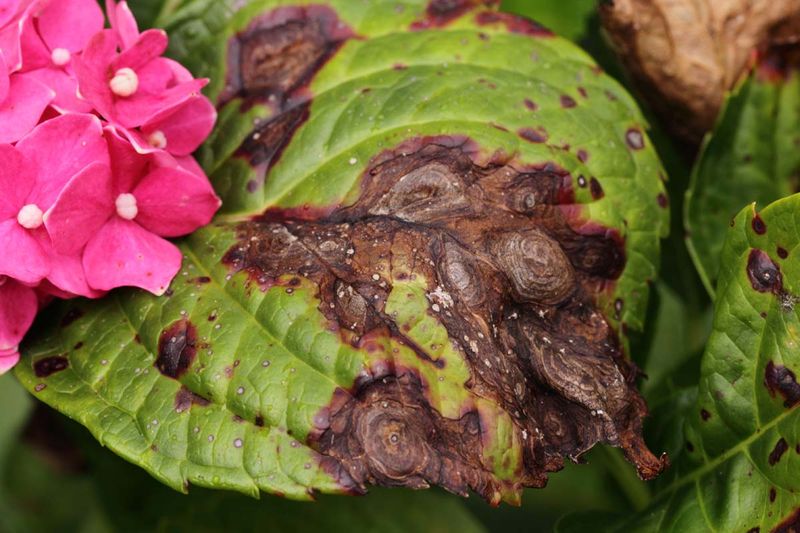
When spots appear on the petals or leaves rather than an overall color change, the diagnosis shifts. Anthracnose and related fungal diseases can produce brown, sometimes sunken spots on hydrangea petals and foliage, and those spots often have a darker margin that separates the diseased tissue from healthy tissue around it. That combination of spot shape, texture, and margin is meaningfully different from the even color transition of normal aging or the dry, crisp edge damage that heat produces.
University of Minnesota Extension’s hydrangea diagnostic resource describes brown spots on petals as one of the patterns that points toward disease rather than environmental stress, particularly when similar spots appear on leaves at the same time. The co-occurrence of petal and leaf symptoms is a useful clue because heat scorch and drought rarely produce defined spots on leaves with distinct margins.
Penn State Extension’s hydrangea disease overview covers anthracnose as a condition affecting both foliage and flowerheads, with lesions that can expand or merge under favorable conditions. Wet summers with warm temperatures tend to encourage its spread.
Spotting is a reason to look more carefully, not a reason to reach immediately for a spray. Note the pattern: are spots scattered randomly, concentrated on lower leaves, or appearing on both petals and foliage? Are they sunken or raised? Do they have a distinct border or fade gradually into healthy tissue?
Those details help confirm whether disease is actually involved or whether another explanation fits better. Removing affected plant material and improving airflow are reasonable first steps while you gather more information about what you are actually dealing with.
A late freeze can injure vulnerable buds and flowers
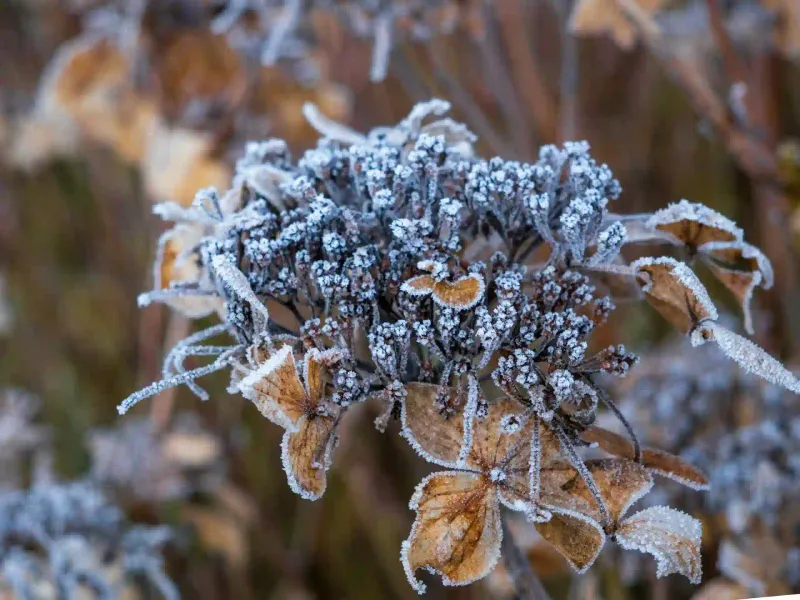
Timing is the most important clue when trying to connect a late freeze to brown hydrangea flowers. If a plant that looked healthy goes brown within a day or two of temperatures dropping to or below freezing, frost injury is a reasonable explanation worth investigating. The damage tends to appear suddenly and affects tissue that was recently exposed to the cold rather than developing gradually over days or weeks the way aging or disease typically does.
Penn State Extension’s guide on why hydrangeas fail to bloom explains that frost can injure or kill flower buds, particularly on bigleaf and oakleaf hydrangeas that bloom on old wood. When those buds are damaged before they open, the plant may produce few or no flowers that season. For flowers that are already open at the time of a freeze, the tissue is vulnerable and can brown or collapse quickly after the cold event.
Protecting plants before a forecast freeze is more effective than any response after the fact. Oregon State University Extension’s advice on protecting flowers from freezing suggests covering vulnerable plants with frost cloth or a lightweight sheet overnight and removing the covering once temperatures rise the following morning. That simple step can make a meaningful difference for plants in marginal locations or during unpredictable late-spring cold snaps.
Not every brown bloom after a cold night is frost damage, particularly if temperatures stayed above freezing or the browning is limited to a few older flowerheads. Compare the timing carefully, check the overnight low for your specific location, and look at whether the damage is widespread across the plant or isolated to a few exposed blooms before drawing a conclusion.
Uneven streaking or distortion justifies an insect check
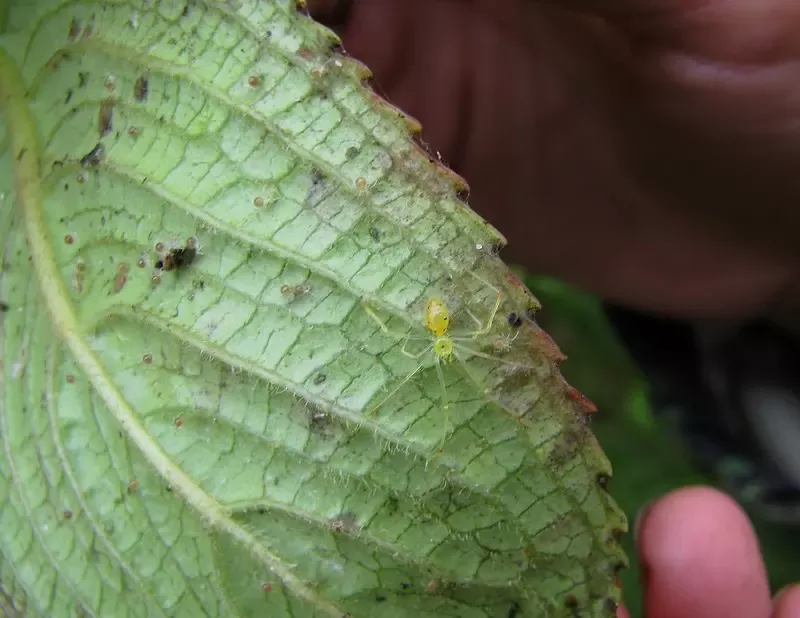
Uniform brown color across a flowerhead is almost never an insect problem. Insects that feed on flowers tend to leave behind a more irregular pattern: streaks that run unevenly through the petals, distorted or crinkled tissue, tiny specks of frass, or flowers that look asymmetrical compared to healthy ones nearby. When those specific clues are present, an insect check becomes worthwhile.
Thrips are sometimes mentioned in connection with flower damage, and they can cause streaking and distortion when feeding on petal tissue. University of Minnesota Extension’s guidance on insects on indoor plants describes thrips feeding symptoms as including streaking and distorted growth, though that source addresses indoor plants rather than outdoor hydrangeas specifically. The general feeding behavior is relevant, but thrips should be treated as a possibility to investigate rather than a confirmed diagnosis for outdoor hydrangea browning.
To check for thrips or other small insects, hold a white sheet of paper beneath a suspicious bloom and tap the flowerhead gently. Tiny insects or dark specks falling onto the paper are a more concrete sign than browning alone. Also look for the insects themselves in the folds of petals, particularly in the morning when they are less active.
If the browning is even, gradual, and unaccompanied by streaking, distortion, or visible insects, an insect cause is unlikely. Work through the more common explanations first: compare timing, check sun exposure, test soil moisture, and look for spots or fuzz before treating the plant for insects. Acting on an uncertain diagnosis can disrupt beneficial insects in the garden without addressing the actual cause of the browning.
Match the response to the pattern, not the color
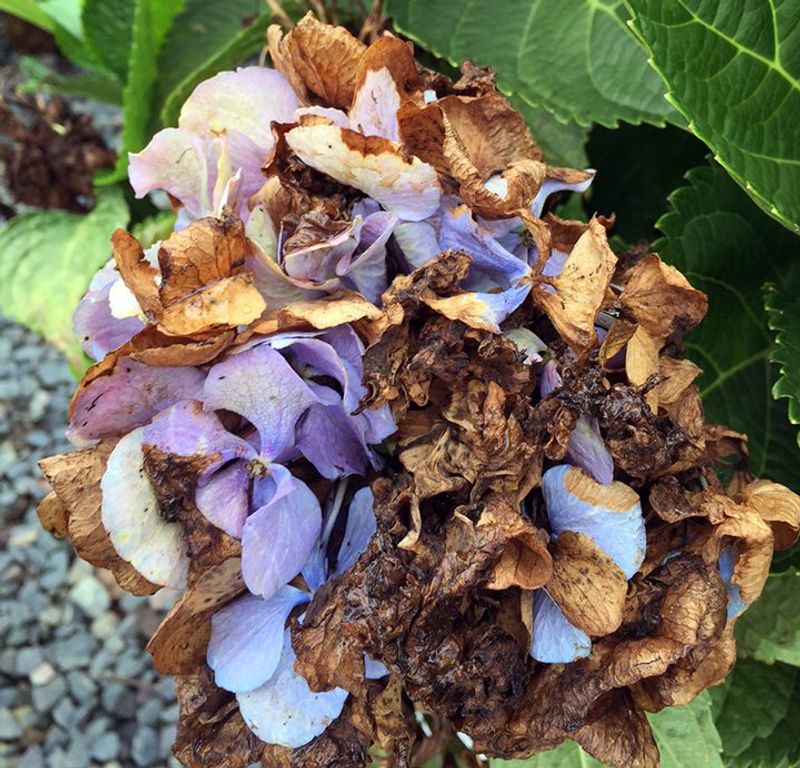
Brown hydrangea flowers call for observation before action. A gradual, even color change without spots, fuzz, or leaf lesions is most likely normal aging and needs no response beyond appreciating the seasonal transition. Dry, brittle margins concentrated on the sun-facing side point toward heat or sun exposure, and the practical response is better site selection for future plants or temporary shade cloth during extreme heat events, not an emergency watering session.
When drought is genuinely the issue, water deeply at the root zone rather than sprinkling the surface, and time it for early morning. University of Minnesota Extension’s guidance on mulching recommends applying 2 to 4 inches of organic mulch over the root zone to reduce evaporation and moderate soil temperature, keeping it a few inches away from the stems to prevent rot. That single step can reduce moisture stress noticeably through a hot summer. OSU Extension’s overview of hydrangeas in garden settings reinforces that consistent moisture in well-drained soil is the foundation of a healthy display, regardless of species.
When gray-mold clues appear, remove infected flowers and debris, improve air circulation, and water at the base. When frost follows freezing weather, cover vulnerable plants before the next cold night. When streaking and distortion suggest insects, investigate before treating, and spare the beneficial insects that share the space.
Pruning and deadheading decisions deserve their own care. Penn State Extension’s pruning guide by hydrangea species makes clear that old-wood bloomers like bigleaf and oakleaf hydrangeas require different timing than new-wood bloomers like panicle and smooth types. Removing brown flowerheads is reasonable for appearance or confirmed disease, but RHS growing guidance for shrubby hydrangeas notes that dried heads can remain ornamental and even offer some frost protection for the buds beneath them. Brown is a color with more than one story.