
The Old-School Mulch Trick That Beats Modern Watering Systems In Peak Heat
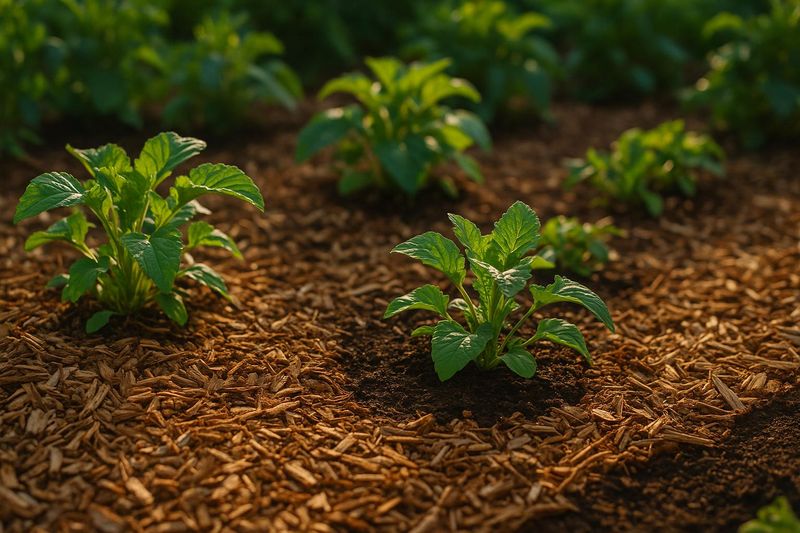
When summer heat hits hard, many gardeners react by watering more, but the real problem is often how fast that water disappears from the soil. A simple layer of mulch can slow that loss down significantly, giving roots a better shot at staying hydrated between waterings. Getting the mulch right, though, means knowing how to apply it, what materials to choose, and when irrigation is still needed.
Mulch protects water already in the soil
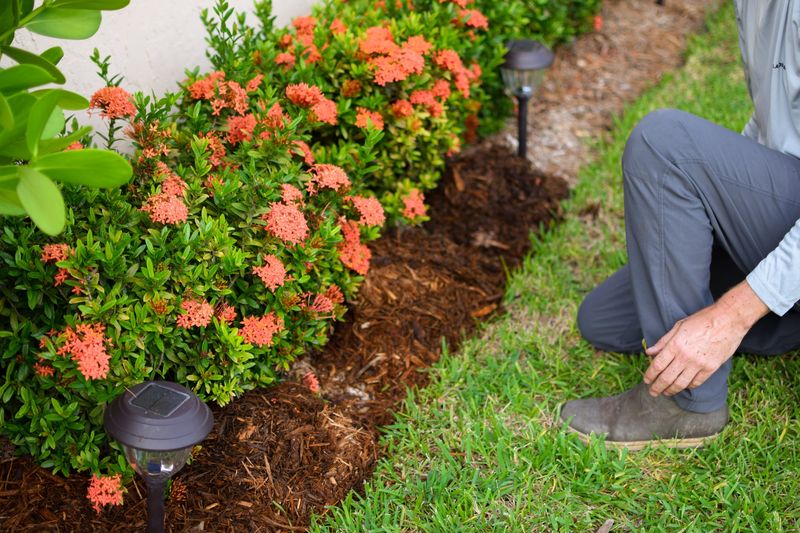
Bare soil in midsummer is almost working against you. When the sun hits an exposed surface directly, moisture near the top evaporates quickly, and plants end up competing for whatever water remains deeper down. Adding a layer of mulch interrupts that cycle by shading the soil and creating a buffer between the heat above and the moisture below.
Oregon State University extension guidance on conserving water in yards and gardens notes that a 3-5 inch mulch layer can reduce soil-water evaporation by as much as 70% compared with bare soil under certain conditions. Colorado State University estimates that vegetable gardens using mulch may reduce irrigation needs by roughly 50%. Both figures are benchmarks from specific extension conditions, not a guaranteed outcome for every backyard, but they point clearly in the same direction: keeping soil covered makes a real difference.
Mulch does more than just block sun. It moderates soil temperature, which matters because hot soil dries out faster and can stress roots even when surface moisture looks fine. Weeds are also a hidden drain on soil water, and University of Minnesota guidance on mulching for soil and garden health highlights weed suppression as one of mulch’s practical advantages, since fewer weeds means less competition for the water you do apply.
The honest framing here is not that mulch defeats modern irrigation systems. Colorado State’s vegetable garden mulch resource makes clear that mulch and irrigation solve different problems. Mulch prevents water from leaving the soil too fast, while irrigation replenishes what plants use. Adding more water more often does not fix rapid evaporation from bare ground.
Mulch does, and that is where its real value lies.
What mulch changes beneath the surface
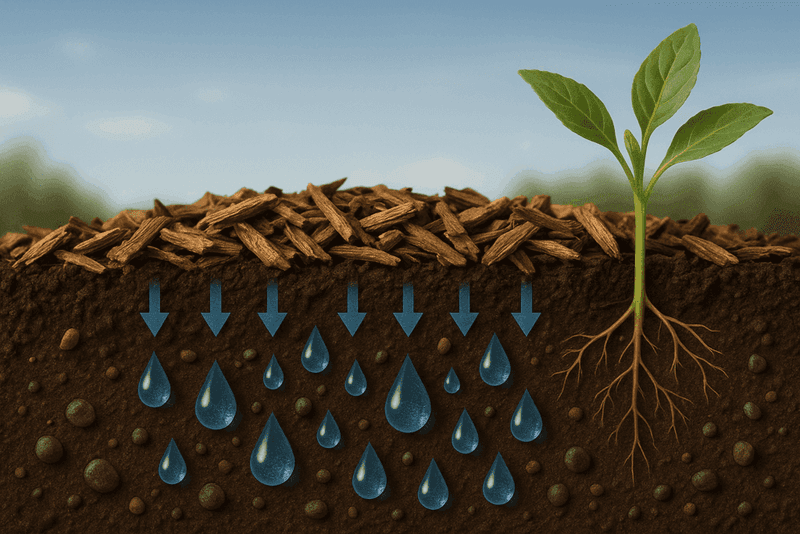
Pull back the mulch on a hot afternoon and you will usually find something surprising: the soil underneath is noticeably cooler and often still moist, even when the mulch surface feels bone dry. That contrast is the whole point. A suitable mulch layer shades the soil so radiant heat cannot drive moisture directly into the air, slows the vapor movement from soil to atmosphere, and buffers the temperature swings that stress roots during the hottest parts of the day.
Oregon State’s guide on mulching with organic materials explains that organic mulch also gradually improves soil structure as it breaks down, which helps soil hold water more effectively over time. That long-term benefit builds on itself across seasons, unlike a one-time watering adjustment.
One thing mulch cannot do is stop transpiration, the water plants lose through their leaves. A large tomato plant loaded with fruit on a windy, low-humidity afternoon will still pull significant moisture from the soil regardless of how well the surface is covered. Oregon State’s irrigation scheduling guidance distinguishes clearly between soil evaporation, which mulch addresses, and plant transpiration, which depends on heat, wind, plant size, and crop stage. Mulch reduces one side of the equation, not both.
Mulch performance also varies more than most gardeners expect. A review of 58 mulch studies in irrigation science found that effects differed substantially by material, soil coverage, crop type, season, and moisture conditions. A field and laboratory study on mulch and soil evaporation found that mulch was most effective when soil remained relatively moist and lost some advantage during extended dry periods when the soil had already entered a low-evaporation stage. That finding has a practical implication: mulch works best as a preventive tool, not a rescue measure for already-parched ground.
Build a moderate, breathable mulch layer
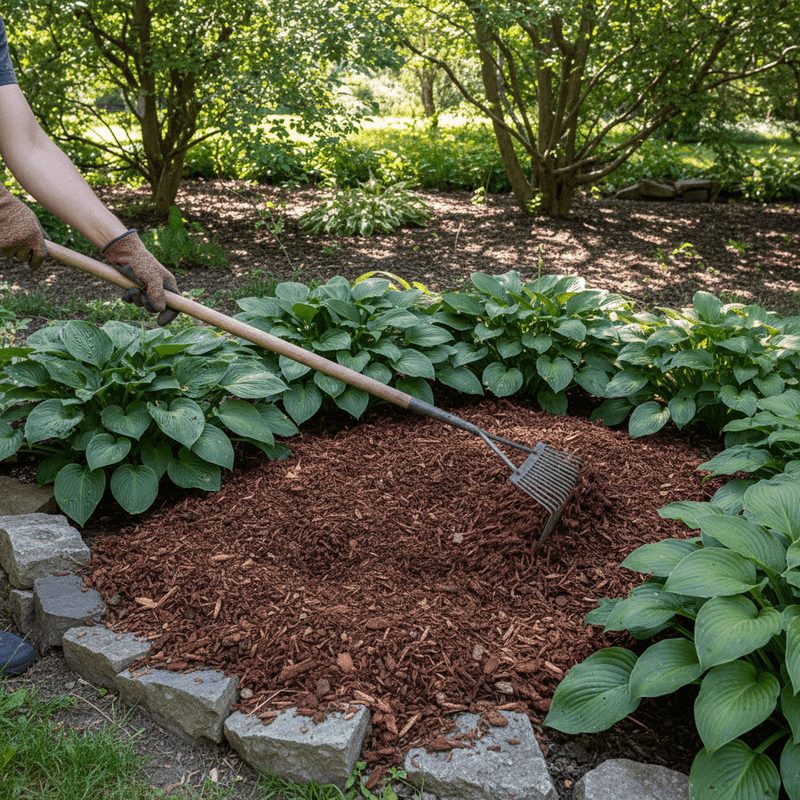
Choosing a good organic material is the first practical step. Clean straw, shredded leaves, bark chips, compost, or coarse wood chips all work well for most garden beds. Each has slightly different properties, but they share the qualities that matter most: they shade the soil, allow water and air to pass through, and break down slowly enough to stay useful through a full season. University of Minnesota’s mulching guide notes that organic materials also add organic matter to soil as they decompose, which builds long-term water-holding capacity.
Depth matters, and more is not always better. For most in-ground vegetable beds and garden borders, roughly 2-4 inches is a widely cited range from extension sources. Penn State’s guidance on applying mulches in home plantings commonly advises 2-3 inches for many settings, while some EPA and university sources recommend up to 3-4 inches depending on material and landscape type. The right depth depends on what you are using: coarser materials like wood chips can go a bit deeper because they stay loose, while finer materials can compact and restrict airflow at lower depths.
Before spreading anything, water the bed thoroughly if the soil is dry. Oregon State’s mulching guide for organic materials specifically notes that mulch applied over already-dry soil is less effective for water conservation because it is locking in a deficit rather than protecting existing moisture. Get the soil moist first, then apply the layer.
Keep mulch several inches away from plant stems, crowns, and tree trunks. Penn State’s mulch options survey warns that mulch piled against bark or crowns can stay wet long enough to encourage decay, fungal disease, and rodent activity. Spread it out to create an even layer across the bed surface, and think of it as a permeable blanket rather than a deep pile. The goal is steady moisture retention and airflow, not the thickest possible coverage.
Check the root zone before you water
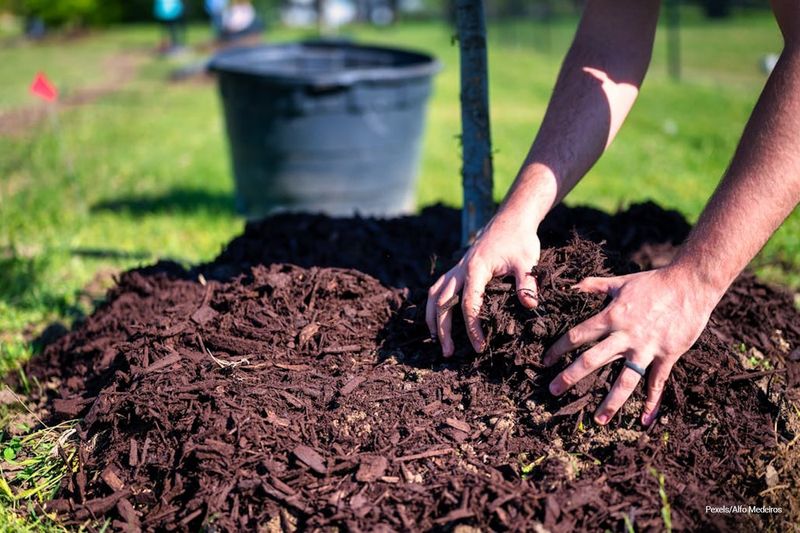
A dry mulch surface is not a reliable signal that the soil beneath it needs water. Mulch is doing its job when it looks dry on top while the soil underneath still holds moisture. Judging irrigation needs by the mulch appearance alone leads to overwatering, which wastes water and can cause root problems. The only reliable way to know what is happening in the root zone is to check it directly.
Move the mulch aside and press two fingers or a trowel into the soil. Colorado State’s vegetable gardening guidance recommends checking the upper 2-4 inches as a rough benchmark for many vegetable beds before deciding to irrigate. University of Minnesota’s vegetable watering guide suggests checking about 2 inches below the surface and watering only when the soil feels dry at that depth. Both are useful starting points, but neither is a universal rule.
Adjust how deep and how often you check based on the plant and situation. Shallow-rooted crops like lettuce and spinach dry out faster near the top, so they need more frequent checks at a shallower depth. Deep-rooted established tomatoes or squash may have adequate moisture lower in the profile even when the upper inch feels dry. Seedlings need more attention than mature plants because their root systems cannot reach moisture stored deeper in the soil.
Containers are a separate category entirely. University of Minnesota’s container plant watering guidance notes that pots dry out much faster than in-ground beds, and during hot weather some containers may need water daily or even twice daily depending on size, potting mix, plant type, wind, and temperature. Mulch helps slow that loss, but it does not change the fundamental reality that containers have a limited reservoir.
Oregon State’s extreme heat guidance also cautions that wilting does not always mean drought. Heat can cause temporary wilting or leaf curling even when soil moisture is adequate. Check the soil before adding water, because irrigating already-moist soil during a heat event does not help and can create conditions for root disease. Oregon State’s mulch guide reinforces that deep, appropriately spaced watering benefits many established in-ground plants, but that new plantings, shallow-rooted crops, and recently transplanted seedlings generally require more frequent monitoring and lighter applications until roots establish.
Pair mulch with properly managed root-zone irrigation
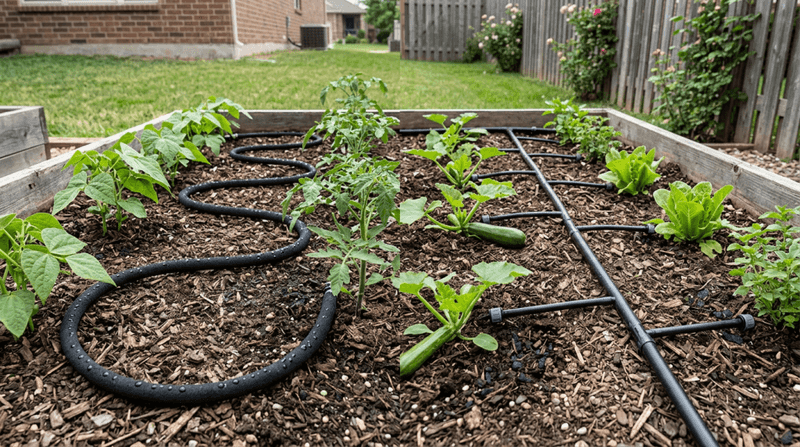
Mulch and irrigation are not competing strategies. They address different parts of the water problem, and combining them is more effective than relying on either one alone. Mulch limits how fast water leaves the soil through evaporation, while a well-designed irrigation system controls how water gets to the root zone in the first place. Treating one as a substitute for the other leaves a gap.
EPA’s WaterSense microirrigation resource notes that microirrigation can use 20-50% less water than conventional sprinklers by delivering water more directly to the root zone rather than broadcasting it across the surface. That efficiency advantage is real, but it depends entirely on the system being properly designed, maintained, and scheduled. A drip line with a clog, a slow leak, or a timer set for the wrong time of day can waste just as much water as a sprinkler. EPA’s irrigation professional guidance identifies poor scheduling, leaks, runoff, and overspray as major sources of irrigation waste, none of which mulch can correct.
Drip lines or soaker hoses installed beneath or through a mulch layer combine both advantages neatly. Water moves directly to the root zone while the mulch layer above limits evaporation between cycles. EPA’s landscaping tips and the 58-study irrigation research review both support pairing mulch with root-zone irrigation rather than treating them as alternatives. The takeaway is straightforward: a properly applied mulch layer makes each irrigation cycle go further by reducing how much water the soil loses before roots can use it.
Avoid mulch choices and conditions that create new problems
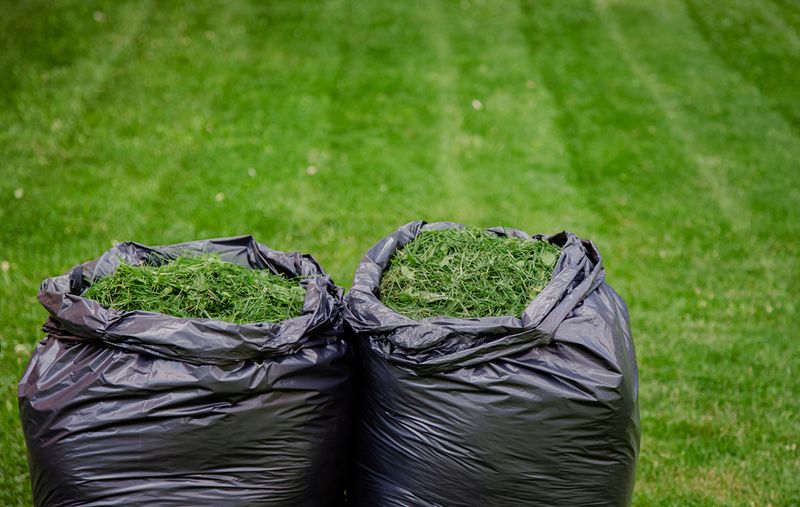
Not all mulch materials behave the same way, and some choices that seem sensible can create real problems. Fresh grass clippings are one of the most common mistakes. Applied in a thin layer they can work fine, but thick mats of fresh clippings compact quickly, form a surface crust that sheds water rather than letting it through, and can develop an unpleasant smell as they heat up. Colorado State’s vegetable mulch guide also warns that clippings from lawns treated with certain persistent herbicides can injure garden vegetables, including tomatoes, peppers, beans, and lettuce, even after the clippings have dried.
Straw and hay carry their own risk around edible crops. Herbicide residues can persist in treated hay, straw, and even in manure or compost made from treated plants. Colorado State’s general mulching guide recommends sourcing straw from untreated fields or confirming its herbicide history before spreading it near vegetables. When in doubt, shredded leaves or bark chips are safer choices for edible beds.
Plastic film and rock or gravel mulch are worth treating as a separate category. Penn State’s mulch options survey explains that plastic film can reduce evaporation effectively but restricts rainfall from reaching the soil and makes hand-watering awkward unless drip lines are installed first. Black plastic can also become hot enough in summer to stress plant roots in warm climates. Gravel and rock mulch absorb and radiate heat, which can increase stress for plants not adapted to arid conditions, and they offer none of the soil-improvement benefits of organic materials.
Depth limits apply to all materials. Piling mulch too deep restricts oxygen and water movement through the soil surface, can keep soil too wet and encourage root rot, and may prevent irrigation from penetrating to the root zone at all. Oregon State’s organic mulching guide and University of Minnesota’s tree and shrub watering guidance both warn against mulch piled against stems, crowns, or trunks, where constantly wet bark can lead to decay, disease, and rodent damage.
Timing matters too. Mulch applied after soil has become very dry provides less benefit because it is protecting a deficit rather than conserving stored moisture. University of Minnesota’s container plant guidance and Oregon State’s extreme heat plant protection resource both emphasize closer monitoring for containers, new plantings, shallow-rooted crops, and drought-sensitive plants, which may need water regardless of how well the mulch is applied.
Use mulch to conserve water, then respond to what the roots need
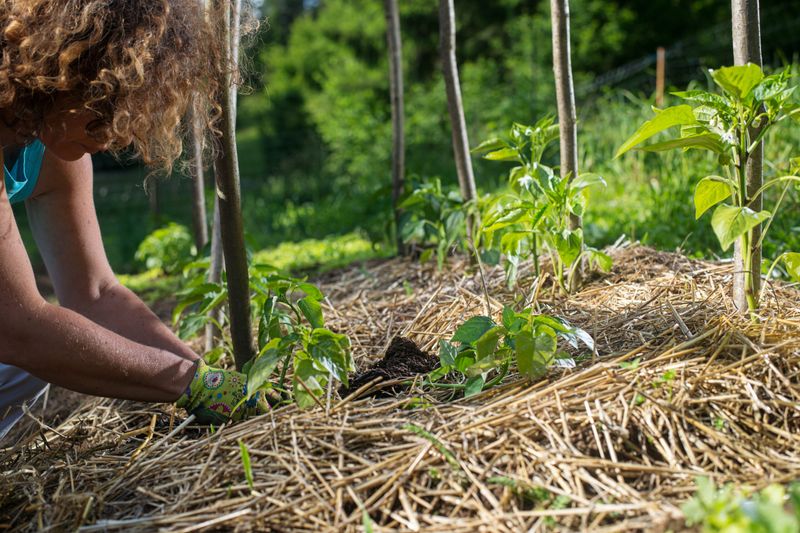
The practical sequence is not complicated. Start with a suitable organic material, apply 2-4 inches over already-moist soil, and keep it several inches away from stems, crowns, and trunks. Then check the soil beneath the mulch before every irrigation decision, adjusting how deep and how often you check based on plant type, root depth, growing medium, and current weather.
Oregon State’s mulching guide supports applying mulch as a preventive measure before heat stress sets in, not as a response after soil has already dried. When irrigation is needed, deliver it to the root zone. EPA’s microirrigation guidance and University of Minnesota’s vegetable watering resource both point toward root-zone delivery as the most efficient approach, provided the system is properly designed, maintained, and scheduled.
Mulch earns its place by reducing avoidable soil-water loss between waterings, not by replacing the need to water at all. A garden with good mulch and a sensible irrigation routine will consistently outperform one that relies on either tool alone. The old trick still works because the physics have not changed: covered soil simply holds water longer, and that gives every drop you apply a better chance to reach the roots.