
If Hummingbirds Zip Past Your Feeder Without Stopping, You’ve Probably Hung It In The Wrong Spot
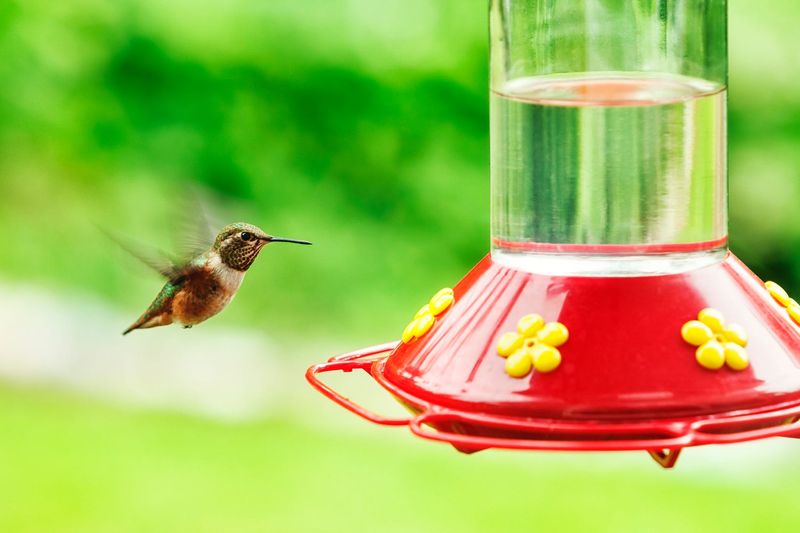
Watching a hummingbird zip past your feeder without stopping is genuinely puzzling, especially after you spent time setting everything up. Before you move the feeder to a new hook, though, it helps to know that location is only one piece of a bigger puzzle. Seasonal patterns, territorial birds, nectar quality, and even the time of year can all keep a feeder quiet, and sorting out the real cause saves you a lot of guesswork.
A Full Feeder Does Not Prove the Location Is Wrong
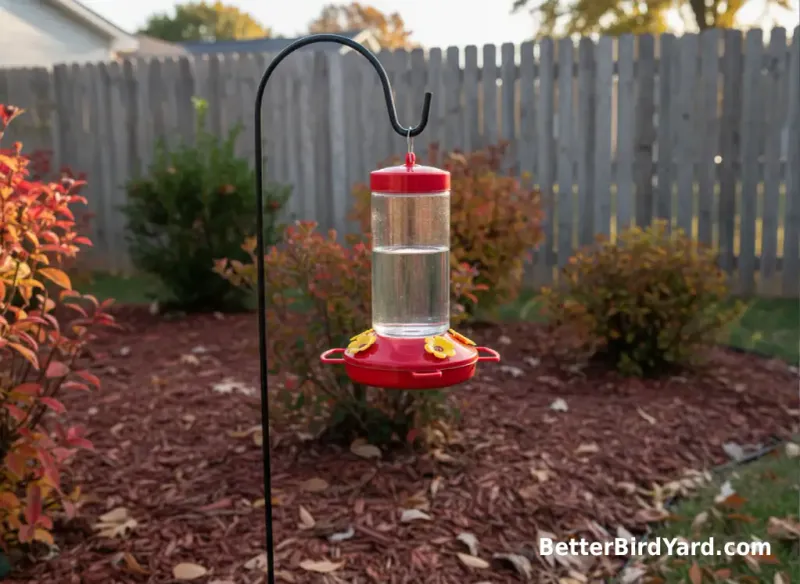
Many backyard watchers see a full feeder and immediately wonder whether they hung it in the wrong place. That is a reasonable first thought, but placement is only one item on a longer checklist. A quiet feeder can reflect a dozen different situations, and most of them have nothing to do with where you drove the hook.
Hummingbird activity shifts noticeably through the season. Cornell Lab of Ornithology explains that midsummer visits often drop because territorial males are busy defending patches of flowers, nesting females come and go on their own schedule, and many birds shift their attention toward natural blooms and insects rather than feeders. None of that has anything to do with the hook on your porch railing.
Migration timing adds another layer. Species presence, arrival dates, and departure windows vary widely across the continental United States. A feeder cannot attract a hummingbird that has not yet arrived in your region or has already moved south for the season. If your feeder went up last week and the local population is still sparse, patience may be the only adjustment needed.
Other plausible explanations include a dominant bird excluding competitors from a distance, an abundance of flowering plants in the neighborhood drawing birds away from supplemental feeders, nectar that has gone stale or cloudy, or simply a new feeder that nearby birds have not yet discovered. Cornell’s overview on declining feeder visits reinforces that low activity rarely points to a single cause.
The rest of this guide walks through each factor, starting with location and moving through habitat, window safety, territorial behavior, seasonal context, and nectar care. The goal is to help you evaluate the whole picture rather than move the feeder three times and still not know why the birds are scarce.
Shade and Wind Protection Support a Better Feeding Site
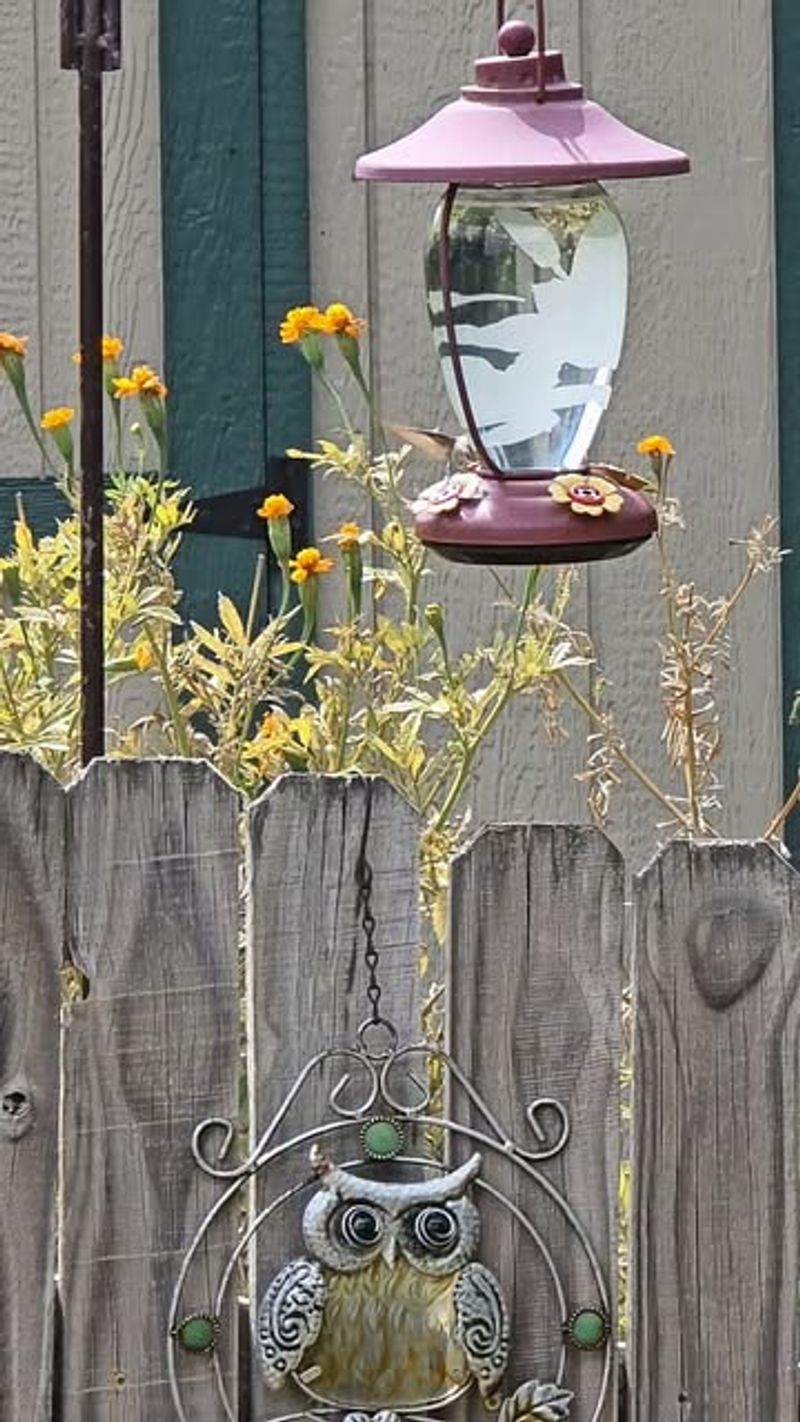
Where you hang a feeder relative to sun and wind does affect how well it performs, though not always in the way most people expect. The concern with direct sun is not that hummingbirds dislike bright light. The real issue is that heat warms the nectar, which speeds up fermentation and spoilage. A feeder baking in afternoon sun on a hot July day may need fresh nectar within a day or two, and if the nectar turns before you swap it out, birds will skip the feeder entirely.
Partial shade, especially during the hottest part of the afternoon, slows that process and reduces how often you need to refill. Morning sun is generally fine because temperatures are cooler and the feeder has time to warm gradually. Positioning the feeder where it catches morning light but gets some shade by midday is a practical middle ground that works in most regions. Cornell Lab’s feeder placement guidance supports partial shade as a useful adjustment, particularly during warm weather, without claiming that a sunny feeder will never attract birds.
Wind creates a different set of problems. A feeder that sways in a strong breeze can drip and spill, leaving sticky nectar on the outside of the feeder and on whatever surface is below it. Those drips attract ants, bees, and wasps, which can crowd the feeding ports and discourage hummingbirds from landing. Before you relocate a feeder, check that all parts are tightened snugly and wipe down any dried nectar from the exterior and the hanging surface.
A spot sheltered by a fence, a wall, or the edge of a tree canopy can reduce swaying without requiring a full relocation. Wind protection and shade are genuinely helpful adjustments, but treat them as part of a broader site evaluation rather than guaranteed solutions on their own.
Flowers Attract; Shrubs and Trees Provide Cover
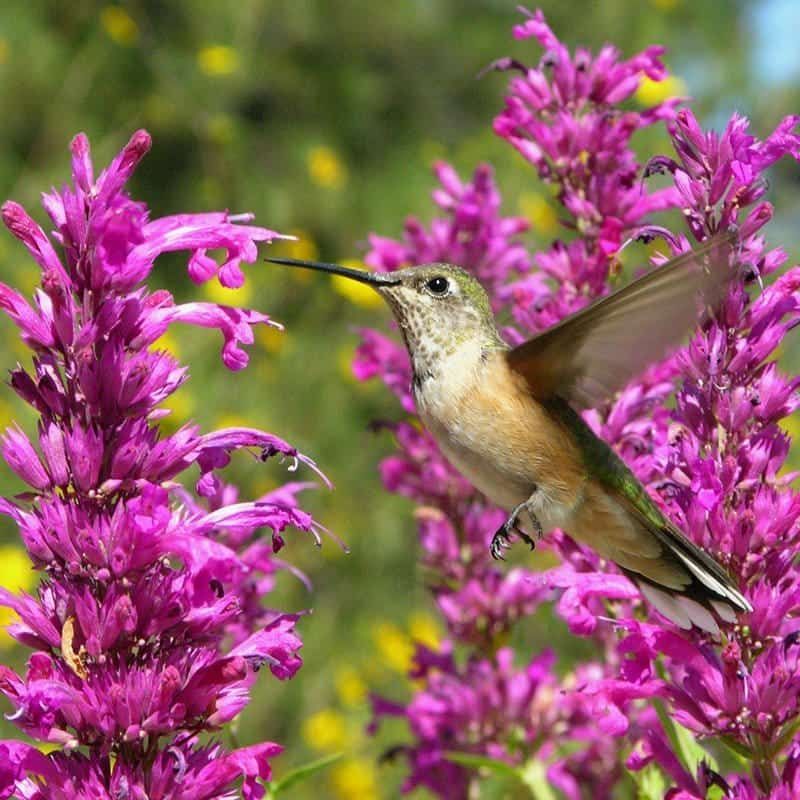
Nearby plants can make a feeding area more appealing, but the different types of plants serve very different purposes. Flowering plants that hummingbirds favor, such as salvia, bee balm, trumpet vine, and cardinal flower, provide nectar directly. Hummingbirds already visit those flowers on their own, so placing a feeder in the same general area puts it in a spot the birds are already checking. Penn State Extension recommends positioning feeders near flower plantings as one of the more reliable ways to help birds notice a new feeder.
Shrubs and trees serve a different function. They do not typically offer nectar, but they give hummingbirds a place to perch between visits, preen, and watch for threats. A small branch or open twig a few feet from the feeder is often enough. Hummingbirds are territorial and observant, so a clear perch nearby lets them keep an eye on the feeder without hovering constantly.
The balance to strike is keeping the immediate feeding area open and visible while placing refuge close enough to be useful. A feeder buried inside a dense shrub or tucked against a thick hedge might feel sheltered, but thick vegetation right around the feeder can give outdoor cats or other predators a concealed approach. Cornell Lab’s placement advice supports a layout that gives birds both accessible feeding space and nearby cover, without creating hidden ambush points.
If outdoor cats visit your yard regularly, moving the feeder higher or to a more open location helps somewhat, but the most effective protection is keeping cats indoors. Relocation alone cannot fully compensate for a predator that can stalk from multiple angles. Aim for a spot where hummingbirds can see a wide arc around the feeder and have clear flight paths in multiple directions.
The Safest Window Distance Has Two Zones
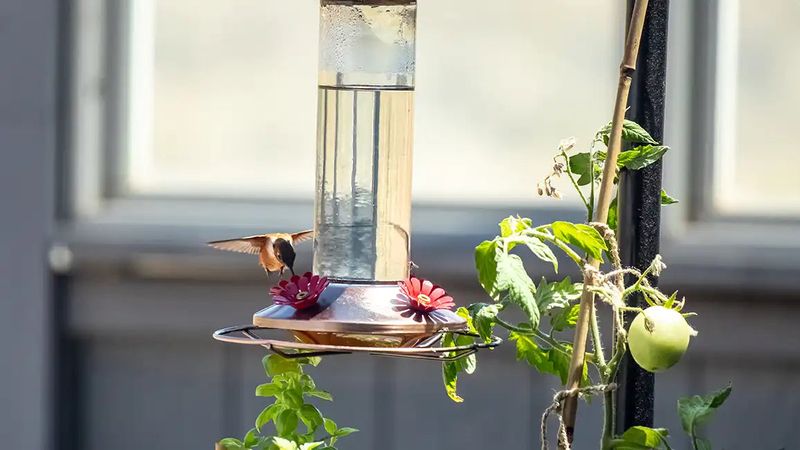
Window collisions kill a significant number of birds each year, and feeder placement plays a direct role in the risk. The guidance here can sound contradictory at first, but the logic is straightforward once you understand the two safer zones.
Placing a feeder within about 3 feet of a window is one safer option. At that short distance, a bird that startles and flies toward the glass does not have enough room to build dangerous speed before it reaches the surface. The impact, if it happens, is much less severe. The other safer zone is more than 30 feet away from any window, where birds are unlikely to be flying toward the house at all.
Utah State University Extension’s window-collision guidance identifies the intermediate range, roughly 4 to 30 feet from glass, as the most hazardous distance because it gives birds enough space to accelerate into a reflective surface they cannot see as a barrier.
If your feeder currently sits somewhere in that middle zone and you have noticed birds hitting the glass, moving it closer to the window is often the more practical fix for a small yard, since 30-plus feet may not be available. Window screens reduce reflection and provide a physical buffer, and exterior treatments such as evenly spaced tape strips, decals placed close together, or fine mesh applied to the outside of the glass can make windows more visible to approaching birds.
A collision can happen even at the close or far distances, so watch for signs of impact, such as feathers on the glass or a bird sitting stunned on the ground below a window. If it keeps happening, add an exterior treatment regardless of the feeder’s distance.
One Dominant Bird Can Make a Good Feeder Look Ignored
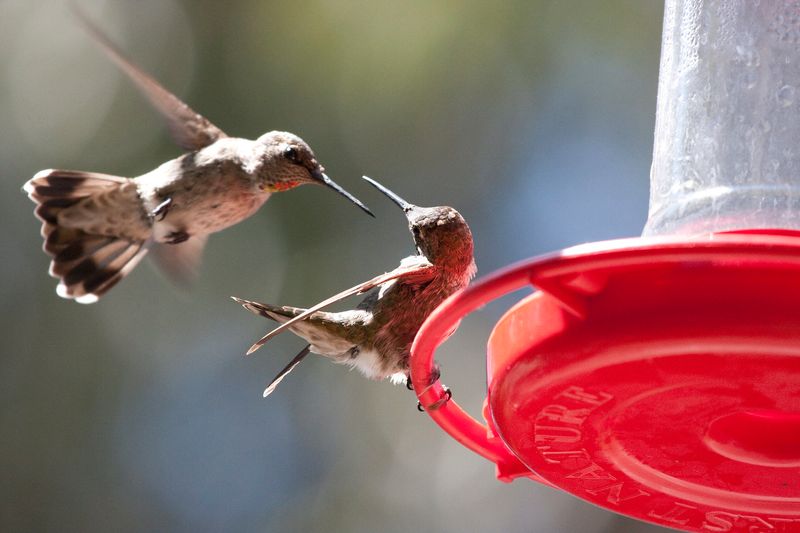
A feeder that sits full and untouched is not always being avoided. Sometimes one bird is using it heavily and preventing everyone else from getting close. Hummingbirds are remarkably territorial for their size, and a single dominant bird, often an adult male, may spend as much energy chasing rivals as it does feeding.
From a distance, this can look like the feeder has no visitors at all. The dominant bird may perch nearby, dart out to intercept any approaching hummingbird, and then return to its watch post. Other birds learn quickly that approaching the feeder triggers a chase, so they stop trying. The feeder stays full not because hummingbirds are avoiding it, but because one bird has locked everyone else out.
Penn State Extension notes that adding a second feeder in a separate location is an effective way to reduce this kind of monopoly. The key is placement: the second feeder needs to be far enough away, and ideally out of sight from the first, so the dominant bird cannot watch and defend both resources at once. There is no single correct distance that works in every yard, because it depends on the individual bird’s patrol range and the layout of your space.
Spreading resources across two or more feeders makes the territory harder to defend. Some birds will still try, but others will eventually find their way to the secondary feeder while the dominant bird is occupied elsewhere. You may also notice that the territorial bird becomes less aggressive over time once it realizes it cannot control every food source in the area.
If adding a second feeder is not possible, try moving the existing feeder around a corner or to a location that breaks the dominant bird’s line of sight from its favorite perch.
Season, Region, and Discovery Change What You See
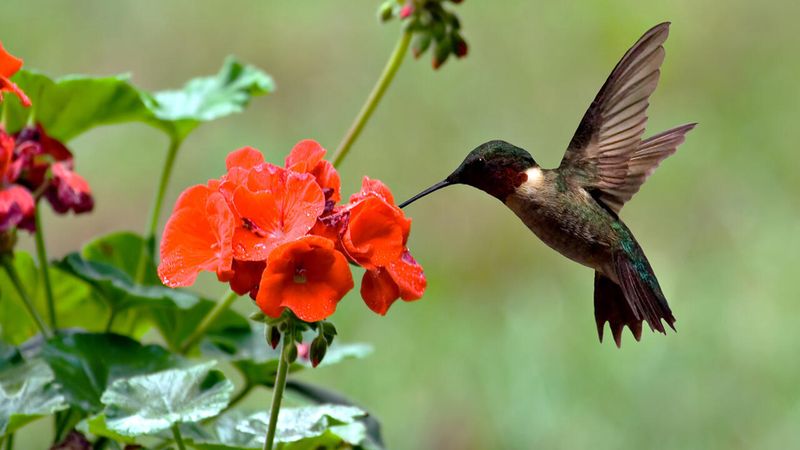
Feeder activity does not stay constant through the year, and the changes are not always a sign that something is wrong. Understanding what drives those shifts can save you from moving a perfectly good feeder or second-guessing a setup that just needs more time.
Midsummer is one of the most common times for a noticeable dip in visits. Cornell Lab explains that by midsummer, territorial males are actively defending patches of flowers and may be spending less time at feeders. Nesting females visit intermittently between incubation and brooding duties. Many birds also shift toward natural flowers and insects during this period, particularly as wildflower crops peak.
A feeder that was busy in May can go quiet in July without anything being wrong with the location.
Regional variation matters just as much. Hummingbird species, migration windows, and year-round availability differ considerably across the continental United States. The ruby-throated hummingbird dominates east of the Rockies and is largely absent from its breeding range by October. Western states host several additional species with their own timing.
Cornell’s overview on declining feeder visits emphasizes that local species availability sets the ceiling on what any feeder can attract, regardless of placement.
A brand-new feeder adds one more variable: discovery time. Hummingbirds are creatures of habit and tend to revisit locations they already know. Penn State Extension advises placing a new feeder near existing flower plantings initially, since hummingbirds already visiting those flowers are more likely to notice the feeder. Once birds begin using it regularly, you can move it gradually toward a more convenient viewing spot, a few feet at a time over several days.
Keeping the feeder up through the fall migration window is worthwhile in most regions. Research consistently shows that leaving feeders available does not delay migration, so there is no downside to keeping a fresh, clean feeder out while migrants are still passing through.
Fresh Nectar Still Matters After You Adjust the Spot
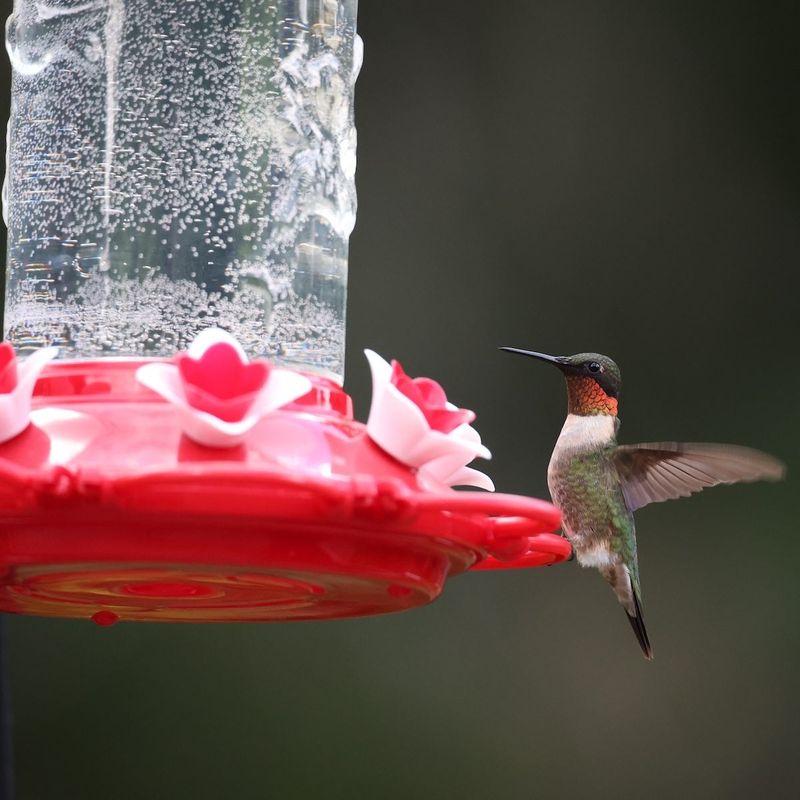
Moving a feeder to a better spot does not accomplish much if the nectar inside has gone bad. Stale or fermented nectar is one of the most common reasons a well-placed feeder gets ignored, and it is also one of the easiest problems to fix.
The recipe is simple and does not need to be complicated. Mix one part ordinary white granulated sugar with four parts water. Stir until the sugar fully dissolves, and let the mixture cool before filling the feeder. Penn State Extension confirms this ratio as the standard recommendation.
Honey is not a safe substitute because it can promote bacterial and fungal growth that harms hummingbirds. Artificial sweeteners provide no calories and should not be used. Red food coloring is unnecessary and potentially harmful; the red parts already on most feeders are sufficient to catch a hummingbird’s attention.
How often you replace the nectar depends on conditions rather than a fixed schedule. In mild weather, every three to five days is a reasonable general interval. In hot conditions or when a feeder sits in direct afternoon sun, every two days or even daily may be necessary. Oregon State University Extension’s hummingbird guidance reinforces that warm temperatures accelerate spoilage, so heat should trigger more frequent changes rather than a wait-and-see approach.
Do not refill a feeder without cleaning it first. Rinse the feeder thoroughly with hot water and scrub all surfaces, including the feeding ports and reservoir, before adding fresh nectar. If you see cloudiness, mold spots, or any discoloration in the nectar or on the feeder’s interior, clean it immediately rather than waiting for the next scheduled change. Cornell Lab’s hummingbird feeding overview notes that clear nectar can still be aging or contaminated, so visible signs of spoilage mean the feeder needs attention right away, not eventually.
A clean feeder with fresh nectar is the baseline that makes every other placement adjustment worthwhile.
Test the Location Before You Replace the Feeder
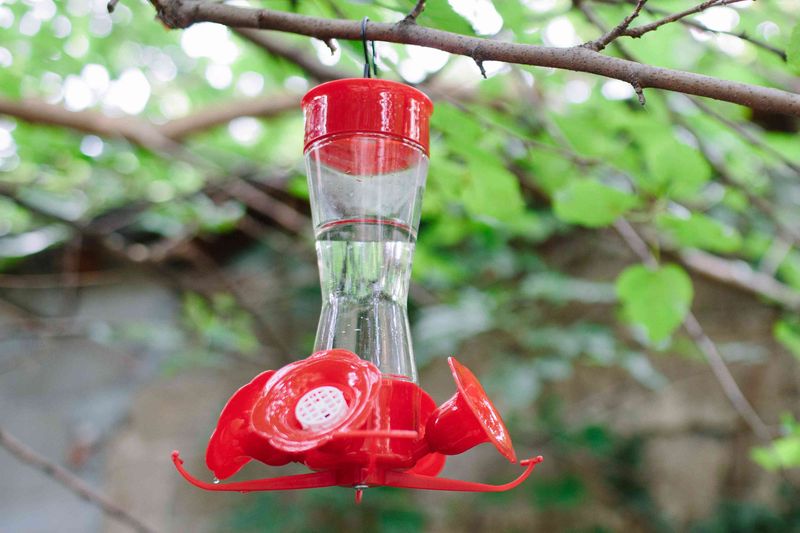
Before pulling the feeder down or buying a replacement, run through a quick site check. Start with the physical conditions: does the feeder hang in partial shade during the hottest afternoon hours, or does it bake in direct sun all day? Is it sheltered from strong wind, or does it sway and drip when a breeze picks up? Are all the feeder parts tightened, and is the area below it free of dried nectar?
Next, look at the surroundings. Cornell Lab’s placement checklist points to nearby flowers, accessible perches, and open visibility as the habitat features that make a feeding area genuinely useful. Check whether the feeder is positioned so birds can see approaching threats and fly away in multiple directions. If outdoor cats visit the yard, consider whether the feeder’s current location gives those cats a concealed approach.
Then check the window distance. If the feeder sits between roughly 4 and 30 feet from a window, that intermediate zone carries the most collision risk. Moving it closer to the glass or farther away reduces that hazard.
Penn State Extension and Cornell both note that territorial exclusion, seasonal shifts, migration timing, and feeder discovery are all separate explanations worth considering before concluding that placement is the problem. Midsummer lulls and regional species gaps are normal, and a safe, clean, well-positioned feeder may simply need more time. A feeder that checks every box on this list is doing its job, even on the quiet days.