
If Your Hydrangeas Sit In A Pot All Summer But Barely Bloom, The Container May Be Part Of The Problem
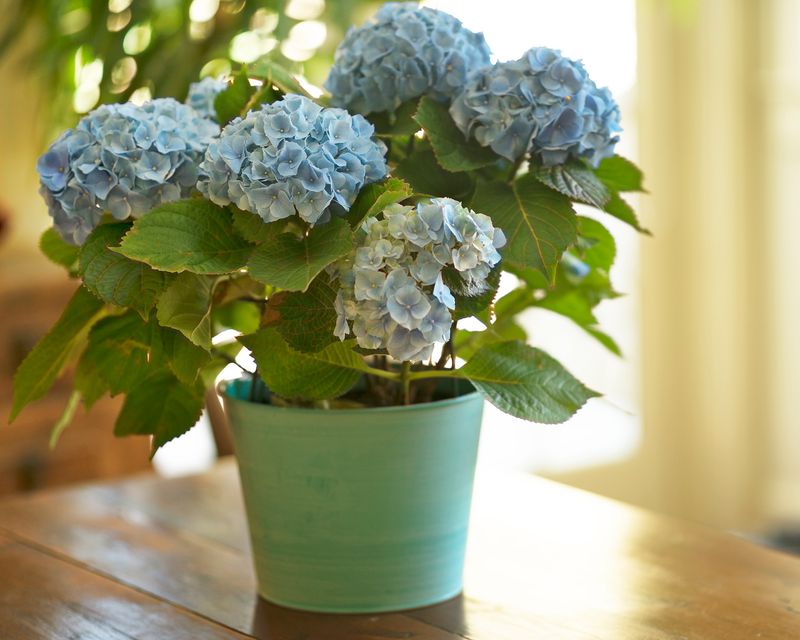
Potted hydrangeas are one of summer’s most rewarding patio plants, but a full season of lush green leaves with almost no flowers can leave gardeners genuinely puzzled. The container does play a real role, since repeated watering can wash nutrients out of potting mix and a cramped root zone can slow growth and flower formation. But a flowerless hydrangea is not automatically a starving one, and chasing the wrong fix can make things worse. Checking pruning history, winter exposure, light, and moisture first gives you a much clearer picture before you touch the soil or the fertilizer bag.
A container may contribute to poor flowering, but it is not proof of starvation
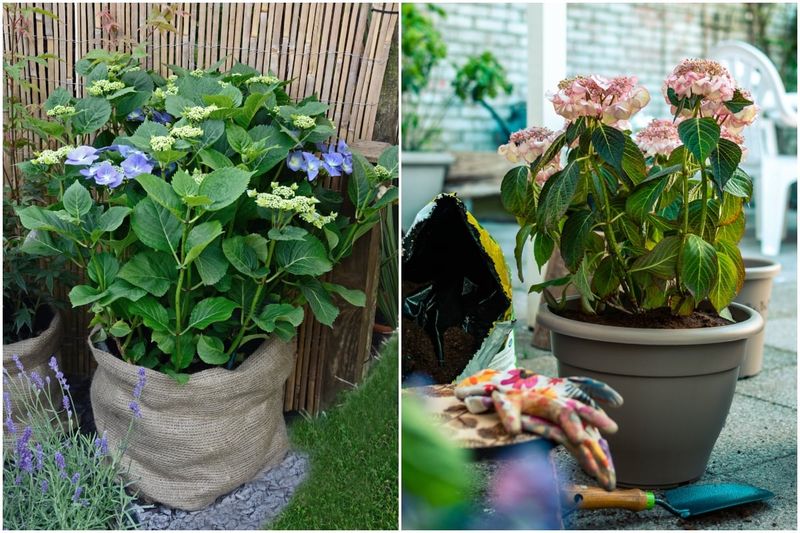
Potted hydrangeas can run into real trouble from their containers, but “the pot is starving the plant” is only one explanation among several, and it is not always the right one. Repeated watering does flush nutrients out of potting media over time, and a restricted root volume can slow both shoot growth and flower formation. A peer-reviewed study on Hydrangea macrophylla found that smaller containers reduced root and shoot growth and decreased flower initiation in that species, and University of Tennessee Extension guidance identifies root restriction as a plausible concern in container production more broadly. That research, however, looked specifically at bigleaf hydrangeas and does not prove that fertilizer shortage alone was responsible for fewer flowers.
A hydrangea can look vigorous and full while still withholding almost every bloom, and the cause is often nowhere near the soil. Excessive nitrogen, for example, pushes lush leafy growth at the direct expense of flowering. Oregon State University Extension notes that a balance between nutrients matters, and that heavy nitrogen can tip the plant toward foliage rather than flowers. Pruning at the wrong time of year, winter-killed buds, inadequate light, and moisture stress are all common reasons a potted hydrangea stays green and flowerless through summer.
Treating the container as the automatic culprit risks adding fertilizer to a plant that already has plenty, or repotting a plant whose real problem is a pruning mistake made last October. A more useful approach is to work through a short checklist before reaching for a bag of granules or a new pot. The sections that follow walk through that checklist in a practical order, starting with the two causes that are most often overlooked.
Check the buds and pruning history before changing the soil
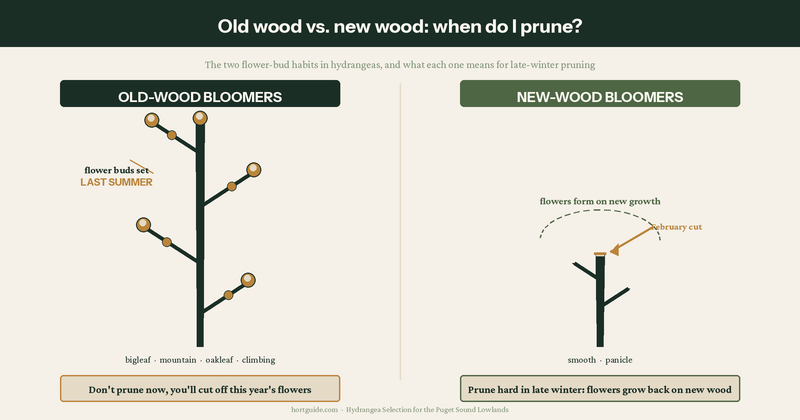
Knowing which hydrangea you have is the single most useful piece of information you can gather before doing anything else. Bigleaf hydrangeas (Hydrangea macrophylla), which include the familiar mophead and lacecap types, and oakleaf hydrangeas (H. quercifolia) both flower on old wood, meaning the buds that will open in summer formed on last year’s stems. University of Illinois Extension explains that cutting these stems back in fall, winter, or early spring removes exactly the wood that carries next season’s flowers. The plant will leaf out perfectly, look healthy all summer, and produce nothing.
Smooth hydrangeas (H. arborescens) and panicle hydrangeas (H. paniculata) behave differently. They flower on new growth produced in the current season, so pruning them in late winter or early spring actually encourages more blooms. Penn State Extension’s guide on pruning timing by species makes clear that the same pruning calendar cannot apply across all hydrangea types. Cutting a panicle hydrangea hard in spring is fine; doing the same to a bigleaf hydrangea is a reliable way to lose the year’s flowers entirely.
If you are not certain what type you have, look at the stem color and texture, the leaf shape, and any old flower heads still attached from the previous season. A well-meaning fall tidy-up is one of the most common reasons a potted bigleaf hydrangea sits full and green all summer without a single bloom. No amount of fertilizer or fresh potting mix will replace buds that were pruned away months earlier. Sorting out the pruning history first saves a lot of unnecessary effort and expense.
Rule out winter injury before you blame the container
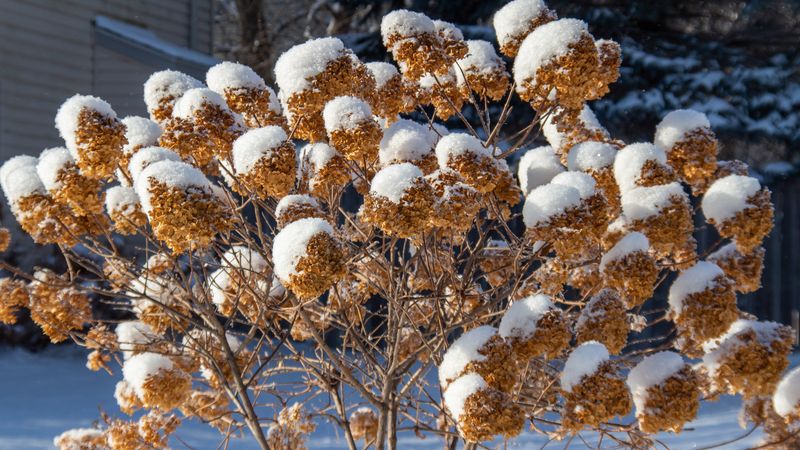
Cold weather can take out a season’s worth of flowers without killing the plant at all, and container hydrangeas are especially vulnerable because their roots and stems are far more exposed to freezing air than plants growing in the ground. A hard freeze or a series of drying winter winds can kill old-wood flower buds on a bigleaf hydrangea while leaving every leaf bud intact. Come spring, the plant pushes out full, healthy foliage, and the gardener assumes something is wrong with the soil or the pot, when the real damage happened months earlier on a cold January night.
University of New Hampshire Extension notes that flower bud survival through winter is one of the key factors controlling whether old-wood hydrangeas bloom, and that bud damage is a frequent explanation for a flowerless but otherwise vigorous plant. Florist hydrangeas and gift-shop bigleaf types deserve particular attention here: many of these cultivars were selected for greenhouse production and may not be reliably cold-hardy across much of the United States when left in a pot outdoors.
RHS guidance on shrubby hydrangeas recommends protecting container plants from hard frost, but the right approach depends on the cultivar, the size of the container, and the local climate. A large, insulated pot in a mild coastal area needs different handling than a small nursery container in zone 5. There is no single national rule that works for every situation, so check the hardiness rating of your specific cultivar and factor in how exposed your patio or balcony is during winter. If buds were winter-killed, no container fix will restore them this season, but protecting the plant through the coming winter gives next year’s flowers a real chance.
Fix light and moisture stress before feeding
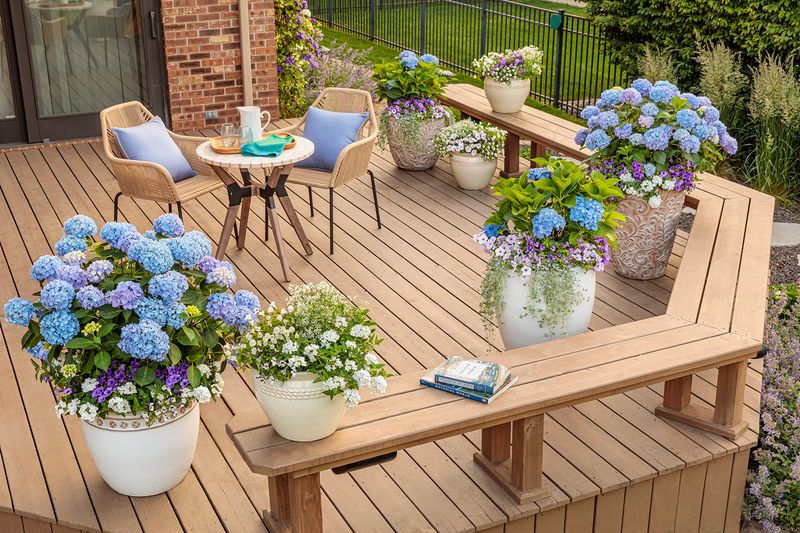
Where you place a potted hydrangea matters as much as what you put in the soil. Heavy shade can prevent adequate flower formation even in a plant that is otherwise healthy and well fed. Most hydrangeas perform best with morning sun and afternoon shade, a combination that provides enough light energy to set buds without the heat stress that afternoon sun brings. University of Connecticut Extension notes that bigleaf hydrangeas are particularly sensitive to hot afternoon exposure, which can cause severe wilting and stress the plant right through the period when buds are forming.
Moisture management in containers deserves the same attention as light. The goal is an evenly moist root zone, not a wet one. Oregon State University Extension’s general hydrangea care guidance emphasizes that drainage holes are non-negotiable and that saucers should not hold standing water, since roots sitting in water will deteriorate quickly. Conversely, allowing the pot to dry out repeatedly stresses the plant and can interfere with nutrient uptake even when fertilizer is present.
Small containers heat up and dry out faster than large ones, especially on a south- or west-facing patio in midsummer. OSU Extension’s heat-wave guidance for hydrangeas makes clear that the priority during heat stress is correcting water and shade conditions, not adding fertilizer or pruning. Rapid drying is worth noting, but on its own it does not confirm root restriction or nutrient depletion. Heat, container color, pot size, and watering frequency all affect how fast a container loses moisture.
Address light placement and consistent watering first, and you may find the flowering problem resolves without touching the potting mix at all.
Inspect the roots for genuine container restriction
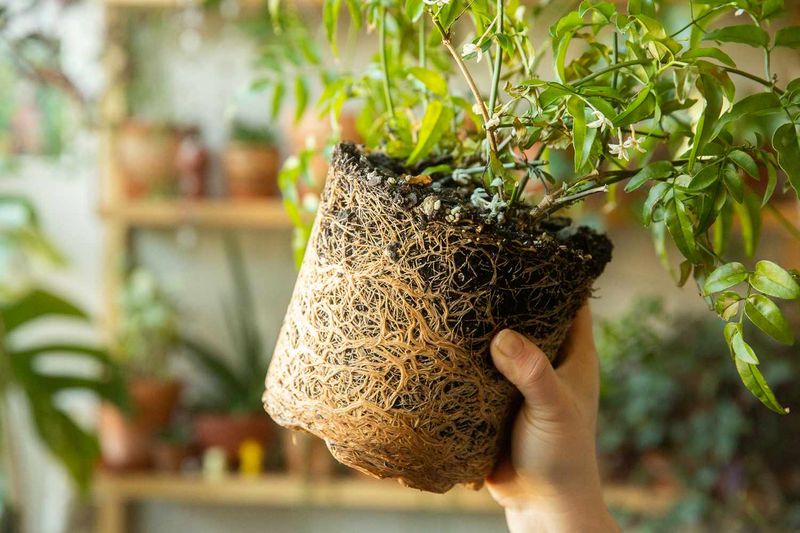
Before repotting, take a few minutes to actually look at the roots rather than assuming. Slide the plant out of its container and examine what you find. Roots that circle tightly around the outside of the root ball, roots that have pushed through drainage holes, or a root mass that has clearly filled every inch of available space are meaningful signs that the plant has outgrown its pot. Colorado State University Extension’s container gardening guidance identifies these physical root signals as practical indicators that a plant needs more room.
A large, established hydrangea that has been in the same nursery pot for two or three years has a reasonable chance of being genuinely root-bound. The root restriction research on Hydrangea macrophylla found that tighter containers reduced root mass, shoot growth, and flower initiation together, suggesting that the effects compound over time rather than appearing suddenly. That said, not every pot that dries quickly is full of roots. Heat, container exposure, plant size, and how often you water all affect drying speed independently of root volume.
If the root ball looks loose, with visible potting mix and roots that have not filled the container, root restriction is probably not the primary issue. Compacted or broken-down potting mix that no longer drains well is a separate problem and worth addressing on its own. OSU Extension’s heat-wave guidance also points out that a stressed plant needs water correction before any other intervention, so if the plant is wilting severely when you inspect it, rehydrate it fully before making any decisions about repotting or fertilizing.
Repot into fresh mix without creating a wet oversized container
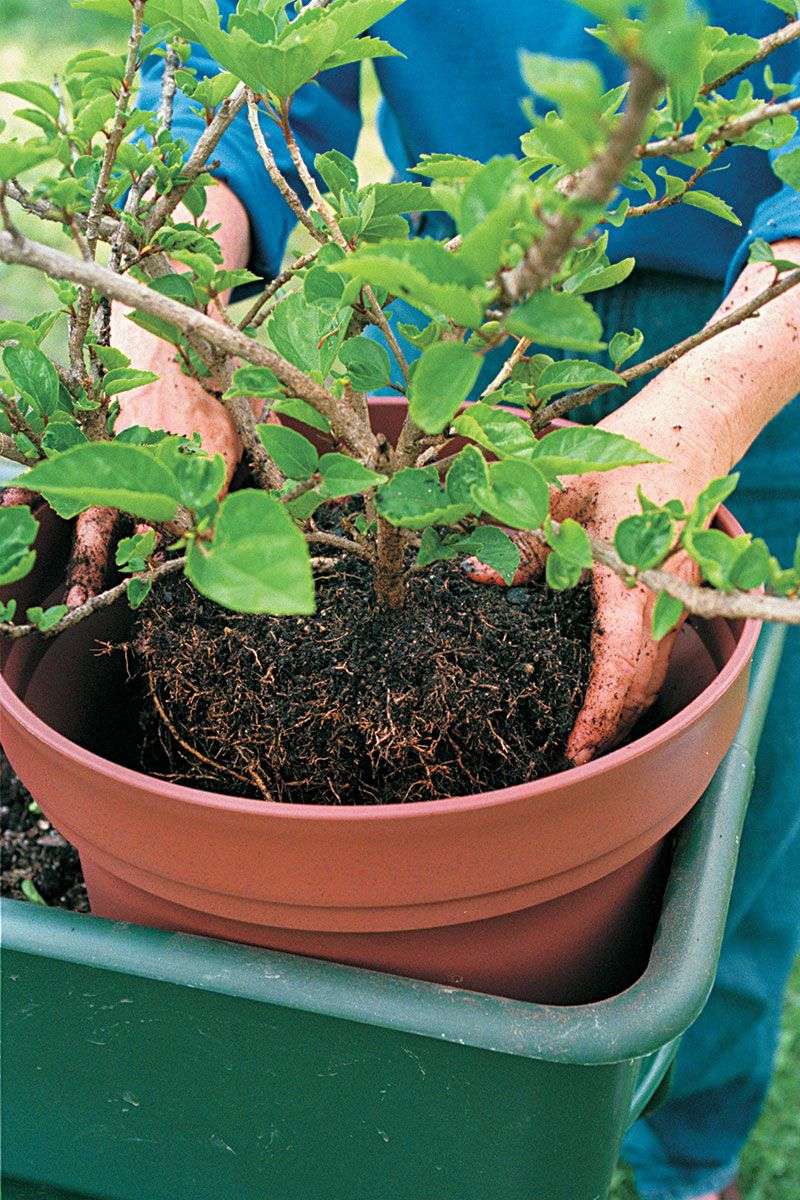
When the inspection confirms tightly circling roots, a root ball that has filled its container, or potting mix that has broken down and compacted, repotting is a reasonable and often effective response. The key word is “slightly.” RHS guidance on growing shrubby hydrangeas recommends moving a plant into a container that is modestly larger than the current one, giving roots new space to expand without surrounding them with a large volume of wet medium that the roots cannot yet use.
Choosing a pot that is dramatically larger than the old one creates its own problems. Excess potting mix around a small root system holds moisture that the plant cannot draw on quickly, and chronically wet medium encourages root rot rather than healthy growth. A container one size up, with at least one drainage hole, is a safer choice than jumping to the biggest pot available. Make sure the new container allows water to move freely out of the bottom, and do not place it in a saucer that will collect and hold standing water.
The potting mix matters as much as the pot size. University of Minnesota Extension advises using a quality container potting mix rather than ordinary garden soil, which can compact in a pot and restrict the air and water movement roots depend on. A fresh container mix also brings back the pore structure and, depending on the product, some slow-release nutrients that an old, exhausted mix no longer provides. Colorado State Extension’s container guide similarly emphasizes well-drained media as a foundation for healthy container plants.
After repotting, water the plant thoroughly to settle the new mix around the roots, and hold off on fertilizer for at least a few weeks if the fresh mix already contains a starter charge.
Feed only when the plant and evidence support it
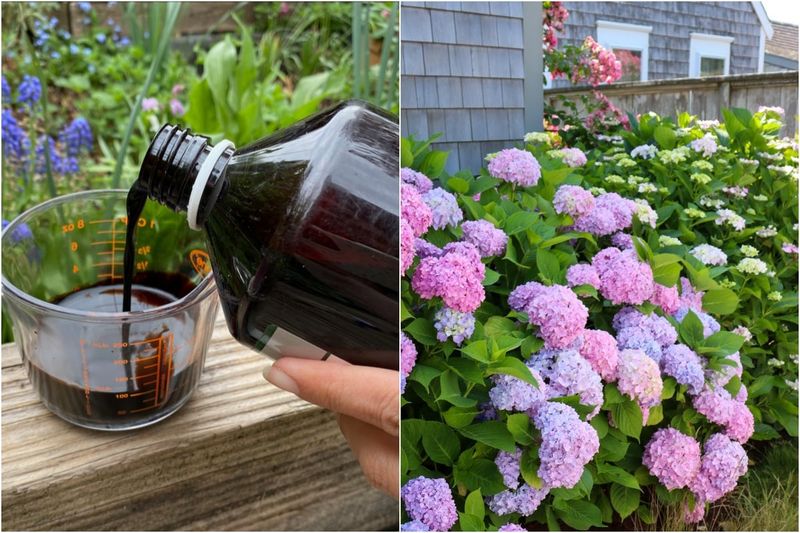
Nutrients in container potting mix do run down over time. Repeated watering carries soluble elements out through the drainage holes, and a plant growing actively through a long summer can exhaust what a fresh mix provided. University of Minnesota Extension recommends beginning regular feeding roughly two to six weeks after planting, with the timing depending on the medium, watering frequency, and how actively the plant is growing. That window is a starting point, not a universal schedule, and the product label should always guide the rate and frequency you use.
A balanced, slow-release fertilizer applied in spring is a defensible general approach for a container hydrangea that has been in the same mix for a full season or more. Soluble fertilizers can be useful when a quicker response is needed, but repeated low-rate applications are safer than a single heavy dose. What is not useful, and can actively worsen a flowering problem, is excess nitrogen. Oregon State University Extension notes that too much nitrogen pushes the plant toward leafy growth at the expense of flowers, which means a lush, flowerless hydrangea may already have more nitrogen than it needs.
High-phosphorus “bloom booster” products deserve a specific caution. Penn State Extension explains that phosphorus and aluminum availability in the soil primarily affect flower color in certain hydrangeas, particularly the blue-to-pink range in bigleaf types, not flower production itself. Reaching for a bloom booster will not replace buds lost to pruning or winter damage, and adding phosphorus without evidence of a deficiency can interfere with other nutrient uptake.
One more firm rule: UNH Extension advises correcting drought stress before applying any fertilizer. A severely wilted or dehydrated plant cannot use fertilizer effectively, and salts from fertilizer can damage roots that are already under water stress. Rehydrate the plant fully, confirm it is recovering, and then consider whether the evidence actually points to a nutrition problem before feeding.
Follow the diagnosis instead of treating every flowerless plant alike
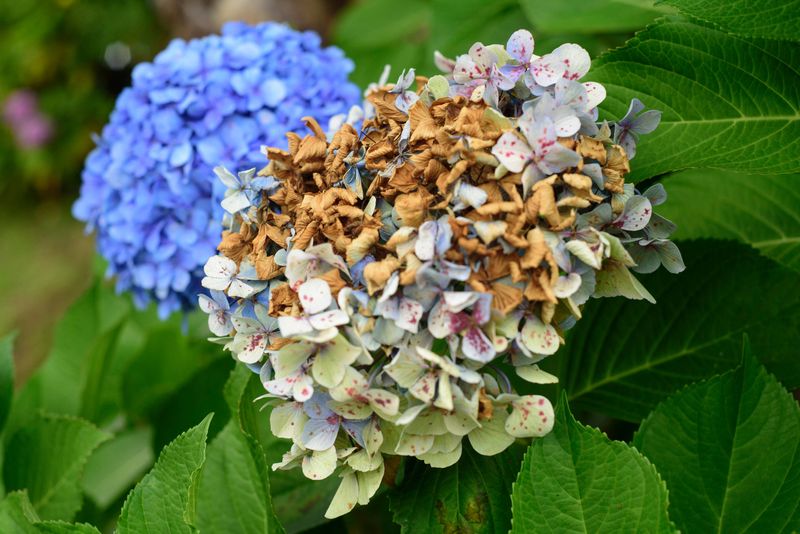
Working through a short, ordered checklist protects you from fixing the wrong problem. Start by identifying the hydrangea type, because that single fact determines whether pruning timing is a likely culprit. Then look at what happened to the plant last fall and winter: was it pruned, and did it face hard freezes or drying winds that could have killed old-wood buds? Illinois Extension’s pruning guide and UNH Extension’s pruning fact sheet both make clear that these two factors account for a large share of flowering failures in otherwise healthy plants.
After checking pruning and winter history, assess light and moisture. Move the plant if the site is too shady or too exposed to afternoon heat, and establish a watering routine that keeps the root zone consistently moist without waterlogging. Then inspect the roots physically. If circling roots or a packed root ball confirm restriction, repot into a modestly larger container with fresh potting mix.
Only after those steps should you consider whether nutrition is genuinely the issue. UMN Extension’s container feeding guidance and the label on your chosen product are the right references for rate and timing, not a fixed universal formula.
One distinction worth keeping in mind as you go: Penn State Extension notes that soil pH affects flower color in certain hydrangeas, not flower production. Adjusting pH will not restore buds that pruning or cold removed. A cramped or depleted container is genuinely fixable, but the fix has to match the actual problem, and the most common mistake is reaching for fertilizer before the diagnosis is done.