
If Your Snake Plant Leaves Flop Over Instead Of Standing Tall, The Cause Is Hiding In The Pot
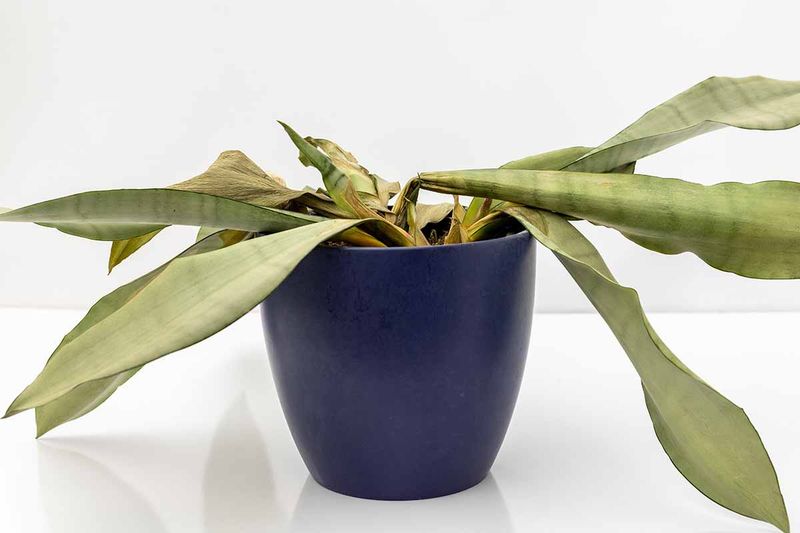
Snake plants have a reputation for being tough, upright, and nearly impossible to neglect into submission, so when those stiff leaves start drooping or folding outward, it genuinely catches you off guard. The good news is that flopping leaves are a signal worth investigating, and the pot and root zone are the best place to start looking. Understanding what you find there, whether wet soil, damaged roots, or simply a top-heavy plant in a wobbly container, will tell you far more than guessing at a fix ever could.
Use leaf firmness, soil moisture, and stability as diagnostic clues
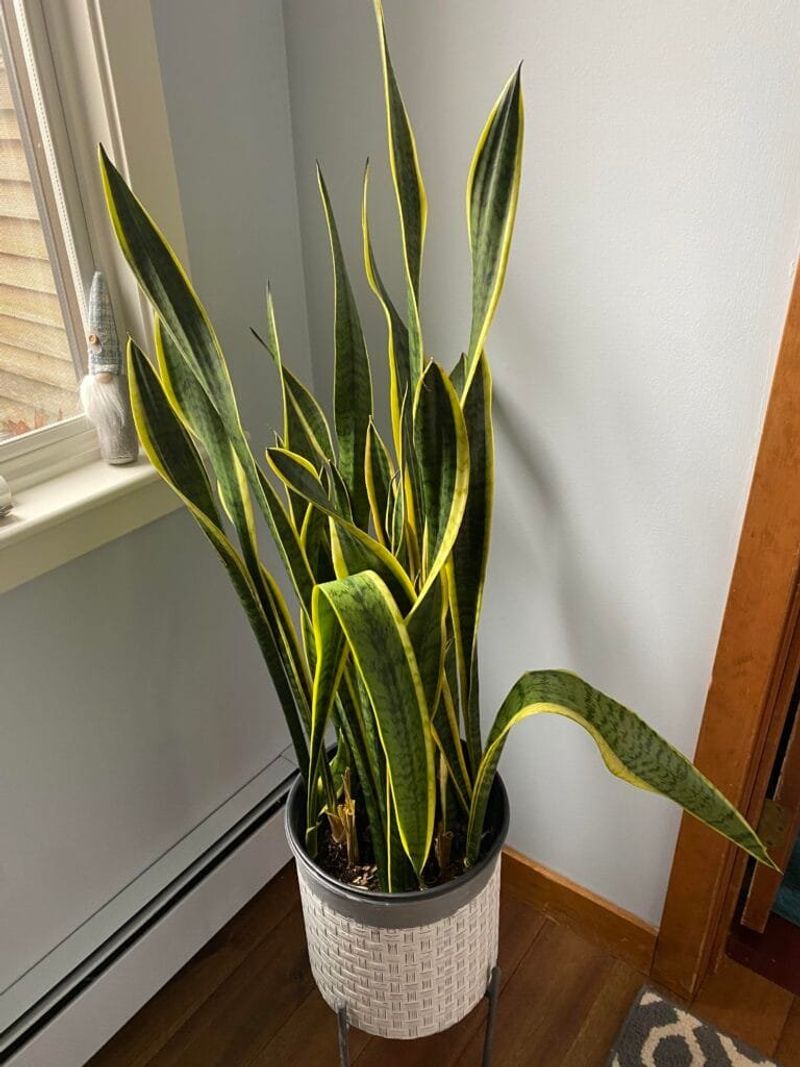
“Floppy” describes what you see, not what went wrong. Before reaching for the watering can or hauling out a new pot, take a few minutes to gather some clues from the plant itself, because the symptom looks the same whether the cause is root rot, a top-heavy leaf, or a plant leaning toward a window.
Start at the base of each drooping leaf and feel the tissue where it meets the soil line. Soft, mushy, or collapsing tissue there, especially when the soil is also wet, is a warning sign consistent with rot. Firm leaves that simply angle outward tell a different story: they may be leaning because of weight, an unstable container, uneven light, natural aging, or the growth habit of the particular cultivar you own. As University of Wisconsin Extension guidance on root rots in houseplants notes, wilting in wet soil is a distinct warning that differs from mechanical leaning in a plant with otherwise healthy tissue.
Next, check whether the plant feels stable in its container. Gently rock it: a plant that shifts loosely in wet soil may have lost root structure. A plant that tips because the pot is too light for its height has a completely different problem that calls for a different fix.
Press a finger an inch or two into the potting mix and notice whether it feels wet, moist, or dry. Wet soil combined with soft leaf bases and an unstable plant points toward the root zone as the priority concern. Firm leaves in dry or barely moist soil point toward physical or environmental causes instead.
These observations are clues, not a definitive verdict. Ask Extension guidance on falling snake plant leaves reinforces that drooping has multiple possible causes, and the Missouri Botanical Garden profile for Dracaena trifasciata notes that an occasional outer leaf may fall without any disease involved. What you learn from firmness, moisture, and stability together will point you toward the right response rather than the most obvious one.
Rule out excess moisture before adding water
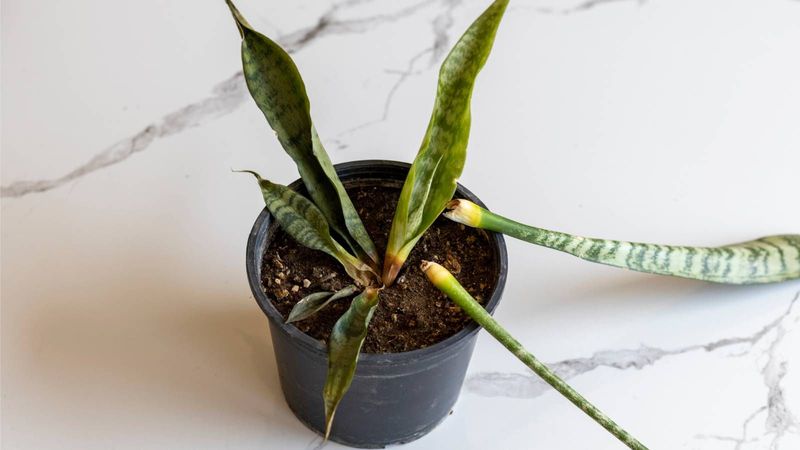
Excess moisture is the single most consequential pot-related problem for a drooping snake plant, and it deserves attention early in your inspection. The plant’s thick, fleshy leaves store water efficiently, which is exactly what makes it so tolerant of dry spells, but that same biology means roots sitting in waterlogged soil have nowhere to off-load the excess. Overwatering is consistently identified as a leading cause of decline in these plants.
Four container conditions can keep roots too wet for too long. A pot without drainage holes is the most obvious: water has nowhere to go, and the mix stays saturated. An oversized pot is subtler but equally problematic, because the large volume of soil surrounding a modest root ball holds moisture far longer than the roots can use it. Compacted or poorly draining potting mix, such as heavy garden soil used indoors, slows water movement in a similar way.
Finally, a saucer or decorative outer pot that collects and holds standing water after each watering keeps the base of the root zone continuously wet even when the top of the mix feels dry.
According to Penn State Extension’s snake plant care guide, the right approach is to water only when the soil has dried sufficiently, not on a weekly calendar. Light levels, indoor temperature, pot size, and mix composition all affect how quickly the soil dries, so a rigid schedule will overshoot in winter or in a low-light room.
Check drainage by watering thoroughly and watching whether water flows freely from the drainage holes within a minute or two. If it pools on the surface or drains extremely slowly, the mix may be compacted. After watering, pour out any water that collects in the saucer within an hour; roots should not sit in standing water. Illinois Extension similarly advises allowing the soil to dry completely between waterings for this species.
If the soil feels wet and the plant is already flopping, hold off on watering entirely. Adding more moisture to an already saturated root zone can accelerate the very damage you are trying to diagnose.
Inspect the roots when wet soil and soft tissue appear together
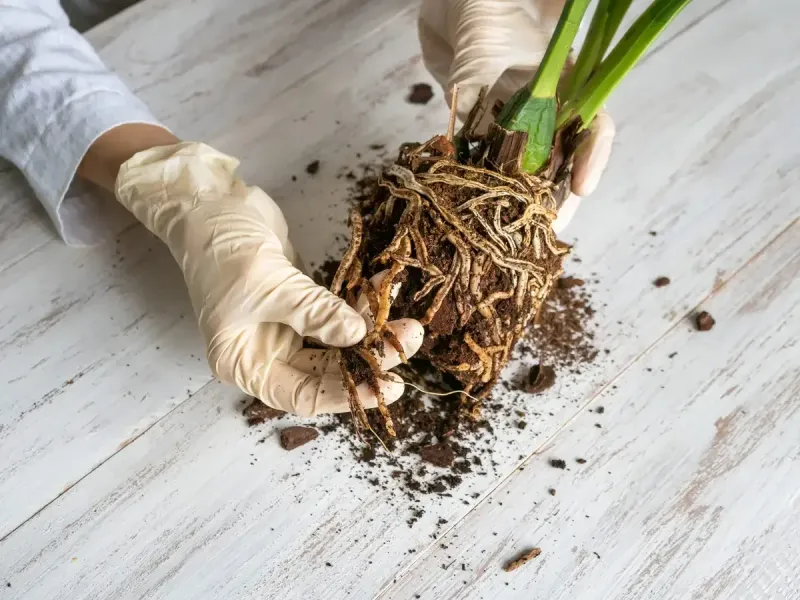
When a snake plant is flopping in persistently wet soil, feels loose when you gently rock it, or has leaf bases that compress under light pressure, the next step is to look at what is happening underground. Pulling the plant out of its container takes about two minutes and gives you far more information than any surface-level guess.
Remove the plant carefully by tipping the pot sideways and easing the root ball out without yanking on the leaves. Set it on a surface you can clean, like a sheet of newspaper or a tray, and examine the roots. Healthy roots tend to be pale, firm, and somewhat flexible. Roots affected by rot are typically soft, brown or black, and may feel slimy or fall apart when touched.
The crown, the area where the leaves emerge from the base, should feel solid; if it compresses or smells sour, crown rot may be present alongside root damage.
Root rot can cause wilting even when the soil remains wet, which is the reason adding more water to a drooping plant is unsafe without checking first. University of Wisconsin Extension’s root rot guidance explains that affected roots lose their ability to take up water and nutrients, so the plant wilts from functional drought even while surrounded by moisture. The wet soil is not helping; it is sustaining the conditions that caused the problem.
A plant that slides out with a dense, intact root ball and firm white or tan roots is not showing rot. That plant may be leaning for mechanical or environmental reasons, which are covered separately. The distinction matters because the responses are completely different: treating a healthy, firm-rooted plant as though it has rot can cause unnecessary damage, while missing actual rot delays a repair that has a time limit.
Severely rotted root systems, where most roots are brown and mushy with little healthy tissue remaining, may not be recoverable. Honest assessment at this stage saves time and helps you decide whether to attempt treatment or take cuttings from any remaining healthy tissue.
Treat limited rot by replacing the damaged root environment
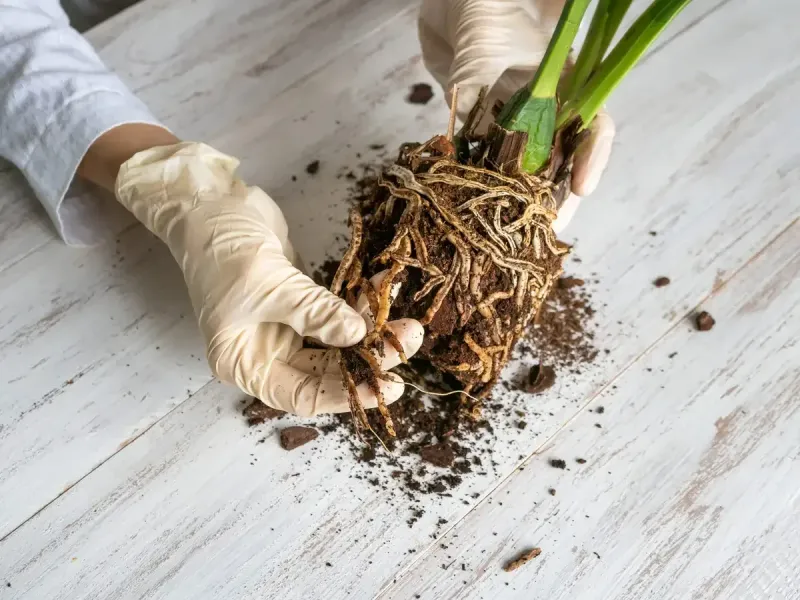
Finding rot does not automatically mean the plant is lost. When damage is limited, meaning a portion of the roots are still firm and healthy, a focused cleanup gives the plant a real chance to recover. The goal is to remove the damaged tissue and replace the environment that allowed rot to develop, not simply to repot into the same conditions with fresh soil.
Work with clean, sharp tools. Pruning shears or scissors wiped down with rubbing alcohol before use reduce the chance of spreading pathogens from cut surfaces. Trim away any roots that feel soft, look brown or black, or fall apart when touched. If the crown has soft spots, remove that tissue as well, cutting back to firm material.
Discard everything you remove, along with all of the old saturated potting mix. Do not reuse contaminated mix in another pot, and pour out any water that drained from the infected container rather than using it to water other plants.
Replant in fresh, well-draining potting mix. A commercial mix formulated for cacti or succulents works well, or you can blend a standard houseplant mix with perlite to improve drainage. Choose a container with drainage holes and a size appropriate to the remaining root volume, not necessarily the same pot the plant was in before. Wisconsin Extension’s root rot article advises against reusing contaminated mix or drainage water, and emphasizes that the new environment needs to support drying between waterings.
One fix to skip entirely: placing gravel or rocks in the bottom of the container. The idea is intuitively appealing, but Wisconsin Extension guidance specifically notes that this practice can actually inhibit drainage rather than improve it, by creating a perched water table at the boundary between the gravel and the soil above it.
After repotting, hold off on watering for several days to allow any cut root surfaces to dry slightly before exposure to moisture. Penn State Extension reinforces that snake plants handle dry conditions far better than wet ones, so restraint with water in the days following treatment is a reasonable precaution, not neglect.
Firm leaves may reflect balance, light, or normal growth
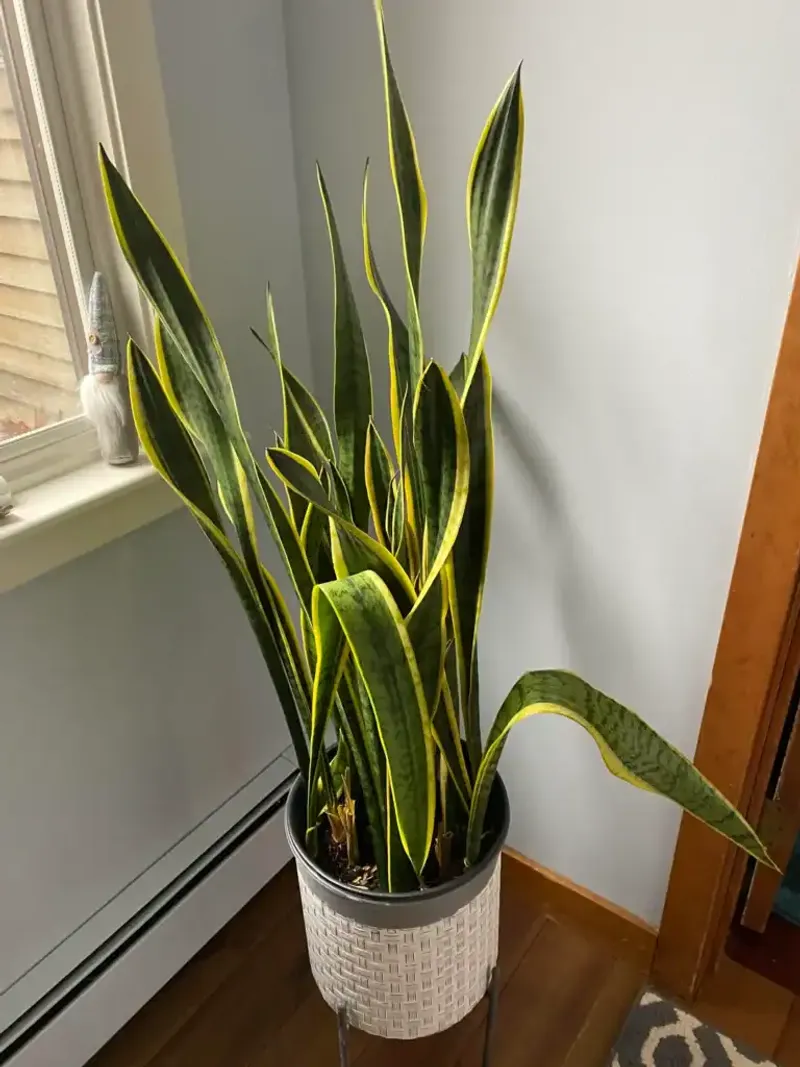
A snake plant whose leaves are firm to the touch but still lean outward is telling you something different from one with soft, collapsing bases. Firmness is a meaningful clue: it generally indicates the roots are intact and the plant is not in the grip of rot. The leaning, in that case, is a mechanical or environmental issue rather than a disease problem, and the responses are quite different.
Tall varieties naturally produce heavy leaves that can pull outward over time, especially as the plant fills out and outer leaves mature. This is partly a growth-habit issue: some cultivars are simply wider and more arching than others, and a single outer leaf angling away from the center does not signal a problem. The concern grows when several leaves collapse together, or when the whole plant tilts because the container cannot support its weight.
Container stability matters more than many growers realize. A lightweight plastic nursery pot is fine when a plant is young and small, but as the leaves grow taller and heavier, the pot can tip easily, especially on a smooth surface. Penn State Extension recommends a heavy pot for taller snake plant varieties to reduce tipping, and the Missouri Botanical Garden notes that wide, low clay pots are often used to stabilize tall, narrow plants. A heavier outer cachepot placed around the nursery pot can accomplish the same thing without requiring a full repot.
Light direction and quantity also play a role. University of Minnesota Extension winter houseplant guidance notes that plants reaching or leaning toward a single light source is a common indoor issue. Insufficient light over time can produce weaker, more stretched growth. Bright, indirect light is a reliable default; if the plant has been in a dim corner, move it gradually toward a brighter spot rather than shifting it directly into strong sun, which can scorch the leaves.
Underwatering is another possibility worth considering when the soil is bone dry and the leaves feel limp rather than crisp. Snake plants tolerate drought well, but prolonged dryness can eventually cause leaves to soften and lean. Check the soil before assuming light or stability is the cause.
Repot only when the roots or container show a real need
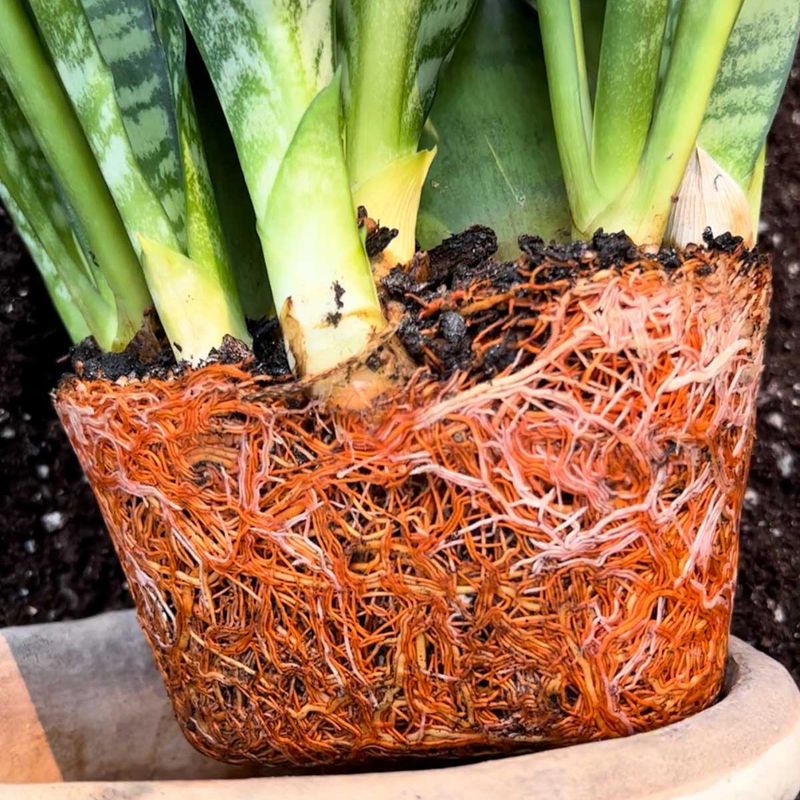
Floppy leaves alone are not a reason to repot a snake plant. Reaching for a bigger container is a common first instinct, but an oversized pot can make moisture problems worse by surrounding the root ball with more soil than the plant can dry out between waterings. The decision to repot should be driven by what the roots and container are actually showing you, not by the symptom that sent you looking in the first place.
Specific signs that repotting is worth considering include roots that circle densely through the entire container with little remaining soil, roots pushing out through the drainage holes, a plastic pot that is visibly bowing or buckling under root pressure, and growth that has slowed noticeably despite consistent care. These are genuine indicators that the root system has outgrown its space. Snake plants generally tolerate a snug container, so a somewhat pot-bound plant is not automatically in distress, and immediate repotting is not the only reasonable response to seeing roots at the drainage holes.
When repotting is warranted, choose a replacement pot that is modestly larger, typically one size up or about 2 to 3 inches wider in diameter. Penn State Extension’s repotting guidance supports a modest size increase rather than a large jump, because excess soil volume retains moisture longer than the root system can use. A pot that is much larger than the root ball essentially creates the same drainage problem as an oversized container from the start.
If the real issue is that a lightweight pot is tipping under the weight of tall leaves, a heavier outer container, such as a ceramic cachepot that fits snugly around the nursery pot, can add stability without changing the root environment at all. Minnesota Extension notes this approach as a practical way to address instability without triggering the moisture risks that come with unnecessarily upsizing the growing container. Keeping the two problems separate, root volume versus physical stability, leads to a more targeted fix.
Judge recovery by new growth, not by old leaves standing straight
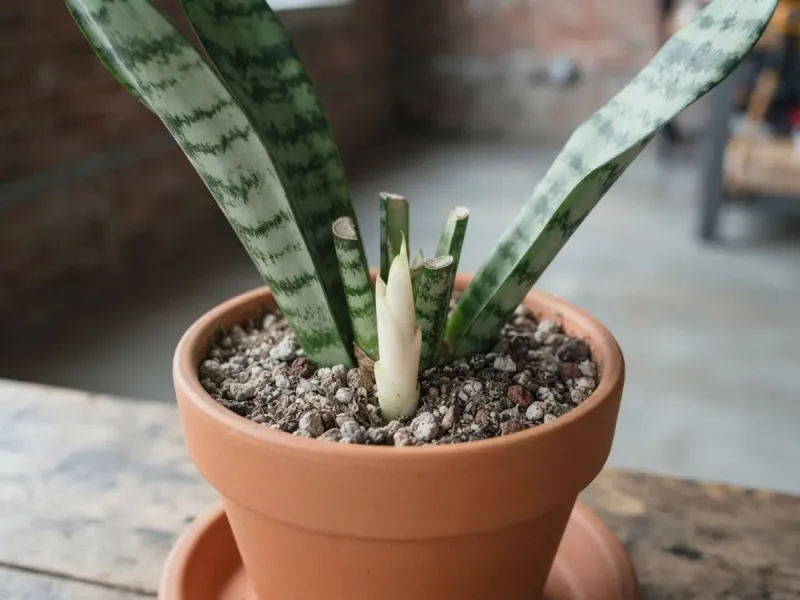
After matching the remedy to what you found, the hardest part is often waiting and resisting the urge to measure success by whether the old flopped leaves spring back upright. Most of the time, they will not. Leaves that have permanently bent, creased, or lost structural integrity at the base are unlikely to straighten on their own, even after drainage improves and the root zone stabilizes.
Firm leaves that are simply leaning because of weight or light direction can be gently supported with a soft plant tie or a bamboo stake placed close to the base, which manages the appearance without treating any underlying problem. Leaves with soft, rotting bases are better removed at soil level with clean scissors; leaving them in place can allow decay to spread. Ask Extension guidance on snake plant leaves falling down confirms that flopped leaves may not become upright again and may need support or removal rather than waiting for a reversal.
The reliable signs of genuine recovery are steadier and slower: soil that dries at an appropriate pace between waterings, a crown that remains firm and does not develop new soft spots, and eventually, new leaves emerging from the base. Penn State Extension notes that new growth is the meaningful indicator that a snake plant has stabilized after a root-zone problem. A single new leaf pushing up from healthy soil is worth more as a recovery signal than any number of old leaves held upright by a stake.
The practical rule to carry forward: inspect the root zone first, keep water moving freely out of the container, and change the pot only when the roots or the container give you a concrete reason. A plant that gets those basics right tends to take care of the rest on its own schedule.