
If Your Late-Summer Zucchini Blooms Like Crazy But Sets Almost No Fruit, One Missing Visitor Is Why
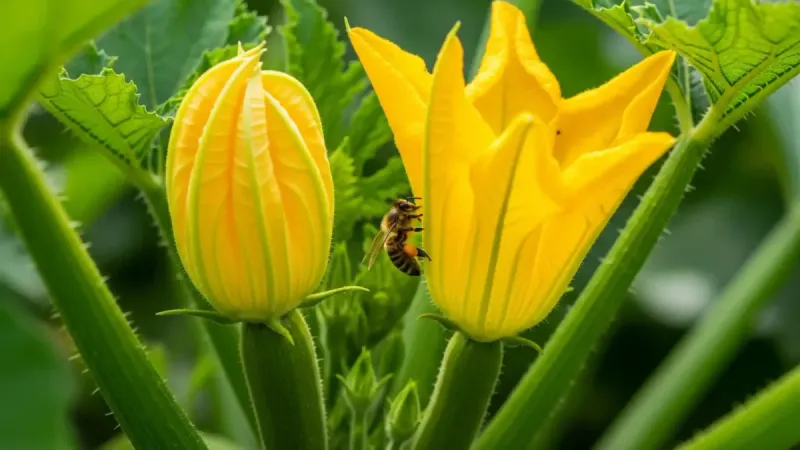
Your zucchini plant is covered in bright yellow flowers, but the actual zucchinis are nowhere to be found. That gap between a flower-covered vine and an almost-empty harvest is one of the most frustrating puzzles in a summer garden. The good news is that a few minutes of flower-by-flower observation this weekend can tell you a lot about what is going wrong and what you can do about it.
The flowers reveal whether zucchini is failing to form fruit or failing to get pollinated
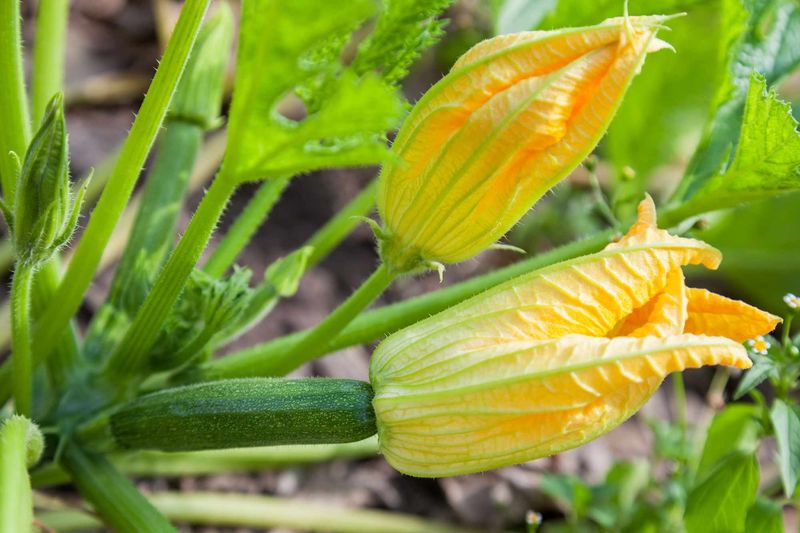
A zucchini plant loaded with blooms but nearly empty of fruit can feel like the garden is mocking you. Before assuming something went wrong with your watering schedule or fertilizer, take a closer look at those flowers, because the blossoms themselves carry the first diagnostic clue.
Zucchini produces two distinct types of flowers on the same plant: male and female. University of Minnesota Extension guidance on growing summer squash explains that only female flowers can develop into fruit, while male flowers serve one purpose: supplying pollen. A plant buried in flowers but producing little zucchini may simply be covered in male blossoms, which cannot become fruit no matter how healthy the plant is.
Male flowers commonly appear first, and an early or extended stretch of mostly male blooms is a normal part of the plant’s development. The diagnosis shifts when female flowers are present but their tiny attached zucchinis repeatedly yellow, shrivel, drop before sizing up, or grow misshapen. That pattern points more specifically toward a pollination problem rather than just an imbalanced flower ratio.
Late summer adds another layer of complexity. UMN Extension’s cucurbit flower and fruit set resource notes that heat and other stressors can increase the proportion of male flowers, reduce female flowering, and cause young fruit to abort even after pollination begins. So the working diagnosis at this stage is provisional: abundant blossoms with little fruit may reflect inadequate pollination, a skewed flower sex ratio, heat stress, or a combination of all three. Checking the flowers first costs nothing and narrows the list considerably.
A female blossom carries the zucchini you are waiting for
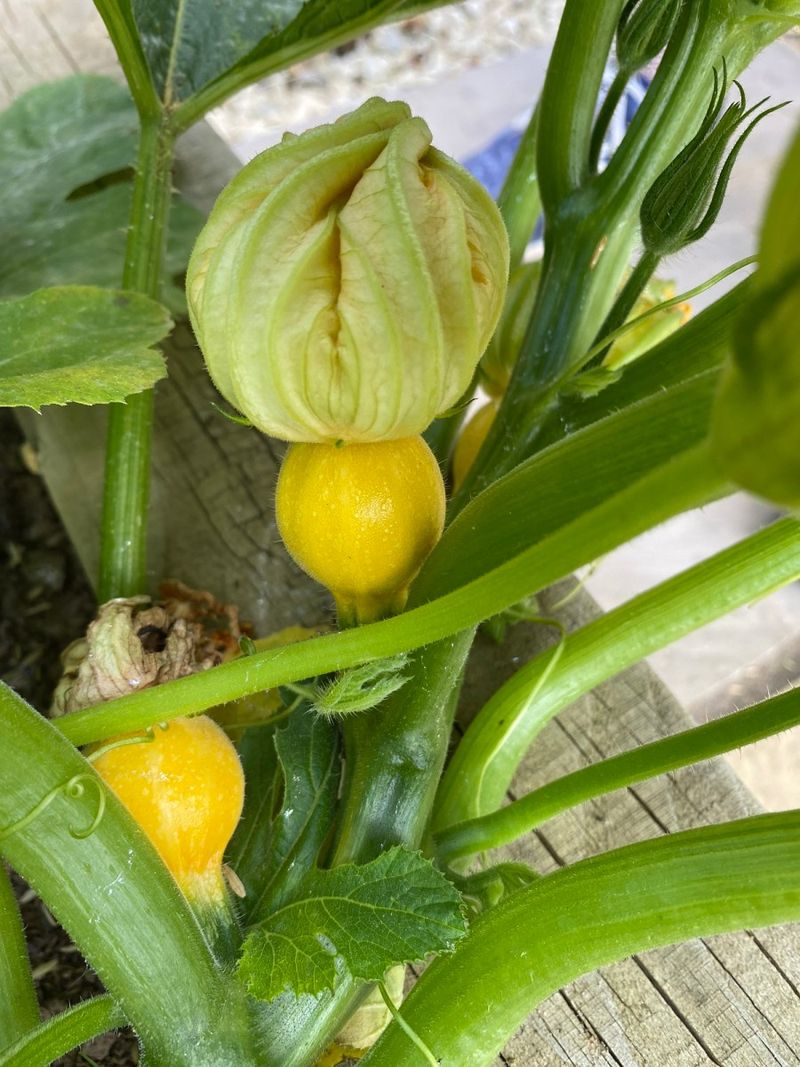
Telling male and female zucchini flowers apart takes about ten seconds once you know what to look for, and getting this right prevents a lot of unnecessary worry about bees, fertilizer, or watering.
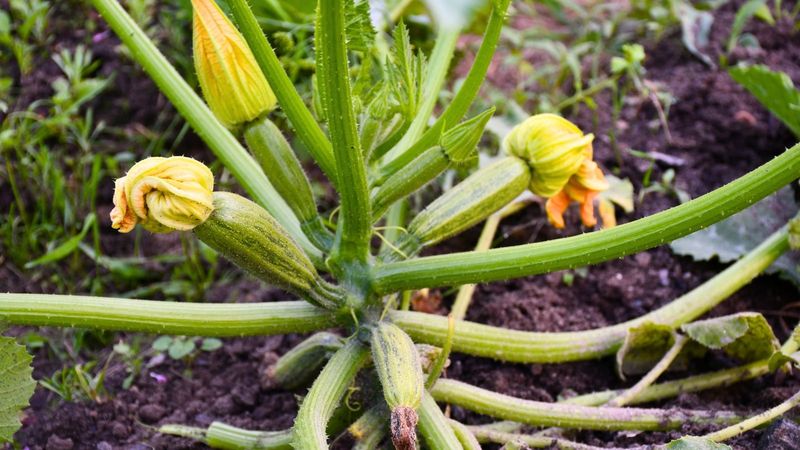
Pick up any flower stem and look at the base of the blossom. A female flower has a small, distinctly swollen bump right where the flower meets the stem. That bump is the ovary, and it looks like a tiny, miniature zucchini already taking shape. UMN Extension’s summer squash guide confirms that this swollen ovary is the immature fruit waiting to develop if pollination succeeds.
Without successful pollen transfer to the female flower’s stigma, that tiny ovary stops growing and eventually drops or shrivels.
Male flowers look noticeably different at the base. The stem is thinner and generally longer, and there is no swelling behind the blossom. Illinois Extension’s summer squash resource points out that male flowers exist solely to provide pollen, which is why removing too many of them can quietly reduce fruit set even when pollinators are active. If you enjoy harvesting blossoms for cooking, always leave several male flowers open on the plant so pollen remains available.
Once you can reliably identify flower sex by sight, you can start asking a more precise question: Are female flowers actually forming, and when they do, are their attached zucchinis enlarging or collapsing? That distinction separates a plant that has not produced enough female flowers yet from one that is producing female flowers but failing to convert them into fruit. Both situations look similar from a few steps away, but the path forward is different for each.
Morning is the best time to watch pollinators and open flowers
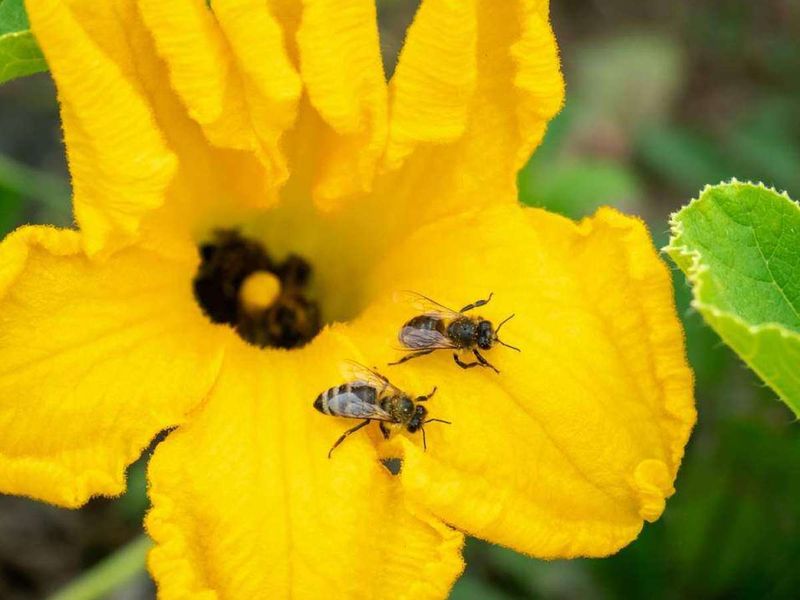
Squash flowers tend to open in the morning and often stay receptive for only one day. That narrow window makes the early part of the day the most useful time to observe what is actually happening between your flowers and the insects visiting them.
Head out to your zucchini patch between roughly 7 and 10 in the morning and watch for a few minutes. You are looking for bees or other insects moving in and out of both male and female flowers. UMN Extension’s cucurbit flowering guide describes morning as the most productive observation and intervention period, because flowers are freshly open and pollinators are typically most active before midday heat sets in.
The visitor you spot may not be a honey bee. Squash bees, bumble bees, and a range of other wild insects all move pollen between zucchini flowers. USDA Agricultural Research Service research on squash pollination identifies squash bees as specialist Cucurbita pollinators that can be highly efficient – sometimes completing their work before most gardeners have finished their morning coffee. Not seeing a honey bee during one quick look does not mean pollination is failing.
Several factors besides bee absence can reduce pollen transfer during that morning window. Cool or rainy weather can suppress pollinator flight. Strong wind can damage open flowers. Row covers left in place after flowering begins physically block all insect access.
USDA ARS research on squash bee pollination efficiency found that wild pollinators were sufficient for full squash pollination at most surveyed farms, suggesting that low fruit set in a home garden often reflects crop stress or flower conditions rather than a complete absence of pollinators. Watch for a few mornings before drawing conclusions, and note whether female flowers are even open and available during your observation window.
Hand-pollination puts the missing transfer in your hands
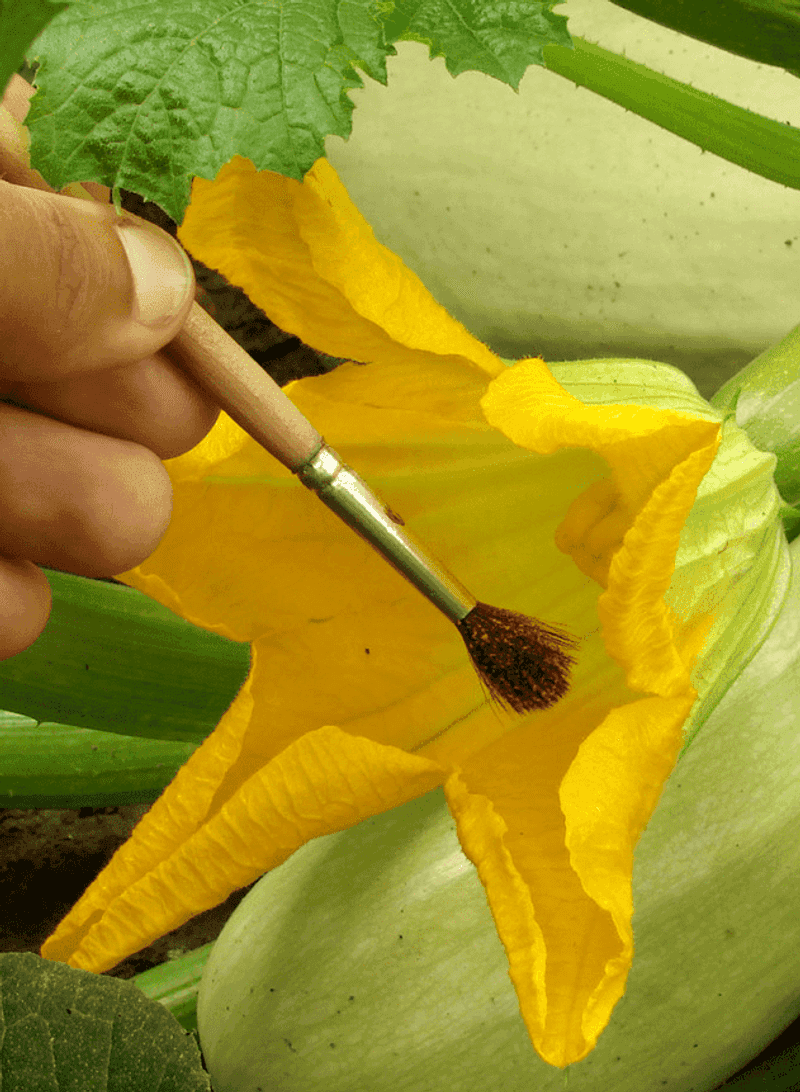
When you have confirmed that female flowers are opening but their attached zucchinis keep yellowing or dropping, and morning observation shows little bee activity, hand-pollination is a reasonable next step for a small backyard garden. It is a simple physical transfer, not a complicated procedure.
Start early in the morning while the flowers are freshly open. Find a male flower – one on a thin stem without a swelling at the base – and either remove its petals entirely or fold them back gently to expose the central column, called the anther, which should be covered in yellow pollen. University of New Hampshire Extension’s guide to zucchini not producing fruit walks through this method clearly: touch the pollen-coated anther directly to the stigma – the sticky central structure – inside a freshly opened female flower. The stigma is typically multi-lobed and sits in the center of the female blossom.
A small, soft paintbrush or a cotton swab works well as an alternative if you prefer not to handle the flowers directly. Dab the brush against the anther to collect pollen, then transfer it to the stigma of each open female flower. UMN Extension’s pollination requirements resource notes that poor or incomplete pollen transfer can result in fruit that is undersized, curved, tapered, or contains few developed seeds – so thorough contact between the pollen and the stigma matters.
Repeat the process for every open female flower that morning. One male flower can typically supply enough pollen for several female blossoms. After pollinating, watch the attached zucchinis over the next two to three days: successful pollination should result in the small fruit continuing to enlarge rather than yellowing or dropping. UMN Extension’s cucurbit guide is clear that hand-pollination cannot correct heat stress, disease, nutrient deficiencies, or pest damage, so if zucchinis continue aborting after careful hand-pollination, a different problem is likely at work alongside or instead of inadequate bee activity.
A pollinator-friendly patch improves the odds without requiring a hive
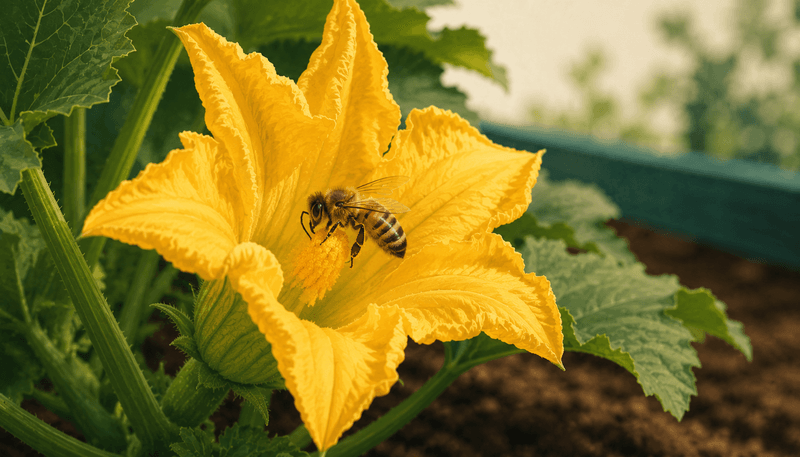
Hand-pollination handles an immediate shortage, but building a patch that attracts and supports pollinators over time gives your zucchini a better baseline to work from each morning. Backyard gardeners do not need to rent a honey bee hive or purchase any insects to make this happen.
USDA ARS research on squash pollination identifies squash bees as ground-nesting specialists that live and forage near Cucurbita crops. Preserving patches of bare or lightly vegetated soil near your squash plants gives these bees nesting habitat they need. Mulching heavily right up to the plant base can reduce that bare-ground availability, so leave a few small open areas nearby if you can.
Planting flowers that bloom throughout the season near your vegetable beds keeps a broader range of pollinators visiting the garden regularly. When those visitors arrive for the flowers, they often work their way over to the zucchini blossoms as well. Penn State Extension’s guidance on conserving wild bees recommends diverse, season-long bloom as one of the most effective ways to support wild bee populations in a home landscape.
Insecticide use around blooming plants is one of the fastest ways to reduce pollinator visits. If a pest problem genuinely requires a spray, Penn State Extension’s pesticide and pollinator guidance explains that applying products in the evening, when bees are generally less active, can reduce exposure – but evening timing is not automatically safe for every product. Toxicity, residue persistence, drift, and label requirements all still apply, and the product label is the controlling document.
Row covers deserve a specific warning. They are useful for excluding squash vine borers and cucumber beetles early in the season, but UMN Extension’s summer squash guide is direct: row covers also exclude pollinators entirely. Remove them once your plants begin flowering, unless you are committed to hand-pollinating every female flower that opens. Leaving covers in place and then wondering why fruit is not setting is one of the most common and easily corrected mistakes in a zucchini patch.
Heat and crop stress can imitate a pollination problem
Not every case of abundant flowers and scarce zucchini comes down to bees. Late summer brings a cluster of stressors that can cause blossom drop and young-fruit abortion in ways that look almost identical to pollination failure at first glance.
Heat is the most common impersonator. UMN Extension’s overview of how vegetables respond to heat explains that high temperatures can reduce female flower production, push the plant toward more male flowering, and cause flowers or newly set fruit to abort. UMN Extension’s cucurbit flowering guide gives daytime temperatures in the 90s Fahrenheit and nighttime temperatures in the 70s Fahrenheit as conditions associated with flower and small-fruit abortion in cucurbits. Those figures are useful warning ranges rather than hard cutoffs – some varieties and locations respond differently – but they give you a practical threshold to watch.
Heat also affects the pollinators themselves. Bees reduce foraging during the hottest parts of the day and during heat waves, which can shorten the window when pollen transfer occurs even when flowers are open. So heat can simultaneously reduce female flowering, discourage bee activity, and cause any young fruit that starts to set to drop – creating a triple hit that looks like a pollination disaster but has a different root cause.
Water stress is another factor that mimics pollination failure. Drought conditions cause zucchini to abort flowers and young fruit as a survival response. Excess moisture or waterlogged soil can cause root stress with similar results. UMN Extension’s summer squash guide recommends consistent, even moisture rather than heavy irrigation followed by dry spells.
If you are unsure whether your soil nutrition is contributing, a soil test is a more reliable guide than adding fertilizer by guesswork – excessive nitrogen, in particular, can push the plant toward lush leafy growth and fewer female flowers.
Pest damage, disease, cool or rainy weather, and poor soil conditions round out the list of contributors. Colorado State University Extension’s vegetable garden guidance acknowledges that blossom and young-fruit drop in cucurbits is a multifactor problem. Wind damage to open flowers, fungal disease on stems, and squash vine borer injury can all reduce fruit set without any shortage of pollinators. Checking for soft or hollow stems, unusual spotting on leaves, and physical damage to blossoms can help separate pest and disease problems from a pollination or heat diagnosis.
The next open female flower gives you a useful test
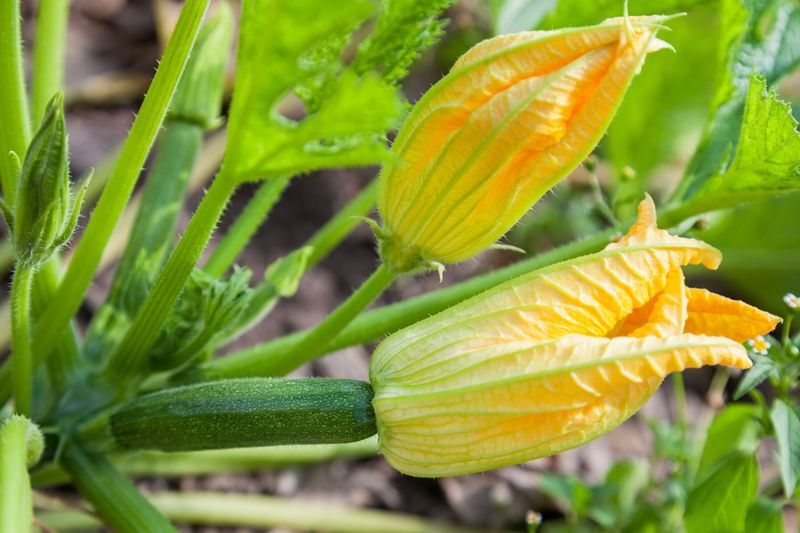
The clearest test available to you right now costs nothing and takes about fifteen minutes. Tomorrow morning, head out early and check whether any female flowers are open – look for blossoms with a small swollen ovary at the base. If female flowers are present, spend a few minutes watching for bee or insect activity around both male and female blossoms.
If activity appears low and female flowers are freshly open, hand-pollinate them using the method described earlier, then mark the flower with a small piece of ribbon or a plant tag so you can track it. Check back in two to three days. UMN Extension’s summer squash guide and UNH Extension’s zucchini flowering resource both describe enlarging fruit as the clearest sign of successful pollination. If the small zucchini yellows, shrivels, or drops within a day or two, pollination may have been incomplete – or heat, disease, or another stressor is overriding it.
This single-flower test can support a pollination diagnosis, but it cannot fix heat stress, pest injury, disease pressure, or nutrient problems on its own. UMN Extension’s cucurbit guide reinforces that fruit set in late summer is rarely a single-cause problem. The most practical response is to protect the pollinators already visiting your garden, keep moisture consistent, and keep observing rather than treating every empty blossom as evidence of one missing bee. A plant that is genuinely supported tends to tell you so, one enlarging zucchini at a time.