
If Your Fall Tomatoes Split Open Right As They Ripen, Uneven Watering Is Cracking Them From Inside
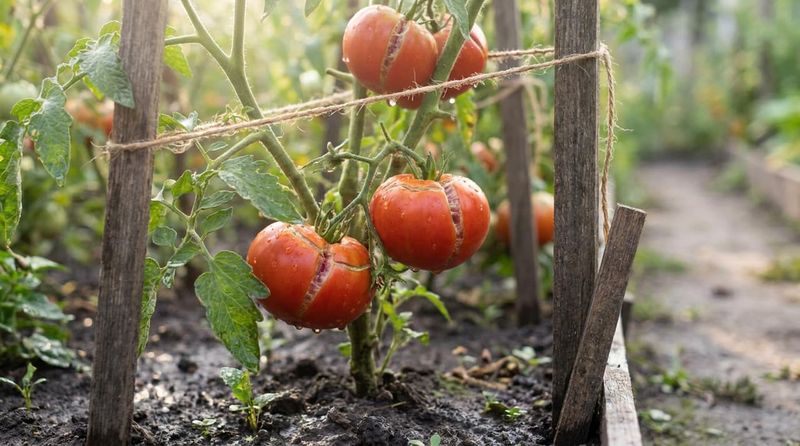
Few garden moments sting quite like spotting a perfectly colored tomato on the vine, only to find it split wide open. The crack usually appears right as the fruit is finishing up, and it can feel like the plant failed at the last second. What actually happened has more to do with the rhythm of water reaching the roots than with anything broken inside the plant itself. Getting a handle on why it happens makes the fix a lot more straightforward.
Fall is not the cause—the crack pattern tells the story
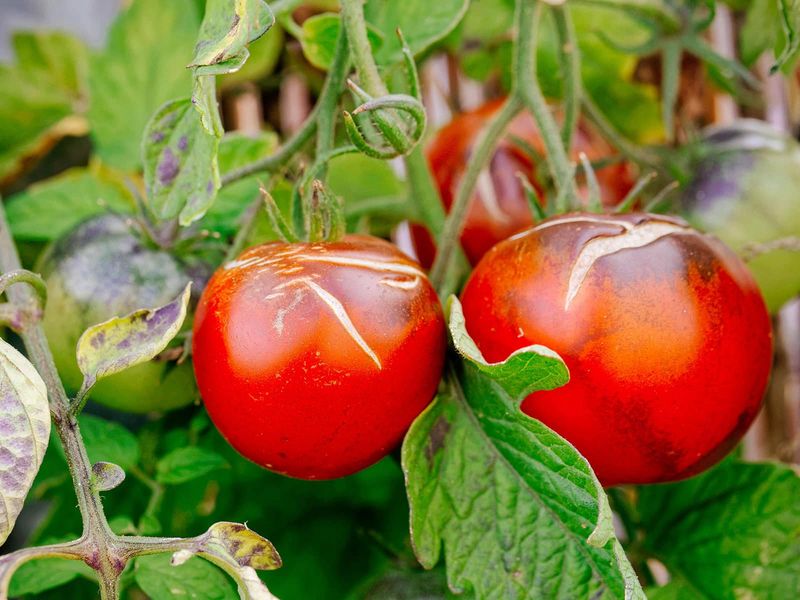
Walk out to the garden after a stretch of dry weather followed by a heavy rain, and you may find tomatoes split right along the shoulder or running in lines from the stem down toward the blossom end. It happens in summer too, but fall gardeners notice it more because late-season rains can arrive suddenly after a warm, dry August or September. The season itself is not the culprit, though. What matters is the pattern of water reaching the roots during the weeks the fruit is finishing its growth.
Two crack types point toward a water-related trigger. Radial cracks run from the stem downward, like spokes on a wheel. Concentric cracks circle the shoulders in rings, sometimes stacking on top of each other. University of Minnesota Extension’s tomato disorder guide identifies both patterns as growth cracks that tend to appear when soil moisture changes rapidly near or during ripening.
A long dry spell followed by a big rain or a sudden heavy irrigation is the classic setup.
The plant is not necessarily defective. University of Missouri Extension’s overview of tomato fruit cracking points out that the disorder is largely environmental, though some varieties handle moisture swings better than others. Penn State Extension’s cracking guide adds that fruit size, stage of ripeness, temperature, sunlight, and canopy cover all shape how vulnerable a tomato is at any given moment. Uneven moisture is a major, fixable risk factor, but it shares the stage with genetics, heat, and the timing of rain or irrigation relative to where the fruit is in its development.
A ripening tomato can outgrow its skin
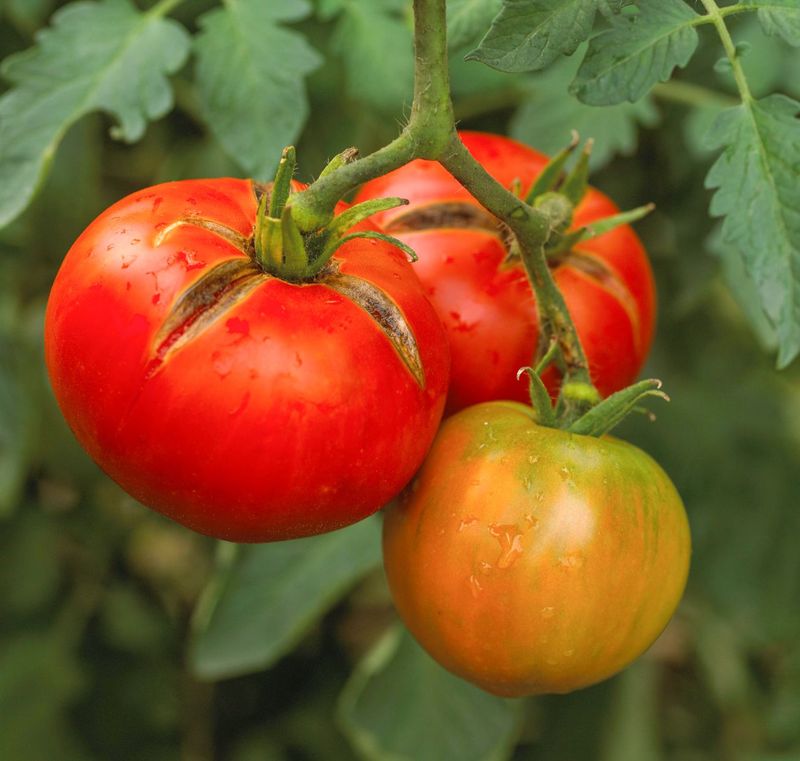
Somewhere between green and fully red, a tomato is doing two things at once: it is still growing slightly, and its skin is changing character. Research published in a peer-reviewed study on tomato fruit growth and cuticle properties during ripening found that tomato fruit continues to expand even as it ripens, and that ripening alters the cuticle in ways that reduce its ability to stretch to accommodate that expansion. So a tomato near maturity is already working against a tighter margin than a green one.
When a dry period ends and water becomes suddenly available, the roots take it up quickly and the fruit expands faster than the stiffening skin can handle. Think of it less as an explosion from the inside and more like a balloon that has been partly inflated, left to sit in the sun until the rubber tightens, and then given one more big breath of air. The phrasing “cracking from inside” captures the experience of watching a tomato split from the inside out, but the real story is rapid expansion meeting a skin that has lost its flexibility. Published research on fruit cracking in tomato connects this vulnerability to changes in the cuticle and fruit wall as ripening progresses.
Rain can also wet the area around the stem scar directly, and that contact may contribute in some cases, particularly during heavy overhead rain. But the dominant pattern extension specialists describe is changing soil moisture driving rapid fruit growth. Penn State Extension notes that the most consistent trigger is a dry period followed by a large, sudden influx of water, whether from rain or irrigation. Timing is everything: the same amount of water spread evenly over a week causes far less trouble than the same amount arriving all at once.
Not every mark is a growth crack
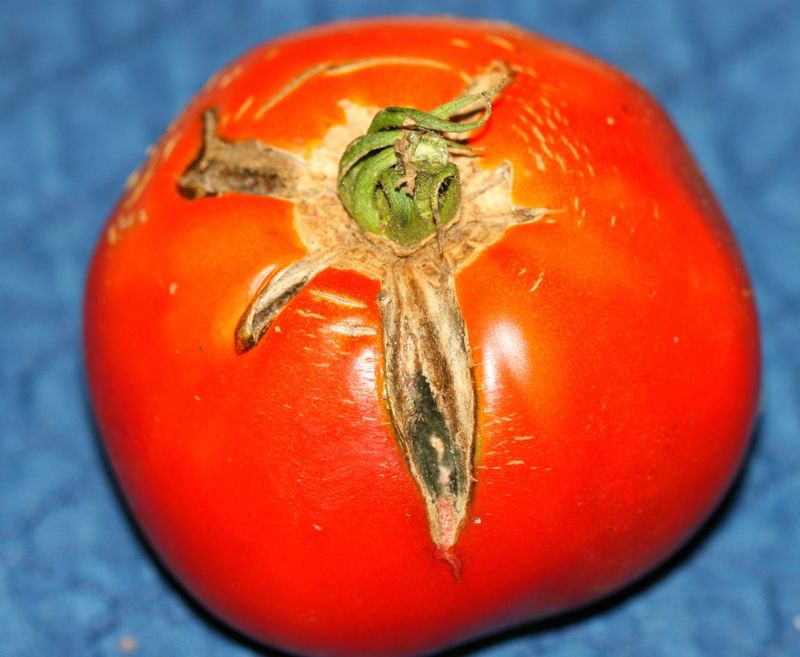
Before adjusting a watering routine, it pays to confirm that what you are looking at is actually a growth crack. Several other tomato problems produce marks that can look similar at a quick glance but have different causes and call for different responses. Misreading the symptom leads to the wrong fix.
Rain check, sometimes called cuticle cracking, weather check, or crazing, shows up as many fine, rough microcracks, often concentrated on the shoulders. Penn State Extension’s overview of rain check and related tomato disorders explains that rain check produces a rough, netted texture rather than the clean, deep splits associated with growth cracks. University of Maryland Extension’s field notes on rain check describe its exact cause as still unsettled, with rainfall, fruit temperature, sunlight, cultivar, and drought-to-rain patterns all potentially involved. It is a separate disorder, not a milder version of the same thing.
Blossom-end rot is easy to tell apart once you know where to look. It creates a dark, sunken, leathery patch on the blossom end, which is the end of the fruit opposite the stem. University of Minnesota Extension links blossom-end rot to disrupted calcium transport, often involving fluctuating soil moisture, but the disorder looks nothing like a radial or concentric crack. There is no split running from the stem, no ring circling the shoulder.
Sunscald rounds out the list of commonly confused problems. University of Wisconsin-Extension’s tomato disorder guide describes sunscald as a pale, yellow-white, flattened or papery patch that forms when fruit is suddenly exposed to intense direct sunlight, usually after foliage is removed or lost. Sunscald and growth cracks can appear on the same fruit if pruning has left it exposed, but they are not the same injury. Knowing the difference helps you target the actual problem rather than adjusting the wrong variable.
Steady soil moisture is the practical fix
The core lesson from the crack pattern is straightforward: avoid letting the root zone go very dry and then flooding it with a large amount of water. That swing is what sets up the rapid expansion that splits the skin. The goal is not permanently wet soil, which creates its own problems including root damage and disease. What you are after is an even moisture pattern that does not lurch between extremes.
University of Minnesota Extension and Utah State University Extension’s tomato growing guide both recommend keeping soil moisture as uniform as practical while fruit are enlarging and ripening. That window, from the time the fruit sets through the final color change, is when the skin is most vulnerable to a sudden change in available water.
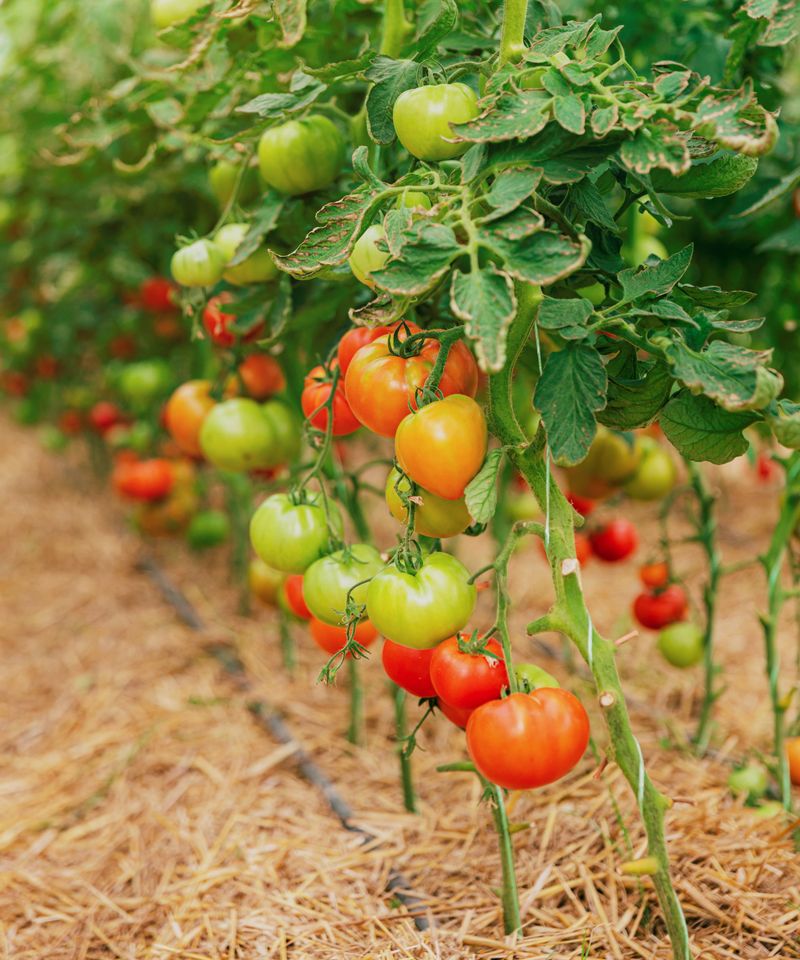
Mulch is one of the most reliable tools for smoothing those swings. A layer of straw, shredded leaves, or wood chips around the base of each plant slows evaporation from the soil surface and buffers the root zone against rapid drying between rain events or watering sessions. University of Wisconsin-Extension commonly recommends roughly 1 to 3 inches of mulch, kept away from direct contact with the stem to reduce the risk of rot or disease at the base of the plant. Pulling the mulch back a few inches from the stem is a small step that protects both moisture consistency and plant health at the same time.
This routine matters most during the ripening phase, when the fruit is shifting from firm and green to soft and colored. Letting the soil dry out completely during that stretch and then catching up with a long, heavy watering session is exactly the sequence to avoid. Building a steadier rhythm before that window opens is easier than trying to correct a dry spell after the fruit has already started to color.
Water by the root zone, not by the calendar
A fixed watering schedule sounds reliable, but it does not account for how fast the soil actually dries out on a given day. A hot, windy afternoon pulls moisture out of the ground much faster than a cool, overcast one. Watering by the calendar alone can mean the plant is sitting in wet soil one day and bone-dry soil three days later, which is the pattern that leads to cracking.
The more useful habit is checking the soil itself. Push a finger or a wooden dowel about 2 inches below the surface. If the soil at that depth feels dry, it is time to water. If it still feels moist, hold off.
University of Minnesota Extension’s vegetable garden watering guidance specifically advises checking soil moisture at roughly that 2-inch depth rather than relying on a set schedule, and notes that sandy soils and containers can dry out much faster than heavier soils.
When you do water, the aim is to wet the full root zone rather than dampening just the top inch or two. Deep, infrequent watering encourages roots to grow downward where the soil stays moist longer. University of Minnesota Extension’s tomato growing page and Utah State University Extension’s vegetable water recommendations present about 1 inch of water per week as a general starting guideline for established tomatoes in typical in-ground beds, with clear adjustments needed for sandy soils, containers, high heat, heavy rainfall, and drainage conditions. Container tomatoes in particular can dry out within a day or two during a heat wave and may need daily monitoring.
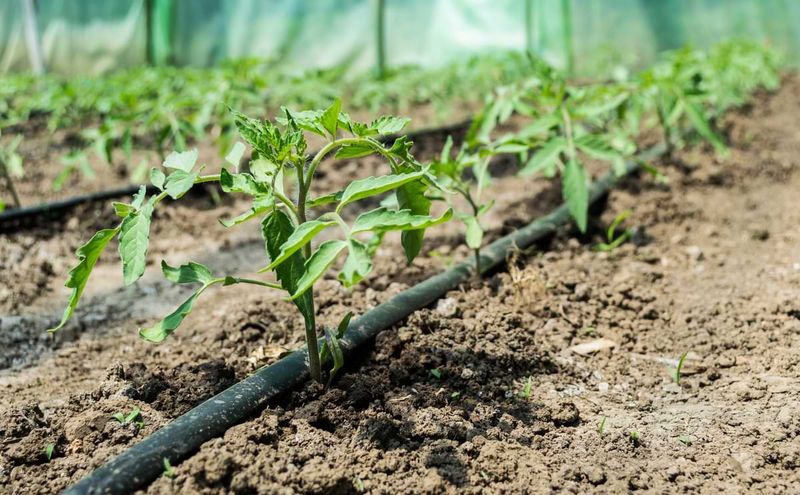
Drip irrigation or a soaker hose delivers water directly to the root zone at a slow, steady rate that the soil can absorb without runoff. University of Minnesota Extension’s irrigation strategies guide and their container plant watering guidance both note that keeping foliage dry reduces disease risk as a secondary benefit. The simplest advice to “water more” misses the point entirely. More water applied unevenly creates the same swing that causes the crack.
Consistency is the variable that actually matters.
Protect nearly ripe fruit before heavy rain
Rain is not something a gardener can control, but the decision about when to pick is. When a forecast calls for heavy rain and the tomatoes are close to ripe, harvesting them early is a practical way to reduce the time they spend exposed to a sudden surge of water. The question is knowing what “close enough” looks like.
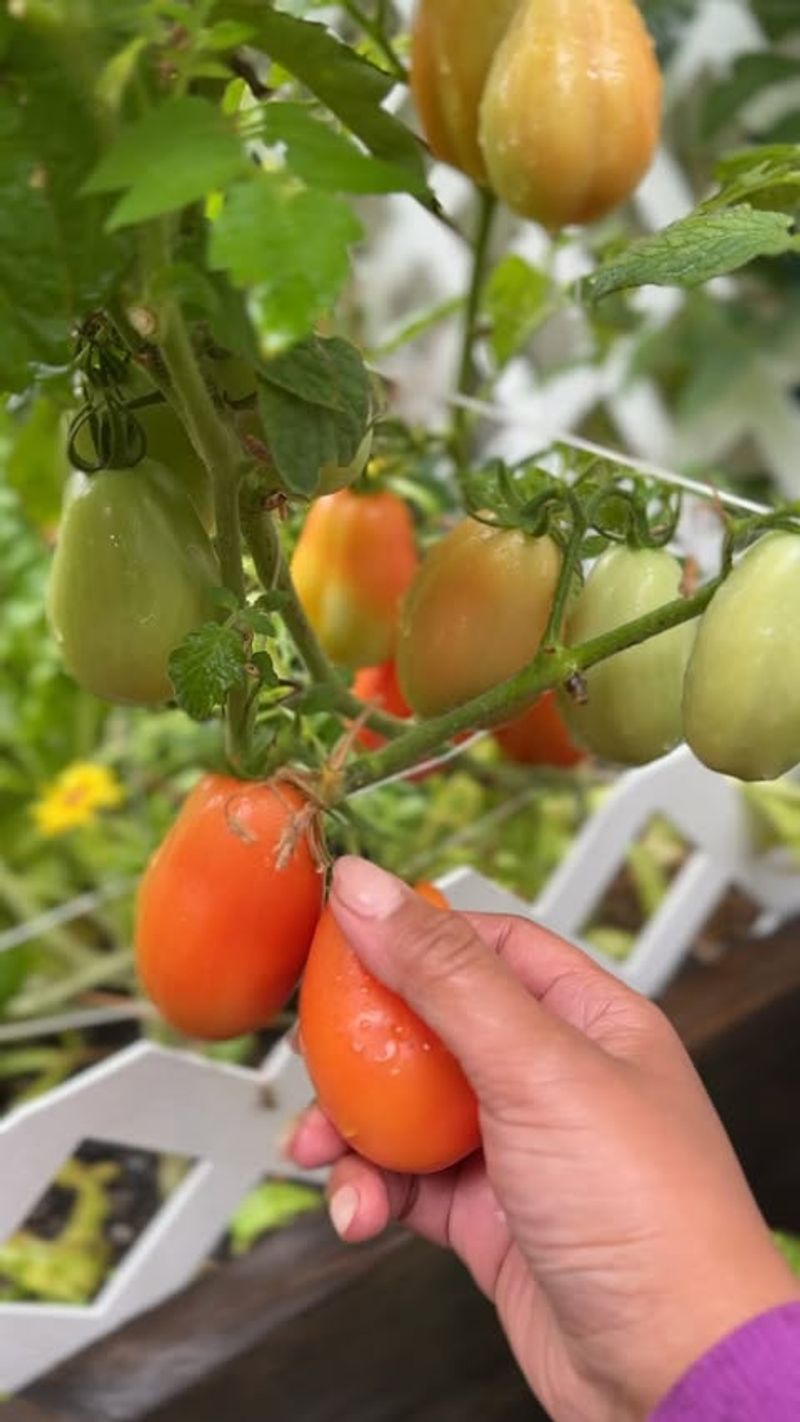
Penn State Extension’s tomato harvest timing guide describes the breaker stage as the point when the first blush of color appears at the blossom end, and notes that tomatoes harvested at the breaker, turning, or pink stage will continue ripening off the vine. Penn State Extension’s cracking article and University of Missouri Extension both recommend this approach as a way to reduce rain-related cracking risk. A tomato picked at the pink stage and ripened on a kitchen counter away from direct sunlight will finish coloring on its own, though flavor and texture can vary by cultivar and storage conditions, and it may not taste identical to one left on the vine through a perfect week of weather.
Leaf cover is the other protection strategy worth keeping in mind. Fruit that is shaded by a healthy canopy heats more slowly and stays less exposed to sudden temperature shifts and direct rain impact. UC IPM’s fruit cracking resource notes that maintaining adequate foliage helps buffer fruit from the kind of rapid environmental changes that raise cracking and sunscald risk. Resist the urge to remove large amounts of foliage late in the season when fruit is nearing maturity.
Strategic pruning has its place, but stripping a plant bare in August or September leaves the fruit exposed at exactly the wrong time.
Choose varieties that tolerate your conditions
Consistent watering and good mulch reduce cracking risk considerably, but they cannot override genetics entirely. Some tomatoes are simply built to handle moisture swings better than others, and knowing that before you plant can save a season of frustration.
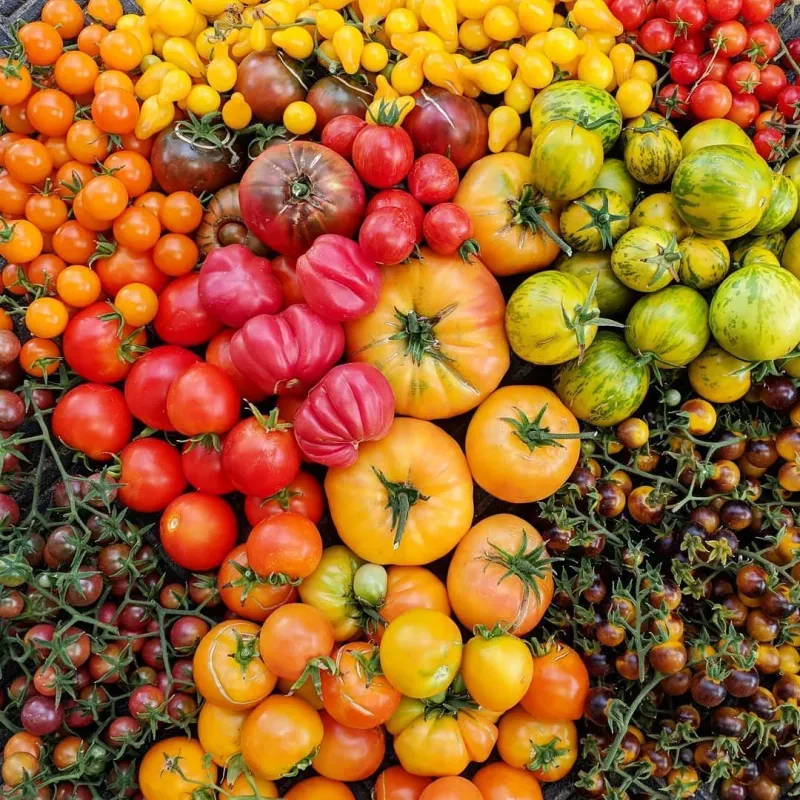
Large-fruited tomatoes and many heirloom varieties tend to be more susceptible to growth cracks than smaller or hybrid types. University of Massachusetts Amherst’s tomato fruit cracking fact sheet explains that cultivar genetics substantially influence cracking susceptibility, with fruit size, shape, and skin characteristics all playing a role. University of Minnesota Extension’s tomato fruit crack diagnostic page and Utah State University Extension both suggest looking for varieties labeled crack-tolerant or crack-resistant when the problem recurs despite steadier moisture management.
Penn State Extension reinforces that variety selection works alongside consistent watering rather than replacing it. A crack-tolerant variety grown in soil that swings between drought and flood will still crack. The combination of a more resilient variety, steady moisture, and adequate canopy cover gives the best odds. Site conditions matter too: a tomato growing in full afternoon sun with little leaf cover faces more heat stress and faster soil drying than one with natural shade during the hottest part of the day, which can make variety choice even more consequential on a challenging site.
Inspect a cracked tomato before deciding what to do
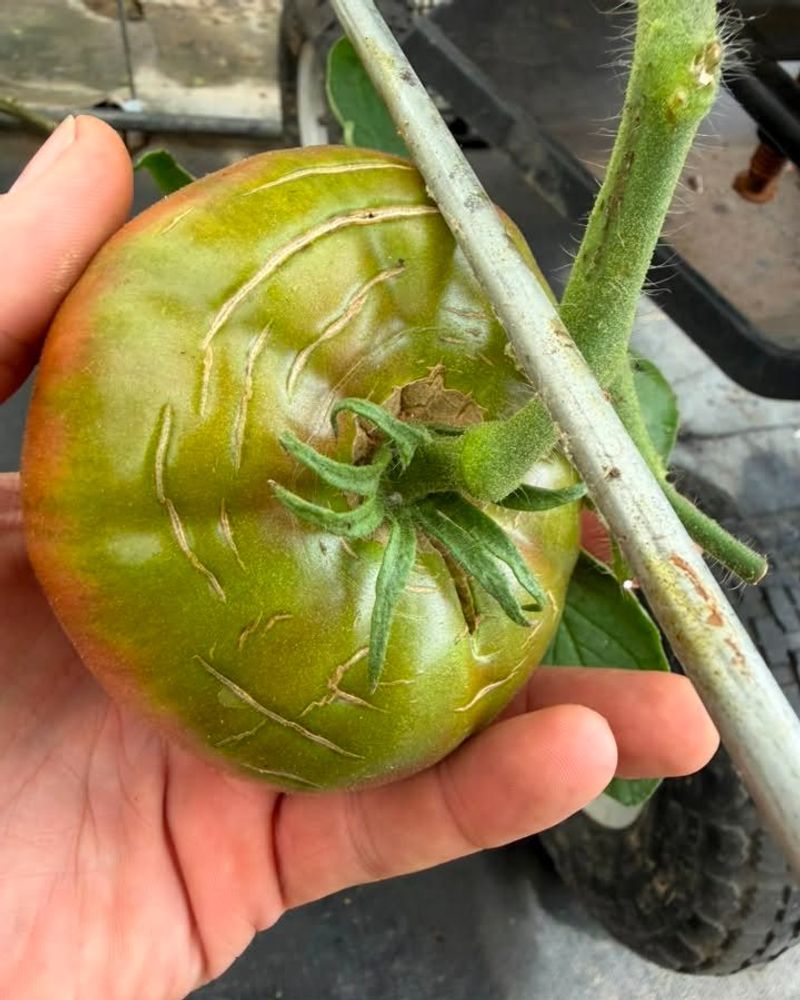
A split tomato is not automatically ruined, but it is not automatically safe either. The skin of a tomato is its first line of defense against bacteria, fungi, and insects. Once that barrier is broken, the clock starts moving faster.
Cracking is usually a physiological growth disorder rather than an infectious disease, as University of Illinois Extension’s tomato trouble guide notes. The crack itself does not mean the fruit is toxic, but it does mean that microorganisms now have an entry point. Ask Extension’s guidance on split tomatoes and their broader food safety guidance treat a small, clean crack on an otherwise firm, healthy tomato as a quality defect that can be managed: harvest it promptly, wash it thoroughly, and cut away the damaged area along with a generous margin of tissue around it. That approach reflects a limited extension recommendation, not a safety guarantee.
Discarding cracked fruit is the more conservative choice, and for people at higher risk from foodborne illness, including older adults, young children, pregnant individuals, and those with compromised immune systems, it is the more appropriate one. University of Wisconsin Horticulture’s guide on less-than-perfect garden produce and FDA guidance on tomato storage and handling both emphasize that broken skin raises contamination risk and that visible decay warrants discarding the fruit entirely.
Any tomato that is soft, moldy, foul-smelling, oozing, or extensively deteriorated should go in the compost, not the kitchen. The same applies to cracked fruit you are considering for canning or preserving: do not treat damaged tomatoes as automatically suitable for home preserving. Follow a tested, approved food-safety process and start with sound fruit whenever possible. A few split tomatoes are a manageable loss.
A poorly preserved batch is a more serious problem.
Change the rhythm before the next tomato turns red
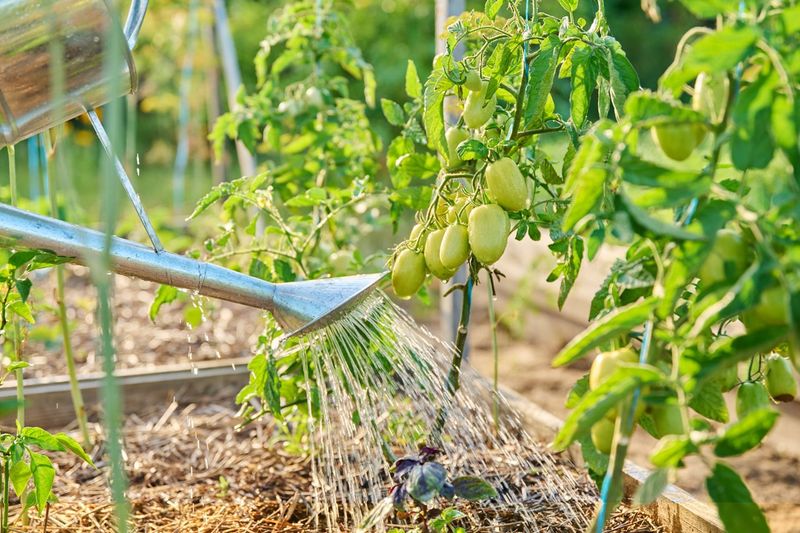
The sequence that leads to a split tomato is readable once you know what to look for. Radial cracks from the stem and concentric rings around the shoulders are the signals that a moisture swing happened at the wrong moment. Catching those patterns early lets you adjust before the next round of fruit reaches that vulnerable final stretch.
Start with the soil. Check moisture about 2 inches below the surface rather than watering on a fixed day. Water deeply enough to reach the full root zone, then let the soil tell you when it needs more. Layer 1 to 3 inches of mulch around the plants, kept back from the stem, to slow evaporation between sessions.
University of Minnesota Extension and their tomato growing guide support this approach as the foundation for reducing moisture-related disorders. Keep the canopy reasonably intact so fruit stays shaded and buffered from heat and direct rain. When a heavy storm is forecast and the tomatoes have reached the breaker or pink stage, bring them in to finish ripening on the counter.
If the problem keeps returning despite steadier moisture, Penn State Extension recommends looking at variety selection as the next lever. Uneven watering drives many splits, but genetics, weather, fruit maturity, and sun exposure all shape the final outcome. A garden that handles all of those variables well rarely loses a ripe tomato to a crack it could have avoided.