
If Your Fall Peppers Grow Plenty Of Flowers But Drop Them Before Fruit Sets, Cool Nights Are To Blame
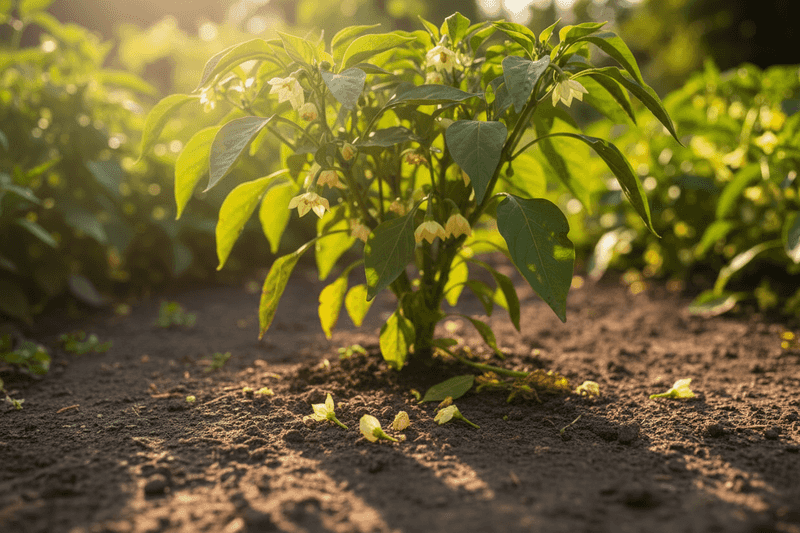
You walk out to your pepper plants expecting to see tiny fruits forming under all those blooms, and instead you find a ring of dropped flowers on the soil. Your plants look healthy, the leaves are green, and new buds keep coming, yet nothing is sticking. Cool fall nights are often the leading suspect when this happens, but they are not the only explanation worth checking. Knowing how to read the pattern on your own plants can help you decide what to do next before the season slips away.
Cool nights may be the leading clue
Pepper plants loaded with flowers but producing no fruit can feel like a cruel trick late in the season. The pattern becomes especially suspicious when nights start cooling and the plant otherwise looks vigorous: leaves are full and green, new buds keep forming, but the flowers detach cleanly and land on the soil before a tiny pepper ever takes shape. Utah State University Extension guidance on growing peppers notes that overnight temperatures below about 55°F can prevent fruit set and trigger flower abortion, making cooling fall nights a logical first place to look.
That said, the pattern alone does not prove cold is the cause. Several other problems can produce identical-looking flower drop, and blaming temperature before you have checked the rest of the plant can send you in the wrong direction. The first diagnostic move is to ask two questions: Are many flowers dropping at once, and is the plant otherwise behaving normally with steady growth and no leaf distortion?
Widespread, simultaneous flower loss on a plant that appears healthy in every other way does fit the profile of a temperature problem. Scattered loss of a few blooms here and there is harder to interpret and may simply be normal thinning. Oregon State University Extension’s pepper guide lists dry soil, wind, low light, excessive nitrogen, and other stresses alongside temperature as documented causes of pepper flower drop, so the temperature check is the starting point of a diagnosis, not the end of it.
Cold can disrupt the flower before fruit appears
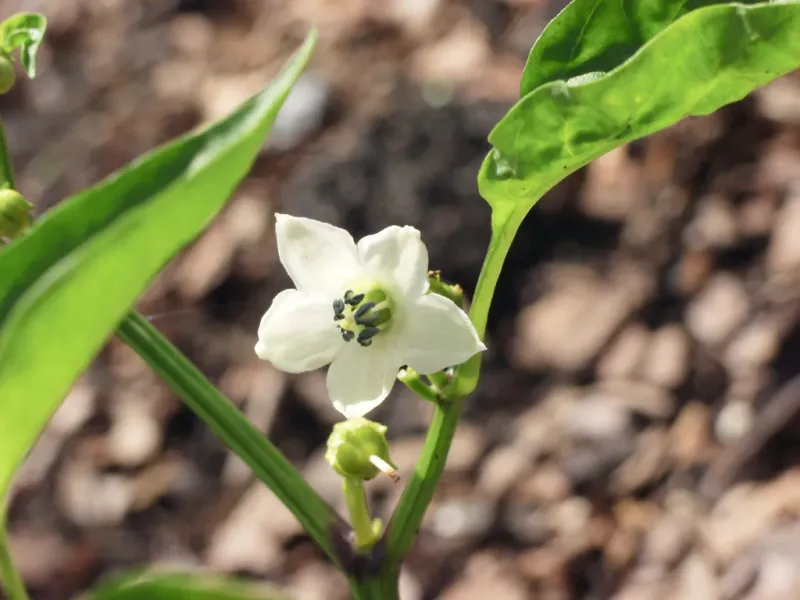
Pepper reproduction is more fragile than it looks from the outside. When temperatures drop, the damage does not always show up as a wilted or discolored flower. Instead, the problem happens inside the bloom at the cellular level, sometimes days before the flower even opens fully.
Low temperatures can interfere with anther development, reduce the amount of viable pollen a flower produces, and slow or stop pollen-tube growth after pollination occurs. If a pollen tube cannot reach the ovule to complete fertilization, no fruit will form even though the flower opened and looked perfectly normal to you. Research on temperature effects in Capsicum annuum has linked low night temperatures with abnormal flower development, reduced pollen viability, and poor seed set, which helps explain why the visible drop can lag behind the actual cold exposure by several days.
Early fruit development is also vulnerable. A pepper that starts to form after a cold night may abort while it is still tiny, appearing to the gardener as just another dropped flower rather than a lost fruit. This multi-stage exposure window means the cold night you noticed on the thermometer may not line up neatly with the day you found flowers on the ground.
A review of reproductive organ abortion in sweet pepper confirms that both pre-bloom development and post-pollination stages can be disrupted, which is why producing more flowers or encouraging more insect visits cannot automatically fix cold-related failure. If the pollen itself is compromised or the flower structure is abnormal because of a cold exposure that happened before bloom, additional pollination attempts will not change the outcome.
Check both overnight lows and daytime highs
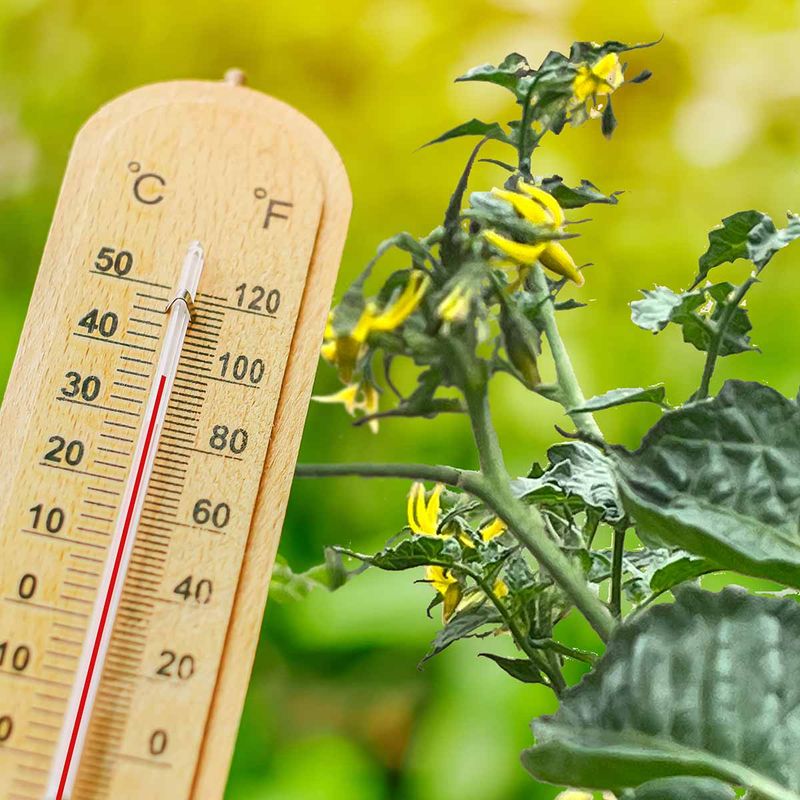
Before reaching for a solution, get actual temperature readings near your plants rather than relying entirely on a regional weather forecast. Microclimates in backyard gardens can differ meaningfully from the official station reading, especially in raised beds, containers, or spots near walls and pavement that hold heat differently.
Extension guidance from Utah State places the cold risk zone at overnight lows below roughly 55°F, while Penn State Extension’s commercial vegetable production recommendations for peppers put the threshold closer to 60°F at night. The slight difference between sources is a useful reminder that these are warning ranges, not universal biological cutoffs. Cultivar, how long the cold lasts, what stage the flower is in, available light, and the overall condition of the plant all affect whether a given night causes measurable damage.
Daytime heat matters just as much as nighttime cold. Pepper flowers can also abort when afternoon temperatures climb above roughly 85-90°F, and University of Minnesota Extension guidance on managing heat stress in the garden warns that excessive daytime heat can reduce fruit set and cause flower drop in warm-season vegetables. A single season can deliver both problems: heat-related losses in late summer followed by cold-related losses as fall progresses.
A simple min-max thermometer left near your plants overnight gives you far more useful information than a phone app average. Record a few nights in a row before drawing conclusions. One cool night that barely touches 55°F is a different situation from a week of repeated lows in the upper 40s, and the plant’s response will reflect that difference.
Inspect the plant for competing stresses
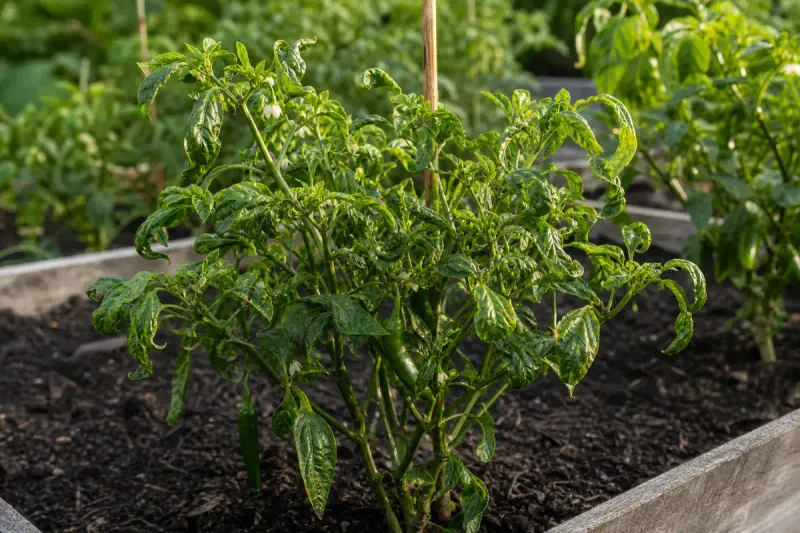
Temperature is worth checking first, but stopping there risks missing something else entirely. Several other stresses produce flower drop that looks exactly like cold damage, and some of them are happening at the same time as cool nights rather than instead of them.
Dry soil is one of the most common triggers. Rapid swings between bone-dry and saturated conditions put the plant under enough stress to shed buds, flowers, and small fruit. Strong wind can physically dislodge flowers and also dry out pollen before it can function. Low light from dense shade, overgrown neighboring plants, or extended cloudy weather reduces the energy available to support developing fruit, and the plant responds by dropping reproductive structures it cannot afford to maintain.
Nutrient and salt stress also belong on the checklist. Oregon State University Extension’s pepper growing guide identifies excessive nitrogen as a documented cause of poor fruit set, because a plant with too much available nitrogen tends to push leafy vegetative growth rather than committing resources to reproduction. Heavy fruit already on the plant creates similar competition: when a pepper is busy filling several large fruits, it may drop new flowers rather than take on more.
Insects, disease, and herbicide injury all deserve a look before you conclude the problem is temperature. University of Minnesota Extension’s pepper growing resource recommends inspecting for twisted or mottled leaves, vascular discoloration, leaf spots, sticky foliage, feeding damage, and fruit lesions, each of which points toward a problem that requires a different response than adjusting for cold. The sweet pepper abortion review also notes that fruit load and assimilate competition are well-documented contributors to reproductive organ loss.
A few dropped blossoms over the course of a week is within the range of normal plant behavior. Persistent or near-total failure to set fruit across many flowers over many days is the pattern that warrants a more thorough investigation of every possible factor on this list.
Stabilize moisture without forcing growth
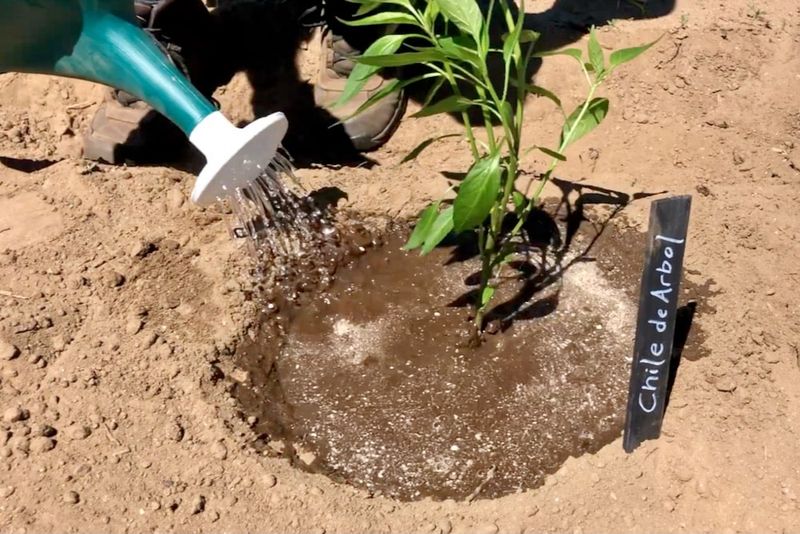
Once you have ruled out serious disease or pest problems, the most useful low-risk step you can take right now is stabilizing soil moisture. Pepper plants under water stress drop buds and flowers just as readily as plants under temperature stress, and the two problems often overlap in fall when rain becomes irregular and gardeners water less frequently.
Water deeply enough to wet the full root zone rather than just dampening the top inch of soil. Shallow, frequent sprinkling encourages roots to stay near the surface and makes the plant more vulnerable to any dry spell between watering sessions. A layer of mulch around the base of the plant helps hold moisture between waterings and moderates soil temperature at the same time. Oregon State Extension’s pepper guide connects consistent soil moisture with better fruit set and specifically flags drought stress as a cause of flower and small-fruit drop.
Resist the urge to respond to flower drop with fertilizer, especially nitrogen. A plant given excess nitrogen late in the season tends to produce a flush of new leafy growth rather than redirecting energy toward fruit. University of Minnesota Extension’s pepper page cautions against over-fertilizing and notes that nutrient and salt imbalances can contribute to fruit set problems. If you suspect a genuine soil deficiency, a soil test is a much safer starting point than adding nutrients by guesswork.
Stabilizing moisture and holding off on fertilizer supports any new flowers that form going forward. These steps do not reverse damage that has already happened to flowers that dropped, but they remove one more variable from a plant that may already be managing several stresses at once.
Use row cover as temporary, monitored protection
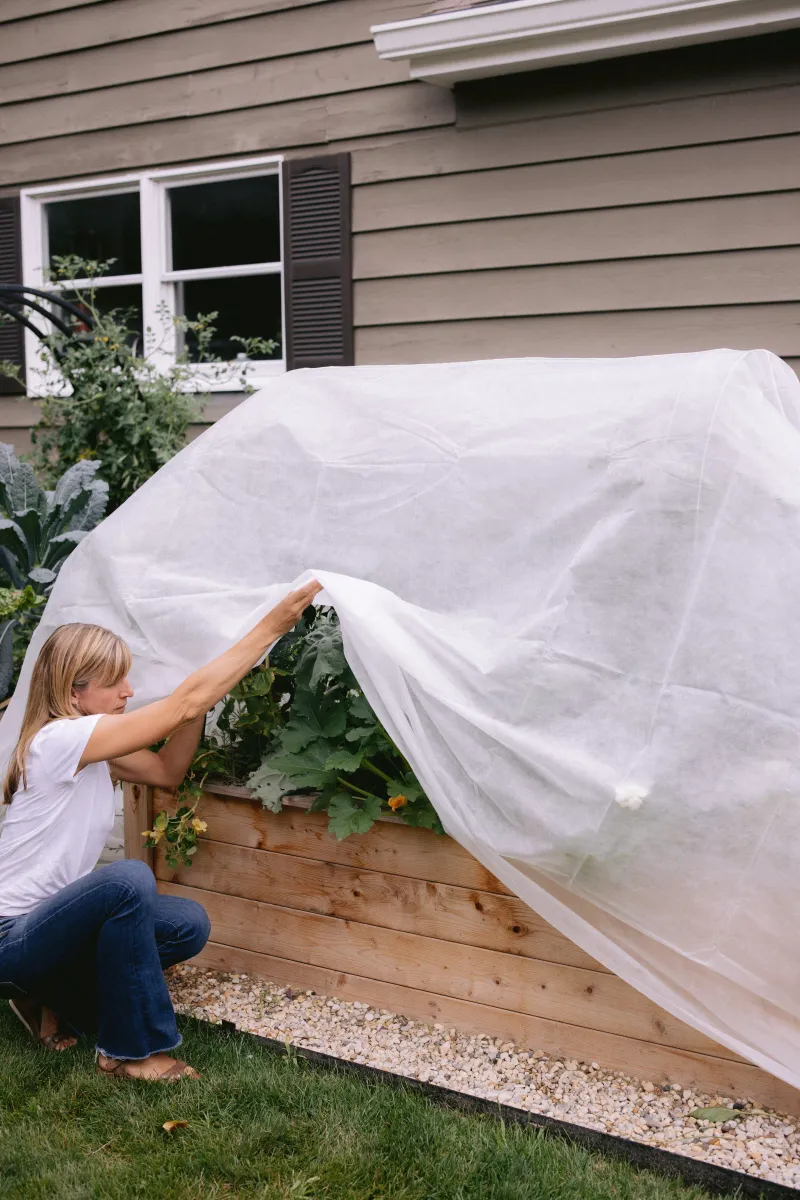
A floating row cover can buy your pepper plants extra nights of fruit-setting weather when temperatures are threatening to dip into the danger zone. The fabric traps warmth near the plant and can make a real difference during a brief cold spell or an early frost event that would otherwise end the season abruptly.
According to Utah State University Extension’s guidance on row covers, covers can raise the air temperature around plants by roughly 5-15°F, which is enough to protect peppers through a light frost. The cover should be secured at the edges to prevent wind from lifting it, and you should check the temperature under it before assuming conditions are ideal.
The critical mistake is leaving the cover on continuously once the plants are flowering. Pepper flowers are sensitive to excessive heat as well as cold, and a cover that stays in place through a warm afternoon can push temperatures above 90°F, which is the range where heat-related flower abortion becomes likely. Reduced airflow under a sealed cover can also limit the gentle plant movement that helps move pollen during flowering.
Treat row cover as an overnight or cold-spell tool rather than a permanent late-season blanket. Put it on in the evening before a cold night is forecast, remove or vent it once daytime temperatures rise, and repeat as needed. Used this way, it protects the flowers and developing fruit you still have without creating a new heat problem during the hours when the plant is actively trying to pollinate itself.
Do not mistake pollination trouble for cold damage
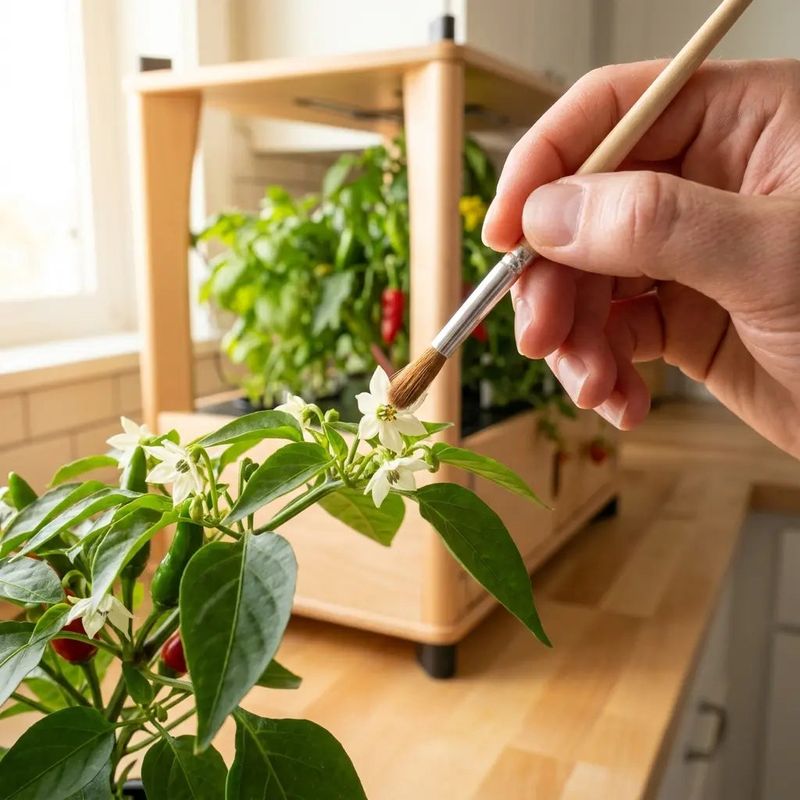
One of the most common pieces of advice that circulates in gardening groups is to hand-pollinate pepper flowers when fruit fails to set. That advice can be helpful in the right situation, but it is easy to apply it to a problem it cannot actually fix.
Ordinary outdoor pepper plants are largely self-pollinating. Unlike squash or cucumbers, which require insects to move pollen between separate male and female flowers, a pepper flower carries both male and female parts and can fertilize itself with enough airflow or gentle plant movement. University of Minnesota Extension’s pollination requirements guide confirms that peppers do not depend on bees in the same way cucurbits do, though insect visits may improve pollen movement and fruit quality in some production settings.
Hand pollination might be worth a limited experiment if your plants are growing in an enclosed space with very little air movement, such as a cold frame, a greenhouse, or a tightly sheltered patio corner. In those conditions, giving the plant a gentle daily shake or brushing pollen between flowers with a small brush could help. Ask Extension’s pollination FAQ supports hand pollination as a supplemental technique for enclosed or still environments rather than as a standard outdoor fix.
What hand pollination cannot do is repair pollen that was damaged by cold temperatures or correct structural abnormalities in flowers that developed during a cold spell. If the pollen is not viable because of what happened three nights ago, moving that pollen around more efficiently will not produce fruit. Focus on temperature management and plant health first, and treat hand pollination as a secondary option only if airflow is genuinely limited.
Separate blossom drop from blossom-end rot
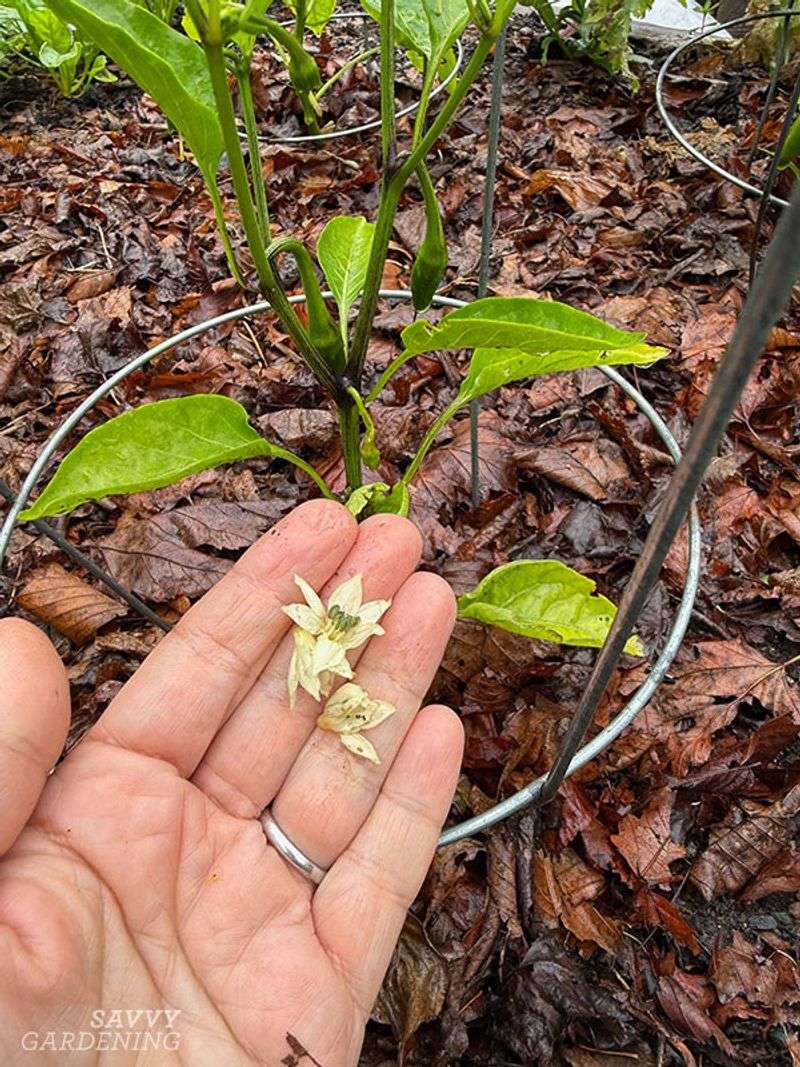
Two problems often get mixed up in late-season pepper troubleshooting, and confusing them leads to remedies that do not match the actual condition. Blossom drop and blossom-end rot are not the same thing, and they do not share the same solution.
Blossom drop happens before a pepper forms at all. The flower, or a tiny developing fruit that is barely visible, detaches from the plant and falls to the ground. This is the pattern this article has been addressing. Blossom-end rot, by contrast, shows up on a pepper that has already been developing for some time.
It appears as a dark, sunken, leathery lesion on the bottom tip of the fruit and is associated primarily with water management problems that impair the movement of calcium into developing tissue. University of Minnesota Extension’s pepper growing page distinguishes the two conditions clearly and notes that blossom-end rot involves calcium transport disruption rather than flower abortion.
Calcium sprays are sometimes recommended as a response to flower drop, but Utah State Extension’s blossom-end rot resource ties that problem specifically to developing fruit and water management, not to flowers that fall before fruit forms. Applying calcium to stop blossom drop is treating the wrong condition.
As the season closes, the most practical final step is harvesting peppers that have already developed rather than waiting for every fruit to reach full color. Utah State Extension notes that peppers commonly take 35-45 days from flowering to full color and recommends harvesting mature-green or slightly colored fruit near season’s end to save what you have. Track your overnight temperatures, check the whole plant for competing stresses, keep moisture steady, use row cover carefully, and pull mature fruit before a hard freeze ends your options. A plant that drops flowers in October is not a failure; it is telling you exactly what it needs to keep going a little longer.