
If Your Fall Snap Peas Grow Tall And Leafy But Set Almost No Pods, Warm Soil Is Delaying Them
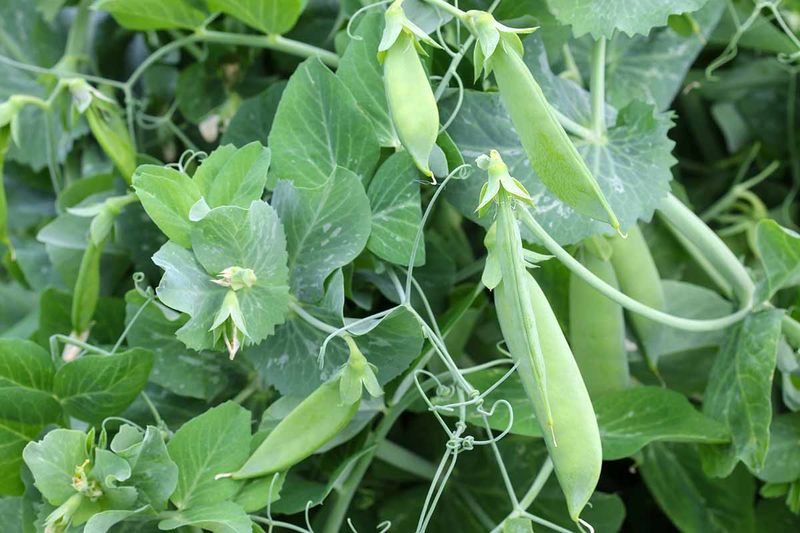
You planted snap peas for a fall harvest, and the vines took off climbing everything in sight, yet the pods never came. That mismatch between lush growth and empty trellises is one of the most frustrating things a home gardener can run into. The real story involves more than just soil temperature, and understanding what is actually happening gives you a better shot at diagnosing the problem and planning a more productive crop next season.
Tall Vines Do Not Prove That Warm Soil Caused the Problem
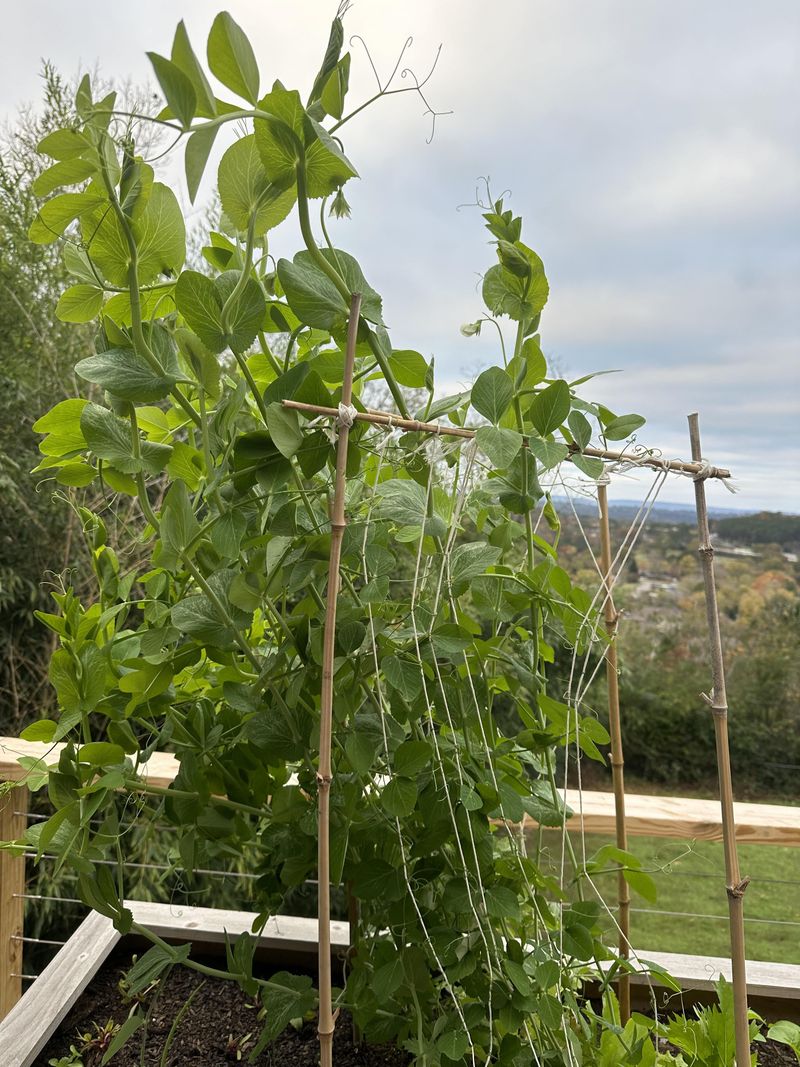
Seeing a pea vine stretch past the top of its trellis while producing almost nothing to harvest feels like a cruel joke. All that energy going into stems and leaves looks like success until you realize the plant never made the transition from vegetative growth to reproductive output. Leafy, climbing vines tell you the plant is alive and growing, but they say nothing definitive about why pods are missing.
Warm soil is often blamed first, and it does play a role, though a narrower one than most gardeners expect. Soil that stays too warm around planting time can slow germination and make early establishment sluggish. University of Maryland Extension guidance on home garden peas notes that warm soil can create germination problems for fall plantings, and that hot weather combined with insufficient time before frost is a real barrier in many regions. But once a vine is already tall and leafy, warm soil at the seed level is no longer the active problem.
Hot air during flowering and early pod development is a stronger explanation for mature vines that refuse to set pods. Peas are cool-season crops, and University of Minnesota Extension’s guide to growing peas reports that plants may stop producing flowers or pods when temperatures climb above roughly 85 degrees F. That is a very different mechanism from soil warmth at germination.
Water stress, excess nitrogen, the growth habit of the specific cultivar you planted, and a fall season that simply does not cool down fast enough can all contribute to the same symptom. Snap peas, which are harvested for their edible pods rather than for enlarged seeds the way shelling peas are, need to complete both flowering and pod development before a diagnosis makes sense. Ruling out causes one at a time gives you a much cleaner picture than assuming a single culprit from the vine’s appearance alone.
Heat Can Abort Flowers or Leave Pods Poorly Filled
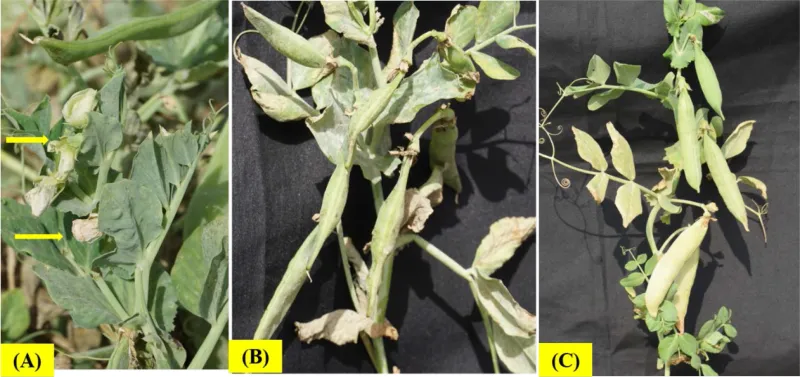
Pea plants put a surprising amount of biological effort into reproduction, and heat can interrupt that process at more than one point. The result is not always the same symptom, which is why observation matters more than guessing at a fix.
When air temperatures stay high during the flowering stage, buds and open flowers can abort before a pod ever begins to swell. Research published in Annals of Botany on heat-stress-induced abortion of buds and flowers in pea found that even short periods of elevated temperature can significantly increase the rate at which reproductive organs fail. The damage is not limited to pollination. Heat can impair the development of the flower’s internal reproductive structures, reduce ovule survival, and cut seed set well below normal levels.
Further research has confirmed that field pea varieties differ meaningfully in heat tolerance, which means a cultivar that holds pods reasonably well in one garden may shed flowers almost completely in another under similar temperatures. That variability is worth keeping in mind before concluding that your entire approach was wrong.
The two main symptoms you might observe are actually distinct. Flowers that fall from the vine before any pod enlarges point toward abortion early in the reproductive sequence, often driven by heat or water stress. Pods that form but end up flat, with few seeds inside or incomplete fill, suggest the problem hit later, after fertilization began but before seeds developed fully. Utah State University’s guide to physiological disorders in legumes describes both flower drop and poor pod fill as outcomes linked to environmental stress.
Peas do not rely on insect pollinators the way many fruiting crops do. Heat disrupts reproductive success through direct damage to plant tissue and reproductive organs, not primarily through a failure of bees to visit. UMass Extension’s pea growing tips reinforce that warm weather itself is the reproductive stressor. Watching whether flowers drop cleanly or whether pods form but stay empty tells you which part of the process broke down, and that observation should guide your next step.
Compare Soil Temperature, Air Heat, and the Crop’s Symptoms
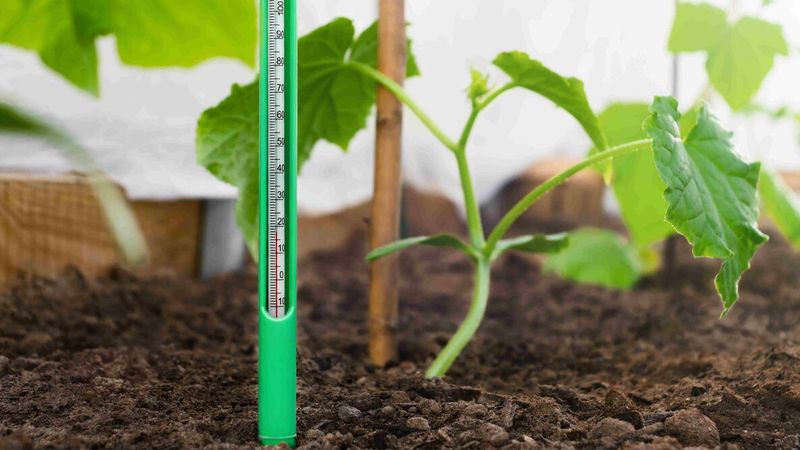
Running through a quick diagnostic sequence saves a lot of time compared to treating the wrong problem. Start at the beginning of the plant’s life, then work forward through the season.
At planting time, soil temperature is the relevant number. Minnesota Extension’s vegetable garden planting guide recommends direct-seeding peas when soil reaches 40 to 50 degrees F, while Illinois Extension places its threshold near 45 degrees F. Warmer soil than that at planting can delay germination and weaken early establishment, giving the vine a rocky start before it ever flowers.
Once the plant is established and growing, air temperature during flowering becomes the number that matters most. Minnesota Extension’s pea-growing guide places good growing conditions at roughly 55 to 65 degrees F and notes that production can stall above about 85 degrees F. Those are approximate thresholds drawn from extension guidance, not universal cutoffs that apply identically to every cultivar, but they give you a practical reference point. If your daytime highs were regularly above 80 to 85 degrees F while flowers were opening, heat during flowering is a strong candidate for the production failure.
Utah State University Extension’s pea-growing guide specifically notes that pea flowers are sensitive to temperatures above 80 degrees F and may shed under hot or dry conditions. That sensitivity is worth checking against your local weather records for the weeks when your vines were flowering.
Symptoms also help narrow the diagnosis. If you never saw flowers, the problem likely started earlier, possibly at germination or establishment. If flowers opened and then disappeared without leaving pods, heat or water stress during flowering is the more plausible explanation. If pods formed but stayed flat or contained only one or two seeds, the disruption came later in development.
Snap peas are harvested for the whole pod, so even a partially filled pod that feels thin and papery is a production failure worth tracking. Shelling peas, by contrast, are harvested only after seeds enlarge, so the visual cues for success and failure look different. Knowing which type you planted keeps the comparison accurate.
Keep Moisture Even Without Saturating the Roots
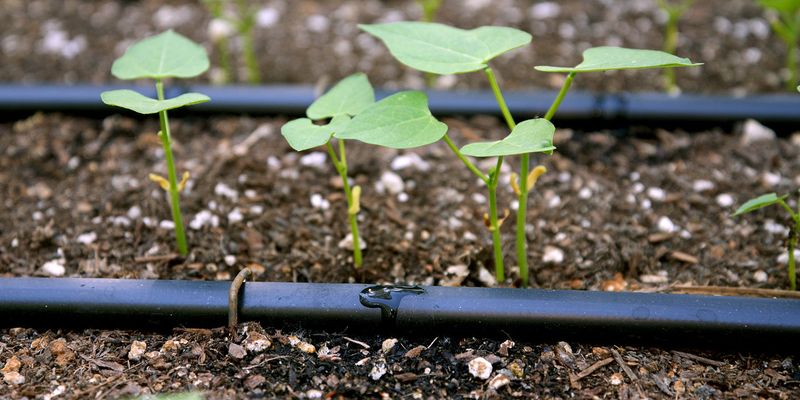
Water management during flowering and early pod development is one of the most controllable factors in the situation, and it deserves careful attention even if heat is the primary suspect. Drought and inconsistent watering can cause flower abortion, pod drop, poor seed fill, misshapen pods, and stringiness, symptoms that overlap significantly with heat stress. That overlap makes it harder to separate the two causes, which is another reason to maintain steady moisture rather than letting the soil cycle between wet and dry.
Utah State University Extension’s pea guide recommends consistent soil moisture, especially from flowering through early pod growth, and warns that dry conditions can cause flowers and pods to drop. The goal is soil that stays evenly moist but never waterlogged. Pea roots are vulnerable to rot in persistently wet conditions, and adding water faster than the soil can drain trades one problem for another.
Check soil moisture a few inches below the surface before watering rather than irrigating on a fixed schedule. A raised bed or container can dry out faster than an in-ground plot, particularly during warm fall days, so the right watering frequency depends on your specific setup. Drip irrigation or a slow soaker hose keeps moisture consistent without wetting the foliage, which also reduces the risk of fungal disease on the leaves.
Organic mulch is a reasonable addition for a fall pea planting. A two- to three-inch layer of straw or shredded leaves over the root zone can conserve soil moisture between waterings and moderate soil temperature as the season shifts. USU’s physiological disorders resource for legumes supports mulching as a way to reduce moisture fluctuation. Keep the mulch a few inches away from the stems to avoid trapping humidity at the crown, and do not layer it so thickly that water cannot penetrate to the roots.
Mulch moderates conditions; it cannot reverse flowers that already dropped or restore pods that failed to fill.
Do Not Fertilize a Leafy Crop by Guesswork
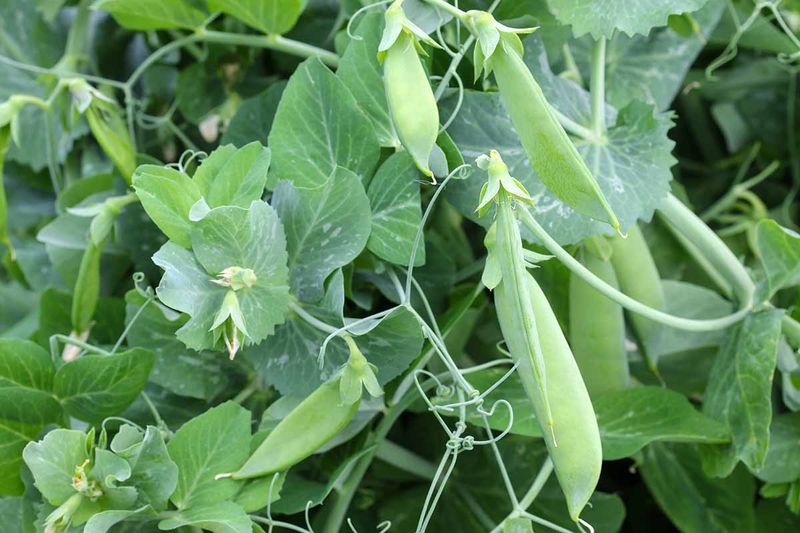
A lush, climbing snap pea vine can look like a plant that needs something, and the instinct to add fertilizer is understandable. Before reaching for any product, though, it helps to understand how peas actually feed themselves and what happens when they get too much nitrogen.
Peas are legumes. Under the right conditions, rhizobium bacteria in the soil colonize the roots and supply the plant with a substantial portion of its nitrogen needs. Oregon State University Extension’s green pea nutrient management guide explains that this biological nitrogen fixation reduces the crop’s dependence on added fertilizer. When a grower adds extra nitrogen anyway, the plant often responds by pushing more vegetative growth, which is exactly the tall-and-leafy symptom that prompted the concern in the first place.
Excess nitrogen can delay flowering, weaken the plant’s reproductive effort, and reduce pod set.
Adding phosphorus, bone meal, bloom boosters, or any other fertilizer based solely on lush appearance is not supported by extension guidance. Utah State University Extension’s pea guide recommends a soil test before making any nutrient correction, and that advice applies here. A soil test tells you whether a deficiency actually exists and which nutrient, if any, is genuinely limiting. Repeated phosphorus applications without testing can also build up to levels that interfere with other nutrients.
Tall vines are not automatically a sign of over-fertilization or nutritional imbalance. Minnesota Extension’s pea guide notes that indeterminate snap-pea varieties can exceed five feet in height and naturally produce over a longer season than bush-type varieties. If you planted an indeterminate cultivar, the vine length alone is not a red flag. Bush types flower and pod more synchronously and stay shorter, so comparing your vine to a neighbor’s bush variety leads to a false comparison.
Actual problems worth investigating include yellowing lower leaves that suggest poor nodulation, stunted new growth, or obvious root damage, and all of those warrant a soil test rather than a product application.
Use Support for the Vines and Timing for the Crop
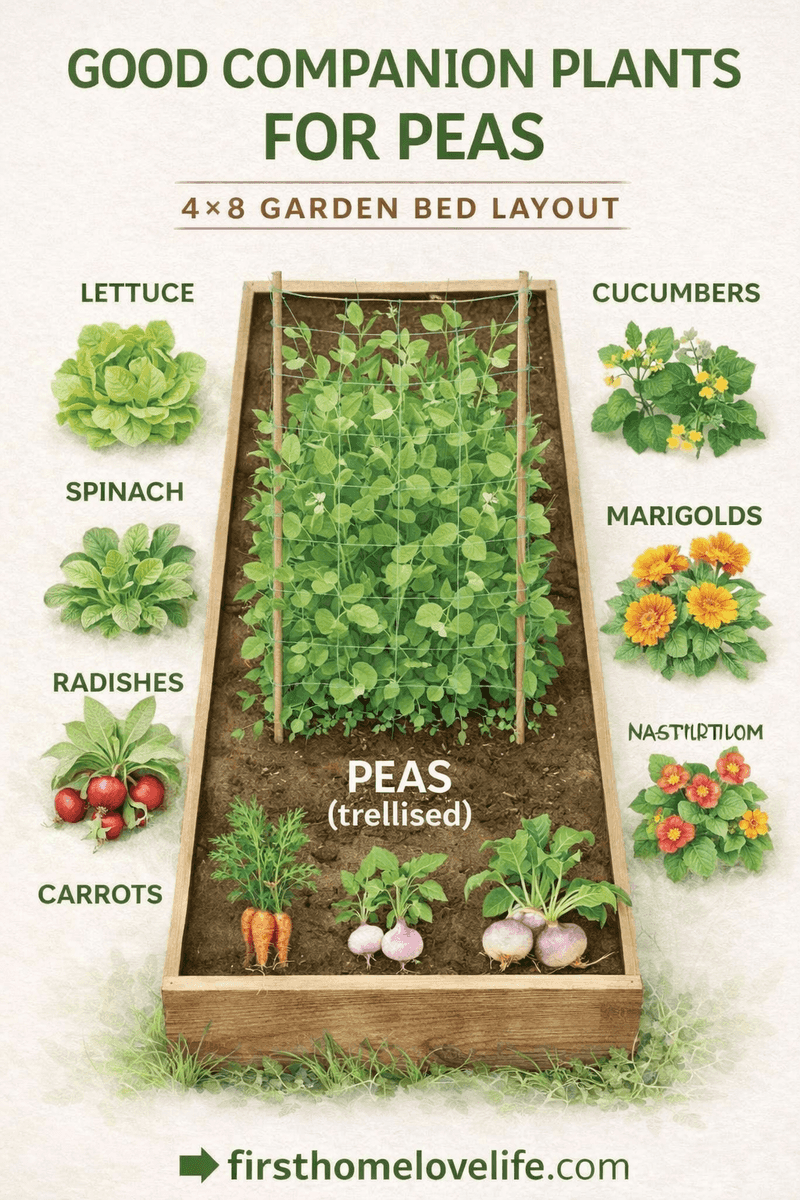
A sturdy trellis is worth setting up before planting, but its job is to hold the vines upright, improve airflow around the foliage, and make harvesting easier. Penn State Extension’s gardener’s guide to peas recommends trellising for tall varieties and notes the access and airflow benefits. A trellis will not change what happens to flowers when temperatures are too high, and installing one mid-season does not repair heat-related reproductive failure. Think of it as infrastructure, not a remedy.
Timing is where the most meaningful improvement usually happens for future crops. Illinois Extension’s pea-growing guide and its companion planting calendar both emphasize that fall days do not accelerate crop development the way long spring days do. Shortening daylength and gradually cooling temperatures mean fall peas typically develop more slowly than the seed packet’s days-to-maturity figure suggests. Planting later than you think you need to is a common mistake; planting too early is just as common, since the crop then flowers during the hottest part of the lingering summer.
The practical approach is to count backward from your expected first killing frost date using the cultivar’s days to maturity, then add a buffer of seven to fourteen days to account for slower fall development. University of Maryland Extension’s home garden pea guide specifically flags insufficient time before frost as a reason fall pea crops fail in that region, and similar constraints apply across much of the mid-Atlantic and Southeast. In regions where summer heat lingers well into September, a fall pea crop may simply not be practical without choosing a fast-maturing cultivar and hitting the planting window precisely.
Cultivar selection matters more than many gardeners realize. Heat-sensitive varieties that perform well in a cool Pacific Northwest spring may struggle in a humid Mid-Atlantic fall. Check whether your chosen cultivar is labeled as heat-tolerant or early-maturing, and look at local extension resources or regional seed-company notes for planting windows specific to your area rather than relying on a single national recommendation.
Judge Recovery by New Flowers and the Remaining Season
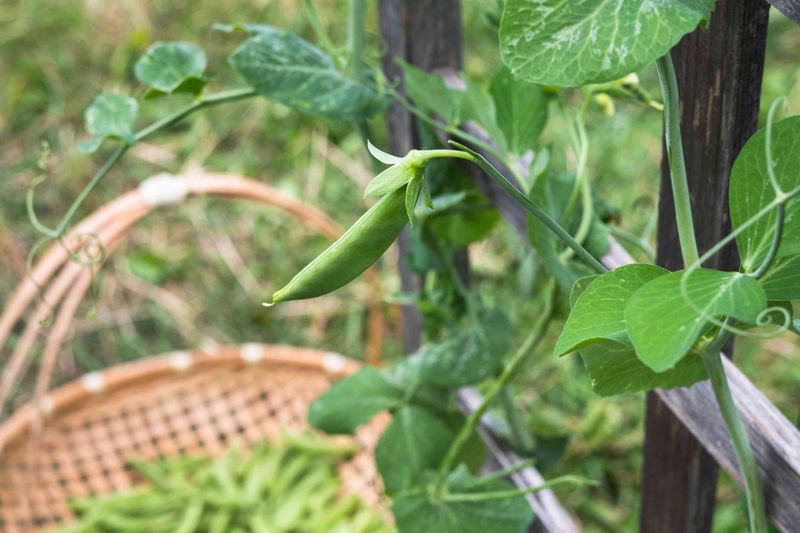
Once temperatures begin to drop, the question shifts from diagnosis to decision. Cooler air can improve the plant’s ability to retain new flowers and carry pods through to a harvestable size, but that improvement only applies to flowers that have not yet formed. Buds and flowers that already aborted cannot be restored, and the reproductive tissue that failed under heat is gone for good.
The Annals of Botany research on heat-induced flower abortion in pea makes clear that the damage from high temperatures is not reversible once it occurs. Whether the remaining plants can produce a worthwhile harvest depends on how many healthy nodes remain, whether new flower buds are forming, and how many frost-free days are left in your season.
Keep moisture even but avoid saturating the soil, apply mulch carefully if you have not already, and hold off on any fertilizer unless a soil test identifies a specific deficiency. Utah State University Extension and University of Maryland Extension both support those as sound baseline practices. If new buds are visible and nighttime temperatures are settling below 70 degrees F, there is reason for measured optimism. If no new buds appear and frost is two weeks away, the season is likely over for that planting.
The most useful thing to carry forward is a clear record of where the crop actually broke down: at germination, at flowering, during pod fill, or because the planting window was simply too narrow. That single piece of information does more for next year’s harvest than any product or technique applied after the fact.