
If Your Fall Turnips Grow Big Bushy Tops But Only Stringy Little Roots, Crowded Spacing Is Choking Them Out
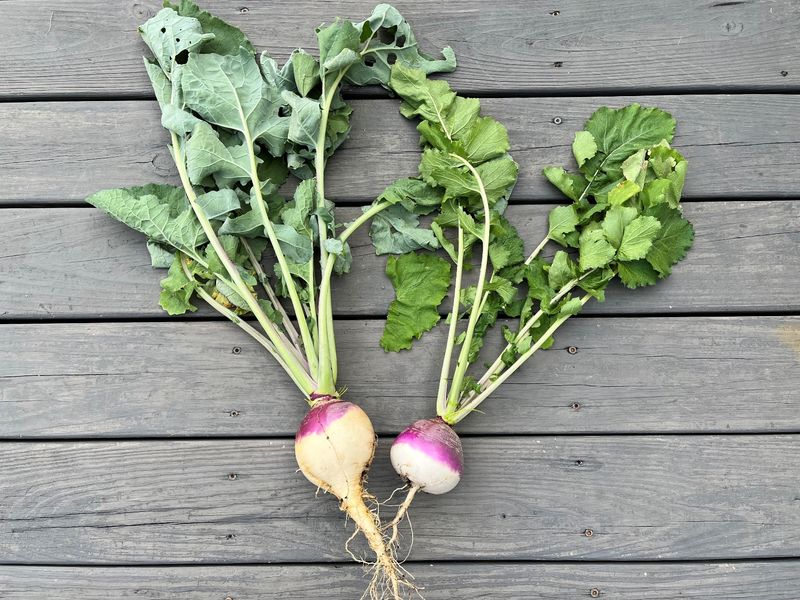
Walking out to your garden and seeing a patch of thick, leafy turnip greens feels like a win, but pulling up the roots to find thin, stringy disappointments is a real letdown. Lush tops paired with poor roots can mean several things, and crowded spacing is one worth checking first. Before you reach for the thinning shears, though, a quick look at your whole setup can save you from treating the wrong problem.
Big tops do not prove a spacing problem
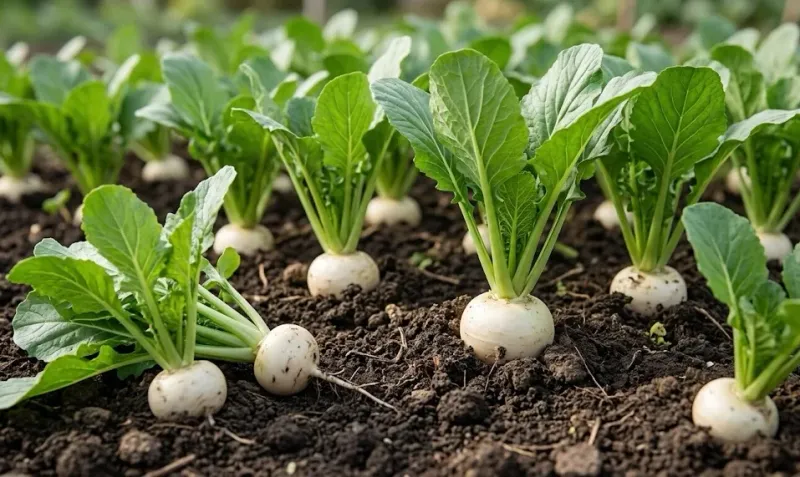
Healthy-looking turnip leaves wave in the breeze while the roots underneath tell a different story. A thick canopy of foliage paired with a small or poor-quality root is a real and frustrating gap, but the appearance alone cannot tell you which of several possible causes is responsible. Crowding is a credible first thing to check, because UC IPM guidance on turnip culture notes that turnips need adequate room for root development and that overcrowding can reduce root quality. Still, the symptom is not specific to spacing.
Excess nitrogen is a well-known alternative explanation. When available nitrogen is too high, plants push energy into leaf production at the expense of root sizing, so the tops look vigorous even as the roots stall. A UC turnip production guide identifies excessive nitrogen as a factor that encourages heavy foliage and misshapen roots, which means adding fertilizer to a leafy patch could make things worse rather than better.
Environmental stress, soil problems, pests, and disease round out the list of possibilities. Heat, drought, compacted soil, moisture swings, root maggots, and clubroot can each produce small, misshapen, or poor-quality roots in their own ways. Before deciding on a remedy, compare your plant spacing against the seed packet’s recommendation, look at your soil structure, think back over recent weather, and check the roots themselves for any physical clues. That inspection will tell you far more than the foliage alone.
Crowded plants can limit root development
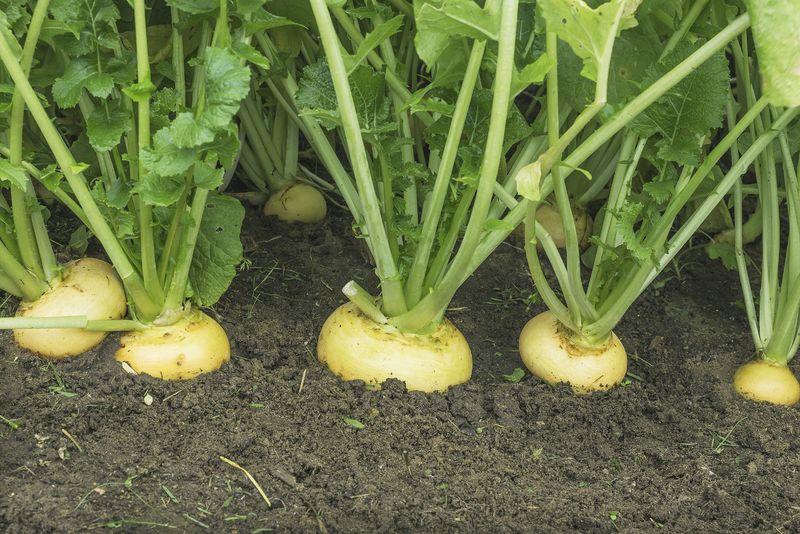
Turnip roots need physical space to expand, and when plants grow too close together, that space simply is not there. Competition for room in the soil can keep roots from reaching a usable size, and University of Minnesota Extension recommends thinning turnips so that plants have enough space to develop properly sized roots. The result of skipping that step is not a dramatic collapse but a quiet squeeze: roots stay thin, never bulking up the way they should when given room to grow.
That said, crowding does not work the same way for every planting goal. Gardeners who want a harvest of tender greens or baby roots sometimes sow seeds more densely on purpose, and that approach is perfectly reasonable. The Royal Horticultural Society’s turnip growing guide acknowledges that turnips grown for tops can be sown closer than those intended for full-size roots. The problem arises when a gardener wants full-size roots but never adjusts the density to match that goal.
Foliage can appear vigorous even in a crowded patch because the leaves are competing aggressively for light and air above the soil surface. Robust tops are not a sign that the roots are doing equally well below ground. If your spacing is tighter than the seed packet suggests for root production, that is meaningful information worth acting on early, while the plants are still young enough to benefit from more room.
Choose spacing for the harvest you want
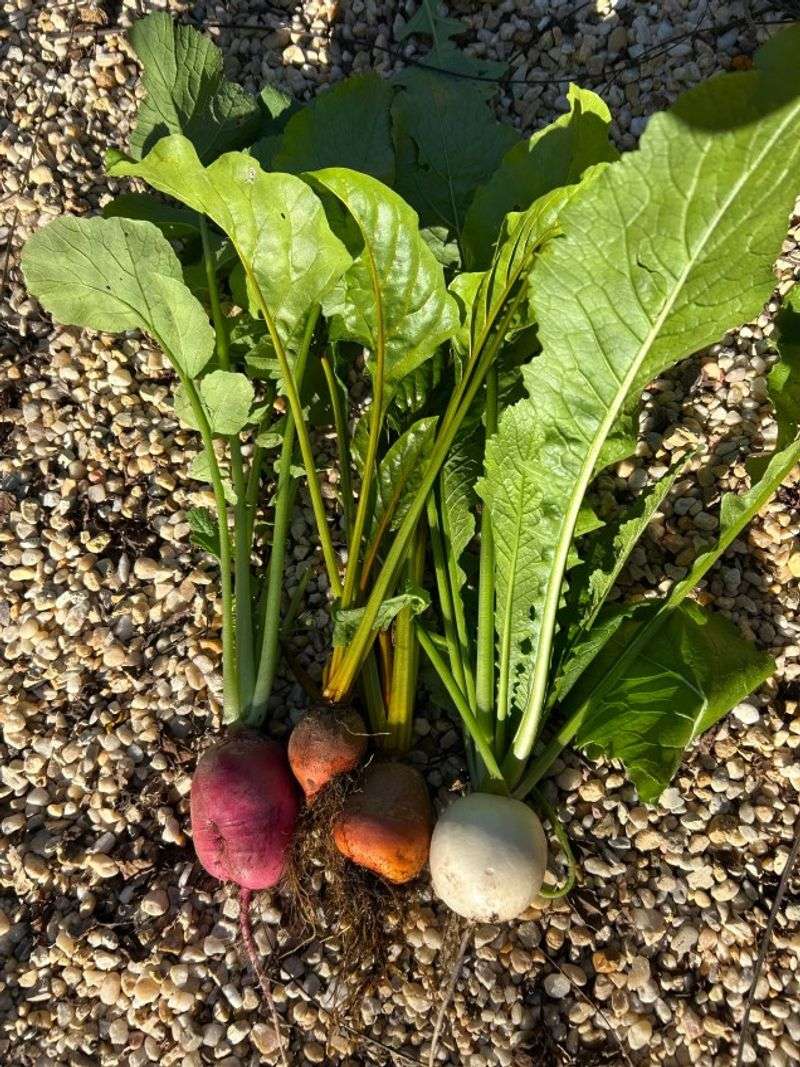
No single spacing number fits every turnip in every garden. For ordinary home-garden roots, a practical range supported by multiple U.S. extension sources falls around 3 to 6 inches between plants, with wider spacing generally favoring larger roots. Utah State University Extension recommends about 3 to 4 inches for turnips, while UC IPM suggests a broader 2 to 6 inches depending on the variety. Your seed packet is the best starting point, because cultivar size and the production system you are using both affect how much room each plant actually needs.
The intended harvest matters just as much as the cultivar. Closer spacing works well when the goal is a cut of tender young greens or small baby roots harvested early. For full-size storage roots, though, plants need more room so the root can expand without pressing against a neighbor. Trying to grow large roots at greens-harvest density is where the mismatch shows up most clearly at harvest time.
Raised beds and in-ground rows follow the same basic logic, even if the layout looks different. In a row, thin to the recommended distance along the row. In a wide bed, space plants evenly in all directions so that each one has a roughly equal share of soil. Containers can support a small planting of turnips, but the same spacing principle applies: root production needs more room per plant than a greens-only harvest.
When in doubt, err toward the wider end of the range and let the roots tell you whether the spacing worked at harvest time.
Thin young seedlings carefully
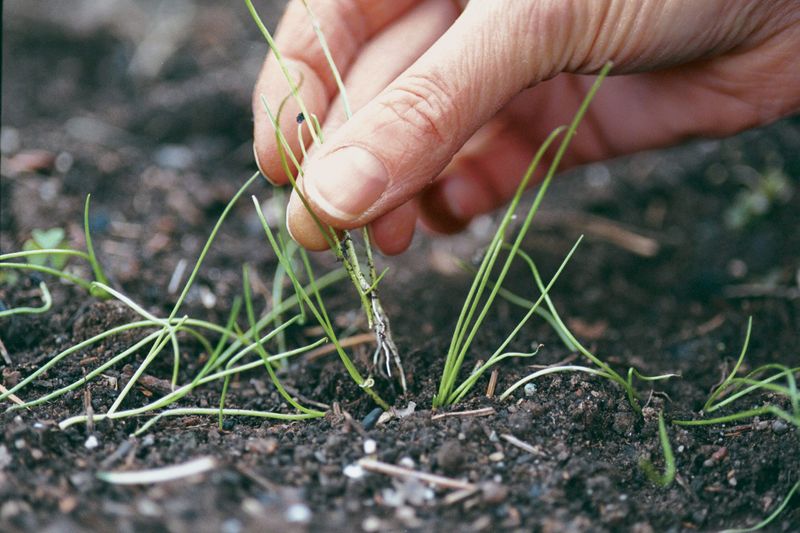
Early thinning is the most straightforward response when a patch is genuinely too dense. The right time to act is once the seedlings have developed their first true leaves, which look different from the rounded seed leaves that emerge first. At that stage, the plants are small enough that removing some of them does not disturb the roots of the ones you keep.
Work along the row or bed and pull or snip seedlings until the remaining plants sit at your target spacing. Utah State University Extension notes that the thinnings themselves are edible and can be used as salad greens, so nothing goes to waste. If snipping at soil level feels easier than pulling, that approach works fine and avoids disturbing nearby roots.
Handling the remaining plants gently matters more than it might seem. Turnip roots develop close to the soil surface, and jostling or compacting the soil around them during thinning can set back their growth. Work carefully around the base of each plant you intend to keep, and avoid deep digging or heavy tamping after you finish.
One important limit: thinning later in the season creates more open space, but it is not a reliable way to enlarge roots that have already spent weeks developing in tight quarters. UC IPM’s turnip guidance supports thinning as a preventive step, not a rescue. If your plants are already mature and the roots are thin or misshapen, giving them more room at that stage may not change the outcome for this season’s crop. Thinning early is what sets up a better result; late thinning is worth doing but should not be treated as a guaranteed fix for roots that missed their development window.
Protect the remaining roots as they grow
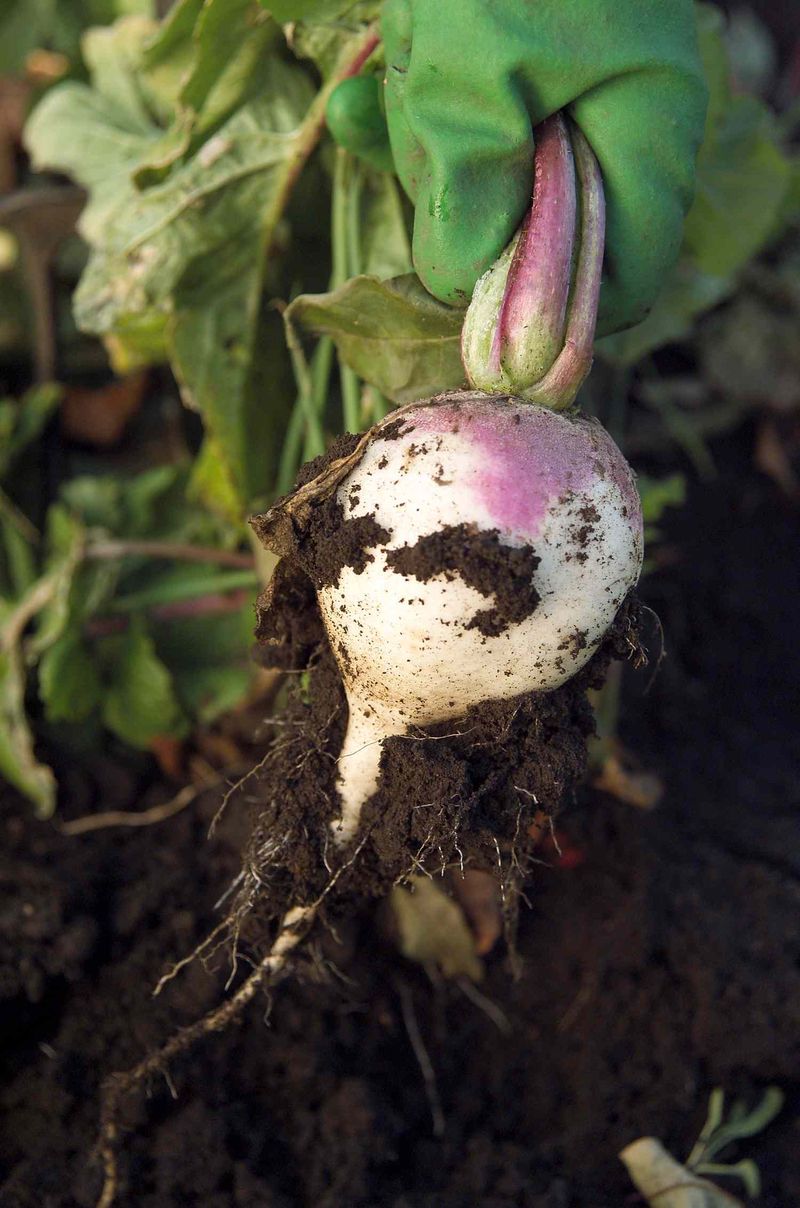
Once thinning is done, the job shifts to keeping the surviving plants growing steadily without accidentally setting them back. Turnip roots sit close to the surface, which makes them more vulnerable to disturbance than deeper-rooted crops. Avoid deep cultivation between plants after thinning, because hoeing or digging near the base can cut into developing roots and reduce yield.
Consistent moisture is one of the most practical things you can manage at this stage. University of Minnesota Extension recommends about 1 inch of water per week as a general benchmark, with more frequent watering needed in sandy soils that drain quickly. Utah State University Extension suggests a range of 1 to 2 inches per week depending on weather and soil conditions. Either way, the goal is to avoid long dry spells followed by heavy watering, because that kind of fluctuation can contribute to cracking, pithiness, and a woody texture in the roots.
Mulching lightly between plants can help hold soil moisture and reduce surface crusting without requiring you to cultivate close to the roots. A thin layer of straw or shredded leaves placed carefully around the plants keeps the soil from drying out unevenly between waterings. Keep the mulch a short distance from the base of each plant so air can still circulate around the crown.
Steady growing conditions support quality, but they cannot substitute for correcting an underlying problem. If density, nutrition, or soil structure was the real issue, consistent watering helps but will not fully compensate. Think of good moisture management as supporting the plants you have, not as a separate fix for whatever caused the poor roots in the first place.
Check nitrogen, soil, and weather before fertilizing
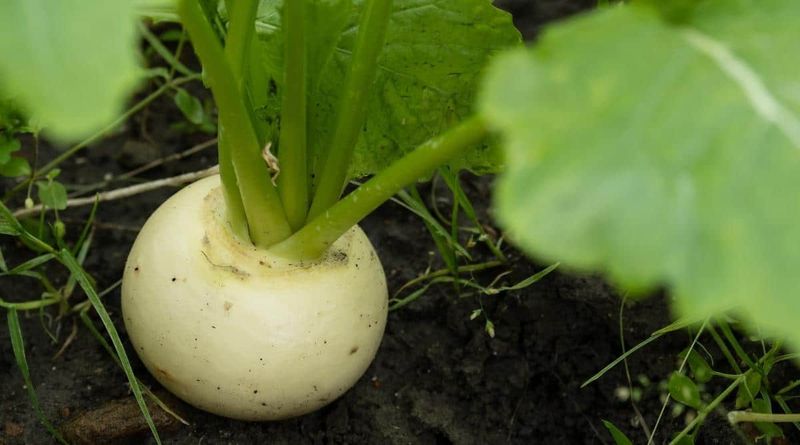
When spacing looks reasonable and still does not explain the poor roots, the next step is to look at what the plants are growing in and what conditions they have been dealing with. Soil nutrition is a logical starting point, but the instinct to add fertilizer can backfire with turnips. USU’s soil and fertility guidance for root crops explains that overapplication of nitrogen encourages excessive leaf growth at the expense of root development. If your patch already has thick, bushy tops, adding more nitrogen is likely to push even more energy into leaves rather than roots.
Soil structure is worth checking separately from fertility. Compacted, crusted, or stony soil can physically block root expansion even when nutrients and spacing are adequate. Turnip roots grow best in loose, well-prepared ground that allows them to swell without resistance. If the top few inches of soil feel hard or dense when you press a finger into them, that compaction may be contributing to undersized roots regardless of how well you manage everything else.
Weather plays a real role too, particularly temperature. UC IPM notes that turnips are a cool-season crop that performs best around 50 to 65 degrees Fahrenheit, and that high temperatures can cause bolting and strong-flavored or poor-quality roots. Fall plantings that hit an unexpected warm stretch early in development can suffer root quality problems that have nothing to do with spacing.
Dry spells and uneven moisture also show up here. Drought stress during root development can produce woody, bitter roots, while alternating wet and dry conditions can cause pithiness and cracking. Utah State University Extension connects moisture consistency to root quality, which is why watering steadily through the growing period matters. Diagnose the actual condition before treating; applying a blanket fix to the wrong problem rarely helps and can sometimes make things worse.
Use root symptoms to narrow the diagnosis
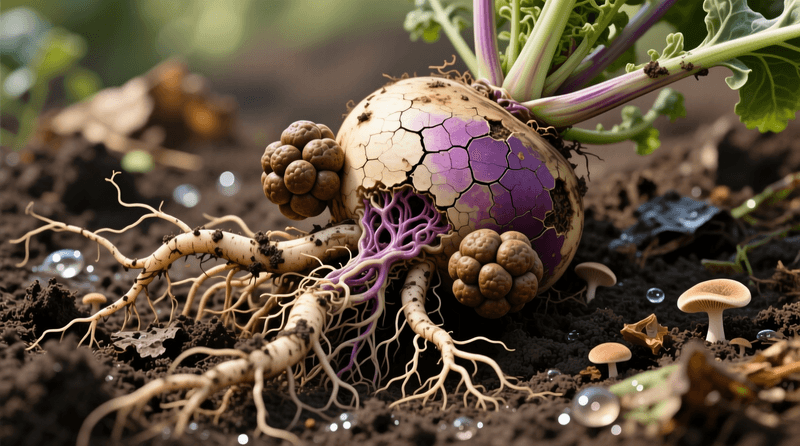
The word “stringy” covers several different root problems, and each one points in a different direction. A thin, pencil-like root that never bulked up suggests the plant did not have adequate conditions for root development, which could reflect crowding, poor soil, heat stress, drought, or a combination of factors. That type of underdeveloped root is the one most associated with spacing problems, but it is not exclusive to them.
A root that started to swell but ended up woody, tough, or fibrous tells a different story. That texture usually means the root matured and then kept growing past its quality window, or that it developed under stress conditions like heat or uneven moisture. University of Minnesota Extension identifies overmaturity as a reason roots become tough and strong-flavored, separate from any spacing concern.
A root that looks swollen, distorted, or club-shaped rather than smooth and round is a meaningful red flag. That appearance is associated with clubroot, a soil-borne disease caused by a pathogen that deforms roots and can persist in the soil for years. UC IPM’s clubroot resource describes the characteristic swollen, distorted root symptoms and notes that the disease affects plants in the cabbage family, which includes turnips. Clubroot requires a different response than thinning or watering adjustments.
Tunnels, channels, or feeding damage inside the root suggest root maggots, the larvae of a fly that lays eggs near the base of brassica plants. That kind of damage also calls for a different response than spacing correction. Resist the urge to apply any pesticide based on visual symptoms alone; accurate identification of the pest or pathogen comes first, and any treatment should follow current product label guidance and local extension recommendations. Pulling a few roots and inspecting them carefully gives you more useful information than the tops ever can.
Harvest at a usable size
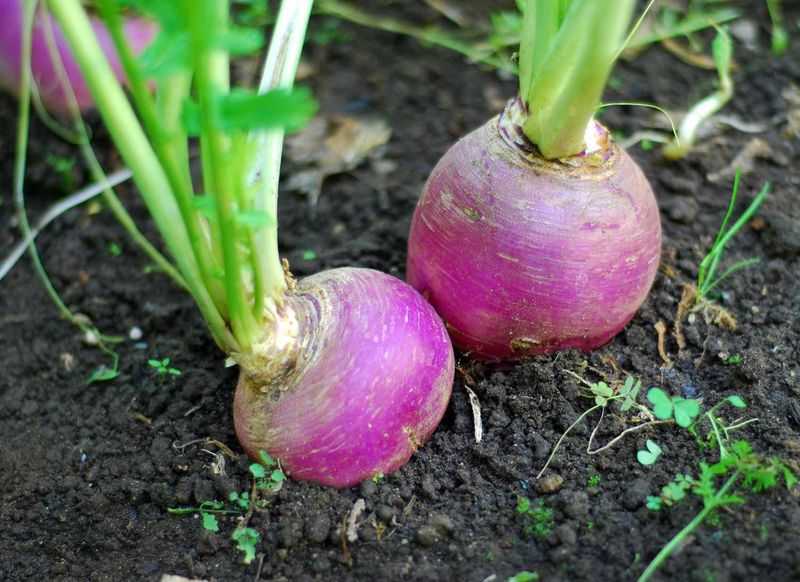
Patience is a gardening virtue, but with turnips it can work against you if it means waiting too long to pull the roots. Most home-garden turnips reach their best eating quality somewhere around 2 to 3 inches in diameter, and University of Minnesota Extension identifies that size range as a practical harvest target. Leaving roots in the ground well past that point increases the chance they will become tough, fibrous, or strongly flavored, problems that can look like spacing or fertility issues but are really just overmaturity.
Variety matters here too. Some cultivars are bred for smaller, faster-maturing roots, while others are meant to size up more slowly over a longer season. University of Illinois Extension notes that harvest timing depends on the variety and intended use, so checking the seed packet for the expected days to maturity helps you plan when to start pulling and tasting.
Harvest timing connects directly to the spacing decision made earlier in the season. Plants given adequate room from the start have the best chance of reaching a good harvest size within the expected window. If roots were crowded during development, they may be undersized even at the right calendar date, and leaving them longer will not reliably add size, only age.
The practical takeaway from the whole season is conditional rather than certain: thin early if the patch is too dense, keep growing conditions as steady as possible, and look carefully at root symptoms before assuming one cause. A turnip patch that gets reasonable spacing, consistent moisture, cool temperatures, and a timely harvest tends to reward the effort. Good roots start with the right setup from the beginning, not a last-minute rescue at the end.