
If Your Fall Green Beans Flower Heavily But Set Almost No Pods, Overcrowded Vines Are Starving The Blooms
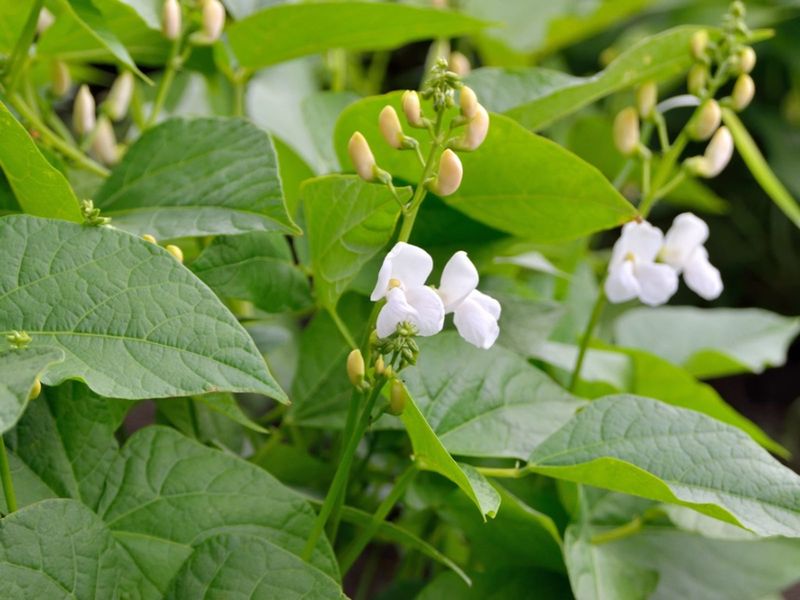
Walking out to your bean patch and seeing a tangle of blossoms is exciting, until you realize almost none of them are turning into pods. Before you start pulling plants apart, know that the real problem is rarely as simple as too many vines in one spot. Heat, uneven watering, and a few other sneaky causes can shut down pod production even when flowers are everywhere. A quick, honest look at what is actually happening in your garden will get you much further than thinning alone.
Heavy flowering does not guarantee a full harvest
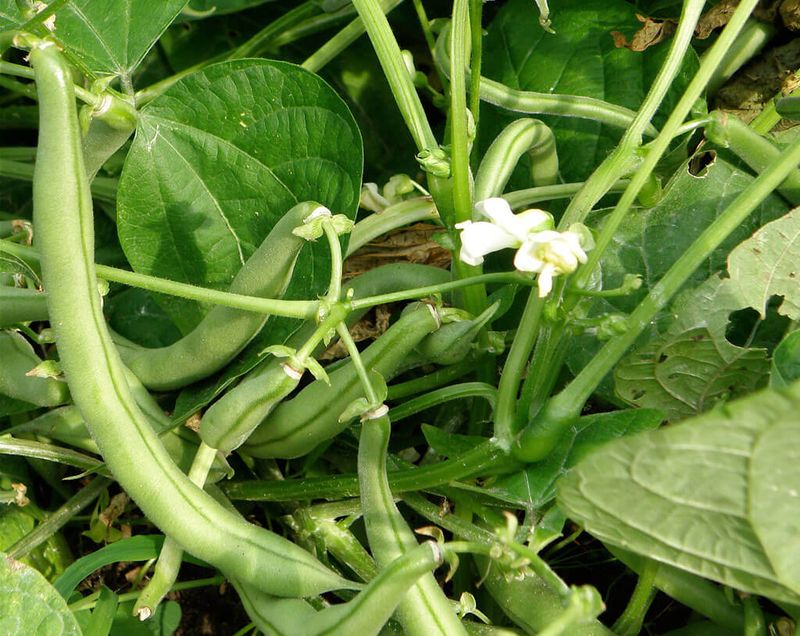
Snap beans are generous bloomers, and that generosity can be misleading. OSU Extension horticulture guidance notes that snap beans routinely produce substantially more blossoms than mature pods, and some flower drop is simply part of how the plant manages its energy. Seeing dozens of flowers on the vine is a sign of a healthy, active plant, not a promise that every blossom will become a bean you can pick.
What this means practically is that a ratio of many flowers to few pods is not automatically a red flag. The question worth asking is whether pod set has dropped below what you would expect for the variety, or whether a handful of pods are forming normally while the rest of the flowers cycle off as usual.
Abundant flowering with almost zero pod development does deserve a closer look, but the investigation should start with growing conditions rather than plant density. UMN Extension’s bean growing guide points to heat, water stress, and disease as key factors that interrupt pod set. Spacing can play a supporting role in canopy management, but it is one variable among several, and thinning plants will not restore pod production if a different problem is driving the flower drop.
Starting with that honest framing saves time and protects plants from unnecessary disturbance. A careful inspection of temperature, soil moisture, foliage health, and plant density, in roughly that order, gives you a clearer picture of what actually needs to change.
Check heat and moisture before assuming crowding
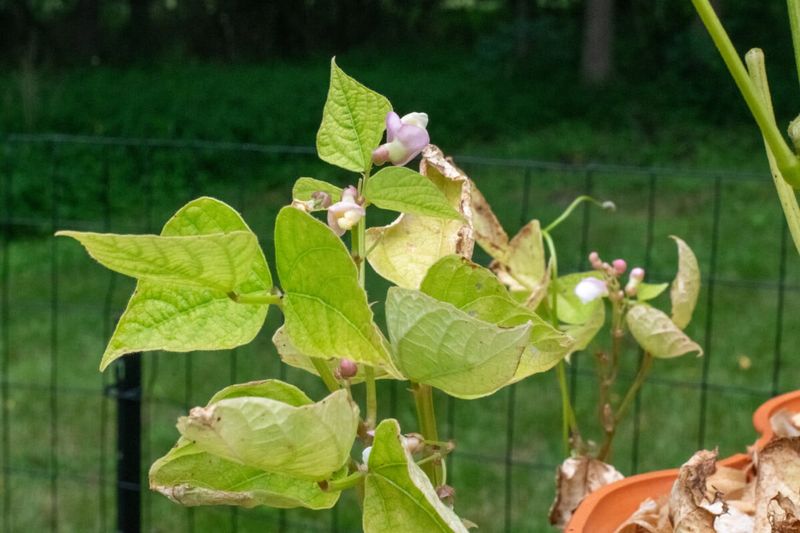
High temperatures during flowering are one of the most direct causes of poor pod set in snap beans, and they are easy to overlook because the plants may still look green and vigorous. UMN Extension’s heat stress guide reports that bean flowers can abort when temperatures climb above roughly 95 degrees F, particularly when the soil is dry at the same time. The combination of heat and low moisture is especially hard on pollen viability and early pod development.
A practical inspection starts with your recent weather history. Check whether daytime highs have been pushing into the mid-90s or above, and whether overnight lows have stayed above 75 degrees F. USU Extension’s bean care resource identifies that combination of high day temperatures, warm nights, and low humidity or soil moisture as conditions that strongly favor flower drop. If your thermometer and calendar confirm a recent heat stretch, that explanation deserves serious weight before you start rearranging plants.
Soil moisture is the second check. Push a finger two inches into the soil near the root zone. If it feels dry at that depth, the plant has likely been running short of water during a period when consistent moisture matters most. Uneven watering, soaking one day and letting the bed dry out for several days afterward, can cause flower abortion, undersized pods, and poor quality even when total rainfall looks adequate on paper.
The fix is steady, even moisture rather than heavy soaking. Beans need water at the root zone, not on the foliage, so watering at the soil line or early in the day so leaves can dry before evening is a better habit than overhead watering in the afternoon. Saturated beds create their own problems, including root rot, so the goal is consistent moisture without standing water. If heat and drought both check out as likely culprits, address those first and then reassess pod set before making any other changes.
Crowding affects the canopy more than pollination
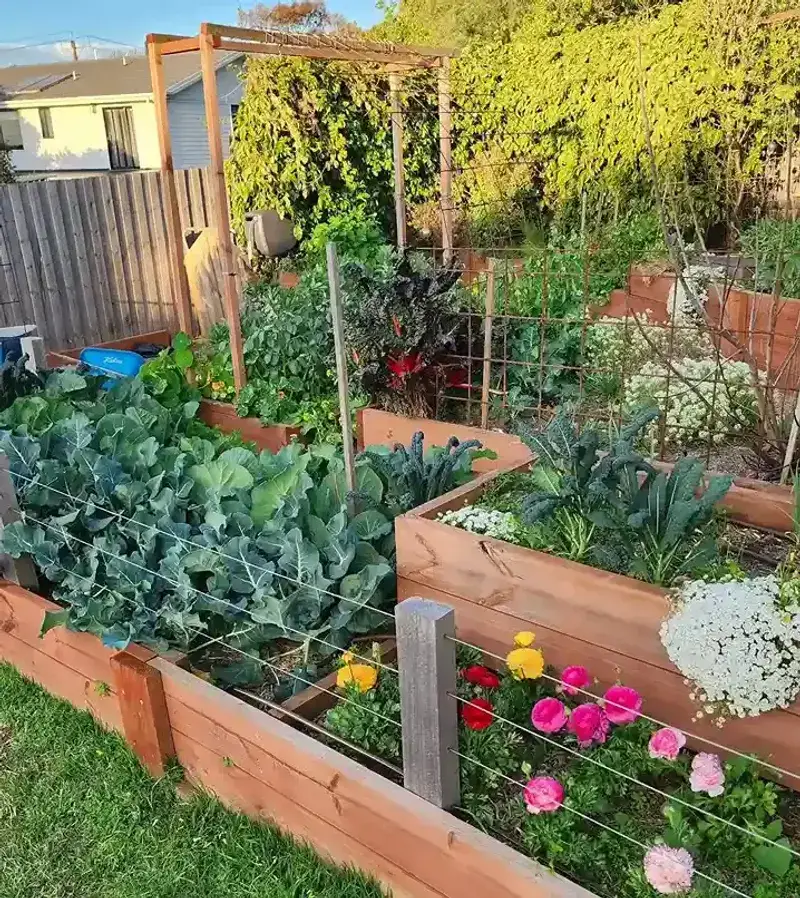
One reassuring fact that often gets left out of the crowding conversation: common snap beans are generally self-fertile. UMN Extension’s seed-saving guide confirms that beans are self-pollinating, which means the flowers do not rely on bees or wind to transfer pollen between plants. A crowded bed does not block pollination the way it might for a crop that needs insect visitors, so hand-pollinating ordinary green beans is not the remedy here.
Where density does matter is in the canopy environment. When plants are packed tightly together, leaves overlap and shade the lower portions of the vine, reducing the light available to flowers and developing pods. Air movement through the planting slows down, and the foliage stays wet longer after rain or irrigation. That slower drying creates conditions that favor bacterial and fungal diseases, which can themselves interfere with pod set or cause existing pods to fail.
UMN Extension’s home garden disease management guidance supports spacing and airflow as practices that reduce disease pressure, and their white mold resource specifically connects dense, humid canopies with increased fungal risk in garden settings. Crowding, in other words, is a risk factor for the conditions that reduce pod set, not a direct cause of flower failure on its own.
A dense planting is not automatically doomed. Field production systems sometimes use higher densities, and a well-watered, healthy bed with some crowding may still produce a decent harvest. The practical concern is that crowding raises the odds of the humidity and disease problems that do directly hurt pod production, so managing density is worth doing as a preventive step once heat and moisture have been ruled out or addressed.
Inspect leaves, stems, and growth before thinning
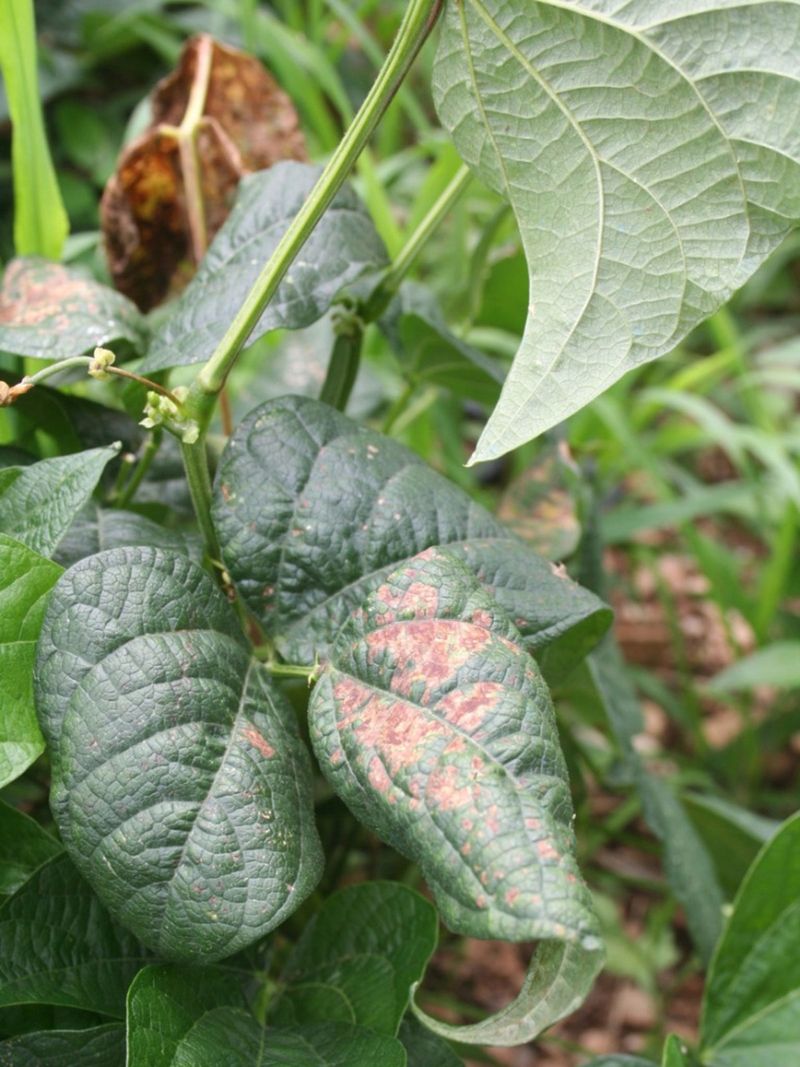
Before pulling or moving any plants, spend five minutes reading what the foliage is telling you. Lush, deep-green leaves paired with very few pods and delayed flowering can point to excess nitrogen in the soil. USU Extension’s bean growing guide notes that too much nitrogen pushes vegetative growth at the expense of flowering and pod set, meaning a well-fertilized-looking plant may actually be running behind on production for that exact reason. Adding more fertilizer to a plant that already looks lush is very likely to make the problem worse, not better.
Disease clues tell a different story. Mosaic-like mottling across the leaf surface, leaves that look puckered or distorted, water-soaked spots that later develop yellow halos, dark lesions on stems, or patches of white powdery or cottony growth near the soil line are all signs that something beyond spacing is at work. UMN Extension’s bean guide lists several bacterial and fungal diseases that can affect pod development, and these symptoms suggest that a disease investigation should come before any thinning decision.
Pest damage is worth checking at the same time. Tiny feeding marks on flowers, stippled or bronzed leaf surfaces, or small insects clustered near new growth can indicate insect pressure that is interfering with the plant’s ability to set pods. These clues require a different response than spacing adjustments.
UMN Extension’s disease management resource recommends using symptoms as diagnostic starting points rather than definitive identifications, which is a sensible approach for home gardeners. Symptoms can overlap, and a single plant may show more than one problem at once. The goal of this inspection is to narrow down the most likely cause so any action you take actually addresses what is happening rather than what the planting looks like from a distance.
Thin genuinely crowded plants to the right spacing
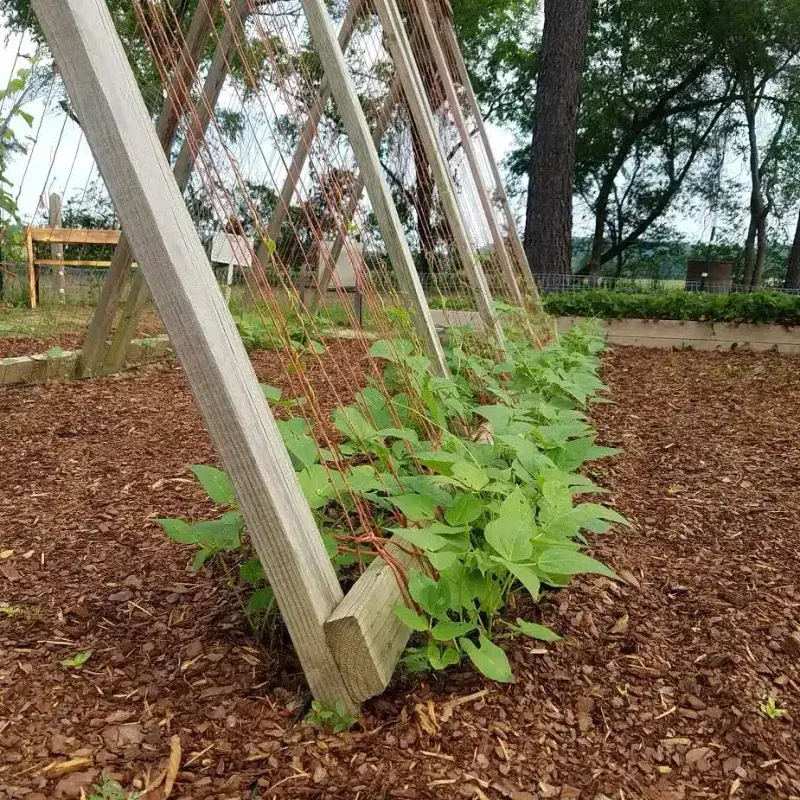
If your inspection confirms that plants are genuinely packed together well beyond the seed-packet recommendation, careful thinning is a reasonable next step. The first place to look for spacing guidance is the packet the seeds came in, because cultivars vary and the manufacturer’s recommendation is calibrated to that specific variety. Representative guidelines from Illinois Extension’s snap bean resource place bush bean seeds about 2 to 4 inches apart within the row, with rows at least 18 to 24 inches apart. Pole beans, which need more room to climb and spread, are typically spaced about 4 to 6 inches apart with rows around 30 to 36 inches apart.
Those ranges are planting guidelines, not a universal thinning rule that applies to every situation. A bed with seedlings slightly closer together than the ideal is different from one where stems are genuinely tangled and competing for light and water. Thinning should target visibly packed clusters where plants are clearly crowding each other, not any planting that looks busy from above.
When removing extra seedlings, work carefully. UMN Extension’s growing beans guide points out that beans have relatively shallow root systems, and disturbing the soil close to a plant you want to keep can injure its roots and set it back. Snipping extra seedlings at the soil line with scissors is often safer than pulling them, because pulling can shift or loosen the roots of neighboring plants.
Bush beans and pole beans need different follow-up after thinning. Bush beans generally do not require trellising once they reach their mature size, so spacing is mainly about light, airflow, and access. Pole beans, by contrast, need adequate support to climb. If crowded pole bean vines are tangled together because the trellis or stake is too small or too close, improving the support structure is as important as adjusting plant spacing.
Aggressive removal of healthy plants from an otherwise well-managed bed is rarely necessary, and thinning should stop once plants have enough room to grow without overlapping leaves.
Improve airflow without stripping the plants
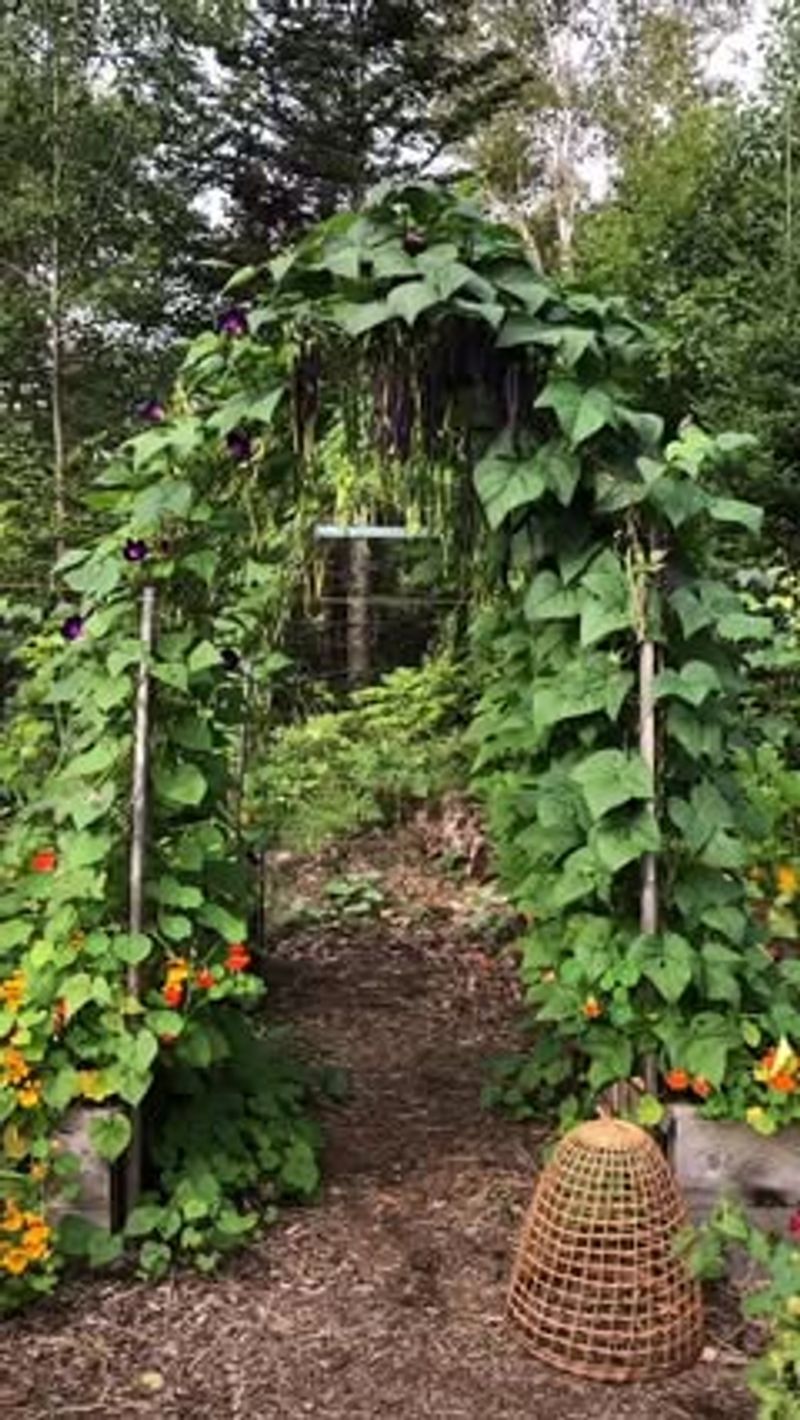
Several low-risk habits can meaningfully reduce the humidity and disease pressure that a crowded canopy creates, without removing leaves or disrupting the plants. Trellising is the most important one for pole beans. When vines climb onto an adequate support structure rather than leaning on each other or collapsing onto the soil, air can move through the canopy, foliage dries faster after watering, and pods are easier to spot and pick. A trellis that is too short or too narrow for the variety will still leave vines tangled, so matching the support height to the expected plant size matters.
UMN Extension’s disease management guidance recommends watering at the soil line and avoiding working among wet plants as practical ways to reduce disease spread in the home garden. Both habits also reduce the time foliage stays wet, which is directly connected to fungal disease risk. Morning watering is preferable to evening watering because leaves have the rest of the day to dry before temperatures drop overnight.
Keeping weeds and surrounding vegetation trimmed back from the bean bed also helps air move through the planting without requiring any changes to the beans themselves. Weeds compete for water and nutrients and can harbor insects, so managing them is worthwhile on its own.
Illinois Extension’s snap bean page and USU Extension’s bean guide both emphasize harvesting snap beans before the seeds inside the pod visibly bulge. Regular picking encourages the plant to continue setting new flowers and pods, particularly for pole beans, which can produce over a long season when conditions stay favorable. Bush bean varieties with a concentrated harvest period benefit from picking too, because leaving mature pods on the vine signals the plant to stop producing. Getting out to the garden every two to three days during peak production is the simplest way to keep pods coming.
Use realistic timing for a fall bean crop
Planning a fall bean planting around a single national deadline is a setup for frustration, because the right timing depends on where you live, what variety you are growing, and what the weather has been doing. The more reliable approach is to combine three pieces of information: the days-to-maturity estimate on your seed packet, your local average first frost date, and a reasonable buffer for the fact that fall growth tends to be slower than spring growth as day length shortens and temperatures ease off.
UMN Extension’s midsummer planting guide notes that bush snap beans generally fall in the 45 to 65 day maturity range and that even a light frost around 30 to 32 degrees F can kill bean plants. That maturity range is a starting estimate, not a schedule you can count on precisely, because soil temperature, cloud cover, and variety all affect actual development time.
A workable calculation looks like this: find your local average first frost date using your state’s extension service or a frost-date tool, subtract the seed packet’s days-to-maturity estimate, and then subtract another week or two as a buffer for slower fall conditions. Illinois Extension’s planting timing resource encourages gardeners to lean on local frost information rather than general guides, which is sound advice for a crop as frost-sensitive as beans.
Illinois Extension’s snap bean page reinforces that fall timing is genuinely regional, and a planting window that works in Tennessee or Georgia may be too late in Minnesota or Colorado. If the math suggests you have enough frost-free time and the soil is still warm enough to germinate seeds, a fall sowing is worth trying. If the numbers are tight, pushing the planting earlier in the season or choosing a shorter-season variety gives you the best chance of getting pods before the first killing frost arrives.
Follow a diagnosis-first reset
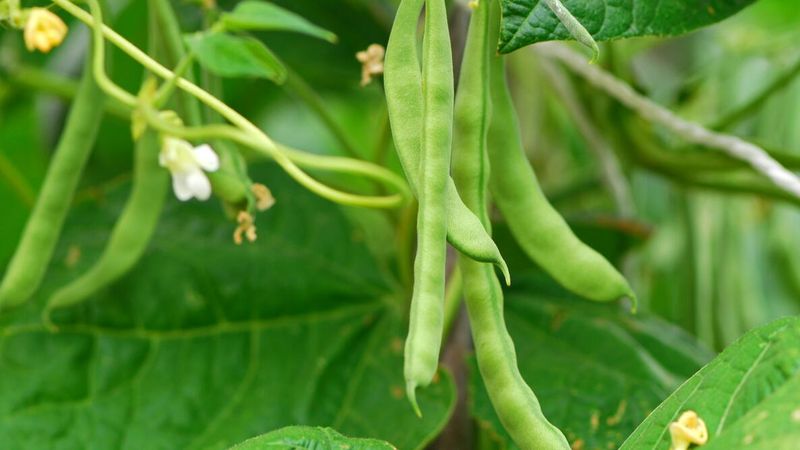
A useful reset for this situation follows the evidence rather than the easiest assumption. Start by reviewing recent temperatures and soil moisture, because UMN Extension’s heat stress guidance and USU’s bean research both point to heat and uneven watering as common drivers of flower drop in snap beans. If those conditions check out as likely causes, correct them first before touching plant spacing.
Next, scan the foliage for disease or pest clues and look at overall growth habit for signs of excess nitrogen. Only after ruling out or addressing those possibilities does it make sense to focus on density. If the bed is genuinely crowded beyond Illinois Extension’s recommended spacing, thin carefully using the seed packet as your guide, support pole beans on an adequate trellis, and water at the soil line to keep the canopy drier.
Spacing can improve light access, drying conditions, and manageability, but it cannot guarantee that every flower becomes a pod. Some blossom drop is normal, and varieties differ in how they respond to stress. The realistic goal is a healthy, well-supported canopy with steady moisture and enough estimated frost-free time for continued pod production. A garden that meets those conditions, and has enough season left to use it, gives you the best honest shot at a fall harvest worth picking.