
If Your Fall Radishes Grow Big Leafy Tops But Only Woody, Hollow Roots, Sparse Watering Is Turning Them Pithy
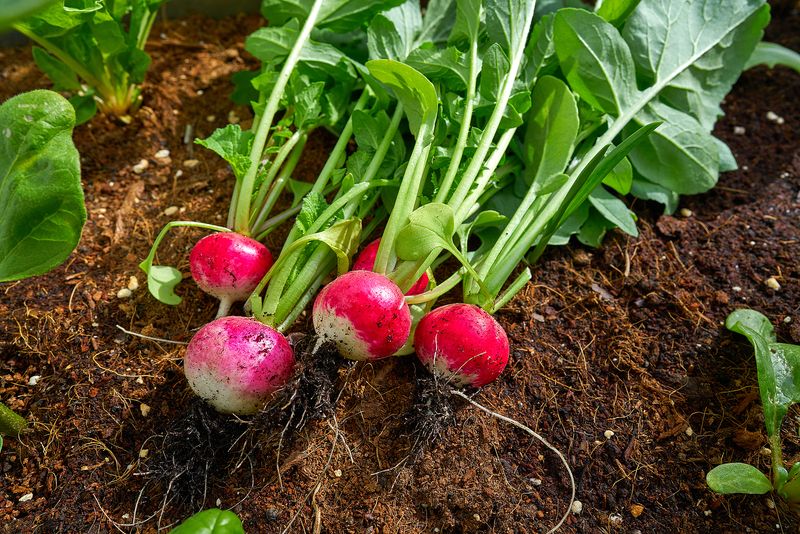
Pull a fall radish and find a spongy, hollow disappointment instead of a crisp root, and it is easy to blame your watering can. The truth is messier: uneven moisture is one possible contributor, but excess nitrogen, crowding, heat, variety choice, and harvest timing all play a role too. Knowing which factor is actually at work in your bed makes the difference between a simple fix and another season of leafy tops with nothing worth eating underneath.
Big tops do not diagnose the root problem
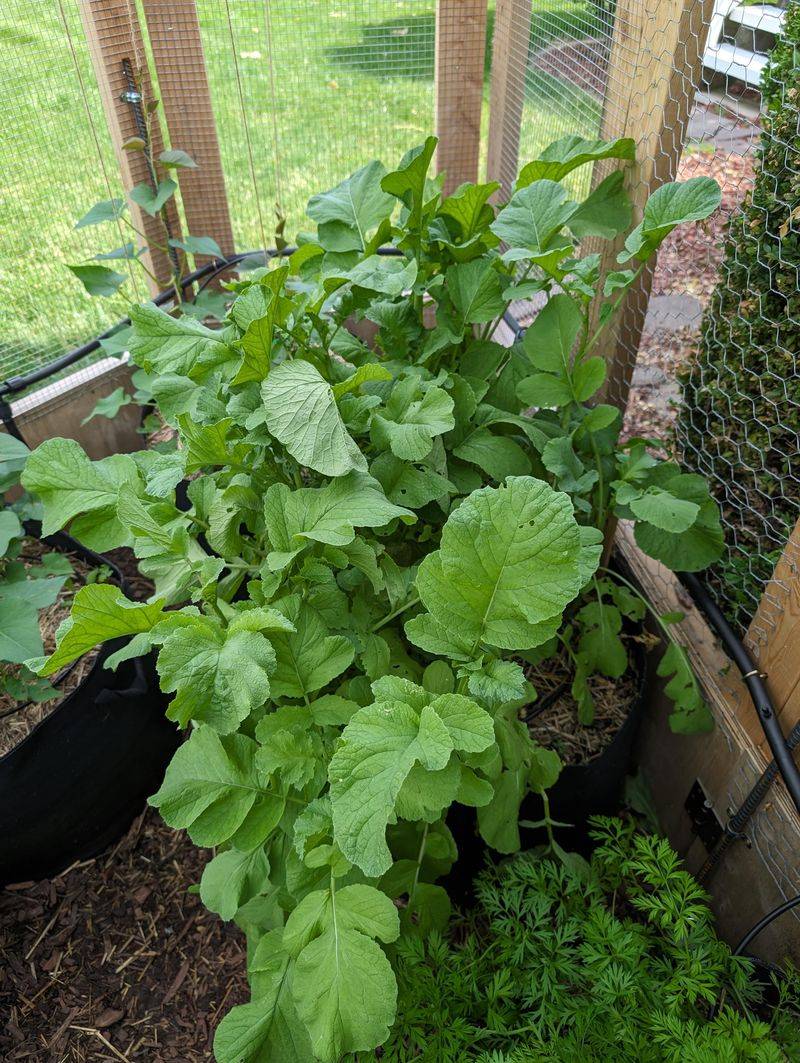
Pulling a radish and finding a spongy or hollow core when you expected a firm, crisp bite is genuinely frustrating, especially when the plants looked so healthy above ground. The instinct to blame underwatering is understandable, but those big leafy tops do not actually point to a single cause. Iowa State University Extension guidance lists excess nitrogen, overcrowding, shade, and heat as common reasons radish plants push energy into foliage rather than roots, and water stress can also contribute without being the only explanation.
Uneven or insufficient moisture can affect how a developing root grows, but it is not the guaranteed cause every time you find a disappointing root. Other stresses, including temperatures outside a comfortable range, poor spacing, or a variety that simply was not a good match for the season, can produce the same result. Sorting out which factor is actually driving the problem in your specific bed is the first step toward fixing it.
Adding to the confusion, the words gardeners use to describe bad radish texture are often treated as interchangeable, but they describe slightly different conditions. Pithiness refers to spongy, vacuolated tissue that has lost its firm cell structure. Hollowness describes an actual internal cavity or air pocket inside the root. Woodiness means the tissue has become tough, fibrous, or stringy rather than crisp.
A peer-reviewed review of preharvest physiological disorders in radish treats these as related but distinct problems with multiple possible causes, so treating them all as proof of one issue leads to the wrong correction.
How uneven moisture affects developing radishes
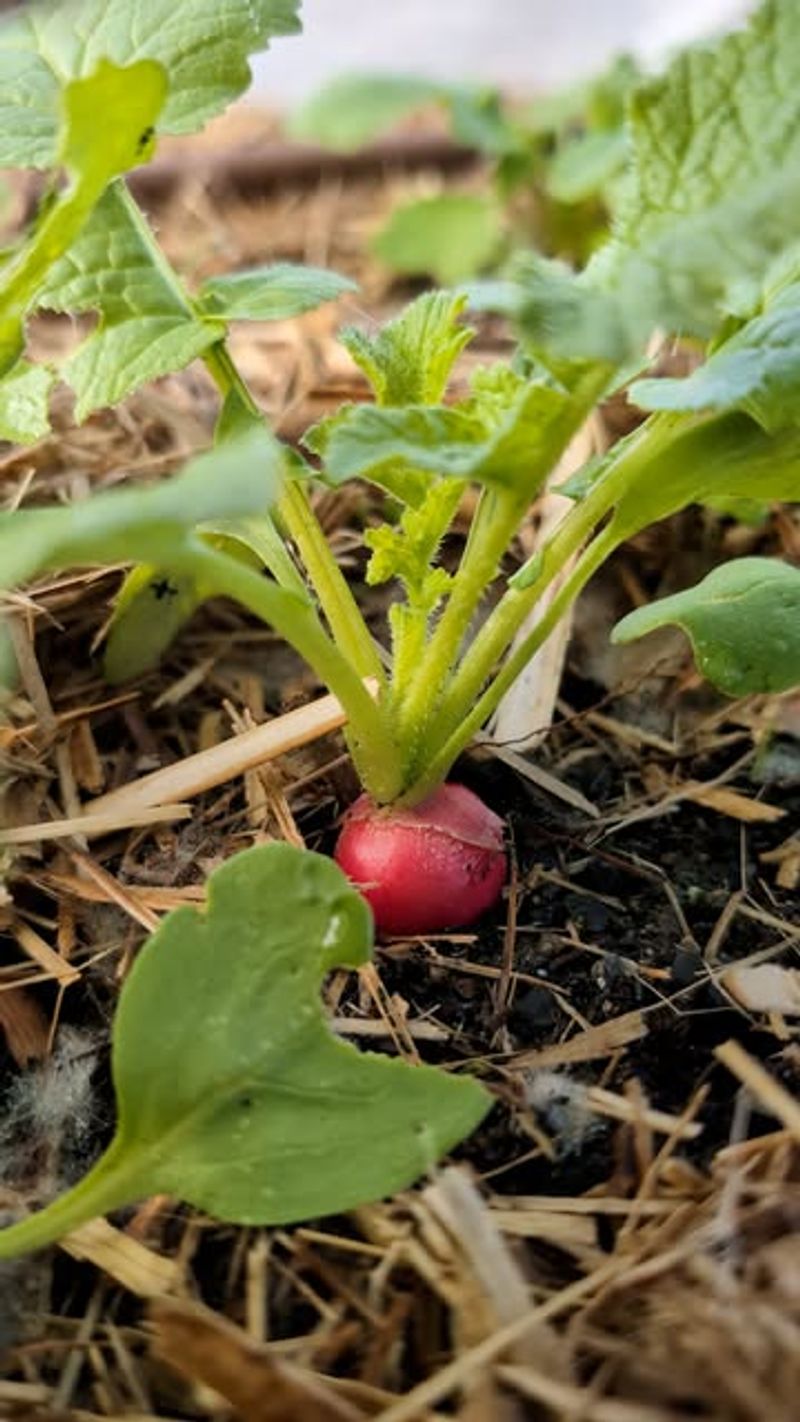
Radish roots develop quickly and concentrate their growth in a relatively narrow zone of soil directly below the plant. University of Minnesota Extension notes that radish roots have limited horizontal spread, which means the plant depends heavily on whatever moisture is present in that small column of soil. When that zone dries out repeatedly, the root cannot draw the water it needs to fill out properly.
Drought stress can slow the development of the storage root, reduce crispness, and produce a hotter, less pleasant flavor. Research on radish responses to drought stress confirms that water deficits can impair root growth and quality, though the severity depends on when and how long the stress occurs during the growth cycle. A plant that experiences consistent moisture during root formation has a better chance of producing firm, well-developed tissue than one that swings repeatedly between soaking wet and bone dry.
The wet-dry swing itself can be as damaging as simple drought. Utah State University Extension warns that moisture fluctuations can cause cracking, slow growth, sharp flavor, and hollow or pithy roots. A root that suddenly receives a heavy soak after a prolonged dry spell may crack rather than fill in smoothly. That said, moisture stress is a plausible contributor to poor texture rather than a complete explanation, because over-maturity, heat, and cultivar differences can produce identical symptoms even when watering has been reasonably consistent.
Create a flexible watering rhythm
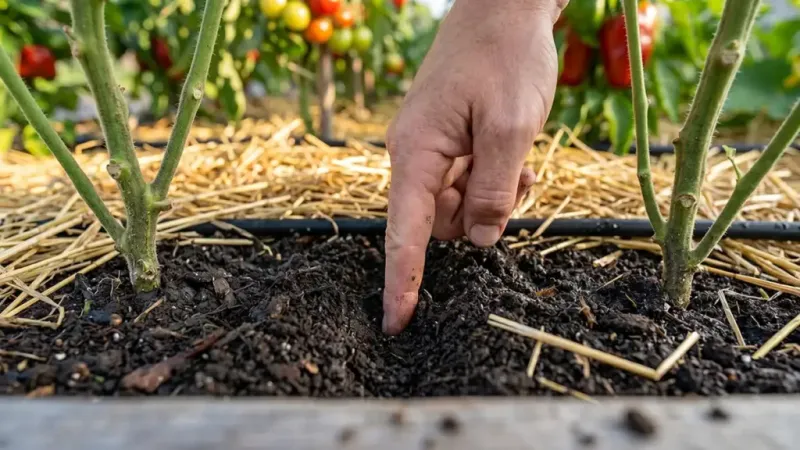
The most useful watering habit for radishes is not a fixed calendar schedule but a soil-check routine. Push a finger two to three inches into the bed near the plants; if the soil at that depth feels dry or barely damp, water thoroughly. If it still feels moist, wait another day and check again. This approach accounts for the fact that rainfall, temperature, humidity, and soil type all change how fast the root zone dries out.
A starting reference of about one inch of water per week is reasonable for many garden beds in moderate conditions, but treat it as a flexible baseline rather than a rule. University of Minnesota Extension recommends deep watering when rainfall is insufficient, and the right frequency shifts considerably depending on your situation. Sandy soil drains faster than clay and may need water more often. Containers dry out much more quickly than in-ground beds, sometimes requiring attention every day during warm or windy weather.
A bed in full afternoon sun in a hot region will lose moisture far faster than one in partial shade during a mild fall week.
Mulching the bed with a one-to-two-inch layer of straw or shredded leaves can slow surface evaporation and buffer the soil against rapid drying between waterings. Drip irrigation or soaker hoses deliver water directly to the root zone without wetting foliage, which also helps reduce the sharp wet-dry swings that contribute to cracking and poor texture. When you do water, soak the bed thoroughly enough that moisture reaches the full depth of the developing root, then let excess water drain freely. Keeping the bed continuously saturated is not the goal; roots sitting in waterlogged soil are vulnerable to rot.
The target is evenly moist, well-drained soil throughout the active growing period.
Thin crowded plants before adding fertilizer
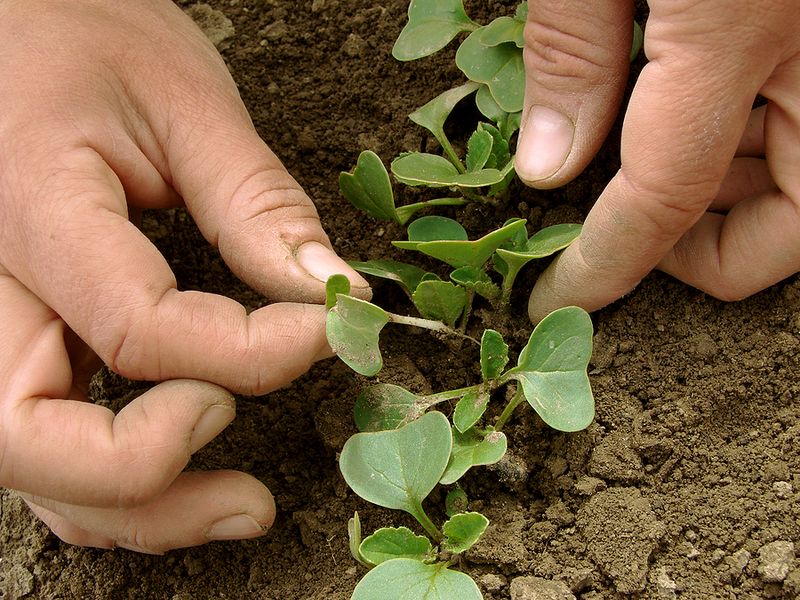
Crowded seedlings compete for water, light, and nutrients from the moment they germinate. When radish plants are packed too tightly, the roots have nowhere to expand, and the plants often respond by sending energy upward into leaves instead. Thinning early, ideally when seedlings are just an inch or two tall, gives each remaining plant the space it needs to develop a proper root rather than just a lush canopy.
For common small spring-type radishes, roughly one to two inches between plants is a workable target. Larger winter radishes and daikons need considerably more room, often two to six inches or more depending on the cultivar. Utah State University Extension guidance on radish spacing emphasizes that crowding competes for resources and can leave plants with impressive tops but poorly developed roots, so following the seed packet’s recommended spacing is worth the effort even when it means pulling out plants that look perfectly healthy.
Before reaching for fertilizer to fix the problem, consider that adding nitrogen to an already nitrogen-rich bed can make things worse. Iowa State University Extension explains that excess nitrogen is a documented cause of lush foliage with little root development, so applying more without evidence of a deficiency can tip the balance further toward leaves and away from roots. Shade from nearby taller plants and persistently warm temperatures can do the same. Mississippi State University Extension cautions against adding amendments such as borax without soil-test support and label-compliant rates, because excess nutrients can harm plants and soil rather than help them.
Harvest spring radishes before quality declines
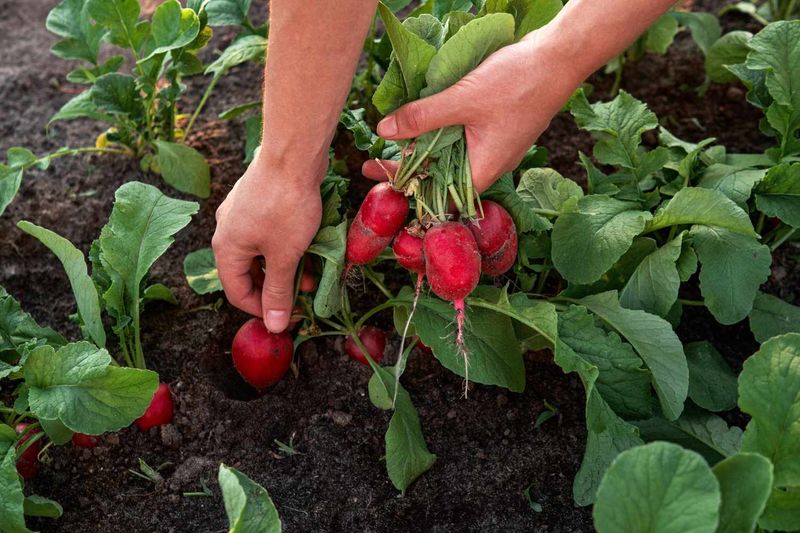
For small spring-type radishes, timing the harvest is often the most important quality decision a gardener makes. Many common varieties are ready to pull in roughly three to five weeks from seeding, but weather and cultivar differences shift that window in both directions. A cool fall stretch can slow development slightly, while a warm spell can push a root past its quality peak faster than expected.
Illinois Extension recommends harvesting radishes when roots are young and at usable size rather than leaving them in the ground in hopes they will grow larger. Once a spring-type radish passes its quality window, the root can quickly become tough, woody, hollow, pithy, or sharply hot in flavor. Leaving it in the ground longer does not improve texture; it accelerates the decline. The seed packet’s days-to-maturity and expected root diameter are the most reliable guides for deciding when to check.
A practical habit is to pull one root for inspection a few days before the packet’s expected maturity date. If it is close to the right size and feels firm, harvest the whole row promptly. If it is not quite there yet, check again in two to three days rather than waiting a full week. UMass Amherst identifies approximately 50 to 65 degrees Fahrenheit as a favorable quality range for radishes, which is a reminder that the fall growing window is genuinely helpful but not unlimited.
Cool weather supports quality; it does not pause the clock on a root that has already reached maturity.
Match fall varieties to local weather
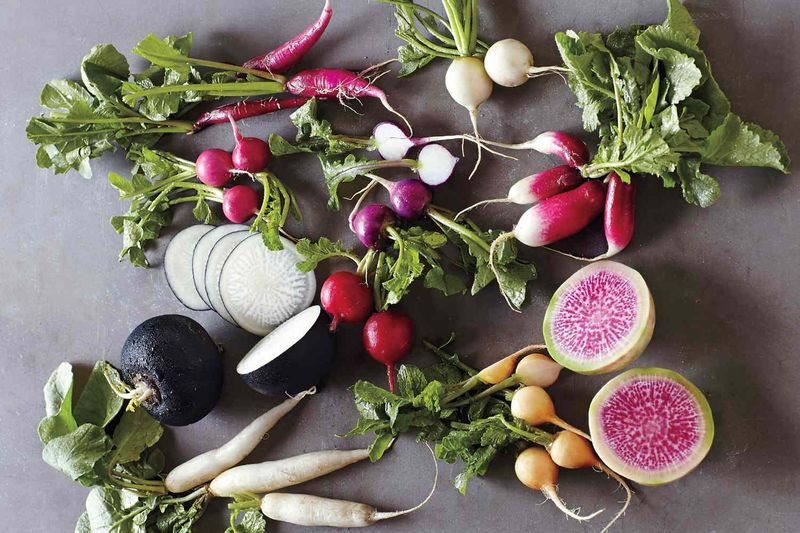
Not every radish is built the same, and applying the same harvest-size standard to a daikon that you would use for a Cherry Belle will lead to pulling roots too early or misreading a perfectly healthy large root as a problem. Small red spring types are bred to mature quickly and small, while winter radishes and daikons are bred to develop slowly, grow considerably larger, and hold their quality reasonably well when conditions stay cool.
Illinois Extension distinguishes between quick-maturing spring radishes and slower winter varieties that are better suited to a longer growing season and a fall or storage harvest. A daikon root that looks impressively large is not necessarily over-mature; it may simply be doing exactly what it was bred to do. The seed packet’s expected root size and days-to-maturity for the specific cultivar are far more useful than a single diameter rule applied to every type.
Fall is generally a favorable season for radishes across most of the United States, but it is not uniformly cool everywhere. UMass Amherst notes that heat and long days can trigger pithiness, bolting, and stronger flavor, which means gardeners in the South or in lower-elevation regions may still encounter warm conditions during a late-summer sowing. Adjusting planting dates so that the root-filling period lands during genuinely cooler weather is a more reliable strategy than assuming fall automatically solves the heat problem. Match your variety to both the season and your local conditions, and you give the root its best chance at the texture you are hoping for.
Separate pithiness from pest and rot damage
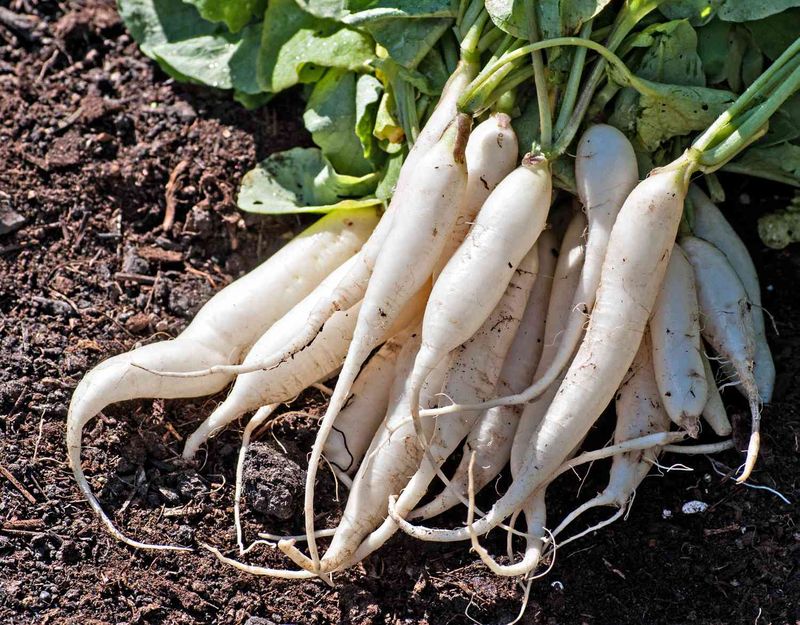
A spongy or hollow interior that is evenly distributed through the root is a different problem from discrete tunnels, feeding holes, or darkened, softened tissue. Physiological pithiness and hollowness develop from the inside out as the root’s cell structure changes, and the damage is generally spread throughout the flesh rather than concentrated in specific channels or spots.
Tunnels and holes that run through the root in defined paths are a different matter entirely. Washington State University Extension identifies root maggots as a pest that physically bores into radish roots, creating winding tunnels distinct from the spongy texture of a physiologically pithy root. Wireworms can produce similar narrow, defined feeding channels. Finding that kind of damage in your roots is a signal to investigate pest activity rather than adjust your irrigation schedule.
Discoloration, soft or mushy areas, or an off smell point toward rot or disease rather than simple water stress or over-maturity. Treating those symptoms as a watering problem and simply adding more moisture can make conditions worse by promoting further rot in a wet bed. Keep the diagnosis focused on what you actually see: evenly spongy or hollow tissue suggests physiological causes worth addressing through moisture management, spacing, variety, and harvest timing; tunnels, holes, dark spots, or soft rot suggest a different investigation entirely. Avoid drawing food-safety conclusions without clear criteria, and when in doubt about damaged or discolored roots, err on the side of discarding rather than eating.
Use prevention, not emergency watering, for the next crop
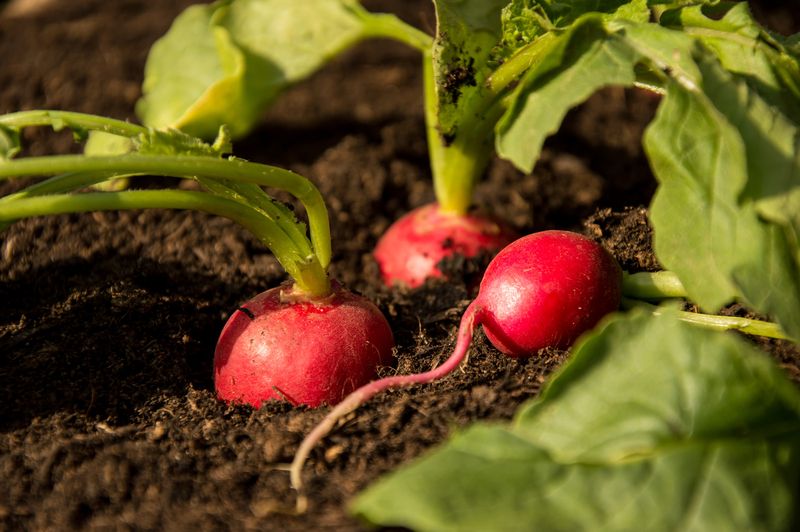
Already hollow, woody, or pithy roots will not become crisp again with extra water. Utah State University Extension and Illinois Extension both make clear that the correction for poor radish texture is prevention during active growth, not rescue after quality has declined. Pull and assess the current crop, use roots with acceptable texture now, and compost anything that is already past its quality window.
For the next sowing, start with consistent moisture from germination through harvest, checking the root zone rather than watering on a fixed schedule. Thin seedlings early to the spacing your cultivar requires, choose a variety suited to your fall conditions and local planting window, and begin checking for harvest readiness a few days before the seed packet’s maturity date. University of Minnesota Extension reinforces that deep, timely watering during dry stretches supports developing roots, but the goal is uniform moisture in a well-drained bed, not saturated soil.
Watering is the first lever to check when radish quality falls short, but it works alongside spacing, nutrient balance, variety selection, and harvest timing rather than replacing them. A radish grown with steady moisture, proper room to develop, and pulled at the right moment is far more likely to be crisp than one left in the ground waiting for conditions to improve on their own. Good radishes are mostly grown in the weeks before harvest, not rescued in the final days.