
If Your Fall Cabbages Grow Wide Outer Leaves But Never Form A Tight Head, Loose Spacing May Not Be The Cause
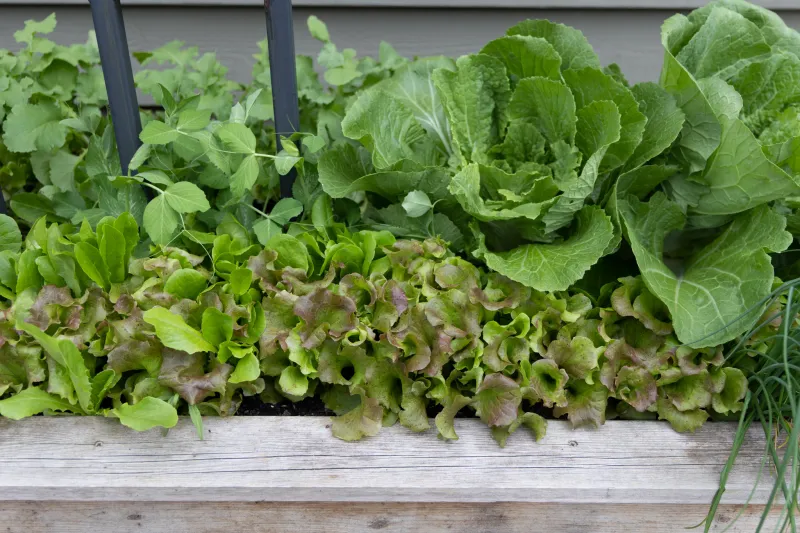
You step out to the garden expecting to find a neat row of round, firm cabbages, but instead every plant is throwing out broad, open leaves with nothing wrapping up in the center. Before you start blaming the spacing, it helps to know that wide outer leaves are often a normal part of how fall cabbage grows before conditions are right for heading. Several factors, including heat, timing, moisture, fertility, pests, and plant injury, can delay or prevent a tight head just as much as how far apart the plants sit. Sorting through those possibilities is the fastest way to figure out what your specific crop actually needs.
Wide outer leaves may reflect normal fall cabbage development
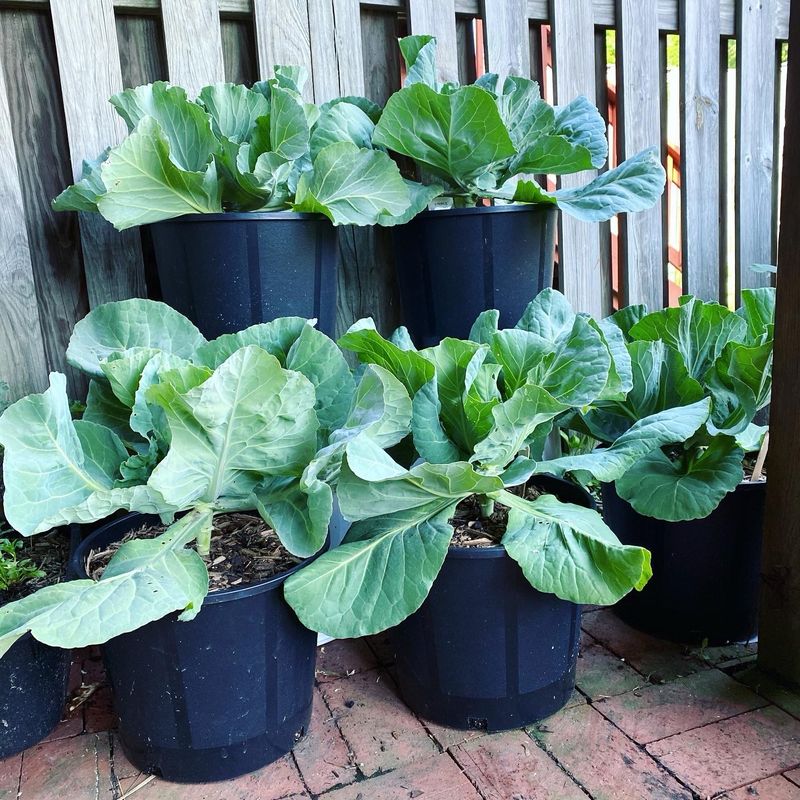
A cabbage plant spreading its outer leaves wide without any obvious center forming can look alarming, but that picture is often exactly what a healthy plant looks like during the vegetative phase. Fall cabbage spends a significant stretch of time building leaf area before the center begins wrapping, and University of Minnesota Extension guidance on growing cabbage describes how the crop forms heads as summer transitions to fall, underscoring that the leafy canopy comes first.
Cooler autumn temperatures generally favor the conditions under which cabbage shifts from vegetative growth toward heading. That does not mean a plant will automatically wrap tight the moment nights cool off; it means the conditions become more suitable. If your region is still carrying late-summer warmth, an open plant may simply be waiting for the shift rather than signaling a permanent problem.
Distinguishing an immature plant from one that is genuinely stressed or damaged matters before you reach for any fix. A young cabbage with soft, fanning outer leaves and a loose, tender center is almost certainly still developing. A plant with yellowing, wilted, or distorted leaves, a visibly injured growing tip, or no change after weeks of suitable cool weather deserves a closer look. Appearance alone, especially the spread of the outer canopy, does not prove a spacing failure or confirm that the crop is headed for disappointment.
The outer leaves also serve a real purpose. They are the plant’s main photosynthetic surface during the growth phase, capturing energy that eventually supports head formation. Removing healthy wrapper leaves to “help” the plant close up is not recommended; UMN guidance on non-pest issues in cool-season crops points to overcrowding, excess nitrogen, and water stress as contributors to poor head formation, not the presence of healthy outer leaves. Let the canopy do its work while you check the factors that actually matter.
Loose spacing is not the first diagnosis to make
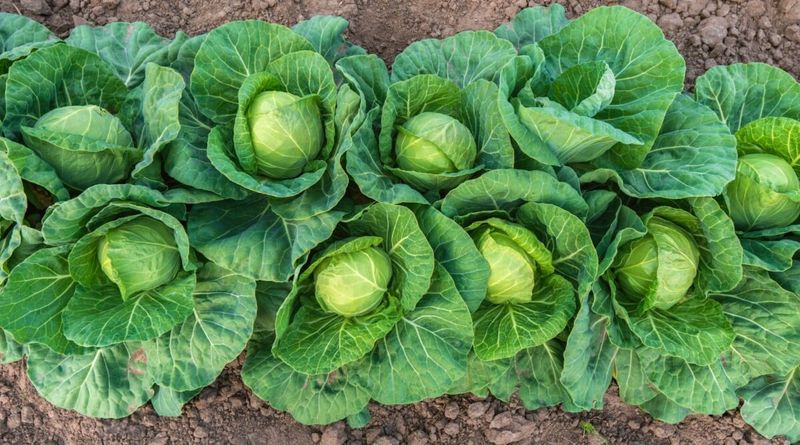
Spacing matters in the cabbage patch, but the relationship between plant distance and head formation is more nuanced than the idea that “too much room causes sprawl.” The more reliable concern is actually the opposite: plants crowded too close together compete for light, water, and nutrients, and that competition is more consistently linked to poorly formed heads than giving plants extra room. Virginia Cooperative Extension’s guide to cole crops draws a clear distinction between overcrowding and excessive space, noting that wider spacing and excessive spacing are not the same problem.
When plants have more room than a tight row requires, they tend to produce larger individual plants and, often, larger heads. The outer canopy may spread more visibly, which can look like sprawl, but a plant with room to grow is not automatically a plant that will fail to head. Visible spread is a size response, not evidence that something went wrong with the spacing decision.
Your seed packet is the best first authority on how far apart your specific variety should sit. General home-garden recommendations commonly range from about 12 to 18 inches between plants, and University of Illinois Extension notes that the range can extend from 12 to 24 inches depending on the cultivar and the head size you want. Utah State University recommends 12 to 18 inches within rows for most home-garden plantings. A compact mini variety and a full-size storage type are not grown the same way, so one universal number does not apply.
Utah State University Extension guidance on brassica spacing and thinning recommends thinning direct-seeded plants to their final spacing once they carry three to five true leaves. That window is the right time to correct distance; moving established, rooted plants farther apart is not a dependable fix for a crop already in the ground. If spacing is within the cultivar’s recommended range, shift your attention to the factors that more directly affect whether a head forms.
Check the variety and calendar before changing the bed
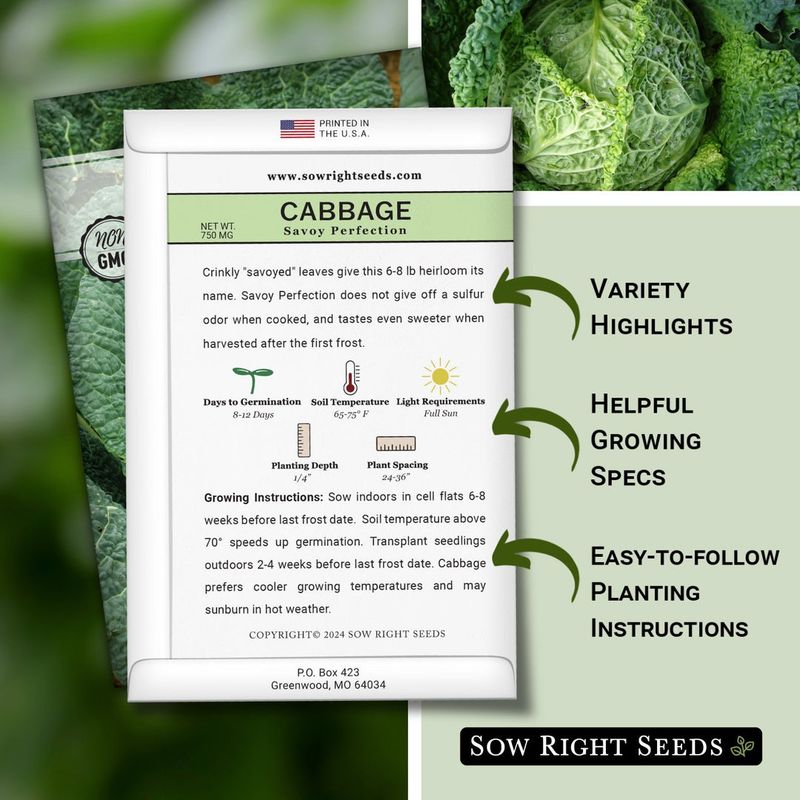
Not every cabbage looks like the smooth round head at the grocery store, and that difference alone can make a perfectly normal plant look like a problem. Pointed varieties, Savoy types with crinkled leaves, red cabbages, mini heads, and long-season storage varieties all have distinct shapes, textures, and expected sizes. Comparing any of them against a mental image of a standard green ball is a quick way to misjudge progress. Pull out the seed packet and match what you see in the bed against the variety description before drawing any conclusions.
Days to maturity is the number to focus on. University of Minnesota Extension guidance on midsummer planting for fall harvest lists a range of roughly 50 to 90 days for fall cabbage started in midsummer, and notes that fall crops often develop better quality because they mature during cooler weather. Count backward from your local first-frost date using the days-to-maturity figure on the packet to find the latest reasonable transplant date for your area.
That calculation is region-specific. A gardener in Minnesota works with a much earlier first-frost date than one in Georgia or coastal California, so a single national planting date is meaningless here. If your plant went into the ground on schedule for your region and has not yet reached its expected maturity window, an open center may simply mean the clock has not run out. Illinois Extension’s cabbage growing guide reinforces that cultivar selection and planting timing both shape what a mature head will look like and when it will arrive.
Give the plant its full expected time before deciding the crop has failed. An open cabbage that is two weeks from its days-to-maturity target is not a lost cause; it is still developing. Checking the variety’s expected characteristics and doing the frost-date math takes five minutes and can save an otherwise healthy planting from unnecessary intervention.
Cool conditions support heading, but they do not explain every plant
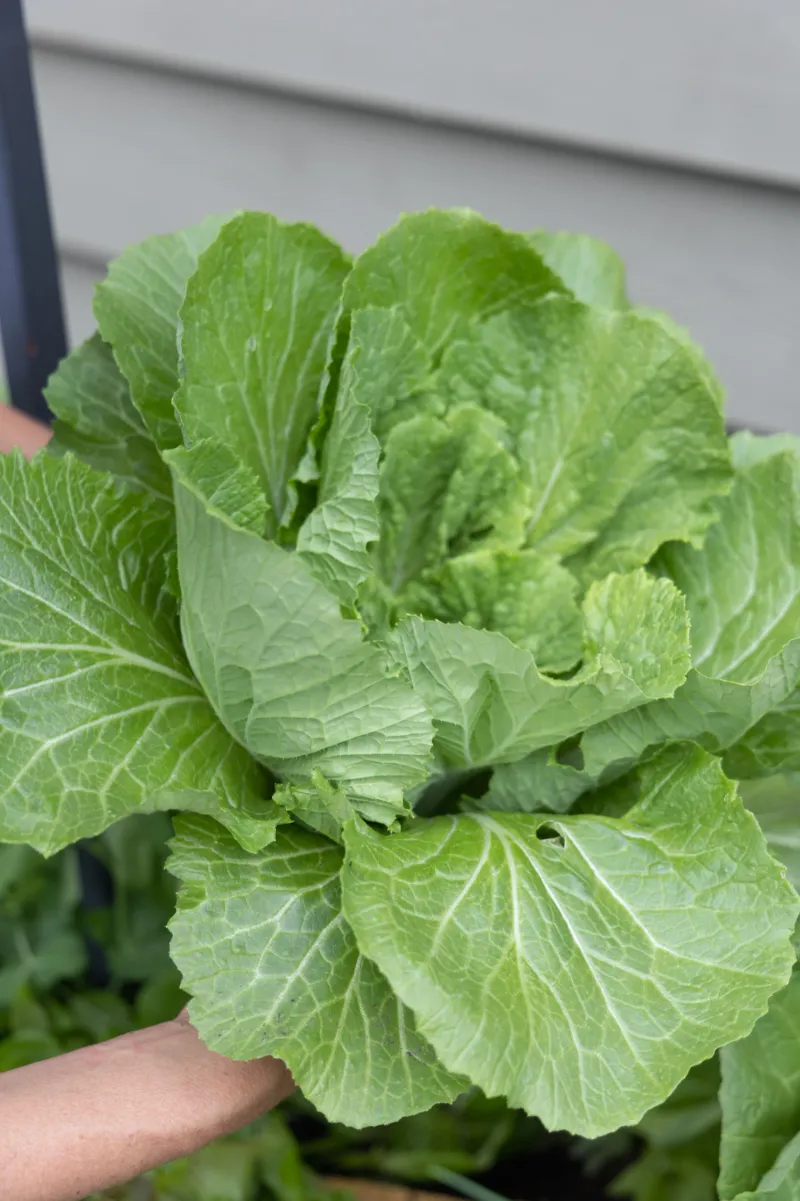
Cooler fall temperatures create more favorable conditions for cabbage to shift from leaf production toward heading, and that is a genuine advantage of growing this crop in autumn. Cabbage performs best when mean daily temperatures stay in roughly the 60 to 70 degree Fahrenheit range. Utah State University Extension’s brassica planting guide notes that temperatures above 85 degrees Fahrenheit can significantly slow growth and alter head shape, so a hot spell earlier in the season may have pushed your plant’s timeline back without any spacing issue being involved.
Cooler weather can improve the situation, but it cannot guarantee a tight head when other problems are present. A plant with a damaged growing point, chronic water stress, or severe pest injury will not recover just because October arrives. Temperature is one piece of a multi-factor picture, and treating it as the only factor leads to waiting passively when corrective steps are still available.
UMN’s cabbage growing guide confirms that the crop grows best in cool weather and that fall plantings often produce better-quality heads, but it also lists damage to the growing point, overcrowding, excess nitrogen, and water stress as separate contributors to heading failure. Cooling down alone does not override those problems.
Extra fertilizer is not a shortcut around any of this. Some gardeners assume that pushing the plant with more nutrients will force it to head faster, but UMN’s guide to non-pest issues in cool-season crops identifies excess nitrogen as one of the documented contributors to poor head formation in cabbage. Continued high-nitrogen feeding during the heading stage tends to produce more foliage and looser heads rather than the firm center you are hoping for. Let the plant respond to suitable conditions while you manage moisture, pests, and fertility sensibly rather than trying to chemically accelerate a biological process.
Keep moisture even and avoid excess nitrogen
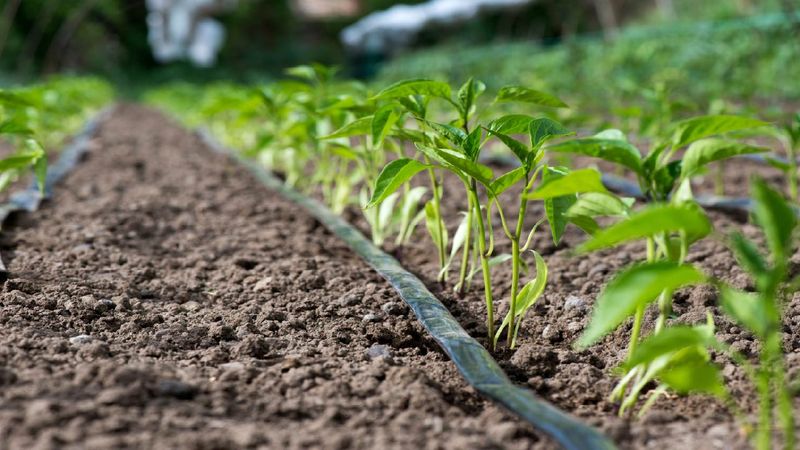
Steady soil moisture is one of the most reliable things you can do for a cabbage that has not yet formed a firm center. Dry periods during head development can impair the process and cause the outer leaves to brown at the edges. Utah State University’s guide to growing cabbage in the garden recommends roughly 1 to 2 inches of deep, even watering per week, while University of Minnesota Extension guidance suggests about 1 inch weekly suits their regional conditions. The right amount for your garden depends on your soil type, climate, and current weather, so use those ranges as a starting point and adjust based on what you observe.
Consistency matters more than volume. Large swings between drought and heavy watering create a different problem: mature cabbage heads can crack or split when the plant takes up water rapidly after a dry period. Soaker hoses or drip irrigation spread moisture evenly through the root zone and reduce the feast-or-famine pattern that hand watering can create. Mulching around the base of the plants helps the soil hold moisture between waterings.
Nitrogen deserves equal attention. If your soil is already fertile or you applied a balanced fertilizer at planting, continuing to add high-nitrogen amendments during the heading stage is more likely to hurt than help. Excess nitrogen at this point encourages the plant to keep producing foliage rather than consolidating into a head, and it can also contribute to loose, open heads and splitting. Utah State University’s guidance explicitly warns against high nitrogen during head formation for exactly these reasons.
UMN’s non-pest issues guide for cool-season crops lists excess nitrogen alongside water stress and overcrowding as documented contributors to heading failure. A soil test is the most reliable way to know whether your ground actually needs anything added before the crop finishes. Guessing with fertilizer mid-season, especially nitrogen-heavy products, is a risk that rarely pays off with fall cabbage.
Inspect the growing point for injury and pest damage
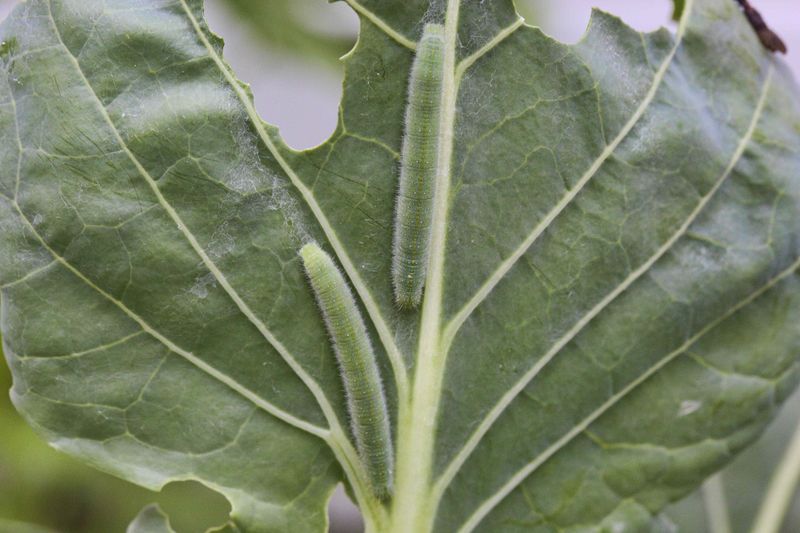
A physical inspection of the plant’s center tells you more than looking at the outer canopy from a distance. The growing point, which is the small, tightly compressed cluster of tissue at the very center of the plant, is where the head originates. Damage to that point during the early stages of plant development can permanently prevent a head from forming, regardless of how well you manage spacing, moisture, and fertility afterward.
Several things can injure a young growing point. Cold snaps that arrive before the plant has hardened off, rough handling during transplanting, and insect feeding are all documented causes. UMN’s cabbage growing guide specifically identifies growing-point damage from cold injury, transplant stress, and insect feeding as factors that can permanently prevent head formation. If the center of your plant looks brown, mushy, collapsed, or simply absent, that plant is unlikely to produce a usable head no matter what you do next.
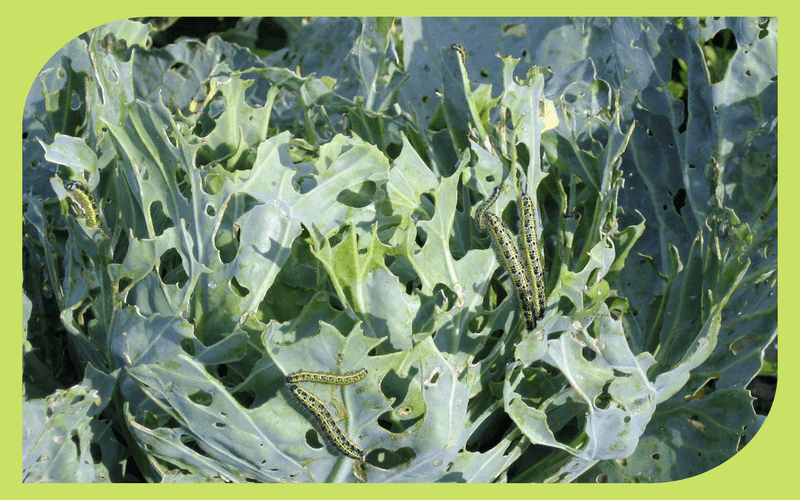
Caterpillars deserve particular attention during fall brassica season. Cabbage loopers and imported cabbageworms can chew through outer leaves quickly, but when feeding reaches the center of the plant and damages the growing point, the consequences go beyond cosmetic. University of Maryland Extension’s resource on cabbage loopers explains how severe caterpillar feeding can stunt plant development and reduce head quality significantly.
Not every hole in a leaf signals a crisis. Minor surface chewing on outer wrapper leaves is common and does not mean the growing point is compromised. Look specifically at the center: is it intact, pale green, and tightly clustered? That is healthy.
Is it brown, collapsed, or riddled with frass and feeding damage? That is a problem worth acting on. Separating those two pictures prevents both overreaction and the mistake of ignoring an injury that is actively preventing your crop from heading.
Correct what remains manageable in an established planting
Once you have worked through the diagnosis, the next step is acting on whatever is actually fixable in the plants you have now. Start by leaving the healthy outer wrapper leaves alone. They are still photosynthesizing and supporting whatever heading potential remains in the plant. UMN’s brassica production considerations reinforce that proper spacing, suitable conditions, moisture, fertility, and protection from damage are the levers that actually matter, not removing leaves to force the plant to close up.
Maintain steady moisture through the rest of the growing season. Stop adding nitrogen unless a soil test has confirmed a genuine deficiency. Those two steps address the two most common care mistakes that show up during the heading stage, and neither requires buying anything or making dramatic changes to the bed.
If caterpillars are actively feeding on your plants, act promptly before they reach the growing point. Row covers placed over the bed create a physical barrier that prevents adult moths and butterflies from laying eggs on the leaves. Handpicking caterpillars and egg masses is effective on small plantings when you check regularly. Bacillus thuringiensis (Bt) products labeled for caterpillar control on vegetable crops are a practical option when infestations are heavier.
University of Maryland Extension’s cabbage looper resource identifies these approaches as appropriate management tools.
Any pesticide application, including Bt, must follow the product label precisely. EPA guidance on reading pesticide labels is clear that the label is a legal requirement: use only on the crops and pests listed, at the stated rate, and observe the preharvest interval before harvesting treated plants. Finally, do not expect moving established plants farther apart to rescue a crop that is already in the ground. Utah State University Extension’s spacing and thinning guidance makes clear that spacing corrections belong at planting or during early thinning, not once roots have settled in.
For this season, work with what you have and plan better spacing at the start of the next planting.
Judge maturity by firmness rather than first appearance
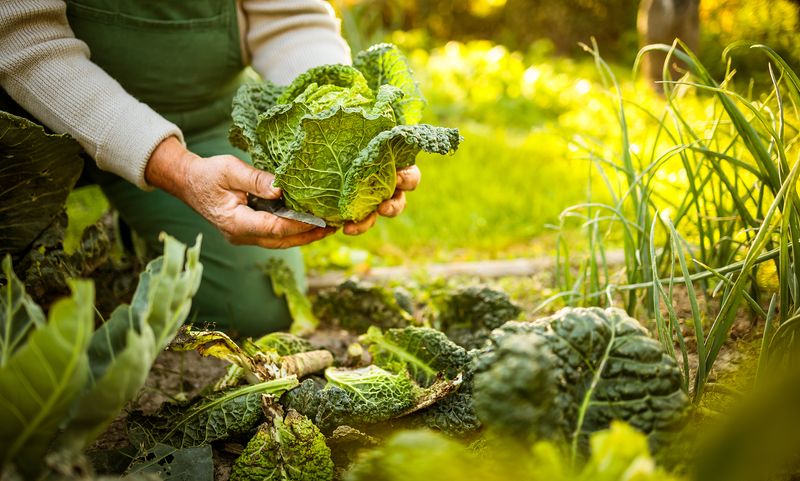
Firmness is the most reliable signal that a cabbage head is ready to harvest. UC Davis Postharvest Research guidance on cabbage describes a very loose head as immature and a very firm head as mature, which gives you a straightforward physical test: press the center of the head with your palm. If it compresses easily, the plant is still developing. If it resists with solid, consistent pressure, the head is approaching or at maturity.
Harvest when the head feels firm but before the outer leaves begin to crack or separate. Waiting too long, especially after a heavy rain following a dry spell, invites splitting that reduces storage quality. Illinois Extension’s cabbage guide notes that timing the harvest correctly protects both texture and flavor.
The broader takeaway from this entire troubleshooting process is that wide outer leaves are often normal and that spacing is only one item on a longer checklist. Cultivar selection, local timing, suitable cool conditions, even moisture, moderate fertility, and physical plant health all interact to determine whether a tight head forms. A cabbage that has everything working in its favor will usually get there on its own schedule; the gardener’s job is to remove the obstacles, not to force the outcome. The most satisfying fall harvests tend to come from plants that were simply allowed to do what they do, with attentive care rather than anxious intervention.