
If Your Peace Lily Grows Glossy Green Leaves But Never Sends Up A Single Bloom, You’re Feeding The Wrong Part
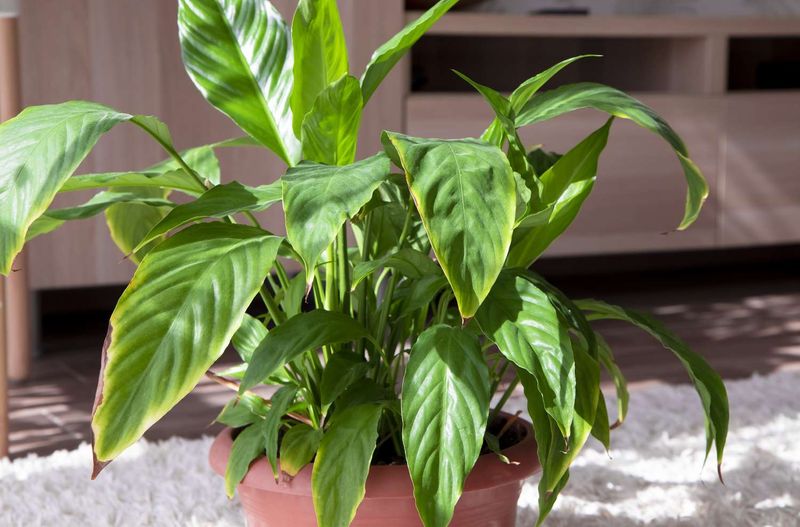
A peace lily that pushes out one glossy leaf after another but never produces a single white bloom can feel like a puzzle with no solution. Many gardeners assume heavy feeding is to blame, but the real picture is more complicated than that. Light levels, plant age, the time of year, and fertilizer history all play a role, and figuring out which factor is holding your plant back makes all the difference.
Green leaves do not convict the fertilizer
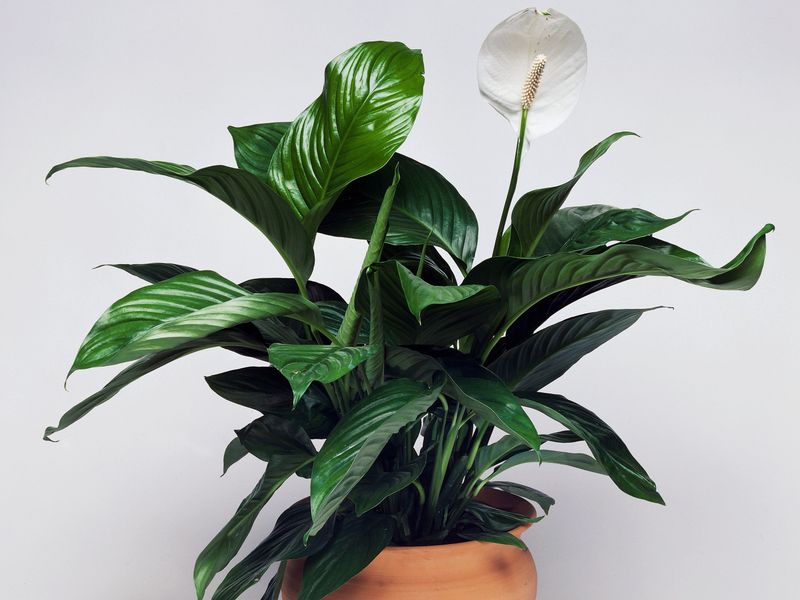
Peace lily foliage is naturally glossy and dark green. That rich color is simply what a healthy plant looks like, not a warning sign that something has gone wrong with your fertilizer routine. Before blaming the bag of plant food, check your care history first, because leaf appearance alone cannot tell you whether a plant has been overfed.
What most people call a peace lily flower is actually an inflorescence made up of two parts. North Carolina Extension’s plant profile for Spathiphyllum explains that the white petal-like structure is a spathe, a modified leaf that wraps around a finger-like spike called the spadix. As the spathe ages, it naturally shifts from white to green, which is a normal part of its life cycle and not evidence of a nutrient problem.
Treating dark-green leaves as proof of nitrogen excess is a shortcut that can lead you in the wrong direction. Leaf color is influenced by light levels, cultivar genetics, water stress, and overall plant health, among other things. A lush, deeply colored plant might simply be well-grown.
The more meaningful clues to look for are brown or scorched tips and margins on the leaves, a white crusty deposit on the soil surface or pot rim, or a history of applying fertilizer more often than the label suggests. RHS guidance on growing peace lilies notes that leaf color can be affected by multiple care factors, so a single symptom like glossiness should never carry the full weight of a diagnosis. Build your case from the whole picture before changing anything.
Light and plant timing shape flowering
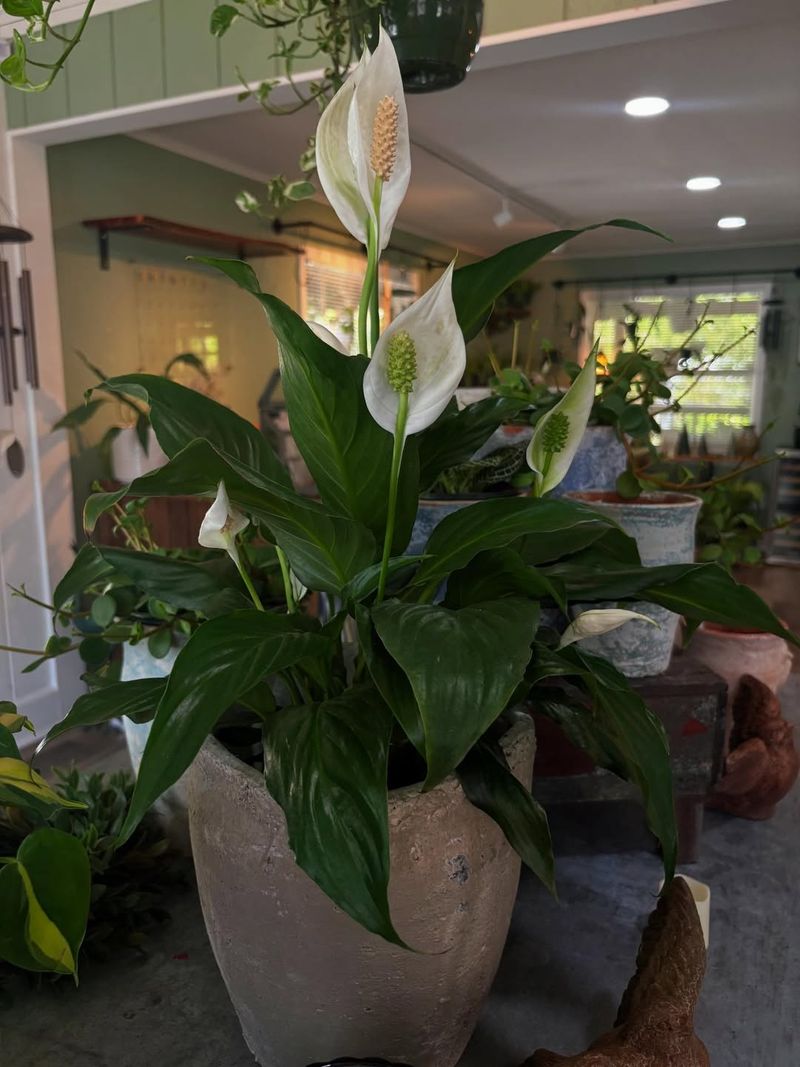
Many peace lilies sit in corners that feel pleasant to us but are genuinely dim for a flowering plant. Surviving in low light is something peace lilies do well, but flowering in low light is a different matter. University of Missouri Extension’s guide to lighting indoor houseplants explains that Spathiphyllum can adapt to lower light conditions as a foliage plant while needing medium light to produce flowers reliably.
Beyond light intensity, flowering in peace lilies is shaped by several factors that have nothing to do with fertilizer. UF/IFAS research on Spathiphyllum flowering identifies photoperiod, temperature, plant maturity, and cultivar genetics as key determinants of when and whether a plant blooms. A young plant that was recently divided or repotted may simply need more time before it is developmentally ready to flower, regardless of how well it is cared for.
Seasonal patterns matter too. Many peace lily cultivars flower most actively from late winter through early summer, so a plant that looks perfect in autumn may just be in a quiet phase of its natural cycle. Some cultivars are bred for more continuous flowering while others tend toward a single seasonal flush, and that difference is built into the plant’s genetics rather than corrected by changing its food.
Temperature swings can also interfere. Peace lilies prefer warm, stable indoor conditions, and consistently cool temperatures, especially near drafty windows or air-conditioning vents, can suppress flower initiation even when light is adequate. Before adjusting the fertilizer schedule, spend a week or two observing where your plant actually sits, how bright the light is at different times of day, and whether the temperature around it stays comfortable. Those observations will tell you more than the color of the leaves ever could.
Nitrogen excess can favor leaves without proving the cause
Nitrogen does exactly what fertilizer labels promise: it fuels leafy, vigorous growth. When a plant receives more nitrogen than it needs, that energy tends to pour into shoots and leaves rather than flowers. Heavy or very frequent fertilizer applications can push a peace lily toward lush foliage, but that pattern is one possibility, not a guaranteed explanation for missing blooms.
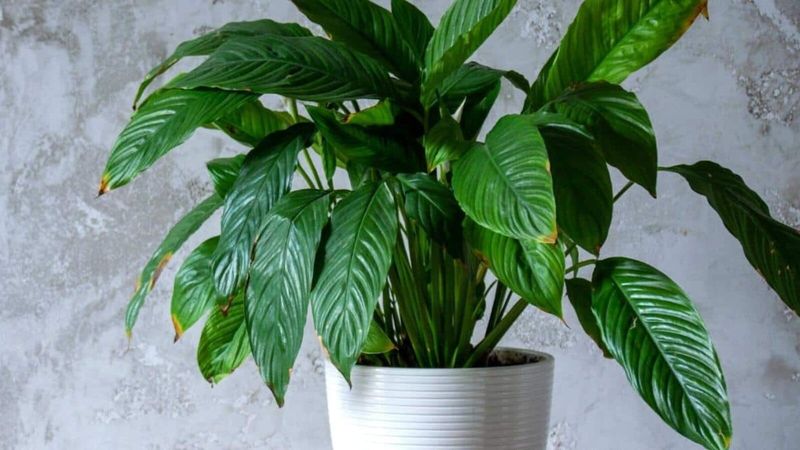
The clearest sign that fertilizer has been applied too generously is not leaf color. It is physical damage. Salt buildup from repeated fertilizer applications can scorch leaf tips and margins, leaving brown, papery edges that look distinct from the yellowing caused by other problems. A white crust on the soil surface or along the pot rim is another indicator worth noting.
N.C. Extension’s Spathiphyllum profile points to salt accumulation as a specific concern with over-fertilized peace lilies, noting that flushing the soil between applications is a recommended practice.
A study on nitrogen nutrition of Spathiphyllum, published in HortScience, found that plant growth peaked within a moderate nitrogen range and that higher nitrogen levels increased leaf damage. The study did not establish excess nitrogen as the typical reason a peace lily fails to flower. That is an important distinction, because it means cutting nitrogen is not a reliable universal fix.
On the other side of the scale, too little nitrogen is also a problem. Nitrogen deficiency can cause older leaves to yellow and slow overall growth, which can in turn reduce a plant’s capacity to flower. The goal is balanced, moderate nutrition, not the elimination of nitrogen. Overfertilizing and underfertilizing are both real risks, and the right response depends on your actual fertilizer history rather than on how dark the leaves look.
Start with brighter, gentler conditions
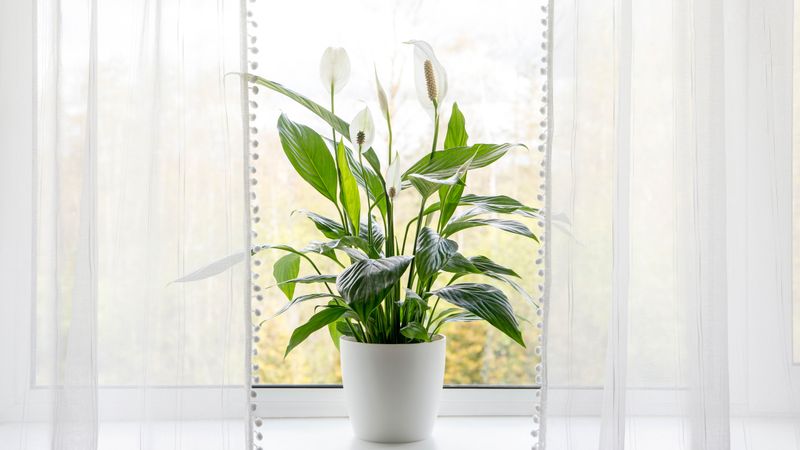
Before touching the fertilizer, move the plant. Shifting a peace lily from a dim corner to a spot that receives bright, indirect or filtered light is the single most impactful adjustment most indoor gardeners can make. A location within a few feet of an east- or north-facing window, or back from a south- or west-facing window with a sheer curtain in between, typically provides the kind of light that supports flowering without risking leaf scorch.
Direct sun is a real hazard. Harsh afternoon light can bleach or burn the foliage, turning the leaves pale or papery in a matter of days. UF/IFAS house plant care guidance for Spathiphyllum recommends bright, indirect light and specifically cautions against placing peace lilies where they receive intense direct sun. Move the plant gradually over a week or two rather than shifting it suddenly from deep shade to a bright window, which gives the leaves time to adjust.
Moisture management pairs directly with the lighting change. Peace lilies perform best when the potting mix stays evenly moist but never soggy. Waterlogged soil reduces oxygen around the roots and can invite root rot, while allowing the mix to dry out severely stresses the plant and can delay flowering even after light improves. MU Extension’s houseplant lighting guide reinforces that overall plant health, including sound watering, supports a plant’s ability to flower once light conditions are met.
One easy rule: never let the pot sit in a saucer of standing water. Drain any runoff within an hour of watering. Together, brighter light and consistent moisture address two of the most common barriers to flowering without requiring any changes to the fertilizer routine at all.
Address suspected salt buildup carefully
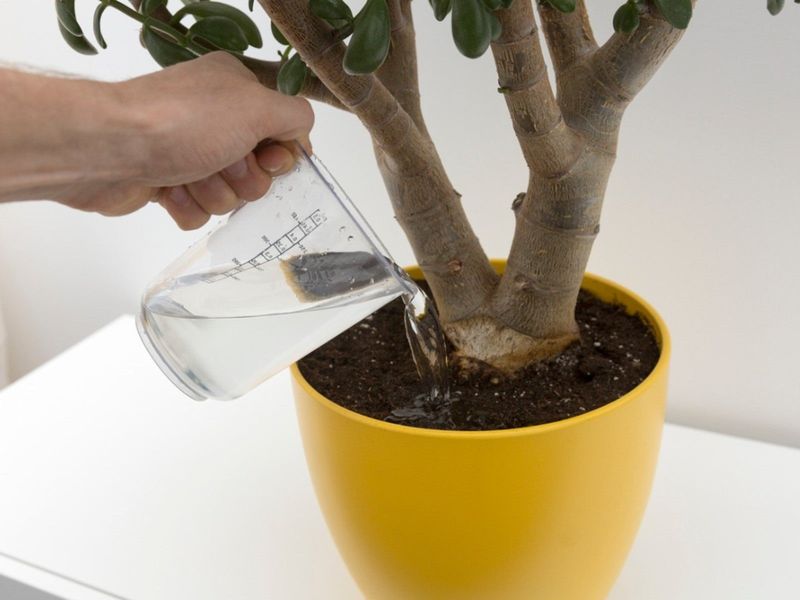
If your peace lily has been fertilized frequently, perhaps every two weeks or at full label strength, a temporary pause and a thorough soil flush are worth considering. The purpose of flushing is to rinse out accumulated soluble salts that build up over time from repeated fertilizer applications. High salt concentrations in the potting mix can damage roots and cause the brown, scorched leaf tips and margins that are among the more reliable signs of overfertilization.
To flush the pot, take it to a sink or move it outdoors and water it slowly and thoroughly, allowing water to run freely out of the drainage holes. Repeat that process two or three times in one session. N.C. Extension recommends flushing the soil between fertilizer applications as a standard practice for peace lilies, and this same technique applies when clearing a salt overload.
After flushing, make sure the pot does not sit in the water that drained out. Roots left standing in runoff can develop the same waterlogged conditions you were trying to avoid.
A few important limits apply here. Flushing reduces soluble salts broadly; it does not selectively remove nitrogen or reverse root damage that has already occurred. UF/IFAS Spathiphyllum care guidance emphasizes that drainage must be free and unobstructed for flushing to work properly, so check that your pot has adequate holes before you start.
Gardeners who fertilize lightly and infrequently probably do not need to flush at all. Flushing is a corrective step for a specific situation, not a routine part of peace lily care. If your plant shows no signs of salt injury and your fertilizer schedule has been conservative, focus on light and moisture first and skip the flush.
Resume modest, balanced feeding
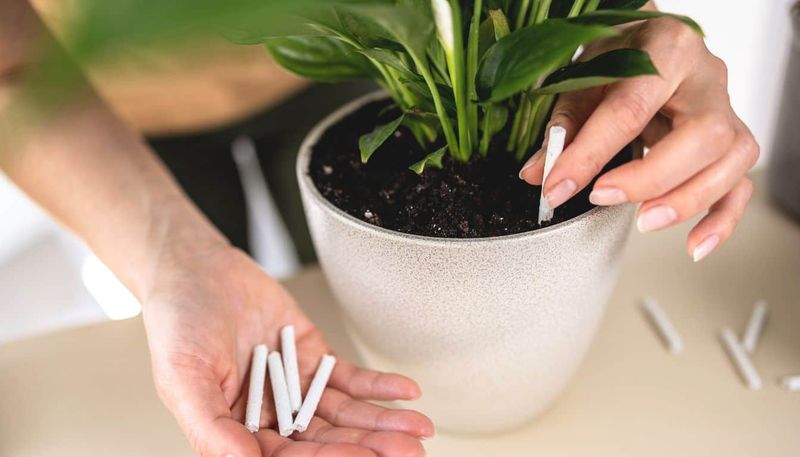
Once light and moisture are on track and any fertilizer excess has been addressed, the next step is resuming a steady, modest feeding schedule. Peace lilies have fairly light nutrient needs compared with heavy feeders like tomatoes or tropical fruiting plants. Matching the feeding schedule to those actual needs, rather than applying fertilizer generously in hopes of triggering flowers, produces better results.
UF/IFAS house plant care guidance for Spathiphyllum recommends applying a low dose of liquid fertilizer about three times per year for indoor plants. N.C. Extension suggests using fertilizer at one-quarter of the label strength and flushing the soil between applications. Both recommendations point in the same direction: less fertilizer, applied carefully, is safer than more.
A balanced houseplant fertilizer, one where the three numbers on the label are roughly equal, is a sensible default. Some gardeners reach for high-phosphorus bloom boosters when a plant is not flowering, on the theory that phosphorus triggers flower production. Phosphorus is an essential nutrient, but adding extra phosphorus to a plant that is not deficient in it is not a reliable way to force blooms. University of Minnesota Extension’s fertilizing guide makes the broader point clearly: more fertilizer is not better, and excess applications can create new problems rather than solving existing ones.
It is also worth knowing that commercial Spathiphyllum growers operate under tightly controlled conditions, with specific light, temperature, substrate, and fertilizer targets that do not translate to a living room plant. UF/IFAS commercial production guidelines for interiorscape Spathiphyllum describe those controlled-environment rates separately from household care advice for good reason. Feeding a houseplant at commercial production rates would almost certainly cause more harm than good. Stick to label directions at a reduced rate, apply only during active growth, and let the plant’s condition, not a desire for faster results, guide the schedule.
Give maturity, season, and cultivar time
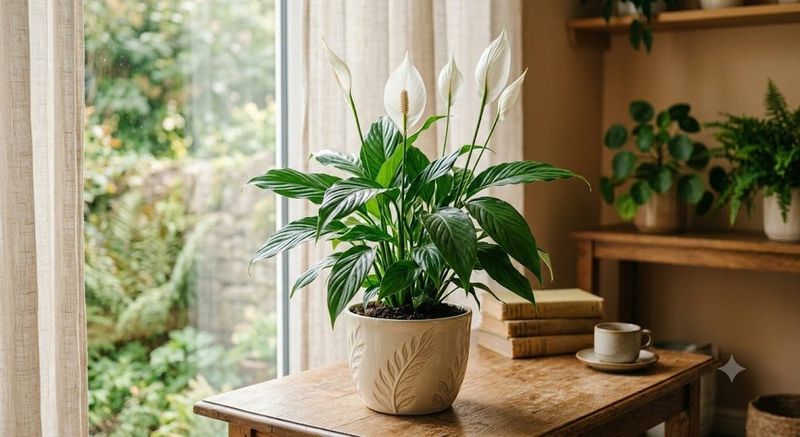
After improving light, correcting any fertilizer excess, and settling into a steady care routine, patience becomes the most practical tool you have. A peace lily that has been stressed, recently repotted, or recently moved may take several weeks or even a full growing season before it produces a bloom. Improved conditions set the stage, but the plant works on its own schedule.
UF/IFAS research on Spathiphyllum flowering notes that many cultivars flower primarily from late winter through summer, while some have multi-season or age-dependent patterns. If your plant is young or was divided recently, it may simply need more time to reach the developmental stage at which it can initiate flowers. That is a biology question, not a fertilizer question.
Cultivar differences are real and worth acknowledging. Some varieties sold as compact tabletop plants are bred for their foliage rather than for frequent flowering, and no amount of adjusted care will change their genetics. If your plant came from a grocery store or big-box retailer and has never flowered at home, it may have been treated with gibberellic acid commercially to produce the blooms you saw on the shelf. UF/IFAS Spathiphyllum care guidance notes that GA3 is used in commercial production but is not a practical or reliable home remedy.
Skip any advice that involves deliberately stressing the plant, whether through restricted water, root crowding, or harsh sun, to force flowering. Those tactics can injure a plant that is already rebuilding its health. The practical decision rule is straightforward: improve light, correct excesses, feed moderately, and give the plant a full season to respond. A peace lily that is genuinely healthy and well-sited will usually find its way to a bloom on its own terms.