
If Your Cut Zinnias Wilt Within A Day Of Coming Inside, You May Have Cut Them At The Wrong Stem Stage
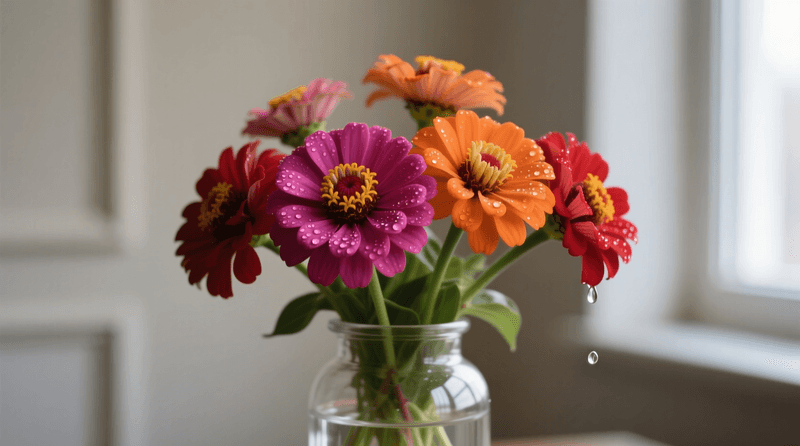
Bringing a fresh armful of zinnias inside only to watch them droop by the next morning is genuinely frustrating, especially when the blooms looked perfect on the plant. A one-day wilt often points to the stem not being ready at harvest time, but that is not the only thing that can go wrong. Vase conditions, water quality, and where you place the flowers all play a role too. Understanding what to look for before you cut, and what to do right after, can make the difference between a bouquet that lasts a week and one that gives up overnight.
A one-day wilt has more than one possible explanation
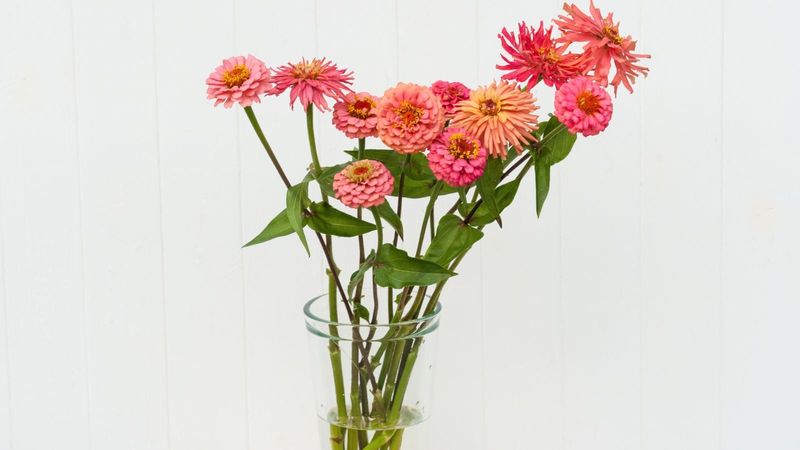
Watching a zinnia droop within hours of cutting it is discouraging, and the natural reaction is to blame one specific mistake. Utah State University Extension guidance on zinnia cut-flower production warns that underdeveloped blooms can droop quickly after harvest, which makes stem maturity a reasonable first thing to check. Still, treating it as the only possible cause overlooks several other factors that research and extension sources consistently flag.
Bacterial activity in vase water, for instance, can contribute to vascular blockage and water-stress symptoms in cut flowers. Research on bacterial species and postharvest quality of cut Zinnia elegans shows that the type and behavior of bacteria in solution, not just their presence, can influence how quickly a stem deteriorates. Delayed hydration after cutting, heat exposure, a dirty container, damaged stem ends, and cultivar differences can each shorten vase life on their own or in combination.
The practical takeaway is to treat harvest stage and postharvest handling as two parallel checklists rather than a ranking. Check whether the stem was ready when you cut it, then check whether the flower received clean water promptly and stayed in a cool spot away from heat and drafts. Most zinnias, under suitable care, should last several days in the vase, though the exact number varies by flower and conditions. A collapse in under 24 hours is unusually poor performance and warrants reviewing both categories, not just one.
Use petals and stem firmness together
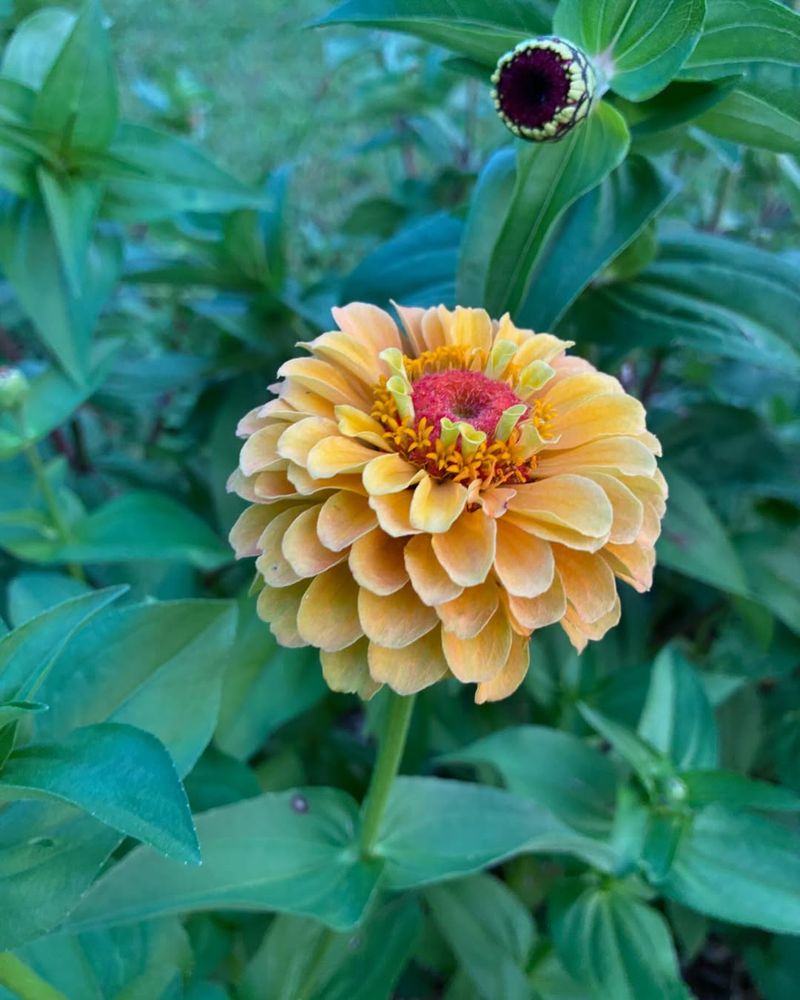
Many gardeners judge a zinnia by its bloom alone, reaching for the flower that looks the most colorful or fully formed. Visual appeal is a useful starting point, but a flower can look gorgeous while its upper stem is still too soft to support it after cutting.
Utah State University Extension’s zinnia harvest guidance recommends looking for at least two full rows of expanded petals combined with an upper stem that feels mostly stiff. A bloom with only one row of open petals, or one whose stem bends easily when you press it gently, is likely not mature enough to stay upright in a vase. Cutting it anyway is one of the more common reasons for a same-day droop.
A simple field check, sometimes called the wiggle test, can help confirm readiness before you make the cut. Hold the stem several inches below the flower head and move it gently side to side. A specialty cut-flower care guide describes a wobble at this point as a warning sign that the stem is not yet firm enough for harvest, while a stem that holds its position suggests better readiness. Think of this test as an informal field aid rather than a scientifically exact threshold.
Firmness and petal expansion work together as a practical target, not a universal biological rule. Some cultivars mature differently, and the wiggle test does not control for every postharvest variable. Passing the test does not guarantee a set number of days in the vase, but failing it is a reliable signal to leave the flower on the plant a little longer.
Cut during cool, dry conditions
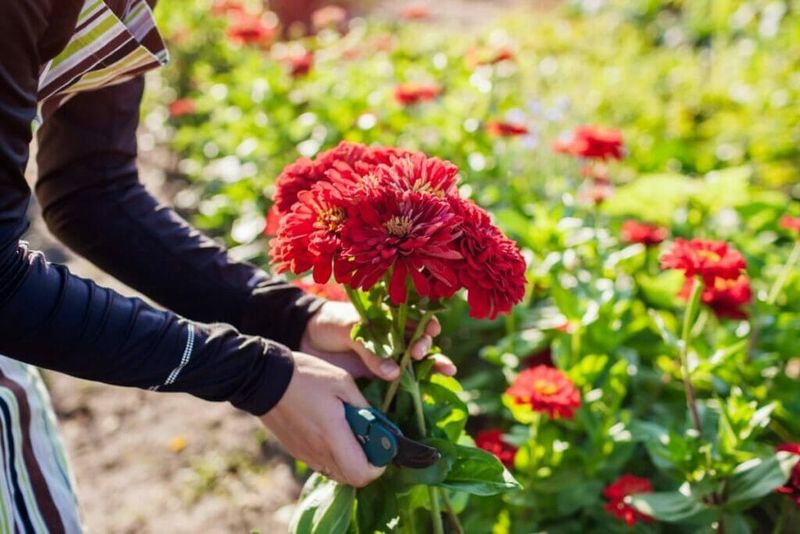
Timing the cut matters almost as much as where on the stem you make it. Cutting zinnias during the hottest part of the afternoon means both the plant and the freshly severed stem are already under heat stress before the flower ever reaches a vase. Utah State University Extension recommends harvesting during the cool part of the day, preferably when flowers and foliage are dry rather than wet with morning dew, because excess moisture on petals and leaves can encourage decay.
Use a clean, sharp tool for every cut. Dull blades crush stem tissue rather than slicing cleanly, and a damaged stem end takes up water less efficiently. After cutting, strip off any leaves that would sit below the waterline in your vase, since submerged foliage breaks down quickly and feeds bacterial growth. Place the stems in clean, cool water immediately so the tissue does not begin to dry before hydration starts.
You may notice that different published sources give slightly different advice about exactly when to cut. Utah State’s guidance centers on the two-row, firm-stem combination as a practical home-garden target, while some commercial production guides lean toward waiting until the flower is fully open. The University of Massachusetts Amherst’s commercial cut-flower production resource reflects the fully-open approach common in professional settings. Cultivar, production system, market preference, and intended use are all possible reasons for that variation, though none has been confirmed as the definitive explanation.
For a home gardener cutting flowers for a kitchen table rather than a florist’s cooler, the firm-stem and petal-expansion combination is a reliable working guide. Skip any rigid before-opening or fully-open rule and let the stem’s physical readiness be your primary signal.
Vase water and placement still matter
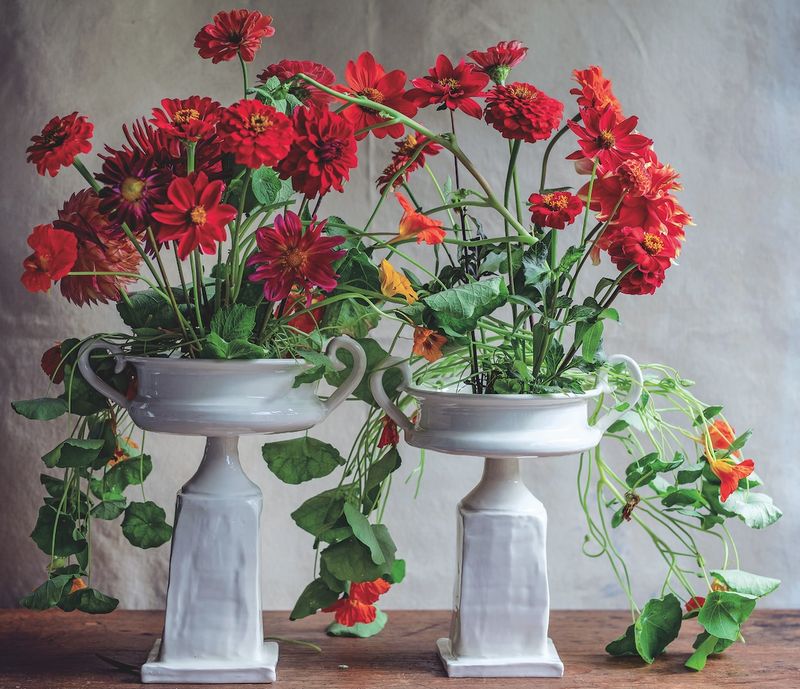
A zinnia cut at exactly the right stage can still wilt prematurely if it goes into a dirty vase or sits in the wrong spot. Clean water and a clean container are not optional extras; they are part of the same care routine as the harvest check. Research on bacterial activity in zinnia vase solutions found that certain bacterial species and solution conditions can contribute to vascular blockage, a physical obstruction that prevents the stem from drawing water even when the flower is sitting in a full vase. Cloudy water is a sign of bacterial buildup, but clear water can harbor bacteria too, so regular changes matter regardless of how the water looks.
University of Minnesota Extension recommends changing vase water every two days, while NC State Extension suggests every two to three days and washing the container at each refresh. Scrubbing the vase removes the biofilm that clings to glass and ceramic surfaces and reseeds bacteria into fresh water if left in place. Remove any leaves that have slipped below the waterline during a refresh, and top off with cool water between full changes.
Placement shapes how long the flowers last once the vase is ready. Keep arrangements away from direct sun, heating vents, drafts from fans or air conditioning, and open windows where wind can dry the petals. Iowa State University Extension notes that commercial floral preservative is the most reliably supported additive for home use, and that homemade substitutes such as pennies, aspirin, sugar water, and soda are not as effective and may sometimes shorten vase life rather than extend it. If you want to use an additive, a packet of commercial flower food mixed according to its label directions is the better-supported choice.
One note on bleach: some sources include small amounts in storage solutions, but recommendations vary, and CDC guidance warns never to mix household bleach with other cleaners or disinfectants because dangerous vapors can result. For most home arrangements, clean water changed regularly and a commercial preservative packet is a simpler and safer approach.
Troubleshoot a wilt that continues indoors
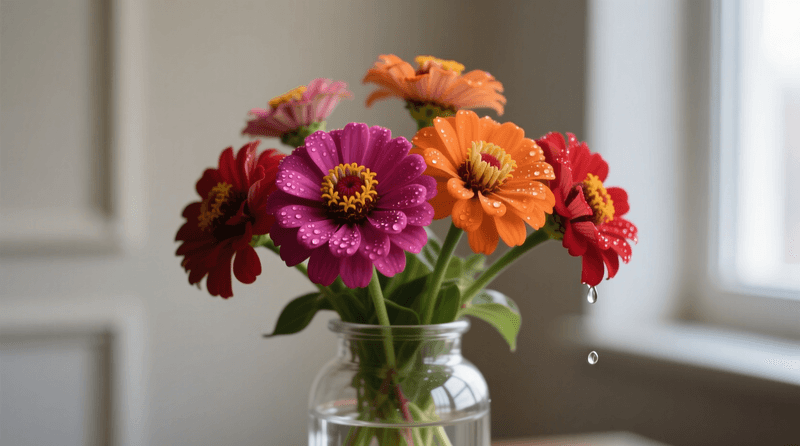
Sometimes a zinnia passes the wiggle test, gets cut during the cool morning, and still droops faster than expected. Before assuming the harvest stage was wrong after all, work through a short checklist of postharvest variables. Delayed hydration is one of the most common culprits: even a few minutes with a dry stem end can allow an air bubble to form in the vascular tissue, partially blocking water uptake once the stem reaches the vase.
Check the stem end for discoloration or a dried, sealed-looking tip. Recutting can help when a stem has been out of water long enough to dry or when the cut end shows obvious damage, but it is not a universal fix. A 2022 study on improving hydration and vase life of cut Zinnia found that recutting benefited stems that had dried for several hours, but when stems had remained continuously hydrated, recutting showed no benefit and in some cases reduced vase life. Automatic recutting of every stem is not supported by that finding.
The same study found that using a floral preservative holding solution and short-term cold storage at 1 to 5 degrees Celsius improved vase life under its specific controlled conditions. Those results are worth knowing, but translating them directly to a home refrigerator is tricky. The University of Massachusetts Amherst’s commercial cut-flower guide notes that zinnias can be stored at 36 to 40 degrees Fahrenheit for up to four days, while Utah State Extension cautions against storing below 40 degrees Fahrenheit. Home refrigerators fluctuate in temperature, dry flowers through low humidity, and often contain fruit that releases ethylene gas, which can accelerate petal aging.
Cold storage may help under the right conditions, but it is not a reliable fix for every home situation.
Also review heat exposure after the flowers came inside. A vase sitting near a stove, a south-facing window, or a heating vent can raise the ambient temperature enough to accelerate wilting even when the stem was harvested correctly. Flower-to-flower variation within the same bunch is normal too; one stem wilting ahead of others is not always a sign of a systematic problem.
Make the stem check one part of the routine
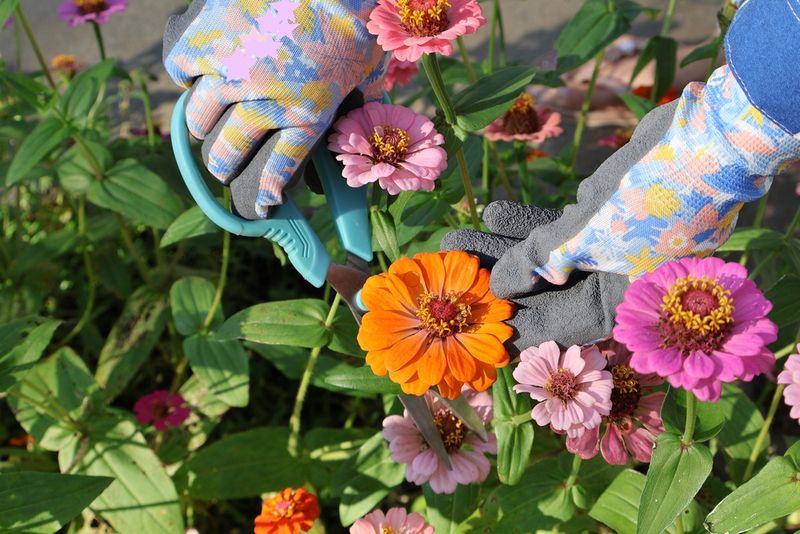
Building a short pre-cut checklist into your zinnia harvest takes less than a minute and addresses the two most controllable variables at once. Look for at least two rows of expanded petals, then run a finger along the upper stem to feel for firmness. Follow that with the gentle wiggle test, holding several inches below the bloom and checking whether the stem holds steady. Utah State University Extension’s zinnia guidance treats petal expansion and stem firmness as the core readiness indicators, and the wiggle test works as supporting evidence alongside those two checks rather than as a standalone guarantee.
After cutting, the sequence matters as much as the checklist. Get stems into clean, cool water right away, keep submerged foliage out of the vase, and position the arrangement away from heat, drafts, and direct sun. Iowa State University Extension’s cut-flower care guidance reinforces that clean water and proper container hygiene are ongoing responsibilities, not a one-time setup step. Change the water every two to three days and wash the vase each time.
A zinnia that still wilts within a day is most usefully treated as feedback. Review both the cutting stage and everything that happened after the stem left the plant, because the answer is rarely found in just one place.