
If Your Fall Turnips Grow Lush Green Tops But Only Small, Bitter Roots, You Sowed Them Too Late For Cool Weather
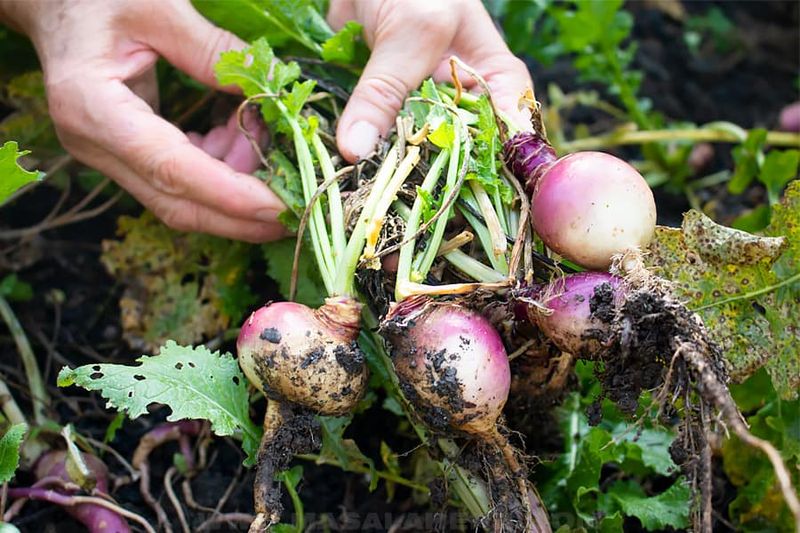
Pulling a turnip from the ground and finding a golf-ball-sized root under a forest of healthy green leaves is one of fall gardening’s most frustrating surprises. Planting date is often the first thing gardeners blame, and timing really can matter, but it is rarely the whole story. Heat, crowding, too much nitrogen, uneven watering, and even soil diseases can all push a turnip crop toward leafy growth and disappointing roots. Understanding what actually went wrong this season makes it much easier to fix the problem and plan a better crop next time.
Late sowing can limit root size, but it does not prove the diagnosis
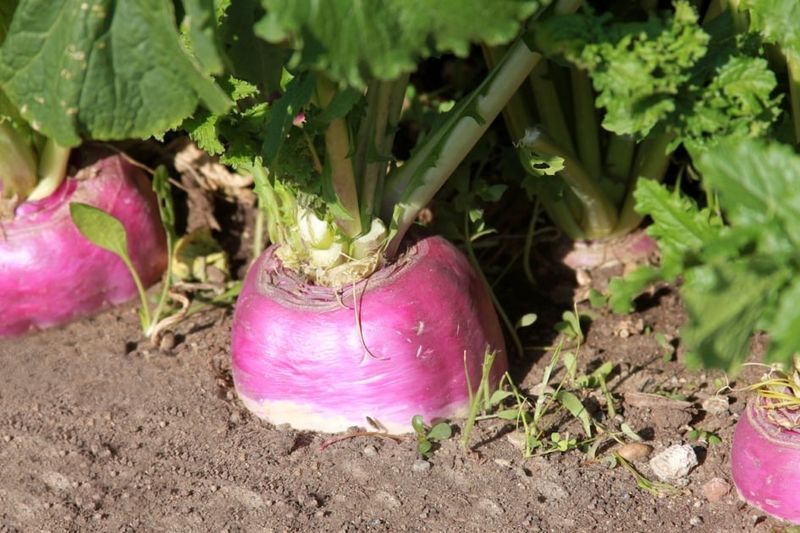
Turnips are cool-season vegetables that thrive when most of their growing time falls in mild, moderate temperatures. UC IPM guidance places the optimum growing range at roughly 50 to 65 degrees Fahrenheit, and Utah State University notes that turnips generally perform best when temperatures stay below 85 degrees. Cool conditions support root development and can actually improve the flavor of the roots you harvest.
The timing concern for fall crops is specific: roots need enough remaining warm-but-not-hot growing days to enlarge before shorter days, cooling soil, or a hard freeze slow or stop growth. When a crop goes in too late, the plant may establish leaves and stems just fine, but the root never gets enough time to bulk up to a useful size before conditions shut growth down. That is a real and common problem, but it mainly predicts undersized roots rather than automatically explaining bitter flavor or a particularly lush canopy.
Utah State University Extension points out that small or strong-flavored roots are also associated with heat, drought, fluctuating moisture, crowding, excess nitrogen, low fertility, poor soil structure, and disease. Blaming the calendar alone skips a checklist of other causes that may be easier to correct. A late planting date is a reasonable starting hypothesis when roots are undersized, but it should be treated as one possibility to investigate rather than the confirmed answer.
Use frost, maturity time, and local conditions to estimate the planting window
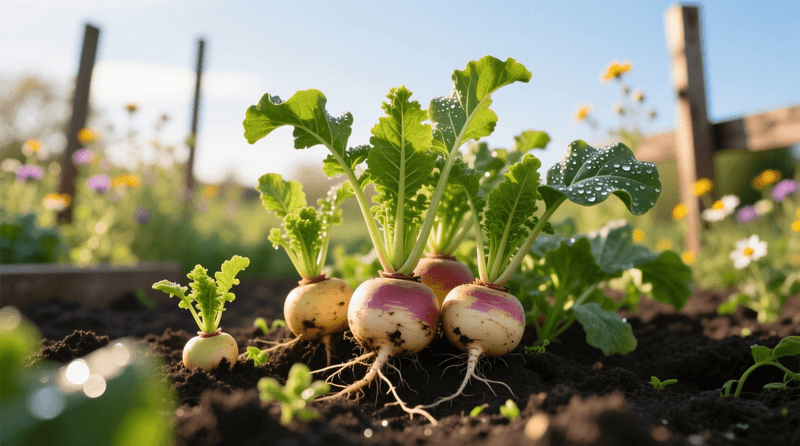
Calculating a realistic fall sowing window starts with two numbers: your local expected first killing frost date and the days-to-maturity figure printed on the seed packet. Count backward from the frost date by the number of days the variety needs, then add roughly two more weeks to account for the fact that fall days are shorter and cooler, which slows seedling growth compared to a spring planting. Virginia Cooperative Extension’s fall vegetable gardening guidance recommends exactly this backward-count method for timing cool-season crops.
The frost date alone cannot define the deadline. Soil temperature, rainfall patterns, your specific region, and the cultivar you chose all shift the window. A gardener in coastal California, the mid-Atlantic, or the upper Midwest faces very different fall timelines even if their first frost dates happen to be similar. If the window turns out to be narrow, choosing an early-maturing turnip variety, one that reaches usable size in 30 to 45 days, gives the roots a better chance to develop before growth slows sharply.
Turnips and rutabagas should not be planned on the same schedule. Virginia Tech’s root crops publication lists roughly 30 to 60 days to maturity for turnips and 80 to 100 days for rutabagas. A gardener who applies a turnip timeline to rutabagas will almost certainly end up with undersized roots, not because of anything wrong with their soil or spacing, but simply because the crop needed far more time than the schedule allowed. Check the packet and match the plan to the actual crop in the ground.
Crowding, excess nitrogen, and poor soil can create an all-tops appearance
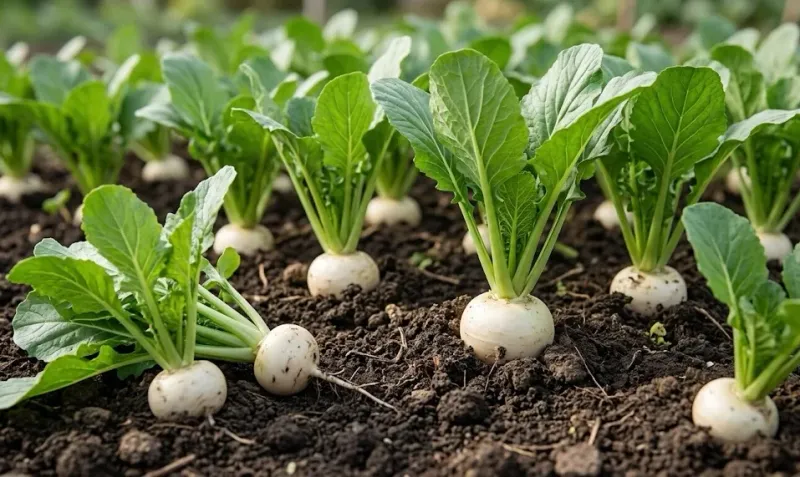
When a turnip bed looks like a thick carpet of greens with almost nothing happening underground, the instinct to blame the calendar can be strong. Before accepting that conclusion, pull a few plants and take a close look at the spacing. University of Minnesota Extension recommends thinning turnips to approximately 3 to 6 inches apart, and crowded roots simply do not have the physical room to enlarge properly. Thinning is one of the most frequently skipped steps in home vegetable gardening, and skipping it reliably produces small, misshapen roots under healthy-looking tops.
Soil fertility is worth examining from two directions. Iowa State University Extension notes that excessive nitrogen is one documented cause of lush foliage with poor root development in closely related crops like radishes, and Minnesota Extension echoes this for turnips, warning that readily available nitrogen can encourage branching rather than a clean, enlarged root. If you recently applied a high-nitrogen fertilizer or worked in large amounts of fresh compost, that could be pushing growth above ground.
Low fertility and compacted or poorly structured soil are the opposite problem but can produce a similar result. Roots that cannot push through dense soil stay small and may develop irregular shapes. Utah State University Extension recommends working beds to a good depth and ensuring adequate drainage before planting. Rather than guessing whether to add fertilizer or hold back, consider a basic soil test for home gardens, which removes the guesswork and tells you exactly what the soil needs.
Bitterness points more toward heat or uneven moisture than cool weather
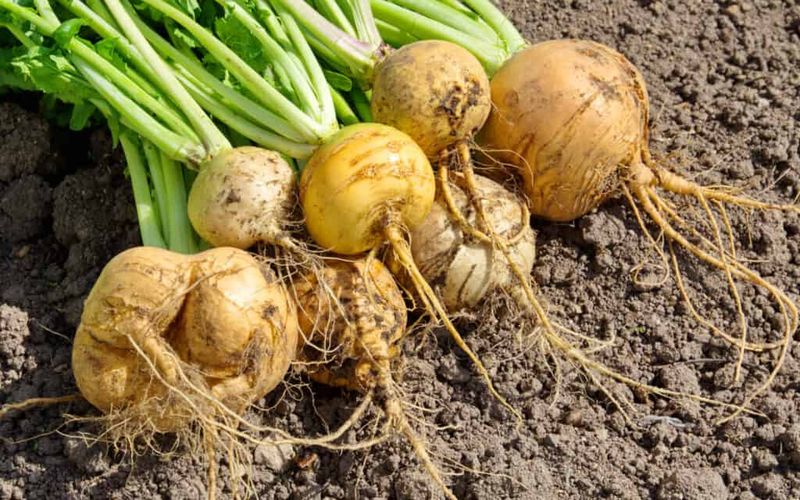
Undersized roots and bitter or sharp-flavored roots are two different symptoms, and they do not always share the same cause. A root that stayed small because the crop ran out of growing days before a hard freeze is a timing problem. A root that tastes harsh or unpleasantly strong is more likely a stress response, and the stressors most associated with off-flavor in turnips are heat and irregular moisture rather than cool fall weather.
Utah State University Extension explains that turnips prefer cool growing conditions and that temperatures above 85 degrees Fahrenheit can push plants toward poor quality. UC IPM similarly describes cool conditions as optimal for turnip production. If your fall crop went in during a late-summer heat spell and spent several weeks developing in dry, hot soil before temperatures finally dropped, the roots that formed during that period may carry bitterness regardless of whether the planting date was technically on schedule.
Moisture swings compound the problem. University of Minnesota Extension recommends about 1 inch of water per week during root enlargement, while Utah State notes that weather and soil type may push that need to 1 to 2 inches. Alternating dry spells and heavy watering can produce roots that crack, become pithy or woody, or develop a sharper flavor. University of Connecticut Extension guidance on vegetable crops through drought and heat confirms that moisture stress during development affects both texture and flavor in root crops.
Keeping soil consistently moist, not wet, is one of the most practical steps you can take to support mild-flavored roots.
Inspect abnormal roots for disease or pest damage
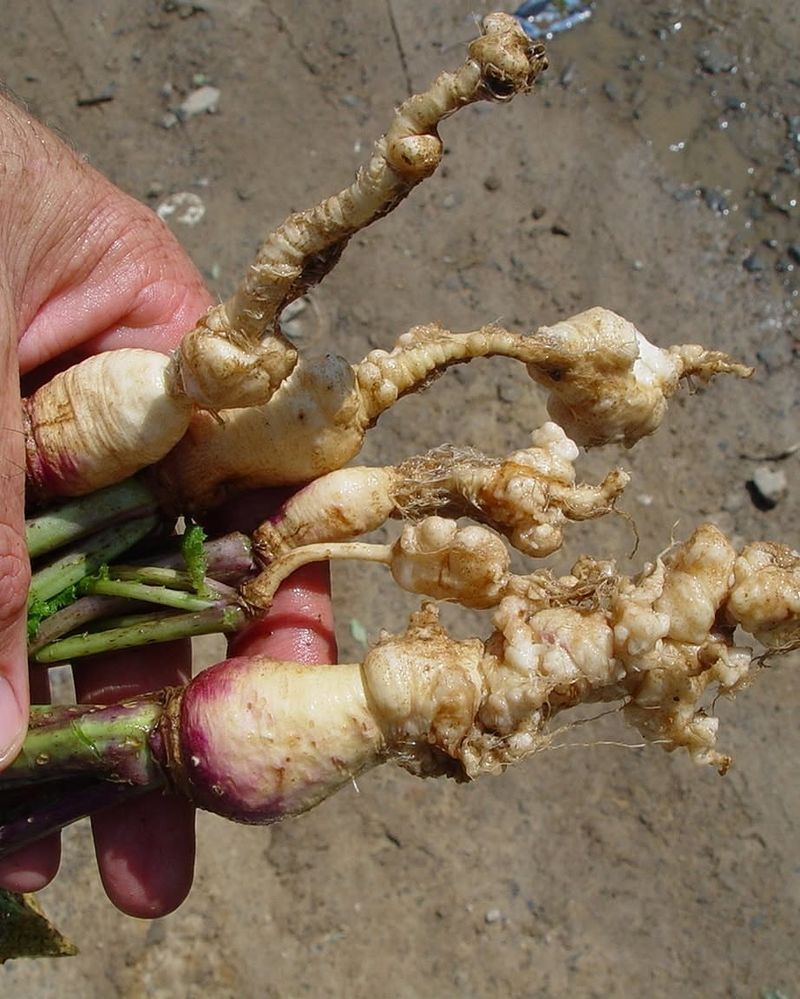
Not every leafy, undersized turnip crop is a scheduling miss. Before writing off the planting date or adjusting the fertilizer, pull a few representative plants from different spots in the bed and actually look at the roots. What you find can change the entire response plan.
Roots that are swollen in an irregular, club-shaped way, clearly distorted, or accompanied by yellowing leaves and wilting plants may be showing signs of clubroot, a soil-borne disease caused by a pathogen that attacks brassica family crops including turnips. University of Minnesota Extension’s clubroot guidance describes the characteristic galls and swelling that distinguish this disease from simple undersizing. Clubroot requires a different management approach entirely, including avoiding replanting brassicas in affected soil for several years, and reseeding earlier will not solve it.
Roots with tunnels, entry holes, or visible feeding damage inside the flesh point toward a different problem. Root maggots, the larvae of small flies in the cabbage maggot family, can feed inside developing turnip roots and stunt growth while leaving the tops relatively healthy-looking. If you see that kind of internal damage, the fix involves crop rotation, row covers at planting time, and sanitation, not an earlier sowing date. Inspecting the roots takes two minutes and can save a full season of misdirected effort.
Thin, water, and stop unnecessary fertilizer applications now
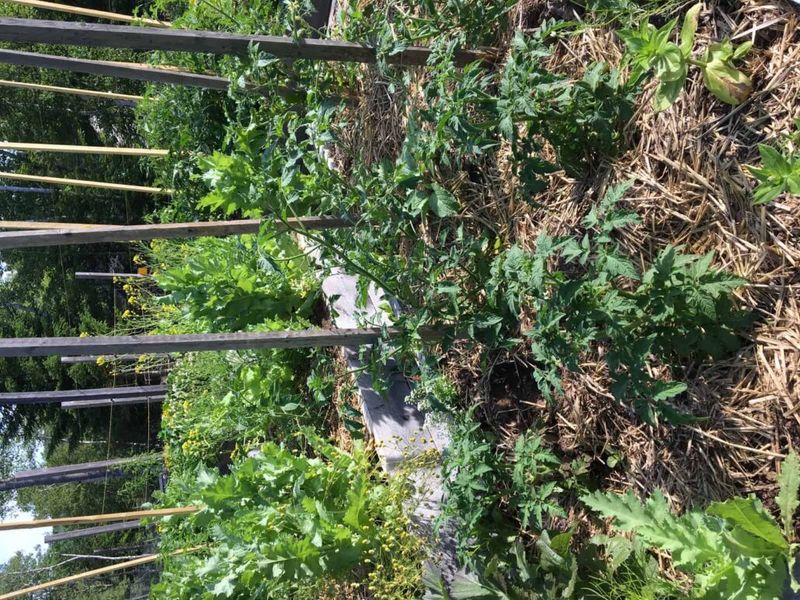
If the current crop is still in the ground and roots have not yet sized up, a few concrete steps can improve the situation before the season ends. Start with thinning. University of Minnesota Extension is clear that crowded turnips cannot develop properly, and opening up space now, even mid-season, gives remaining roots at least some room to push outward. Aim for roughly 3 to 6 inches between plants and use scissors rather than pulling if roots are already tangled.
Next, focus on water. Consistent soil moisture during root enlargement is one of the most direct supports for both size and flavor. Utah State University Extension recommends keeping moisture steady rather than swinging between dry and saturated. Check soil an inch or two below the surface before watering and aim for even, moderate moisture throughout the root zone.
Mulching between plants helps hold moisture and moderate soil temperature as nights cool.
Stop adding nitrogen unless a soil test clearly shows a deficiency. Adding more fertilizer to an already leafy crop can make the foliage-to-root imbalance worse rather than better. If you are tempted to try a boron or borax treatment because the roots taste sharp, hold off. University of Minnesota Extension notes that excess boron can be toxic to plants, and bitterness alone does not establish that boron deficiency is the cause.
A soil test is the right first step before adding any micronutrient. Some problems, including a confirmed disease or a genuinely missed cold-weather window, may not be correctable this season, but thinning and steady moisture cost nothing and carry no downside.
Harvest while the roots remain tender
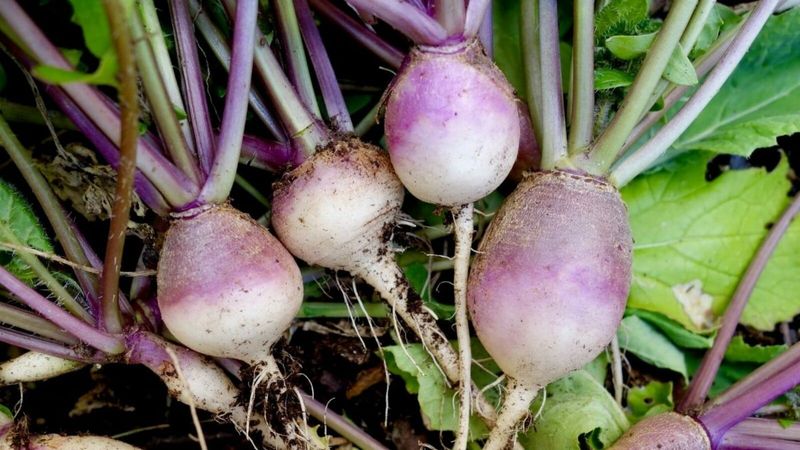
Waiting for small roots to grow larger before harvesting can backfire, especially when the crop has already been under stress. University of Minnesota Extension identifies approximately 2 to 3 inches as a normal usable root size and notes that roots left to enlarge past their prime can turn bitter, strong-flavored, woody, or fibrous. Variety matters here, since some types are bred for larger roots, but the general principle holds across most common home-garden cultivars.
UC IPM similarly cautions against leaving turnips past maturity, pointing out that quality declines once roots have peaked. If your crop spent time in heat or drought, those roots may reach their flavor peak earlier than expected and decline quickly if left in the ground. Checking a root every few days once they approach usable size gives you a much better read on when to pick than waiting for a specific calendar date.
A root that will not enlarge much further due to timing, crowding, or stress can still be worth eating while it is still firm and mild. Greens from the same plants are fully edible and often quite tender in cool fall weather, so even a crop with disappointing roots does not have to be a total loss. Harvest what is there, note the size and flavor, and let that information feed directly into planning the next sowing.
Plan the next crop backward from frost and diagnose before replanting
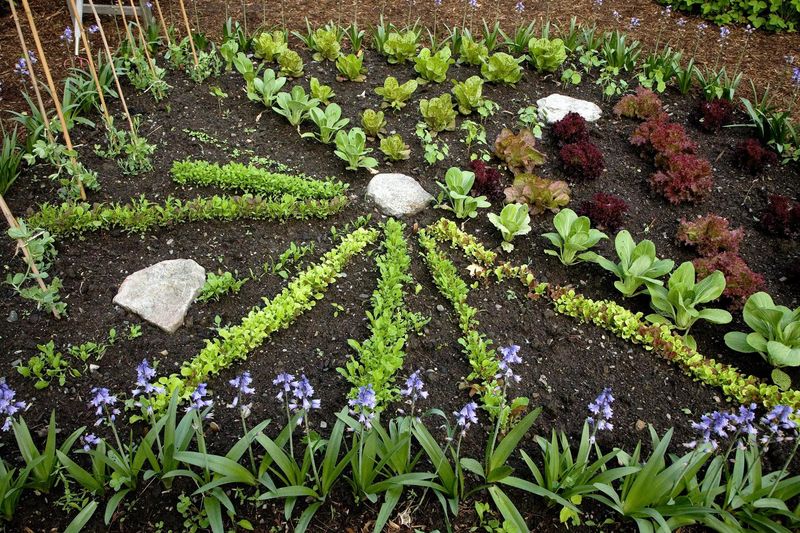
Getting the next fall turnip crop right starts with a single calculation: take your local expected first killing frost date, subtract the variety’s days-to-maturity figure, and then subtract two more weeks for slower fall growth. Virginia Cooperative Extension recommends this backward-count method as the practical foundation for fall vegetable timing. Write the target sowing date on a calendar before the season sneaks up again.
Prepare the bed before you sow. Loose, well-draining soil, adequate spacing from day one, and consistent moisture from germination through harvest address most of the causes described throughout this article. University of Minnesota Extension and Utah State University Extension both emphasize that these fundamentals support root development more reliably than any single fix applied mid-season.
If this season’s roots were also bitter, misshapen, or showed tunneling or swelling, run a soil test and inspect the bed before replanting brassicas in the same spot. Timing explains a crop that ran out of growing days, but bitter, lush-topped turnips with abnormal roots deserve a broader look before you sow again. A good diagnosis now is the most useful seed you can plant for next fall.