
If Your Fall Beets Grow Tall Leafy Greens But Only Stringy Marble-Sized Roots, Crowded Seedlings May Be the Reason
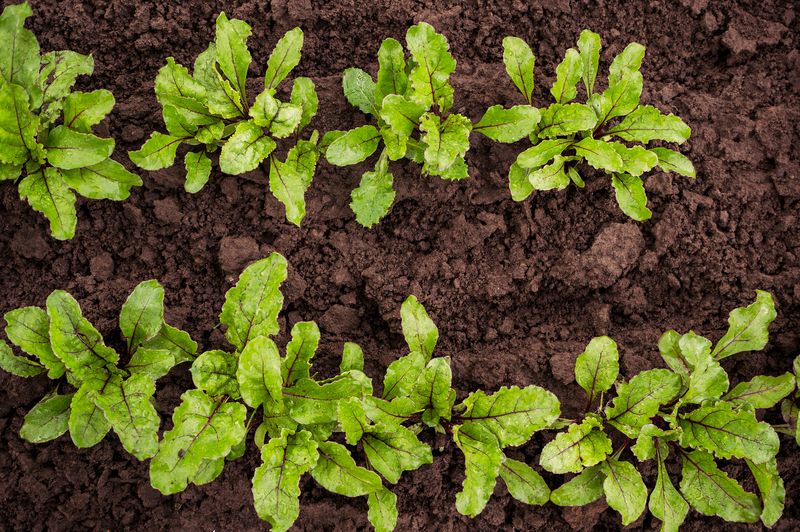
You planted beets expecting a satisfying harvest of round, earthy roots, but what you got instead is a row of impressive green leaves sitting above roots barely bigger than a marble. That maddening mismatch is one of the most common frustrations in the fall vegetable garden, and the fix is often simpler than you think. Overcrowded seedlings are a leading reason this happens, and the good news is that thinning your row is something you can do right now. Read on to learn why crowding works against beet roots, how to thin correctly, and what else to check so you can give your fall crop the best chance it has left.
Crowding is the first problem to investigate—not a proven diagnosis
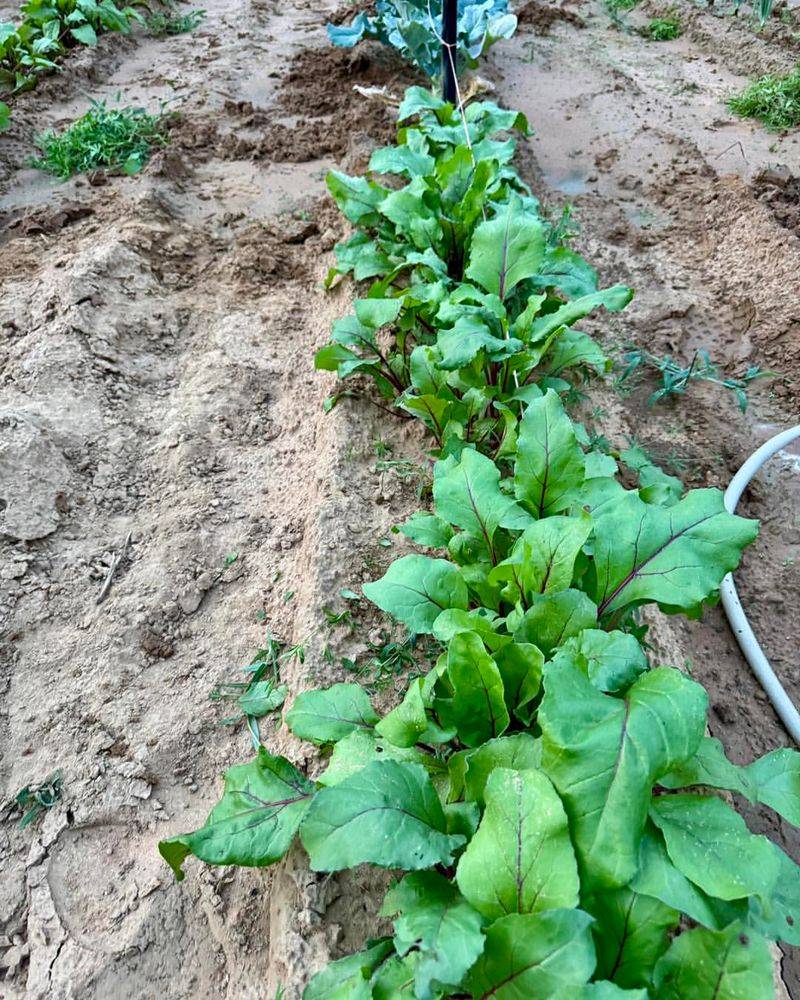
You walk out to your fall beet bed expecting to pull firm, round roots, and instead you find a tangle of gorgeous leafy greens covering a row of marble-sized, stringy disappointments. Before you write off the whole planting, check one thing first: how much space each seedling actually has.
Illinois Extension’s beet growing guidance identifies inadequate thinning and overcrowding as the most frequent reason beets produce vigorous tops but fail to develop usable roots. Iowa State and Utah State Extension both describe thinning as essential for root development and good root size. That is a strong consensus, and it makes crowding the first thing worth investigating when you see this symptom.
That said, the symptom alone does not prove crowding is the cause, and it certainly does not mean the plants are suffering from a single nutrient deficiency. Crowded plants may compete for physical growing room, light, water, and nutrients all at once, which is a different and broader problem than a simple shortage of one element.
Other possibilities deserve a look too. Excess nitrogen in the soil can push leafy growth while limiting root development. Inconsistent watering, hot weather during the growing period, compacted soil, low sunlight, root damage, or disease can all contribute to small or stringy roots. And sometimes the roots are simply not mature yet, especially in a fall planting where cool temperatures slow everything down.
The practical response is to start with what is most fixable: inspect the row, thin it correctly if needed, then work through moisture, weeds, nutrition, soil health, and maturity date. Crowding is the leading candidate, but treat it as the first item on a diagnostic checklist rather than a guaranteed verdict.
A single beet seedball may produce several seedlings
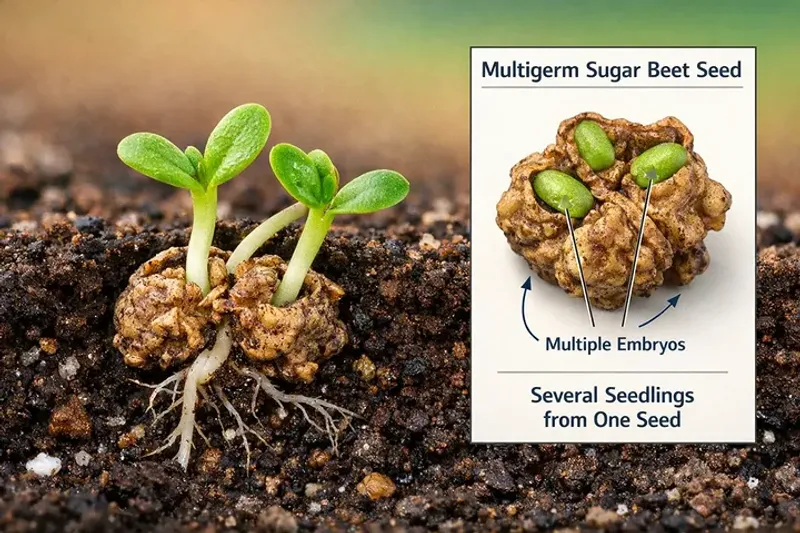
Most gardeners assume they planted one seed and got one plant. With beets, that assumption is often wrong, and understanding why changes how you manage the row from the very beginning.
Many traditional beet varieties produce what is technically a multigerm fruit, not a true single seed. Each dried seedball is actually a cluster of fused plant tissue containing several embryos. University of Maryland Extension’s beet growing resource explains that because each beet seed may contain multiple seeds, several seedlings can emerge from one planted fruit. That is why you often see a tight little clump of sprouts where you dropped a single seedball.
It is worth noting that not every beet seed behaves this way. Monogerm or precision-separated seed has been bred or processed to produce a single seedling per planted seed, and some gardeners seek it out specifically to reduce thinning work. But unless your seed packet specifically says monogerm, you should expect clusters and plan accordingly.
Now picture several seedlings sharing a space the size of a fingertip. Each one sends roots outward looking for room, and each one pushes leaves upward competing for light. Utah State University Extension’s beet guide notes that plants in crowded conditions compete for space, light, water, and nutrients, which means no single plant in a tight cluster has a realistic path to enlarging its root fully.
The foliage can look healthy and even impressive in a crowded row because leaves are relatively efficient at capturing whatever light reaches them. But abundant greens above ground are not evidence that the root below is developing well. A leafy top and a stunted root can coexist easily when plants are packed together, and the multigerm nature of most beet seed is exactly how that situation starts.
Thin young beet seedlings before their roots become crowded
Timing matters more with beet thinning than most gardeners realize. Waiting until the roots look congested underground means the competition has already been happening for weeks, and the plants left behind have less to recover with.
The practical window to start thinning is when seedlings have grown their first one or two pairs of true leaves, or when the plants stand roughly 2 to 3 inches tall. Iowa State Extension’s beet troubleshooting guidance and Illinois Extension both support early thinning rather than waiting. Extension recommendations vary slightly in exact timing, but the consistent message is to act early rather than late.
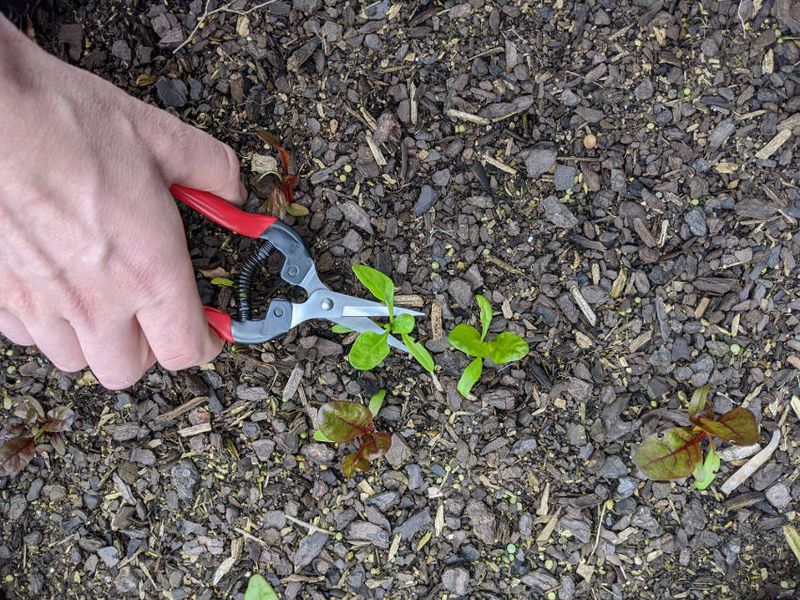
When you are ready to thin, look at each cluster and identify the healthiest, most upright seedling. That is the one you keep. Neighbors that are smaller, leaning, yellowing, or simply too close get removed. You have two reasonable options for removal: snip the unwanted seedlings at soil level with small scissors or pruning snips, or pull them carefully by hand.
Snipping at soil level is often the lower-disturbance choice because it leaves the surrounding soil and the keeper’s roots undisturbed. University of Maryland Extension notes that careful removal is important so the remaining plant is not uprooted or jostled in the process. If you pull rather than snip, do it slowly and press the soil back down around the keeper afterward.
Whatever method you choose, the goal is one remaining plant per position. One plant, not two, not three, and not “the two that look similar in size.” Even a second seedling that looks healthy will continue competing with the first one for the space both roots need.
Do not let the removed seedlings go to waste. UC Cooperative Extension Marin Master Gardeners and other extension sources confirm that beet thinnings are edible greens with a mild, earthy flavor. Rinse them and add them to a salad, saute them like spinach, or toss them into a stir-fry. Thinning the row becomes a lot easier to commit to when you know the pulled seedlings are going onto your dinner plate rather than into the compost.
Leave about three to four inches for full-size table beets
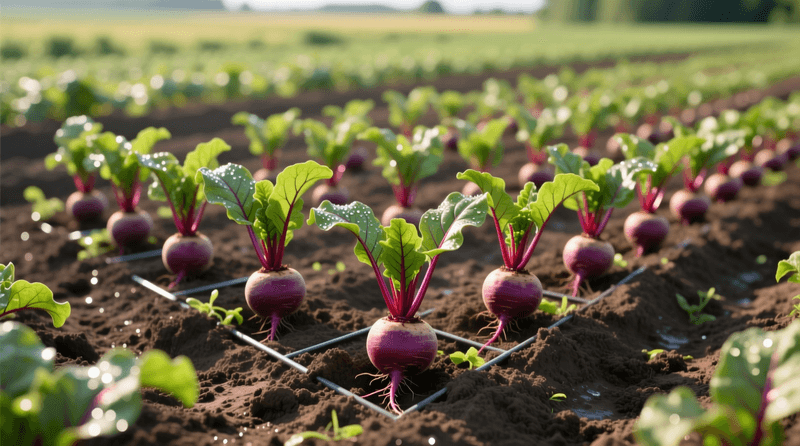
Knowing you need to thin is one thing. Knowing how far apart to leave the survivors is what turns that knowledge into a usable harvest.
For ordinary round table beets, a practical final spacing target is roughly 3 to 4 inches between plants. Utah State University Extension and Iowa State Extension both recommend leaving 3 to 4 inches between surviving plants, with Iowa State specifically advising that spacing. University of Maryland Extension supports a similar range for standard varieties grown in home gardens.
That target is not universal, though. Closer spacing of around 1 to 2 inches may work fine when you are intentionally growing baby beets for an early harvest or doing a first pass of thinning before a second, final thinning later. Elongated varieties like Cylindra or Forono may tolerate somewhat different spacing because they expand downward rather than outward. Check your seed packet for the cultivar’s specific recommendations if you are growing something other than a standard round table beet.
When you walk the row and measure, resist the urge to save seedlings that are clearly too close together just because they look healthy. Two vigorous seedlings planted two inches apart will compete just as much as two weak ones. The goal is to select the single best plant at each position and give it room, not to preserve as many seedlings as possible.
Spacing gives each surviving plant a realistic opportunity to enlarge its root, but it is not a promise. A beet growing in good space still needs consistent moisture, weed-free soil, adequate nutrition, and enough remaining days to mature. Spacing removes one major obstacle; the others still need attention.
Late thinning can still improve a fall planting
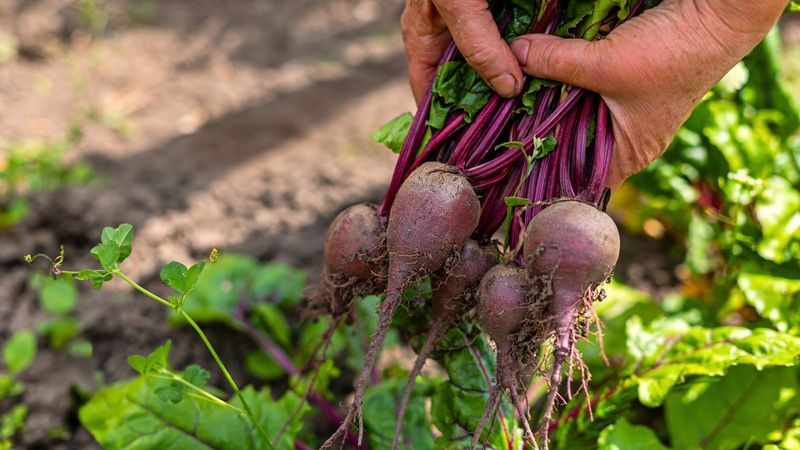
Missing the ideal thinning window is frustrating, but it does not mean the row is finished. If your beet seedlings are already crowded and the roots are still small, the most useful thing you can do right now is thin them anyway.
Iowa State Extension specifically recommends removing smaller, weaker seedlings and leaving 3 to 4 inches between survivors, even when the crop is already underway. Late thinning reduces ongoing competition for space, light, water, and nutrients, which gives the remaining plants better conditions going forward than they had before.
Set realistic expectations before you start. Thinning a crowded row now can improve the growing environment, but it cannot undo heat damage from weeks ago, reverse the effects of prolonged drought, fix compacted soil, or add days to the calendar. The plants that remain will have more room, but they are also older and have been under more stress than plants thinned at the right time.
Fall beets add an important wrinkle to this calculation. Root crops often continue sizing as temperatures cool in autumn, and cool weather actually tends to improve beet flavor. Before you decide the row has failed, check the seed packet’s listed days to maturity and compare it to your planting date. If the math shows you still have several weeks of growing time ahead, the roots may still have a reasonable chance to develop further.
Fall scheduling varies by location. University of Minnesota Extension’s midsummer planting guide and Iowa State’s fall planting resource both suggest counting backward from the local average first frost date using the variety’s days to maturity when planning fall crops. Beets tolerate cool weather and can handle light frost, but local conditions, your specific variety, and remaining growing time all determine how much longer the crop can stay productive. University of New Hampshire Extension’s fall vegetable gardening guide reinforces that beets are among the hardier fall crops, making late-season thinning worth attempting rather than abandoning the bed.
Keep moisture even and weeds under control
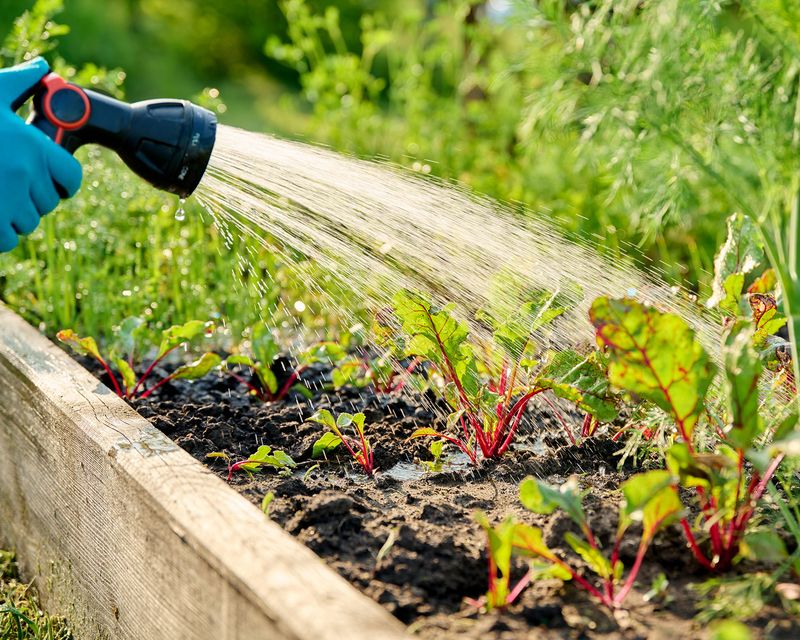
Thinning clears out beet-to-beet competition, but the plants that remain can still struggle if the soil dries out unevenly or weeds move in to fill the space. Addressing both issues after thinning is what keeps the improvement from stalling.
Beet roots enlarge most during the latter portion of their growth cycle, and consistent soil moisture during that period makes a measurable difference. Oregon State University Extension’s beet and chard guide and Utah State University Extension both note that water stress can slow development and reduce root quality. Irregular watering, where the soil swings between very dry and very wet, can lead to cracking, woody texture, or sluggish root sizing. Illinois Extension’s root vegetable guidance supports keeping moisture steady rather than letting the bed go dry between waterings.
Aim to keep the soil evenly moist a few inches down without letting it become waterlogged. A finger-test works well: press into the soil near a plant, and if it feels dry an inch or two below the surface, it is time to water. Mulching around the plants after thinning helps hold moisture, moderate soil temperature, and reduce how often you need to water.
Weed control matters just as much, especially while the seedlings are still young and small. Illinois Extension’s beet growing page notes that keeping the planting weed-free is important because weeds add another layer of competition on top of any crowding that remains. A row that looks tidy and open after thinning can still have its improvement undercut if fast-growing weeds reclaim the cleared space within a week or two. Pull weeds by hand close to the beet plants to avoid disturbing shallow roots, and cultivate carefully between rows if needed.
Do not reach for fertilizer just because the leaves look lush
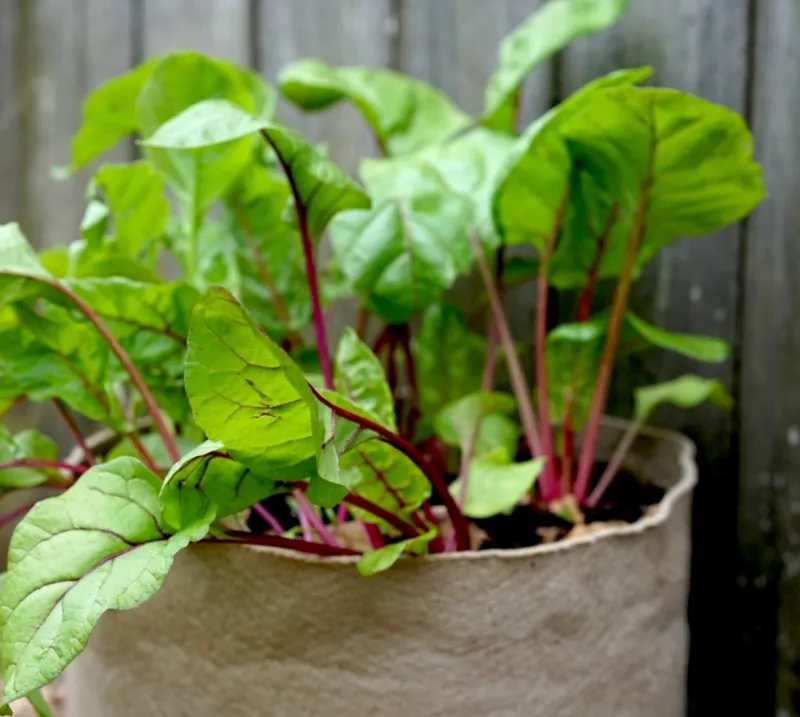
Lush beet greens can trick you into thinking the plants are thriving and just need a boost to finish the job. Reaching for fertilizer at that point may actually make the problem worse.
Excessive nitrogen in the soil is a documented contributor to the very symptom you are trying to fix: disproportionate top growth paired with poor root development. UC Cooperative Extension Sacramento County’s beet guidance and Oregon State University Extension both note that excess nitrogen can push leafy growth at the expense of root sizing. That does not mean nitrogen is harmful across the board. Beets need adequate nutrition to grow well, and a genuinely nitrogen-poor soil can limit overall plant health.
The problem is excess, not the nutrient itself.
Utah State University Extension recommends basing fertilizer decisions on a soil test rather than on the appearance of the leaves. A soil test tells you what is actually present in your soil and what, if anything, needs adjusting. Adding fertilizer without that information risks making an imbalance worse rather than correcting it.
A separate issue worth mentioning is boron deficiency, which some gardeners have heard can affect beet roots. Small or stringy roots alone are not enough to diagnose a boron problem. UMass Amherst Extension’s boron deficiency fact sheet explains that boron deficiency typically shows up as internal black spots, distorted growing points, or brittleness, not simply as small roots. More importantly, the margin between adequate and toxic boron levels is narrow, and overapplying boron can injure or kill plants.
Treat it only if a soil test and local extension guidance confirm a deficiency.
The same caution applies to phosphorus, potassium, and bone meal. None of these should be added as a general root-swelling remedy. If your soil has a confirmed deficiency, address it. If it does not, adding amendments without a diagnosis is guesswork that carries real risk of harm.
Use the symptom as a prompt to investigate other causes
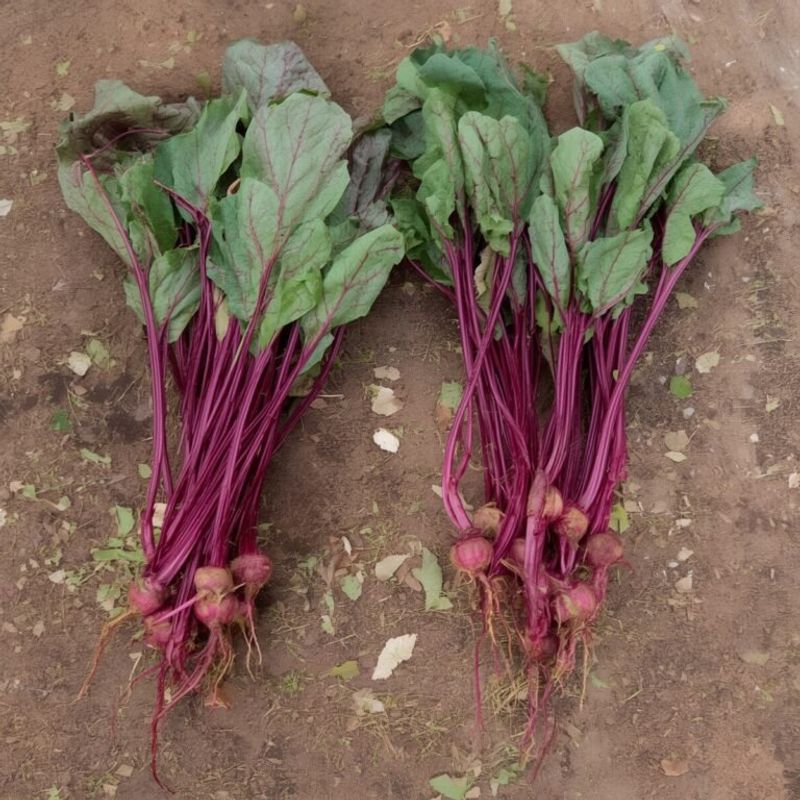
Crowding is a strong first candidate when fall beets produce tall greens but undersized roots, and thinning is a worthwhile response. Still, it is one explanation among several, and the symptom can have more than one contributor at a time.
Before writing off the row, run through the other possibilities. Check the planting date and the variety’s days to maturity. University of Minnesota Extension notes that fall crops planted too late relative to the first frost may simply not have enough time to size up fully. A marble-sized root is not automatically a failure; it may be an immature root that still has growing time ahead of it.
Think through the season’s weather. Hot temperatures during the main growing period can limit root development even in well-spaced plants. Inconsistent watering leaves a similar fingerprint. Oregon State University Extension and Utah State University Extension both note that stringy or fibrous roots can result from stress, immaturity, or roots left in the ground too long past maturity.
Compacted or poorly drained soil, low sunlight, root damage from cultivating too close, and disease round out the list of things worth checking.
Illinois Extension reinforces that healthy foliage supports photosynthesis and should not be aggressively removed to force root growth. Harvesting a few outer leaves is reasonable, but stripping the plant of most of its leaves removes the energy source the root depends on.
The practical action plan comes down to a short list: thin each cluster to one plant at roughly 3 to 4 inches, maintain even soil moisture, stay ahead of weeds, skip untested amendments, and give the fall crop enough calendar time before deciding the row is a loss. A crowded beet row with room still left in the season is a problem worth solving, not a harvest already gone.