
If Your Fall Beets Grow Lush Red Tops But Only Marble-Sized Roots, Too Much Nitrogen Is Feeding The Wrong End
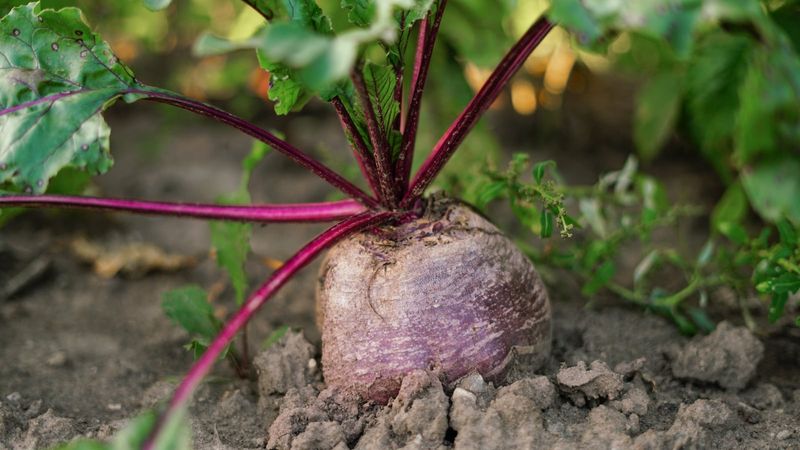
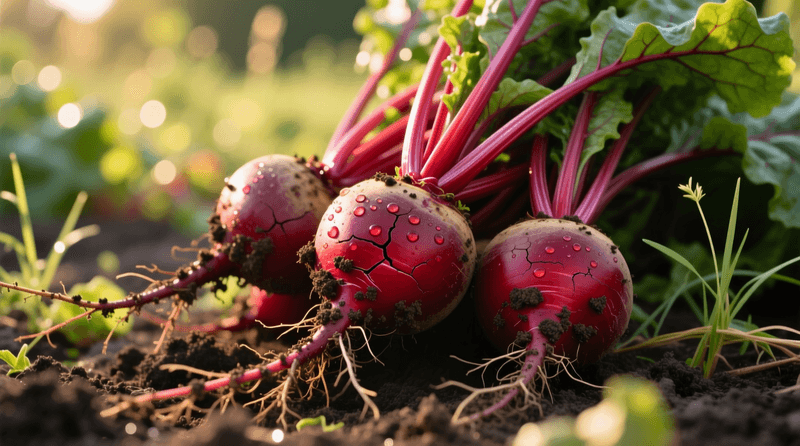
Walking out to your fall garden and pulling up a beet only to find a marble-sized nub under all those gorgeous red leaves is genuinely frustrating. Before you blame the fertilizer bag, though, there are several reasons this can happen, and nitrogen excess is just one of them. Overcrowding, uneven watering, compacted soil, and even simple crop age can all produce the same leafy-tops-but-no-roots picture. Knowing which cause actually fits your bed makes the difference between a fix that works and one that wastes your time.
Lush tops and small roots do not identify the cause
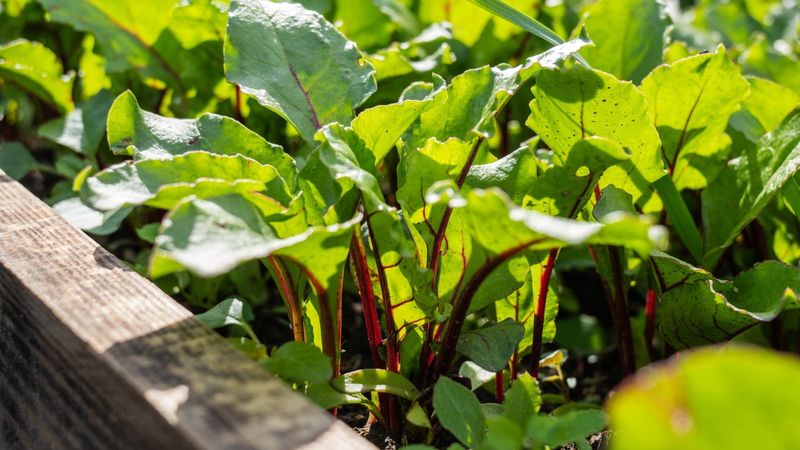
Abundant foliage and undersized roots is a symptom pattern, not a verdict. Several different growing problems can produce exactly that picture, so a diagnosis requires more than a glance at the leaves. Reaching for the fertilizer bag as a first response can make some of those problems worse, not better.
Overcrowding sits at the top of the suspect list for most home gardeners. Illinois Extension beet guidance identifies overcrowding as the most frequent cause of poor root development, and the reason is built into the seed itself. What looks like one beet seed is usually a dried fruit cluster that contains two to four seeds, meaning every sowing point can push up a small crowd of seedlings. Those seedlings compete for the same pocket of soil, water, and root space, so the leaves grow upward while the roots barely have room to expand sideways.
University of Wisconsin Extension community garden guidance echoes the same point, noting that beets sown too close together may produce greens without harvestable roots. Beyond crowding, excessive or late nitrogen, compacted soil, inconsistent moisture, heat stress, low light, physical root injury, and not enough days in the ground can all contribute to the same leafy-but-rootless result.
Root size also needs context. Utah State University Extension notes that beet roots enlarge rapidly when given adequate space and moisture, which means a young planting with otherwise healthy conditions may simply need more time. Gardeners growing intentional baby beets are harvesting at exactly this stage on purpose. Before drawing any conclusion, check how long the plants have been in the ground, how densely they are spaced, and whether the basic growing conditions are sound.
When nitrogen can favor foliage over root quality
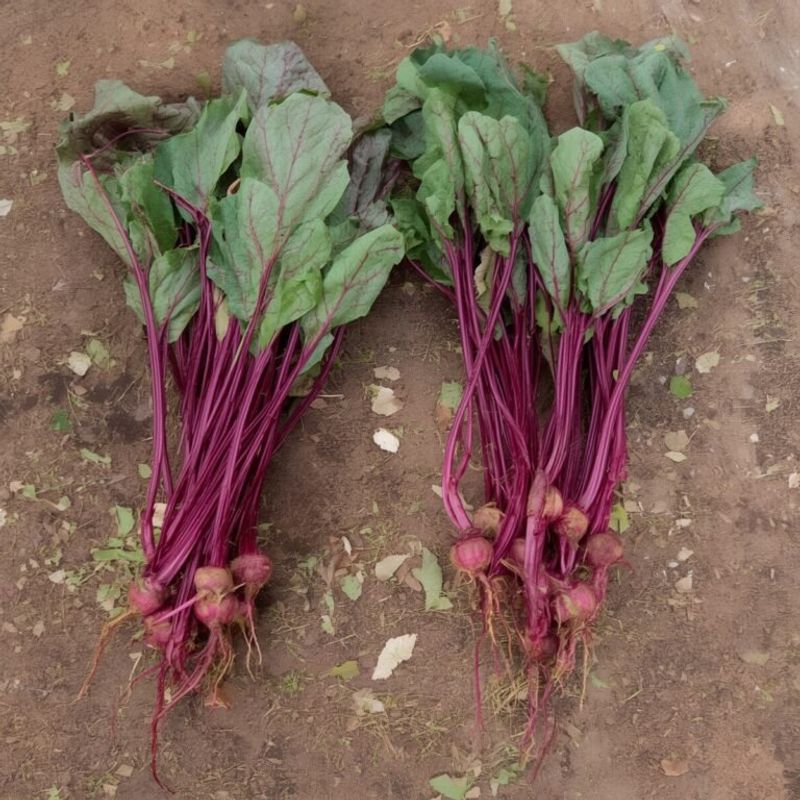
Nitrogen is not the enemy of beet roots, but the timing and amount genuinely matter. The nutrient drives cell division and vegetative growth throughout the plant, which means it supports both the leafy tops and the swelling root. Up to an appropriate level, more nitrogen typically means more of both.
A beetroot field study on nitrogen supply and growth found that increasing nitrogen generally raised both shoot and root yields, but the benefit leveled off at higher rates rather than causing roots to fail outright. That is a meaningful distinction. The research supports avoiding excess nitrogen, not eliminating nitrogen from beet production entirely.
Where the problem sharpens is with late-season or high-rate applications. University of California beet growing guidance warns that nitrogen feeding late in the crop cycle can retard root development, reduce sugar content, and contribute to hairy, lower-quality roots. When the plant receives a surge of nitrogen after the root should already be sizing up, the energy tends to stay in the shoots rather than transferring downward.
Fresh manure carries a similar risk. Illinois Extension fall planting guidance specifically warns that fresh manure and high rates of nitrogen fertilizer can produce excessive leafy growth and small, irregular roots in a fall beet bed. That warning applies to well-meaning gardeners who amend heavily before sowing, not just to those who overfeed mid-season.
The practical takeaway is proportional, not absolute. Nitrogen has a real role in beet production, and a plant that received a modest, early application is not automatically on the wrong path. The concern is excess or late feeding, especially from concentrated or fresh sources, applied after the root has started to form.
Check spacing before changing the fertilizer
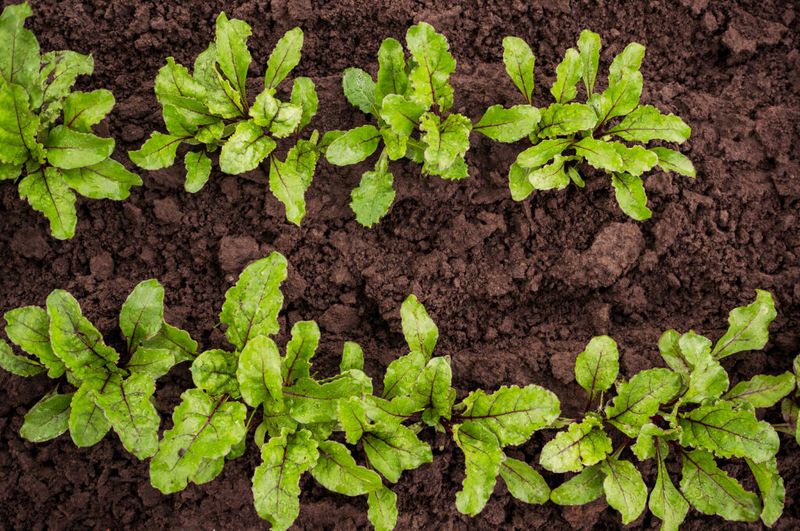
Spacing is the first physical check to make before touching the fertilizer or the watering schedule. Crowded beets produce beautiful canopies because the leaves can reach upward freely, but the roots run out of lateral room almost immediately and stay small as a result. Fixing that condition costs nothing and can turn a disappointing bed around within the remaining weeks of the season.
The cluster issue is worth understanding because it surprises many first-time beet growers. Each rough, corky “seed” sold in a packet is actually a dried fruit that typically contains two to four true seeds. Plant one, and two, three, or four seedlings often emerge from the same spot. Illinois Extension recommends thinning beets to about three inches apart to give each root room to develop, and notes that the thinnings are edible greens worth saving for the kitchen.
Texas A&M AgriLife Extension beet guidance supports spacing in the one-to-three-inch range depending on the target root size, with closer spacing producing smaller roots suitable for pickling and wider spacing allowing larger table beets to develop. The key point is that thinning is almost always necessary, even when the seedbed looks reasonably open at first glance, because the cluster habit means competition starts underground before it is visible above the soil.
Wisconsin Extension reinforces that beets sown too close together are likely to produce greens without harvestable roots, which is precisely the symptom this article addresses. Pull the weakest seedlings in each cluster now, leaving the most vigorous one with clear space on all sides, and give the remaining plants a few more weeks before drawing conclusions about root size.
Inspect moisture, soil structure, and light
Once spacing is confirmed, three growing conditions deserve a focused look: how evenly the soil stays moist, how loose and workable the root zone is, and how much direct sunlight the bed receives each day. None of these is a fertilizer question, but all of them can hold roots back just as effectively as a nitrogen problem.
Moisture consistency matters more than most gardeners expect. Utah State University Extension notes that moisture fluctuations can slow leaf development, lower yields, and contribute to root cracking. A beet bed that dries out between waterings and then receives a heavy soak is cycling through stress and relief rather than supporting steady root expansion. Aim for evenly moist soil throughout the root zone, not wet and not dry, and consider mulching the surface to reduce evaporation during warm fall afternoons.
Illinois Extension also recommends uniformly moist soil for best beet performance, connecting consistent moisture to both leaf quality and root development. That aligns with University of Minnesota Extension irrigation guidance, which emphasizes steady soil moisture for small-seeded vegetable crops that are sensitive to swings in water availability.
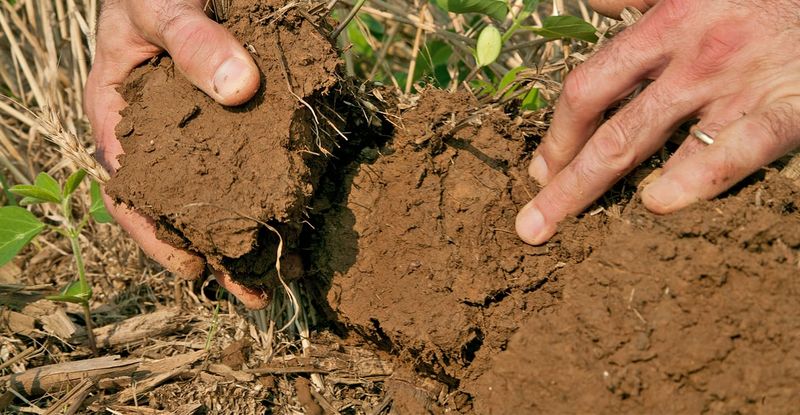
Soil structure is the second checkpoint. Beet roots push outward as they swell, and they need a loose, well-prepared zone to do it. Compacted or crusted soil physically resists root expansion. Texas A&M AgriLife Extension recommends working the soil to a depth that allows roots to develop without obstruction, and notes that heavy or poorly drained soils can produce misshapen or stunted roots even when other conditions are fine.
Light rounds out the checklist. Beet roots form through photosynthesis happening in those leafy tops, so a bed that receives fewer than six hours of direct sun per day will struggle to build root mass even if spacing, moisture, and fertility are ideal. Shade from nearby structures, trellises, or taller plants is worth checking before the season ends.
Give a young fall crop time to size up
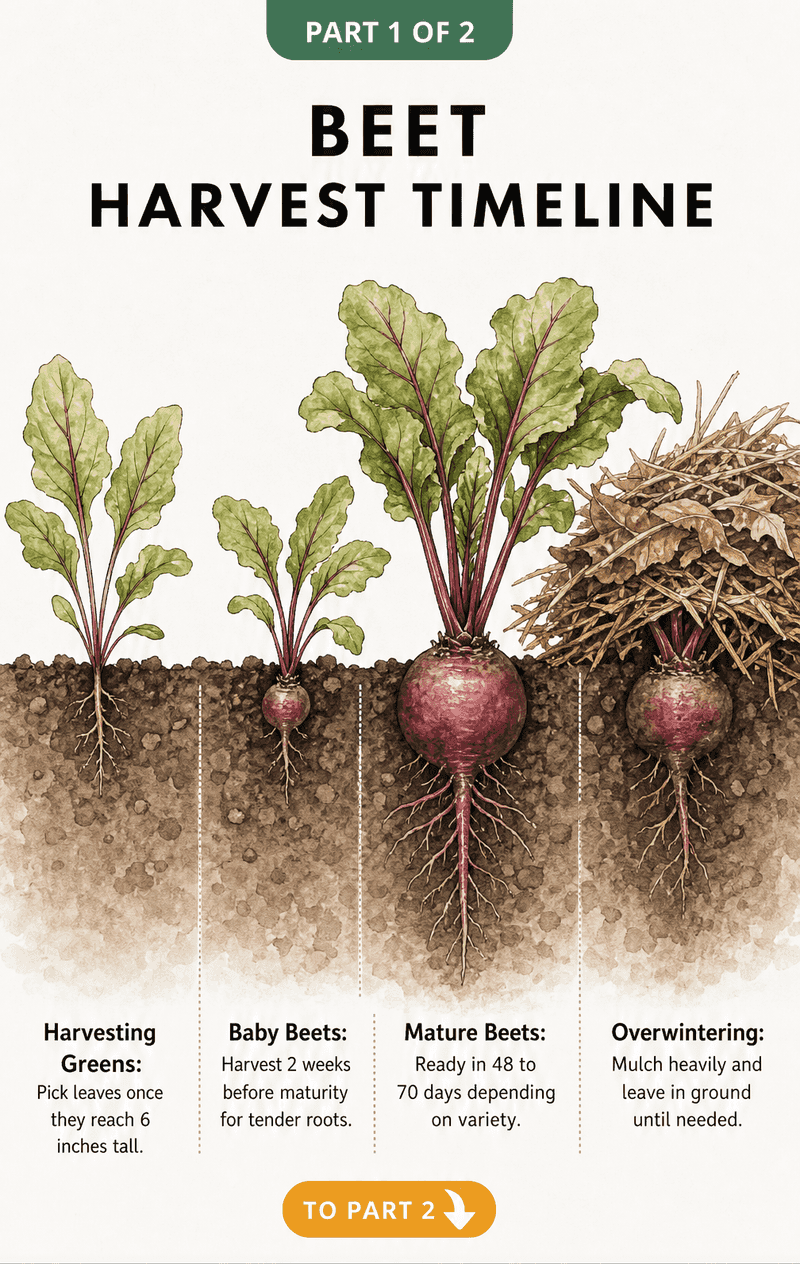
Root size always needs to be read against the calendar. A beet planted six weeks ago and a beet planted twelve weeks ago can look similar above the soil line while being in completely different stages of root development underground. Pulling plants early or assuming something is wrong simply because the roots are small can cause a gardener to abandon a healthy crop.
Fall beets are cool-season crops that actually perform well as temperatures drop, but they still need enough time in the ground to reach harvest size before hard freezes shut down growth. Planting calendars from Utah State University Extension list roughly 50 to 63 days to harvest as a planning range for fall beets, though the actual number shifts with variety, local weather, and whether the gardener wants baby beets or full-sized roots. That range is a guideline, not a promise.
Illinois Extension notes that beets can be harvested at small sizes and that roots enlarge rapidly when given adequate moisture and space. That rapid enlargement tends to happen in the final weeks of the growing window, which means a bed that looks unimpressive at week five may catch up noticeably by week eight or nine if conditions are right.
The practical question to ask is straightforward: count the days since sowing, check the variety’s listed days to maturity, and decide whether the crop still has a realistic window. If the spacing is good, the soil is loose and moist, and the plant is still inside its growing window, the most productive choice is usually to wait rather than to intervene. Small roots on a young, well-managed fall planting are often not a problem at all.
Use fertilizer history and testing before adding nutrients
After checking spacing, crop age, moisture, soil structure, and light, the fertilizer question finally earns its place in the diagnostic order. The right response at this stage is not to add more nutrients but to review what the soil has already received and to gather information before making any changes.
Healthy-looking tops are not a signal to apply more nitrogen. Colorado State University Extension vegetable nitrogen guidance notes that a high soil-nitrogen result can mean additional nitrogen is unnecessary, and that overapplication can cause poor vegetable quality and reduced yields rather than improvement. If the bed was amended with compost, fertilizer, or manure before sowing, it may already carry more nitrogen than the crop needs.
A soil test is the most reliable way to find out what is actually in the ground before adding anything. The same Colorado State guidance recommends basing phosphorus, potassium, and other nutrients on test results rather than assumption. Applying phosphorus or potassium as a “root-building” rescue without test support is unlikely to correct crowding, drought, or compaction, and may do nothing at all.
Boron deserves a specific note because it circulates in gardening advice as a root-crop remedy. Beets do need boron, and a genuine deficiency can cause internal black spots, root damage, and distorted new leaves, as described by University of Minnesota Extension beet root discoloration guidance. However, University of Minnesota Extension boron guidance is clear that excess boron injures crops, and the margin between deficiency and toxicity is narrow. Borax or boron products should not be applied casually or without soil-test support, particularly on sandy or low-organic-matter soil where the risk of over-application is higher.
Fresh manure should be ruled out entirely as a quick fix. Illinois Extension fall garden guidance specifically links fresh manure and high-rate nitrogen fertilizer to excessive foliage and small, irregular beet roots. The same warning applies to Utah State University Extension beet guidance, which recommends avoiding heavy nitrogen sources for this crop. Pause unnecessary feeding, review what the bed has already received, and contact a local Extension office if a soil test result is unclear.
Aim for balanced growth, not leaf removal
A clear order of checks keeps the diagnostic process from becoming overwhelming. Start with spacing, since crowding is the most common culprit and the easiest to confirm. Then look at days since sowing and whether the crop still has time to size up. After that, assess moisture consistency, soil looseness, and daily light.
Fertilizer history comes last, and any changes to nutrient inputs should follow a soil test or local Extension recommendation rather than a visual guess.
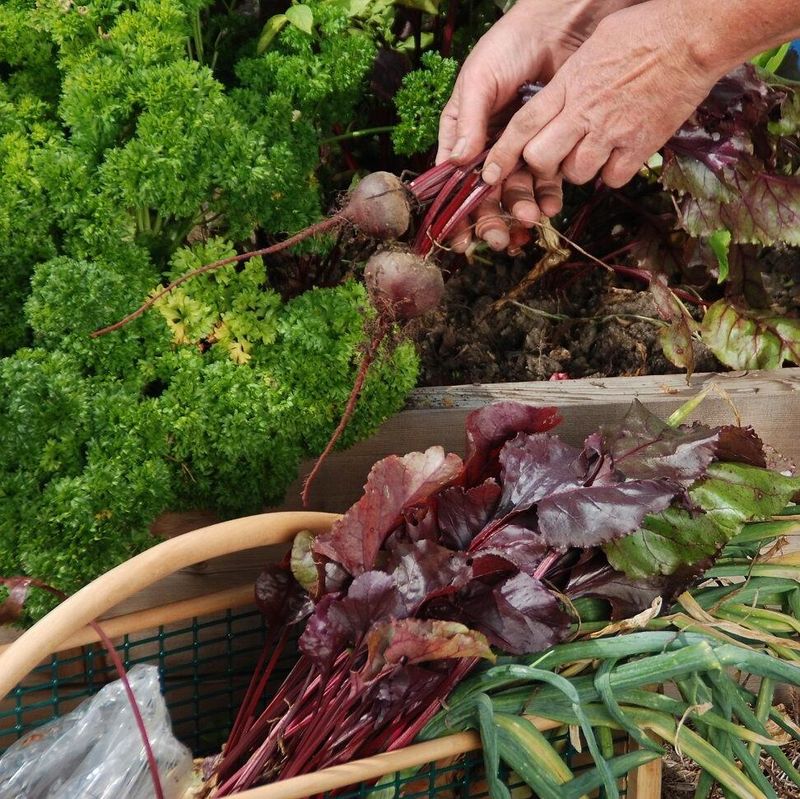
Beet leaves are the plant’s photosynthetic engine. Removing a few outer leaves to sample the greens is a normal part of growing beets, and Illinois Extension notes that the tops are edible and worth harvesting. Severely cutting back the foliage as a strategy to force root growth is a different matter entirely and is not supported by evidence. The roots swell because the leaves are feeding them; strip the leaves and the root loses its energy source.
Colorado State University Extension reinforces that overapplied nitrogen can reduce vegetable quality, and the beetroot nitrogen study shows that higher rates produce diminishing returns on root yield rather than a clean improvement. Both sources support a measured approach rather than aggressive intervention in either direction.
The title of this article points at a real phenomenon, but the fuller picture is this: excessive or late nitrogen can contribute to small or poor-quality beet roots, yet healthy-looking tops alone cannot tell you why the roots are small. Fix the condition the evidence actually supports, and let a crop with time and sound growing conditions do its job.