
If Your Lavender Grows Woody And Sparse Instead Of Bushy, One Fall Pruning Mistake Is Hollowing It Out
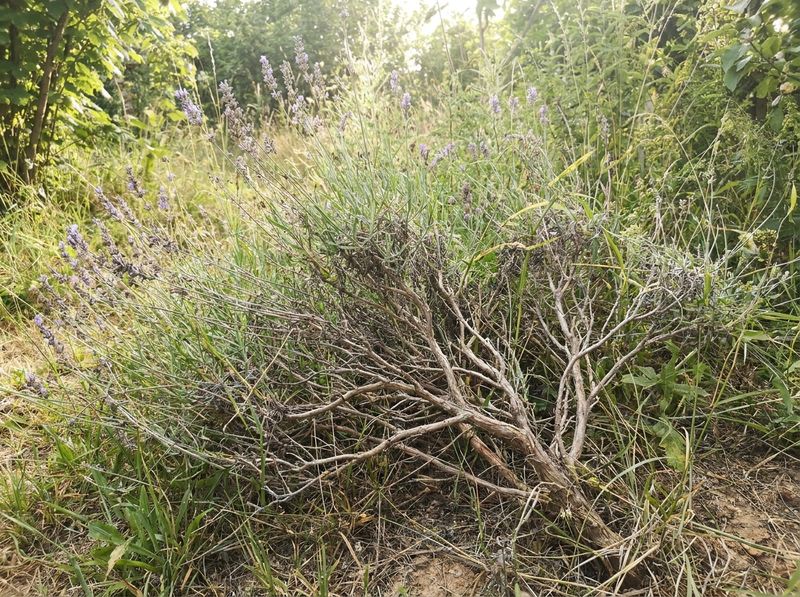
Lavender is one of those plants that looks effortlessly beautiful in photos but can turn into a leggy, gap-riddled shrub faster than most gardeners expect. When that happens, the first instinct is to blame a missed fall pruning, but the real picture is more complicated. Cutting too far into old wood at the wrong time of year can leave lasting damage, yet age, poor drainage, and the wrong cultivar can produce the same hollow look without any pruning mistake at all. Knowing the difference is what separates a plant you can save from one that needs to be replaced.
A hollow center can reflect pruning, aging, or growing stress
Walk up to a lavender plant that has turned into a ring of thin stems around a bare, woody center and the easy assumption is that someone skipped a fall trim. That assumption gets the diagnosis only partly right. Repeated pruning that cuts into old leafless wood, skipping annual shaping while the plant is young, and letting the woody base grow unchecked season after season can all push lavender toward that open, gap-filled look.
The trouble is that the same symptom shows up for entirely different reasons. Ask Extension lavender pruning guidance notes that older lavender commonly becomes woody and open regardless of how carefully it has been trimmed, because natural aging gradually reduces the plant’s ability to push new growth from its base. Cultivar matters too: some varieties are simply more prone to legginess than others, and no pruning schedule will fully override that tendency.
Growing conditions add another layer of complexity. University of Maryland Extension research on lavender decline points to poor drainage, overwatering, excessive fertilizer, and insufficient sunlight as contributors to a woody, sparse habit that looks exactly like a pruning problem. A UC Agriculture and Natural Resources report on aging lavender reinforces this, finding that heavy soil and wet roots can stress a plant until it stops pushing new green growth from the interior. Before reaching for the pruners, check sun exposure, soil drainage, and watering habits alongside the pruning history.
Lavender cannot reliably replace lost wood
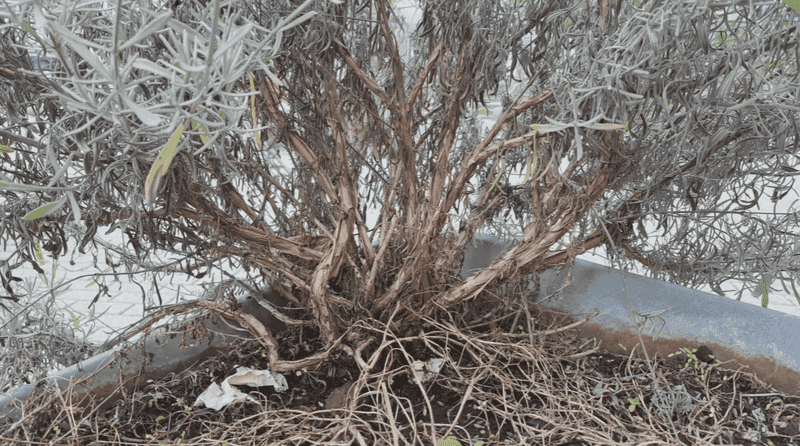
Most gardeners learn early that cutting a perennial back hard will produce a flush of fresh growth in spring. Lavender does not follow that rule, and treating it like a herbaceous perennial is one of the most common ways a plant ends up permanently damaged. Lavender is a woody subshrub, meaning its stems turn hard and brown over time and do not carry the dormant buds that allow true perennials to regenerate from the soil line.
University of Maryland Extension is direct on this point: cutting lavender back to bare, leafless wood risks killing the plant or leaving it with permanent gaps because the old woody portions rarely produce new shoots. The Royal Horticultural Society’s lavender growing guide echoes this, advising gardeners never to cut into the hard, brown wood below the leafy green growth. The tissue that can actually branch and fill out is the green, leafy portion of each stem, and once that is removed, the plant has nothing left to work with.
Pruning does encourage branching, but only where viable leafy shoots remain. A cut made several inches above the woody base, just above a visible node or cluster of small leaves, signals the stem to push side branches and creates the mounded, compact shape most gardeners are after. A cut that removes all of the green and leaves only bare brown wood creates a gap that is likely to stay a gap. Iowa State University Extension warns that severe pruning can outright kill lavender, so the woody base should be treated as the boundary the pruners should not cross.
The risky late cut removes the last healthy green shoots
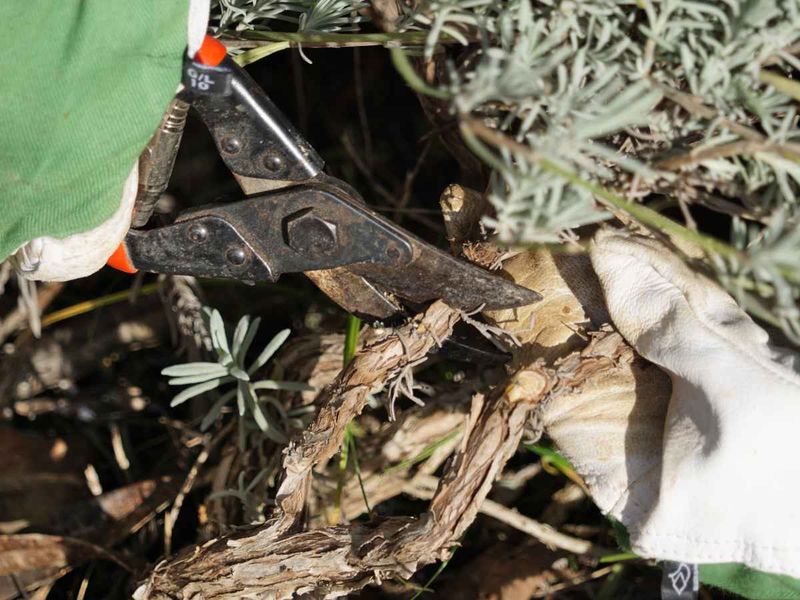
The specific pruning error most likely to leave lavender hollow is simple to describe: the shears go farther down a stem than the lowest healthy green shoots, leaving only brown, leafless wood behind. That cut strips away the only tissue capable of pushing new branches, and the timing makes it worse. A heavy trim late in the season can trigger a burst of tender new growth that has no time to harden before the first frost, leaving both the fresh shoots and the exposed cuts vulnerable to cold damage.
Oregon State University Extension pruning guidance identifies late-season heavy pruning as a risk factor for exactly this reason: new growth that emerges after a September or October cut in many US climates will not have the six or more weeks it needs to toughen up before cold arrives. The result can look like winter kill, but the pruning decision set the stage. A useful rule from Ask Extension trimming guidance is to treat the lowest visible healthy green shoot on each stem as the hard stop for the pruners.
There is an important distinction worth keeping straight. Spent flower spikes, the long bare stems left after blooms fade, can and should be removed because cutting them back to the leafy foliage below is not cutting into woody tissue. The green stem beneath the flower spike is the tissue that supports regrowth, so removing the spent bloom without cutting into that leafy base is safe. Removing a stem that is wholly dead or damaged is a different situation: that cut can be appropriate even though the dead stem will not regenerate.
University of Maryland Extension notes that dead wood should be cleared out, but gardeners should not expect new shoots to fill the gap where a dead stem once stood.
A post-flowering trim can help keep green growth mounded
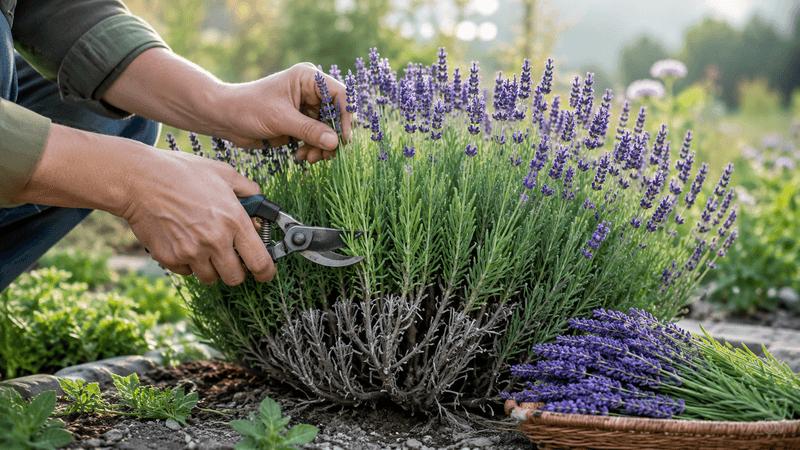
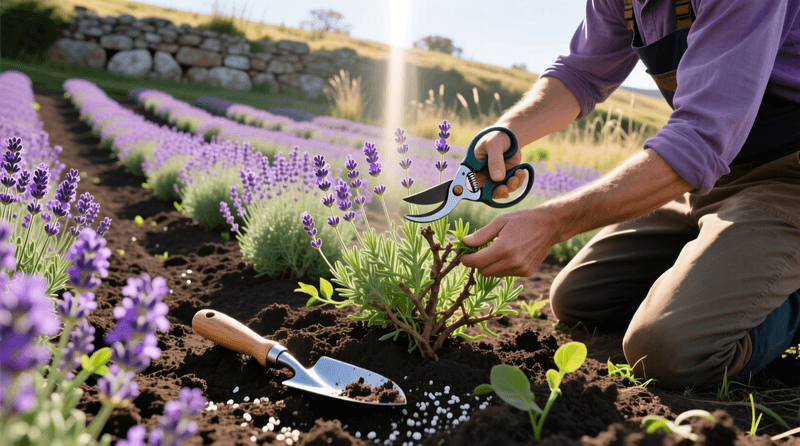
For an established lavender plant that still carries a good amount of healthy green growth, a post-flowering trim is one of the most practical things a gardener can do to maintain a compact, rounded form. The goal is not a dramatic reshape but a light shaping that removes the spent flower stems and reduces the green foliage enough to encourage branching without exposing bare wood. Sharp, clean pruners used on a dry day reduce the chance of spreading disease through open cuts.
The Royal Horticultural Society recommends removing spent flower spikes along with roughly one-third of the green leafy growth, shaping the plant into a rounded mound rather than shearing it flat across the top. Oregon State University Extension supports a similar approach, emphasizing that cuts should remain in the green growth and that each stem should retain visible leafy nodes after trimming. These nodes are where new side shoots will emerge to fill the plant out over the following season.
The one-third figure is a general guide, not a fixed measurement that applies to every plant in every yard. A younger plant with dense green growth might tolerate slightly more; an older plant with limited green foliage may need a gentler touch that removes only the flower stems and a modest amount of the uppermost leaves. Ask Extension trimming guidance is clear that the plant’s actual green growth, not a preset fraction, should control how far the cut goes. Work around the whole plant to keep the mounded shape even, and stop well above the woody base on every stem.
Frost timing and lavender type set the pruning window
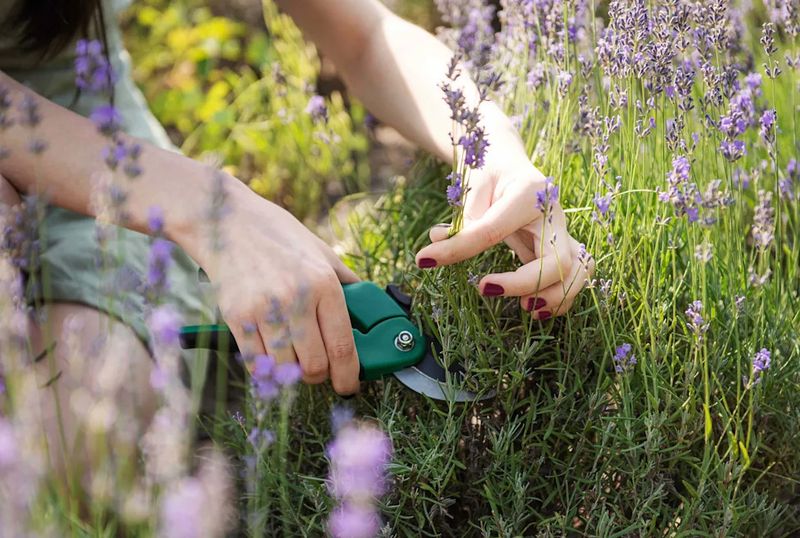
The phrase “fall pruning” covers a wide range of actual calendar dates and regional conditions, and treating it as a single event is one reason gardeners end up with conflicting advice. A trim completed in late August in coastal Oregon is very different from the same cut made in mid-October in a short-season northern climate. What matters is whether the plant has enough frost-free time after pruning to push a small amount of new growth and let it harden before cold arrives.
Oregon State University Extension pruning guidance recommends finishing the main shaping trim approximately six weeks before the local first frost date, framing it as regional guidance rather than a universal law. The Oregon State University spring pruning guide also notes that in colder or wetter climates, a spring trim after new growth appears may be the safer option, because it avoids the risk of late-season cuts triggering tender growth that gets caught by frost. Colorado State Extension similarly favors spring pruning for colder areas, so the timing decision should be based on local conditions rather than a single calendar month.
Cultivar hardiness adds another variable. English lavender varieties such as Hidcote and Munstead and their hybrid relatives are generally the most cold-tolerant and can handle a post-flowering trim in late summer across much of the continental US. Spanish lavender and French lavender are considerably less winter-hardy and should receive a gentler trim, with RHS guidance and Ask Extension trimming notes both flagging that advice written for English types should not be applied automatically to tender cultivars. Knowing which type is growing in your bed is the first step in choosing a safe pruning window.
Wait for spring to confirm winter damage
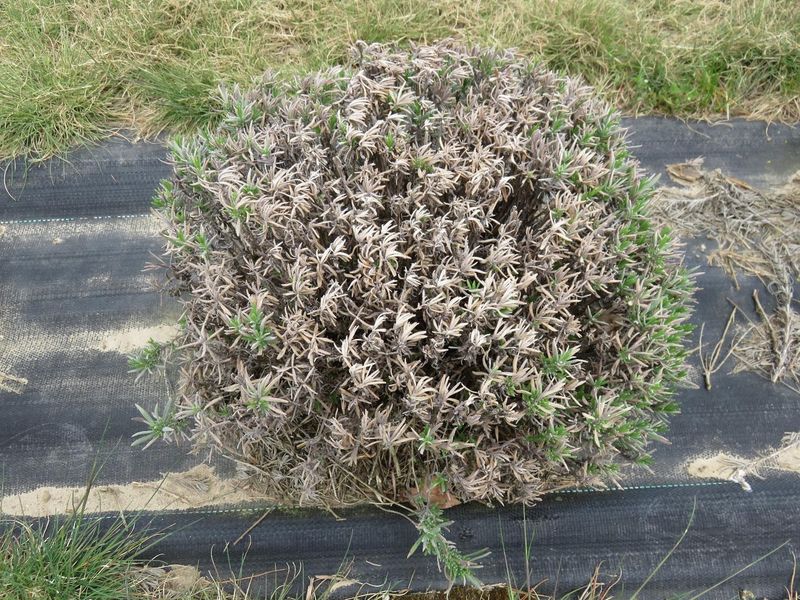
After a cold winter, lavender can look alarmingly brown and dead from a distance. The temptation is to grab the pruners and cut everything back immediately, but acting too early often removes tissue that would have greened up on its own. The safest approach is to wait until new growth is visibly pushing from the stems, then use that green growth as the guide for what to remove.
University of Maryland Extension recommends patience in spring, noting that lavender can look worse than it is before new growth emerges and that premature cutting can remove wood that still has living tissue inside. Scratch the bark of a suspicious stem with a fingernail: green or white tissue underneath means the stem is alive; dry, brown tissue all the way through confirms it is dead. Iowa State University Extension supports this scratch-test approach as a practical way to separate winter injury from living wood before making any cut.
Once new growth has appeared, remove stems confirmed dead or damaged by cutting back to the nearest point of live tissue, or to the base if the whole stem is gone. Keep cuts in green tissue where possible, and resist the urge to do a heavy renovation at the same time. Spring is the moment to clear out real damage, not to attempt a full reshape. A light cleanup that removes confirmed dead wood and leaves the living green structure intact gives the plant the best chance of filling back in over the coming season without the added stress of a deep cut.
An aged or stressed plant may need replacement
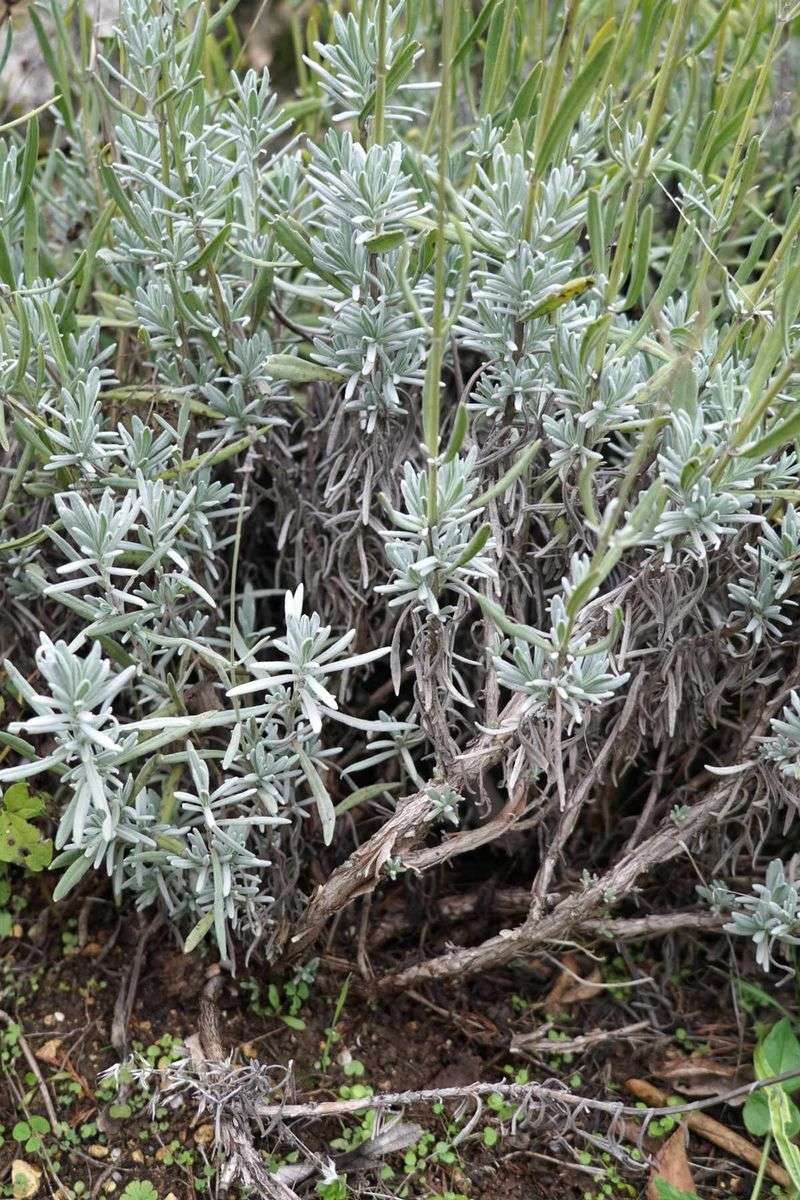
A lavender plant that has a completely hollow woody center with only a few struggling green shoots at the perimeter is sending a clear message: the window for routine pruning has likely closed. At that stage, removing dead or damaged stems and lightly shaping whatever living foliage remains is still worthwhile, but expecting a heavy prune to restore a full, bushy plant is unrealistic. Lavender often cannot push new growth from old bare wood, so radical renovation into the woody base is more likely to finish the plant than revive it.
Ask Extension guidance on salvaging lavender is candid that plants with extensive woody dieback and minimal green growth are poor candidates for recovery through pruning alone. Ask Extension pruning notes and University of Maryland Extension both flag that older lavender commonly declines despite regular care, and that replacement is often the practical answer. Before pulling the plant, though, check whether the decline has a fixable cause: UC Agriculture and Natural Resources reporting on aging lavender and UC ANR lavender care guidance both point to heavy soil, poor drainage, overwatering, and excess fertilizer as contributors that can be corrected in the next planting.
Full sun, sharply draining soil, and watering based on actual dryness rather than a fixed schedule are the growing conditions lavender needs to stay compact and healthy. High-nitrogen fertilizer promotes soft, floppy growth and should be avoided. If the current plant is beyond saving, taking cuttings from any healthy stems before removing it gives you a head start on a replacement that will grow with better habits from day one. A young, well-sited plant pruned regularly from its first season is far easier to maintain than an old one that has been allowed to go woody over many years.
Keep green shoots at the center of every cut
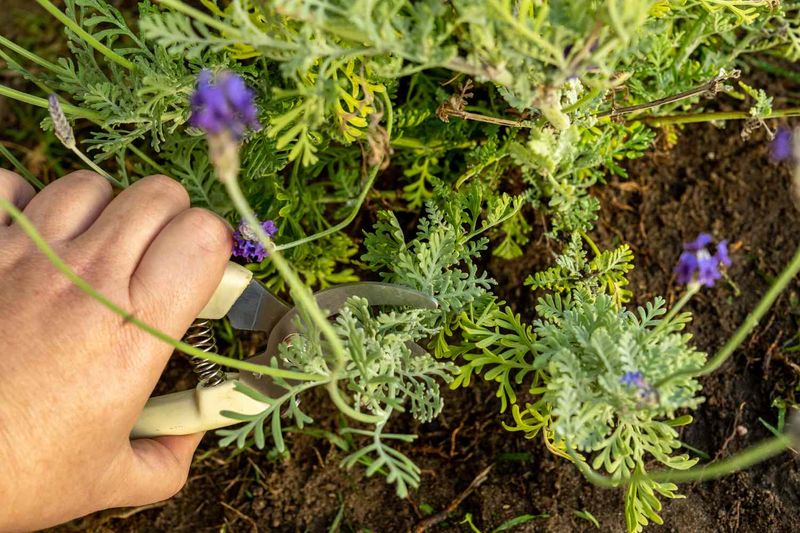
Every time the pruners go to work on lavender, one question should guide the cut: where are the lowest healthy green shoots on this stem? That point is the boundary. Shaping within the green, leafy growth, while leaving visible nodes or small shoots on each stem, keeps the plant in the zone where branching is possible. Oregon State University Extension and the Royal Horticultural Society both anchor their pruning advice on this same principle: stay in the green, stop before the wood.
Dead or damaged stems are a separate case and can be removed even when they extend into the woody base, but do not expect them to regenerate. The goal there is clearing out dead tissue, not triggering new growth. Schedule the main shaping trim around local frost timing and cultivar hardiness, finishing early enough that any new growth has time to harden before cold weather arrives. University of Maryland Extension recommends waiting until spring growth appears before judging winter damage, so resist the urge to cut back brown tips until the plant has had a chance to show what is still alive.
Pruning is one tool for keeping lavender compact, but it works only as long as green growth remains to shape. A plant that still carries healthy foliage and gets a careful annual trim will stay mounded and productive for many seasons. A plant that has already lost its green interior needs honest assessment, not another hard cut.