
If Your Fall Broccoli Grows Tall And Leafy But Only Buttons Into Tiny Heads, Heat Stress Triggered It Too Early
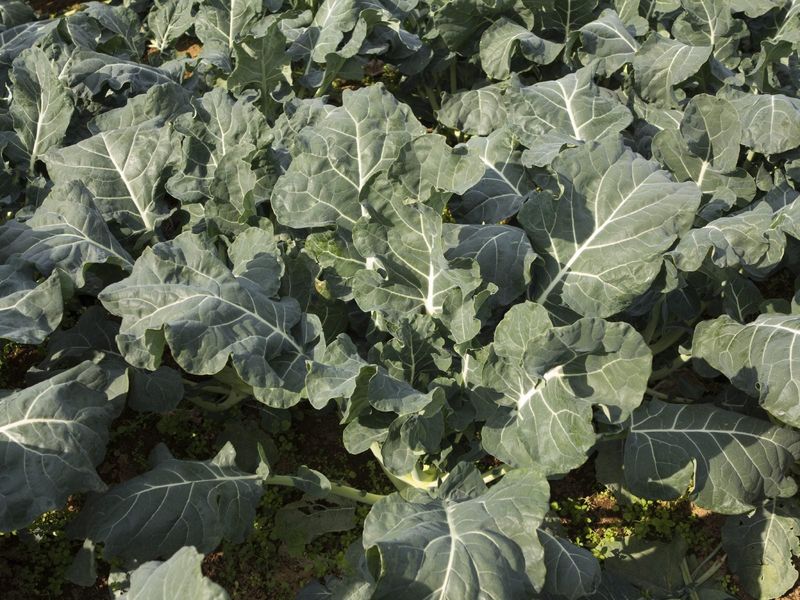
You did everything right: watered consistently, kept the bed tidy, and watched your fall broccoli grow into a full, dark-green plant. Then the crown appeared, and it was barely the size of a quarter – or it never formed at all. That gap between lush leaves and a disappointing head points to a timing and temperature problem that catches even experienced gardeners off guard. Understanding what went wrong during a narrow window of plant development can help you get a proper harvest next season.
Healthy leaves can hide a damaged broccoli crown
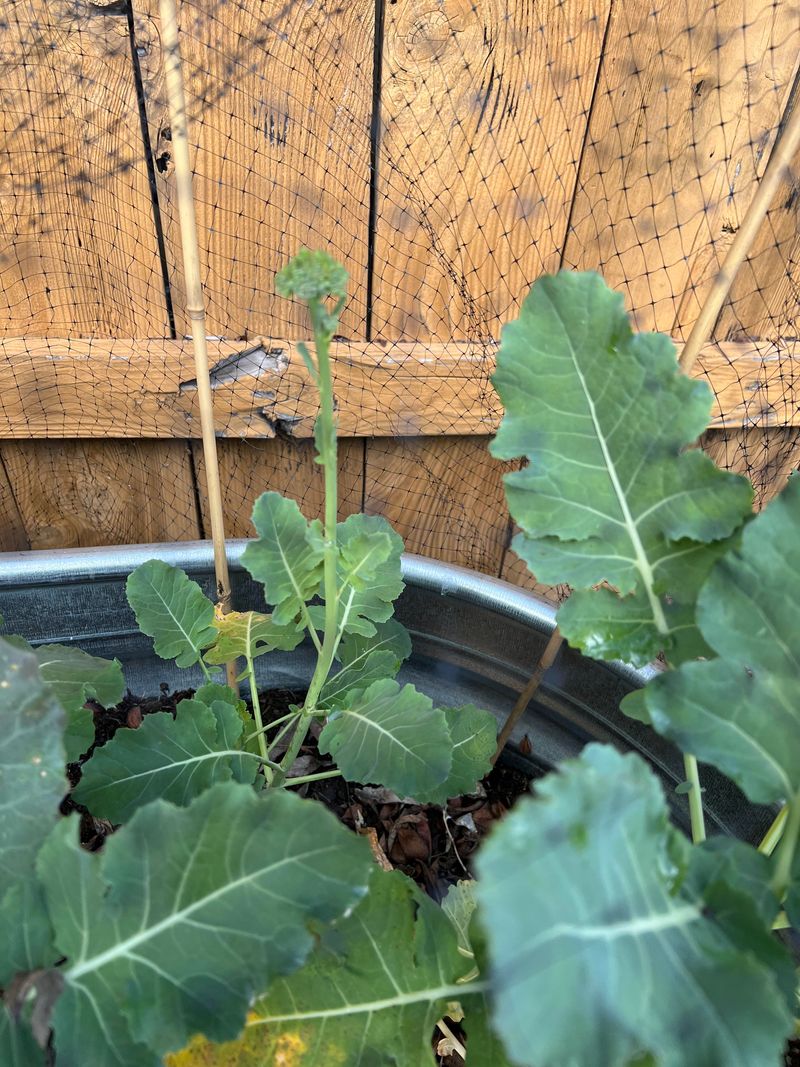
A broccoli plant that towers over neighboring vegetables and carries deep-green leaves looks like a success story. The trouble is that vigorous foliage only confirms that vegetative growth went well – it says almost nothing about whether the developing crown stayed healthy during the stage that actually matters for harvest.
Broccoli grows in two distinct phases. First, it builds leaves, roots, and stem. Then, at a specific moment, the growing point shifts direction and begins forming flower buds. University of Minnesota Extension notes that heat during vegetative growth may be tolerated, while heat during head development harms head quality – meaning those two phases are not equally sensitive.
A plant can stay tall and vigorous right through a heat event and still produce a crown that is rough, loose, or barely there.
Before assuming heat is the culprit, recognize that a tiny or premature head has several possible explanations. Cold snaps, oversized transplants, irregular watering, fertility problems, disease, insect damage, and even cultivar type can all produce undersized or poor-quality crowns. What extension sources call “buttoning” – a premature small head that forms before the plant has grown enough leaves to support a marketable crown – is a specific condition, and UC IPM’s guidance on buttoning in broccoli and cauliflower lists cold, transplant stress, and low fertility alongside heat as recognized triggers.
This article works through the diagnosis systematically. The goal is to separate heat-related crown damage from true buttoning and from other stresses, using the plant’s timing, weather history, crown appearance, cultivar, transplant age, and care history together – not from height or crown size alone. A closer look at one particular developmental window explains why the timing of heat exposure matters far more than its presence during any random week of growth.
Why the hidden 10-day window matters for head quality
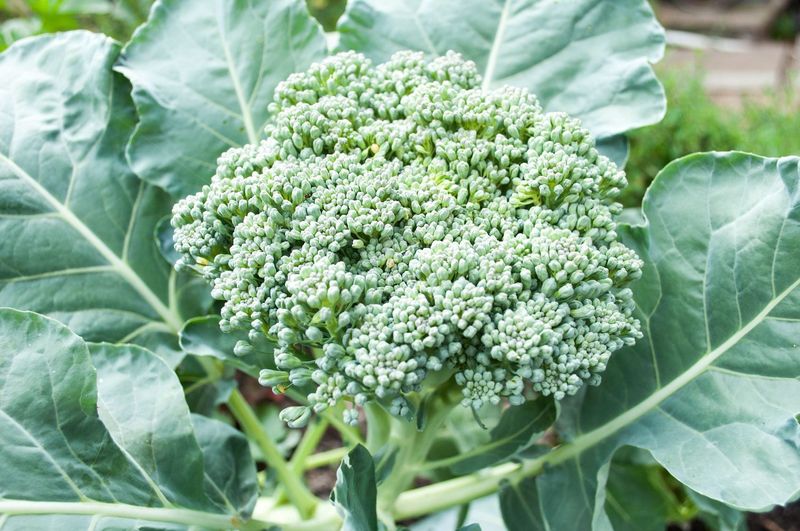
Broccoli does not become heat-sensitive all at once. During most of the leafy growth period, the plant can handle temperatures that would be uncomfortable for the developing head. The vulnerability concentrates in a relatively short stretch when the growing point transitions from making leaves to initiating flower buds – roughly 10 days before a visible crown appears above the leaves.
Heat exposure during that hidden window is what tends to produce the frustrating combination of healthy-looking foliage and a poor crown. UMass Extension vegetable notes summarize Cornell research indicating that temperatures above 95 degrees Fahrenheit for more than four consecutive days during this sensitive period can deform heads. That figure is a useful risk marker, not a universal failure point – cultivar, night temperatures, soil moisture, plant age, and how long the exposure lasts all influence the outcome.
The preferred temperature range for head development is roughly 54 to 68 degrees Fahrenheit, according to North Carolina Cooperative Extension. USDA research reports that many varieties begin having head-development problems above about 86 degrees Fahrenheit. Those numbers frame a target, not a hard cutoff, because individual cultivars respond differently under the same conditions.
What makes this window so easy to miss is that the plant gives no outward signal that bud initiation has started. Foliage continues to look healthy, and nothing visible changes until a tiny crown breaks the surface days later. By that point, any heat damage to the developing florets has already occurred. Cornell Plant Disease Diagnostics documentation on heat stress in broccoli describes how excessive heat during this stage can arrest or unevenly develop florets, producing heads that are rough, loose, misshapen, or already beginning to flower when they emerge.
The UMass broccoli summer heat fact sheet reinforces that the most dependable intervention is preventive – scheduling head formation for cooler weather rather than trying to rescue a head whose development was already disrupted.
Is the tiny head heat injury or true buttoning?
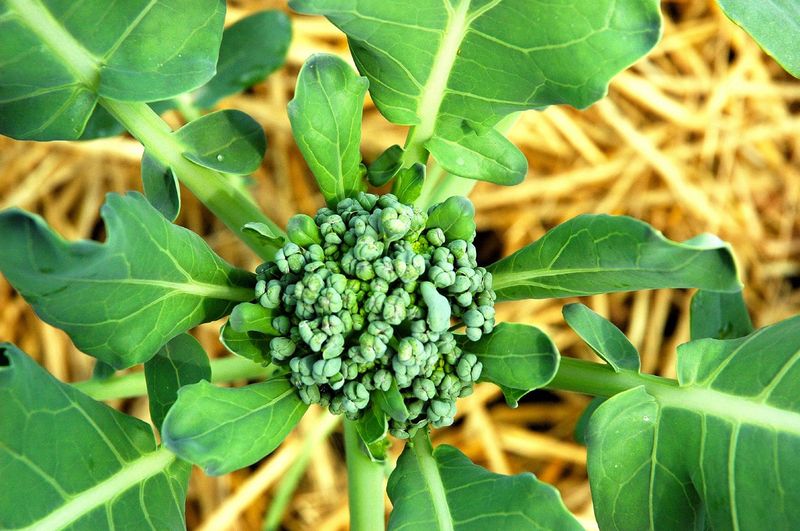
Not every undersized broccoli head points to the same problem. Gardeners who skip the differential diagnosis and blame heat by default can end up fixing the wrong thing for the next planting. A more reliable approach is to check the plant’s full history against a short list of known causes before settling on an explanation.
True buttoning is a specific failure mode: the plant forms a small, premature head before it has produced enough leaves to support a marketable crown. UC IPM’s buttoning guide associates the condition with cold exposure, oversized or over-mature transplants, water stress, low fertility, and micronutrient problems – not only heat. A plant that buttoned typically has a small head surrounded by relatively few leaves, and the head often appears quite early in the season relative to the expected maturity date.
Heat-related crown damage looks different. The plant usually has ample foliage, and the head that emerges may be rough-textured, loose, uneven, or already showing yellow florets trying to open. Utah State Extension’s brassica production problems guide lists irregular head formation alongside buttoning as a separate category with its own set of causes. Reviewing both helps narrow the diagnosis.
A tall plant is not itself diagnostic. Broccoli naturally grows upright, and some cultivars are more open or vigorous than others. Height only becomes a meaningful clue when combined with timing, temperature records, crown texture, transplant age, watering history, and fertility notes. Utah State’s home garden broccoli guide and University of Maryland Extension both caution that disease and insect injury can also produce small or deformed heads and should be ruled out before assuming environmental stress.
One more distinction matters for gardeners who may have planted a different type of brassica. Sprouting broccoli, broccoli raab, and broccolini are expected to produce multiple small florets or side shoots rather than one large solid central head. A University of Minnesota Extension post on sprouting broccoli for fall explains that this growth habit is normal for those types – what looks like failure in a heading broccoli is simply how sprouting types behave.
Schedule fall heading for cooler weather
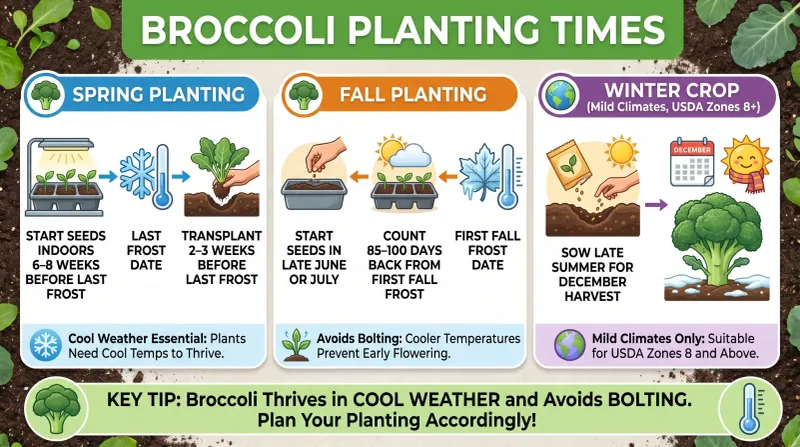
Matching the timing of crown initiation to cooler fall temperatures is the single most effective step a gardener can take to prevent heat-related head problems. The goal is not to grow the entire plant in cool conditions – fall broccoli routinely builds its leaves during late-summer warmth without serious harm. The critical task is ensuring that the 10-day window before crown emergence lands in weather that favors floret development rather than disrupting it.
Getting there requires working backward from local conditions rather than copying dates from a national calendar. Start with your area’s average first fall frost date, subtract the seed packet’s days-to-maturity, and add a week or two as a buffer for slow establishment or unexpected heat. University of Minnesota Extension recommends mid-summer planting and longer-season fall varieties – roughly 60 to 85 days to maturity – so that heading occurs as temperatures moderate. That window will shift earlier or later depending on your climate zone.
Regional examples can illustrate the approach without serving as universal instructions. University of Maryland Extension lists late July to early August as the fall transplant window for central Maryland, while Utah State Extension recommends planting fall broccoli approximately 50 to 75 days before the anticipated maturity date. Both are starting points for gardeners in those regions, not prescriptions for growers in the Pacific Northwest, the Deep South, or the High Plains.
Planting too late creates its own set of problems. A crop that reaches crown initiation as days shorten sharply and hard frost approaches may stall before producing a usable head. Oregon State Extension’s vegetable gardening guide notes that cool-season crops still need adequate time to mature, and a late start can mean the plant never reaches harvest before cold shuts it down. The balance to aim for is leafy growth during the warmest remaining weeks of summer, with heading timed to land in the moderate temperatures of early to mid-fall.
Cultivar and transplant choices shape heat exposure
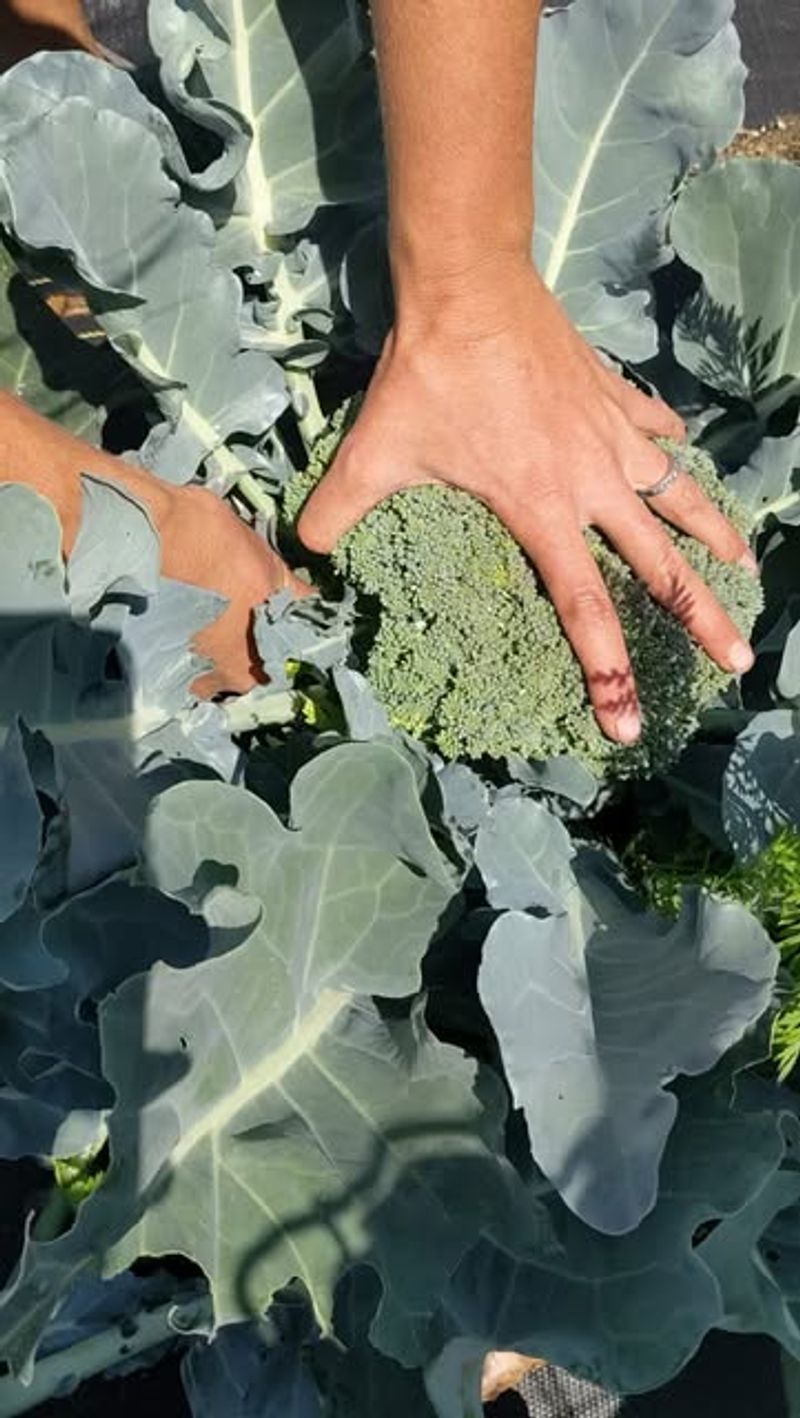
Scheduling helps enormously, but the cultivar in the ground determines how much heat tolerance you actually have to work with. Not all broccoli varieties respond the same way to warm conditions during crown initiation, and that difference can determine whether you get a firm, full head or a rough, loose disappointment even when timing looks right on paper.
USDA and Cornell field trials found that some widely grown commercial hybrids failed to produce marketable summer heads in South Carolina, while experimental heat-adapted hybrids performed well under the same conditions. The trials also found that some cultivars entered the heat-sensitive stage earlier than others – meaning two varieties planted on the same day could face very different temperature exposure at the moment of crown initiation. Choosing a cultivar labeled for fall production or noted for heat tolerance in your region reduces that risk considerably.
Transplant age and size matter just as much as variety selection. Plants that are oversized or over-mature at transplanting – particularly those with more than roughly four to six mature leaves, and especially those with eight or more – are more prone to premature buttoning after any stress event. Utah State Extension’s production problems guide and University of Illinois Extension both caution against setting out large, root-bound transplants, noting that the stress of transplanting combined with an already-advanced growth stage can trigger buttoning regardless of temperature.
For fall crops, starting seeds indoors about four to six weeks before the target transplant date generally produces transplants in the right size range. Utah State’s home garden broccoli guide suggests aiming for stocky, compact transplants with healthy root systems rather than the tallest or most developed ones available at a garden center. A younger, smaller transplant that establishes quickly in the garden is almost always preferable to a larger one that sits in transplant shock during the weeks when crown initiation is approaching.
Steady moisture and measured fertility support the crown
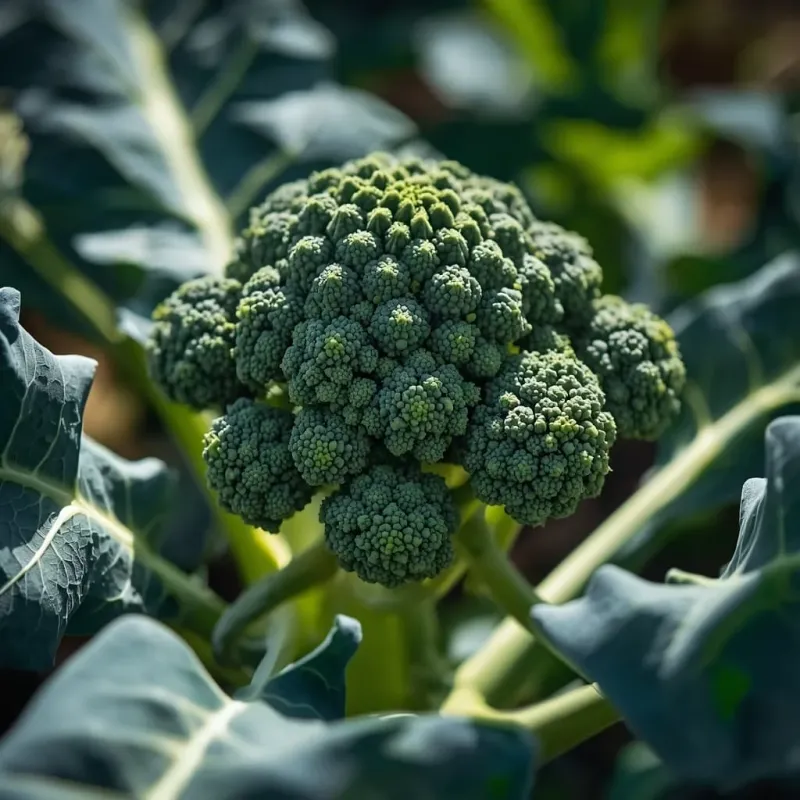
Consistent soil moisture during heading is one of the most practical steps a gardener can control, and its effect on crown quality is well-documented. Irregular watering – alternating dry spells with heavy soaking – can produce rough, uneven florets and compound whatever heat stress the plant is already managing. The target is even, sustained moisture rather than reactive watering after the soil has dried out completely.
Deep, regular irrigation and a layer of mulch are more effective than frequent shallow watering because they keep the root zone consistently cool and moist without saturating the soil. Utah State Extension’s brassica irrigation guide recommends maintaining uniform moisture and adjusting frequency based on soil type, weather, and plant size rather than following a fixed daily schedule. Saturated soil encourages root disease and wastes water; the goal is steady availability, not constant wetness.
Fertility requires a similarly measured approach. Low nitrogen can reduce overall plant vigor and yield, but throwing extra fertilizer at a plant with a small crown is unlikely to fix a timing or heat problem and may actively make things worse. UMass Extension vegetable notes caution that excess nitrogen can drive overly rapid, nonuniform growth, delay floret formation, and contribute to rough, leafy heads or hollow stems. Utah State’s soil fertility guide for brassicas recommends basing applications on a soil test and following crop-appropriate rates rather than responding to visible symptoms with heavy doses.
Row cover can protect young transplants from insect damage during establishment, and that protection has real value for fall crops that go into the ground when cabbage worms and aphids are still active. University of Minnesota Extension recommends lightweight material and proper anchoring so the cover does not trap heat around the plant or get torn loose in wind. A cover that raises temperatures around a plant approaching crown initiation can worsen exactly the stress you are trying to prevent, so remove or vent it as soon as insect pressure eases or temperatures climb.
A formed tiny crown usually calls for harvest, not rescue
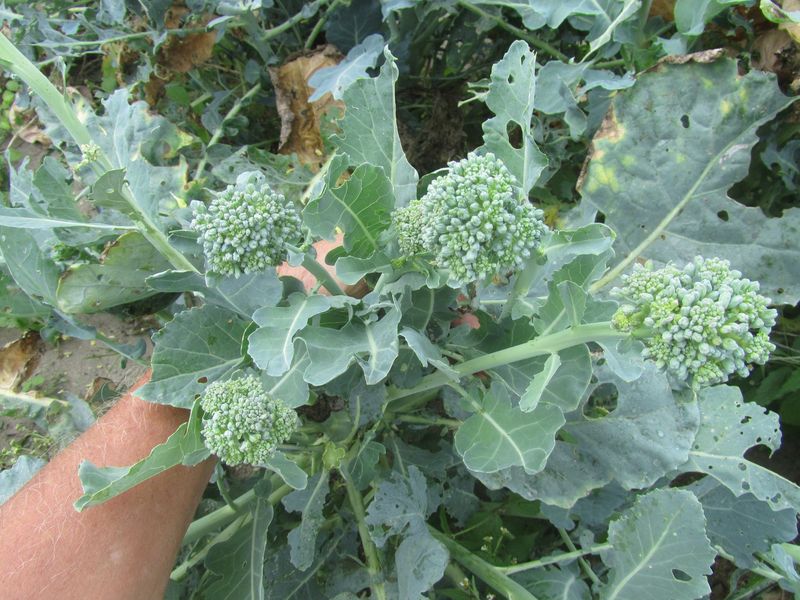
Once a small broccoli crown has fully formed or begun to open, the window for changing its outcome has already closed. Cooling temperatures, extra water, and shade cloth can reduce ongoing stress on the plant, but they cannot reorganize florets that developed during a heat event or reverse a crown that set prematurely. Expecting a dime-sized head to grow into a full central head once fall arrives is a reasonable hope but an unreliable plan.
University of Minnesota Extension draws a useful distinction: a plant that has not yet formed any crown may still produce one if conditions improve, but a head that has already appeared and been damaged or stunted during the sensitive window is unlikely to become a normal full-size central head. The practical response for that plant is to harvest while the buds remain tight and green. Waiting for yellow florets to open means losing both flavor and texture.
After cutting the central head, many heading cultivars will produce smaller side shoots from the leaf axils along the main stem. University of Maryland Extension and Utah State Extension both note that these side shoots, while smaller than the central crown, can extend the harvest for several weeks in cool fall weather. Leaving a healthy plant in the ground after the central head is cut is often worth doing.
The UMass broccoli summer heat fact sheet reinforces that shade, mulch, and irrigation are most valuable as preventive tools during the critical developmental window, not as corrective measures after a poor head has already formed. Use what the current crop teaches you about local timing, and put that knowledge into the next planting plan rather than spending effort trying to rehabilitate a crown that cannot be changed.
Plan the next crop around the crown’s calendar
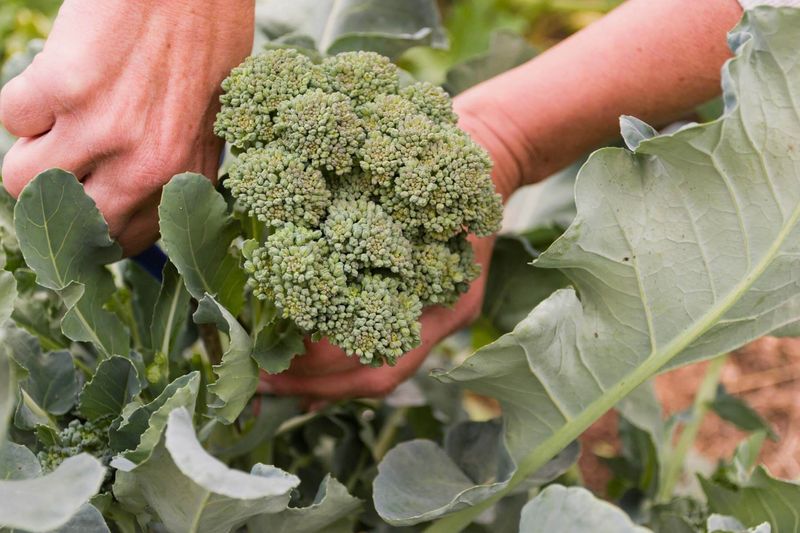
The most productive thing a gardener can do after a disappointing broccoli harvest is build a simple checklist for next time. Review your temperature records against the approximate date when the crown would have been initiating – roughly 10 days before it became visible. If daytime highs were above 86 degrees Fahrenheit and particularly above 95 degrees for several consecutive days during that stretch, heat timing is a plausible explanation worth adjusting for. If temperatures were moderate but the transplant was oversized, watering was irregular, or a cold snap hit early, those factors belong at the top of the correction list instead.
From there, the action sequence is straightforward. Choose a cultivar suited to fall production in your climate, start with compact transplants that have four to six mature leaves rather than large root-bound ones, and calculate your transplant date backward from the local frost date using the seed packet’s days-to-maturity. Maintain even soil moisture through heading, fertilize based on soil test results rather than guesswork, and use lightweight row cover only when insect pressure justifies it. University of Minnesota Extension and UMass Extension both frame this combination of timing and cultivar selection as the most reliable path to a quality fall crown.
A lush, tall plant with a poor head is a real signal worth investigating, but as UC IPM’s buttoning guide makes clear, the symptom alone does not establish the cause. Heat may well explain what happened – and for many fall plantings that go in too early, it does – but the correction should follow the evidence in the plant and the season, not just the headline.