
If Your Fall-Planted Garlic Grows Tall Green Tops But Only Tiny Single-Round Bulbs, Shallow Planting May Be One Reason – But Here Is the Full Picture
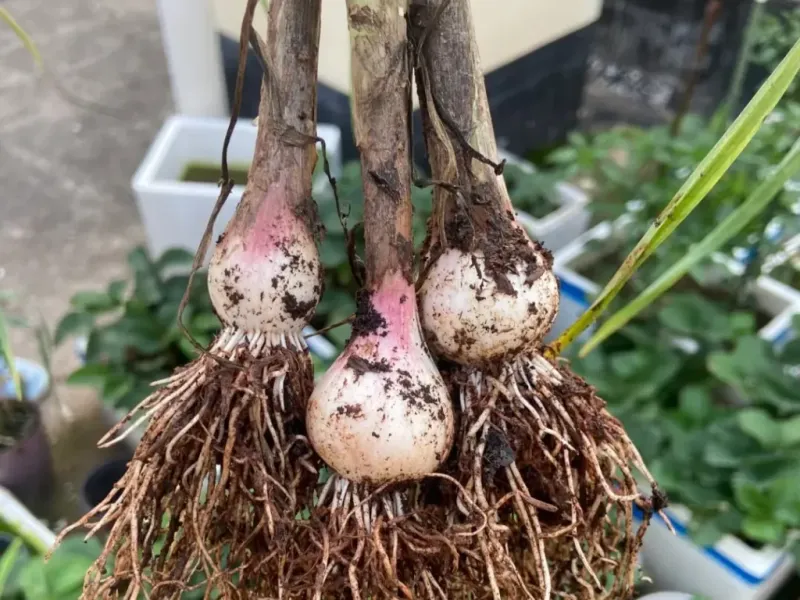
Pulling up a head of garlic and finding a small, undivided ball instead of a plump, clove-filled bulb is genuinely frustrating, especially when the tops looked so promising all spring. Shallow planting can play a role in that outcome, but it is far from the only explanation. Several other factors – from the size of the clove you started with to how much rain fell during bulb expansion – can produce the same result. Working through those possibilities gives you a much better shot at a bigger harvest next fall.
A Tiny Round Does Not Prove a Planting Mistake
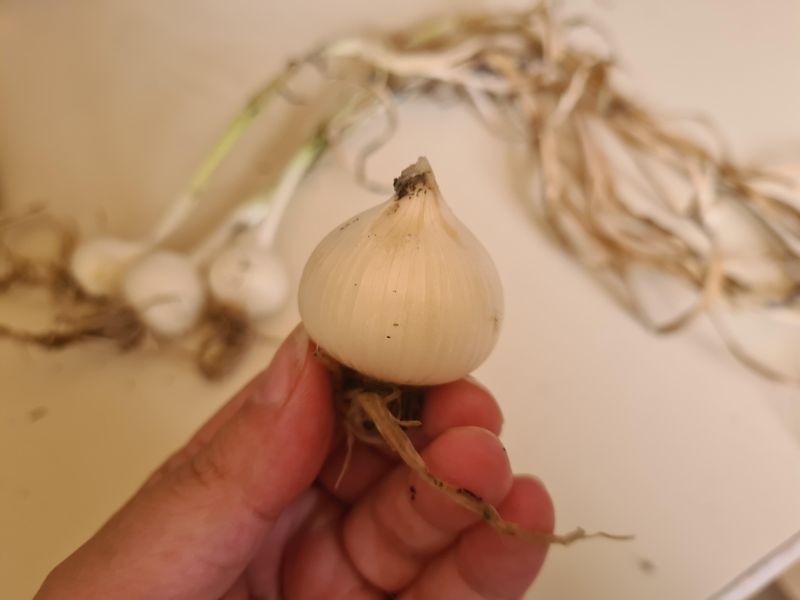
Garlic that forms a small, undivided bulb at harvest is called a round. A round is not the same as a mature bulb that happens to have only one large clove, and it is not the same as solo garlic sold at specialty markets. A round is simply a bulb that never divided – an entire head that stayed whole instead of separating into individual cloves.
Lush, tall tops are a good sign because garlic needs substantial leaf growth to fuel bulb development. Bigger, healthier foliage generally supports larger bulbs. But the tops finishing strong does not guarantee that the underground portion will divide or reach full size. Bulb formation happens in a separate phase driven by temperature, day length, and other conditions that have nothing to do with how tall the plant grew.
Nebraska Extension’s garlic production guide lists small planting cloves, poor growing conditions, and cultivar mismatch as causes of rounds – and notes that the precise cause can be uncertain even after a careful review. Research published in the Journal of Horticultural Science and Biotechnology and economic analyses of garlic production both confirm that bulb sizing and division are shaped by temperature, photoperiod, cold exposure, cultivar, clove size, moisture, fertility, spacing, and disease.
Shallow planting can contribute to an undivided round by increasing winter stress, but the available evidence does not establish it as the specific or usual cause. Treating it as the automatic answer skips over a list of other factors that are just as likely to be responsible. The sections that follow work through those factors one by one so you can make a more accurate diagnosis before the next planting season.
How Shallow Planting Can Stress Garlic
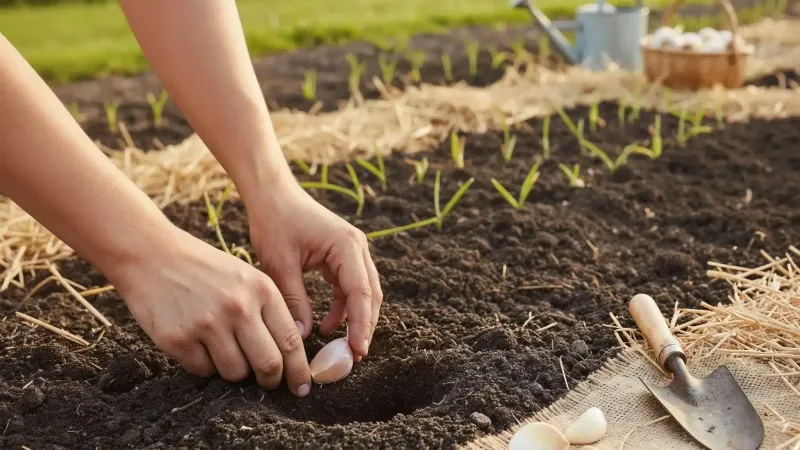
When a garlic clove sits too close to the soil surface, it faces a set of stresses that a more deeply planted clove can mostly avoid. Exposure to hard freezes can injure the shoot or damage developing roots before the plant is firmly established. Frost heaving – the repeated lifting and settling of soil during freeze-thaw cycles – can push a shallow clove partially out of the ground, leaving roots in the air and reducing the plant’s ability to take up water and nutrients.
Shallow cloves also dry out faster. The top inch or two of soil loses moisture more quickly than the layers below, so a clove sitting just under the surface can experience drought stress even when the rest of the bed looks adequately moist. Any combination of winter injury, heaving, and early drying can weaken the plant before it ever gets to the bulbing stage, which can contribute to smaller or undivided bulbs at harvest. That is a real and defensible connection – but it is one possible pathway, not a confirmed verdict.
Nebraska Extension specifically links shallow planting to increased winter injury risk, which supports treating depth as a worthwhile correction for next fall. At the same time, a small Wisconsin Extension depth trial found that cloves planted at one inch produced a higher average bulb weight than cloves planted at three or six inches – a result that directly contradicts the idea that deeper always means bigger. That trial was small and used specific cultivars, so it does not replace regional recommendations, but it does make the point that no single depth rule applies everywhere.
The practical takeaway is that shallow planting deserves attention as a contributing factor, especially in regions with hard winters and significant freeze-thaw cycling. Correcting depth for the next crop is a reasonable step. Just keep in mind that a tiny round can appear even when depth was perfectly adequate, which means depth alone rarely tells the whole story.
Choose Planting Depth for Your Local Climate
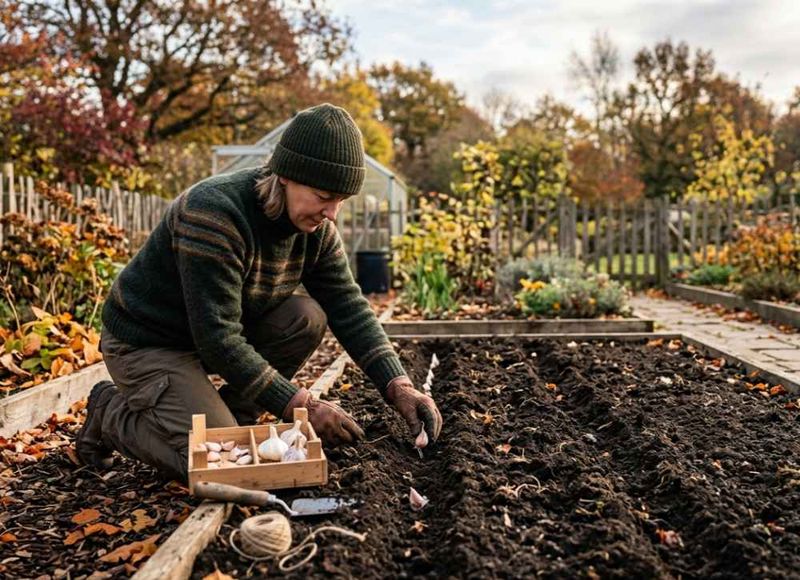
Published extension recommendations for garlic planting depth vary noticeably across the United States, and that variation is intentional. Illinois Extension suggests roughly 1 to 2 inches, while Utah State Extension recommends 2 to 3 inches. Nebraska Extension also lands around 2 to 3 inches, while Maine Extension recommends 2 to 4 inches to account for that region’s colder, harsher winters. Climate, soil type, winter severity, and local practice all influence which end of the range makes sense for a given garden.
When measuring depth, count from the clove’s pointed growing tip down to the soil surface – not from the base of the clove. That distinction matters because a clove is an inch or more tall on its own. Measuring from the base instead of the tip can put the point much deeper than intended, or leave it much shallower depending on how you orient the clove.
Orientation also matters. Plant each clove with the pointed tip facing up and the flat basal plate – the root-producing end – facing down. University of Minnesota Extension and Wisconsin Extension both emphasize this orientation because a sideways or inverted clove wastes energy correcting its growth direction before it can establish properly.
Use firm, healthy, unpeeled cloves and separate the bulb shortly before planting rather than days in advance. Exposed cloves dry out faster and are more susceptible to disease. Choosing the largest cloves from your best bulbs is one of the simplest ways to improve next season’s results, since larger starting cloves consistently tend to produce larger bulbs. Save your smallest cloves for cooking and plant the best ones back into the ground.
Check the Other Causes of Tiny Rounds
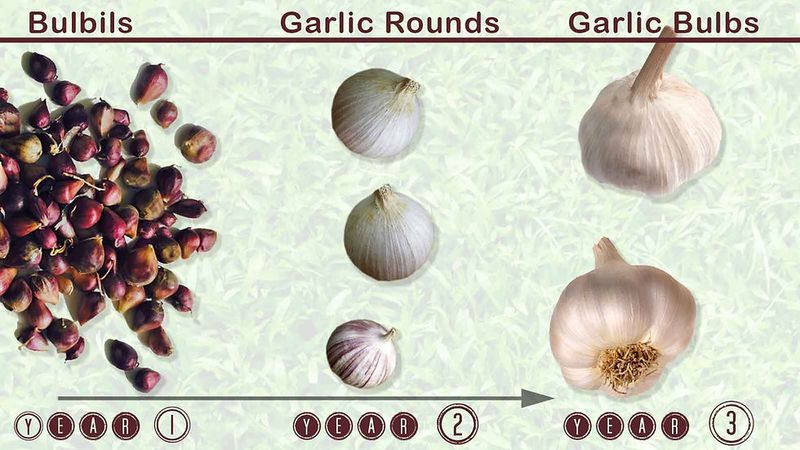
Before settling on shallow planting as the explanation for a tiny round, it helps to run through the other causes that extension sources identify just as clearly. The starting material is often the first place to look. A small clove produces a small plant with less photosynthetic capacity, and a small plant is more likely to produce an undivided round than a full bulb. Bulbils – the tiny clove-like structures that form in the flower head of hardneck garlic – can also be planted, but they typically need two or more growing seasons before they develop into a full-sized bulb.
A round from a bulbil is not a sign that anything went wrong; it is simply part of a longer development process.
Nebraska Extension and Extension experts responding to home gardener questions both point to cultivar mismatch as a meaningful factor. A softneck variety grown in a region with mild winters may not receive enough cold to trigger proper bulb development. A hardneck variety pushed into a climate that warms too quickly in spring may not have enough time to complete clove formation before the season ends.
Spring planting in cold-winter regions commonly produces smaller bulbs because the plants miss the extended cold period that fall-planted garlic gets. Drought or uneven watering during the bulbing phase can reduce clove formation and hasten premature maturity. University of Minnesota Extension and Wisconsin Extension both note that weed competition can also reduce bulb size by stealing water and nutrients during the critical expansion window.
Premature harvest is another common culprit that can look like a planting problem. A bulb pulled two or three weeks too early may still be undivided or only partially formed. Disease is worth considering only when foliage symptoms appear. University of Minnesota’s garlic diagnostic tool points to orange rust spots, yellow streaking, stunting, and leaf collapse as the signs that distinguish a disease problem from a cultural one.
Small bulbs alone are not enough to diagnose disease.
Support Bulb Expansion With Steady Care
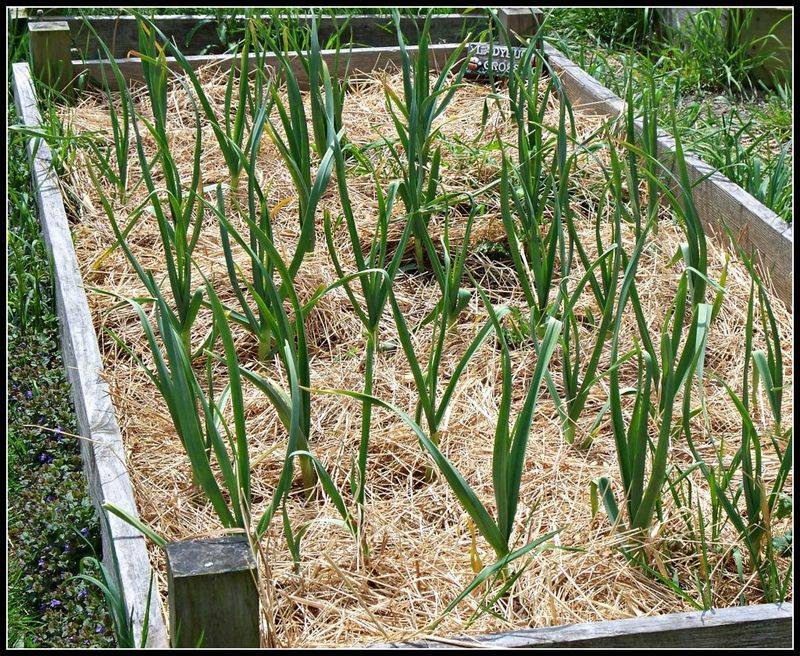
Once garlic is actively growing in spring, the most useful thing a gardener can do is maintain steady, supportive conditions. Garlic has relatively shallow roots compared to many vegetables, which makes it sensitive to moisture swings. Even soil moisture during active growth – especially as bulbs begin to expand in late spring – supports clove development and reduces the chance of stress-induced undersizing. Utah State Extension notes that drought during bulb expansion can reduce bulb size and hasten premature maturity, so consistent watering during that window matters more than at any other time.
Taper off irrigation as harvest approaches, following local guidance, to reduce staining and limit disease pressure on the wrappers.
Weed competition is a quieter threat than drought but equally capable of reducing bulb size. Wisconsin Extension and Nebraska Extension both describe garlic as a poor competitor against weeds. A clean, weed-free straw mulch applied after fall planting or in early spring can conserve moisture, moderate soil temperature, and reduce frost heaving without creating the waterlogged conditions that encourage rot. Use locally appropriate mulch depths and avoid piling wet material directly against the emerging shoots.
Nitrogen deserves careful handling. Healthy tops need adequate fertility, but applying nitrogen too late in the season or in excess can delay bulbing and reduce storage quality. Maine Extension and University of Minnesota Extension both recommend following a soil test or local extension fertility guidance rather than applying fertilizer automatically when tops look lush. Lush tops are not a reliable signal that more nitrogen is needed.
For hardneck garlic growers, removing the curling flower stalk called the scape before it straightens can redirect the plant’s energy toward bulb development. Maine Extension reports that leaving scapes on can substantially reduce eventual bulb size. Scape removal is a straightforward sizing practice that is entirely separate from planting depth and worth adding to the routine even when everything else is going well.
Inspect Sample Bulbs Before Harvesting
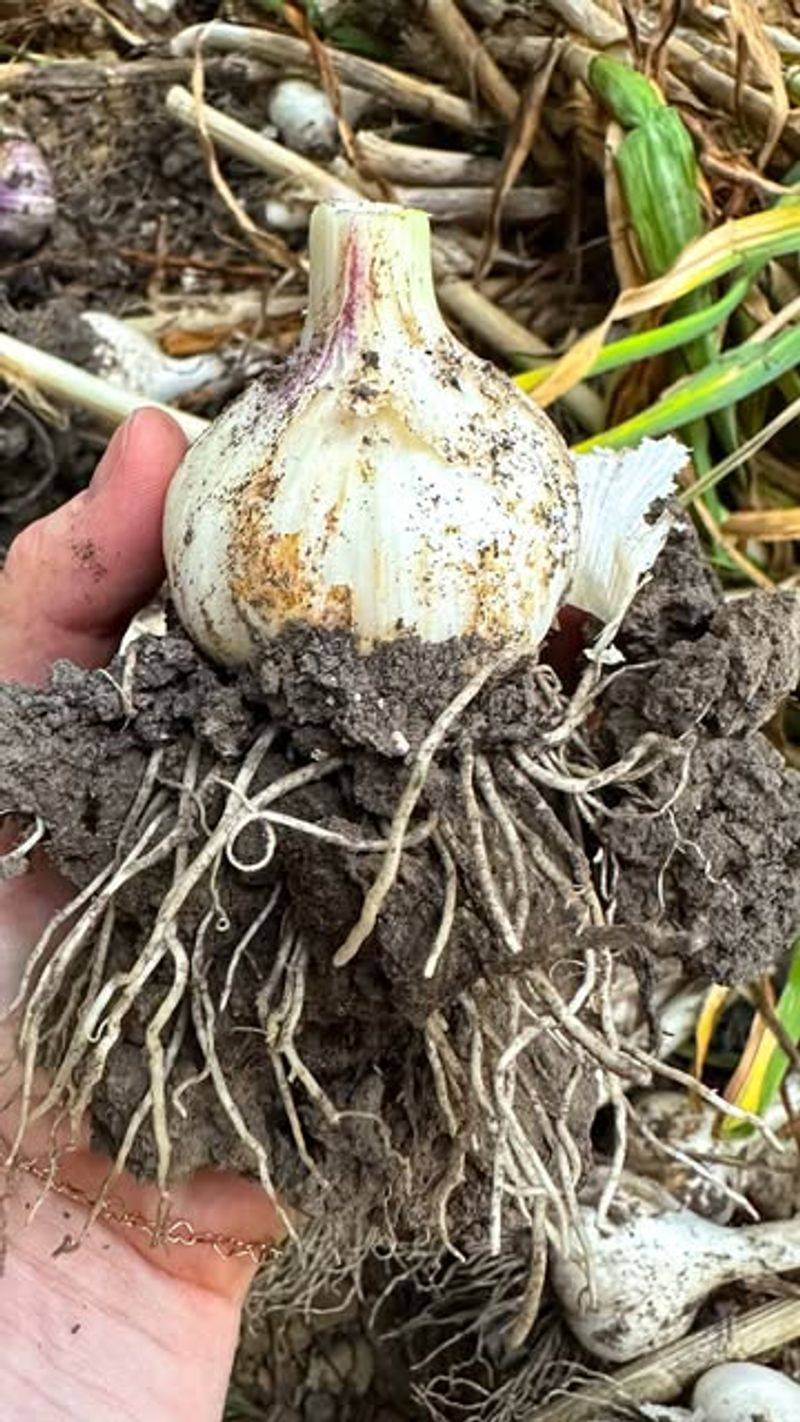
Harvest timing can easily be mistaken for a planting problem. A bulb pulled from the ground two or three weeks before it is ready may look undivided or barely formed, even when the plant received excellent care and was planted at the right depth. That early-harvest round can lead a gardener to blame the previous fall’s planting when the actual fix is simply waiting longer.
University of Minnesota Extension recommends checking several sample plants rather than harvesting based on the appearance of the tops alone. Nebraska Extension and Maine Extension both note that harvest timing varies by cultivar and local conditions, so the first yellowing leaf is a prompt to start checking, not a signal to harvest immediately.
The risk runs in both directions. Pulling too early leaves bulbs small or incompletely divided. Waiting too long causes the papery wrappers to break down, the cloves to begin separating inside the head, and the bulb to lose the protective covering that allows it to store well. Checking two or three sample plants at the margins of your timing window gives you the information needed to pick the right day for the rest of the crop.
When rounds do show up at harvest, resist the urge to discard them automatically. A healthy, firm round is a perfectly viable planting clove for next season. Nebraska Extension notes that rounds replanted or left to grow for another season typically develop into normal full-sized bulbs. A round that originated from a bulbil may need an additional season beyond that, but it is still worth saving.
The decision to replant or discard should be based on the condition of the round, not on the assumption that it is permanently defective.
Plan the Next Crop From What You Observed

The most useful thing to do after a disappointing garlic harvest is record what actually happened rather than guessing at a single cause. Write down the cultivar name, the size of the cloves or bulbils you planted, the depth you planted them, how the winter went, how consistently you watered, how much weed pressure the bed had, what the fertility program looked like, whether you noticed any foliage symptoms, whether you removed scapes on hardneck varieties, and the date you harvested. That record turns a frustrating outcome into useful data for the next crop.
For next fall, follow the depth recommendation from your local extension service rather than a one-size-fits-all number. Maine Extension, Nebraska Extension, University of Minnesota Extension, and Utah State Extension each publish region-specific guidance that accounts for local soil, climate, and winter conditions. Measure depth from the pointed tip of the clove to the soil surface, plant the largest cloves point-up, and maintain even moisture and weed control through the growing season.
If healthy rounds came out of this year’s harvest, consider replanting them rather than starting over entirely with purchased seed garlic. A round from a clove often develops into a normal full bulb after one more season in good conditions. Keep notes on those plants separately so you can track whether they perform differently from the rest of the bed.
Shallow planting is worth correcting because it genuinely can increase winter stress and contribute to smaller bulbs – but a tiny round is a signal to review the whole season, not proof of a single mistake. The gardener who checks every variable and adjusts one thing at a time is the one who figures out what actually happened.