
If Your Fall Kale Grows Tall And Leggy But Only Thin, Sparse Leaves, You Skipped One Pinching Step
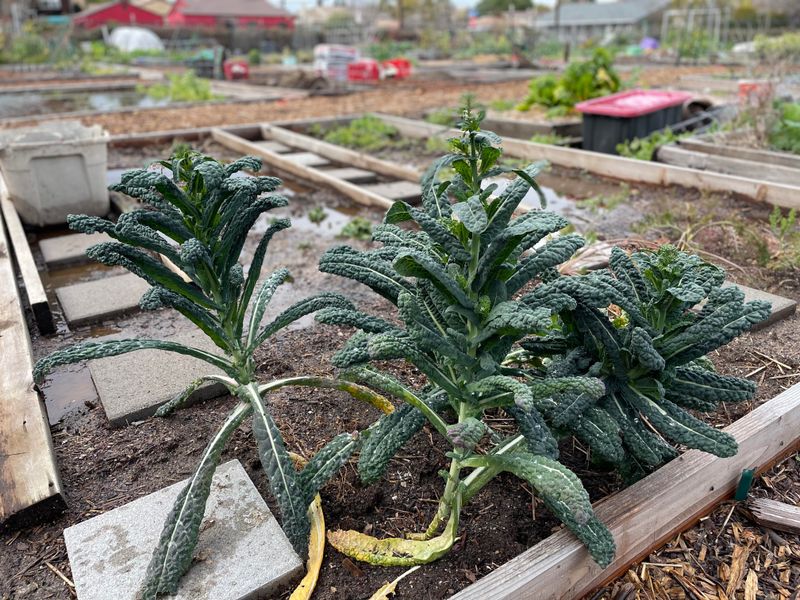
Tall kale with a bare lower stem can stop a gardener in their tracks, especially when the plant looks nothing like the full, leafy bunches at the grocery store. Before you reach for pruning shears or assume something went wrong, it helps to know what that upward growth actually means. A plant shooting skyward is not automatically in trouble, and the fix depends entirely on what you find when you look closely.
A tall kale plant may be growing normally
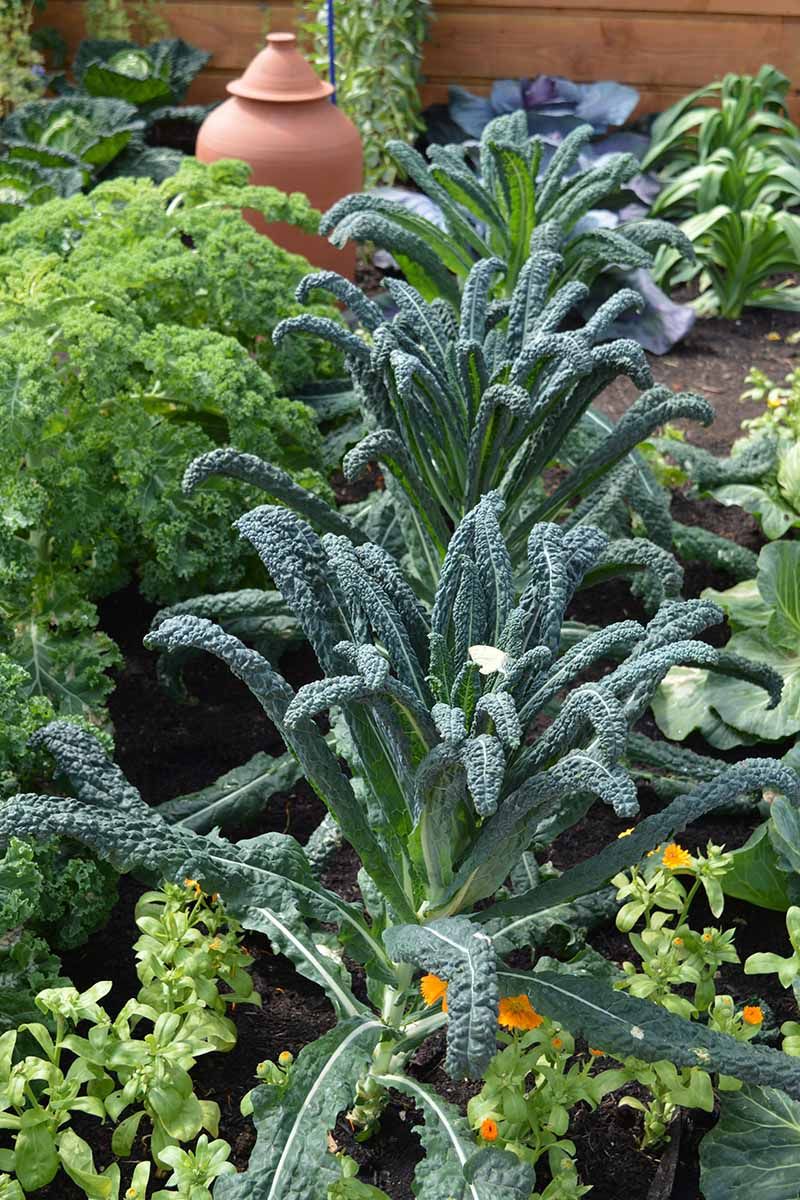
Seeing a kale plant with a long, bare stem and a tuft of leaves only at the top can feel alarming, but that shape is often the result of something you did right. Every time you remove an older lower leaf for the kitchen, the stem below that point stays exposed. Over a full growing season, repeated harvesting naturally creates a palm-tree silhouette, and that is perfectly normal for a productive plant.
Cultivar choice matters here too. University of Illinois Extension notes that tall, palm-tree-like kale can be a completely normal growth habit, particularly in varieties like Lacinato, also called dinosaur or Tuscan kale, which are bred to grow upright rather than wide. Expecting a Lacinato plant to look like a compact, rounded Red Russian is asking the wrong cultivar to do the wrong job.
A tall plant with green leaves at the top and no visible flower buds is still making food for you. University of Delaware Cooperative Extension confirms that kale continues producing new leaves from its growing tip as long as that center remains healthy. The shape of the plant at any given moment reflects its harvest history and its cultivar, not necessarily a problem that needs correcting.
Before deciding the plant needs any intervention, spend a minute looking it over. Check whether the leaves at the top are healthy and green, whether new small leaves are forming at the center, and whether the exposed stem is firm. If those things are true, your plant is likely doing exactly what a well-harvested kale should do, and the right move is to keep harvesting outer leaves rather than reaching for anything sharp.
Look for flowers, not height, when diagnosing bolting
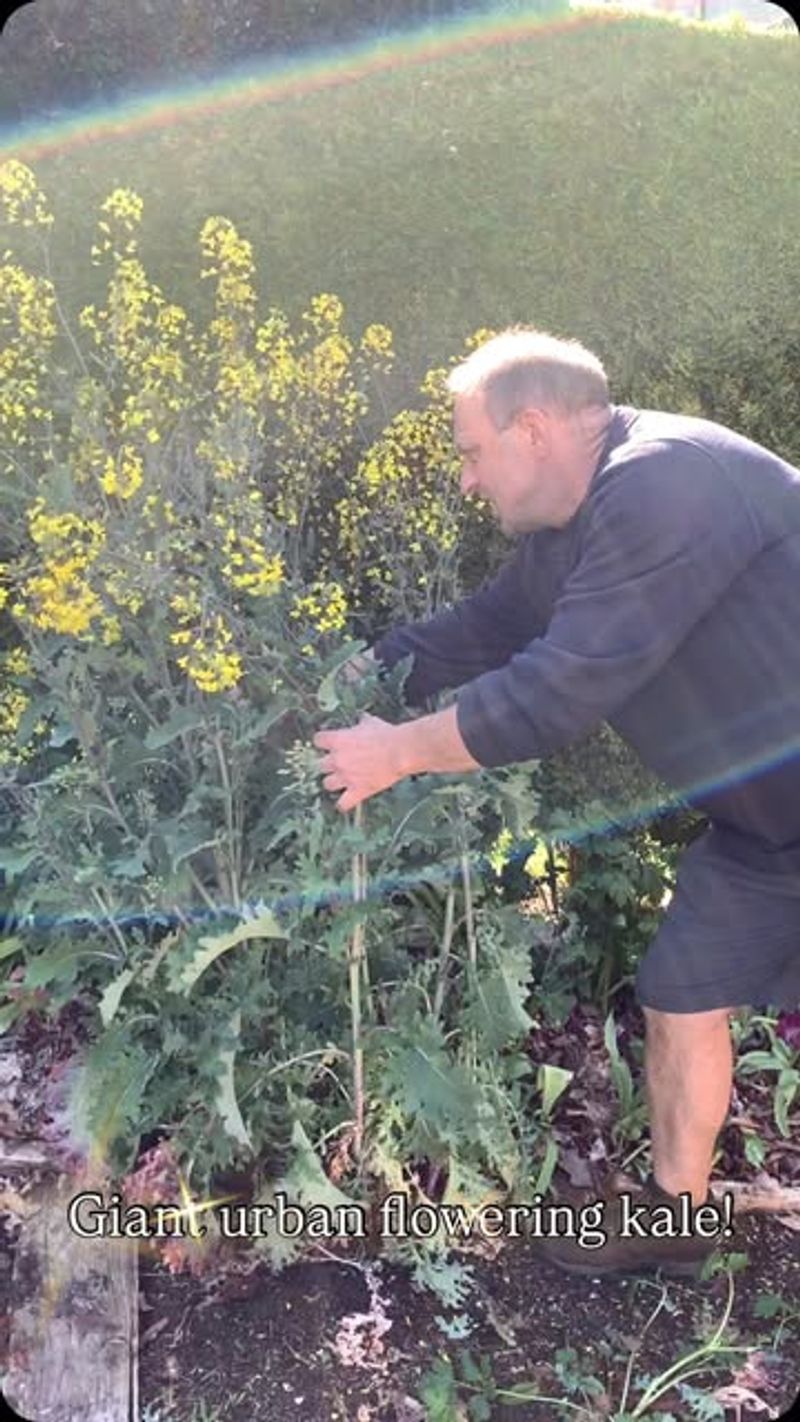
Bolting is a specific biological event, not just a description of a tall plant. When a kale plant bolts, it stops prioritizing leaf production and shifts its energy toward making flowers and seeds. The clearest sign is an elongated central stalk rising distinctly above the rest of the plant, often topped with clusters of small yellow buds or open flowers. That stalk looks and feels different from the main stem, and once you know what to look for, it is hard to miss.
University of Maryland Extension describes bolting as the transition from vegetative to reproductive growth, visible through the appearance of flower buds or a distinct flowering stem. Height alone cannot tell you this is happening. A plant can be three feet tall and still be in full vegetative production; another plant at the same height might have buds tucked into its center that signal it is ready to flower.
Several factors can push a plant toward that reproductive shift. UC Statewide IPM Program identifies heat, long days, and plant stress as common contributors. Purdue University research on brassica bolting adds that exposure to cold at the wrong growth stage can also trigger flowering in cole crops, which matters for fall gardeners who transplant young seedlings into unpredictable autumn weather.
Fall planting does reduce some seasonal pressure because shorter days and cooler temperatures generally discourage bolting in kale. Even so, it is not a guarantee. Stressed or immature transplants, unusual temperature swings, or a plant simply reaching the end of its productive life can all bring on flowering regardless of the season. Checking for buds rather than judging by height gives you an accurate answer instead of a guess.
“Leggy” can describe two different kale problems
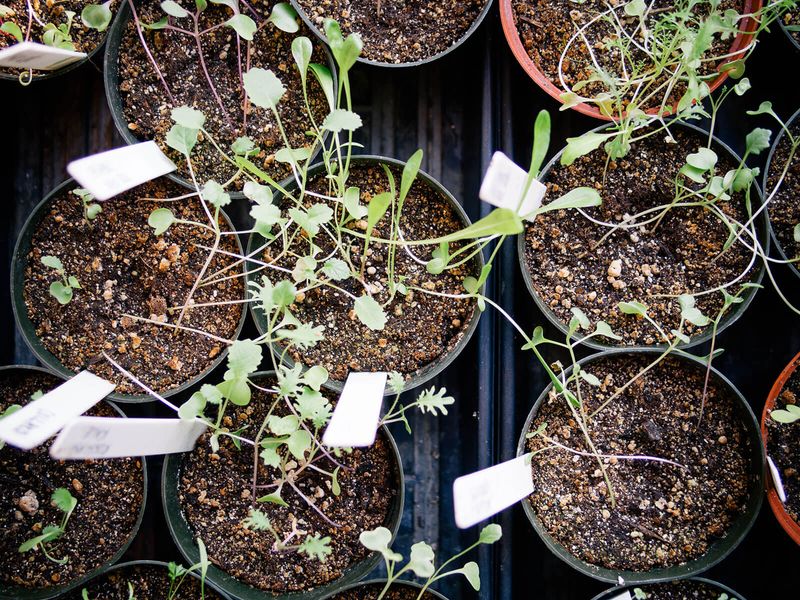
When gardeners call their kale leggy, they are often describing two very different situations that call for completely different responses. A young seedling with a long, spindly stem, wide gaps between leaves, and a pale color is telling you something went wrong during its earliest weeks. A mature kale plant with a tall, bare lower stem and a healthy crown of leaves at the top is probably just showing you the result of regular harvesting. Treating one like the other leads to frustration.
Stretched seedlings almost always come down to growing conditions. University of Minnesota Extension guidance on lighting for indoor plants explains that seedlings deprived of adequate light stretch toward whatever source they can find, producing weak, elongated stems that struggle to support the plant later. Excessive warmth, crowding, overwatering, and too much fertilizer early on can each play a role as well, and Iowa State University Extension points to low light as a primary cause of indoor seedlings going tall and spindly.
The corrective direction for a leggy seedling is to address the growing environment: move it closer to a brighter light source, reduce excess heat, thin crowded trays, and ease off on water and fertilizer. University of Illinois Extension’s seedling troubleshooting guide walks through these environmental fixes in practical detail.
For a mature plant with a bare stem, the fix is simply to continue harvesting correctly and let the plant keep growing upward. Pinching is not a universal remedy for either situation. Cutting the top off a healthy, mature kale plant removes the growing point that drives new leaf production and is not a practice supported by extension guidance for home kale growing.
Harvest the outside while protecting the center
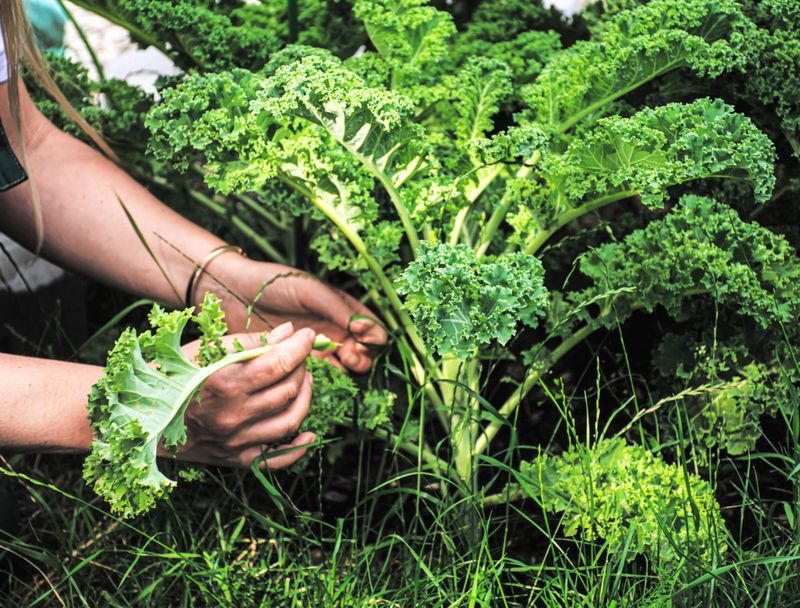
The most important harvesting rule for kale is also the simplest: work from the outside in and from the bottom up. The oldest, largest leaves sit on the lower outside of the plant, and those are the ones to take first. Leave everything near the center alone, especially the small, tightly clustered leaves at the very top. That central growing point is where every new leaf the plant will ever make originates.
University of Minnesota Extension’s guide on growing collards and kale specifically recommends harvesting outer and lower leaves while keeping the central growing point intact to support continued production. NC State Extension’s kale crop guide echoes this, and Clemson Cooperative Extension reinforces leaving the center undisturbed for ongoing leaf production.
Topping a kale plant by cutting off the growing tip is a separate action entirely, and it is not an established technique for making kale produce more or fill out faster. University of Delaware Cooperative Extension frames the center as the engine of the plant’s continued growth, which is exactly why protecting it matters.
When you follow the outside-in method consistently, the lower stem naturally becomes more exposed over time. That exposed stem is not a sign of neglect or a missed pruning step. It is the direct result of doing the job correctly, and a plant harvested this way can keep producing usable leaves for weeks or even months into the fall season.
Remove a real flower stalk only when the leaves remain worth eating
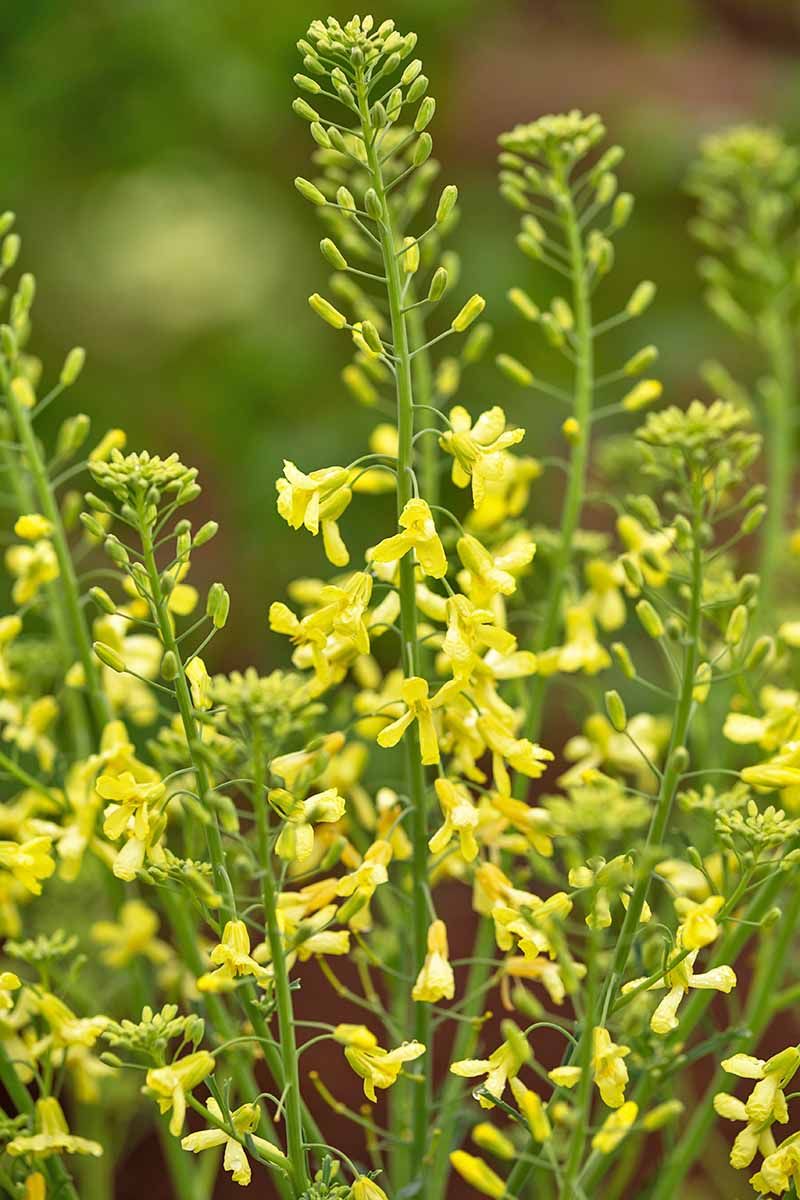
Once you have confirmed actual flower buds or a distinct elongated flowering stalk on your kale, the question shifts from diagnosis to decision. The key variable is whether the remaining leaves still taste and feel acceptable. If they are still tender and flavorful, removing the emerging flower stalk promptly can redirect the plant’s energy back toward leaf production, at least for a while.
University of Maryland Extension recommends removing flower stalks when they appear if you want to continue harvesting, while noting that quality may keep declining. University of Florida IFAS Extension describes this as a way to extend harvest briefly, not a method to permanently stop the plant’s reproductive shift.
The honest expectation after removing a flower stalk is a short additional harvest window, not a full reset. Bolting is a developmental transition driven by environmental cues and plant age, and removing one stalk does not erase those signals. NC State Extension’s bolting kale resource notes that leaves on a bolting plant often become tougher and more bitter as the plant prioritizes reproduction, which is a useful quality check as you decide whether continued harvesting is worthwhile.
Removing a flower stalk is also not the same as pinching the normal growing tip of a healthy plant. The flower stalk is a new, distinct reproductive structure. The growing tip is the vegetative center the plant needs to make more leaves. Cutting the wrong one shortens the harvest rather than extending it, so make sure you are targeting the stalk with buds, not the leafy center of an otherwise healthy plant.
Set fall kale up for leafy growth before stress arrives
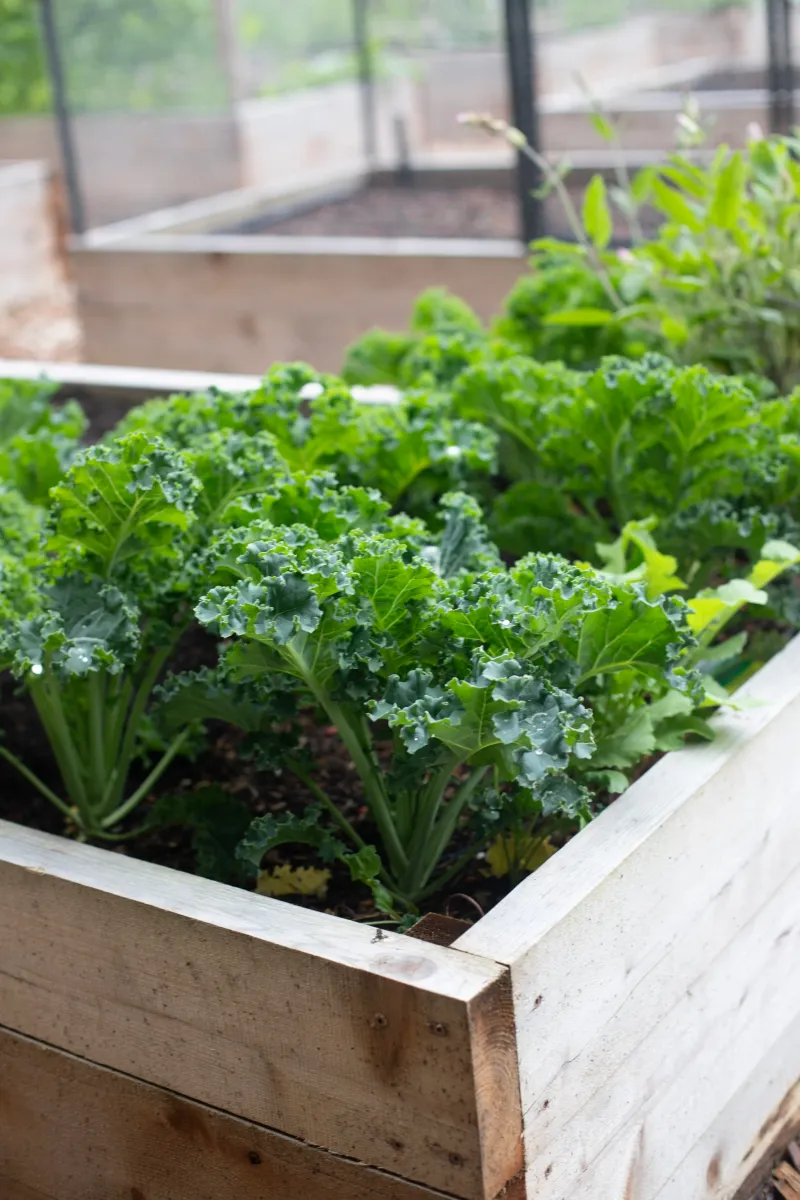
Getting the timing right at the start of the fall season is one of the most reliable ways to reduce the risk of thin growth, early bolting, and disappointing harvests. Kale planted too late may not have enough time to develop before hard frost arrives. Planted too early in still-hot weather, young plants face heat stress that can weaken them or push them toward flowering before they ever fill out.
University of Minnesota Extension’s guide on planting vegetables for fall harvest recommends working backward from your local first-frost date to determine when to sow or transplant, accounting for the cultivar’s days to maturity. University of Maryland Extension’s cole crops guide provides similar region-adaptable timing advice for fall brassica production.
Utah State University Extension’s kale guide notes that kale grows best in full sun, which supports strong, compact leaf development in spring and fall when light intensity is lower. During the hottest part of late summer, some afternoon shade can help young transplants establish without wilting or stressing, but once temperatures cool, full sun exposure helps the plant produce the dense, dark leaves most gardeners are after.
Young or immature plants that experience an early cold snap at a vulnerable growth stage may respond by flowering prematurely, as UC Statewide IPM Program points out for cool-season crops. Choosing cold-tolerant cultivars, hardening transplants properly, and planting at the right size for your local conditions all reduce that vulnerability without eliminating it entirely.
Check light, spacing, moisture, and nutrition before feeding
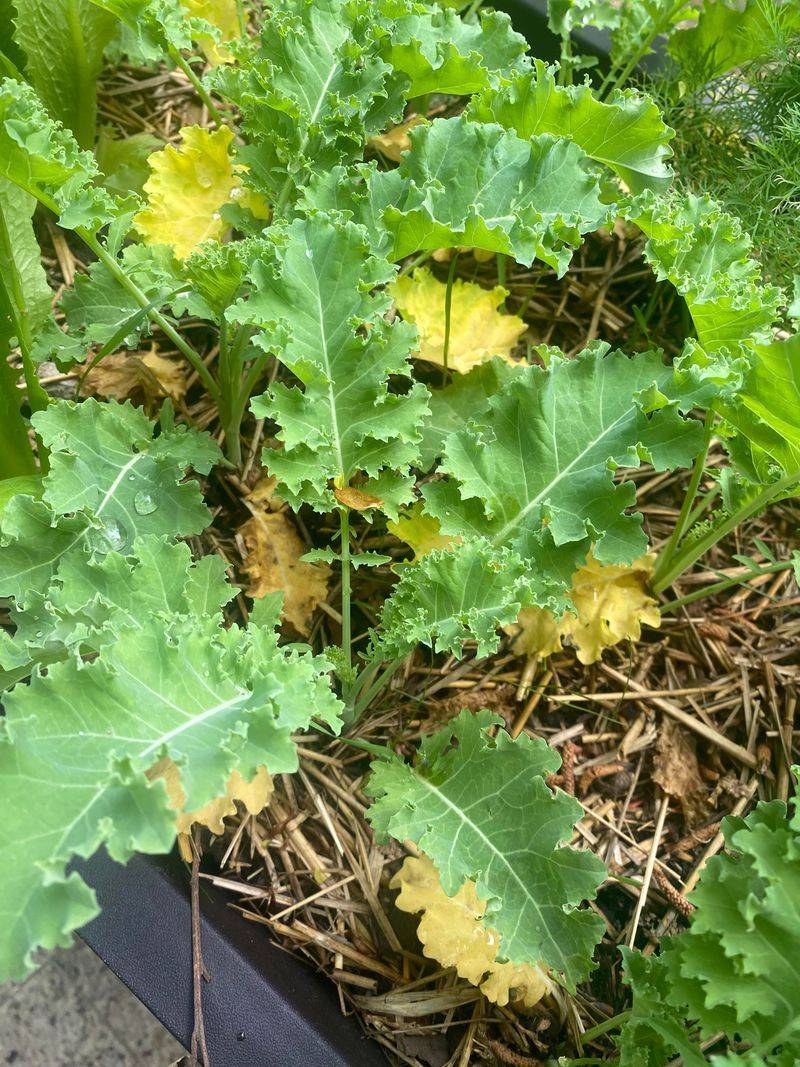
When a kale plant looks thin, weak, or pale but shows no flower stalk or buds, the problem is somewhere in its growing environment, and the answer starts with a systematic look rather than a bag of fertilizer. Running through a short checklist of light, space, water, and soil can point you toward the real issue faster than any single-input fix.
Light is the first thing to assess. University of Delaware Cooperative Extension identifies inadequate light as a recognized cause of long, thin, sparse growth, particularly in container-grown plants or beds with seasonal shade from trees or structures. If your kale is reaching toward one side or producing small, widely spaced leaves, it may simply need a sunnier spot.
Spacing is the next check. West Virginia University Extension’s kale guide notes that crowded plants compete for light, water, and nutrients, which can produce weak growth across the whole group. Thinning or transplanting to give each plant adequate room often produces visible improvement within a week or two.
Consistent moisture matters too. Kale under water stress drops older leaves early and may produce thinner, tougher foliage. If the soil is drying out unevenly or the plant is wilting between waterings, addressing irrigation is a higher priority than feeding.
Nutrition deserves a careful look rather than an automatic response. Iowa State University Extension’s guide on nitrogen deficiency describes pale foliage, weak stems, and premature loss of older leaves as signs worth investigating. But thin growth can also come from low light, pests, or root problems, so Virginia Cooperative Extension’s plant problem diagnostics guide recommends confirming the cause, ideally with a soil test, before applying any fertilizer. No single input reliably transforms a sparse mature kale plant into a bushier one.
Inspect damaged leaves before blaming bolting
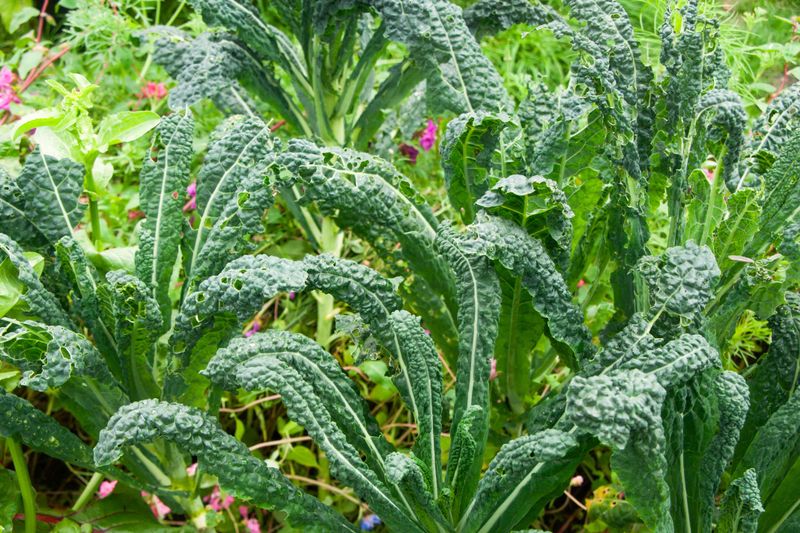
A kale plant that looks sparse, ragged, or full of holes may not be bolting or struggling with its environment at all. Pests can strip a plant of usable leaves faster than most diseases or nutrient problems, and the damage often goes unnoticed until the plant looks dramatically thinner than it should. Before reaching any conclusion about why your kale looks the way it does, flip some leaves over and look closely at what is living on them.
South Dakota State University Extension’s guide on kale pests identifies caterpillars, flea beetles, and aphids as common culprits. Caterpillars leave irregular holes or skeletonize whole sections of leaf; flea beetles create scattered tiny round holes across the leaf surface; aphids cluster on stems and undersides and cause distorted, curling growth. University of Maine Cooperative Extension’s imported cabbageworm guide covers one of the most common caterpillar pests on brassicas, including what eggs, frass, and feeding damage look like.
The inspection routine is straightforward. Check the undersides of leaves, the growing point, and the stem junctions where pests often shelter. Look for insects in any life stage, eggs, dark frass, slime trails, or tissue that appears chewed or bleached. West Virginia University Extension recommends starting with hand removal, water sprays for soft-bodied insects like aphids, and row covers as first-line options before considering any other treatment.
If you do move toward a pesticide product, identify the pest first and follow the product label exactly. A spray that works on caterpillars may not be appropriate for flea beetles, and applying the wrong product wastes time and money while the actual pest keeps feeding. Correct identification is the step that makes every other response more effective.
Match the fix to the sign you can actually see
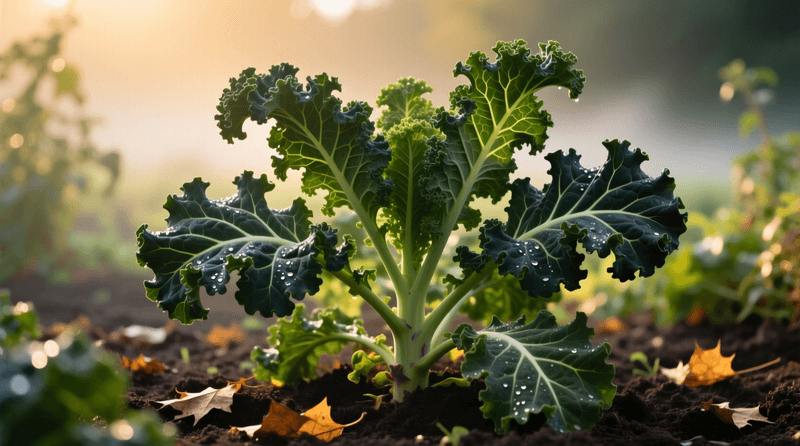
Tall kale with a bare lower stem and leaves only at the top most often reflects a plant harvested correctly over time, not one that missed a required pruning step. Stretched, pale seedlings with wide gaps between leaves point toward a light, heat, crowding, or watering problem during the earliest growth stage. Leaves that look ragged, full of holes, or stripped away call for a pest inspection before anything else. Only when you find actual flower buds or a distinct elongated stalk rising from the center are you looking at bolting.
University of Illinois Extension and University of Maryland Extension both support preserving the central growing point and harvesting outer leaves as the right ongoing practice. NC State Extension’s kale crop guide reinforces that the center drives continued production, which is why removing it is not an established fix for sparse growth.
When you do find a confirmed flower stalk and the remaining leaves still taste good, remove the stalk and harvest what you can, knowing the window may be short. For the next season, adjust fall timing, site selection, and cultivar choice to give the plant better conditions from the start. A tall kale plant that keeps making leaves from the top is doing its job well, and the best response is usually to keep harvesting and let it grow.