
Why Your Cucumber Leaves Are Turning Yellow – And The First Routine To Inspect
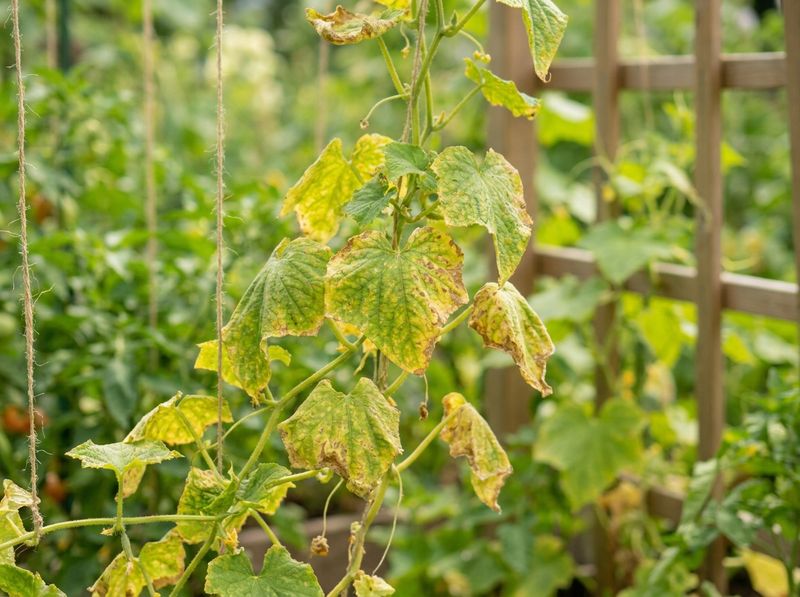
Cucumber plants are pretty good at keeping quiet until something goes wrong, and yellow leaves are one of the clearest signals they send. The tricky part is that yellowing can mean several different things, so the color alone does not tell you what to fix.
Before you reach for the hose or a bag of fertilizer, a few quick checks around the roots and leaves will point you in a much more useful direction.
Yellow leaves are a warning sign, not a diagnosis
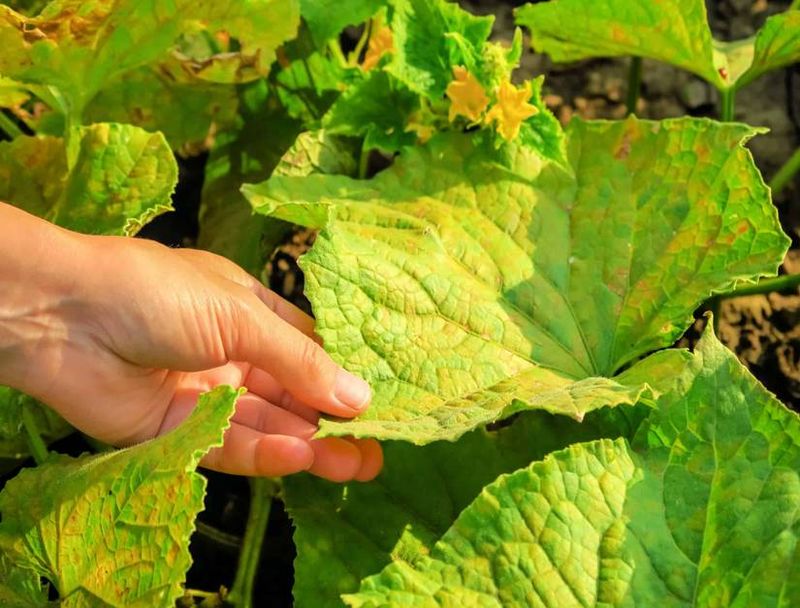
Spotting yellow leaves on your cucumber plant is unsettling, but the color itself is a symptom, not an answer. According to UC IPM’s cucumber pest and problem guide, yellowing can result from excess water, drought, root disease, nutrient deficiency, insects, viruses, foliar disease, or simply the normal aging of older leaves.
That range of possibilities matters because the right response to one cause can make another cause worse.
Watering is a smart first place to look because inconsistent moisture, calendar-based watering, and saturated soil are among the more common stressors for cucumbers. Utah State University Extension’s irrigation guide for cucurbits notes that cucumbers need regular, uniform moisture and that overwatering can encourage root rot, which can produce yellowing followed by wilt or collapse.
That does not mean watering caused your specific problem, only that it is the first routine worth auditing.
Resist the urge to water, fertilize, or pull off yellow leaves right away. Each of those actions can feel productive while actually masking the real issue or creating a new one.
Instead, plan to work through a short set of checks: feel the soil several inches below the surface near the roots, observe whether water drains normally or lingers, scan both sides of the leaves for spots or insects, and compare the oldest leaves near the base with the newest leaves at the tips. That pattern, taken together, is what will guide a reliable next step.
Check whether watering is contributing to the yellowing

Cucumbers are not particularly forgiving when water supply swings from one extreme to the other. Watering on a rigid schedule without checking the soil can leave plants either parched during a hot week or sitting in waterlogged ground after a rainy stretch.
Both conditions create stress, and stressed cucumbers often respond by yellowing their leaves. Utah State University Extension’s cucurbit irrigation guidance describes consistent moisture as essential throughout the growing season, particularly during establishment, flowering, and fruit development.
A commonly cited starting point is roughly 1 inch of water per week for garden vegetables, but that figure requires real adjustment depending on your situation. Illinois Extension’s guide to growing cucurbits emphasizes that cucumbers are especially sensitive to water shortages at key growth stages, meaning the “1 inch” estimate can fall short during hot spells, when plants are large and fruiting, or when soil drains quickly.
Rainfall, soil texture, mulch depth, container size, wind, and air temperature all shift how much and how often water is actually needed.
University of Minnesota Extension’s vegetable garden watering advice recommends checking soil moisture near the root zone rather than watering by the calendar. Sandy soil may need watering more often than clay soil, and a plant setting fruit in 90-degree heat needs more than a seedling on a mild spring morning.
Yellowing alone cannot tell you whether the plant is too dry or too wet, which is exactly why the soil check, not the leaf color, should drive your decision.
Overwatering carries its own risks that go beyond soggy roots. Utah State University Extension’s overwatering guide explains that persistently saturated soil can lead to root stress and reduced oxygen availability, which can produce yellowing that looks nearly identical to drought stress from the outside.
The key difference lives underground, not in the leaves.
Read the soil and roots before you add water
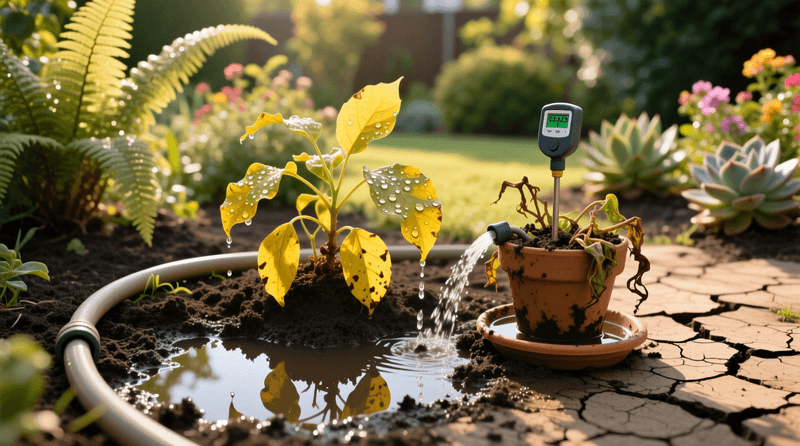
Before changing anything about your watering routine, spend two minutes checking what the soil is actually doing. Push your finger or a wooden dowel several inches straight down into the ground close to the plant’s base, reaching toward the root zone rather than just testing the surface.
Surface soil can feel dry while the root zone is still moist, and surface soil can feel damp while deep roots are sitting in standing water. What you find several inches down is what matters.
Dry soil that crumbles away from your finger and feels warm suggests the plant may not be getting enough water to the roots. In that case, water deeply and evenly at the base of the plant rather than giving a quick surface sprinkle.
A slow, thorough soak that reaches the root zone does more good than frequent light watering that never penetrates deeply. University of Minnesota Extension’s watering guide advises watering when soil is dry about 2 inches below the surface, then allowing the soil to partially dry before watering again.
Soggy or muddy soil that holds its shape and feels cold is a different situation entirely. Adding more water to already saturated ground can worsen root stress rather than relieve it.
Pause routine watering, check whether the bed drains normally after rain or irrigation, and consider whether the irrigation duration or frequency needs to be reduced. UC IPM’s guide to root rot on cucurbits associates damp or saturated conditions with cucurbit root rot, noting that crown leaves may yellow before the plant rapidly wilts or collapses.
If the soil is wet and the plant is also wilting or declining despite that moisture, inspect the roots. Healthy roots are firm and light-colored.
Soft, brown, or mushy roots near the crown point toward root stress or disease, which requires a more specific diagnosis than adjusting your watering schedule. USU Extension’s overwatering resource notes that persistently wet soil and poor drainage are the conditions most associated with this kind of root decline.
Build a watering routine that keeps moisture steady
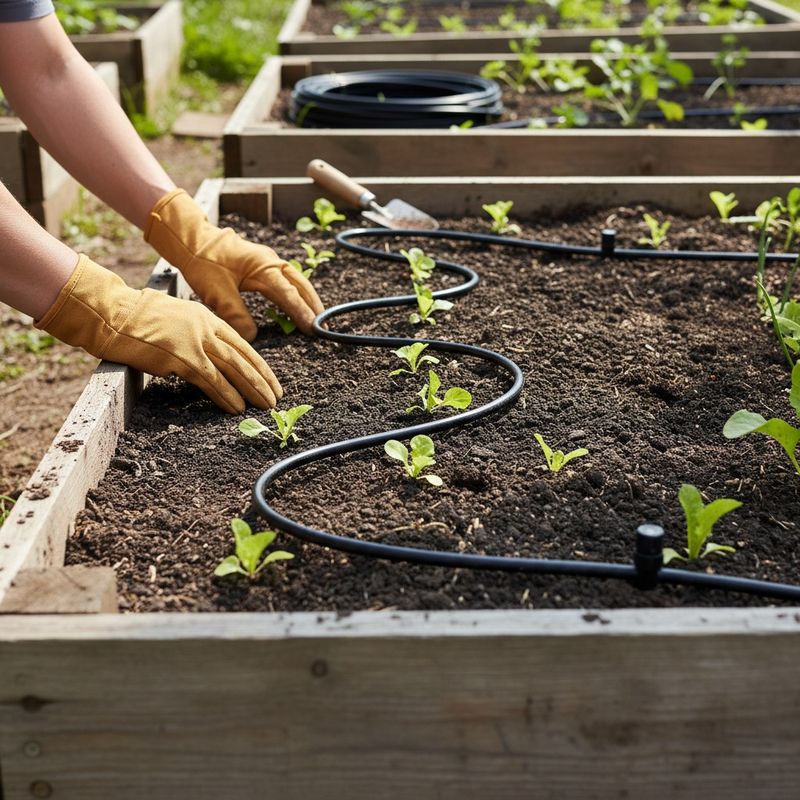
Once you know what the soil is doing, you can build a watering habit that keeps moisture consistent rather than reactive. The core idea is simple: water deeply when the root zone is dry, then check conditions again before watering a second time rather than defaulting to a fixed day of the week.
University of Minnesota Extension’s vegetable watering guidance stresses that monitoring the root zone and adapting frequency to soil texture and weather conditions produces better results than any calendar-based schedule.
Delivering water at the base of the plant rather than over the foliage is a practical step that helps on two fronts. First, it puts moisture where the roots can use it.
Second, it keeps leaves drier, which can reduce conditions that favor certain foliar diseases. Drip irrigation or a soaker hose accomplishes both goals efficiently.
Trellising cucumber vines off the ground also improves airflow around the leaves, which helps foliage dry faster after rain or overhead watering. University of Minnesota Extension’s downy mildew resource recommends both drip irrigation and trellising as practices that can help reduce foliar disease risk in cucurbits.
Timing overhead irrigation in the morning is generally preferable when the irrigation method wets the canopy, because leaves have the rest of the day to dry out. That said, morning timing is not a cure for yellow leaves, and it should not be presented as one.
Penn State Extension’s analysis of drip irrigation timing reports that for drip systems, which do not wet the canopy, the time of day is much less consequential than applying the correct amount of water and avoiding saturated soil. If you already use drip irrigation, focus your attention on duration and frequency rather than the clock.
Angular spots and leaf fuzz suggest a disease pattern
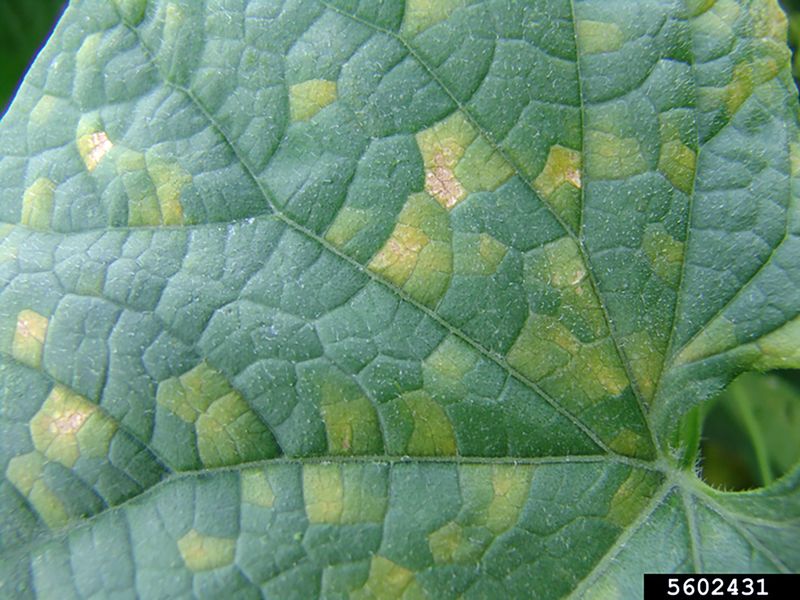
Not all yellow patches on cucumber leaves look the same, and the shape of the discoloration can redirect your investigation away from watering entirely. Diffuse, uniform yellowing that spreads gradually across whole leaves looks very different from angular yellow spots that are sharply bounded by the leaf’s veins.
That angular shape is a meaningful clue because it reflects the physical structure of the leaf limiting where a pathogen can spread.
UC IPM’s angular leaf spot guide describes angular leaf spot as producing pale yellow or water-soaked spots that become brown and tattered at the center, with the vein-bounded shape being a distinguishing characteristic. Downy mildew can produce a similar angular appearance on the upper leaf surface, often with a gray or purple fuzzy growth on the underside of the leaf when humidity is high.
Finding that fuzz is one of the more reliable field clues for downy mildew.
Both diseases depend on more than just wet foliage. University of Minnesota Extension’s downy mildew resource explains that disease development also involves temperature, air movement, regional pathogen movement, and the presence of the pathogen itself.
Wet leaves can favor spread under the right conditions, but overhead watering does not automatically cause these diseases, and the same symptoms can appear even in gardens with careful irrigation practices.
When inspecting your plant, turn leaves over and look at both surfaces carefully. Angular spots, tattered brown centers, or gray-purple fuzz on the undersides are signs that the investigation needs to move beyond the watering routine.
Treating a disease pattern as a simple moisture shortage, and responding with more or less water, will not address the underlying problem and may delay a more useful response such as improving airflow, removing severely affected leaves for sanitation, or consulting your local extension office for a regional diagnosis.
Leaf age and visible pests can reveal other causes
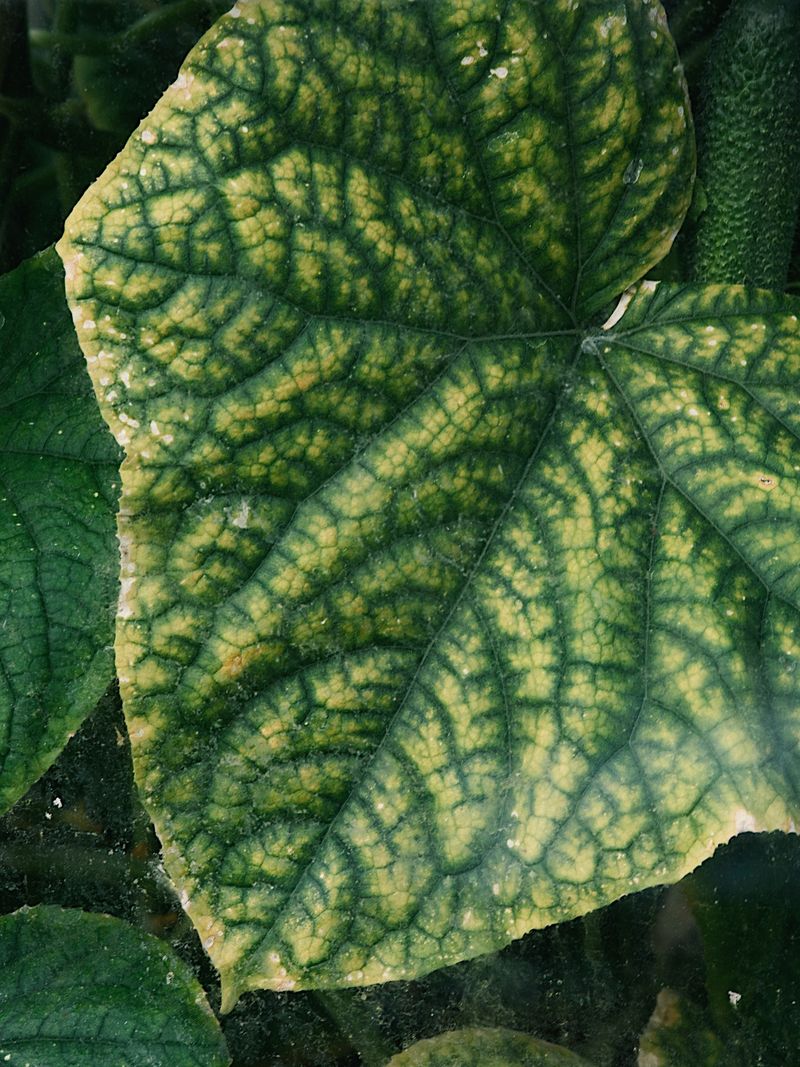
Where on the plant the yellowing appears, and which leaves are affected first, carries diagnostic value that leaf color alone cannot provide. Older leaves near the base of the plant that turn uniformly pale yellow while new growth looks normal can be consistent with nitrogen deficiency.
Nitrogen is mobile inside the plant, meaning the plant pulls it from older tissues to support new growth when the supply runs short. Utah State University Extension’s nutrient management guide notes that a soil test is preferable to guessing, because excess fertilizer can damage roots, increase salt stress, and push excessive vine growth at the expense of fruit.
Yellowing that appears between green veins, especially on older leaves, can suggest magnesium deficiency. University of Minnesota Extension’s magnesium crop production resource describes this interveinal pattern as characteristic of magnesium shortage, though it also notes that disease and root problems can create visually similar symptoms.
If the interveinal yellowing is appearing on newer leaves instead, a different nutrient problem or a soil pH issue may be involved. Visual diagnosis for nutrient deficiencies is genuinely uncertain, and a soil test is the most reliable way to confirm.
Pests leave their own calling cards. Tiny pale or bronze stippling across the leaf surface, fine webbing on the undersides, sticky honeydew residue, or clusters of small insects all point toward sap-feeding pests such as spider mites, aphids, or whiteflies rather than a watering problem.
UC IPM’s cucurbit pest damage identification guide covers the range of vegetative-stage damage patterns that different insects produce, which can help distinguish pest injury from other causes. Cucumber beetles are a separate concern; they can damage foliage and transmit bacterial wilt, though bacterial wilt is more typically associated with sudden wilting and collapse than with the gradual, uniform yellowing that often prompts this kind of investigation.
Finally, context matters for urgency. UC IPM’s cucumber overview reinforces that yellowing is a broad symptom with many possible origins.
A handful of yellowing lower leaves late in the growing season, when the plant is otherwise healthy and producing fruit, is less alarming than yellowing that is spreading through new growth, accompanied by wilting, or affecting the whole plant at once.
Follow the evidence before changing the routine
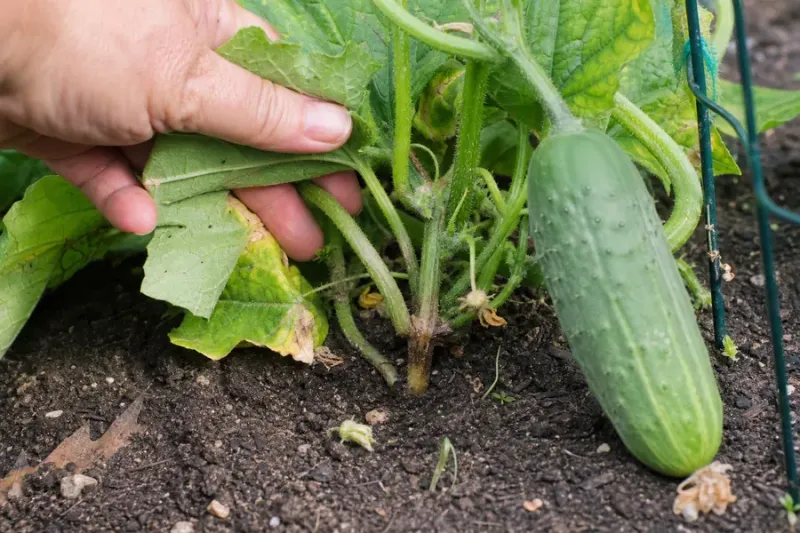
A practical rescue sequence keeps the investigation orderly. Start by pressing your fingers several inches into the soil near the plant’s base.
Dry soil calls for a deep, even soak at the root zone. Soggy soil calls for pausing irrigation and improving drainage before adding any more water.
Utah State University Extension’s cucurbit irrigation guidance reinforces that consistent moisture, not reactive watering triggered by leaf color, is what cucumbers actually need.
After checking the soil, turn over several leaves and look at both surfaces for angular spots, fuzz, stippling, webbing, or insects. Compare older leaves near the base with newer leaves at the growing tips.
If the plant is wilting despite wet soil, inspect the roots for softness or discoloration rather than assuming the plant is thirsty. UC IPM’s root rot guide identifies rapid decline in wet conditions as a reason to assess root health and seek a more specific diagnosis.
Avoid adding fertilizer unless a soil test, clear nutrient pattern, or extension recommendation supports it. UC IPM’s cucumber overview lists multiple possible causes for yellowing, none of which are reliably fixed by fertilizer applied without a confirmed deficiency.
One last distinction worth keeping in mind: an overmature cucumber fruit turning yellow on the vine is a harvest issue, not a sign of plant decline. Illinois Extension’s cucumber guide notes that fruit left too long will yellow and soften, which is separate from the leaf yellowing discussed here.
Yellow leaves ask you to investigate; what you find in the soil and on the plant is what tells you what to do next.