
19 Small Perennials That Fill Bare Beds Fast Before This Summer Ends
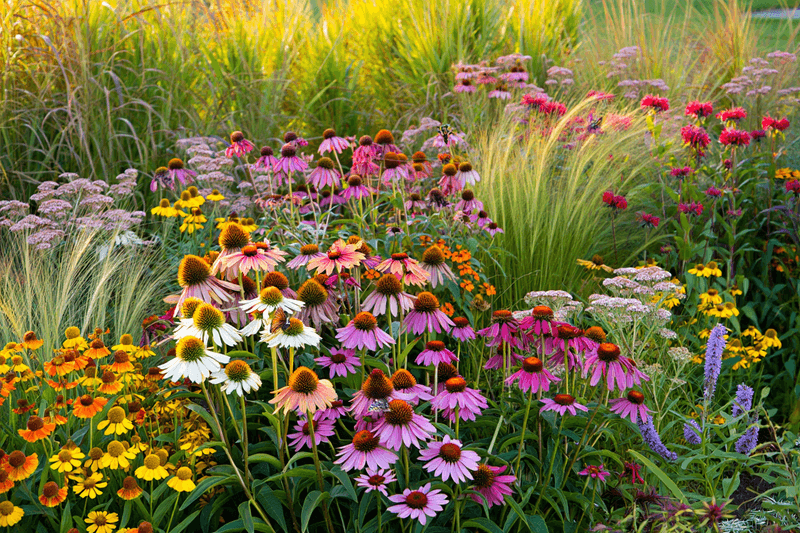
Staring at an empty patch in your flower bed right now? You still have time to fill it before summer wraps up, and the trick is choosing perennials that grow fast and come back every year.
The plants below spread quickly, bloom for weeks, and shrug off summer heat without a lot of fussing from you. Pick a few, get them in the ground, and watch those bare spots disappear.
1. Coneflower (Echinacea)
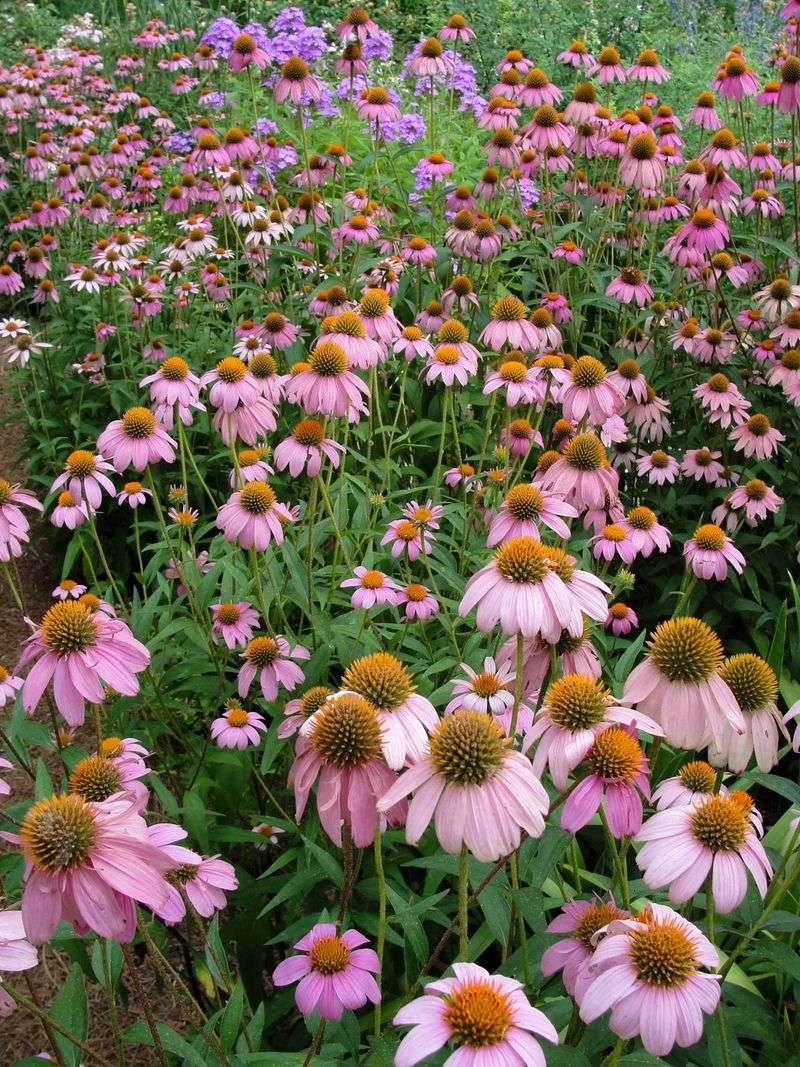
Butterflies practically line up for coneflowers, which is part of why gardeners keep tucking them into every open spot. Hardy across zones 3 through 9 and topping out around 18 to 36 inches, they hold their own even when the July sun turns brutal.
What sets them apart from the rest of this list is stamina. They start blooming in midsummer and simply keep going through fall, so a bare bed you fill now will still be putting on a show when the leaves start turning.
Drought does not scare them, and neither does neglect. Snip off the faded flowers every so often and you will get non-stop color right up until the first frost.
Birds also love the seed heads if you leave a few standing into winter.
2. Rudbeckia (Black-Eyed Susans)
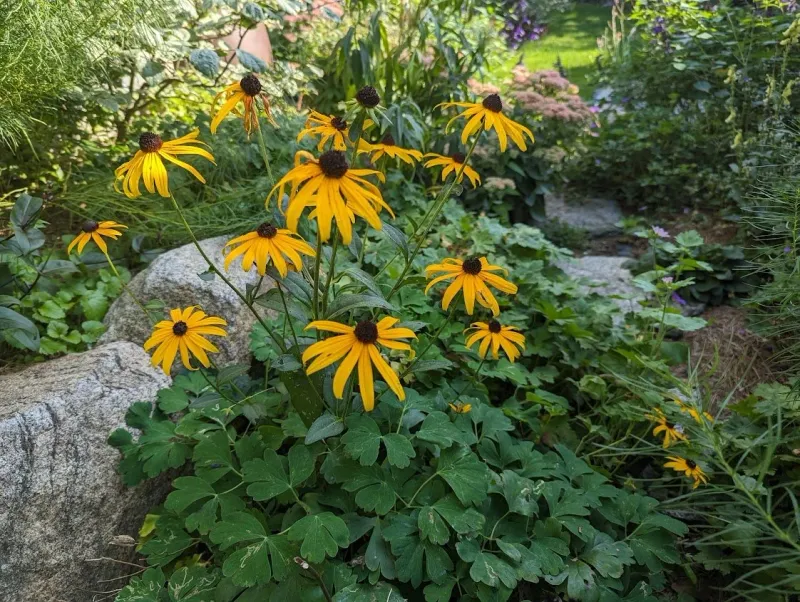
Golden petals circling a dark chocolate center make Black-Eyed Susans instantly recognizable, and they earn their spot here by multiplying on their own. Drop a few plants in a gap this summer and next year you will have noticeably more.
They thrive in the same zones 3 to 9 range as coneflowers and reach a similar 18 to 36 inches, but their real gift is self-seeding. The plants spread and fill space year after year without you lifting a finger.
Heat and dry spells barely register with these tough natives. Keep pinching off the spent blooms and the flowering just keeps rolling from midsummer clear into fall, giving you cheerful color exactly when other plants start fading.
3. Coreopsis
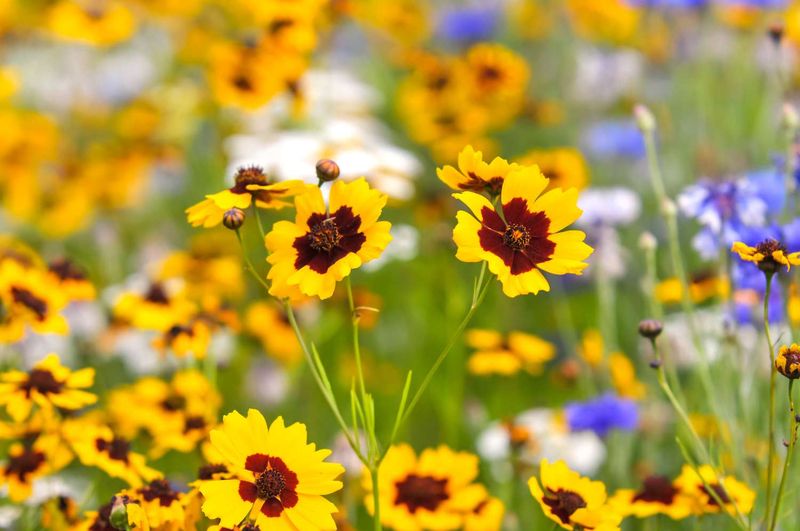
Think of coreopsis as the friendly neighbor that quietly takes over the empty lot next door in the nicest possible way. Its bright, daisy-like blooms open in early summer and refuse to quit until fall.
Comfortable in zones 3 through 9, this perennial spreads with almost no effort on your part, which makes it a natural pick for closing up gaps in a hurry. One small plant becomes a cheerful little colony surprisingly fast.
Give it a quick deadheading now and then and the flowers just keep coming. The sunny yellow and gold tones pair beautifully with almost anything else you plant nearby.
4. Sedum (Stonecrop)
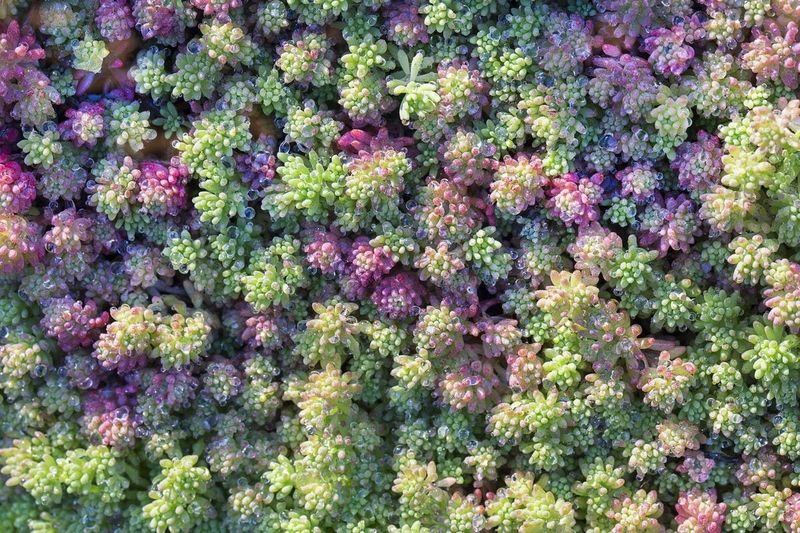
Ever wish a plant could just handle itself? Sedum comes about as close as it gets.
This low-growing succulent creeps along the ground and stitches bare patches shut while asking for almost nothing in return.
Its fleshy leaves store water, so it laughs off dry spells and poor soil that would sink fussier plants. Some kinds flower in late spring, while others save their fireworks for late season, adding fresh interest just as the rest of the bed winds down.
Because it is so forgiving, sedum is a smart choice if you tend to forget the watering can. Plant it once and it settles in to do the quiet work of covering ground for you.
5. Agastache (Hyssop)
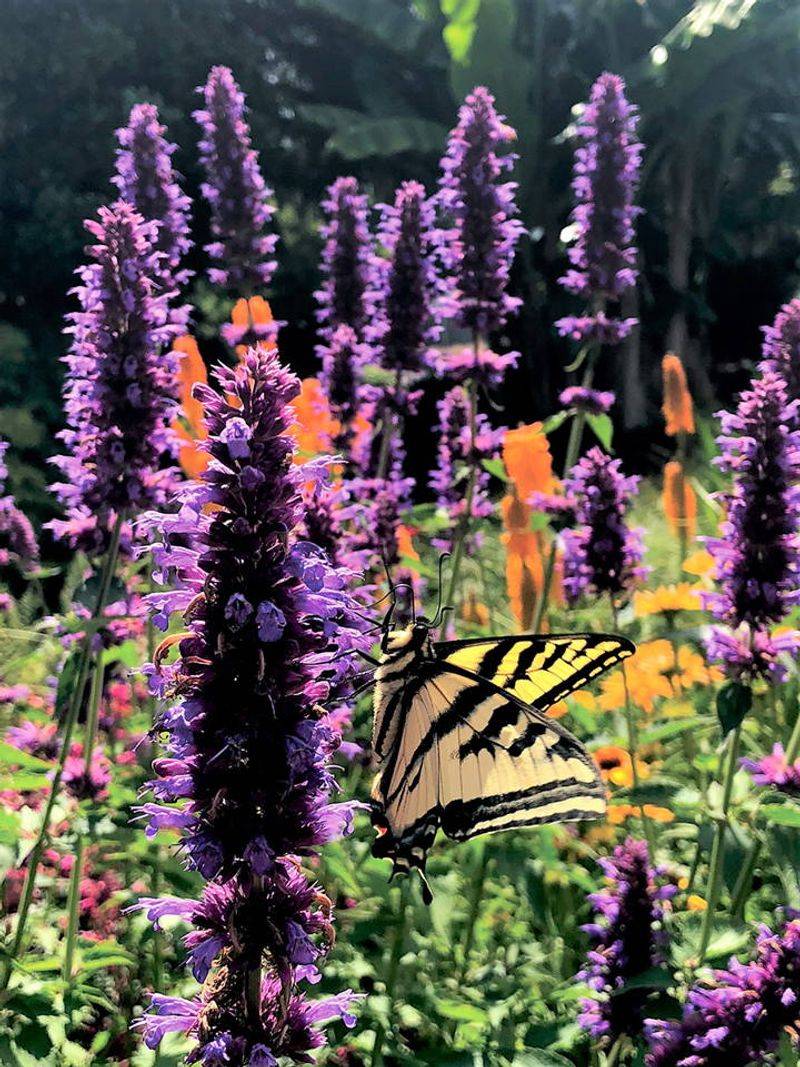
Brush against agastache and you get a wave of fragrance somewhere between mint and licorice, a bonus that comes free with the flowers. Also called hummingbird mint, it sends up long spikes of tubular blooms in pink, purple, orange, blue, or white.
Fast growth is its calling card. Set it in a sunny gap in early summer and those flower spikes climb quickly, blooming from late spring right into early fall.
Deer tend to leave it alone thanks to that scent, and it asks for very little care once established. Hummingbirds and bees, on the other hand, will find it in no time.
6. Veronica (Speedwell)
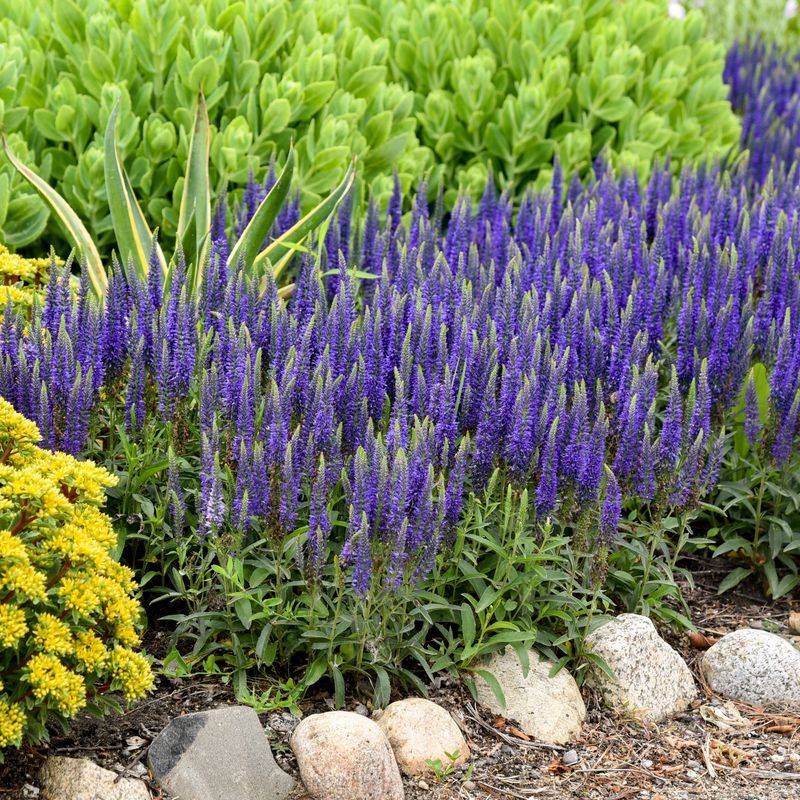
Neat is the word for veronica. It forms a tidy green mound and then shoots up slender spikes packed with tiny tubular flowers in blue, purple, pink, or white.
The blooming runs from late spring into early summer, and here is the handy part: cut the plant back once the first flush fades and it will push out fresh growth and more flowers. That reliable rebound makes it feel like you are getting two seasons in one.
Low maintenance from start to finish, speedwell keeps its foliage looking crisp and full even between bloom cycles. It slips easily into the front of a border where its clean mound quietly fills the space.
7. Creeping Phlox
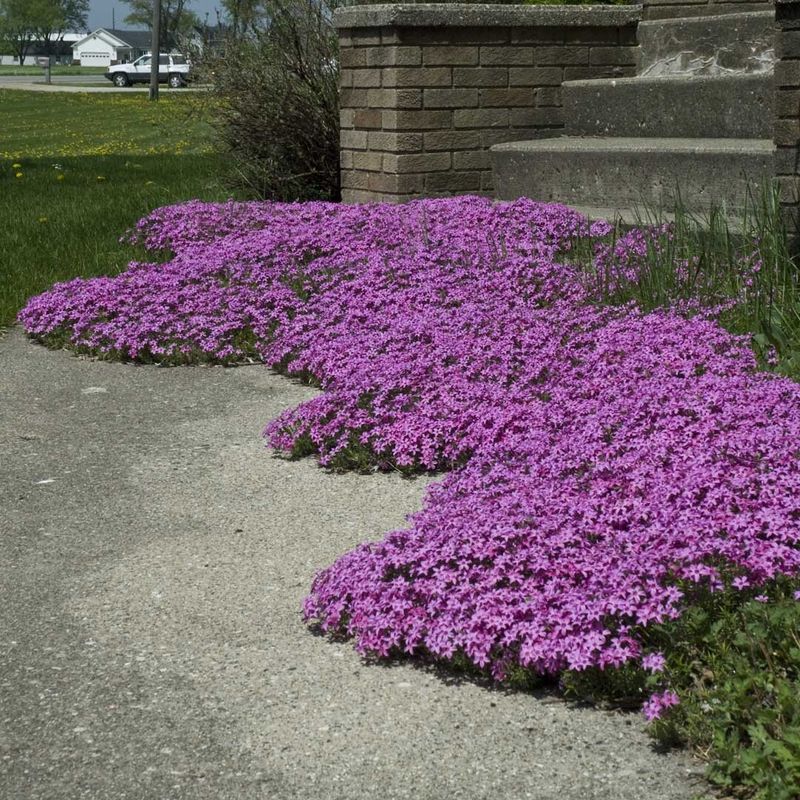
For sheer ground-covering speed, creeping phlox is hard to beat. It rolls out like a living carpet, blanketing bare soil in a dense mat of color that spills over edges and slopes.
Come spring it puts on a jaw-dropping show, so dramatic that people slow down to look. That fast, low spread makes it a favorite for pathways, rockeries, and sunny borders where you want coverage now, not eventually.
Smaller gardens especially benefit, since a little goes a long way once it settles in. Even after the peak bloom, the trailing green mat keeps holding down the space it claimed.
8. Helenium (Sneezeweed)
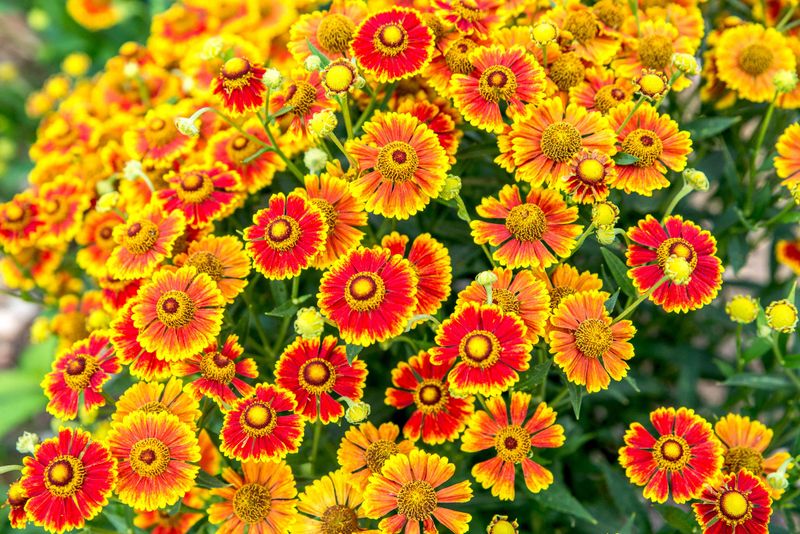
Do not let the name scare you off, because sneezeweed has nothing to do with sniffles. This tough North American native rises 30 to 40 inches tall and crowns itself with warm, daisy-like blossoms in yellow through deep, fiery red, each with a prominent central cone.
Its timing is the real selling point. The flowers arrive in generous clusters in late summer and fall, filling that awkward stretch when many gardens start looking tired.
Bees and butterflies flock to it during those cooler weeks when nectar gets scarce. Plant a clump now and it becomes a bold, late-season anchor right when you need one most.
9. Dianthus
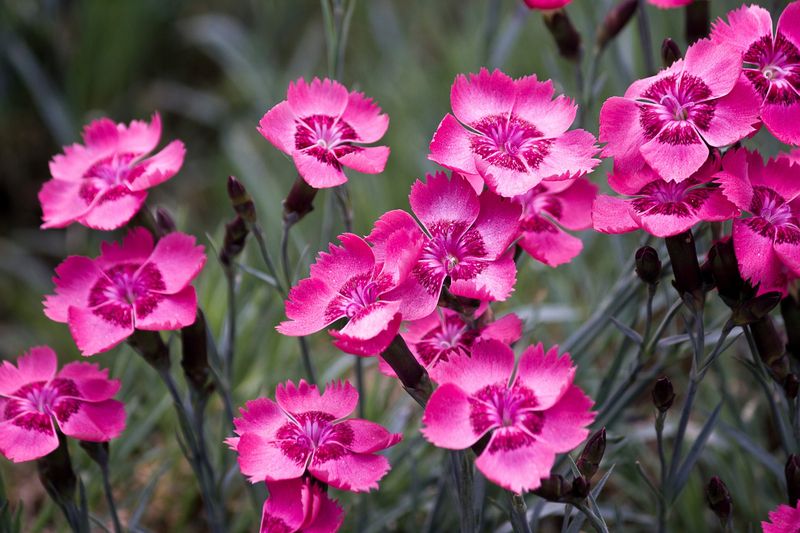
Lean in close and dianthus rewards you with a sweet, clove-like scent that has charmed gardeners for generations. Its frilly, fringed flowers look like they belong in an old-fashioned cottage garden, and that is exactly where they got famous.
The genus is wonderfully varied, ranging from tiny 4-inch cushions to plants stretching 36 inches tall and up to 24 inches wide. That range means you can find one to fit almost any gap, from a border edge to a bigger open patch.
Long-lived and dependable, dianthus keeps coming back with those charming blooms year after year. The fragrance alone earns it a place near a walkway where you will pass it often.
10. Lamb’s Ear (Stachys byzantina)
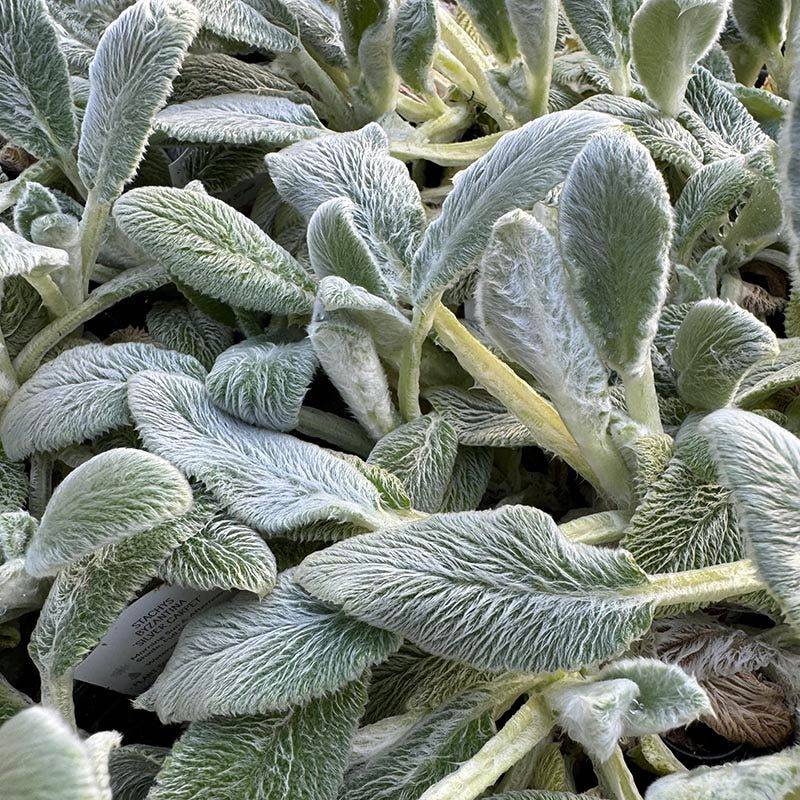
Kids can never resist touching lamb’s ear, and honestly, neither can most adults. The velvety silver leaves feel exactly like the soft ear it is named after, giving your bed a fuzzy, moonlit texture no other plant on this list offers.
Growing in zones 4 through 9, the foliage stays low at 6 to 8 inches while flower spikes rise to 12 to 18 inches. It spreads into a dense mat that crowds out weeds, which makes it a fantastic groundcover or border edging.
Poor soil, drought, and general neglect do not faze it one bit. Tuck it into a bare, dry spot and it will quietly weave itself into a soft silver blanket.
11. Lavender (Lavandula)
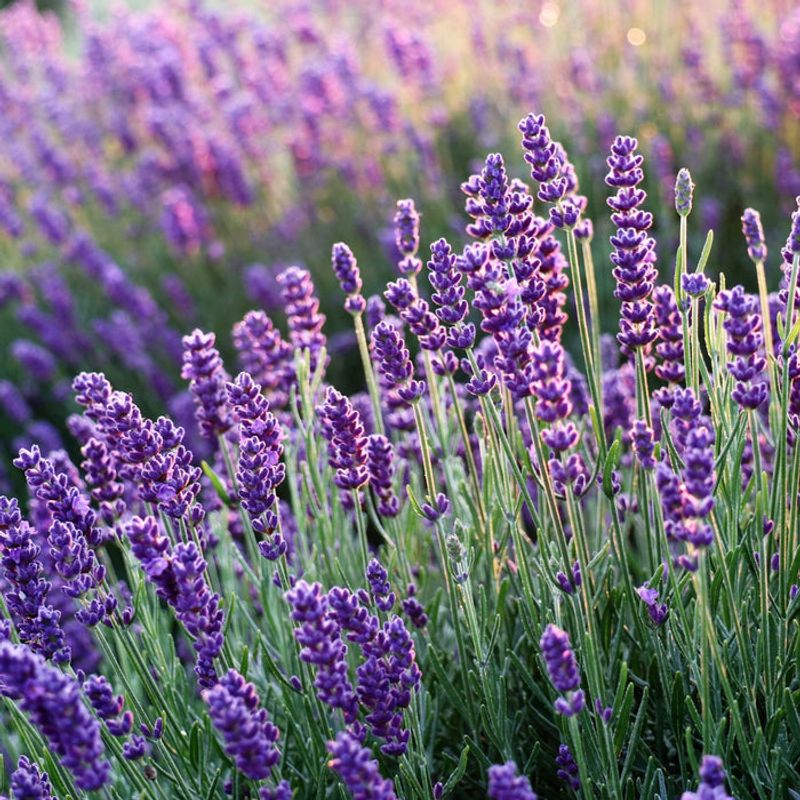
Few plants pull double duty like lavender, filling a bed with color while perfuming the whole yard. Hardy in zones 5 through 9, it grows 1 to 4 feet tall and can sprawl up to 5 feet wide, with aromatic gray-green foliage and those unmistakable purple spikes.
The bloom window stretches from late spring into fall, and the variety called Sweet Romance keeps flowering all season without any deadheading. That kind of hands-off performance is a gift in a busy summer.
Lavender actually prefers to be a little neglected. Give it hot, dry conditions, lean soil, and sharp drainage, then let the soil dry out between waterings and it will thrive on that tough love.
12. Daylilies
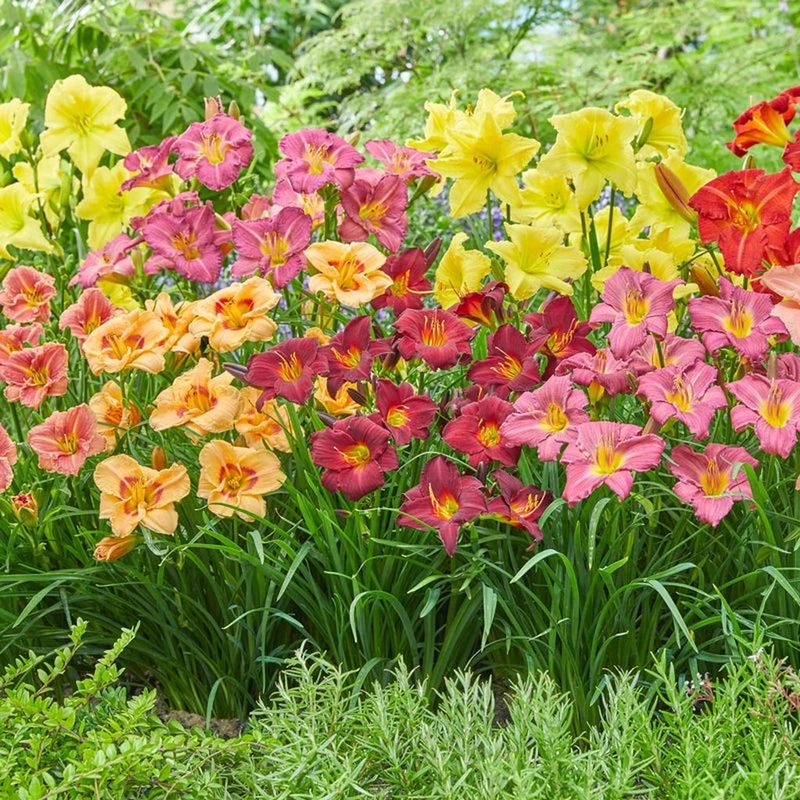
Blink and your daylily clump has doubled. These fast multipliers fill borders in a hurry and return a little bigger and bolder every single season, which is exactly what a bare bed calls for.
The color range is huge, and plenty of compact varieties exist for tighter spots, so you are not locked into giant plants. Whatever shade you crave, there is likely a daylily to match it.
Best of all, they ask almost nothing of you. Low-maintenance and endlessly reliable, they reward beginners and busy gardeners alike with armfuls of blooms.
13. Catmint (Nepeta)
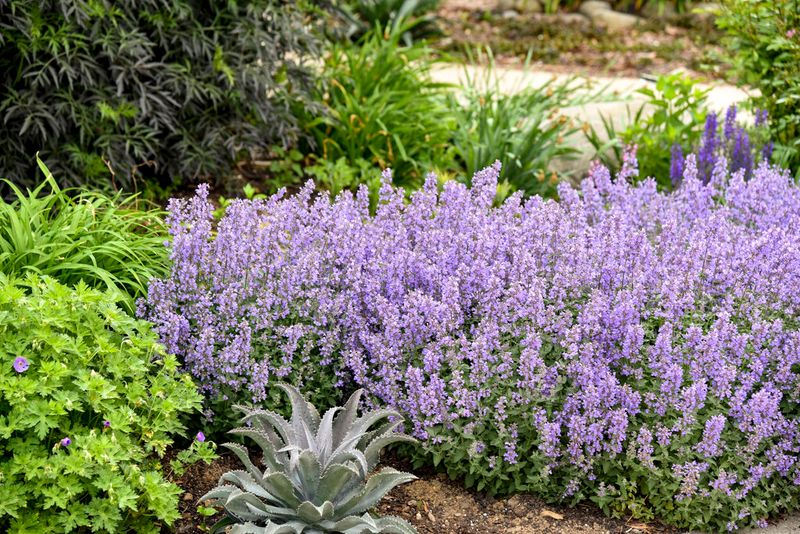
Soft sweeps of hazy blue and purple are what catmint brings to a bed, its flowers floating just above aromatic gray-green foliage. The overall effect is a relaxed, billowy mound that softens hard edges and fills gaps gracefully.
Pollinators adore it, and the blooming season runs long, so bees and butterflies keep visiting for weeks. Those gentle, spreading mounds make it especially good at covering open ground without looking stiff or planned.
It is a workhorse that stays easygoing. Once it settles in, catmint keeps offering color with very little coaxing on your part.
14. Ajuga
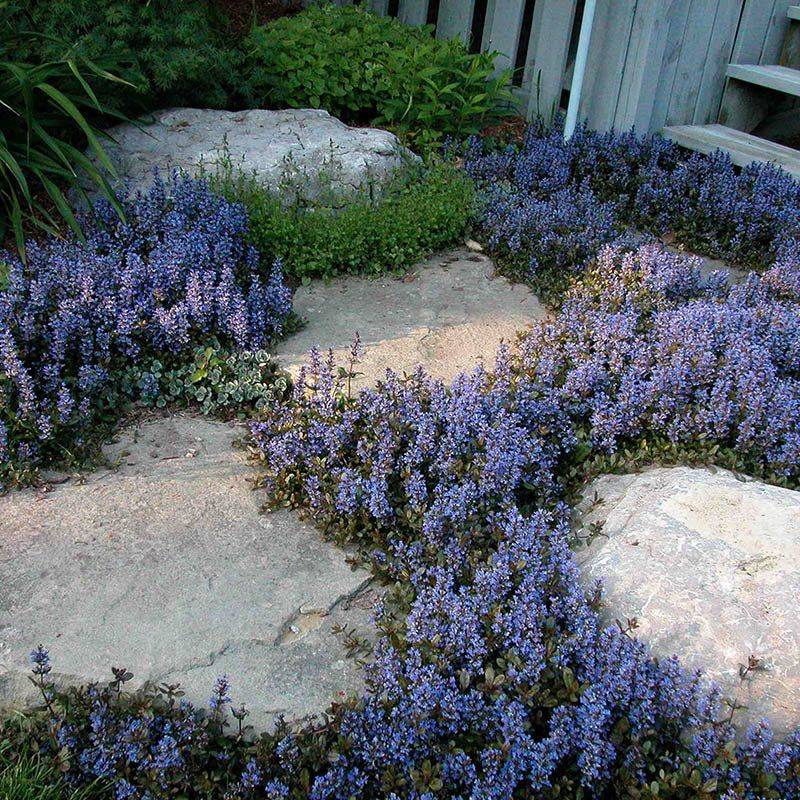
Got a shady, stubborn spot under a tree where nothing seems to grow? Ajuga is your answer.
This shade-loving groundcover races to fill bare patches where sun-hungry plants throw in the towel.
Its rapid spread is the whole point. Even though the main flower show, spikes of blue-purple blooms, comes in spring, the plant keeps blanketing the ground fast through the rest of the season.
That speed makes it ideal for problem areas that have sat empty and frustrating. Set it loose in the shade and it will knit the ground together while you focus on the sunnier parts of the yard.
15. Bee Balm (Monarda)
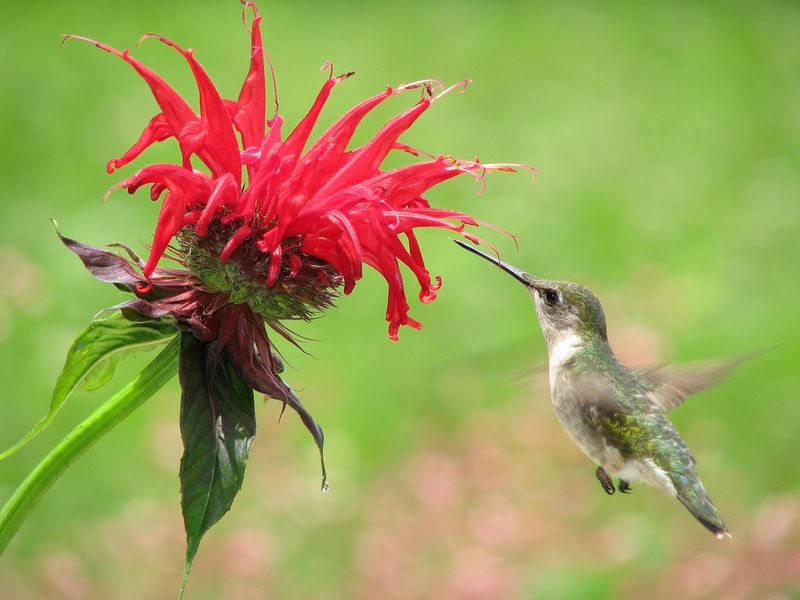
If hummingbirds had a favorite restaurant, bee balm would be it. Those shaggy, mint-scented blossoms in lavender, pink, red, white, and purple act like a neon sign for pollinators zipping through the garden.
The plant spreads into bold, colorful clusters that fill space with real presence, blooming from mid to late summer. Crush a leaf and you will catch that fresh minty aroma that gives it away.
Older bee balm had a reputation for powdery mildew, but newer varieties come with much better mildew-resistant foliage. Pick one of those and you get all the hummingbird drama with far fewer leaf troubles.
16. Shasta Daisies
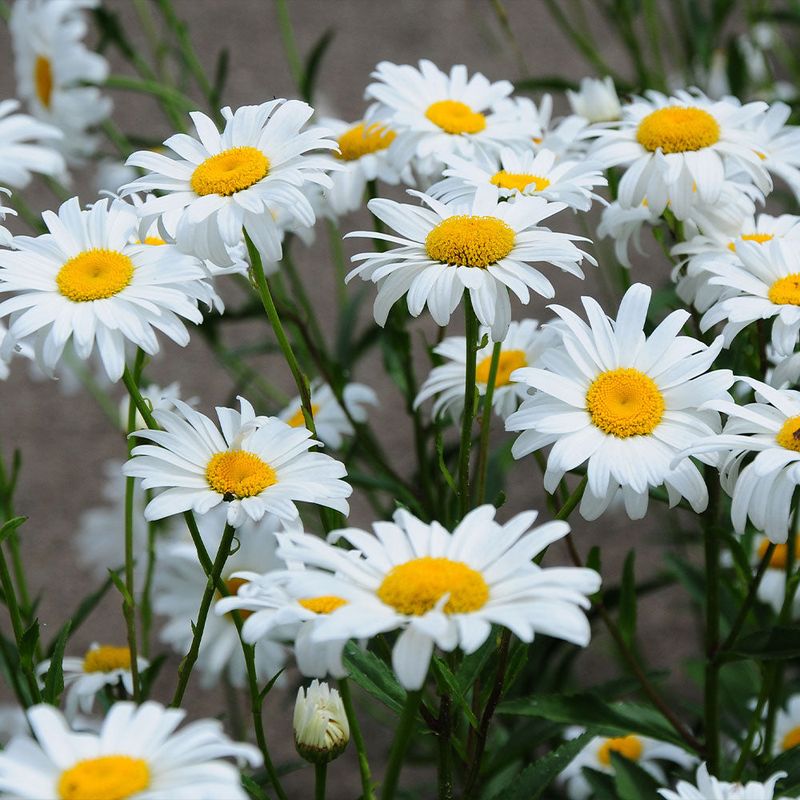
Nothing says classic summer quite like a Shasta daisy, all bright white petals circling a sunny yellow eye. They spread to fill beds with an easy, timeless elegance that never looks fussy.
Simple to grow is their whole personality. They hand you cheerful, dependable blooms all summer long without demanding much in return.
Because they multiply and hold their shape well, a small planting soon becomes a full, tidy drift. Cut a few for the kitchen table and they will keep sending up more.
17. Russian Sage
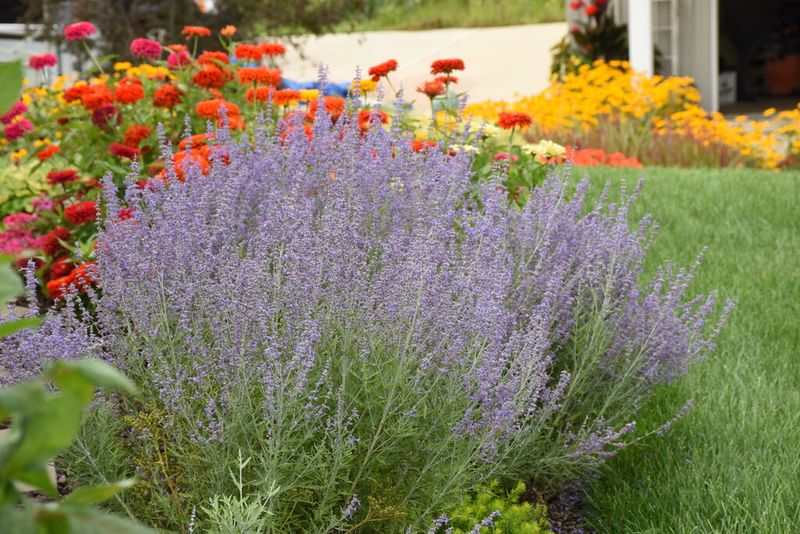
Some plants sulk without pampering; Russian sage practically thrives on being ignored. Heat-loving and drought-tolerant, it turns a hot, dry, forgotten corner into a cloud of airy silver-and-purple texture.
The loose, hazy form fills space differently than the daisies and spikes elsewhere on this list, adding softness and movement. Its distinctive purple-blue flowers often push on into late summer, keeping the color going.
Poor soil, blazing sun, skipped waterings, none of it bothers this tough perennial. If you have a spot that bakes and stays bone dry, this is the plant that will actually enjoy it.
18. Aster
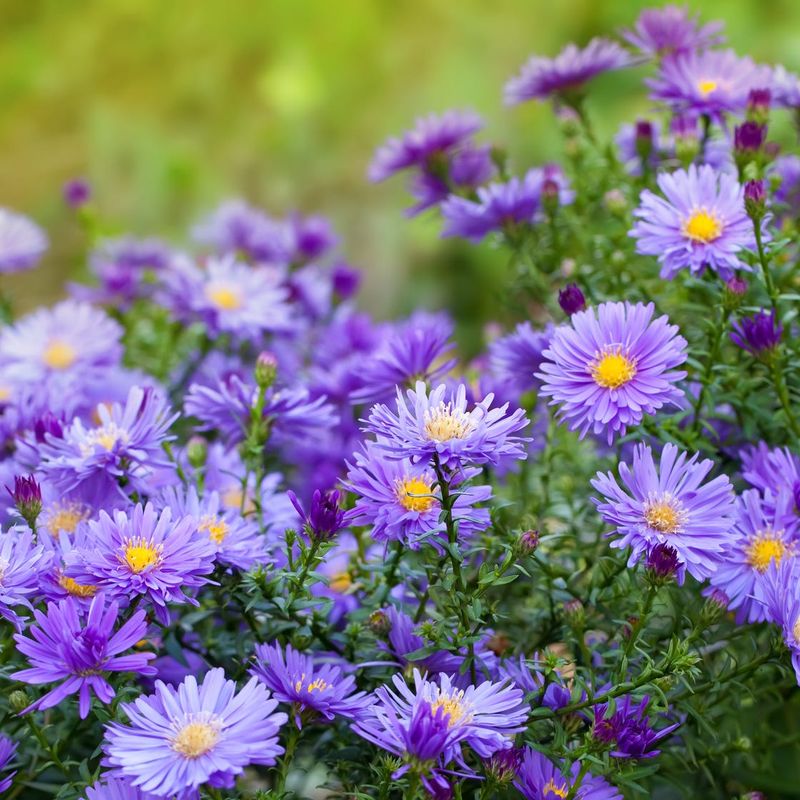
When most of the garden is calling it a season, asters are just getting started. These dependable perennials burst into daisy-like flowers of purple, blue, pink, and white from late summer straight through fall.
They typically stand 1 to 4 feet tall, with compact varieties available for smaller spots, so you can size them to whatever gap you are filling. Full sun and well-drained soil keep them happiest.
Their late timing makes them a lifeline for pollinators, offering nectar when little else is left. Plant them now and they will carry your bed’s color long after the summer heat breaks.
19. Gaillardia (Blanket Flower)
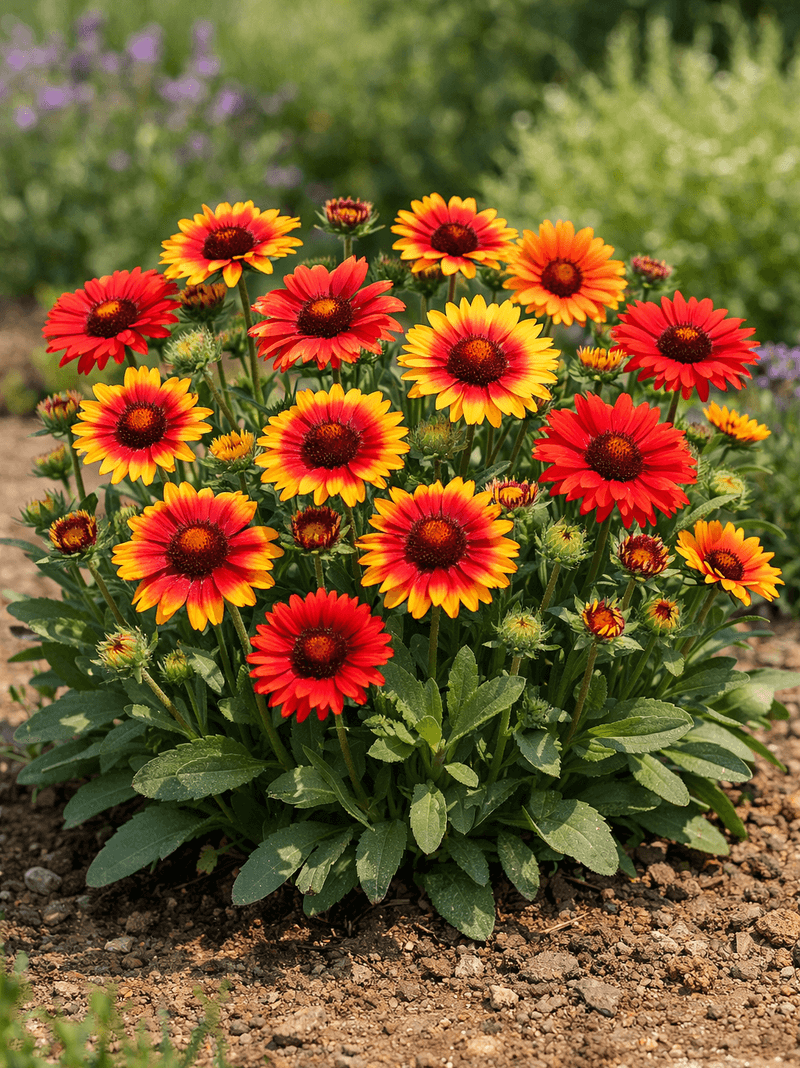
Picture the warm colors of a sunset stitched into a single flower and you have got gaillardia. Fiery reds, oranges, and yellows swirl across its petals, earning it the fitting nickname blanket flower.
Its endurance is the reason it closes out this list. Gaillardia blooms non-stop from midsummer through autumn, refusing to take a break even as the temperatures climb.
Heat and sun are exactly what it wants, so a bright, exposed bed suits it perfectly. Drop it into a sunny gap now and it will pump out vibrant color right up until fall fades.