
How To Keep Your Christmas Cactus Healthy Through Summer and Give It the Best Chance of Producing More Buds
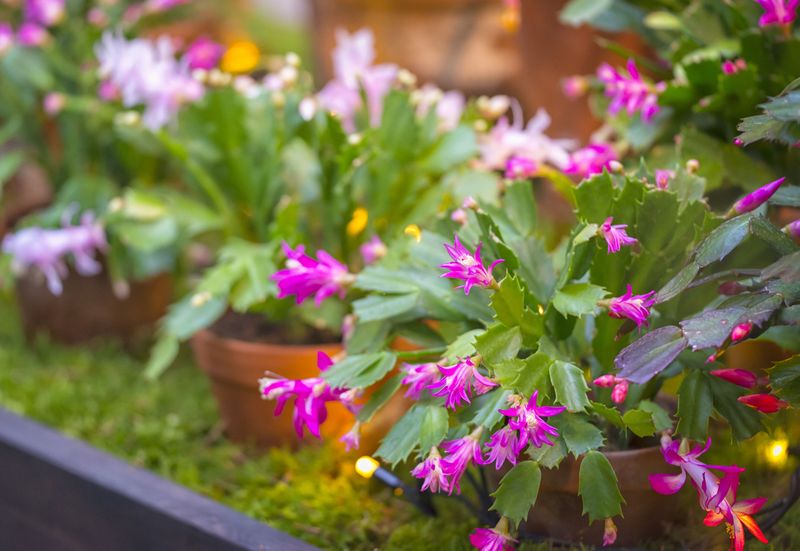
Your Christmas cactus has been sitting quietly on a shelf all summer, and you might be wondering whether you should be doing something more to help it bloom later. The honest answer is that summer care cannot guarantee a plant loaded with holiday buds, but poor summer care can quietly weaken the plant months before flowers are even possible.
Keeping your holiday cactus healthy from June through August gives it the strong stems, roots, and new growth it needs when shorter nights and cooler fall temperatures finally send the flowering signal.
Healthy summer care gives flowering a stronger foundation
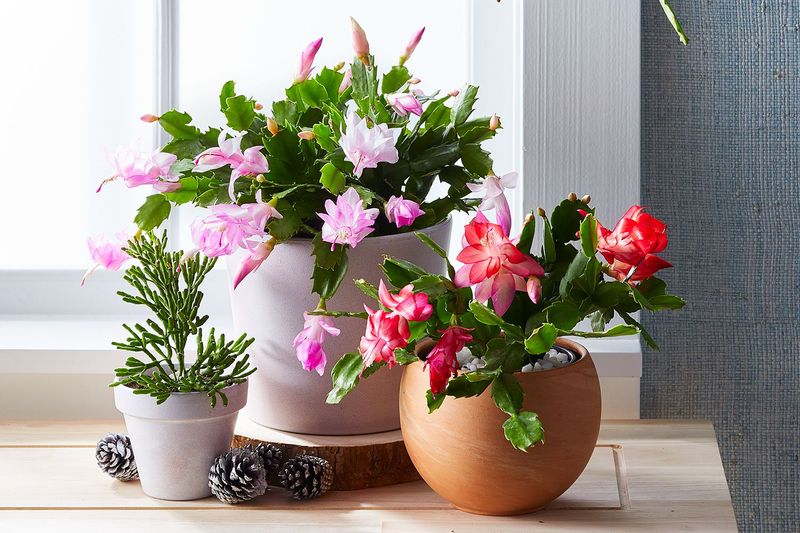
Most of us have heard that you should stress a Christmas cactus in summer to make it bloom. That idea is misleading, and following it too aggressively can leave your plant weaker when the flowering season actually arrives.
Summer care cannot guarantee your plant will be covered in buds, but it can prevent the kind of damage that quietly reduces flowering potential long before fall.
Holiday cacti spend the long days of summer growing vegetatively, producing the new stem segments that will eventually carry flower buds. Iowa State University Extension explains that shorter, uninterrupted nights and cooler temperatures are the primary triggers for bud initiation, not summer treatment alone.
What summer care actually does is preserve the healthy roots, stems, and new growth that support the plant when those fall signals arrive.
Harmful stress takes several forms: prolonged drought that causes shriveling, saturated soil that rots roots, intense direct sun that scorches the segmented stems, and abrupt swings between bone-dry and waterlogged conditions. Each of those problems can reduce the plant’s overall vigor and, by extension, its ability to respond well to the flowering cues later in the year.
Consistent, attentive care is the goal, not deliberate neglect.
One more thing worth knowing before you start: the plant on your windowsill may not be a true Christmas cactus at all. University of New Hampshire Extension notes that retail plants sold as Christmas cactus are often Thanksgiving cactus, Christmas cactus hybrids, or Easter cactus, each with slightly different bloom timing and light-temperature responses.
The care principles in this article apply broadly to all of them, but your plant’s natural bloom window may be earlier or later than December 25. The sections ahead cover moisture, light, feeding, repotting, fall darkness and temperature, bud retention, and the move back indoors, giving your plant its best practical chance to flower well.
Water by the potting mix, not by the calendar
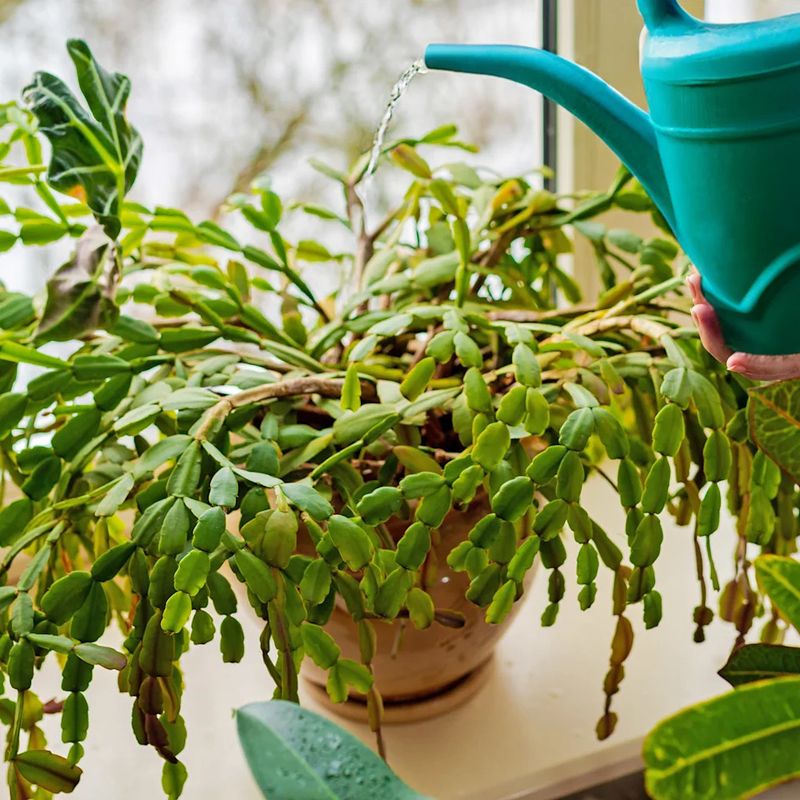
Forget the idea of watering your holiday cactus on a fixed schedule. Whether you water once a week or once every two weeks matters far less than what the potting mix is actually telling you.
University of New Hampshire Extension points out that pot size, soil composition, temperature, light levels, indoor humidity, and outdoor rainfall all change how quickly a mix dries out, making any single nationwide schedule unreliable.
The practical method is straightforward: press a finger an inch or so into the potting mix. When it starts to feel dry at that depth, water thoroughly until water runs freely from the drainage holes, then let the pot drain completely.
Never let the plant sit in a saucer of standing water, because holiday cacti are tropical plants that need moisture but also rapid drainage. UConn Extension describes them as jungle cacti that differ fundamentally from desert cacti in their moisture needs, which means the occasional thorough watering that suits a cactus from an arid region is not the right model here.
Some guidance suggests allowing the potting mix to stay slightly drier toward the end of summer as part of the seasonal transition. That is a reasonable adjustment, but it does not mean stopping water or allowing the plant to shrivel.
Oregon State University Extension cautions that excessive dryness can cause bud abortion and that swinging from drought to a sudden heavy soaking can damage roots. Mildly drier is a description of soil that is allowed to approach dryness before the next watering, not soil that stays parched for days or weeks.
Root health is the real goal here. Strong, undamaged roots absorb water and nutrients efficiently during the active growing season and support the new stem segments the plant is producing all summer.
Protecting that root system through sensible moisture management is one of the most direct contributions summer care makes to fall flowering potential.
Bright shade prevents summer sun injury
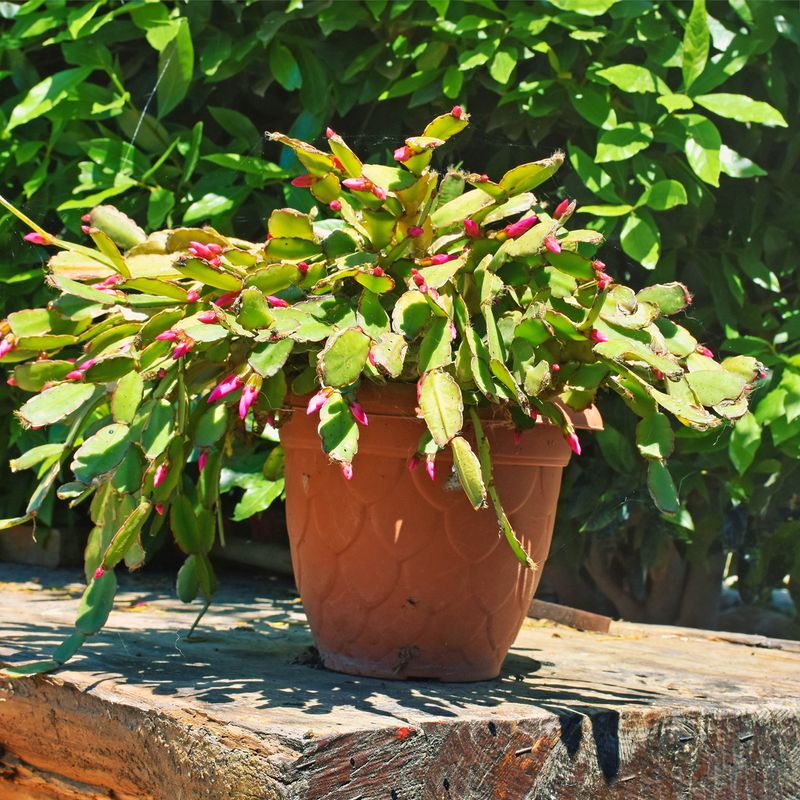
Finding the right summer spot for your holiday cactus comes down to one principle: bright light without direct midday or afternoon sun. Outdoors, that might mean a covered porch, a spot under a tree canopy, or the north or east side of a structure.
Indoors, a bright room with a window that receives strong indirect light works well, especially if the plant is kept a few feet from south- or west-facing glass during the hottest hours.
University of Illinois Extension notes that direct, intense summer sun can burn or discolor the segmented stems, and that effect is not just cosmetic. Scorched stem tissue does not recover, and a plant with damaged segments has less healthy surface area to support the growth and stored energy it will need later.
If you are moving a plant that has been indoors all spring, take at least a week or two to acclimate it gradually by starting it in deeper shade and slowly increasing its light exposure.
Summer light is about supporting vegetative growth, not triggering flowers. The intentional long-dark-period treatment that initiates bud formation belongs to late summer or fall, not to the height of summer.
During June, July, and August, your goal is simply to give the plant enough bright, indirect light to grow new stem segments without stressing it with sun it cannot handle. A location that keeps the plant comfortable and growing steadily is the right choice, regardless of whether it is indoors or outside.
Feed active growth without trying to force flowers
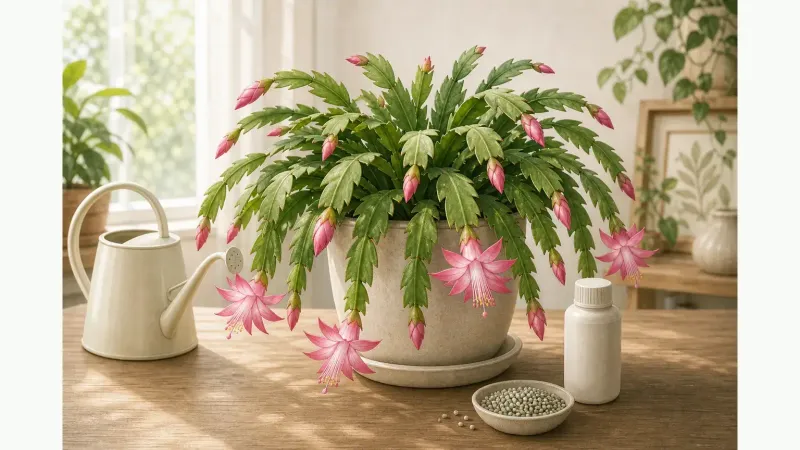
During active summer growth, a holiday cactus benefits from moderate, regular feeding. The goal is to support the new stem segments the plant is producing, not to push it into flowering before the conditions are right for that.
University of Minnesota Extension recommends feeding with a half-strength balanced fertilizer from June through August, roughly once a month, which gives the plant steady nutrition without overwhelming it.
Always follow the product label for dilution and frequency. A balanced fertilizer with roughly equal nitrogen, phosphorus, and potassium numbers works well during the growing season.
Some sources suggest switching to a lower-nitrogen formula in fall, but fertilizer type alone does not govern whether your plant flowers. UConn Extension and Iowa State Extension both point to photoperiod and temperature as the primary flowering signals.
No fertilizer formula can substitute for shorter nights and cooler conditions when it comes to bud initiation.
Once you can see visible buds forming, reduce or stop fertilizing. Feeding a plant that is already in bud can interfere with that process and may contribute to bud problems rather than more flowers.
The practical takeaway is to feed consistently from early summer through late summer, then back off as the plant transitions toward flowering. Nutrient neglect during the growing season can leave the plant with weak growth heading into fall, while overfeeding at the wrong time creates its own complications.
Moderate and label-directed is the approach that avoids both problems.
Healthy roots matter even when the plant is somewhat pot-bound
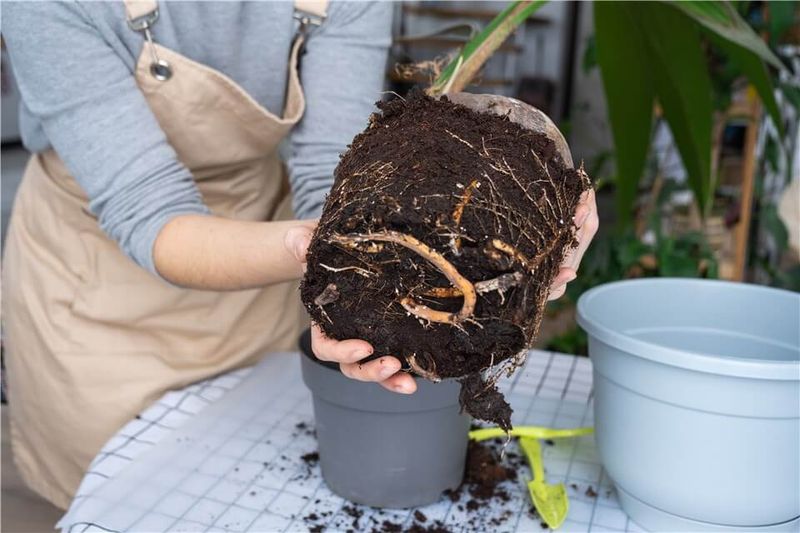
Holiday cacti have a reputation for flowering well when their roots are a bit crowded, and that reputation is largely earned. A plant that fills its container tends to stay in a manageable moisture balance and often produces buds reliably without being disturbed.
Because of that, routine summer repotting is usually unnecessary and can cause more disruption than benefit.
Iowa State Extension suggests that repotting roughly every three years is commonly sufficient, with spring or early summer preferred when repotting is needed. UConn Extension echoes the point that these plants do not need frequent container changes.
If your plant is growing steadily and draining properly, leave it alone through the summer months.
There are situations where repotting cannot wait. If water pools on the surface and drains very slowly, the mix has likely broken down and is holding too much moisture around the roots.
Severely root-bound plants where roots are circling densely and escaping from drainage holes may also benefit from a slightly larger container. Root rot or visible root damage is the clearest signal that intervention is needed regardless of season.
When you do repot, choose a container only one size larger than the current one and use a fast-draining mix, such as a cactus or succulent blend or a standard potting mix amended with perlite. Good drainage is the point: standing water around the roots is the condition most likely to cause lasting damage, and the right container and mix prevent it from developing in the first place.
Fall darkness and cooler temperatures initiate flowering
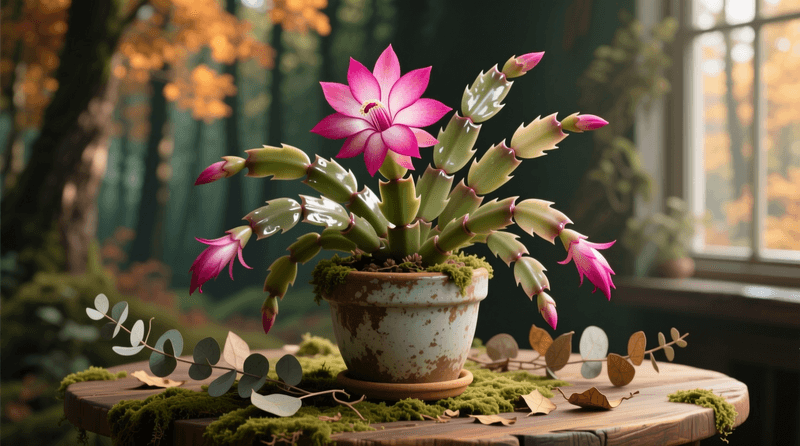
Around late summer or early fall, the care routine shifts from supporting growth to encouraging bud formation. That shift is less about what you do to the plant and more about the conditions you provide.
Two factors work together to send the flowering signal: long, uninterrupted nights and cooler temperatures.
Many holiday cacti need approximately 12 to 16 hours of continuous darkness each night for several consecutive weeks before buds begin to form. University of Florida IFAS Extension explains that even brief interruptions from lamps, kitchen lighting, streetlights, or a television in the same room can disrupt the dark period and prevent or reduce bud formation.
A spare bedroom that stays dark at night, a closet with a slotted door, or simply moving the plant away from artificial light sources are all practical solutions.
Temperature matters alongside day length. Extension guidance commonly places the target range at approximately 55 to 65 degrees Fahrenheit during bud initiation.
Iowa State Extension notes that temperatures above roughly 70 degrees Fahrenheit can inhibit flowering, while published greenhouse research on Schlumbergera shows that flowering responses vary with the combination of day temperature, night temperature, and cultivar. Treat those numbers as useful guidance rather than a universal guarantee for every plant.
The interaction between temperature and photoperiod means that a plant kept in a consistently cool spot outdoors as nights naturally lengthen in early fall may begin initiating buds without any special management from you. A plant kept in a warm, well-lit interior room may need more deliberate help.
UConn Extension recommends beginning the dark treatment in late September or October for plants intended to bloom around the holidays, though the exact timing depends on your cultivar and how far in advance of bloom you start. Keep daytime light bright during this period so the plant has enough energy to support the buds it is forming.
Stable conditions help protect visible buds
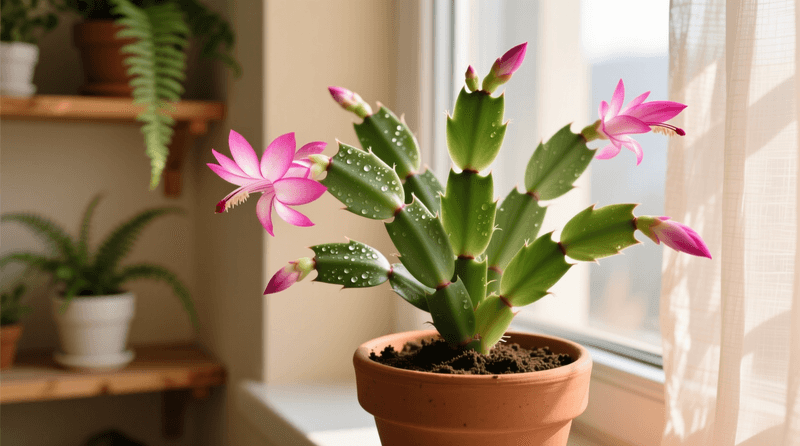
Seeing buds on your holiday cactus is genuinely exciting, and the instinct to move the plant to a better display spot is understandable. Resist it, at least until the buds are well developed.
Bud retention is a separate challenge from bud initiation, and the conditions that protect formed buds are different from the conditions that triggered them in the first place.
Once buds are visible, stability is the priority. Iowa State Extension lists several common causes of bud drop: sudden temperature shifts, cold drafts from doors or air vents, excessive soil dryness, overwatering, abrupt changes in light, and physically moving the plant.
Any one of those stresses can cause buds to abort before they open, and a plant that successfully initiated dozens of buds can lose most of them in a short period if conditions change too quickly.
Keep watering steady using the same moisture-check method from summer: water when the top inch of mix begins to dry, drain completely, and never let the plant sit in water. Maintain consistent temperatures away from cold windows, heating vents, and exterior doors.
If the plant has been outdoors and you are bringing it in for the season, do that before nighttime temperatures drop into the low 50s.
Before moving an outdoor plant inside, inspect it carefully. University of Minnesota Extension recommends checking for scale insects, mealybugs, aphids, and spider mites, all of which can hitchhike indoors on outdoor plants.
Remove any dead leaves or debris from the surface of the potting mix, and confirm that the drainage holes are clear. Treating a pest problem after the plant is already indoors and in bud is far harder than catching it at the door.
UConn Extension notes that outdoor exposure during summer does increase pest risk, so the inspection step is worth taking seriously even if the plant looked fine all season.
Give your holiday cactus its best chance to flower well
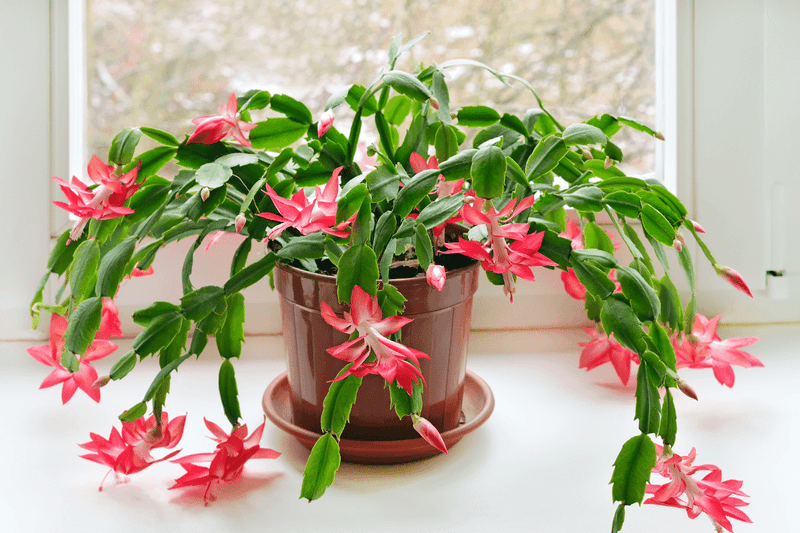
Summer care for a holiday cactus is not a guarantee of blooms, but it is the foundation everything else depends on. A plant that arrives at fall with healthy roots, strong stems, and well-developed new growth is simply better positioned to respond to the flowering signals than one that spent the summer stressed, scorched, or waterlogged.
The practical checklist is short: water when the potting mix begins to dry and drain completely after each watering, keep the plant in bright shade rather than direct summer sun, feed moderately with a balanced fertilizer during active growth and stop once buds appear, and skip repotting unless drainage or root health genuinely requires it. Inspect any outdoor plant for pests before bringing it inside.
Iowa State Extension and University of Minnesota Extension both support these steps as the core of reliable holiday cactus care.
When fall arrives, uninterrupted darkness, cooler temperatures, your specific cultivar, and stable post-bud conditions take over as the determining factors. University of Florida IFAS Extension emphasizes that those signals are what actually initiate buds, and no amount of summer effort can substitute for them.
What you can do is make sure the plant that meets those fall conditions is as healthy as it can be. A well-tended holiday cactus that reaches fall in good shape has done everything on its end of the bargain.