
The Worst Time Of Day To Water Your Tomatoes (And 12 Smarter Habits That Save Your Harvest)
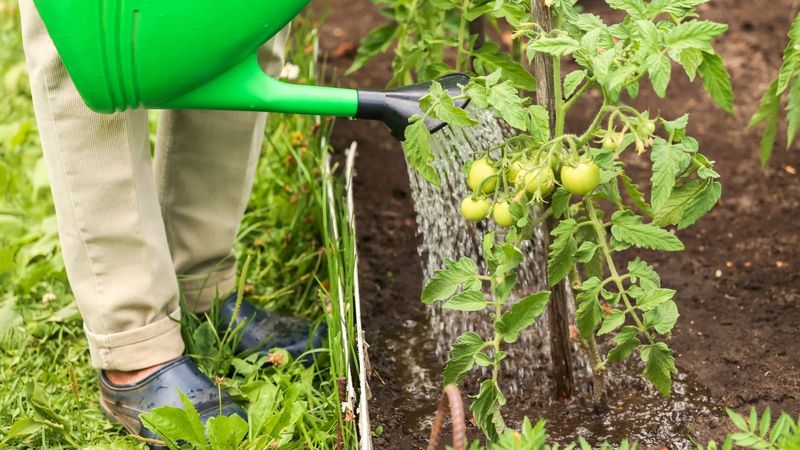
Your tomato plants might be struggling for one simple reason: you’re watering them at the wrong time. Evening watering leaves leaves damp all night, which invites the kind of fungus and rot that can wreck a whole harvest.
The good news is that fixing your watering routine is easy, cheap, and works fast. Here’s the single worst time to water, plus twelve smarter habits that keep your tomatoes healthy from first blossom to last ripe fruit.
1. Evening Watering Is the Habit Sabotaging Your Plants
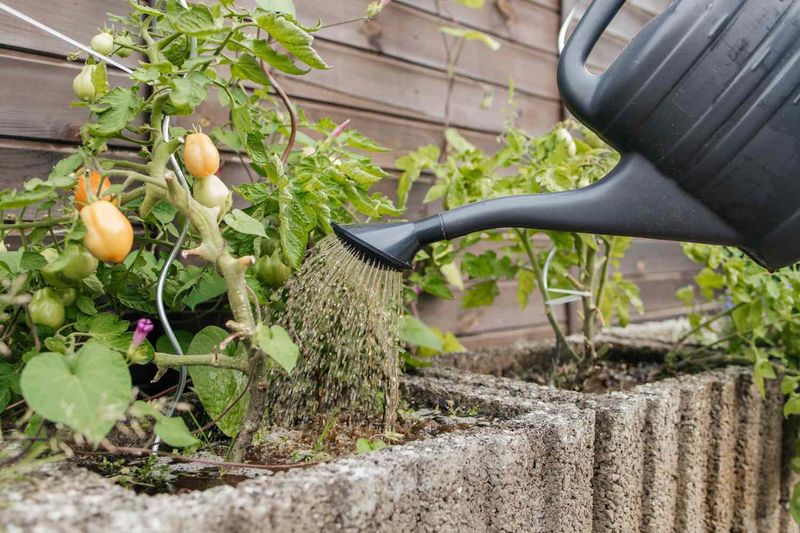
Let’s start with the mistake most gardeners never realize they’re making. Watering your tomatoes in the evening feels convenient after a long day, but it sets your plants up for trouble overnight.
When the sun goes down, temperatures drop and moisture stops evaporating. Any water that splashes onto the leaves just sits there in the dark, cool air for hours.
That damp, still environment is exactly what soil-borne fungal and bacterial diseases love, from early blight to leaf spot.
Wet foliage overnight is like leaving a welcome mat out for problems you’ll have a hard time reversing once they take hold. By morning, the damage may already be underway, even though the plant still looks fine.
Midday watering has its own downside, since a big chunk of the water evaporates before it reaches the roots, and droplets on leaves can magnify the sun and scorch them. But evening is the true worst offender because of that long overnight window of dampness.
Break this one habit, and you’ve already dodged the most common cause of tomato disease.
2. Water in the Early Morning
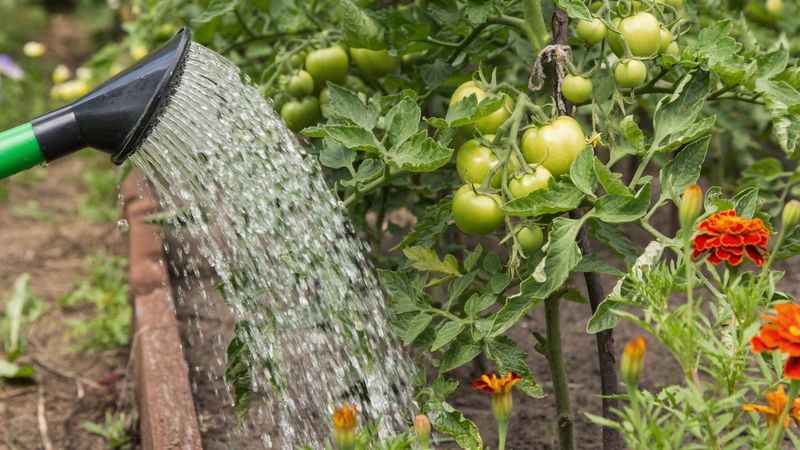
If evening is the villain, early morning is the hero of this story. Right after sunrise, before the heat builds, is the sweet spot for giving your tomatoes a drink.
Watering at dawn lets the plant soak up moisture and store it before the sun starts pulling water away. Your tomatoes head into the hottest part of the day fully hydrated instead of stressed and thirsty.
There’s a bonus, too. Any stray droplets that land on the leaves get plenty of daylight and warmth to dry off quickly, which slams the door on the fungus that thrives in overnight dampness.
You don’t need to be up at the crack of dawn every single day. Aim to finish watering before the temperature really climbs, and set a small reminder if mornings tend to get away from you.
A few minutes early in the day pays off in healthier plants and fewer disease headaches all season long.
3. Water at the Base of the Plant
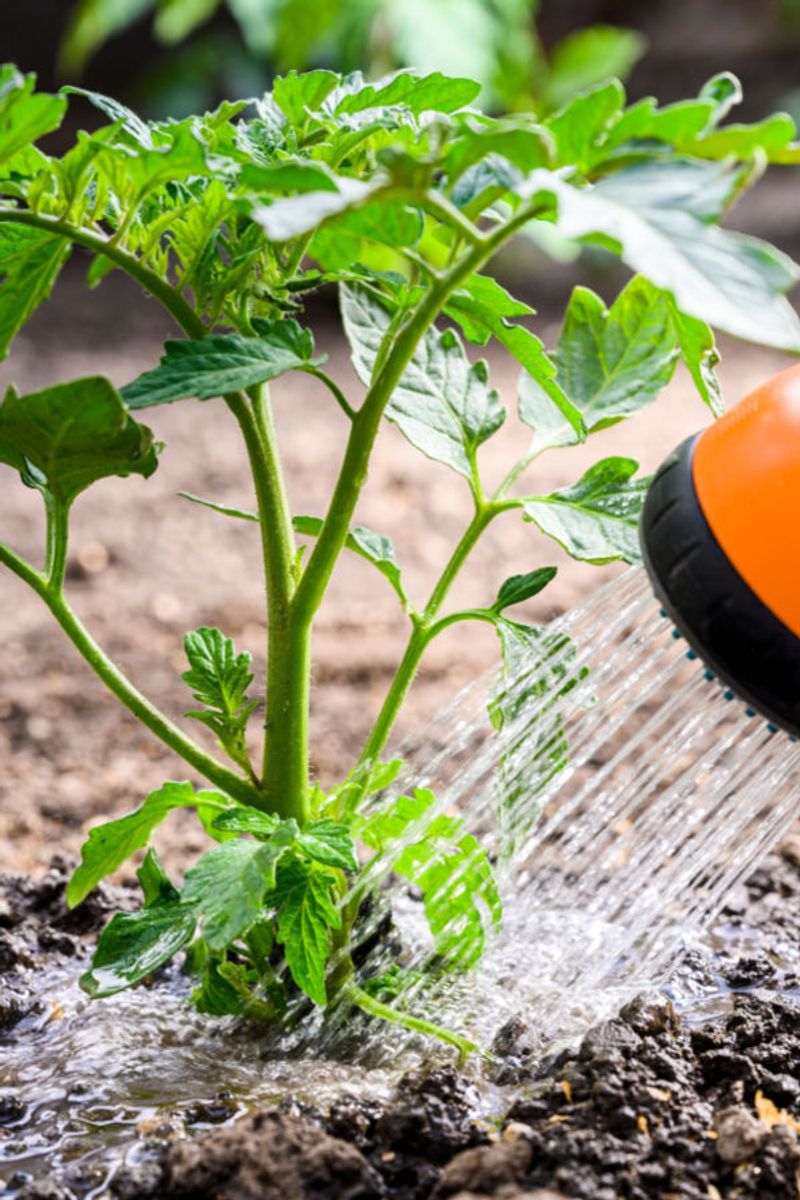
Aim low. It’s the simplest trick in the book and one of the most powerful for keeping tomatoes disease-free.
Overhead watering with a hose or sprinkler soaks the leaves, and wet leaves are ground zero for fungal diseases and leaf spot. Directing your water straight to the soil at the base keeps that foliage dry and the roots happy.
Think of it this way: the roots are the mouth of the plant, not the leaves. Everything the tomato needs enters through the soil, so that’s where the water belongs.
Use a watering can with the rose removed, a hose set to a gentle flow, or a wand you can tuck under the leaves. Move slowly around the stem and let the water sink in rather than blasting the ground and sending soil splashing back up onto the lower leaves.
Splashing dirt can carry disease spores upward, so a calm, low pour protects your plant on two fronts at once.
4. Water Deeply and Slowly
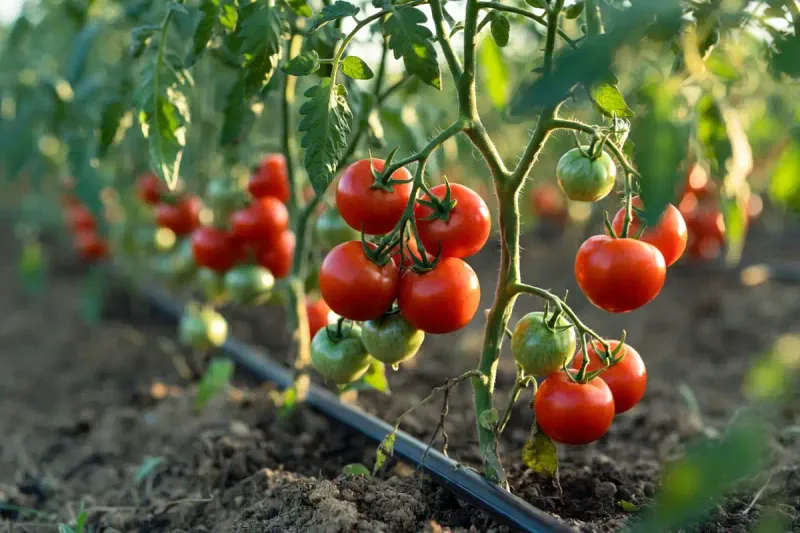
A quick splash might make you feel like you’ve done your job, but it barely wets the surface. Tomatoes reward a slow, deep soak far more than a fast sprinkle.
When water reaches deep into the root zone, it encourages roots to grow downward chasing that moisture. Deeper roots mean a sturdier, more drought-resistant plant that can shrug off a hot afternoon without wilting.
Shallow watering does the opposite. It trains roots to stay near the surface, where the soil dries out fast and leaves your tomatoes vulnerable the moment you skip a day.
Take your time and let the water sink in gradually rather than running off the top. For container tomatoes, keep going until you see water draining from the bottom, which tells you the whole root ball got a proper drink.
A good rule of thumb is fewer, longer waterings instead of frequent little ones. Your plants will build the deep root system that carries them through the toughest stretch of summer.
5. Maintain Consistent Moisture
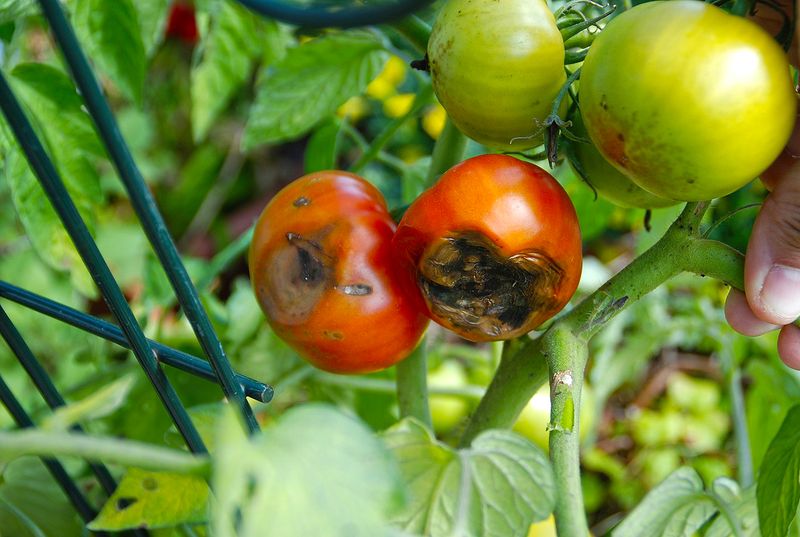
Tomatoes are creatures of habit, and nothing throws them off like a feast-or-famine watering schedule. Keeping the soil evenly damp is one of the biggest secrets to a clean, unblemished harvest.
When moisture swings wildly, letting the soil bone-dry out and then flooding it, the fruit pays the price. Sudden gulps of water after a dry spell cause tomatoes to swell too fast and split right open.
Those same fluctuations are behind blossom end rot, that ugly sunken black patch on the bottom of the fruit. Steady moisture helps the plant take up calcium properly and keeps that frustrating problem at bay.
The goal isn’t soggy soil and it isn’t dust either. Aim for something like a wrung-out sponge, consistently damp throughout the growing season.
A regular rhythm, paired with mulch to buffer the swings, keeps your plants calm and your tomatoes whole.
6. Check Soil Moisture Daily
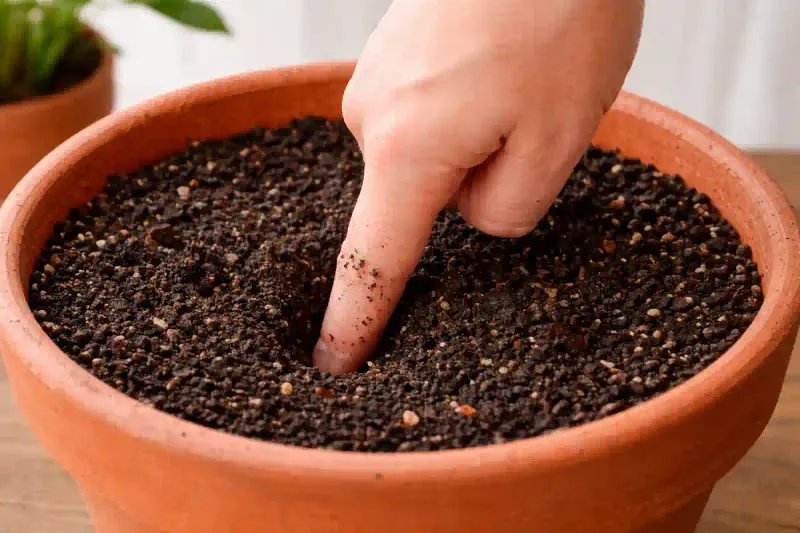
You already own the best moisture meter there is: your finger. No batteries, no gadgets, and it’s remarkably accurate.
Before you reach for the hose, push a finger about one to two inches down into the soil near the base of the plant. If those top few inches feel dry, it’s time to water.
If they’re still damp, hold off a bit longer.
Watering on a rigid calendar schedule ignores what’s actually happening outside. A cloudy, cool week needs far less water than a blazing dry one, and the soil will tell you which is which if you just check.
This quick daily habit protects you from both extremes, the overwatering that drowns roots and the underwatering that stresses plants during fruiting. Make it part of your morning walk through the garden.
Ten seconds of poking the dirt saves you from guessing, and your tomatoes will thank you for paying attention to what they truly need.
7. Use Mulch to Lock In Moisture
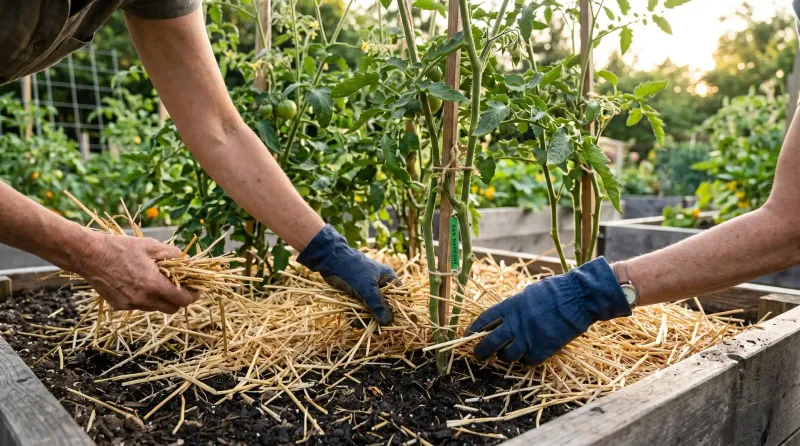
Mulch might be the laziest hardworking helper in your garden. Spread a few inches of it and you’ve handed your tomatoes a built-in moisture manager.
A blanket of straw, shredded bark, or chopped leaves around the base of each plant slows evaporation dramatically. The water you give stays in the soil where roots can use it instead of vanishing into the summer air.
Mulch also keeps soil temperatures steadier, which ties right back into that consistent-moisture goal that prevents cracking and blossom end rot. On top of that, it blocks weeds and stops rain from splashing disease-carrying soil up onto the lower leaves.
Keep the mulch pulled back an inch or so from the actual stem so it doesn’t trap moisture against the plant itself. Refresh it as it breaks down over the season.
One afternoon of mulching means less watering, fewer weeds, and calmer plants for weeks on end.
8. Adjust for Container-Grown Tomatoes
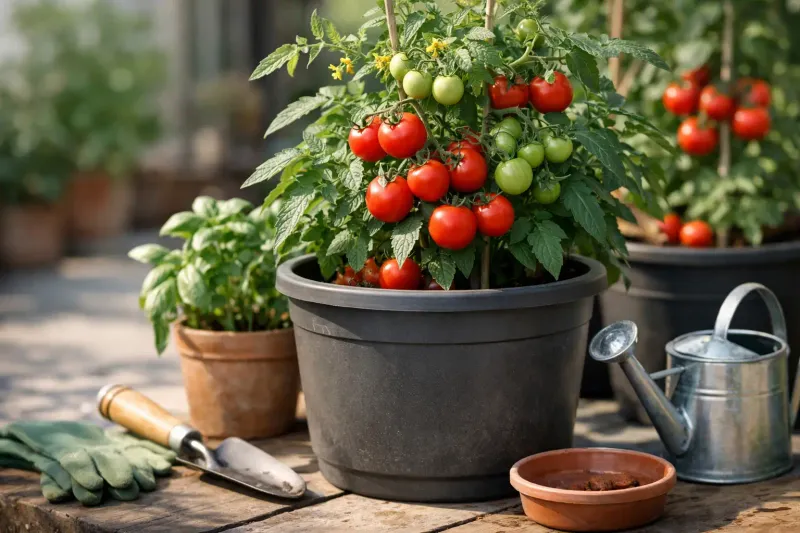
Growing tomatoes in pots? Then throw out most of what you’d do for in-ground plants and expect to water a lot more often.
Containers have far less soil to hold moisture, and their sides heat up in the sun, drying everything out at surprising speed. A pot that looked perfectly damp in the morning can be parched by mid-afternoon.
During a real heat wave, potted tomatoes often need water once a day, and sometimes twice for larger plants in smaller pots. That’s not a sign you’re doing something wrong; it’s just the reality of container life.
Choose the biggest pot you reasonably can, since more soil means more moisture buffer and less frantic watering. Always pick containers with drainage holes so roots never sit in a swamp.
Keep checking with the finger test, because pots break every rule of thumb that works for garden beds. Stay attentive, and your patio tomatoes will produce just as generously as any in the ground.
9. Avoid Overwatering
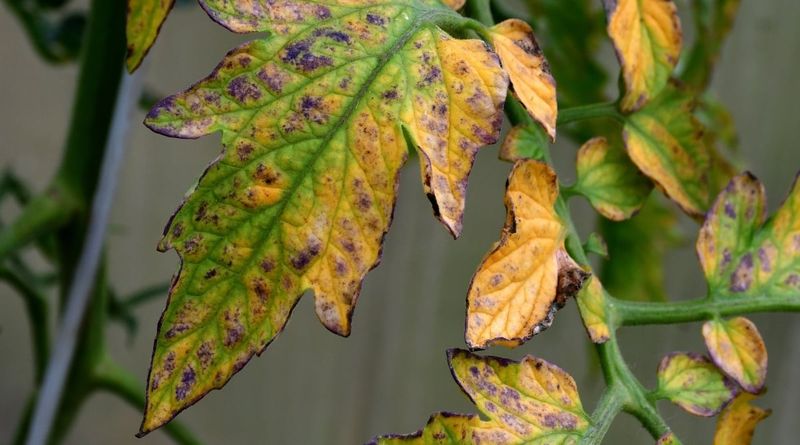
Loving your tomatoes too much can drown them. Overwatering is one of the sneakiest ways well-meaning gardeners hurt their plants.
When soil stays soggy, roots can’t breathe, and they begin to rot in the waterlogged mud. The plant responds with yellowing leaves, wilting that looks confusingly like thirst, and disappointingly sparse fruit.
All that excess water does more than suffocate roots. It flushes nutrients straight down and out of the root zone, leaving your tomatoes hungry even as they sit in wet ground.
The fix is to let the soil dry slightly between waterings rather than keeping it constantly saturated. If yellow leaves and mushy soil have you worried, back off and let things drain before you water again.
Good drainage in beds and pots is your safety net. Remember, damp like a wrung-out sponge is the target, not muddy and dripping.
10. Avoid Underwatering
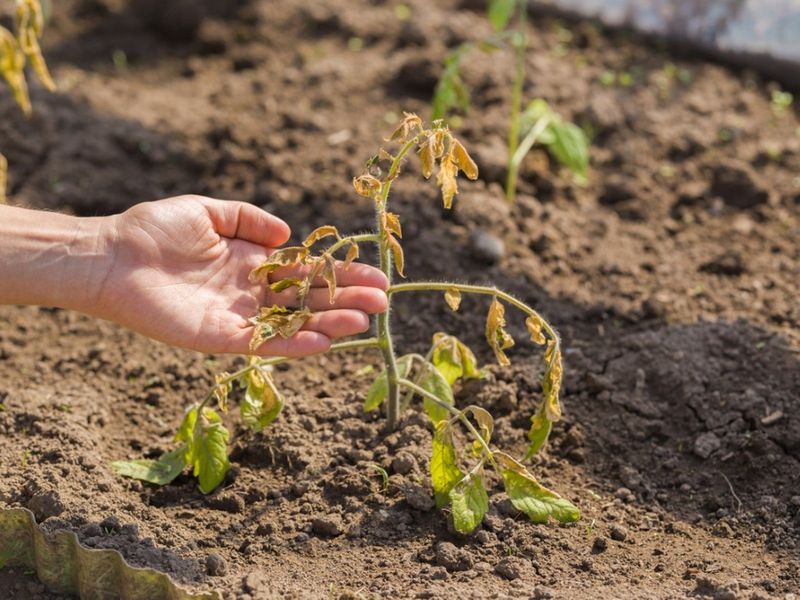
On the flip side, a thirsty tomato lets you know it’s suffering, and it does so loudly. Underwatering shows up as dramatic wilting, especially in the heat of the afternoon.
Skimping on water hits hardest when the plant is busy setting and swelling fruit. That’s the moment tomatoes need moisture most, and shortchanging them leads to stunted growth and stressed, sad-looking plants.
Chronic dryness also blocks the plant from pulling nutrients out of the soil, since roots need moisture to move those nutrients around. The result is deficiencies that pile problems on top of problems.
Occasional afternoon wilting during extreme heat can be normal if the plant perks back up in the evening. But if it’s drooping in the morning too, or the soil is bone dry two inches down, you’re behind on watering.
Catch it early with your daily finger check and a deep morning soak, and your plants will bounce right back to full, productive health.
11. Provide the Right Amount of Water
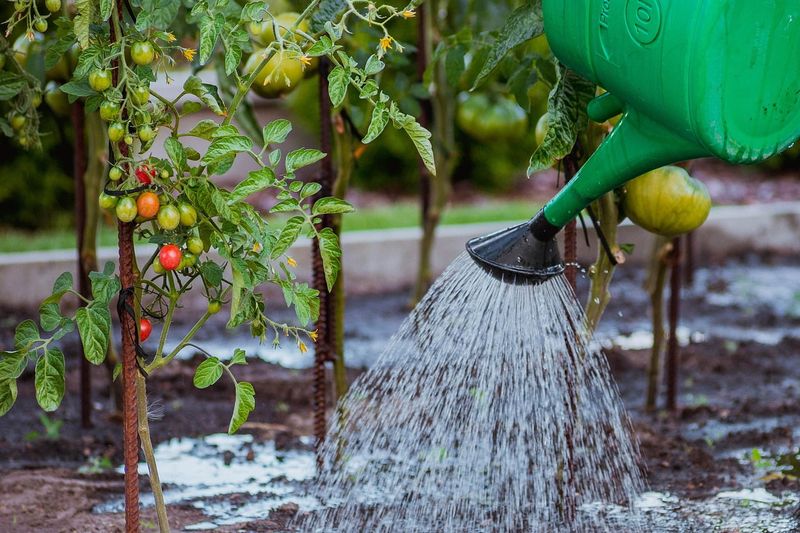
Ever wonder how much is actually enough? Putting a number on it takes a lot of the guesswork out of watering tomatoes.
As a baseline, in-ground tomatoes generally want about one to two inches of water per week, counting whatever rain falls. That steady supply keeps the soil evenly moist without swinging into soggy territory.
Mature plants in peak summer are surprisingly thirsty. A big, full-grown tomato can drink two to three gallons a day, and during the hottest stretch of the season, some heavy producers push four to five gallons.
Those numbers explain why a tiny daily sprinkle never cuts it once your plants are loaded with fruit. Adjust up during heat waves and down during cool, wet spells, and let the finger test confirm what your plants are experiencing.
A simple rain gauge helps you see how much nature already provided, so you only top off the difference.
12. Consider Drip Irrigation or Soaker Hoses
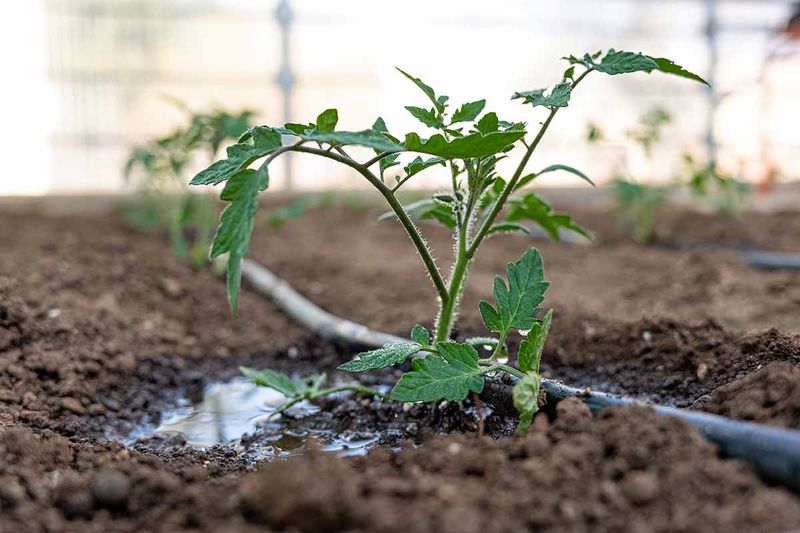
Want to automate nearly everything you’ve read so far? Drip irrigation and soaker hoses do exactly that, delivering water right where tomatoes want it.
Both systems release water slowly at the base of the plant, straight into the soil and the root zone. Foliage stays bone dry, which quietly eliminates one of the biggest causes of fungal disease.
Because the water seeps in gently instead of spraying everywhere, you lose almost nothing to evaporation and nothing to runoff. Every drop goes to work feeding the roots rather than misting the air.
Setup is more forgiving than it sounds. A soaker hose is as easy as laying it along your row and connecting it to a spigot, and you can add a cheap timer to handle those early morning waterings while you sleep in.
For anyone juggling a busy schedule or a big patch of tomatoes, this is the upgrade that pays for itself in healthier plants and hours of saved time.
13. Avoid Cold Water Shock
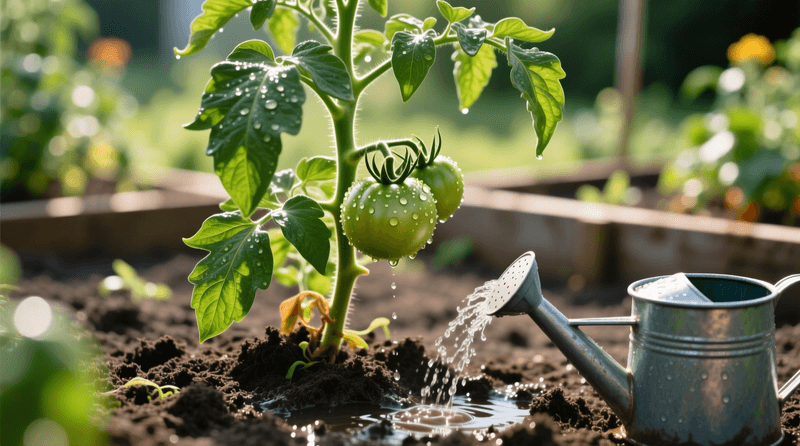
Here’s a subtle one that catches even seasoned gardeners off guard. It isn’t about when you water, but what temperature the water is when it hits the roots.
Blasting hot, sun-warmed plants with an icy stream straight from the tap can shock the root system. On a scorching day, that sudden cold jolt stresses a tomato that’s already working hard to stay comfortable.
Roots take up water and nutrients best when the temperature isn’t wildly different from the soil around them. A big swing forces the plant to spend energy coping instead of growing and fruiting.
An easy fix is to fill a watering can or bucket and let it sit for a while so the water comes up to a milder temperature before you pour. Rain barrels naturally give you water that’s closer to the ambient temperature, which is one more reason to love them.
Small courtesy, real payoff, especially in the middle of a heat wave.