
The One Watering Mistake That’s Splitting Your Tomatoes Right Before Harvest
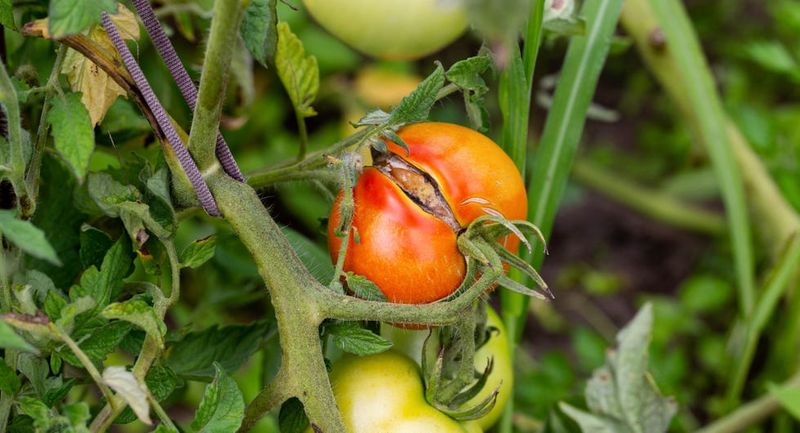
You walk out to check your tomato plants and find a ripe, beautiful fruit split wide open along the top. It happens again and again, always right when the tomatoes seem closest to ready.
Uneven watering, especially letting the soil dry out and then soaking it, is one of the biggest reasons this happens. Understanding what goes wrong, and how to keep moisture steadier, can save most of your crop.
The real mistake is letting soil moisture swing from dry to wet
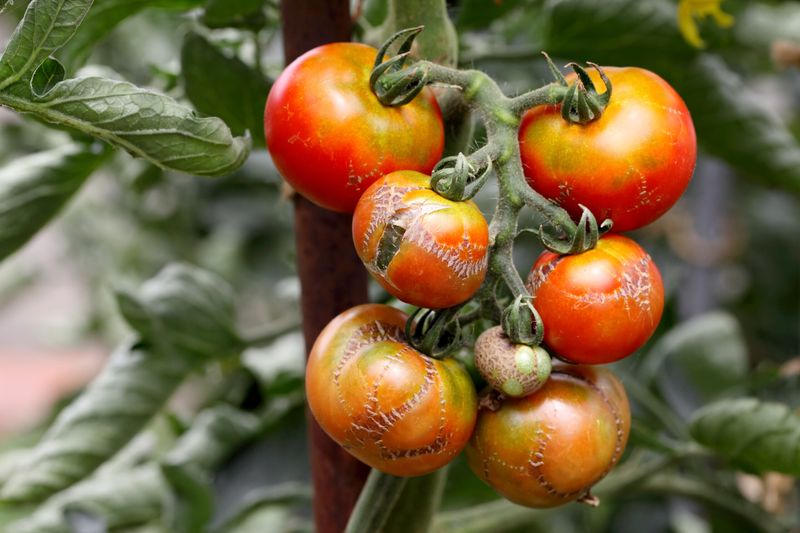
Stem-end cracks that radiate outward like spokes, or ring-shaped cracks that circle a tomato’s shoulder, are the hallmarks of what gardeners and plant scientists call growth cracking. When you spot those patterns, the cause is usually not a single bad watering session.
University of Minnesota Extension guidance on tomato disorders points to sharp swings in soil moisture as a major trigger, meaning the pattern of drying out and then wetting heavily is more damaging than any one watering event on its own.
Here is what typically happens: the soil dries down during a stretch of hot, dry weather, the plants stress, and then a heavy rain or a large irrigation arrives. The fruit, which has been waiting for water, suddenly gets a surge of it.
Internal tissues expand quickly, and the skin, which has been sitting tight under dry conditions, cannot keep pace with that rapid growth. A crack forms.
Ripening fruit can be especially vulnerable because the skin becomes less elastic as the tomatoes color up, but cracks can also begin while fruit are still green, so the problem is not limited to the final days before harvest.
The actual correction is not to water less or to stop watering when tomatoes start to turn. Utah State University Extension irrigation guidance recommends keeping root-zone moisture as consistent as practical throughout the growing season.
Weather, variety, fruit growth rate, heat, and how quickly your soil dries all shape the outcome too, so steadier moisture is the goal rather than any single watering rule.
Fast fruit expansion can stress the skin
Picture a water balloon being filled too fast. The rubber stretches until it can’t, and then it gives way.
Something similar happens inside a tomato when water availability suddenly increases after a dry spell. The flesh and juice-filled cells inside the fruit expand rapidly, pushing outward, while the skin and the thin waxy layer covering it can only stretch so far before splitting.
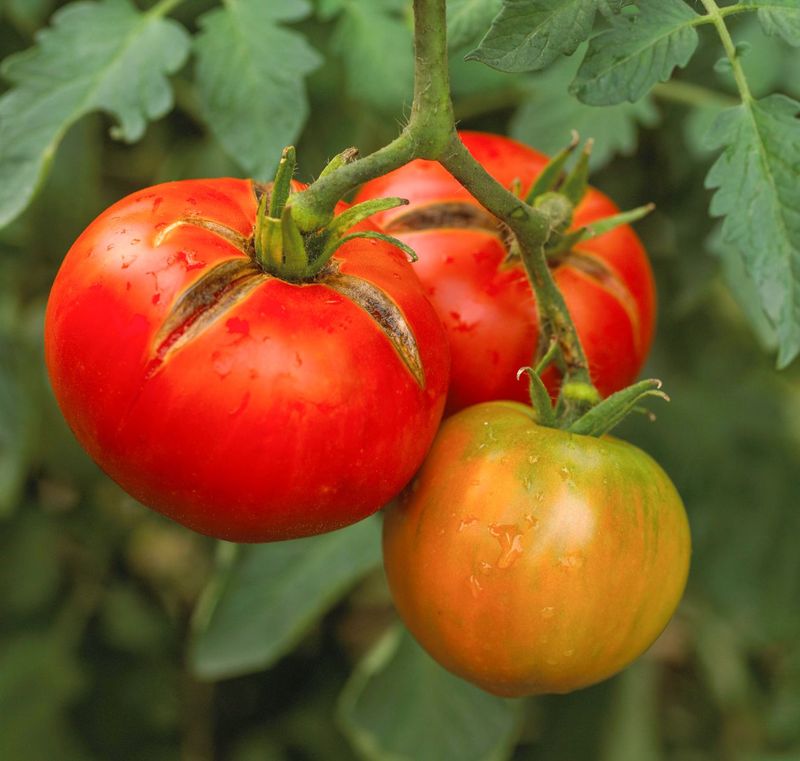
Minnesota Extension’s fruit crack diagnosis tool describes two main crack patterns that result from this process. Radial cracks run from the stem end down toward the middle of the fruit.
Concentric cracks form rings around the shoulder, circling the top of the tomato. Both types are considered growth cracks, a physiological disorder rather than a disease caused by a pathogen.
Ripening fruit tends to be more susceptible because the skin loses some of its flexibility as the tomato matures, but the process can start earlier. A fruit that has been slowly building internal pressure during a dry period may crack within hours of a heavy rain or a large watering.
UMass Amherst’s tomato fruit cracking fact sheet notes that cultivar genetics, fruit size, skin and cuticle characteristics, heat, humidity, direct sun exposure, and overall growing conditions all influence how easily a tomato cracks. No two gardens, or two varieties, respond identically.
Research on greenhouse tomatoes published in HortScience, a study on excess water and tomato fruit cracking, found that plants receiving excess irrigation had substantially higher cracking rates than those kept at appropriate moisture levels. That finding supports the value of steady moisture management, though the exact numbers from a controlled greenhouse trial will not map directly onto every backyard garden with different soil, weather, and variety conditions.
Confirm growth cracks before changing your routine
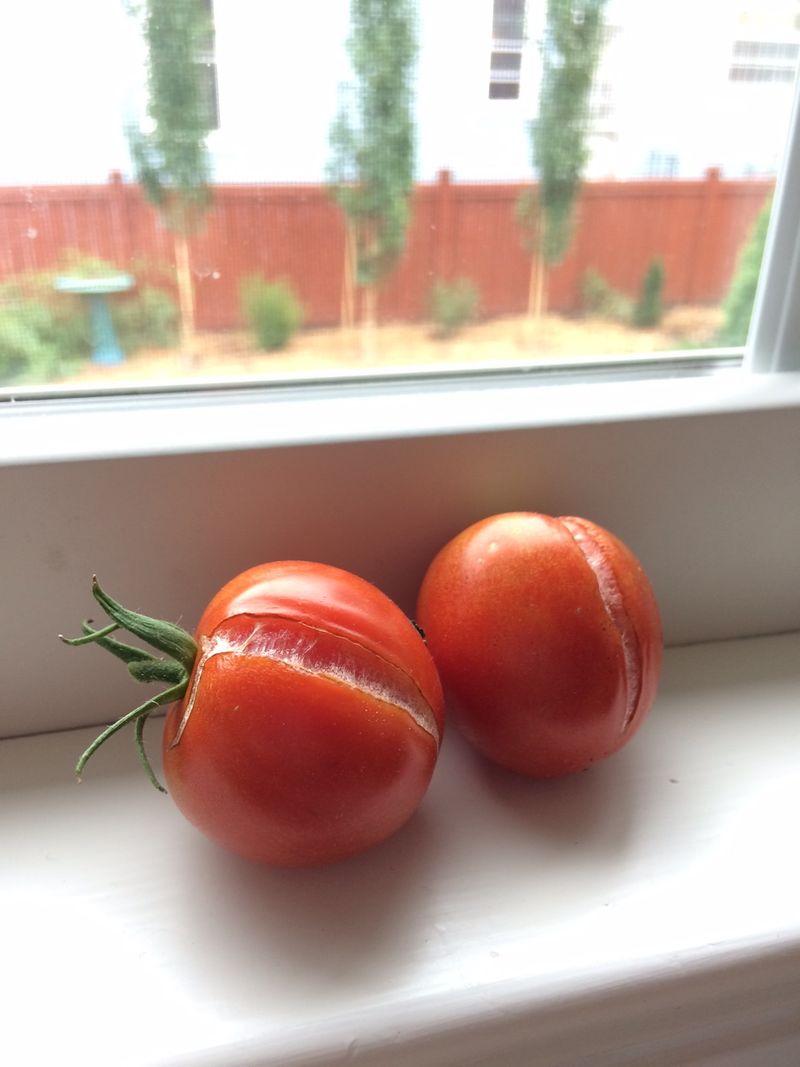
Before adjusting your watering, make sure the problem you are looking at is actually growth cracking. Two common tomato disorders get mixed up, and they call for different responses.
Growth cracks appear at the stem end or around the shoulder of the fruit, running radially outward or forming concentric rings. Blossom-end rot looks completely different: it shows up as a dark, sunken, leathery patch on the bottom of the tomato, the end opposite the stem.
Penn State Extension’s guide to tomato diseases and disorders distinguishes both clearly, which matters because blossom-end rot involves calcium availability in the plant, not the same cracking mechanism.
Growth cracking is generally considered a physiological disorder, meaning it comes from physical and environmental stress rather than a fungus, bacterium, or virus. Minnesota Extension’s plant diagnosis resource confirms that growth cracks are not caused by an infectious pathogen, so you do not need to worry about the problem spreading from one plant to another the way a disease might.
Cracks can appear before a tomato fully ripens. A fruit that is still mostly green or just beginning to turn can develop a crack after a moisture swing, which means you may spot the damage earlier than you expect.
Once the skin is broken, the open wound becomes an entry point for fungi, bacteria, and insects. Minnesota Extension’s tomato disorder overview notes that secondary infection is a real concern with cracked fruit, which is worth keeping in mind when you decide whether a cracked tomato is safe to use.
Use soil checks instead of a rigid watering calendar
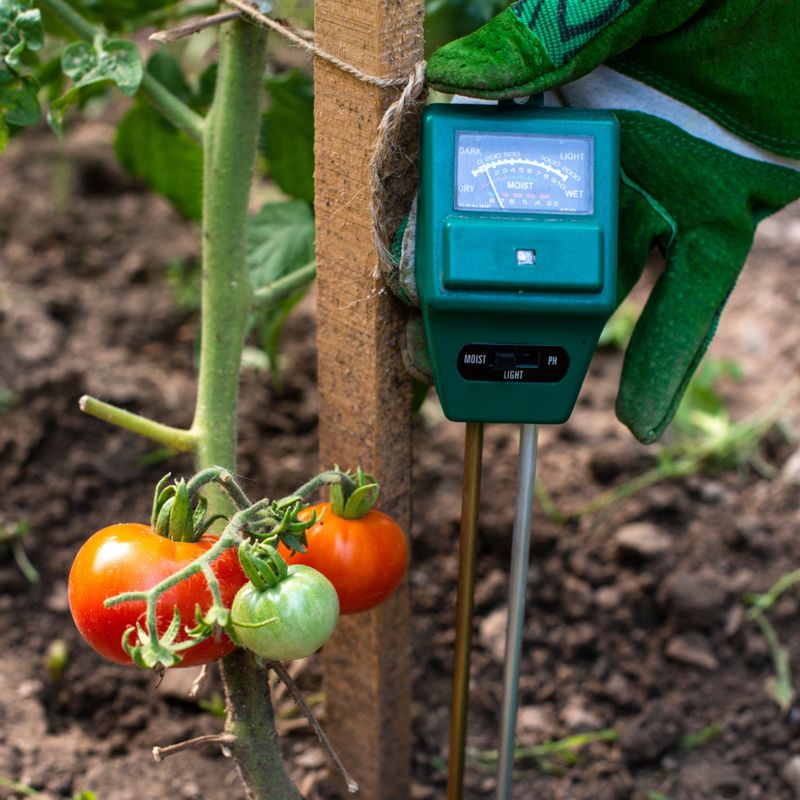
Calendars are convenient, but they cannot feel the soil. A week that brings two inches of rain needs no supplemental watering; a week of 95-degree heat and wind may need more than the usual amount.
The most reliable way to know when your tomatoes need water is to check the root zone directly rather than watering on a fixed schedule regardless of conditions.
University of Minnesota Extension’s tomato growing guide recommends checking how deeply water has penetrated the soil after you irrigate and continuing until the root zone is thoroughly wetted. Penn State advises watering when the soil feels dry about two inches down.
Push a finger or a thin trowel into the soil near the plant base; if the soil is dry at that depth, water thoroughly. If it is still moist, hold off.
Thorough, less frequent watering is generally better than frequent, shallow sprinkles. Shallow watering encourages roots to stay near the surface, where they dry out fastest, while deep watering supports a stronger root system that can draw on a larger reservoir of soil moisture.
That said, there is an important qualification: allowing the soil to dry severely before giving a large drink creates exactly the kind of moisture swing that contributes to cracking. The goal is thorough watering before the plant becomes truly drought-stressed, not waiting until the leaves wilt and then flooding the bed.
About one inch of water per week is a widely used starting benchmark, but Utah State University Extension’s irrigation guidance makes clear that actual needs vary considerably. Sandy soils drain faster than clay and may need watering more often.
Container-grown tomatoes dry out much faster than in-ground plants and may need daily attention in hot weather. Large, heavily fruiting plants use more water than young transplants.
Adjust for rainfall, temperature, wind, and how quickly your specific soil dries, and let the soil, not the calendar, be the guide.
Mulch and steady irrigation reduce sharp changes
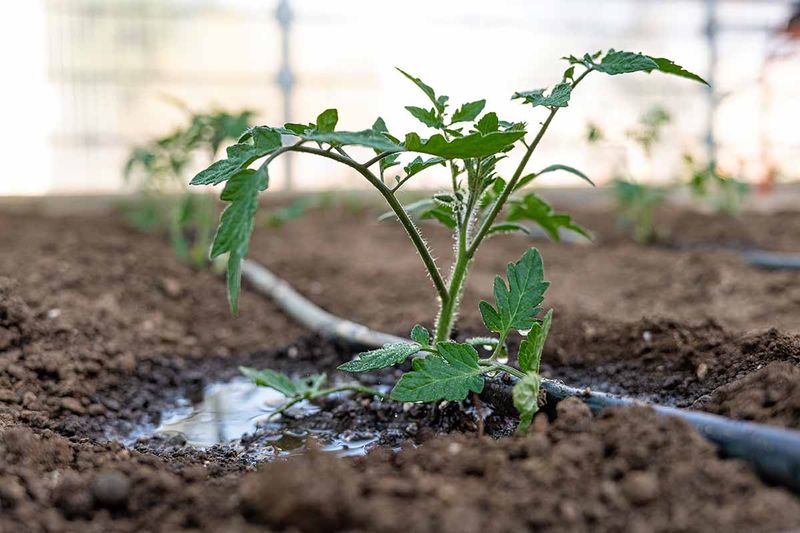
Keeping soil moisture from swinging wildly is easier when you have two tools working together: a layer of mulch over the soil surface and a consistent way to deliver water. Neither one is a guarantee against cracking, but both reduce how fast the root zone dries between waterings and how extreme the wet-to-dry-to-wet cycle gets.
Penn State Extension’s seedling-to-fruit tomato guide recommends applying two to three inches of straw or bark mulch around tomato plants. Mulch slows evaporation from the soil surface, which means the root zone holds onto moisture longer between rain events or waterings.
That slower drying gives you a wider window before the soil drops into the dry range that sets up a damaging rebound. Keep the mulch pulled back an inch or two from the main stem to avoid trapping moisture against the base of the plant, which can encourage rot.
Drip irrigation and soaker hoses deliver water directly to the soil surface at a slow, steady rate, which makes it easier to maintain even root-zone moisture compared to sporadic hand watering with a hose. Utah State University Extension’s tomato irrigation page recommends watering at the plant base rather than overhead.
Applying water at the soil surface also keeps foliage dry, which matters because wet leaves and water-splashed soil create conditions that favor fungal diseases, a separate but real concern for tomato growers.
Drip and soaker systems are helpful tools, not foolproof solutions. Clogged emitters, uneven coverage, drought periods longer than the system can compensate for, and heavy rain events can all still create moisture swings.
Colorado State University Extension’s tomato growing resource notes that overhead watering’s clearest drawback is increased disease risk from wet foliage and soil splash, while direct wetting of fruit during ripening may also contribute to cracking under certain conditions. Checking that your system is working and adjusting run times with the weather keeps the benefits real.
Adjust for rain, heat, sunlight, and variety
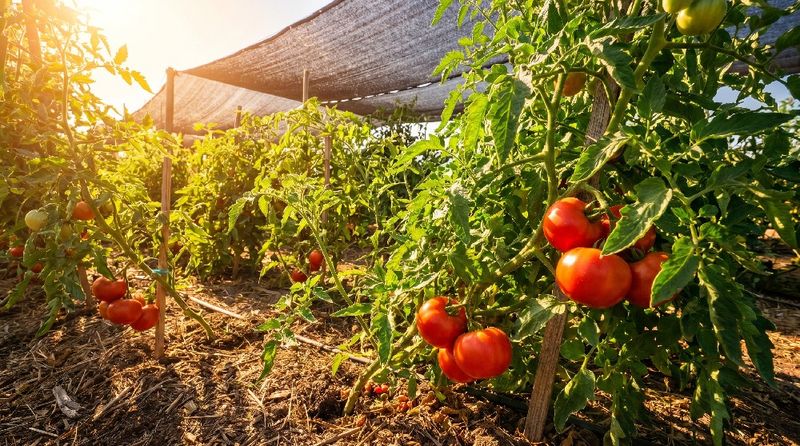
Watering management is only part of the picture. A gardener who waters perfectly but grows a highly crack-prone variety in full afternoon sun during a heat wave is still going to see splits.
Several factors outside of irrigation influence how often growth cracking occurs, and accounting for them helps you set realistic expectations and target the right adjustments.
After a meaningful rain, skip or reduce your usual irrigation rather than adding it on top of what fell. University of Georgia Extension tips for growing tomatoes emphasize adjusting irrigation based on actual conditions rather than sticking to a fixed schedule regardless of weather.
A half-inch of rain on a cool day may meet most of the week’s needs; a half-inch on a 95-degree afternoon may not be enough.
Heat and intense direct sunlight speed up fruit development and can make skin less resilient. Excessive pruning that strips away foliage and leaves fruit exposed to harsh sun increases the risk.
The UGA Cooperative Extension Commercial Tomato Production Handbook notes that maintaining adequate foliage cover helps protect developing fruit from temperature extremes and direct sun stress. You do not need a perfectly leafy plant, but stripping it bare to chase better airflow can backfire.
Variety choice matters more than many gardeners realize. Minnesota Extension’s tomato disorder guidance notes that cultivars differ considerably in cracking susceptibility, and if a particular variety cracks every season despite good watering practices, switching to one labeled crack-resistant is a practical response.
Finally, calcium supplements are sometimes suggested for cracking, but UMass Amherst’s fruit cracking fact sheet makes clear that calcium nutrition is not a universal fix. Adding calcium without a soil or tissue test confirming a deficiency is unlikely to solve a moisture-management problem and should not replace the adjustments described here.
Harvest vulnerable fruit before damaging weather
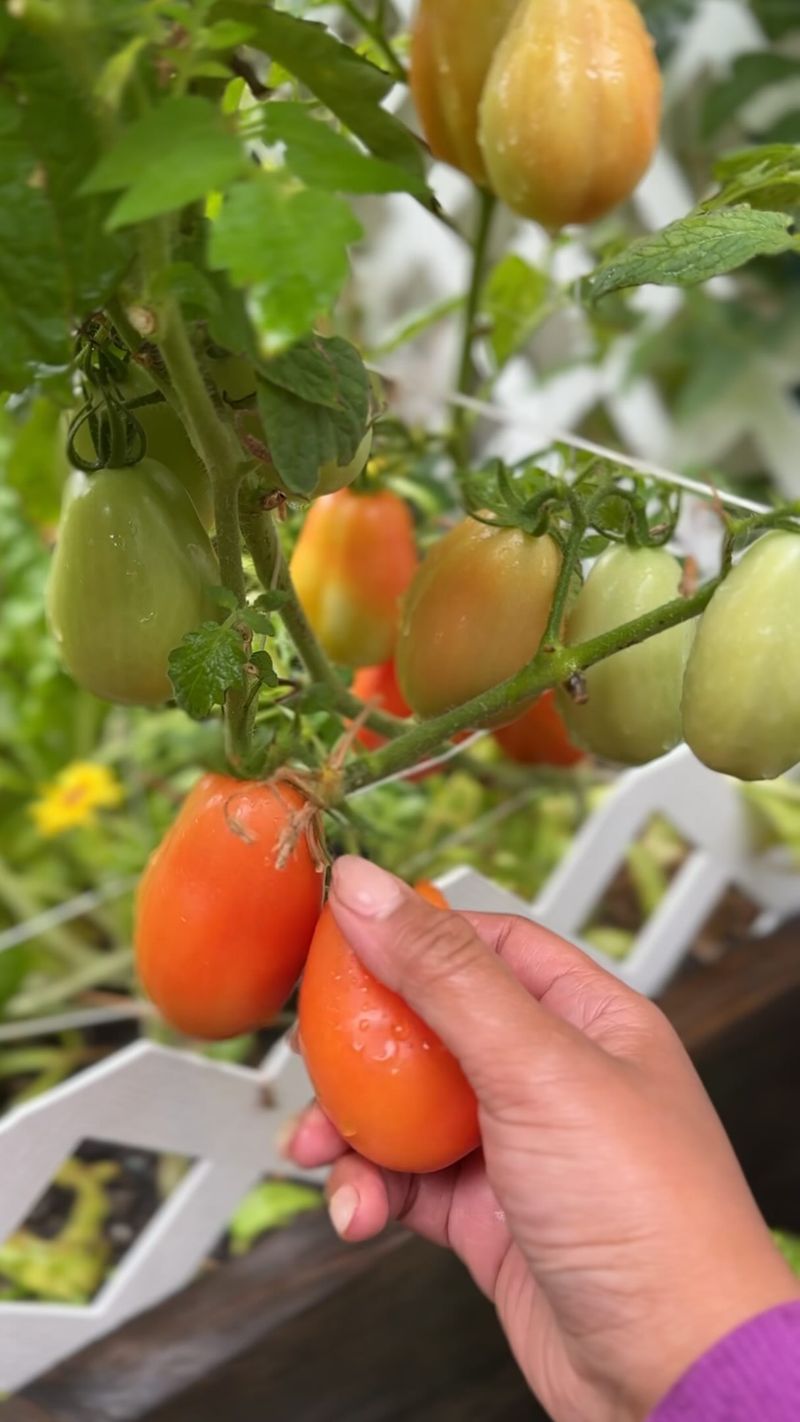
When a heavy rain is forecast and your tomatoes are already showing color, picking them early is a reasonable way to protect the crop. Tomatoes at what plant scientists call the breaker-to-pink stage, when the skin has just begun to shift from green to a blush of color, will continue ripening indoors at room temperature without losing much quality.
Penn State Extension’s tomato cracking guide identifies early harvest before a rain event as a useful risk-reduction step for fruit that is already vulnerable.
This strategy is a backup option, not a substitute for consistent watering throughout the season. Picking early every time the forecast looks uncertain would mean trading flavor and ripeness for safety more often than necessary.
Use it selectively, particularly when fruit are already near ripe and a significant rain is coming within a day or two.
Once cracking has already happened, a cautious food-safety decision is in order. Shallow surface cracks on fruit that smells normal, shows no mold, and has no wet or discolored flesh can often be used promptly after cutting away the damaged area.
Fruit with deep, wet, foul-smelling, or extensively open cracks is a different matter. USDA NIFA safe handling guidance for tomatoes advises discarding produce that is damaged or shows signs of decay, and USDA FSIS produce washing guidance does not support rinsing as a reliable fix for broken or compromised skin.
When in doubt, discard the fruit. A season of steadier soil moisture is the better investment, and a cracked tomato that ripened almost perfectly is a good reminder of how close you already are to getting it right.