
5 Little Habits That Keep Your Petunias Pinched And Pumping Out Bigger Blooms All Summer
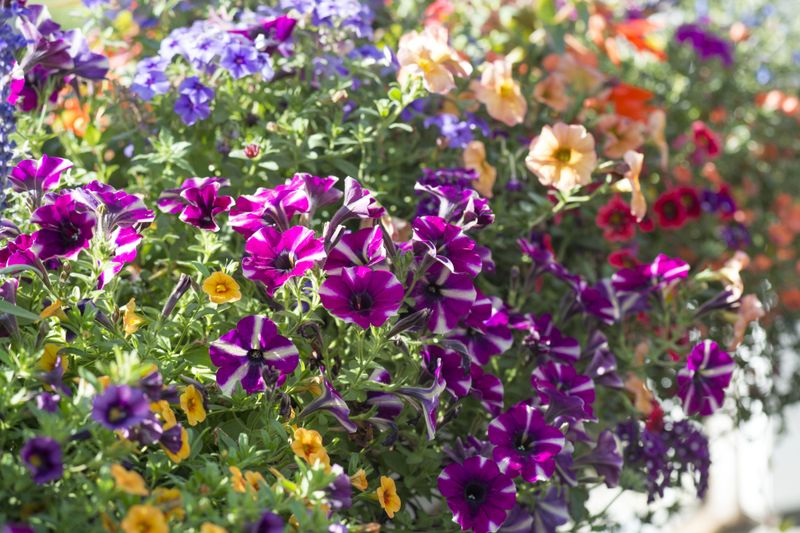
Petunias look amazing in June, but by mid-July a lot of them turn into sad, leggy stems with a few flowers hanging on the ends. The good news is that keeping them full and blooming isn’t about luck or fancy tools.
A handful of small, repeatable habits make the difference between a scraggly pot and one that spills over with color. Here are five simple things you can start doing today to keep your petunias bushy and blooming right through summer.
1. Pinch Regularly for Bushier Growth
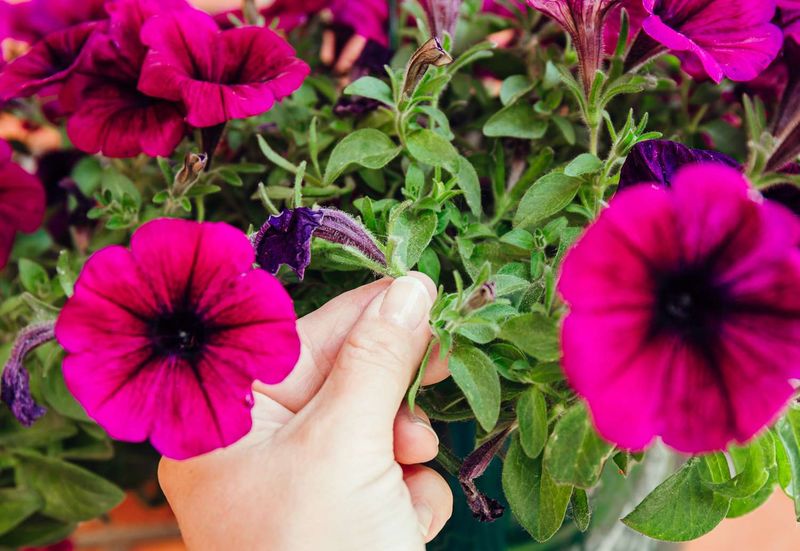
Snapping off the very tip of a petunia stem feels almost wrong, like you are hurting the plant. In reality, that little pinch is the single fastest way to turn a spindly plant into a mound of blooms.
When you remove the growing tip, the plant stops racing upward and pushes energy sideways into new branches instead. More branches mean more nodes, and every node is a spot where fresh flowers can form.
That trade of a little height now for a fuller shape later pays off all season.
Get started as soon as your plant has four to six true leaves, then repeat every 10 to 14 days into early summer, or even mid-August in warmer zones. Pinch off about half an inch to an inch of the stem tip, cutting just above a leaf node with your fingers or clean snips.
Hanging baskets are the biggest winners here. They tend to sprint downward and go bald on top, so pinch them earlier and a bit more often to keep that cascading look thick from the crown to the tips.
2. Deadhead Spent Blooms Correctly
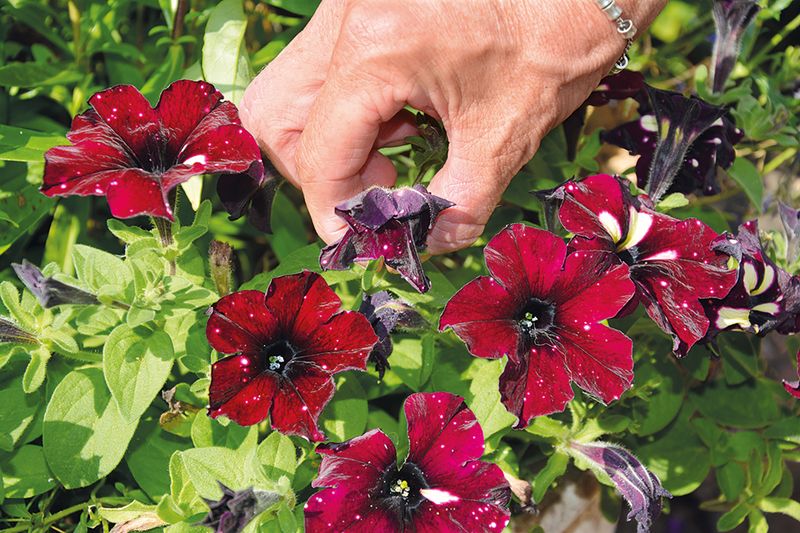
Ever notice how a petunia that looked packed with flowers slows way down after a couple of weeks? Usually the plant has quietly switched jobs from blooming to making seeds.
Removing faded flowers, called deadheading, tricks the plant into staying in flower-production mode. The catch is that most people only pull off the wilted petal and miss the important part underneath.
You want to remove the whole spent flower plus the little stem behind it, including the swelling seed capsule at its base. Leave that capsule and the plant keeps pouring energy into seeds instead of new buds.
Pinch or snip it all the way back and you redirect that effort straight into more color.
A quick pass every few days, or at least once a week, keeps the flowers coming and the pot looking tidy. Some newer varieties are labeled self-cleaning, which helps, but a little hands-on grooming almost always beats letting the plant coast on its own.
3. Ensure Ample Sunlight
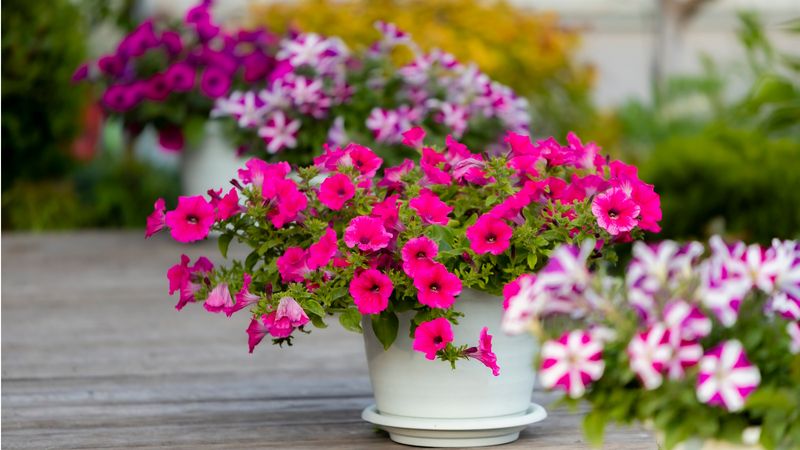
A petunia with plenty of leaves and hardly any flowers is often screaming one thing: it wants more sun. These are true sun lovers, and light is the fuel that powers every bloom.
Aim for at least six hours of direct sunlight a day. Anything less and the plant tends to stretch out, grow lots of green, and skimp on the flowers you actually planted it for.
Shade is a sneaky problem because the plant can still look healthy while barely blooming, so it is easy to blame your fertilizer or watering instead. If yours sits under a tree, on a shady porch, or in the shadow of the house for much of the day, that is likely the real culprit.
The fix is refreshingly easy with containers and baskets. Slide the pot to a brighter spot, follow the sun across your yard for a few days to see where it lands longest, and give the plant a week or two to respond with a fresh flush of buds.
4. Water Consistently and Deeply
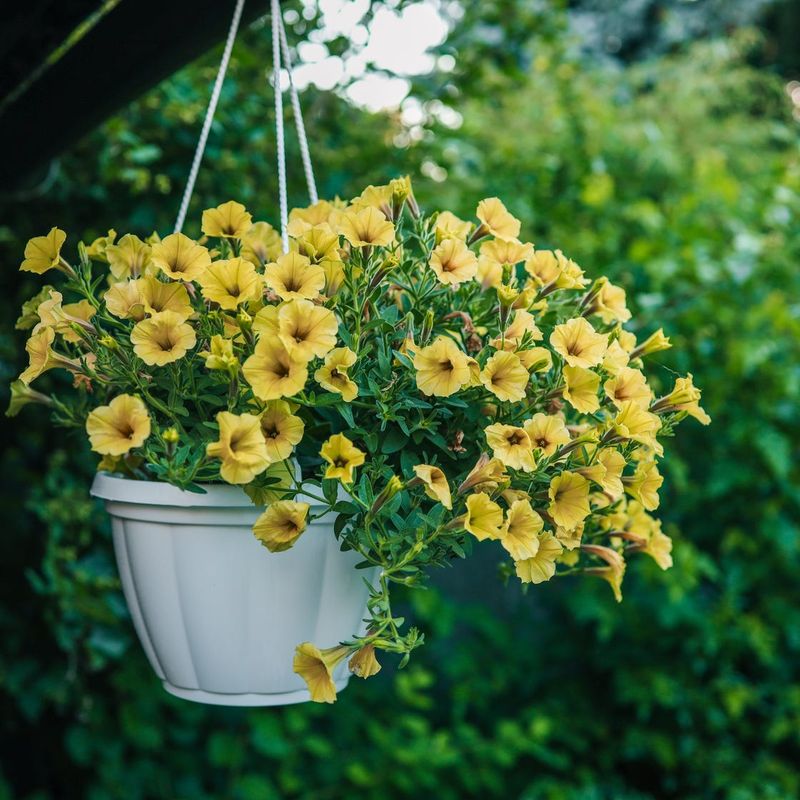
Nothing wilts a summer petunia faster than a hanging basket that dried out while you were at work. Containers heat up, drain fast, and can go from happy to droopy in a single hot afternoon.
Consistent moisture is what keeps the flowers coming without a break. When you water, soak the soil deeply until water runs out the bottom of the pot, then let the top dry out slightly before the next round.
Balance matters more than you might think. Overwatering drowns the roots and invites rot, which shows up as poor blooming, while letting the plant bone-dry causes buds and open flowers to drop.
Both mistakes lead to the same disappointing result: fewer blooms.
During a hot stretch, containerized petunias may need a drink every single day, sometimes more for small baskets in wind and sun. Poke a finger an inch into the soil each morning, and let what you feel there decide whether it is time to water.
5. Fertilize Regularly with the Right Nutrients
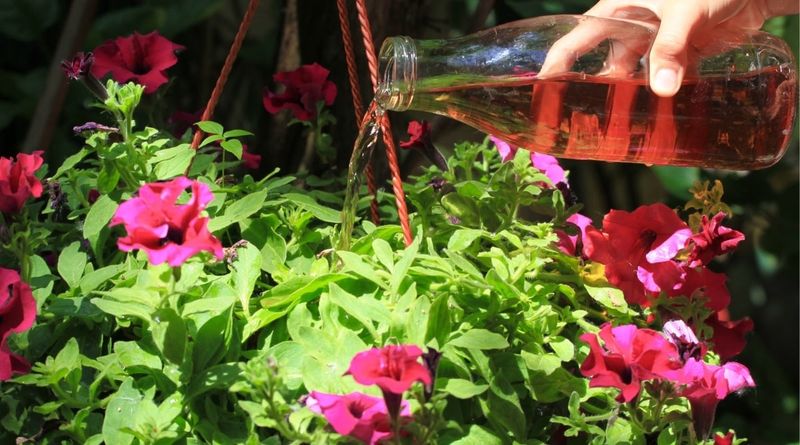
Petunias are hungry plants, the kind gardeners call heavy feeders. All that nonstop blooming burns through nutrients fast, so a plant left unfed will slowly run out of steam by midsummer.
Feed a balanced liquid fertilizer, or one a little higher in phosphorus, every one to two weeks while the plant is actively growing. Phosphorus is the nutrient most tied to flowers, so it helps keep the buds coming.
Here is a common trap worth avoiding: reaching for a high-nitrogen feed. Too much nitrogen pushes out gorgeous, leafy green growth while quietly starving you of flowers.
Switch to a bloom-friendly formula and you can often see fresh buds within a couple of weeks.
If your plant goes leggy and tired partway through the season, give it a rescue combo. Trim back up to a third of the growth for a clean haircut, then follow with a dose of water-soluble fertilizer, and the plant usually bounces back with vigorous new stems and blooms.