
17 Reasons Your Tomatoes Rot At The Bottom (And How To Stop It Before It Spreads)
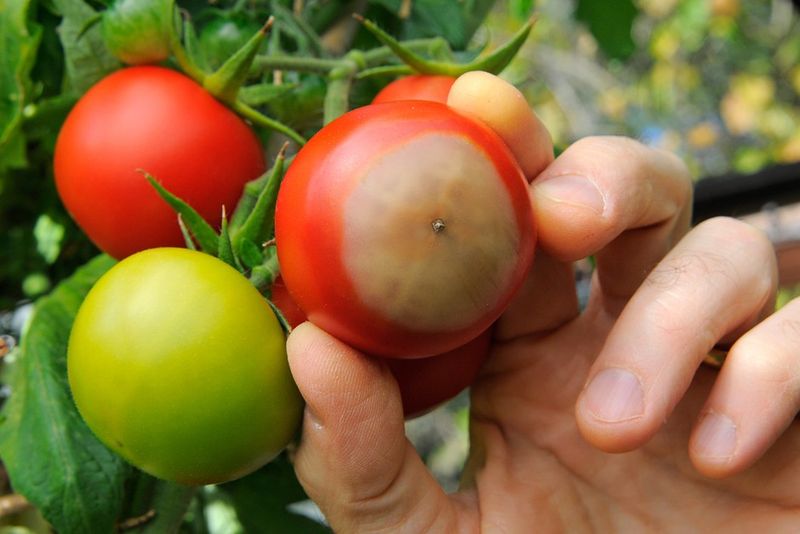
Finding a dark, sunken patch on the bottom of your tomato is one of the most discouraging sights in the backyard garden. That damage has a name – blossom-end rot – and understanding what causes it can help you protect the tomatoes still forming on the vine.
The good news is that this is not a disease spreading from fruit to fruit, and many gardens recover well once growing conditions improve.
Start With the Symptom, Not the Cure
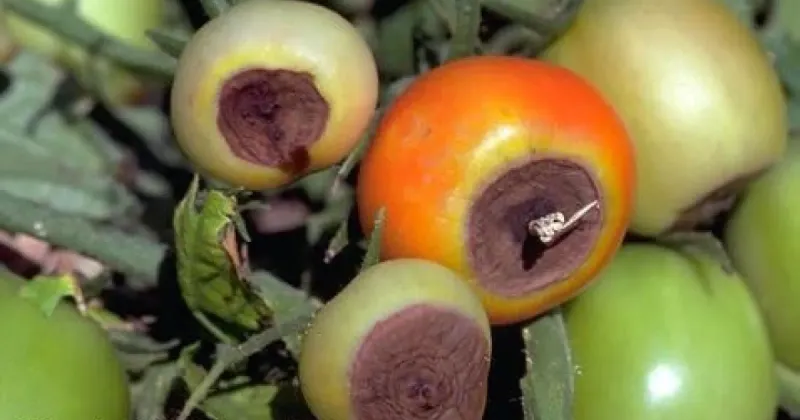
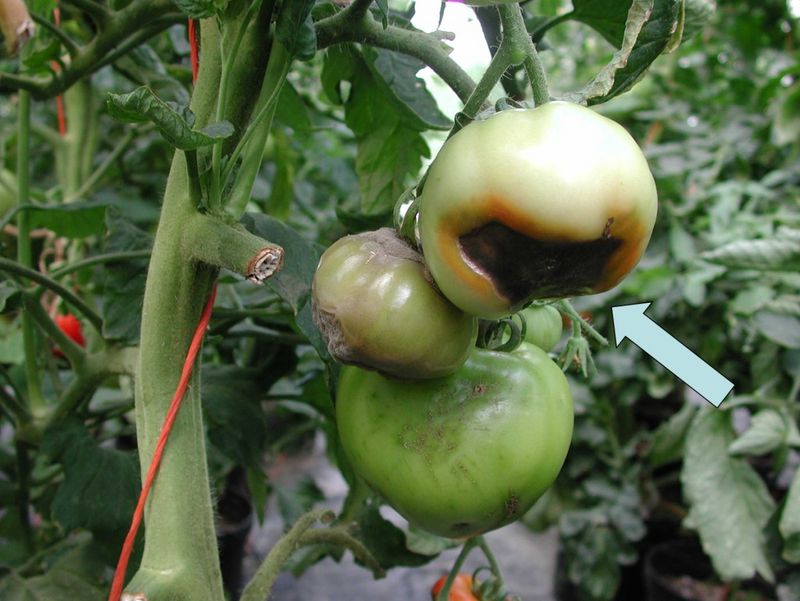
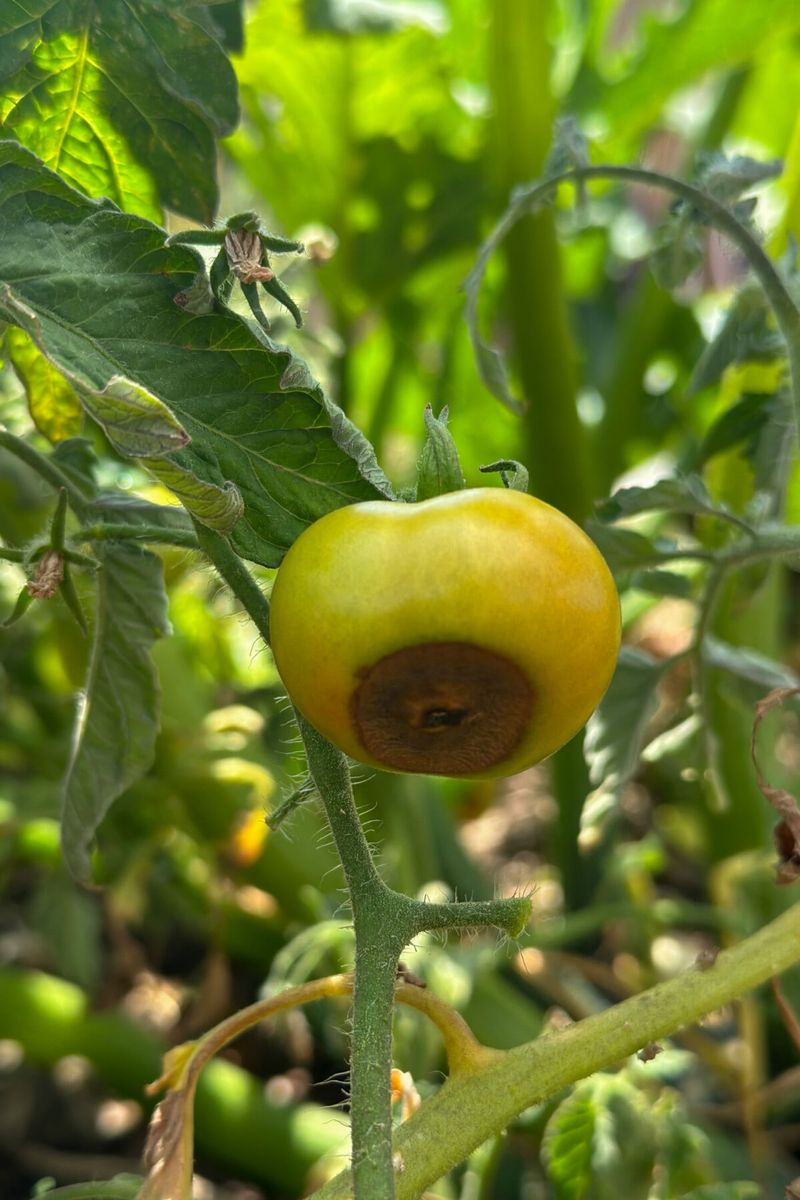
A tan or water-soaked patch on the bottom of a tomato – the end opposite the stem – is the earliest sign most gardeners notice. That small spot can expand quickly into a flattened, sunken lesion that turns brown or black and feels dry and leathery to the touch.
UC IPM describes this progression as a hallmark of blossom-end rot (BER), a physiological disorder that affects the tissue at the blossom end of the fruit.
BER is not a contagious infection. No pathogen is moving from one fruit to another or spreading through the soil to neighboring plants.
Multiple tomatoes on the same plant, or across several plants in the same bed, can develop similar lesions because they experienced the same stressful growing conditions – not because something is passing between them.
Secondary fungi or bacteria sometimes colonize the damaged area after BER begins, which can make the lesion look wet, fuzzy, or soft. That secondary decay does not change the original cause, and it does not mean the disorder has become contagious.
However, it does affect how you handle the fruit once you pick it, which is covered later in this article.
Not every rotten tomato bottom is BER. University of Minnesota’s plant diagnostic tool points out that rot on the sides or shoulders, round sunken spots with visible fungal growth, or damage paired with widespread foliage symptoms may point to other problems entirely – fungal diseases, insect injury, or cracking among them.
Identifying the lesion correctly before taking action saves time and avoids unnecessary treatments.
What BER Says About Calcium—and What It Does Not
Calcium plays a structural role inside developing fruit tissue. When young tomato cells do not receive enough usable calcium during their most rapid growth phase, the cell walls break down and the tissue collapses – producing the leathery lesion that defines BER.
That much is well established.
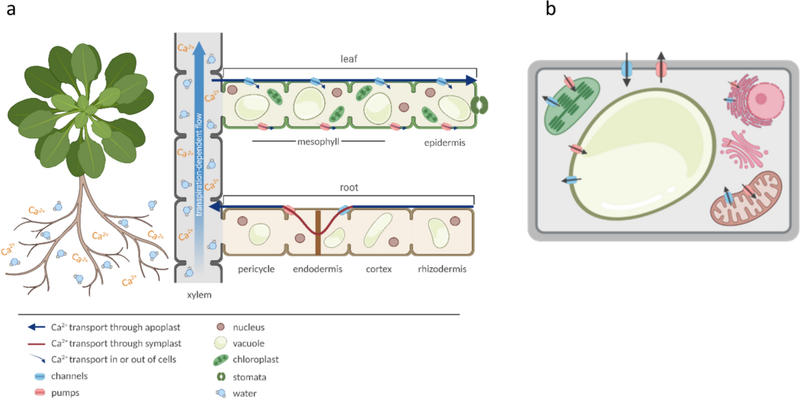
What often surprises gardeners is that research published in a peer-reviewed review of BER spanning a century of study describes the disorder as rooted in disrupted calcium homeostasis and irregular water movement rather than simply a shortage of calcium in the soil. Your soil may contain plenty of calcium and your tomatoes can still develop BER if the plant cannot move water and dissolved minerals efficiently from roots to fruit.
Calcium travels through the plant primarily with water, pulled upward through a process driven by transpiration. Roots absorb water along with dissolved calcium, and both move through the plant’s vascular tissue toward the developing fruit.
When that movement is interrupted – by dry soil, waterlogged roots, heat, or root damage – fruit at the end of the supply line can run short of usable calcium even when the soil around the roots contains an adequate supply.
UC IPM confirms that BER is a physiological disorder, not a nutrient-deficiency disease in the simple sense, and that adding calcium to soil that already has enough will not reliably prevent or stop it. Utah State University Extension notes that the core issue is usually impaired uptake or transport rather than a calcium-poor soil.
Researchers continue to study the precise sequence of events inside the fruit, so some details remain unsettled – but the practical takeaway is consistent: focus on root-zone moisture and root health first, and test the soil before adding any amendments.
The Conditions That Raise BER Risk
Rather than a single hidden cause, BER tends to result from conditions that disrupt the steady flow of water and calcium from the soil through the roots and into developing fruit. Several overlapping factors can contribute, and more than one may be at work in the same garden at the same time.
Dry soil and abrupt swings between drought and heavy watering are among the most commonly observed contributors. When roots sit in parched soil, water uptake slows and calcium movement stalls.
Then a heavy rain or irrigation flood can trigger rapid new growth that outpaces the plant’s ability to deliver calcium to all the fruit at once. Utah State University Extension identifies inconsistent moisture as a central factor in BER development.
Waterlogged or poorly drained soil is equally problematic. Roots need oxygen, and soil that stays saturated forces them into anaerobic conditions where they cannot function properly – reducing water and nutrient uptake just as effectively as drought can.
Root injury from transplanting, aggressive hoeing, weeding close to the stem, or accidental pruning during staking creates the same bottleneck by physically limiting the root system’s reach.
Heat and strong wind speed up water loss from leaves, pulling water away from fruit before it can deliver calcium. Rapid vegetative growth – often triggered by excess nitrogen fertilizer – can stretch the plant’s calcium supply thin across too many fast-expanding tissues at once.
University of Minnesota Extension explains that high concentrations of ammonium, potassium, magnesium, sodium, or other fertilizer salts can also interfere with the root’s ability to absorb calcium even when it is present in the soil.
Timing matters too. BER is most common on the first fruit clusters of the season and tends to appear when fruit is roughly one-third to one-half its final size – the period of fastest cell division.
University of Minnesota’s tomato growing guide notes that large slicer varieties and elongated or Roma-type tomatoes are generally more prone to BER than cherry types, though no variety is fully protected under every growing condition. The century-long research review on BER confirms that these risk factors interact and overlap rather than acting as seventeen separate, independent causes.
Take These Steps When BER Appears
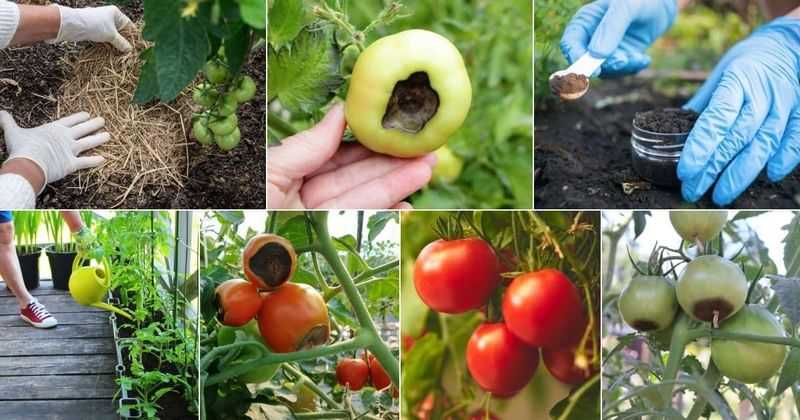
Seeing BER on a tomato already on the vine can feel urgent, but the first thing to understand is that the damaged fruit cannot recover. The tissue that collapsed will not firm up or return to normal regardless of what you apply or change.
Removing that fruit is a practical step – it redirects the plant’s energy toward the tomatoes still forming – but it is not stopping a disease from spreading, because BER is not a pathogen.
Once the affected fruit is off the plant, shift your attention to the root zone. Push a finger or a trowel several inches into the soil near (but not directly against) the stem and feel for moisture.
University of Minnesota’s growing guide recommends watering deeply enough to moisten the entire active root area rather than just wetting the surface. Shallow watering encourages shallow roots, which are more vulnerable to drying out between sessions.
If the soil stays soggy for more than a day or two after rain or watering, drainage is a problem. Compacted soil, heavy clay, or a container without adequate drainage holes can all keep roots in oxygen-poor conditions.
Improving drainage – by amending the bed, raising it, or ensuring containers have functioning holes – addresses the root cause more reliably than any surface treatment.
Mulch is a straightforward tool here. A 2- to 3-inch layer of straw, shredded leaves, or another organic material over the root zone slows evaporation and buffers the soil against rapid wet-dry swings.
UMN Extension advises avoiding cultivation within 1 foot of the tomato base to prevent root injury while you work around the plant.
Pause any heavy fertilizing while BER is active. Utah State University Extension cautions that excess nitrogen and high fertilizer salt concentrations can worsen calcium uptake problems.
UC IPM reinforces that stabilizing the root zone – not adding more inputs – is the most reliable path toward better fruit later in the season.
Water the Root Zone, Not the Calendar
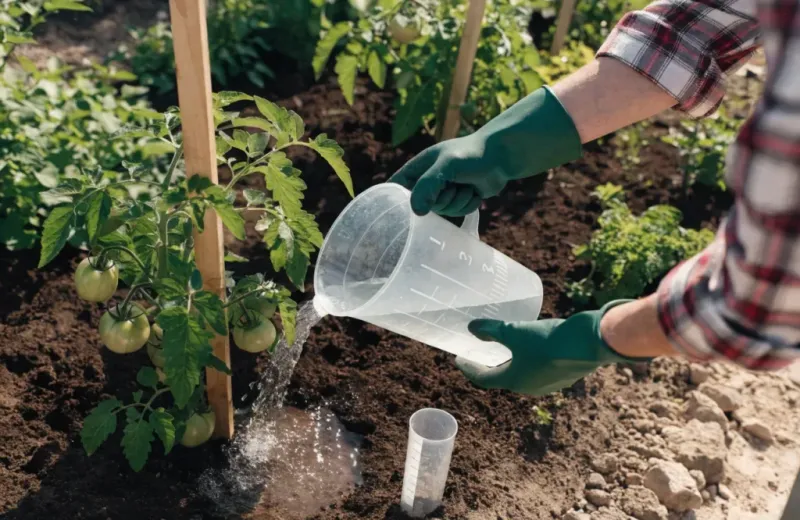
Watering by the clock or the calendar is one of the most common habits that sets tomatoes up for BER. Soil conditions change with weather, plant size, and season, so a fixed schedule that works in cool spring weather can leave roots gasping by mid-July.
A more reliable approach is to check the soil directly before deciding whether to water.
Push a finger about 2 inches into the soil, or use a trowel to check 4 to 6 inches down where active roots are feeding. If the soil at that depth feels dry and crumbly, water thoroughly.
If it still feels moist, wait and check again in a day or two. University of Minnesota’s tomato guide offers approximately 1 inch of rain or irrigation per week as a general starting point, while noting that sandy soils may need water more frequently and that checking actual soil depth is more informative than watching the surface.
UMN’s vegetable irrigation guidance reinforces that deep, less frequent watering encourages roots to grow downward where moisture is more stable – which makes plants more resilient during short dry spells. Light daily splashes keep only the top inch moist, which is where roots are most exposed to heat and evaporation.
Containers and grow bags need closer attention because they dry out much faster than in-ground beds. A pot that feels heavy with water in the morning can be dangerously dry by afternoon on a hot, windy day.
Illinois Extension highlights container monitoring as especially important for preventing BER in potted tomatoes. That said, containers still need drainage holes – sitting in standing water is just as harmful as drying out completely.
Mulch works alongside good watering technique by slowing evaporation from the soil surface, which extends the window between necessary waterings and smooths out moisture swings. Utah State University Extension notes that mulch helps maintain more consistent root-zone conditions, though it does not repair lesions that have already formed.
Protect Roots and Feed Only With Evidence
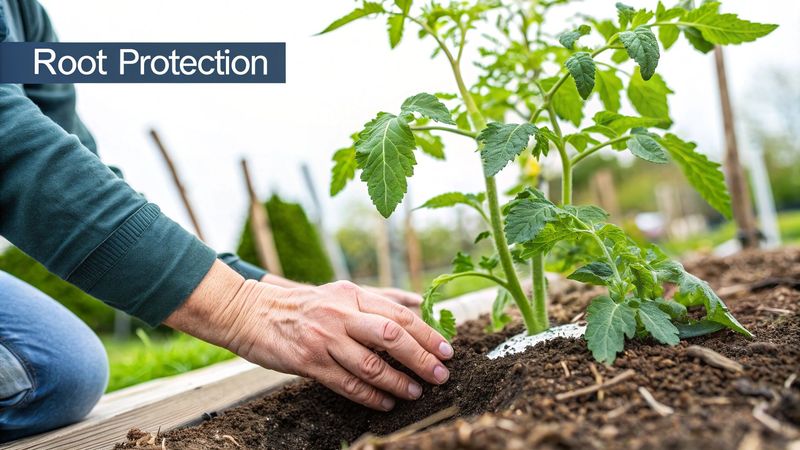
Roots are the engine behind calcium delivery, and they are easier to damage than most gardeners realize. Hoeing or cultivating the soil within about a foot of the tomato stem can slice through the shallow feeder roots that do most of the work.
University of Minnesota Extension specifically advises avoiding cultivation within 1 foot of the tomato base to protect those roots. Hand-pulling weeds close to the plant is safer than using any tool that disturbs the soil at that distance.
Fertilizer deserves careful handling when BER is a concern. Excess nitrogen encourages fast, lush vegetative growth that can outpace the plant’s ability to supply calcium to all its developing fruit at once.
High concentrations of ammonium, potassium, magnesium, sodium, or other salts in the root zone can also compete with calcium for uptake, reducing how much actually reaches the fruit even when calcium is physically present in the soil.
A soil test is the only reliable way to know what your soil actually needs before adding any amendment. University of Minnesota’s soil-health remedies guide is direct on two popular home fixes: eggshells decompose too slowly to supply usable calcium during the current growing season, and Epsom salt adds magnesium rather than calcium – excess magnesium can actually interfere with calcium uptake and foliar applications risk leaf scorch.
Neither is an appropriate immediate response to BER.
Illinois Extension cautions that lime, gypsum, and other calcium-containing amendments should only be applied after testing confirms a deficiency or a pH problem that warrants correction. Lime also raises soil pH, which affects nutrient availability broadly – adding it without a test can create new imbalances.
Utah State University Extension echoes that containers need confirmed drainage holes and that waterlogged root zones remain a risk even in pots that appear well-maintained on the surface.
Check for Other Causes of Tomato Rot
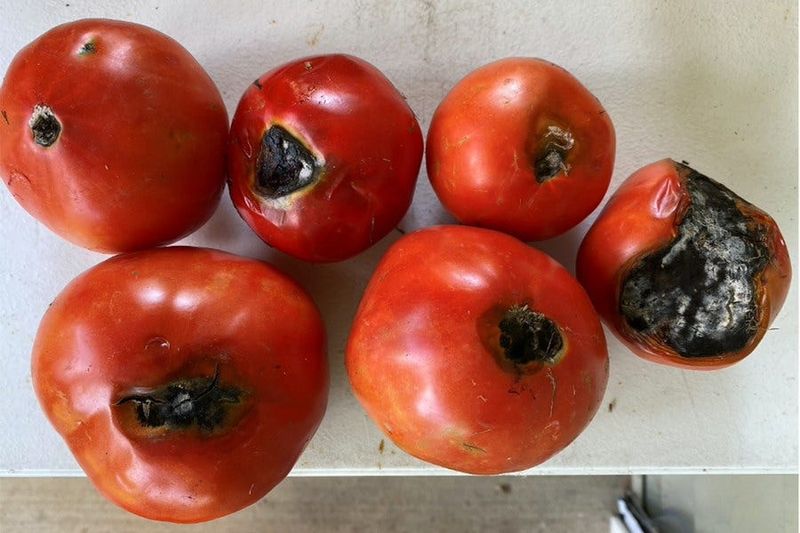
Before adjusting watering schedules or buying amendments, take a close look at exactly where and how the damage appears. Classic BER produces a centered, dry, leathery, sunken lesion on the blossom end – the bottom of the fruit, opposite the stem.
That location and texture are the clearest diagnostic clues.
Damage that appears on the sides or shoulders of the fruit points elsewhere. The University of Minnesota plant diagnostic tool identifies round sunken spots with visible fungal growth as potential anthracnose or Alternaria fruit rot – both fungal diseases that behave very differently from BER and require different responses.
Small puncture marks surrounded by discoloration may indicate stink bug feeding. Cracked skin, often running radially from the stem or circling the shoulder, typically results from uneven moisture or rapid growth after rain.
Pale, papery patches on the sun-exposed side of the fruit suggest sunscald rather than rot.
Secondary decay can make BER look more alarming than the original disorder. UC IPM notes that fungi and bacteria can colonize the leathery BER tissue, adding wetness, fuzz, or a softer texture.
That secondary colonization does not mean BER has become infectious – it means the damaged tissue has been invaded by opportunistic organisms after the fact.
Food safety matters once secondary decay is present. Utah State University Extension advises discarding any tomato that is soft, moldy, leaking, or extensively rotten.
USDA guidance on molds in food specifically lists tomatoes among soft, high-moisture produce that should be discarded entirely when mold is present, because contamination can extend well below the visible surface. Cutting away a small moldy section is not a reliable way to make a soft, leaking tomato safe to eat.
Protect the Next Harvest Without False Promises
One genuinely reassuring fact about BER is its timing. The disorder tends to hit the first fruit clusters hardest, when the plant is still establishing its root system and adjusting to the garden environment.
University of Minnesota’s growing guide confirms that later fruit on the same plant often develops without symptoms once growing conditions stabilize – so a rough start to the season does not necessarily mean a lost harvest.
The priorities that give later tomatoes the best chance are consistent: steady moisture without saturation, good drainage, mulch over the root zone, roots protected from cultivation and injury, and fertilizer applied only when a soil test supports it. UMN Extension summarizes these as the core management steps, none of which involve a single product or a guaranteed outcome.
Choosing varieties with a lower likelihood of BER can also help in future seasons. Penn State Extension lists cultivars such as Celebrity, Mountain Pride, Fresh Pak, and Jet Star among those that tend to be less susceptible, along with some cherry types.
Less susceptible is not the same as immune – any variety can develop BER under stressful enough conditions – but starting with a variety that handles variability better gives you a margin.
The practical decision rule is straightforward: identify the lesion accurately, correct the root zone, and watch the new fruit rather than trying to repair what is already damaged. A tomato plant that gets steady moisture, protected roots, and balanced nutrition has a reasonable chance of finishing the season with a good crop – even after a difficult beginning.