
Why Your Petunias Quit Blooming Right When Summer Peaks (And The Reset That Brings Them Back)
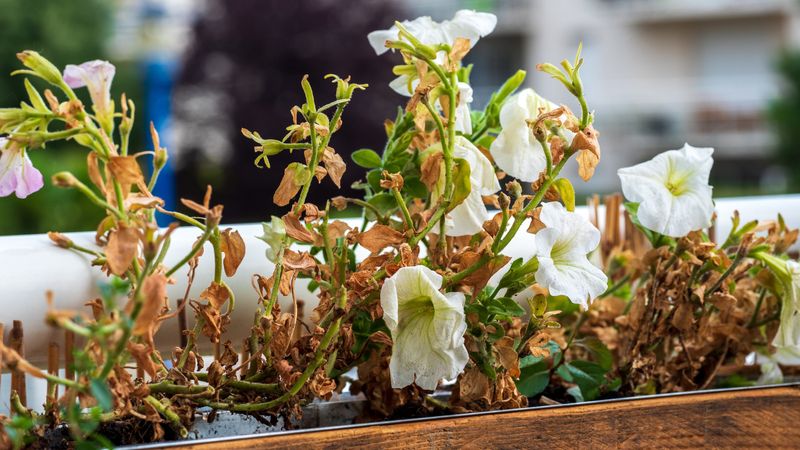
You step outside on a hot July afternoon and notice your petunias have gone from a riot of color to a tangle of long, bare stems with barely a flower in sight. Before you assume the worst, know that a petunia losing its blooms in summer does not always mean the plant is finished.
Several fixable conditions can slow flowering, and a living, leafy plant may respond well to a simple reset. Understanding what is actually happening is the first step to bringing the color back.
A midsummer flowering slump can have more than one cause
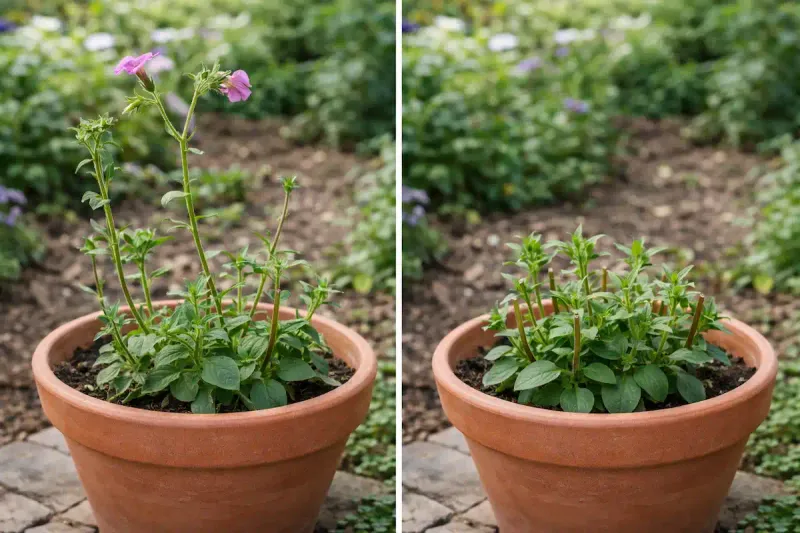
Petunias look so promising in May and June, covered in color, that a sudden drop in flowers during July or August can feel alarming. The stems grow long, the blooms thin out, and the whole plant seems to stall.
That visible shift is real, but it rarely has just one explanation.
Elevated heat is one possible contributor. Research presented at the American Society for Horticultural Science found that elevated temperature reduced the number of flowers per petunia plant, and a separate peer-reviewed study confirmed that temperature affects petunia growth, flower development, and flower characteristics.
Prolonged heat can suppress blooming, but the degree of impact depends on the cultivar, nighttime temperatures, humidity, available water, and how the plant is growing.
Other conditions can produce the same flower-sparse result. Insufficient light is a common culprit: petunias that were planted in a spot with good spring sun may now sit under more shade as neighboring plants fill in.
Drought stress, waterlogged roots, and depleted nutrients in containers can all reduce flowering just as noticeably as heat. Legginess itself plays a role, because long stems with few leaves tend to push energy toward maintaining existing growth rather than producing new flowers.
Cultivar behavior adds another layer. Older petunia varieties were historically more prone to midsummer decline, while some newer breeding lines carry improved vigor and heat tolerance.
A plant that seems to quit in July may simply be expressing traits built into its genetics.
The practical takeaway is that a petunia with green, actively growing stems that has become leggy and flower-sparse may be a candidate for a reset. A plant that is browning, collapsing, or declining rapidly may have a different problem entirely, one that pruning alone will not fix.
Sorting out which situation you are looking at comes before reaching for the scissors.
Check the plant before you reach for the pruners
A quick assessment before pruning can save you from making a stressed plant worse. Start with light.
University of Minnesota Extension recommends at least 5 to 6 hours of good sunlight for petunias, with full sun generally producing better flowering. If your plant has gradually shifted into more shade as the season progressed, more pruning will not compensate for that deficit.
Next, check the soil. Push a finger an inch or two into the mix and note what you find.
Containers and hanging baskets can dry out surprisingly fast in summer heat, and a plant that wilts from drought stress needs water more urgently than it needs a haircut. At the same time, soil that stays soggy or smells off can point to waterlogged roots, a condition that damages the plant from below and will not improve with pruning.
University of Minnesota Extension consistently distinguishes adequate moisture from persistently wet soil, noting that waterlogged containers can injure roots and reduce overall plant performance.
Look at the tissue itself. A reset-ready petunia is green, pliable, and actively pushing new growth even if flowers are scarce.
Stems that snap rather than bend, leaves that are yellowing in patterns, or tissue that feels mushy near the base are warning signs that something beyond legginess is at work.
Rapid wilting, sudden browning, or a plant that seems to be collapsing from the crown downward can indicate root rot, crown rot, or stem disease. Penn State Extension identifies Phytophthora crown rot as a disease that causes branches to wilt and plants to die rapidly, and cutting back a diseased plant will not stop that progression.
If you notice those kinds of symptoms, a petunia diagnostic guide from UMN Extension or a local extension specialist is a better next step than pruning.
The reset described in this article is appropriate only for a plant that passes this check: green, alive, actively growing, and leggy rather than diseased or severely damaged.
Choose a cautious moment for the reset
Timing a cutback thoughtfully gives the plant a better chance to recover. If your petunia is wilting because it has gone dry, water it thoroughly first and let it stabilize before removing any stems.
Cutting back a plant that is acutely thirsty adds stress on top of stress, and the plant needs its remaining foliage to recover moisture and resume normal function.
Oklahoma State University Extension advises avoiding heavy pruning during periods of extreme heat, while still recommending regular deadheading and deep watering through those stretches. That is a sensible general caution rather than a precise temperature rule.
Petunias respond differently based on cultivar, growing conditions, and how much heat they have already endured, so there is no single temperature that signals a universal safe window. The practical point is that a plant under acute heat stress is not the best candidate for an aggressive cutback.
A better moment tends to be when temperatures have eased somewhat, such as after a cooler spell or in the early morning before the day heats up. Extension guidance on leggy petunias describes the cutback as a recovery step that supports renewed branching and flowering, particularly as conditions moderate.
How much you cut depends on the individual plant. A mildly leggy petunia may only need the longest, barest stems shortened.
A plant that has really sprawled and lost most of its interior foliage may tolerate more. There is no single recovery timetable that applies to every petunia, and renewed flowering after a cutback varies by cultivar, how much healthy foliage remains, and whether growing conditions improve afterward.
Going in with a measured hand and watching how the plant responds is more reliable than following a rigid schedule.
Shorten leggy stems without stripping away the plant
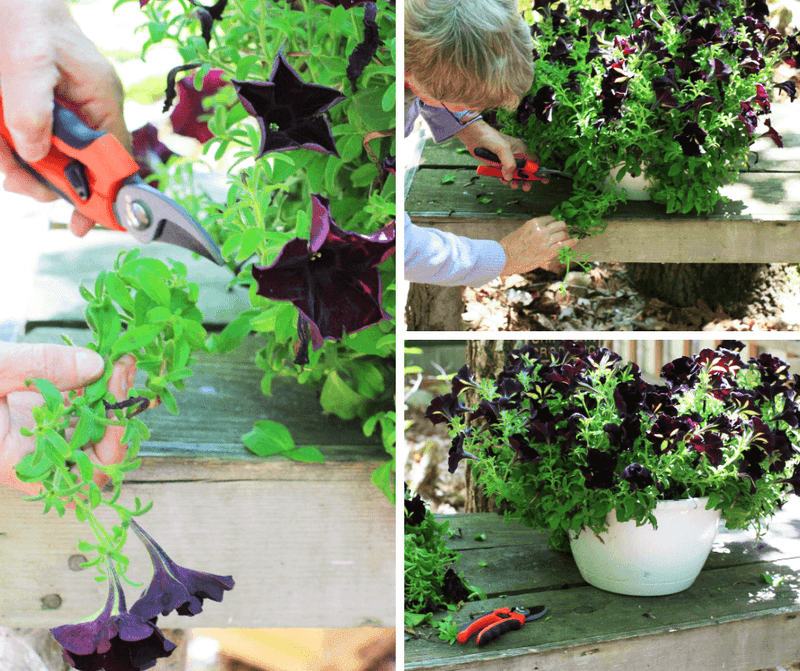
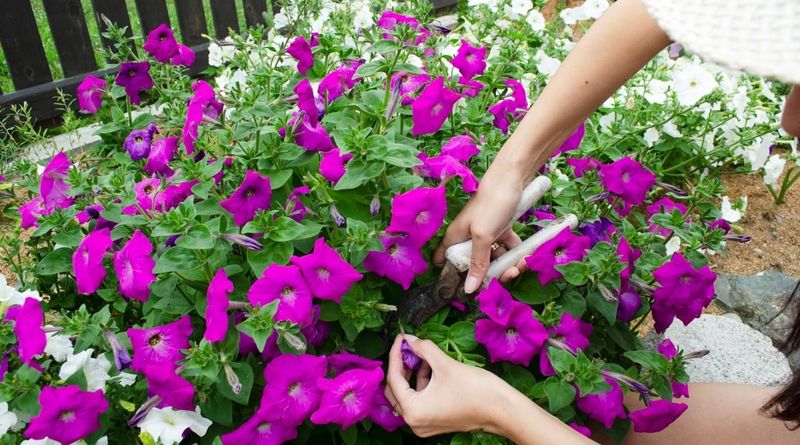
Grab a pair of clean, sharp scissors or pruners before you start. Dirty or dull blades can crush stems or introduce disease, so a quick wipe with rubbing alcohol is worth the thirty seconds it takes.
Work through the plant selectively rather than shearing everything at once. Target the longest, barest stems first, the ones that have stretched out with little foliage and no flowers at the tips.
Shortening those by roughly half is a reasonable starting point for most leggy petunias, and extension guidance on recovering leggy petunias supports retaining healthy leaves throughout the process. Leaves are how the plant captures light and fuels new growth, so stripping them away defeats the purpose of the reset.
An exceptionally overgrown plant may tolerate a more severe cutback. Some extension guidance indicates that petunias can be cut back to within a few inches of the base if needed, but the instruction consistently includes a qualifier: do not remove all the foliage.
Even a severely cut plant benefits from keeping some healthy leaves to support recovery. Automatically shearing every stem to the soil line is not the recommended approach unless the plant is truly out of control and you are prepared for a longer recovery period.
Pruning and deadheading are not the same thing, and mixing them up can leave you wondering why the plant is not responding. Penn State Extension identifies cutting back as useful for annuals that become leggy and produce fewer flowers in midsummer, with many petunia varieties responding well.
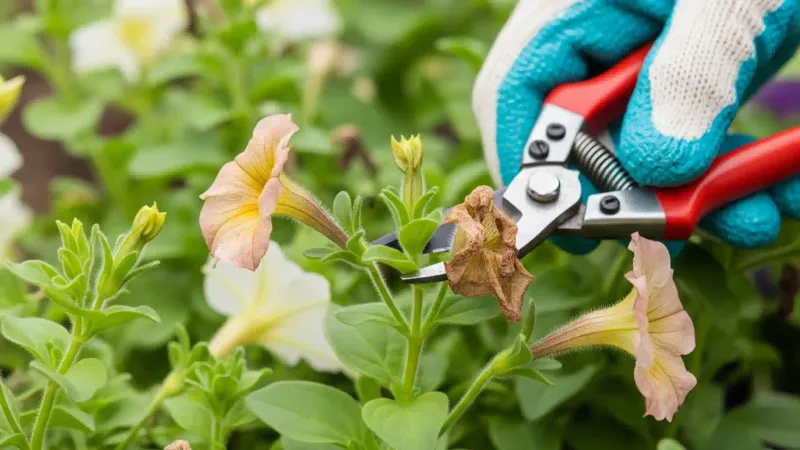
That is a structural intervention: removing meaningful lengths of stem to rebuild branching and plant shape. Deadheading, by contrast, is the targeted removal of a single faded flower and the stalk or seedpod beneath it.
Mississippi State University Extension recommends deadheading about once a week for petunias that require it, but that routine maintenance does not replace a structural cutback when a plant has become seriously leggy.
After you finish, step back and look at what remains. The plant should still have visible green foliage distributed across the stems.
If it looks stripped bare, you have gone further than intended, and the recovery may take longer or may not succeed.
Support regrowth with water and measured feeding
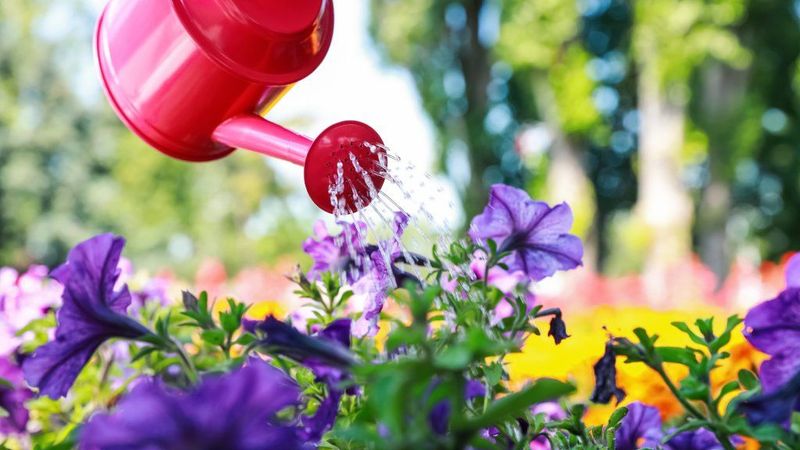
Once the stems are shortened, water the plant thoroughly. A good soak helps the roots recover from any handling stress and signals the plant that resources are available for new growth.
For containers and hanging baskets, water until it drains freely from the bottom of the pot, then let the excess drain completely rather than letting the container sit in a saucer of standing water.
Moisture management after the cutback follows the same logic as before it: base your watering schedule on what the soil actually tells you rather than a fixed daily rule. UMN Extension notes that hanging baskets and containers may need watering as often as daily depending on container size, soil volume, temperature, and weather, but the goal is consistently adequate moisture, not constantly soggy roots.
Checking the soil before watering is more reliable than watering on a timer.
Feeding matters too, especially for container-grown plants. Repeated watering leaches nutrients from potting mix over the course of a summer, and a plant pushing new stems and leaves after a cutback needs those resources.
UMN Extension recommends following the product label closely to avoid fertilizer injury, and that caution applies here as well. A balanced fertilizer applied according to label directions can support new growth and eventual flowering without the risks that come from overfeeding.
There is no evidence that high-phosphorus products force blooms more reliably than balanced fertilization, and excess fertilizer can damage plants and contribute to nutrient runoff.
The goal after a cutback is to give the plant stable, consistent conditions: adequate light, reliable moisture without waterlogging, and appropriate nutrients. That combination supports the new branching that, in a healthy plant, leads back to flowering.
Extension guidance on leggy petunia recovery specifically includes watering well and applying liquid fertilizer as part of the post-cutback care sequence. Patience is also part of aftercare: the plant needs time to push new growth before flowers appear.
Maintain flowering according to the petunia you grow
Keeping petunias blooming through the rest of summer takes a different kind of attention than the one-time reset. Regular maintenance habits, matched to the specific plant you are growing, make the difference between a plant that rebounds and one that stalls again within a few weeks.
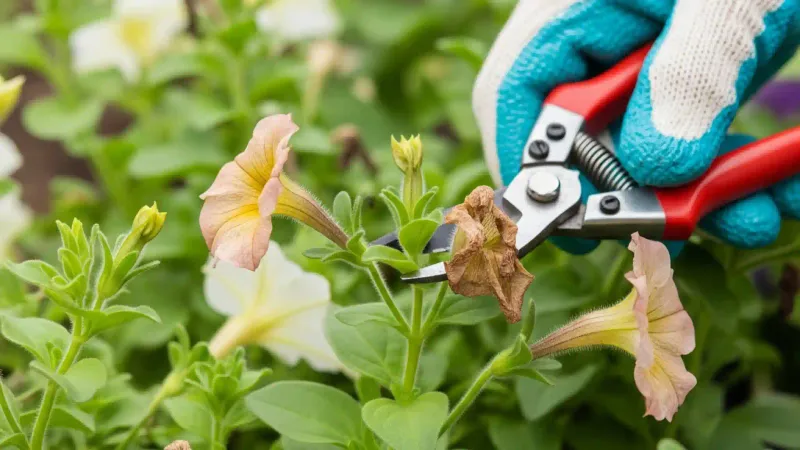
For cultivars that require deadheading, technique matters more than most gardeners realize. Mississippi State University Extension explains that deadheading means removing the faded flower and the stalk beneath it, where the seedpod forms, rather than simply pulling off the wilted petals.
Leaving the seedpod attached allows the plant to direct energy toward seed production instead of new flowers. Done consistently, proper deadheading can extend bloom in varieties that need it.
Light and moisture remain non-negotiable. Even a well-pruned, well-fed petunia will underperform in a spot that has slipped into too much shade, and inconsistent watering creates stress cycles that interrupt flowering.
Spreading or Wave-type petunias are particularly vigorous and can demand more frequent watering and feeding than some upright types. UMN Extension specifically recommends weekly fertilizing for spreading types, reflecting their higher resource demands relative to more compact varieties.
Not every petunia needs the same maintenance routine. Some specifically self-cleaning cultivars are bred to shed spent flowers on their own, reducing or eliminating the need for routine deadheading.
Oklahoma State University Extension identifies Supertunia Vista Bubblegum as a self-deadheading type that blooms continuously until frost, though it may still benefit from occasional light trimming for shape. Self-cleaning is a specific cultivar trait, separate from the improved vigor or heat tolerance that newer breeding lines may also carry.
Missouri Extension reports that older petunia cultivars were more likely to experience a midsummer decline requiring severe trimming, while newer lines generally show improved vigor. Even so, newer does not automatically mean self-cleaning or maintenance-free.
Checking the tag or the cultivar’s growing instructions tells you what that specific plant actually needs, which is more useful than applying one maintenance approach across the board.
Know when pruning will not solve the problem
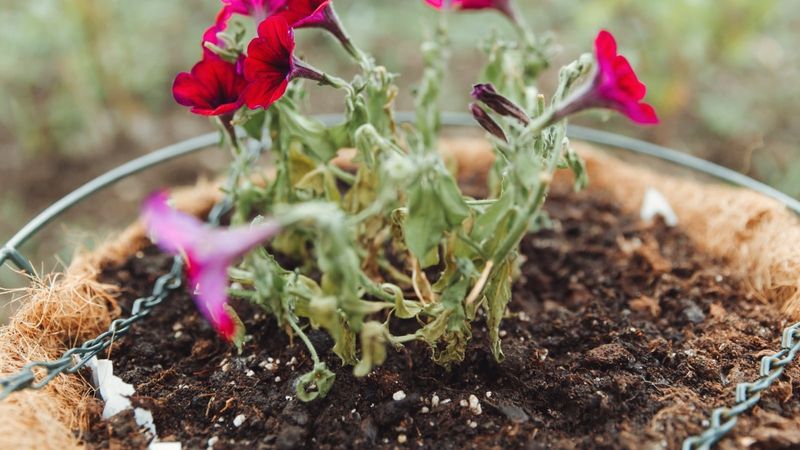
Pruning is a tool for a living, growing plant that has become overgrown. When the problem runs deeper than legginess, cutting stems back accomplishes nothing and may remove what little healthy tissue the plant has left.
Rapid wilting is one of the clearest signals that something other than legginess is at work. Penn State Extension lists Phytophthora crown rot as a disease that causes branches to wilt and plants to die rapidly, and no amount of pruning reverses that kind of root or crown damage.
A plant that collapses suddenly, develops mushy or discolored tissue near the soil line, or gives off an unpleasant smell from the roots is showing signs that need diagnosis, not a haircut. Avoid guessing at a specific disease from a single symptom; the same visible decline can have more than one cause.
Persistent shade is another condition that pruning cannot fix. If the plant’s location simply does not provide enough light for reliable flowering, the only real solutions are moving the container or replacing the plant with something better suited to lower light.
Similarly, UMN Extension’s petunia diagnostic resource connects wilting and browning to causes including drought injury and waterlogging, both of which require correcting the underlying condition before expecting recovery.
Drainage and nutrient problems also fall outside what pruning addresses. A container without adequate drainage holes, or one sitting in a saucer that never empties, keeps roots in conditions that degrade over time.
UMN Extension guidance on container care reinforces that waterlogged roots cannot support healthy growth, and fixing the drainage situation has to come before any other intervention makes sense.
When a petunia continues to decline despite correcting light, water, and drainage, or when you cannot identify a clear cause, local extension services and master gardener programs offer plant diagnostic help. Describing the symptoms accurately, or bringing a sample, gives them the information needed to point you toward a real solution rather than another round of guesswork.
Treat the reset as a chance, not a guarantee
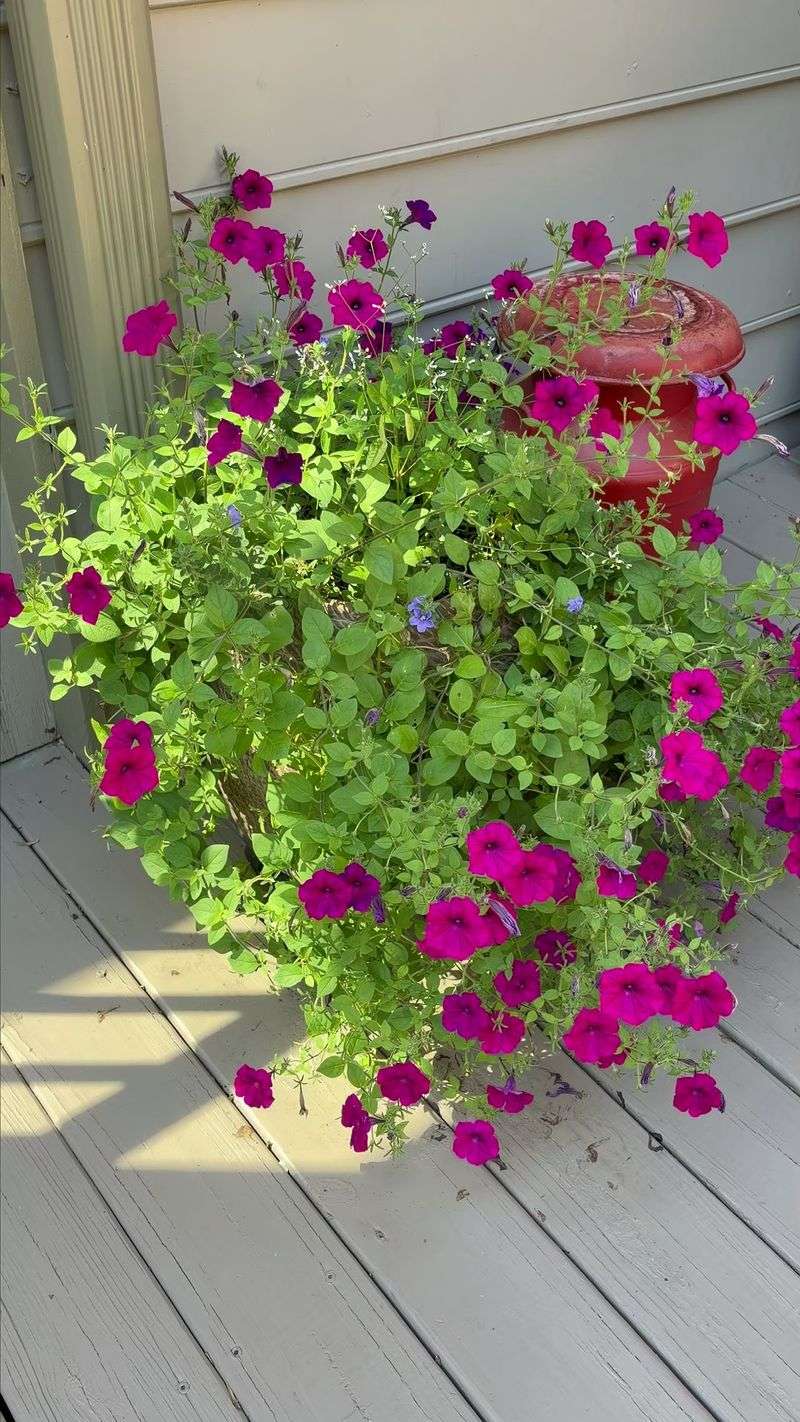
The sequence is straightforward: confirm the plant is alive and actively growing, correct any light or moisture problems first, then make a moderate cutback that shortens the longest, barest stems while leaving healthy foliage in place. Water thoroughly afterward and resume label-directed fertilizing appropriate for your container size and conditions.
Extension guidance on recovering leggy petunias describes renewed branching and flowering as the expected direction after this kind of reset, particularly as temperatures moderate. Timing varies by plant and cultivar, so results are not guaranteed on any fixed schedule.
UMN Extension reinforces that consistent light, moisture, and feeding are what sustain that recovery once it begins.
A midsummer slump in a green, leggy petunia is often a recoverable situation. A rapidly wilting, browning, or collapsing plant is a different problem that needs diagnosis before any other step.
Knowing which one you are looking at is the most useful thing you can do for your garden.