
The One Cucumber Watering Mistake That Turns Your Whole Harvest Bitter
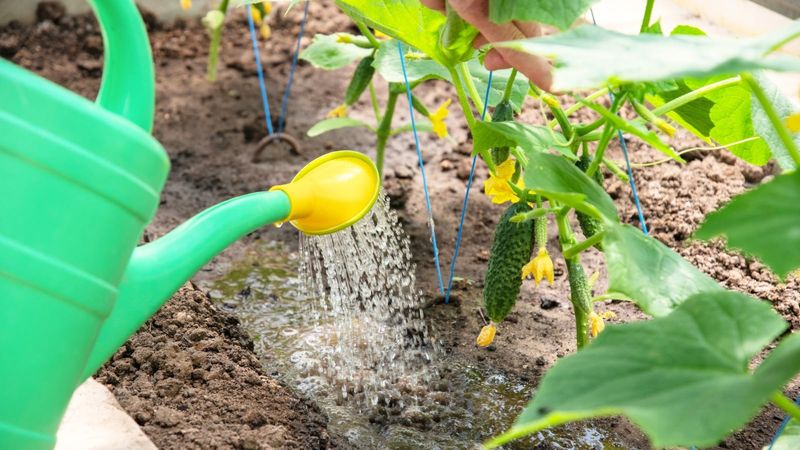
Biting into a homegrown cucumber and tasting something sharp and unpleasant is one of the more discouraging moments in the backyard garden. You did the work, you waited through the season, and the fruit let you down.
The good news is that watering habits do play a real role in cucumber flavor, and understanding exactly how can help you grow better-tasting fruit going forward. The catch is that the story is a little more nuanced than most headlines suggest.
The headline gets the watering mistake wrong
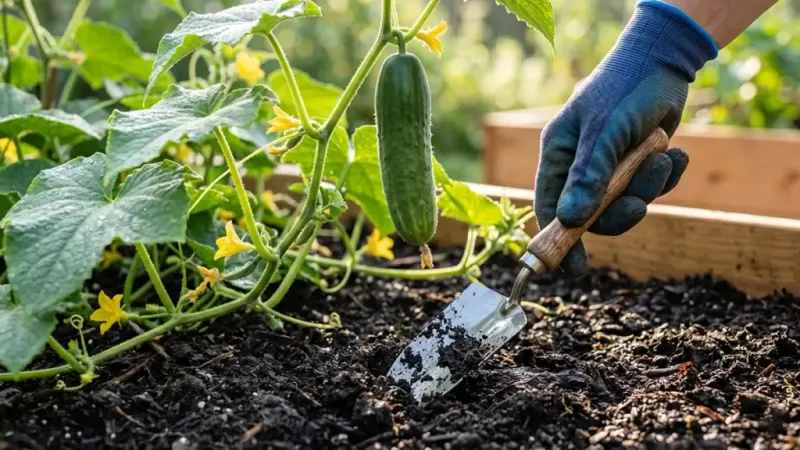
Headlines about cucumber bitterness often land on something like “one watering mistake ruins your whole harvest,” and while that framing gets attention, it skips over what the evidence actually shows. A single missed watering does not inevitably make every cucumber on your vine taste bitter.
The real warning is more specific and more useful: repeated or severe moisture stress, especially when it happens while plants are flowering and developing fruit, can raise the risk of bitter cucumbers.
The condition to watch for is uneven moisture in the root zone over time, not a single dry afternoon or one forgotten watering session. Utah State University Extension emphasizes keeping soil moisture consistent during the growing season rather than cycling between bone-dry and soaking wet.
That pattern of stress, repeated across days or weeks, is the more defensible risk factor.
This is also not a rule about what time of day you water. Morning watering is often recommended, but the reason involves foliage disease, not bitter fruit.
The moisture-related concern is about what happens in the root zone across the whole growing season, not whether you turned on the hose before or after lunch.
UC IPM guidance on bitter cucurbits notes that hot, dry conditions and plant stress are associated with bitterness, but genetics and other environmental factors are also involved. UC Master Gardeners of Sacramento County point out that irrigation frequency alone does not consistently predict whether a cucumber will taste bitter.
What you can do is check the condition of the root zone regularly and work toward steadier moisture, which reduces one real stress pathway without guaranteeing a perfect crop.
How plant stress can produce bitter fruit
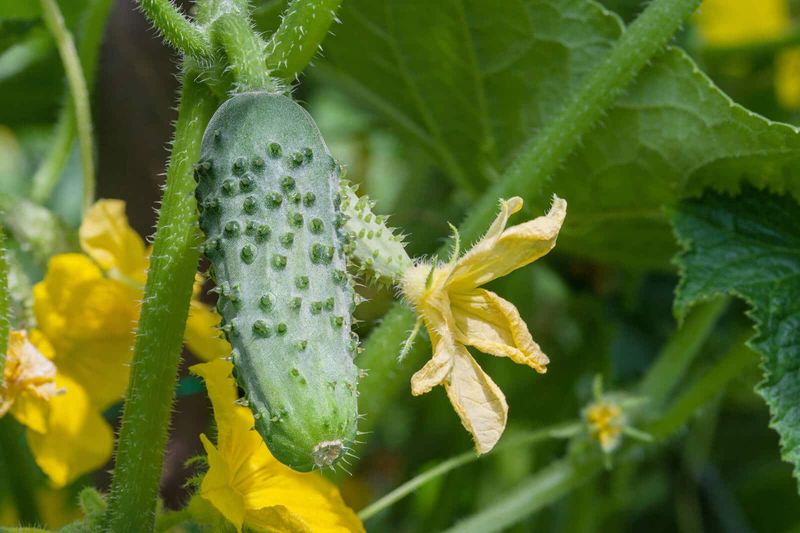
Cucumbers belong to a plant family that produces bitter chemical compounds called cucurbitacins. The two most commonly cited are cucurbitacin B and cucurbitacin C.
Under normal growing conditions, these compounds are concentrated mainly in the leaves, stems, and roots of the plant rather than in the fruit itself.
When a cucumber plant experiences stress, particularly heat and prolonged dryness, cucurbitacins can migrate from those vegetative parts into the developing fruit. Iowa State University Extension explains that bitterness in cucumbers is tied to these compounds and that stress during growth can affect how much of them ends up in the edible part of the plant.
UC IPM similarly connects hot, dry conditions and plant stress to greater bitterness risk in cucurbits.
That said, stress does not guarantee bitter fruit in every plant or every cucumber on a vine. The relationship is a risk factor, not a predictable outcome you can calculate from a single dry spell.
Some cucumbers on a stressed plant may taste fine while others on the same vine are noticeably sharp. The stage of development matters too, with fruit forming during the most stressful periods more likely to accumulate higher cucurbitacin levels.
Genetics also play a significant role. NC State Cucurbit Breeding research makes clear that cultivars differ substantially in how susceptible they are to bitterness, and published research on cucurbitacin biosynthesis confirms that the genetic regulation of these compounds is a major factor in cucumber flavor.
A plant that is genetically inclined toward higher cucurbitacin production may produce bitter fruit even under reasonably good growing conditions, while a low-bitterness cultivar may handle moderate stress without the same result.
Check the root zone before watering
Calendar-based watering schedules feel organized, but they do not account for what is actually happening in the soil beneath your cucumber plants. Soil type, recent rainfall, plant size, fruiting stage, and air temperature all affect how quickly moisture is used up.
A rigid “water every three days” rule can leave plants stressed during a heat wave and waterlogged after a rainy week.
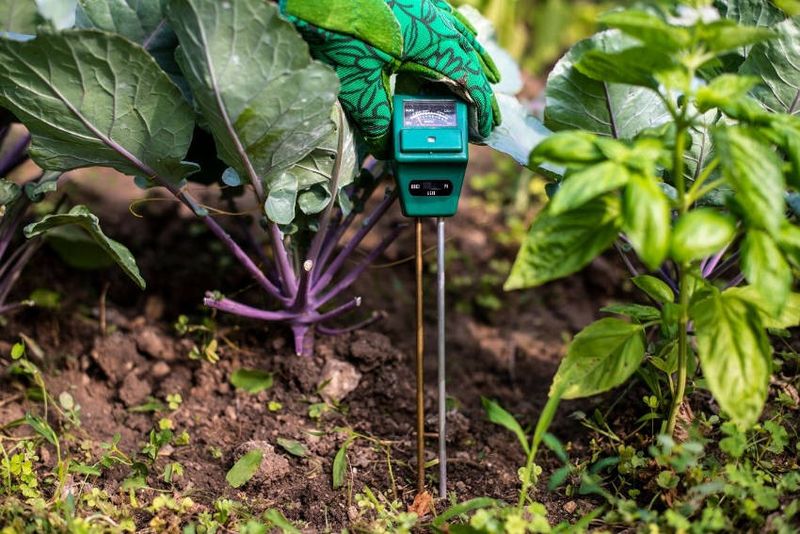
A more reliable approach starts with a quick soil check before you reach for the hose. Push a finger or a narrow trowel into the soil near the base of the plant, aiming for a depth of two to three inches.
If the soil at that depth feels moist and cool, the plant does not need water yet. If it feels dry and crumbles, it is time to water.
Utah State University water guidance for vegetables supports checking actual soil conditions rather than following a fixed schedule, and UC IPM cultural tips for cucumbers similarly recommend targeting even moisture in the root zone.
Sandy soils drain quickly and may dry out within a day or two during hot weather, requiring more frequent but smaller applications of water. Clay-heavy soils hold moisture longer and can stay adequately moist for several days after a thorough watering.
Utah State University cucumber guidance notes that soil type is one of the key variables affecting how often you need to water.
Plant size and growth stage shift the picture further. A small transplant with a shallow root system needs much less water than a large, actively fruiting vine in mid-July.
University of Minnesota Extension uses roughly 1 to 2 inches of water per week as a general benchmark for cucumbers, counting both rainfall and irrigation, but frames this as a starting point rather than a fixed rule. During peak summer heat or when plants are setting multiple fruits at once, demand can run higher.
Treat that range as a reference to calibrate against, not a prescription to follow regardless of conditions.
Build a steadier watering routine
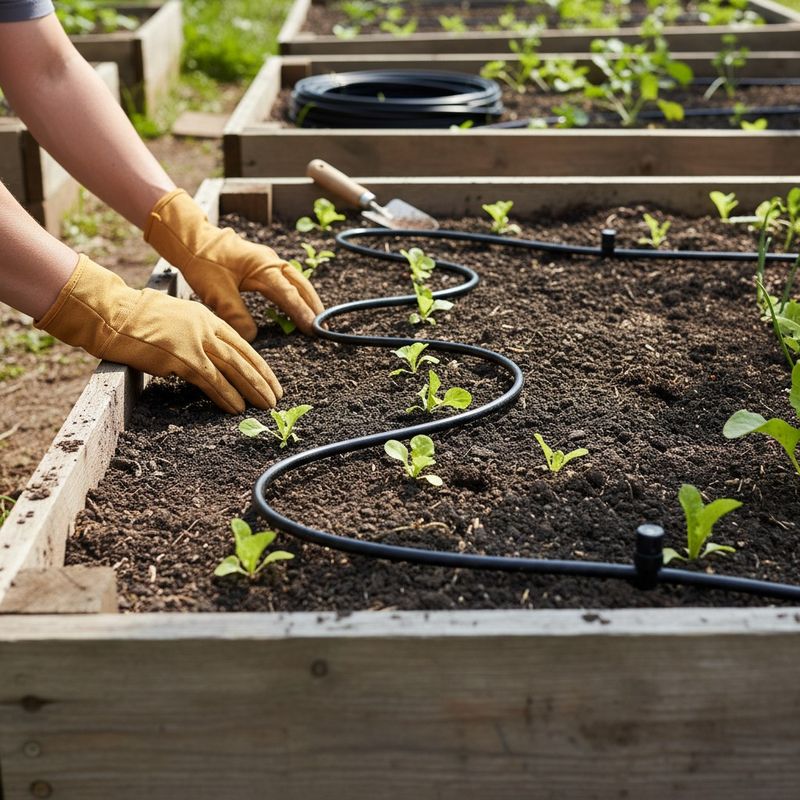
Once you know when to water, the next question is how to do it in a way that keeps moisture more consistent between sessions. The goal is to wet the root zone thoroughly when the soil needs it, then let the soil work as a reservoir until the next check rather than adding small amounts every day on a fixed clock.
Watering deeply encourages roots to grow further into the soil, which gives the plant access to a larger moisture buffer. Shallow, frequent watering tends to keep roots near the surface, where they dry out faster and make the plant more sensitive to short dry spells.
Utah State University cucumber guidance recommends deep watering as part of a consistent moisture management approach.
Drip irrigation and soaker hoses are the most practical tools for keeping soil moisture even without wetting the foliage. Both deliver water slowly and directly to the root zone, reducing runoff and allowing the soil to absorb moisture more evenly.
UC IPM cultural tips and Oregon State University Extension both recommend soil-surface irrigation over routinely wetting cucumber leaves. If you use a sprinkler or hand-held hose, aim at the base of the plant rather than the canopy.
Mulch is one of the most effective and lowest-cost tools for stabilizing root-zone moisture. A two- to three-inch layer of straw, shredded leaves, or wood chips slows evaporation from the soil surface, which means the soil stays moist longer between waterings and the swings between wet and dry are smaller.
Utah State University water recommendations support mulching as a practical way to reduce moisture loss.
One realistic expectation to hold onto: improving your irrigation routine can support better flavor in cucumbers that have not yet formed, but it will not reliably change the taste of fruit already growing on the vine. Purdue Extension is clear that correcting conditions helps future fruit, not the cucumbers already maturing at the time of the change.
Avoid the overwatering correction
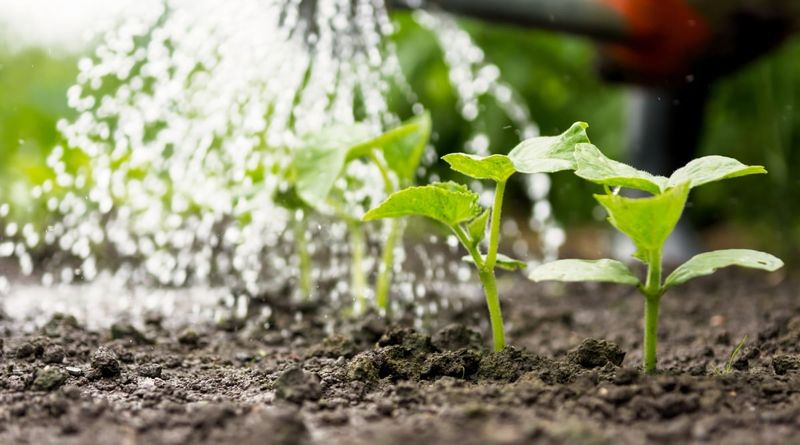
Learning that your cucumbers may be stressed from dry soil can trigger an overcorrection, and keeping the bed constantly saturated creates its own set of problems. Prolonged waterlogging cuts off oxygen to the roots, which can lead to root rot and other diseases that ultimately harm plant health and fruit quality far more than a temporary dry spell.
Utah State University vegetable irrigation guidance draws a clear line between deep, thorough watering and keeping soil perpetually wet. Deep watering is a good practice.
Saturated soil that never drains is not. Poor drainage compounds the problem, so if your garden bed stays soggy for a day or more after watering, improving drainage or raising the bed is worth considering before adjusting how often you water.
Fruit splitting is another consequence of sudden, heavy watering after a dry period. When a plant that has been moisture-stressed receives a large amount of water quickly, the fruit can expand faster than the skin can accommodate.
This is a separate issue from bitterness, but it illustrates why flooding after drought creates its own damage. The fix in both cases points toward the same practice: steadier, more consistent moisture rather than swinging between extremes.
On the question of when to water, morning is generally the better choice if you are using overhead irrigation, meaning a sprinkler or a hose held over the canopy. The reason has nothing to do with fruit flavor.
Utah State University plant health guidance on angular leaf spot explains that prolonged leaf wetness creates conditions where fungal and bacterial diseases spread more easily. Morning watering gives foliage time to dry before nightfall, reducing that window.
University of Maryland Extension and UC IPM both recommend morning irrigation for the same disease-management reason, not as a direct remedy for bitterness.
Check genetics, heat, and plant health too
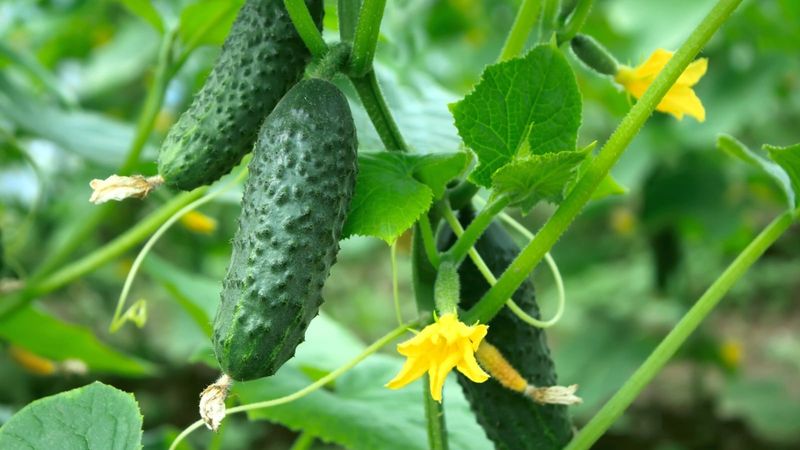
Watering is worth improving, but it is not the only variable controlling cucumber flavor. Studies and extension guidance do not consistently show that irrigation frequency alone predicts bitterness.
UC Master Gardeners of Sacramento County note that irrigation frequency has shown little consistent effect in some observations, which means that even well-watered plants can produce bitter fruit if other conditions are unfavorable.
Genetics rank among the strongest influences on whether a cucumber plant produces bitter fruit. NC State Cucurbit Breeding and published research on cucurbitacin genetics confirm that cultivars differ substantially in susceptibility.
Varieties such as Sweet Success, Sweet Slice, Marketmore, and other burpless or bitter-free types have been bred to carry lower cucurbitacin levels. Iowa State University Extension recommends choosing these cultivars as a practical prevention strategy, though performance still varies by growing conditions.
Heat is a real contributor to bitterness and to other quality problems that are easy to confuse with it. High temperatures can reduce pollination success, resulting in misshapen, undersized, or poorly filled fruit, which is a separate issue from cucurbitacin accumulation.
University of Maryland IPM scouting tips and University of Maryland key cucumber problems both identify heat as a factor in fruit quality decline.
Cool or fluctuating temperatures have been reported as possible contributors to bitterness in some sources, but the evidence for this is less consistent than for heat, moisture stress, or genetics. Fertility problems, pest pressure, and disease can also affect fruit quality and flavor.
If your watering is already steady but bitterness persists, checking for insect damage, disease symptoms, and soil nutrition is a logical next step. Iowa State University’s cucumber growing guide addresses the full range of conditions that influence crop quality beyond watering alone.
Handle bitter cucumbers safely
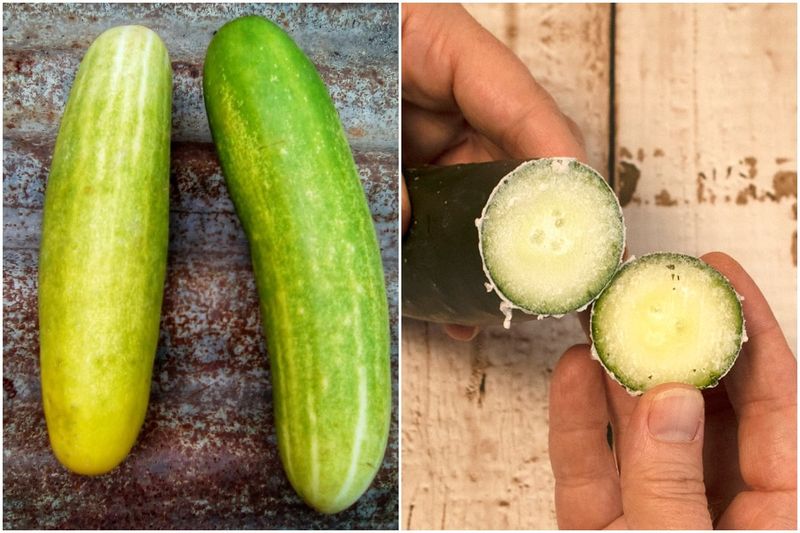
When you pick a cucumber and it tastes sharp or unpleasant, the first instinct is to work around it, trim an end, peel it, soak it in salt water, or assume it just needs to be cooked. Some of those steps may soften a very mild, localized bitterness, but none of them provide a reliable fix for strongly bitter fruit.
Bitterness often concentrates near one end of the cucumber and just beneath the skin, though the pattern is not perfectly consistent. University of Minnesota Extension notes that bitterness tends to be strongest near the blossom end, while Iowa State University Extension and analytical research on cucurbitacin distribution point to the stem end and the area beneath the skin as common concentration points.
Because the pattern varies between individual fruits and across different sources, neither end should be treated as a definitive diagnostic rule.
Peeling and trimming the stem end may improve flavor when bitterness is mild and limited to those areas. However, these steps are not a safety test for fruit that tastes noticeably or extremely bitter throughout.
Poison Control guidance on toxic squash syndrome is clear: spit out and discard any cucurbit that tastes distinctly bitter. Pacific Northwest Extension reinforces that cooking does not reliably neutralize cucurbitacins.
Rubbing the cut ends together, soaking slices in salt water, and pickling are sometimes suggested as remedies, but Ask Extension guidance does not support these methods as dependable ways to remove potentially high cucurbitacin levels. If a cucumber is strongly bitter from end to end, discard it rather than trying to rescue it with preparation techniques.
Use consistency as the practical fix
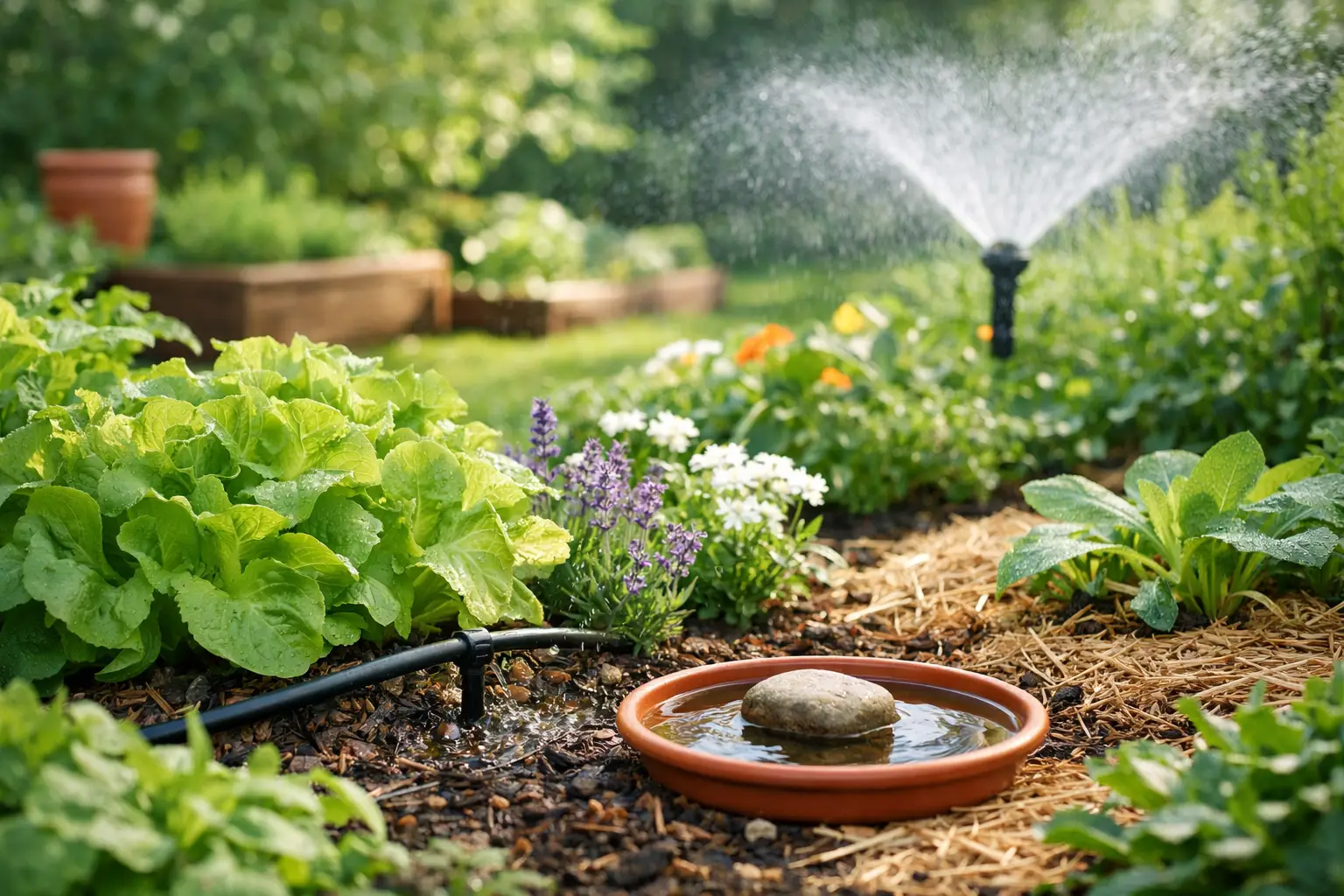
The most useful takeaway from everything above fits into a short list of habits. Check the soil in the root zone before watering.
Water deeply when the top few inches feel dry, then check again before adding more. Avoid letting the bed stay saturated, and avoid letting it dry out completely and repeatedly during flowering and fruit development.
Those two extremes, not a single missed day, are the conditions most likely to push cucurbitacins into developing fruit.
Mulch and soil-level irrigation, whether a drip line or a soaker hose, are the two lowest-effort tools for reducing moisture swings between waterings. Utah State University Extension and UC IPM both point to these practices as part of sound cucumber care.
Cultivar choice matters alongside irrigation, and Alabama Cooperative Extension recommends selecting low-bitterness varieties as a complementary step rather than a replacement for good growing practices.
Steadier moisture reduces one real stress pathway, and that is worth doing. Gardeners who make these changes can reasonably expect better conditions for fruit that has not yet formed, without needing a perfect season or a guaranteed rescue for anything already in the basket.
A garden that gets the basics right more often than not is already ahead of most bitter-cucumber problems.