
What’s Really Making Your Tomato Leaves Curl In Summer Heat – And How The Plant Is Protecting Itself
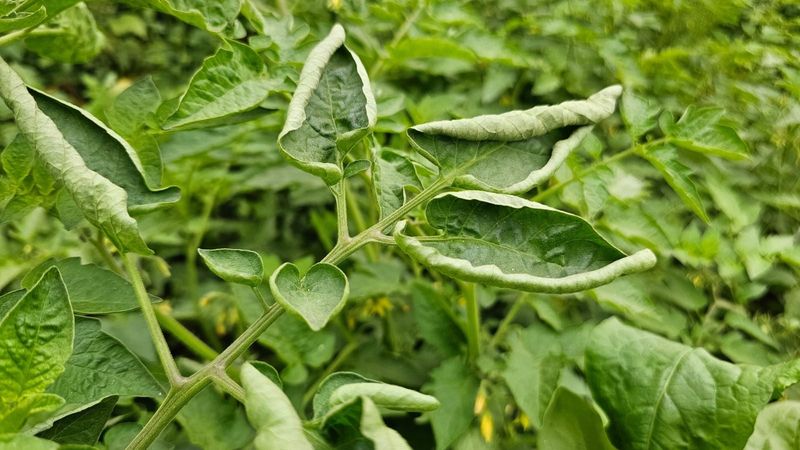
Stepping outside to find your tomato leaves curled tight like little scrolls can send a gardener straight into panic mode. Before you reach for the hose or start pulling plants, take a breath – what you’re seeing is often a natural response that tomatoes use when summer turns brutal.
Understanding why it happens, and when it actually signals something more serious, can save you from making the problem worse.
Why summer heat can curl tomato leaves—but does not explain every case
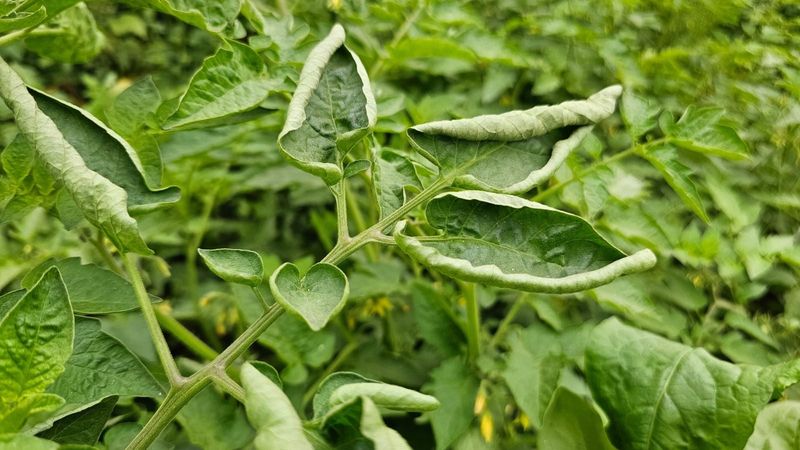
Tomato leaves that cup upward and roll inward during a heat wave are doing something called physiological leaf roll. When foliage loses water faster than the roots can pull it up from the soil, the leaflets fold lengthwise and reduce the surface area exposed to sun and dry air.
Washington State University Extension describes this as a noninfectious response tied to the plant’s water balance rather than to any pathogen or pest.
Here is the important qualifier: a curled leaf does not confirm that summer heat is the cause, and it does not mean the plant is heading for serious trouble. Ordinary physiological leaf roll often has little or no measurable effect on growth or fruit production, even though the leaves look alarming.
The curl is a stress signal – not a reliable forecast of crop failure.
Several other conditions can produce curling that looks similar at a glance. Excess soil moisture and poor drainage, root damage, heavy fruit load, severe pruning, transplant shock, too much nitrogen, sap-feeding insects, viral infections, and herbicide drift can all contribute.
Oregon State University Extension’s heat-stress guide and University of Minnesota’s tomato disorder resource both note that the symptom alone is not enough to name a cause. Keep that in mind as you read through the rest of this article – the sections ahead will help you narrow things down without jumping to conclusions.
Recognize the pattern of ordinary physiological leaf roll
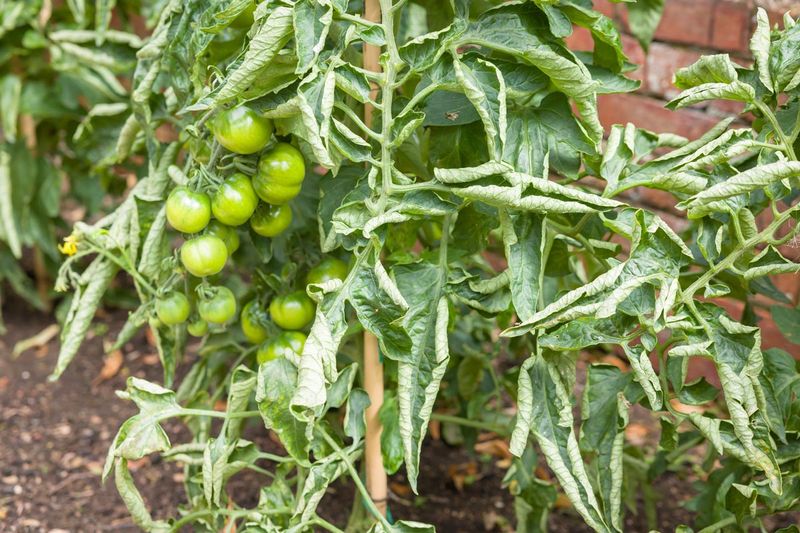
Knowing what normal-looking physiological leaf roll actually looks like gives you a useful baseline before you start worrying. The classic pattern starts with upward cupping – the edges of the leaflet lift toward the sky – followed by the leaflet rolling inward along its length, almost like a taco shell closing up.
Clemson Cooperative Extension’s tomato leaf-rolling factsheet notes that lower and older leaves are typically affected first, while the rest of the plant may look completely healthy.
Texture and color are just as important as the shape of the curl. Leaves showing ordinary physiological roll tend to stay green, firm, and leathery rather than turning yellow, brown, or papery.
When you check new growth at the top of the plant and it looks normal – fully expanded, green, and free of distortion – that is a reassuring sign that the problem is environmental rather than systemic.
The location of the curling matters more than the curling itself. University of Minnesota Extension and WSU Extension both point out that this older-leaf-first pattern is a key feature distinguishing ordinary leaf roll from conditions that tend to hit young growth first.
A tomato with curled lower leaves, healthy upper growth, normal stem color, and no yellowing or mottling fits the physiological-roll picture much better than it fits a disease or herbicide injury. No single visual clue is conclusive, but the combination of location, color, texture, and new-growth health narrows things down considerably.
Heat is only one trigger in the plant’s water balance
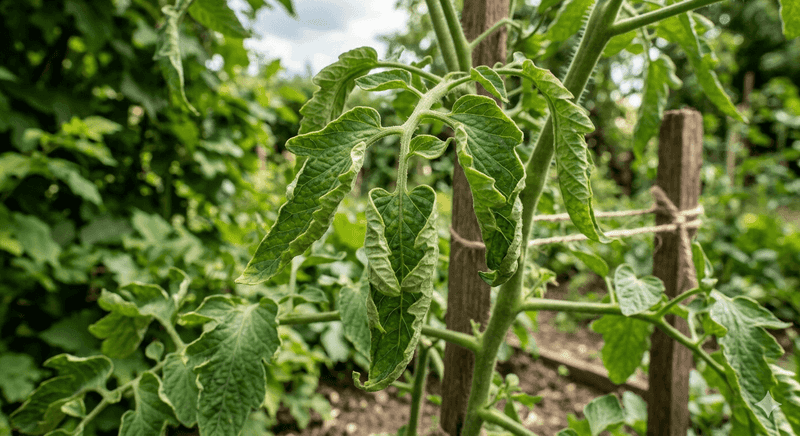
Blaming underwatering when tomato leaves curl is a natural first instinct, but it leads gardeners astray more often than most people expect. The real driver is a disruption in the plant’s water balance – any condition that widens the gap between how much water the foliage loses and how much the roots can deliver.
Heat and dry soil are two of the most common contributors, but they are far from the only ones.
Hot, dry wind accelerates moisture loss from leaf surfaces even when soil moisture is adequate. Sudden weather swings – a cold front followed by a heat spike, for example – can throw off the plant’s normal water management before it has time to adjust.
Heavy fruit load pulls water toward developing tomatoes and away from the foliage, which is why a plant loaded with ripening fruit sometimes rolls its leaves even when it is well-watered. Clemson Extension and University of Missouri IPM both list heavy fruiting as a documented contributor to physiological leaf roll.
Severe pruning removes leaves that normally move water through the plant’s system, and the disruption can show up as curling in remaining foliage. Transplant shock and root disturbance reduce the root system’s ability to take up water reliably, and compacted or damaged roots produce the same effect even in established plants.
Excess nitrogen pushes rapid leafy growth that the root system may struggle to support, while prolonged wet soil or poor drainage can damage roots and limit uptake just as effectively as drought. University of Minnesota Extension specifically flags excess moisture as a contributor, which is why watering more is not always the right response.
Before changing anything, mentally review the past week or two: unusual weather, recent pruning, fertilizer applications, transplanting, or soggy beds all deserve consideration alongside soil moisture.
Check the soil before you water or alter the plant
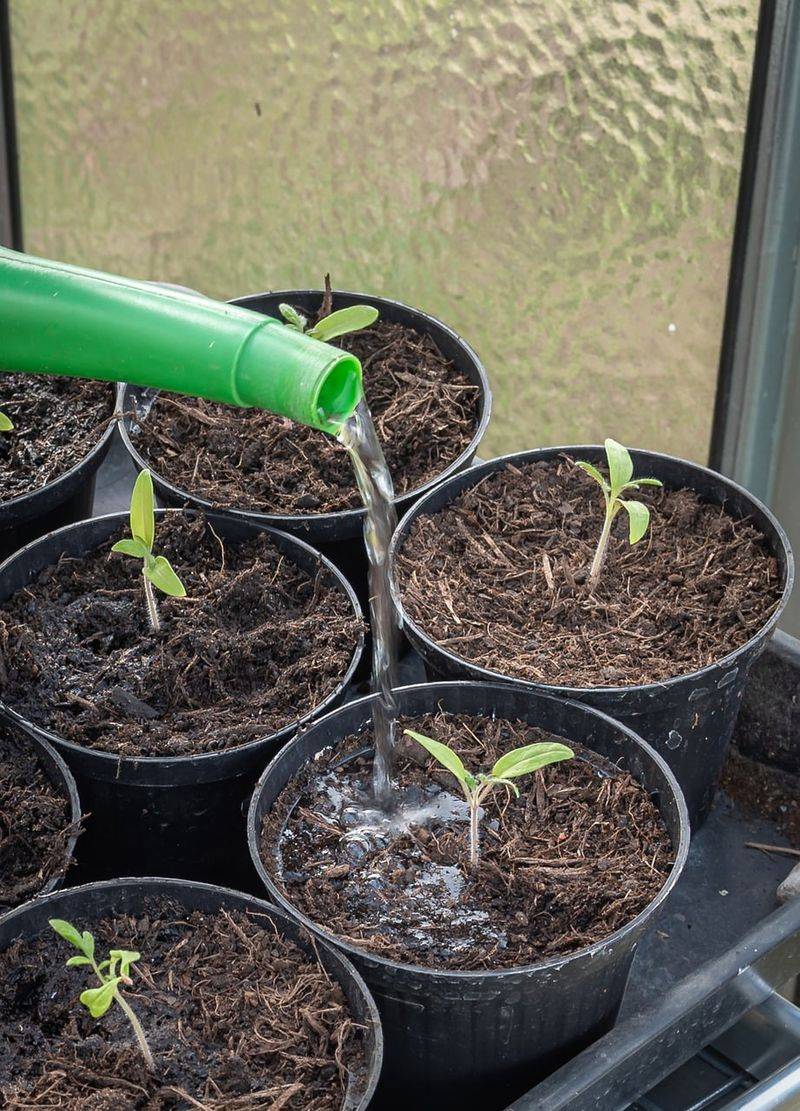
Curled leaves are not a reliable watering gauge on their own. The only way to know whether the root zone actually needs water is to check the soil directly.
Push a finger or a trowel blade several inches down near the base of the plant – if the soil feels moist at that depth, the plant is not running short on water, and adding more could make things worse by saturating roots that are already struggling.
University of Minnesota Extension’s tomato-growing guide offers roughly 1 inch of rain or irrigation per week as a general starting point for established garden tomatoes – but that number shifts with soil type, air temperature, plant size, and whether the tomato is in a container or in the ground. Sandy soils drain fast and may need more frequent attention; heavy clay holds moisture longer and is easier to oversaturate.
Containers dry out much faster than garden beds, sometimes needing water every day during a heat wave.
When the root zone is genuinely dry, water deeply and at the soil line rather than giving the plant a quick splash from above. The goal is to wet the entire root zone, not just the top inch, so roots have access to moisture as temperatures climb during the day.
University of Minnesota’s vegetable-garden watering guidance recommends thorough, infrequent watering over frequent shallow applications, which can keep roots near the surface where they are most vulnerable to heat.
One more thing worth clearing up: if your tomato is actively wilting or showing clear heat stress in the afternoon, water it. Oregon State University Extension’s heat-wave guide is direct on this point – do not withhold water from a stressed plant just because the clock reads 2 p.m.
Morning watering is preferable when you have a choice, partly because it gives foliage time to dry and reduces some disease risk, but an urgent plant should not wait until morning.
Lower the heat load without creating new stress
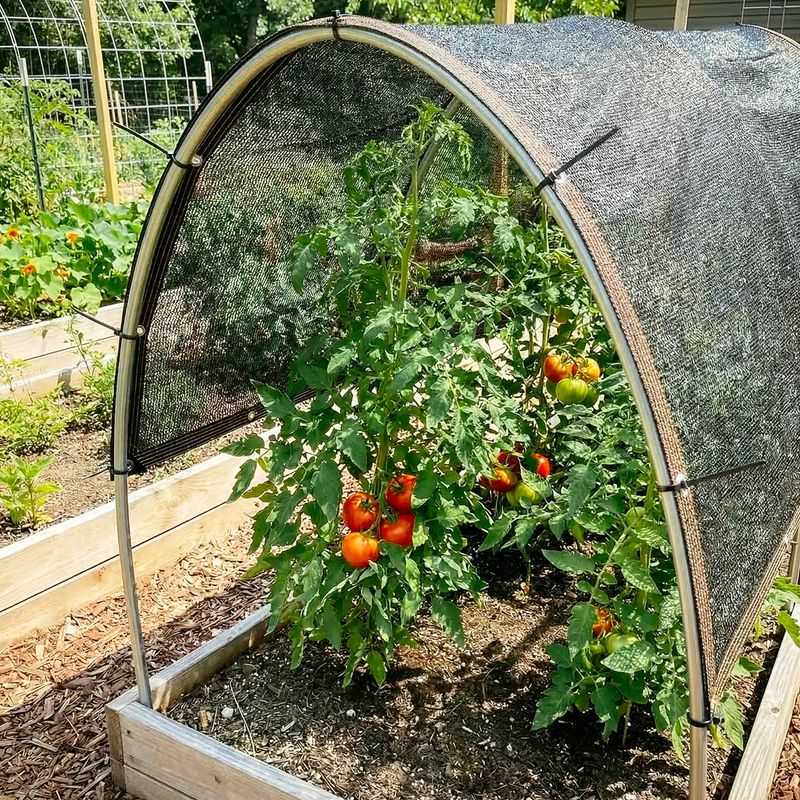
Once you have confirmed that the root zone has enough moisture, a few practical steps can reduce the heat burden on your tomatoes without introducing new problems. Mulch is one of the most straightforward.
A 2-to-3-inch layer of straw, wood chips, or shredded leaves spread over the root zone slows evaporation from the soil surface and helps keep soil temperature from spiking during the hottest part of the day. University of Minnesota Extension recommends mulching as a standard practice for tomatoes, not just during heat events.
Switching to drip irrigation or a soaker hose delivers water directly to the root zone while keeping foliage drier than overhead sprinklers do. Wet leaves are not a burn risk, but consistently moist foliage can contribute to fungal disease over time, so soil-level irrigation is a sensible habit regardless of the weather.
Oregon State University Extension’s extreme-heat guidance highlights both mulching and careful irrigation as tools for reducing heat stress on garden plants.
Temporary shade cloth can take the edge off an extreme heat spell – a 30-to-40-percent shade cloth draped over a simple frame during the hottest afternoon hours reduces the radiant heat load without blocking too much light. The key words are temporary and partial: leaving tomatoes under heavy shade for days at a time limits photosynthesis and can weaken the plant.
Make sure there is enough airflow under the cloth to prevent humid, stagnant conditions that invite disease.
Avoid severe pruning, fertilizing, or transplanting during extreme heat. University of Minnesota’s hot-weather gardening resource notes that those activities add stress at exactly the wrong moment.
None of these measures treat a disease or pest problem – they address environmental strain only, so keep investigating if the plant shows other warning signs.
Use combinations of warning signs to investigate other causes
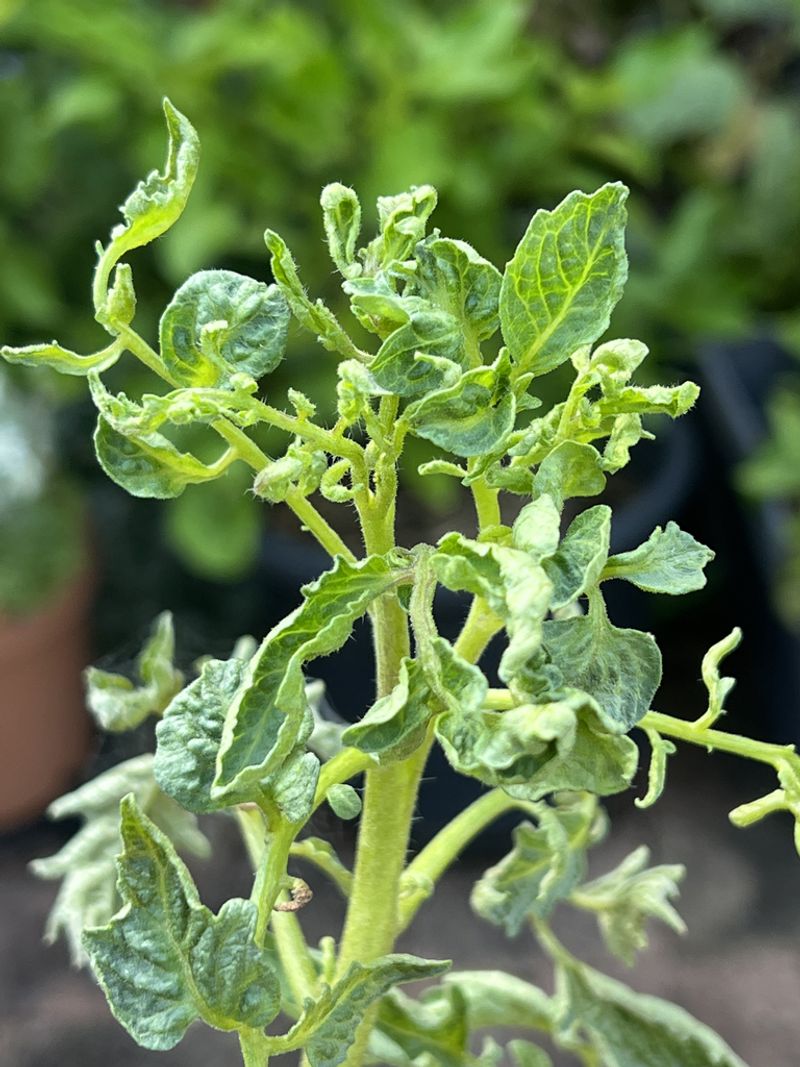
A clear line separates ordinary-looking older-leaf roll from symptoms that deserve a closer look. The key is combinations.
One curled leaf on a lower branch, green and firm, surrounded by healthy growth, is very different from a plant where young leaves at the top are twisted, pale, crumpled, or dramatically smaller than normal. University of Minnesota Extension’s tomato leaf-curl diagnostic tool walks through the distinctions between environmental causes and more serious problems, and it consistently asks about the location and character of the affected growth.
Severely distorted young growth becomes more concerning when it shows up alongside other clues. Yellowing or mottling on new leaves, shortened spaces between leaf nodes, overall plant stunting, and visible insects on leaf undersides are all signs that warrant investigation beyond heat stress.
UC IPM’s tomato yellow leaf curl virus resource describes how that particular virus causes upward-curling, yellowing, crumpled leaves with shortened internodes, along with stunting, flower drop, and serious production losses – and it is spread by certain whiteflies. Seeing whiteflies on leaf undersides alongside those symptoms is a combination that justifies further diagnosis, not just a watering adjustment.
Herbicide injury is another possibility worth raising with your neighbors before you assume disease. Tomatoes are particularly sensitive to 2,4-D and dicamba, which can drift from nearby lawn treatments.
University of Minnesota Extension’s herbicide-injury guide notes that affected plants often show twisted, strapped, cupped, or bleached leaves and stems – and young growth tends to be hit first, not older leaves.
Aphids and whiteflies can distort foliage through sap feeding, especially on new growth. Inspect leaf undersides for insects, sticky honeydew residue, stippling, or sooty mold.
Mosaic patterns, shoestring-like leaves, unusual fruit markings, or decline spreading to neighboring plants all call for more investigation. Flower drop and irregular fruit coloring are nonspecific on their own – they gain meaning only when combined with other warning signs.
One variety curling while others nearby look fine may simply reflect a cultivar tendency rather than a spreading problem, but persistent plant-wide decline that does not respond to corrected watering and heat management is a good reason to contact your local cooperative extension office for hands-on diagnostic help. University of Maryland Extension’s tomato problem guide is a useful starting point for comparing symptom patterns before you call.
Judge recovery by new growth, not by instant uncurling
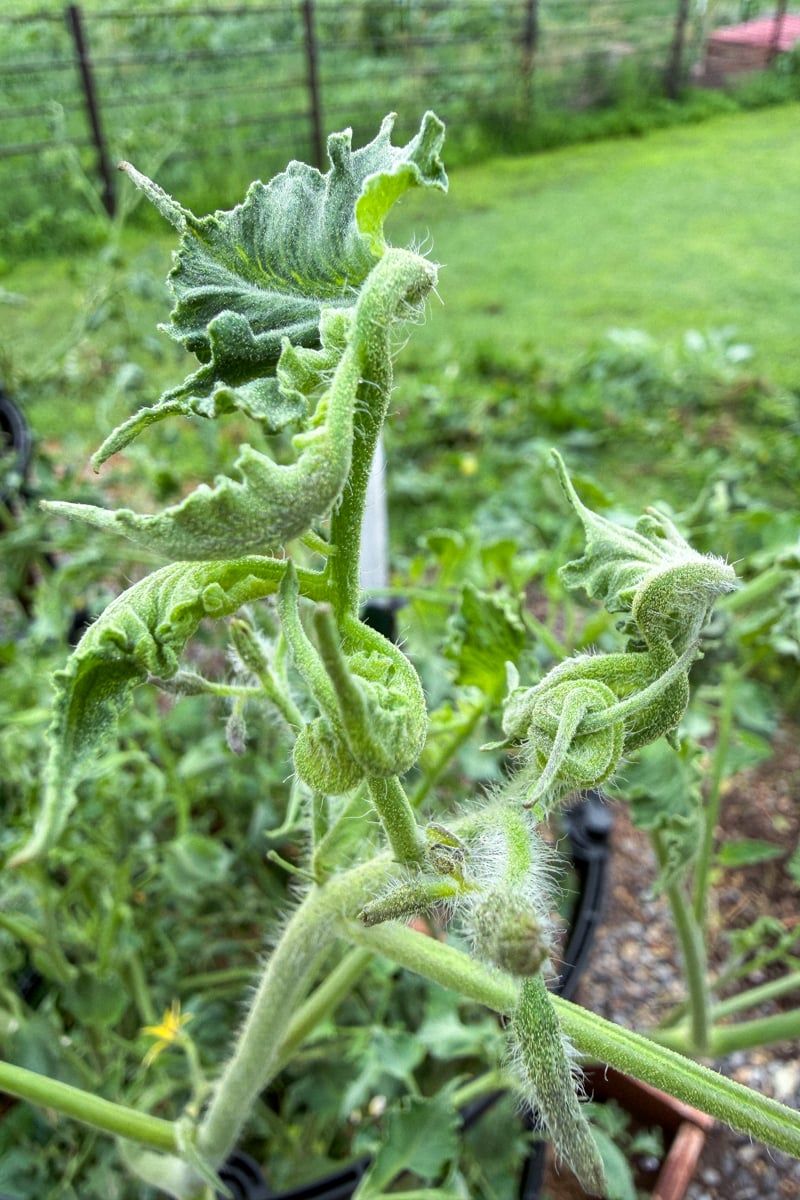
Rolled leaves rarely spring back to flat the moment conditions improve, and waiting for that to happen will leave you chasing a signal that may never come. UC IPM’s physiological leaf roll resource and University of Minnesota Extension both note that affected leaves can stay curled even after heat eases and soil moisture is restored.
The better recovery signal is new growth at the top of the plant – if fresh leaves are expanding normally, green, and undistorted, the plant is moving in the right direction.
Resist the urge to strip curled leaves off the plant. Clemson Extension is clear that physiological leaf roll generally does not require treatment, and removing older leaves during heat stress just reduces the foliage the plant needs for photosynthesis.
Adding calcium supplements to address ordinary leaf curl is also unnecessary – calcium-related problems in tomatoes are more closely associated with blossom-end rot in fruit tissue, not with the environmental leaf rolling described here. And pulling a plant solely because its older leaves show normal-looking upward roll is an overreaction that is rarely warranted.
The practical sequence is straightforward: check soil moisture and drainage first, correct any actual moisture or heat imbalance, avoid adding stress through heavy pruning or fertilizing during extreme heat, and then investigate further only when a combination of stronger warning signs appears. Curled leaves during summer heat are often the plant doing its best under difficult conditions – they tell you to look closer, not to panic.