
9 Petunia Mistakes That Quietly Rob You Of A Full Bloom Season
You planted your petunias expecting a wave of nonstop color, but somewhere along the way the blooms fizzled out. The good news is that most petunia problems come from a handful of small, fixable habits, not bad luck.
Once you know what to look for, you can nurse a tired plant back into full flower fast. Here are nine quiet mistakes that steal your bloom season, plus the simple rescue for each one.
1. Starving Them of Sunlight
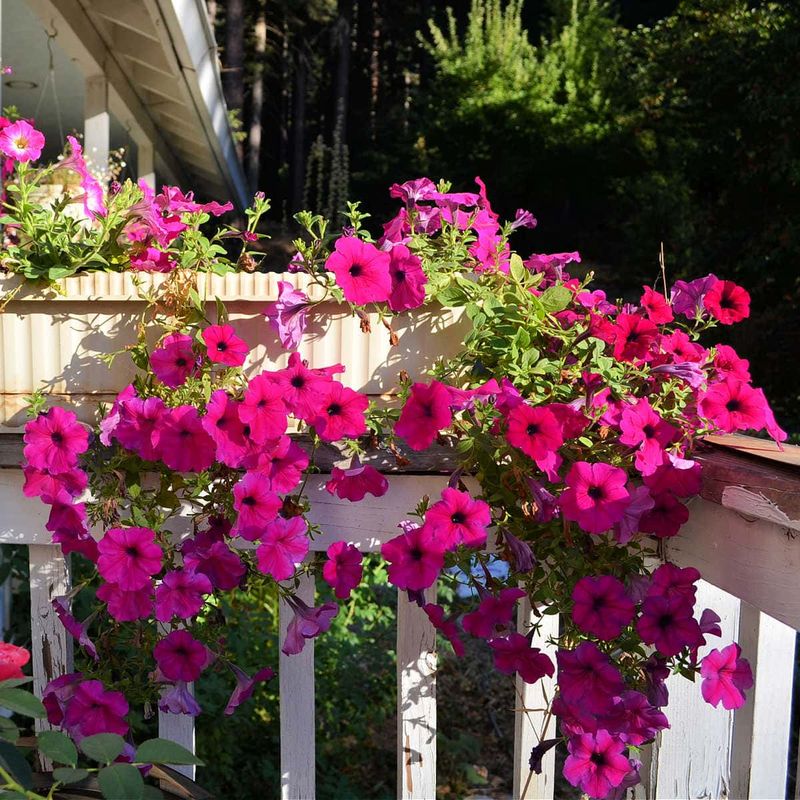
Ever notice your petunias looking tall, green, and leafy but weirdly short on flowers? That is almost always a sunlight problem, and it is the single most common reason petunias quit blooming.
These plants are sun worshippers through and through. They want at least six to eight hours of direct sun every day, and anything less pushes them into growing stems and foliage instead of the flowers you actually want.
The fix is refreshingly easy. If your petunias live in pots, just slide them to a brighter spot and watch them respond within a couple of weeks.
For in-ground plants that got shaded out by taller neighbors, trim back whatever is blocking the light and let the sun pour in again.
2. Watering Too Much or Too Little
Water is where a lot of well-meaning gardeners trip up, because petunias punish you at both extremes. Soggy, waterlogged soil suffocates the roots, invites root rot, and turns leaves a sad shade of yellow that shuts flower production right down.
Swing the other way and you get trouble too. A thirsty petunia slips into conservation mode, dropping buds and shrinking its blooms to save itself.
Hanging baskets are the biggest culprits here, sometimes drying out completely on a hot afternoon.
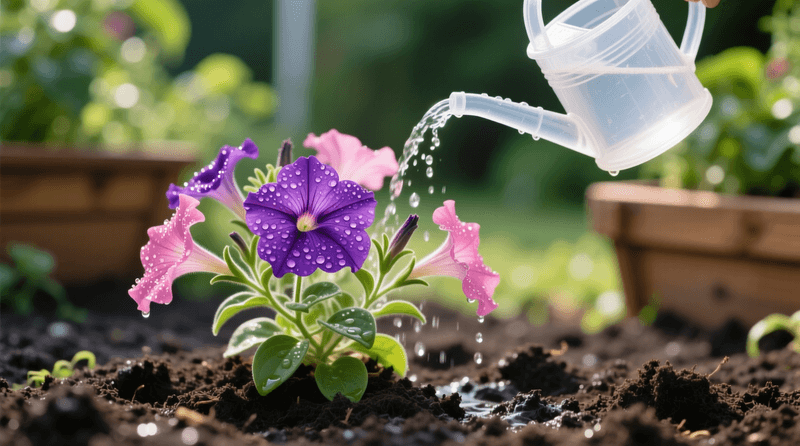
Aim for a steady middle ground. Poke a finger into the soil, and when the top inch feels dry, water deeply until it runs out the drainage holes.
Keep the soil evenly moist but never swampy, and double-check that every container actually has holes in the bottom.
3. Feeding the Wrong Fertilizer
Petunias eat like teenagers. They are heavy feeders that burn through nutrients to keep those blooms coming, so the fertilizer you pick genuinely matters.
Reach for something loaded with nitrogen and you will grow a lush green bush with almost no flowers, since nitrogen fuels leaves and stems. Skimp on phosphorus, the nutrient behind flower and root growth, and your blooms shrink and thin out.
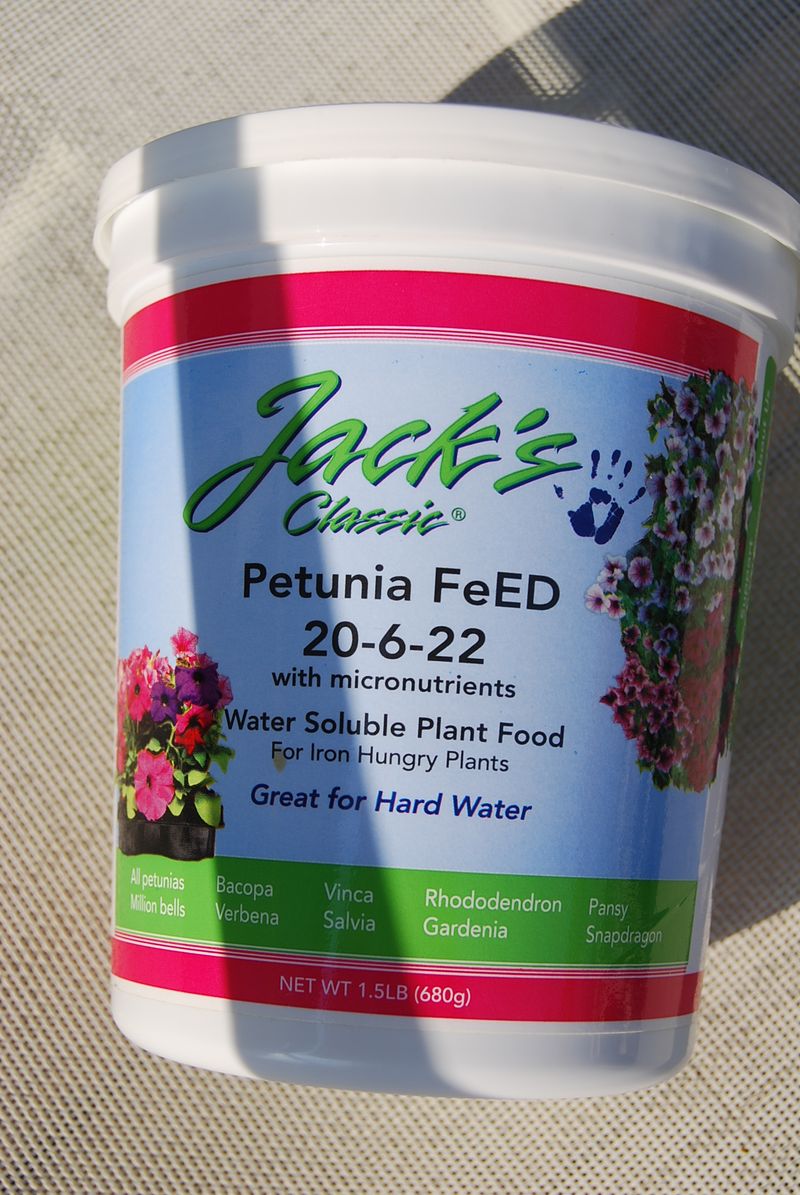
Balance is the answer. Feed regularly with a balanced liquid fertilizer such as 10-10-10 or a bloom-friendly 20-10-20, or lean toward a higher-phosphorus mix to nudge more flowers along.
Dropping in a slow-release granular feed at planting time gives them a steady meal that keeps working for weeks.
4. Skipping Proper Deadheading
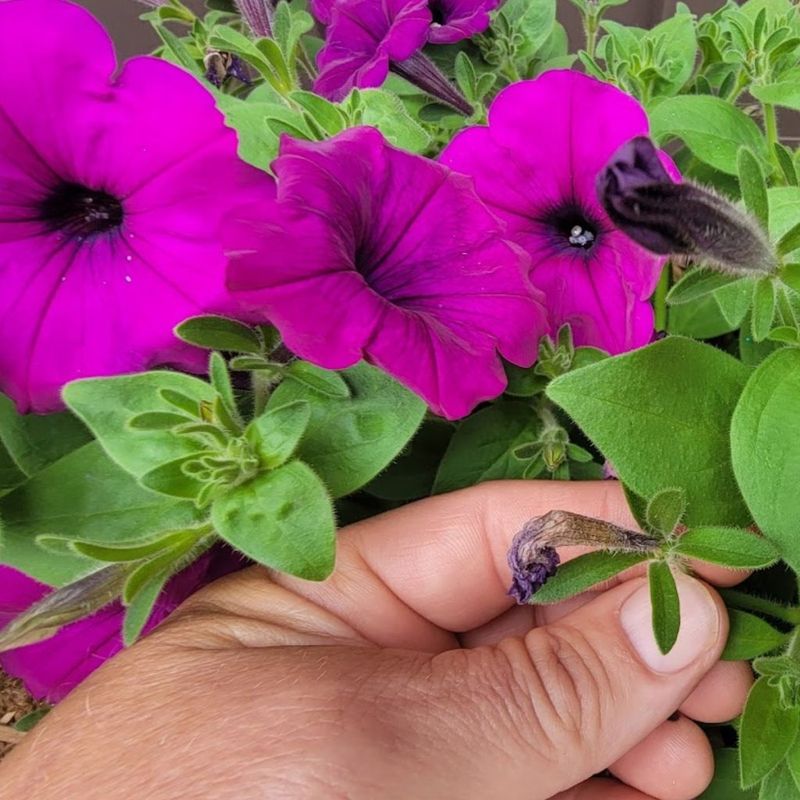
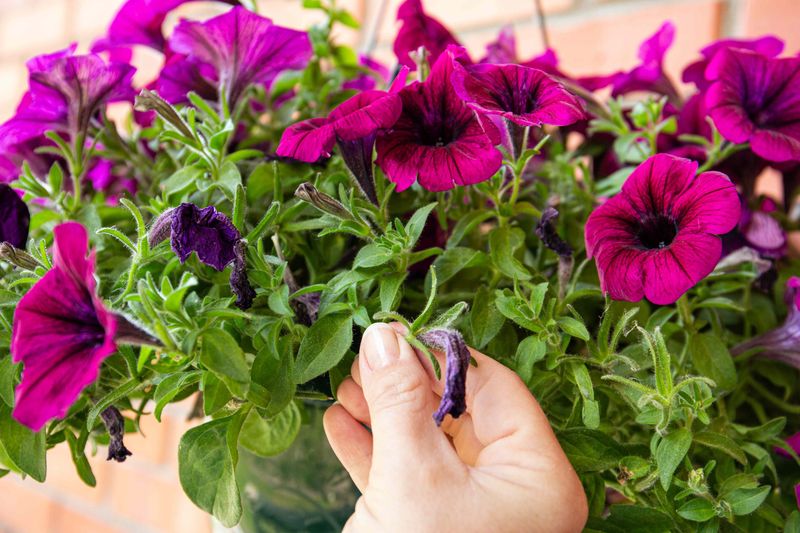
Here is a sneaky one that fools even careful gardeners. Pulling off just the faded, papery petals feels like deadheading, but it leaves the green base and seed pod behind.
The plant reads that as a signal to make seeds instead of new flowers.
When a petunia shifts its energy toward seed production, blooming slows to a crawl. All that effort goes into something you will never see instead of the color you are chasing.
To do it right, remove the whole spent flower, including that little green calyx, by pinching or snipping through the stem just below the bloom. Modern self-cleaning types like Wave and Supertunia forgive a skipped session, but even they bloom a bit fuller with occasional grooming.
5. Letting Them Get Leggy
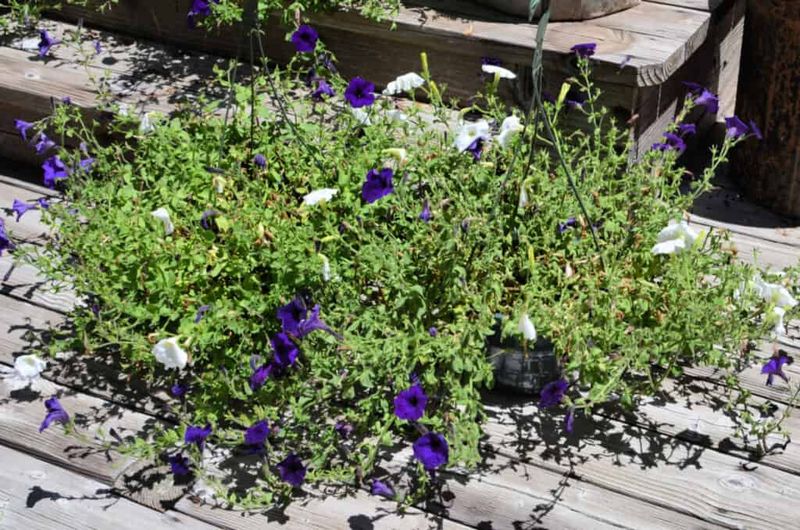
Come midsummer, a lot of petunias start looking scraggly. The stems stretch out long and bare, and the only flowers left cling to the very tips like stragglers at the end of a parade.
Nobody wants to cut a plant that is still blooming, so this one gets ignored until the display looks downright sad. That hesitation is exactly what robs you of the second half of the season.
Grab your scissors and give them a haircut. Trim the leggy stems back by about a third, and within a week or two you will see fresh branching, new buds, and a bushier shape.
Repeat the light trim every few weeks and your petunias stay full instead of stringy all summer long.
6. Ignoring Root-Bound Plants
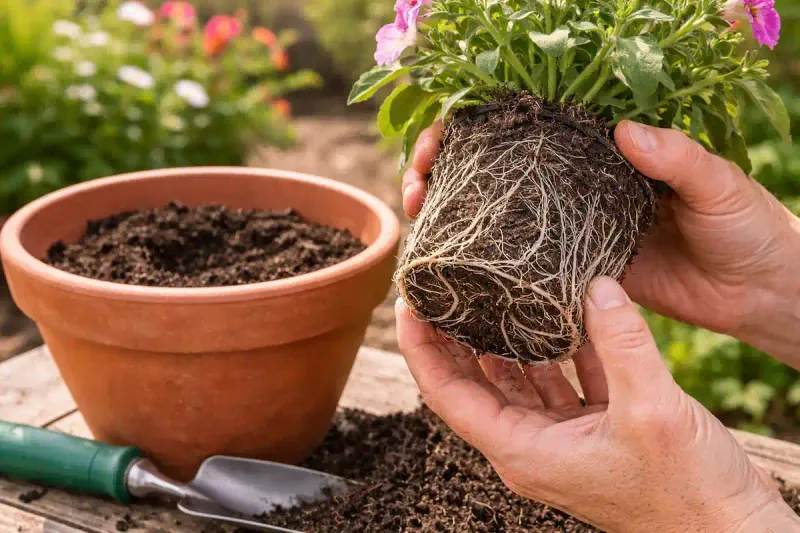
Petunias grow fast, and that speed catches up with them underground. In a small pot, their roots quickly circle around and around until there is no room left, a condition gardeners call root-bound.
Once the roots are packed that tight, the plant struggles to soak up water and nutrients no matter how well you feed and water it. Flowering slows or stops, and you might blame everything except the pot.
Slide the plant out and take a peek at the root ball. If you see a dense mat of coiled roots, move it into a roomier container with fresh soil.
Giving those roots space to spread out often revives a stalled plant surprisingly quickly.
7. Overlooking Heat Stress
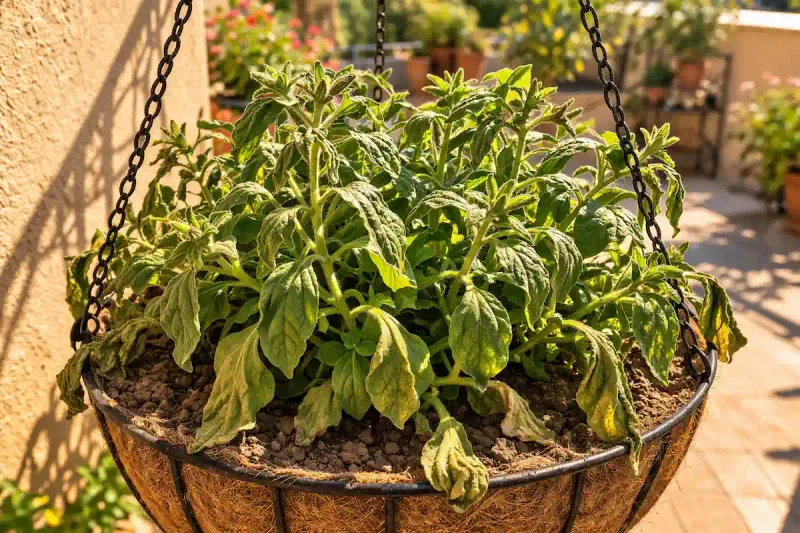
Petunias love warmth, so a heat problem catches people off guard. Push past their comfort zone, though, and even sun-loving plants start to sulk.
When temperatures park in the upper 80s and 90s for days on end, blooms may shrink and new bud production can slow down or drop off entirely. It is not that you did anything wrong, the weather is simply asking too much of the plant.
A little afternoon relief goes a long way. In scorching climates, give your petunias light shade during the hottest part of the day, or plant heat-tolerant varieties from the start so a heat wave barely slows them down.
8. Missing a Budworm Infestation
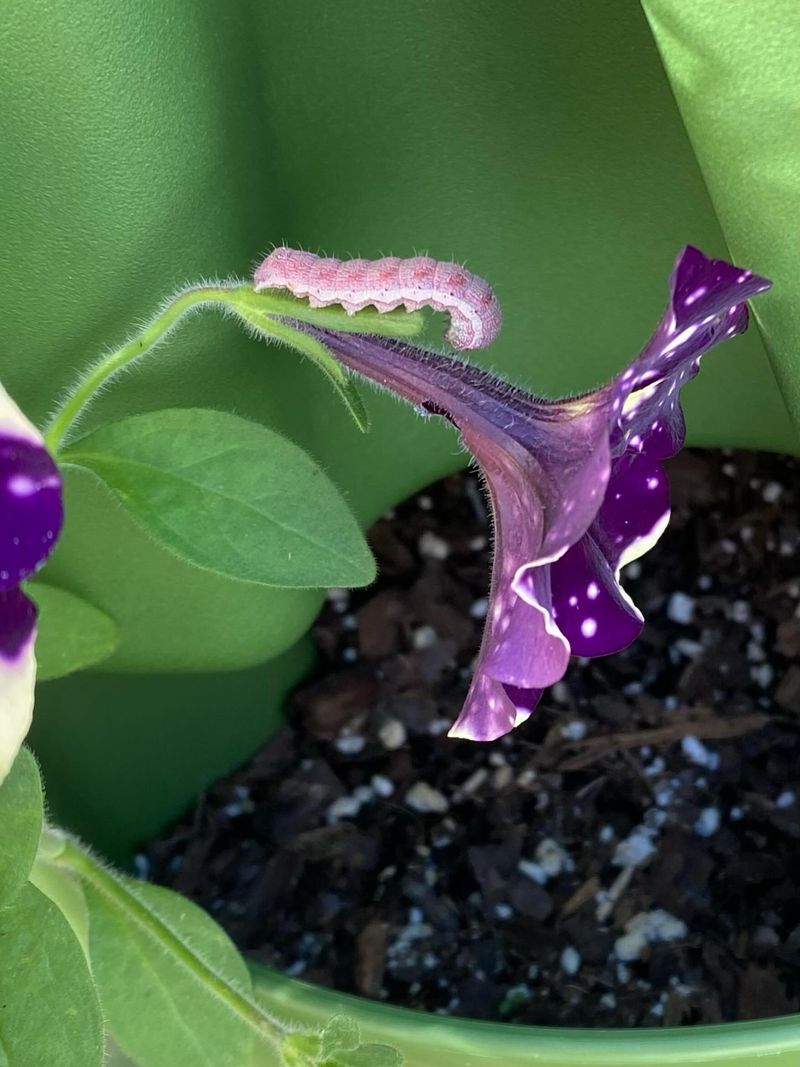
Picture a petunia that looks perfectly healthy yet stubbornly refuses to flower. The culprit might be hiding in plain sight: tobacco budworms, tiny caterpillars that chew flower buds apart before they ever open.
Because they attack the buds and not the leaves, the damage is easy to miss. You end up with a green, leafy plant, a few ragged holes, and hardly any blooms to show for your care.
Get in the habit of inspecting your petunias closely, especially the buds. When budworms turn up, you can pick them off by hand, spray neem oil, or reach for insecticidal soap.
Which route you choose depends on how many uninvited guests you find.
9. Planting in Poor-Draining Soil
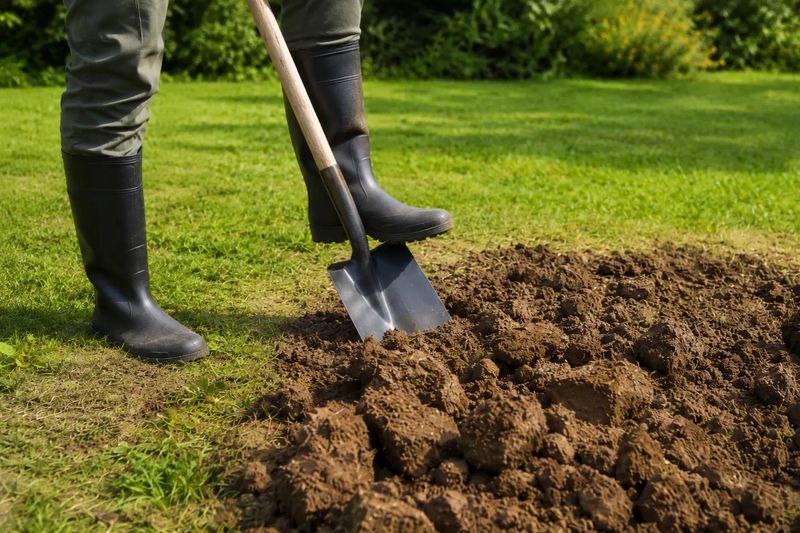
Everything above the soil line depends on what is happening below it, and heavy, compacted soil quietly undoes all your hard work. Water pools instead of draining, and the roots end up sitting in the wet muck they hate.
Waterlogged roots not only rot, they leave the whole plant open to disease and cut down on flowering. A petunia can look fine for a while, then fade for reasons that seem mysterious until you dig around the base.
Set them up for success with loose, well-drained soil, which is especially critical in containers. If your ground soil is dense or clay-heavy, work in a few handfuls of compost before planting to loosen the structure and let water move through the way petunia roots prefer.