
What It Really Means When A Green Anole Shows Up On Your North Carolina Porch Plants
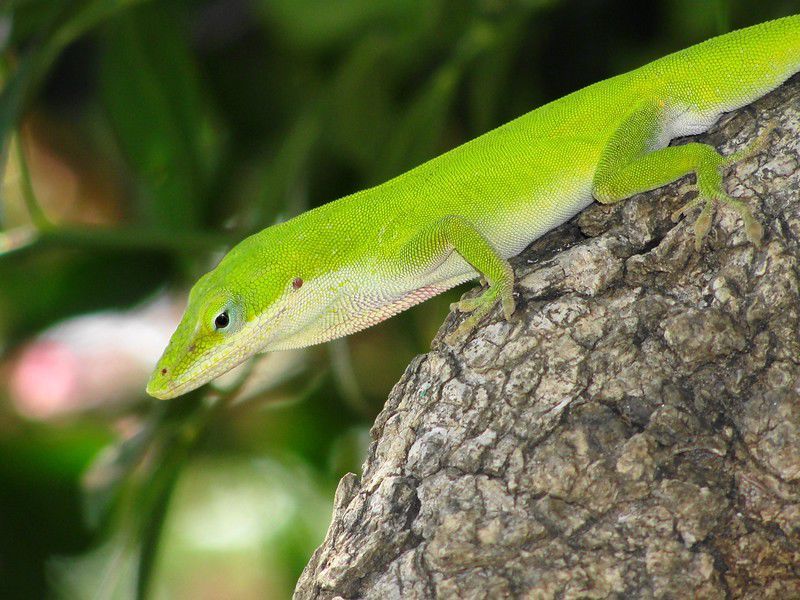
Spotting a small lizard perched on your porch container can stop you mid-watering and send you straight to your phone. Green anoles are a familiar sight across parts of North Carolina, and a late-summer appearance on your potted plants tends to spark two questions right away: is something wrong with the plant, or is the lizard a sign that everything is going well?
The honest answer is a little more interesting than either of those guesses, and understanding it can make you a better steward of both your containers and the wildlife that wanders through your yard.
The Porch Visitor May Not Look Green
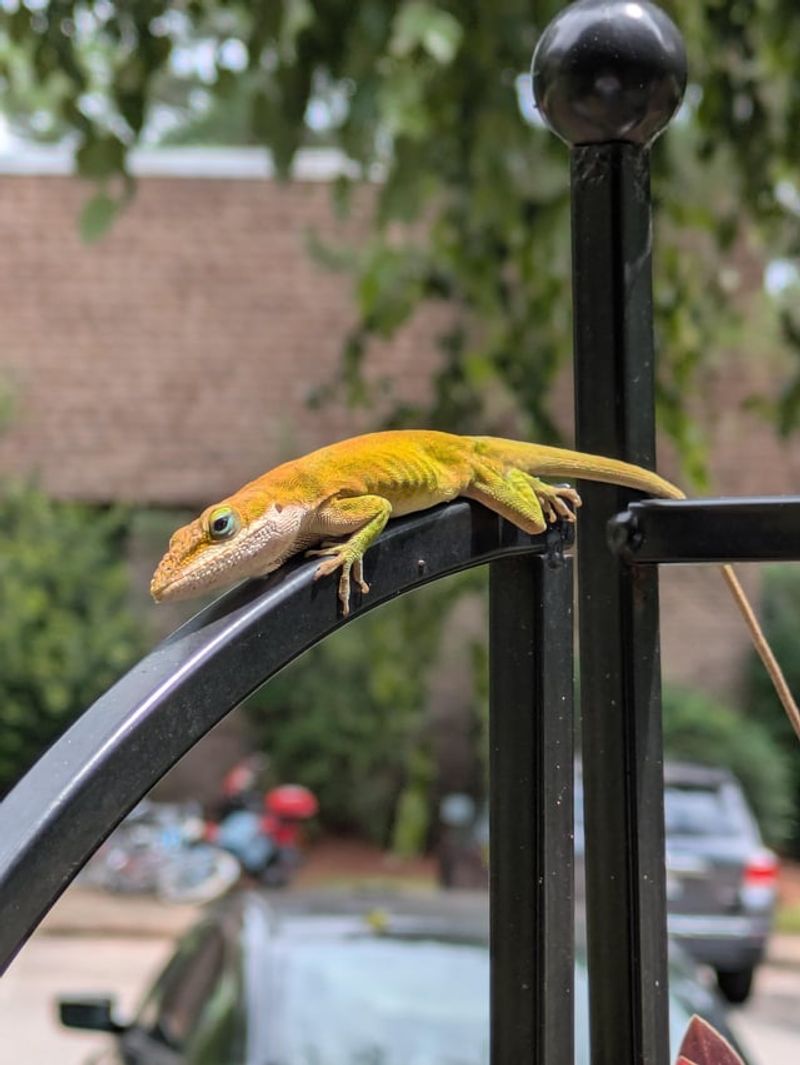
Calling this lizard a “green” anole can actually throw you off right from the start. The NC Wildlife Resources Commission notes that green anoles (Anolis carolinensis) can appear bright green, dull brown, or gray depending on temperature, stress, and activity level.
Color alone is not a reliable way to confirm what you are looking at, so start with body shape and behavior instead.
The snout is one of the most useful features. Green anoles have a noticeably long, tapered snout compared to the blunter face of a brown anole (Anolis sagrei), which is a non-native species now established in parts of the Southeast.
National Park Service guidance on anoles also points to dorsal patterning as a helpful clue: brown anoles often show a distinct pale stripe or bold diamond pattern along the back, while green anoles tend to have a plainer back with no strong geometric markings.
Climbing position matters too. Green anoles are comfortable well above the ground, resting on stems, leaves, railings, and walls.
Brown anoles more commonly stay low, near the base of plants or on the ground. If you see a male display a pink or reddish throat fan, called a dewlap, the National Park Service describes that behavior as a territorial or courtship signal, not a threat to people.
Head-bobbing and small push-up motions are equally normal and harmless.
One more thing worth keeping in mind for North Carolina gardeners: the NC Biodiversity Project’s reptile checklist confirms that the species is most reliably found in the Coastal Plain and southern Piedmont. If your porch is in the mountains or the northern Piedmont, you may be seeing a different lizard species entirely, so use all of these traits together before settling on an identification.
Why Late Summer Can Bring an Anole Into View
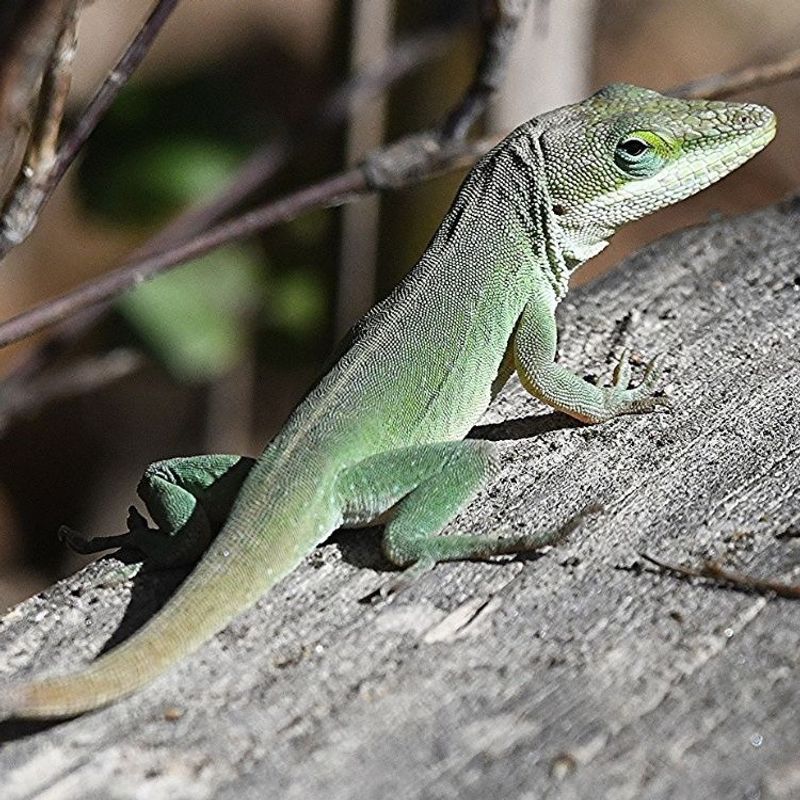
Late summer is a genuinely plausible time to notice one of these lizards on your porch, though the reason is layered rather than simple. Published reproductive biology research on green anoles places their active breeding season broadly from spring into late summer or early fall, with exact timing shifting by location and local conditions.
That extended season means anoles may be active and visible for a longer stretch than many gardeners expect.
Reproductive activity overlaps with a late-summer sighting rather than directly causing it. Warm temperatures, plentiful basking spots, and longer days all keep anoles moving and foraging well into August and September.
Research on seasonal transitions in green anoles shows that temperature and photoperiod shape their activity patterns throughout the year, which means a warm late-summer afternoon is simply a good time for a lizard to be out and visible.
Porch containers can concentrate several favorable conditions in one small area: sun-warmed pots, sheltered corners, moist soil surfaces, and foliage that holds heat into the evening. A study on urban and natural green anole populations found that habitat structure, perch availability, and prey resources all influence where these lizards turn up in suburban settings.
Add in the simple fact that gardeners spend more time on their porches in late summer and you have another reason the sighting happens now: you were there to see it.
Chance observation plays a real role too. An anole may pass through a porch daily for weeks before a gardener finally spots it at the right moment.
Warmth, cover, and a moving arthropod are all it needs to pause long enough to be noticed.
Your Containers Can Supply the Habitat Anoles Use
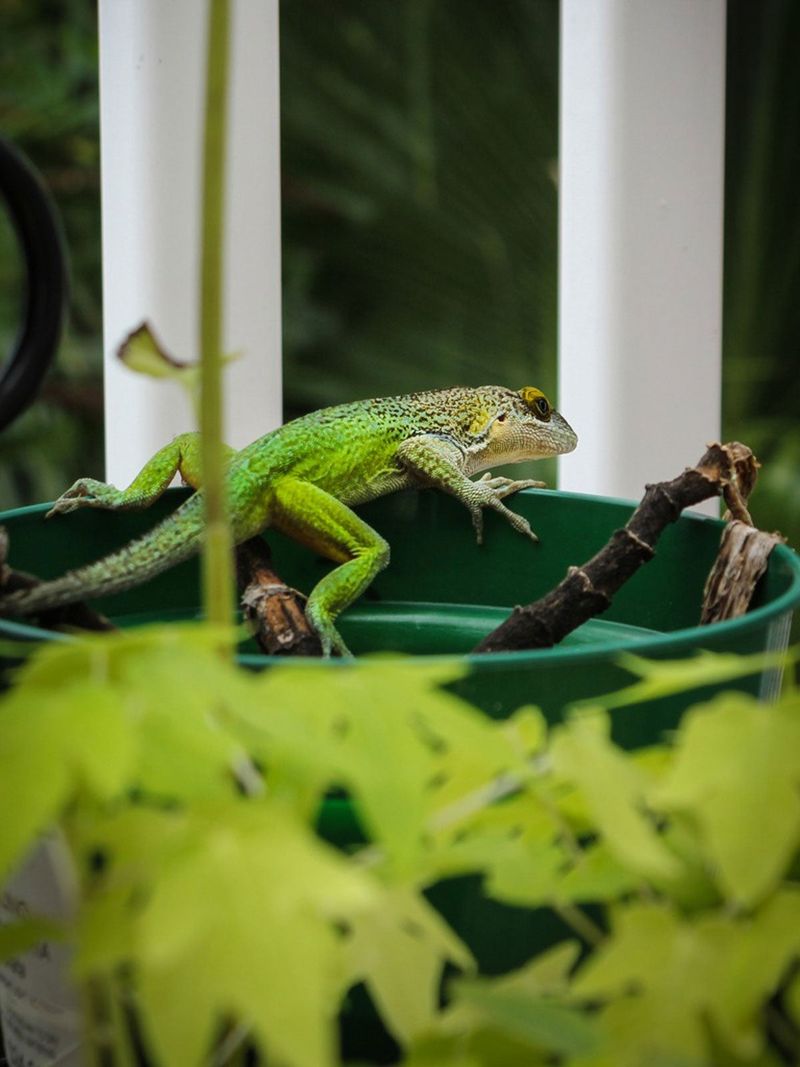
A well-planted porch container area can quietly function as a small piece of usable anole habitat without the gardener doing anything deliberate to attract one. Vertical stems, broad leaves, bamboo stakes, wooden railings, brick or siding walls, and nearby shrubs all provide the kind of structural variety that green anoles prefer.
U.S. Forest Service habitat-selection research on Anolis carolinensis found that perch availability and habitat complexity are central to where the species establishes itself, whether in natural areas or built environments.
The physical structure of a container planting matters more than most gardeners realize. A single pot with a tall, staked plant gives a lizard a vertical perch for basking, a shaded underside for cover, and a warm ceramic surface nearby.
Group several containers together and you create corridors, overlapping shade patches, and multiple escape routes – conditions that match what green anoles use in shrub edges and garden borders. Research on urban anole populations confirms that management practices, predator pressure, and prey resources all interact with structural habitat to determine where lizards actually settle.
Humidity from regular watering, warmth stored in dark pots, and the micro-shelter of dense foliage round out the picture. The Animal Diversity Web profile for Anolis carolinensis notes that the species commonly uses shrubs, trees, fences, walls, and urban or suburban yards – a description that maps directly onto a North Carolina porch setup.
The interpretive point here is worth stating plainly: the lizard showed up because the space around the containers offers what it needs, not because the plants are sending it a signal about their condition. The anole is responding to structure, warmth, shelter, and the presence of small moving prey.
That is a useful thing to understand before drawing any conclusions about what the visit means for the plants themselves.
A Sighting Is a Clue, Not a Plant-Health Test
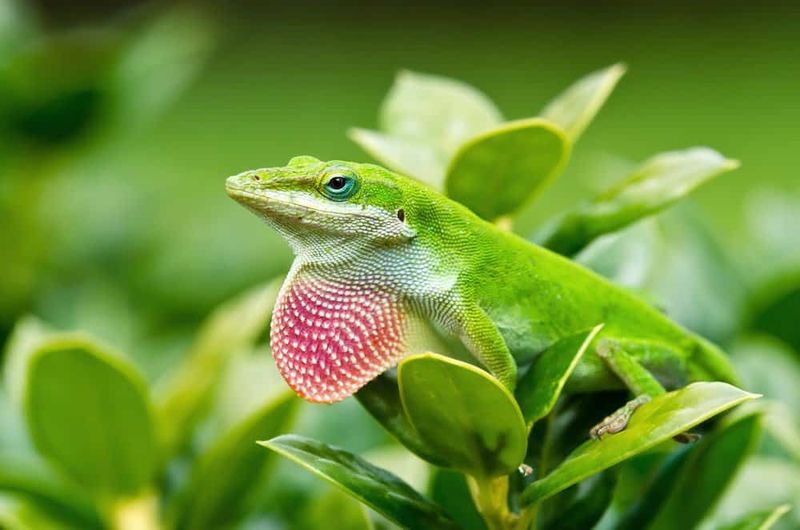
Seeing an anole on your porch containers is genuinely interesting, but the visit cannot tell you whether your plants are thriving or struggling. Anole presence does not prove healthy plants, low pesticide use, abundant beneficial insects, or an active pest infestation.
Urban anole habitat research shows that structural features, basking opportunities, and prey availability shape where lizards appear – none of those factors map directly onto the internal health of a container plant.
The diet of a green anole makes it an unreliable diagnostic tool. Animal Diversity Web’s species account lists flies, crickets, moths, beetles, ants, termites, spiders, and other small arthropods as prey items.
Diet observations compiled in a herpetological review note confirm that green anoles are broad generalists, not specialists targeting any single type of insect. A lizard could be catching harmless fungus gnats hovering near moist soil, hunting a spider on the pot rim, or snapping up a moth that was simply passing through.
That breadth of diet is ecologically valuable, but it means the sighting cannot distinguish between a pest-free container and one quietly hosting a growing aphid colony on the leaf undersides. The NC Wildlife profile for green anoles describes them as common in urban and suburban settings across the Coastal Plain and southern Piedmont – areas where pest-free and pest-troubled containers sit side by side in the same neighborhoods.
Green anoles also eat pollinating and otherwise beneficial insects when those are the prey available. Treating the lizard as a sign of a well-balanced container garden, or as evidence that pests are under control, overstates what a single wildlife observation can actually reveal.
The sighting is an ecological clue worth noting – and then setting aside while you go look at the plants directly.
Let the Lizard Prompt a Real Container Inspection
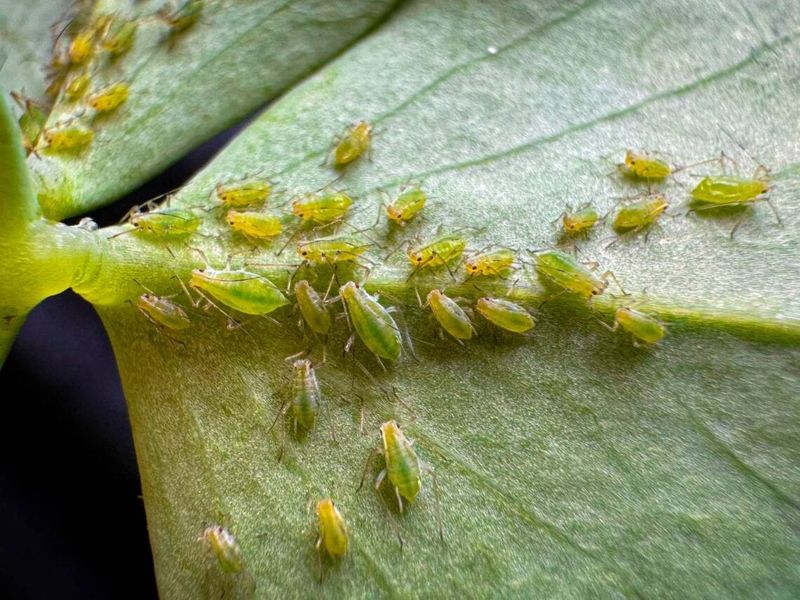
Rather than reading the anole’s presence as good news or bad news, use it as a nudge to do something genuinely useful: look at the plants yourself. A hands-on inspection takes only a few minutes and gives you actual information instead of guesswork.
NC State Extension’s container plant guidance recommends checking leaf undersides, tender new shoots, flower buds, and stems as the most productive places to find early pest activity.
Work through each container methodically. Aphids cluster on soft new growth and leave a sticky residue called honeydew on leaves below them.
Thrips cause silvery streaking or distorted petals and tend to hide inside flower buds. Scale insects look like small brown bumps along stems and midribs.
Whiteflies scatter in a cloud when a plant is disturbed. Spider mites leave fine webbing on leaf undersides and cause stippled, pale discoloration.
Chewing damage – ragged edges, missing sections, or leaf mines – points to caterpillars, beetles, or other chewing insects.
Also look for indirect signs: black sooty mold growing on honeydew deposits, distorted or cupped leaves, stunted new growth, or unusual wilting despite adequate water. These patterns tell you more about container health than any wildlife sighting can.
NC State Extension’s integrated pest management chapter emphasizes scouting – regular, direct observation of plants – as the foundation of any sound pest decision. Finding a few aphids on one stem is a different situation from a heavy infestation across multiple plants, and only a close look can tell you which you have.
Gather real evidence from the plant before deciding whether any response is needed. A lizard on the railing is interesting.
Thirty aphids on the newest growth is actionable.
Use Integrated Pest Management Instead of Hiring the Anole
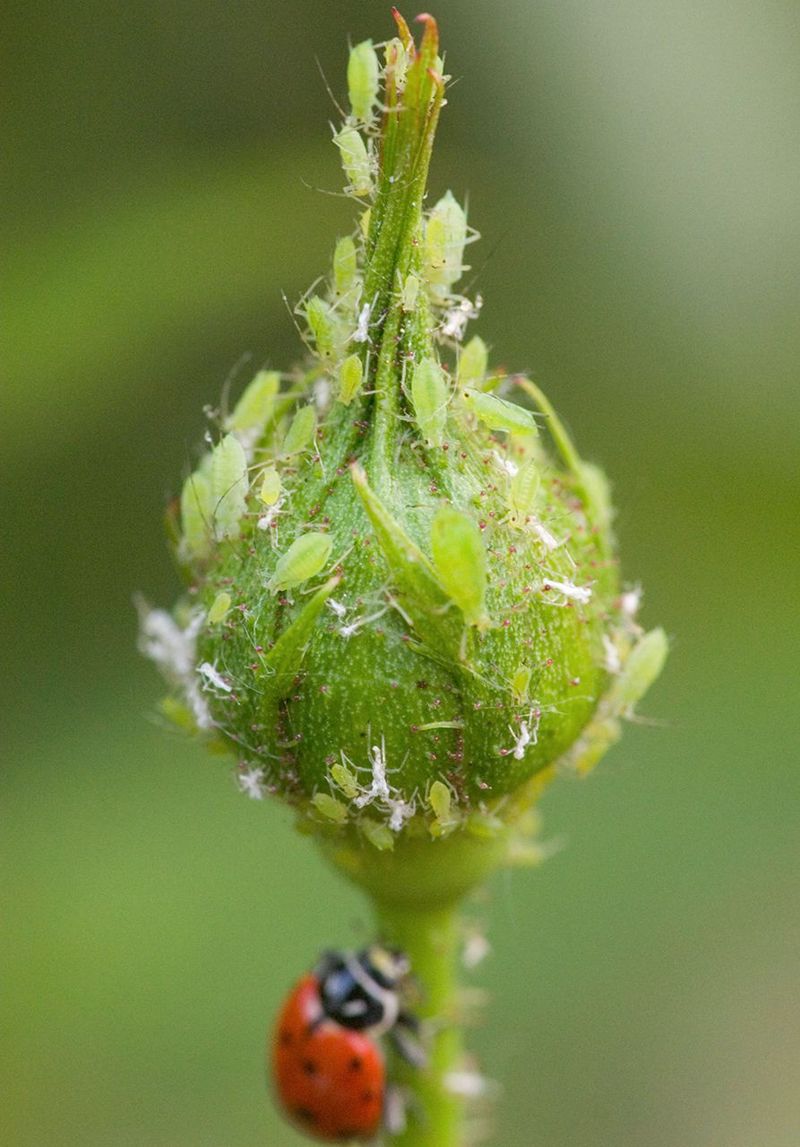
Green anoles eat arthropods, but they cannot be counted on to handle a container pest problem. They are generalist predators that take whatever prey is available, and a review of anoles as potential biocontrol agents found that while lizard predation can contribute to arthropod suppression in some agricultural systems, the effect in a few residential containers is unquantified and not pest-specific.
Expecting one lizard to eliminate aphids, mosquitoes, or spider mites is an unrealistic ask.
A more reliable approach is integrated pest management, which starts with confirming what pest is actually present and whether the damage level warrants a response. The EPA’s introduction to integrated pest management outlines the core steps: identify the pest accurately, assess whether the population or damage is significant enough to act on, choose the least disruptive effective tactic, and monitor the results.
That sequence protects both the plants and the wildlife using the space.
For common small-scale container infestations, NC State Extension’s container plant handbook offers several nonchemical starting points. A firm stream of water directed at aphid colonies knocks them off soft stems effectively.
Removing spent flowers and infested plant debris reduces the shelter and food that thrips depend on. Yellow sticky traps placed near containers catch fungus gnats and whiteflies before populations grow.
Allowing the container growing medium to dry as much as the plant can tolerate between waterings discourages fungus gnat larvae, which need consistently moist conditions to develop.
NC State Extension’s IPM chapter and their biological control resources both note that supporting natural predators and parasitoids is part of a sound management strategy – but that support comes from minimizing unnecessary pesticide use, not from relying on a single lizard. If a chemical treatment becomes genuinely necessary after nonchemical options have been tried, the EPA explains that the pesticide label is a legally enforceable document specifying exactly where, how, and at what rate a product may be applied.
Following the label protects the plants, the surrounding wildlife, pollinators, and people.
Leave the Wild Visitor to Choose Its Own Perch
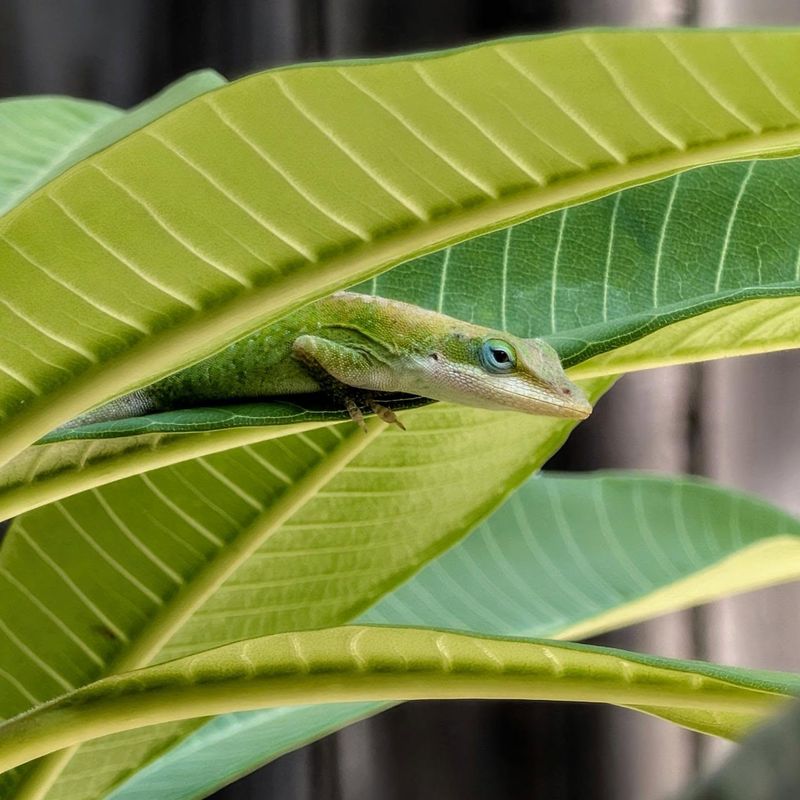
Once you have identified the lizard and checked your plants, the best action with the anole itself is straightforward: leave it alone. NC Wildlife Resources Commission guidance treats green anoles as wild animals using available habitat, not as pets or garden tools.
Capturing it, moving it to a neighbor’s yard, or trying to hand-feed it disrupts a wild animal that is either working a temporary food-and-cover opportunity or actively defending a small local territory.
The National Park Service’s green anole profile notes that these lizards remain part of the food web wherever they live. Birds, snakes, and domestic cats all prey on anoles, which means the lizard on your porch is navigating real risks every time it moves from one perch to another.
Handling stresses the animal and can cause injury; relocating it drops it into unfamiliar territory where it has no established hiding spots or prey knowledge, reducing its survival odds.
The same wildlife-friendly mindset applies to pesticide use around the containers. Routine, preventive insecticide applications are unnecessary and can reduce the arthropod prey that supports the lizard and other beneficial wildlife.
EPA pollinator protection guidance and EPA label-compliance materials both emphasize that even products marketed for ornamental use can harm non-target wildlife, beneficial arthropods, and pollinators when applied without a confirmed need. Treat only when a specific pest has been identified and a threshold for action has been reached, follow the product label precisely, and avoid spraying during periods when pollinators and lizards are most active.
Animal Diversity Web’s species account describes green anoles as common in suburban yards across the Southeast – a reminder that your porch is part of a broader landscape these animals navigate on their own terms.
Read the Sighting as an Invitation to Look Closer
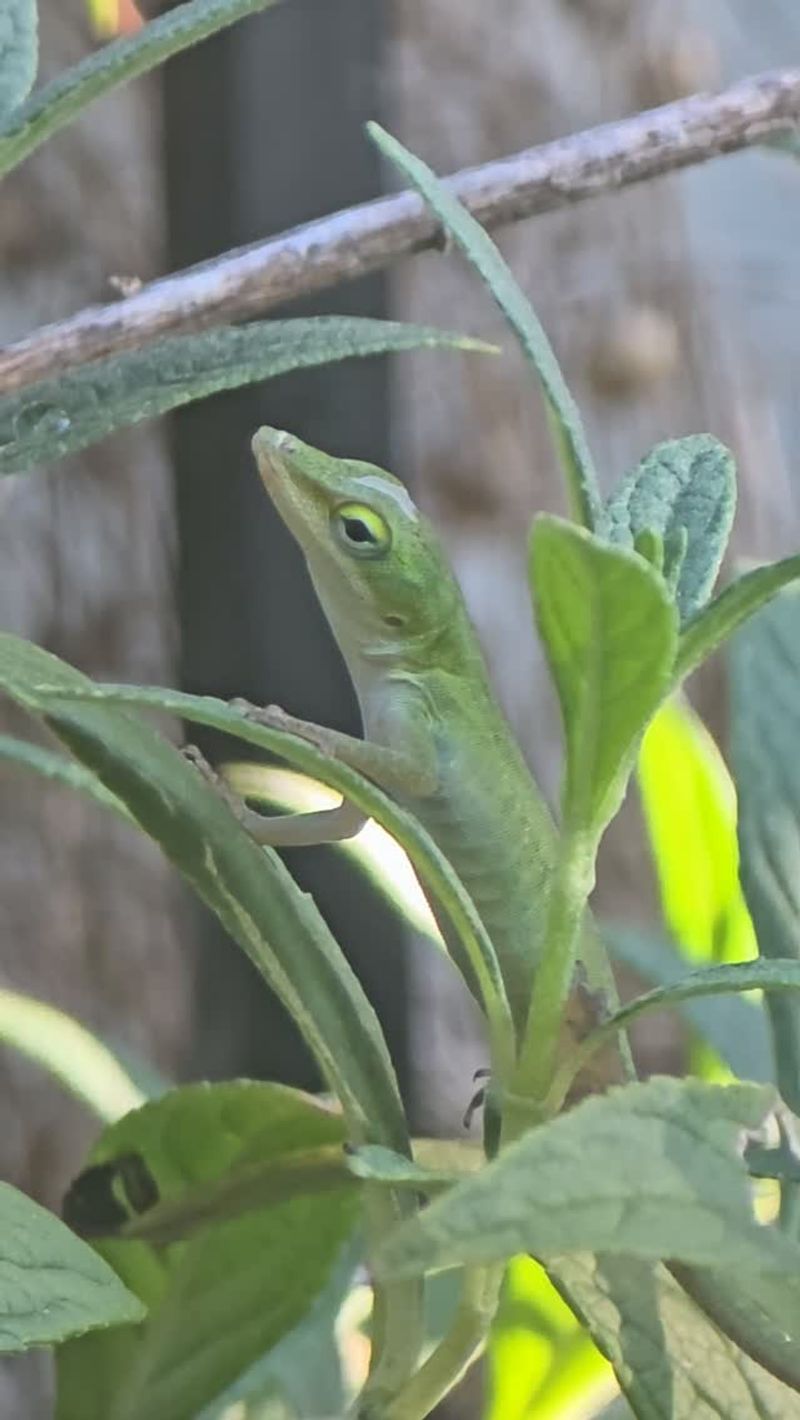
A green anole on a North Carolina porch plant is telling you something modest and accurate: the container area offers usable structure, shelter, warmth, humidity, and enough arthropod activity to make a visit worthwhile. Urban anole habitat research consistently points to those physical and ecological conditions as the real drivers of where lizards appear, not the health status of individual plants.
Enjoy the observation for what it is. Then flip a few leaves, check the stems, and let NC State Extension’s container scouting guidance shape any decisions you make about the plants.
Green anoles thrive best when they are left to navigate the yard on their own terms, and your containers thrive best when you make care decisions based on direct evidence rather than wildlife cameos. The lizard is not a verdict – it is a prompt to pay closer attention to your own small piece of North Carolina.