
What It Really Means When A Skink Keeps Darting Across Your North Carolina Patio
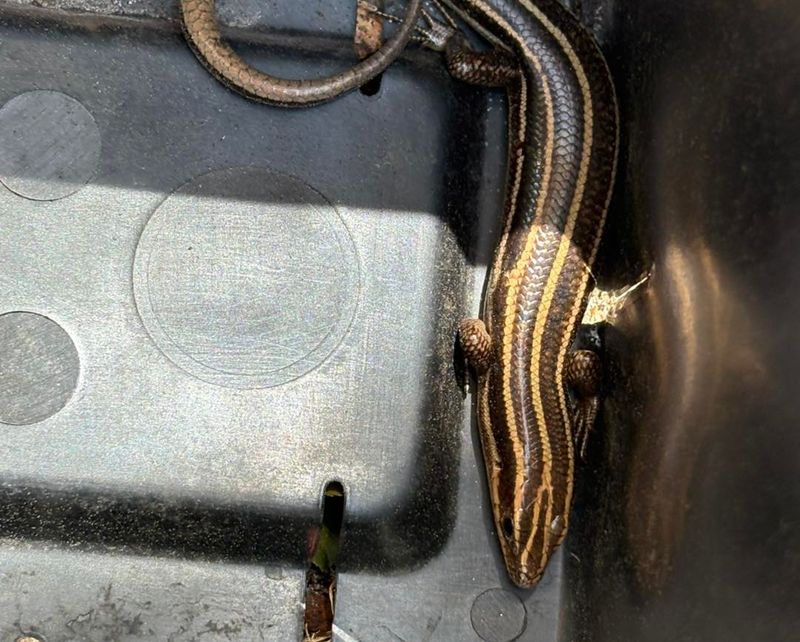
Spotting a small striped lizard with a glowing blue tail flash across your patio can stop you mid-step. Most North Carolina homeowners see it and immediately wonder whether something is wrong with their yard.
The honest answer is more reassuring than alarming, and understanding what that quick crossing actually signals can help you make smarter choices about your outdoor space. A little context goes a long way.
What the repeated crossing actually tells you
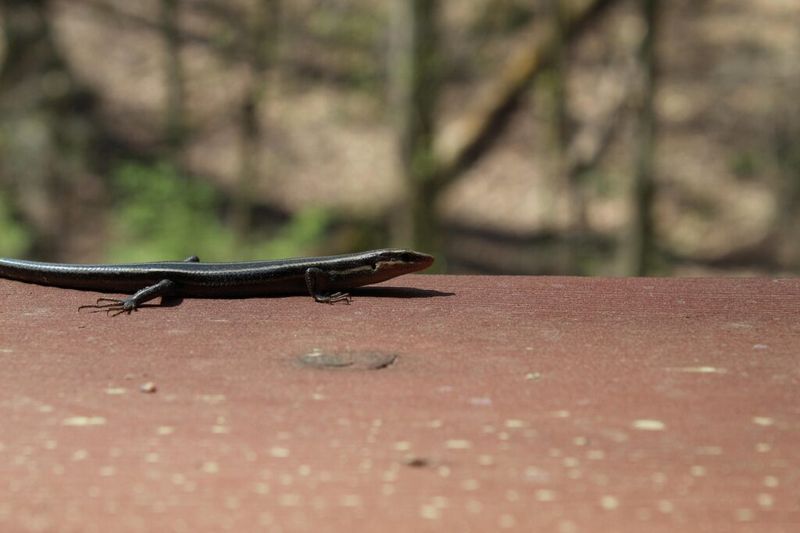
Seeing the same small lizard dart across your patio more than once is easy to misread. The instinct is to assume the yard must be crawling with insects, or that something ecological has shifted.
The more accurate read is simpler: that stretch of patio likely offers a usable combination of warmth and nearby cover, and the animal keeps returning because those conditions work for it.
Repeated sightings are consistent with a warm, sheltered microhabitat where prey may be available, but they do not demonstrate that insects are unusually abundant. Research on five-lined skink habitat use points to cover and sun exposure as the primary predictors of where these animals show up, not prey density measured at the yard level.
A skink cannot serve as a living insect counter.
There is also a good chance you are watching the same individual, not a parade of different animals. Five-lined-type skinks are locally resident and tend to use small home ranges centered on favorable cover objects.
One animal crossing your patio repeatedly is a normal pattern, not evidence of a growing population.
One sighting, or even several, does not prove the entire yard is healthy, pesticide-free, or ecologically balanced. It proves that at least one small reptile found a workable route.
North Carolina Wildlife Resources Commission describes these skinks as common across much of the state, including the Piedmont, so their presence is not rare or extraordinary. The most useful response is to note what favorable conditions your patio already provides, then decide whether those conditions are worth keeping.
Why a patio makes an effective skink station
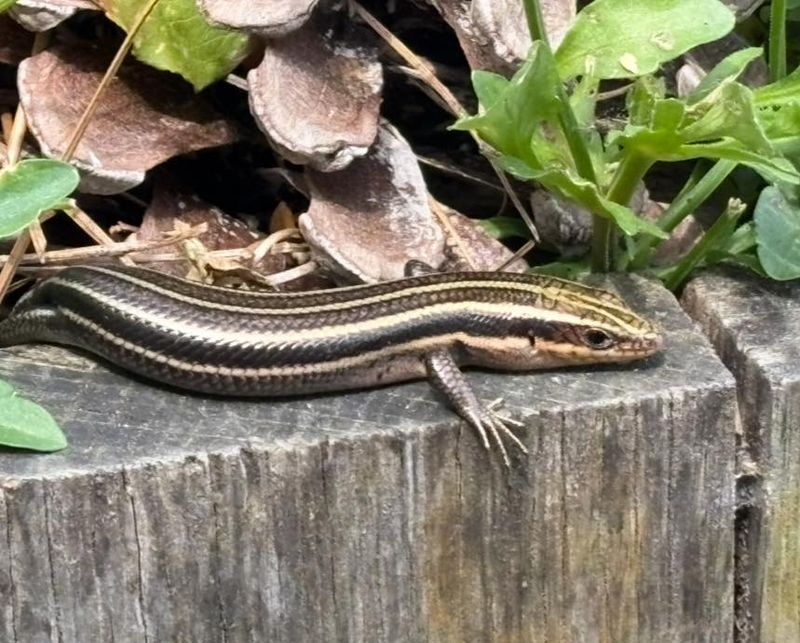
Concrete, brick, and stone absorb heat from the sun and hold it well into the afternoon. For a small reptile that cannot generate its own body warmth, that kind of surface is genuinely useful.
The NC Wildlife five-lined skink profile confirms that these lizards are diurnal and ectothermic, meaning they are active during the day and rely on external heat sources to regulate their temperature. A sun-warmed patio step or paving stone can function as a convenient thermoregulation platform.
The timing of sightings often follows that logic. On warm, sunny mornings, a skink may emerge from cover, cross an open surface to reach a warmer spot, bask briefly, then retreat when it feels exposed or has reached its target temperature.
That quick crossing you noticed is likely part of a predictable daily routine tied to sun angle and surface temperature rather than any unusual activity in your yard.
A neat, well-maintained yard does not rule out this kind of use. Skinks do not need overgrown or wild conditions to find a patio attractive.
They need proximity to some form of escape cover, whether that is a gap under a step, a nearby planting bed, a rock border, or the edge of a retaining wall. NC Wildlife notes that suitable habitat includes old buildings, rock piles, log piles, and clearing edges near woods, all of which can exist in a tidy residential backyard.
The patio itself is not the destination so much as a warm corridor between shelter and the next patch of shade.
Shelter nearby may explain the repeat appearances
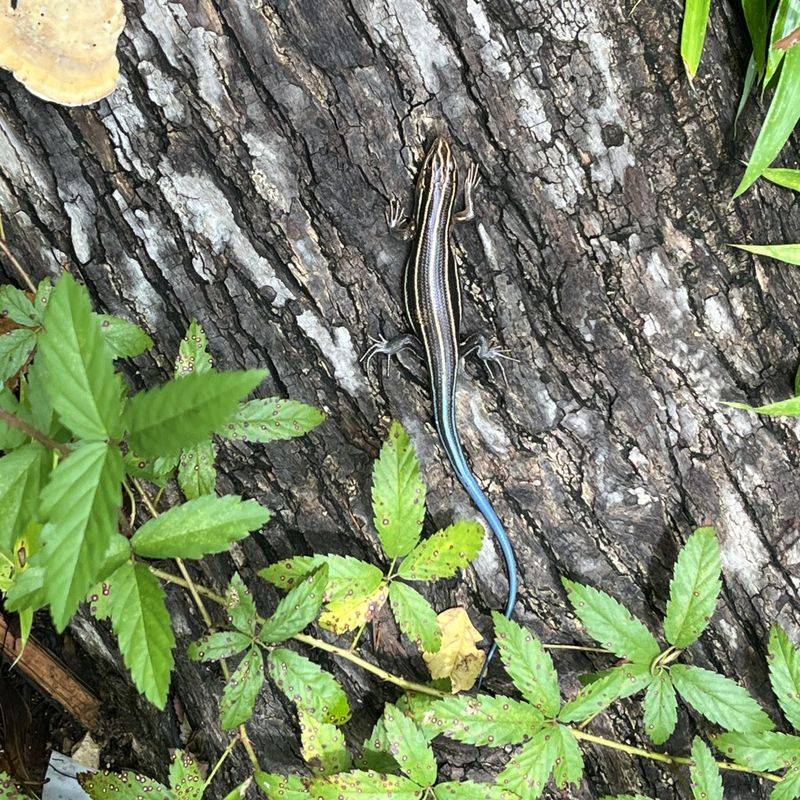
Cover matters more than most homeowners realize when it comes to where skinks set up their local territory. Logs, stumps, rock edges, leaf litter, woodpiles, crevices under steps, and gaps along building edges all qualify as usable shelter.
These features give a skink somewhere to hide from predators, regulate temperature in the other direction on hot days, and potentially nest or overwinter.
Habitat research on five-lined skinks found that these animals preferentially used large, moderately decayed logs and responded quickly to artificial cover objects placed in disturbed areas. That finding matters for backyard stewards because it means a single well-placed cover feature, not a full wild habitat, can be enough to anchor a skink’s activity around one spot.
If your patio has a nearby rock border, a stacked-stone wall, a planting bed with thick mulch, or even a gap beneath a raised step, that feature may be what draws the animal back repeatedly.
Sightings tend to cluster around whichever cover object the skink is using most. You might see the animal cross the same corner of the patio every morning simply because the best hiding spot is just off that edge.
This does not mean the yard has an unusual prey supply or that a colony has formed. NC Wildlife lists common habitat as moist or moderately moist wooded and edge areas, clearings near woods, old buildings, rock piles, and sheltering debris, all of which can exist in a typical residential setting.
One important safety limit applies here. Retaining natural cover is a reasonable stewardship choice only when that cover is safely placed.
Logs, rock piles, or heavy leaf litter should not be left directly against siding, foundations, chimneys, electrical equipment, walkways, or any wildfire-prone structure. The wildlife benefit is real, but it applies to cover placed at a sensible distance from the house, not to hazardous piles wedged against a wall.
Insects are part of the diet, not a yard-wide scorecard
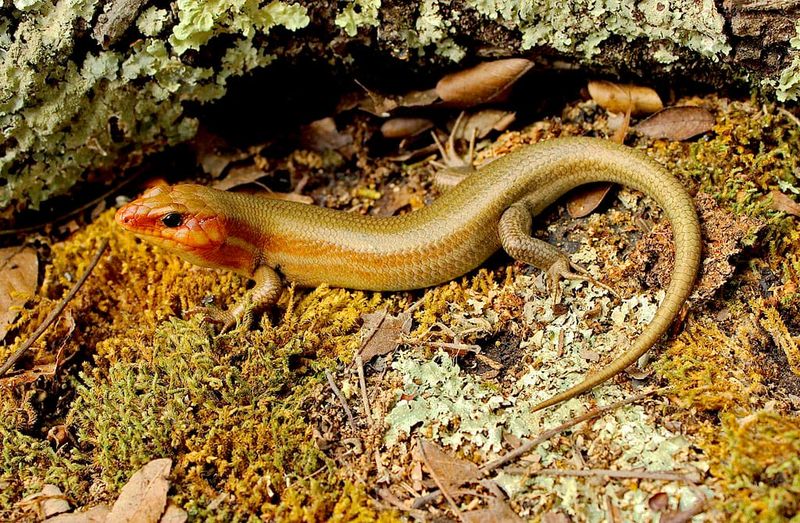
Five-lined-type skinks eat a broad range of invertebrates. Animal Diversity Web’s account of Plestiodon fasciatus documents a diet that includes insects, spiders, millipedes, crickets, termites, grasshoppers, caterpillars, beetles, beetle larvae, and sometimes snails or small vertebrates.
Saying these animals eat bugs is accurate. Saying they eliminate your yard’s pest problem is not supported by the evidence.
Prey access likely contributes to why a skink finds a particular microhabitat worth using. A patio with no invertebrate life nearby would be a less attractive foraging area.
But the presence of one skink does not measure how many insects are in your yard, confirm an infestation, or establish any kind of pest threshold. The animal may be there primarily because the surface is warm and cover is close, with foraging as a secondary benefit of that location.
The pest-control promise also does not hold up at the species level. A skink’s broad diet means it takes whatever invertebrate is available, not a targeted selection of mosquitoes, ticks, or any other pest you might prefer to reduce.
There is no basis for expecting that a resident skink will meaningfully lower the population of a specific pest in a residential yard. Framing the animal as a natural exterminator sets up an expectation the biology does not support.
The practical takeaway is straightforward: the skink may forage near your patio because the conditions are good and prey happens to be accessible, but that foraging behavior is not a diagnostic signal you can use to assess your yard’s insect load. Treat the sighting as habitat information, not as a pest survey reading.
The blue tail does not settle the identification
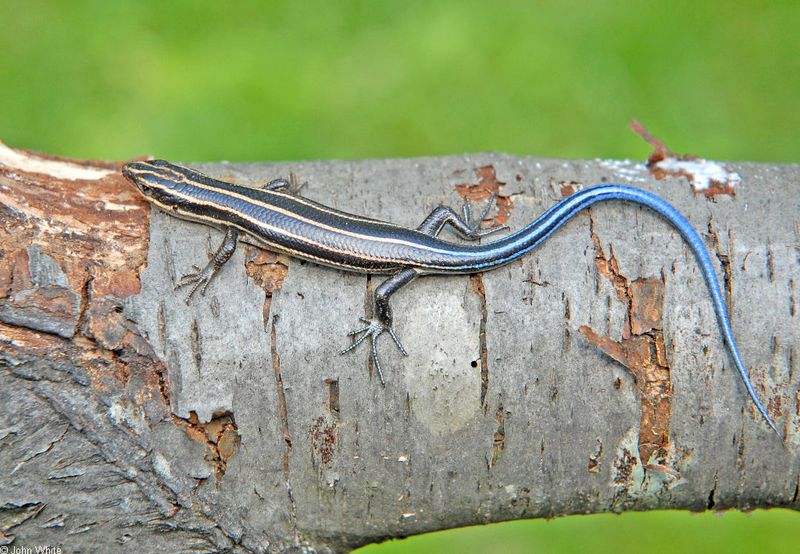
That vivid electric-blue tail is striking, and it makes identification feel obvious. In practice, it complicates things.
Three skink species native to North Carolina share that juvenile coloring: the common five-lined skink, the southeastern five-lined skink, and the broad-headed skink. All three produce juveniles with five pale stripes and a bright blue tail, and telling them apart from a quick glance at a moving animal on a patio is genuinely difficult.
NC Wildlife’s five-lined skink page and the southeastern five-lined skink entry both note that these species overlap in range and appearance, particularly as juveniles. Using “five-lined-type skink” or “juvenile Plestiodon skink” is a more honest label than committing to a species name based on a fleeting sighting.
You are not misidentifying anything by being cautious, and the stewardship response is the same regardless of which species it turns out to be.
A persistent piece of folklore in North Carolina holds that blue-tailed lizards are venomous or can sting. NC Wildlife’s native reptiles guidance is unambiguous: the state’s native lizards are nonvenomous and nonpoisonous.
The rural belief sometimes called the “scorpion” story is folklore with no biological basis.
Trying to capture the animal for a closer look is not a good solution to the identification puzzle. Handling a skink unnecessarily stresses the animal and can prompt a defensive bite.
Leave the identification at a comfortable level of confidence, note the general features you observed, and let the animal go about its day undisturbed.
Give the skink room instead of treating the yard
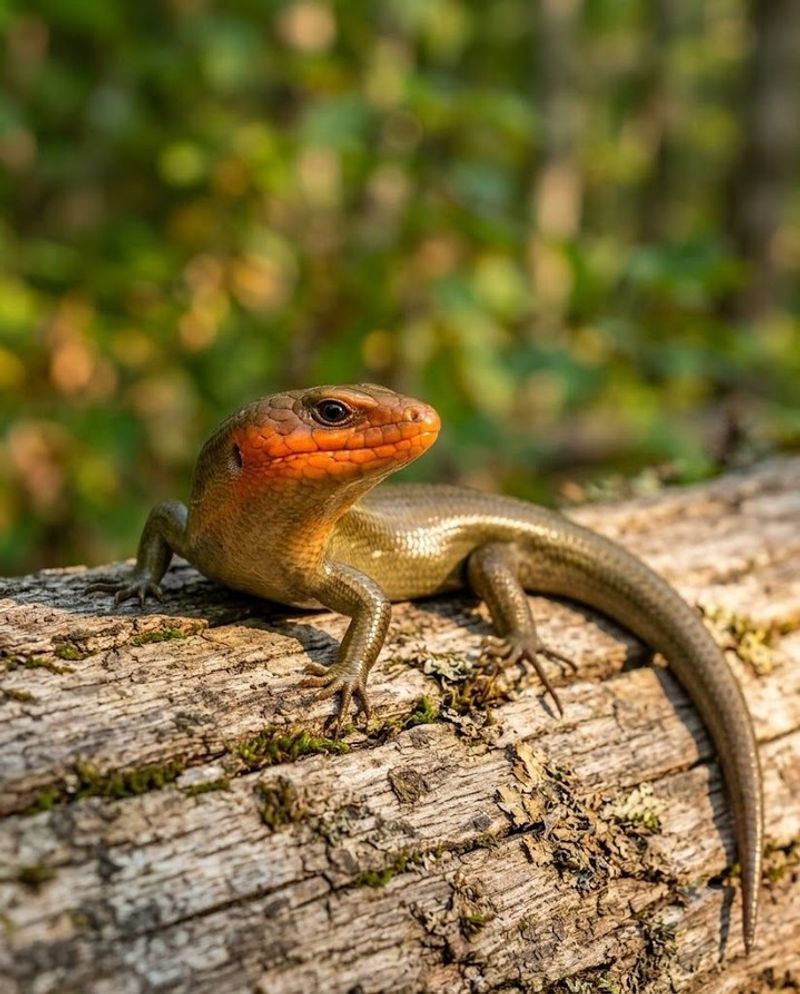
The most useful thing most homeowners can do after spotting a skink is nothing. Chasing, capturing, relocating, or handling the animal is unnecessary and can cause real harm.
A skink that feels cornered may bite defensively. NC Wildlife describes the bite of a large adult as generally a pinch rather than a serious injury, but that does not make handling a good idea.
Wild reptiles should not be casually grabbed, and pets should not be encouraged to chase them either.
House cats are a significant threat to skinks and other small native wildlife. NC Wildlife specifically identifies cats as a major source of harm to these lizards.
Keeping cats indoors or restricting their access to wildlife-rich areas of the yard is one of the most direct steps a steward can take to protect a resident skink. This applies even to cats that seem disinterested most of the time.
Retaining some natural cover in a safe location supports the animal without requiring any major yard changes. A log placed away from the foundation, a rock border along a garden bed, or a section of undisturbed leaf litter in a corner can all serve as usable shelter.
The key word is “safe”: cover should not be stacked against siding, near electrical equipment, along walkways, or anywhere it creates a structural or fire hazard.
Insecticide use is worth reconsidering carefully. Spraying because a skink is present is not a reasonable response, and broad pesticide applications can harm reptiles and other non-target wildlife directly through contact or drift, or indirectly by removing the prey they depend on.
EPA’s ecological risk assessment guidance for pesticides recognizes these pathways of harm. If a genuine pest problem exists, EPA’s citizen pest control guidance recommends starting with nonchemical integrated pest management steps and following product labels exactly before reaching for a spray.
If a skink wanders inside, give it an unobstructed route out rather than trying to grab it.
A Florida tick study does not make a North Carolina skink a tick solution
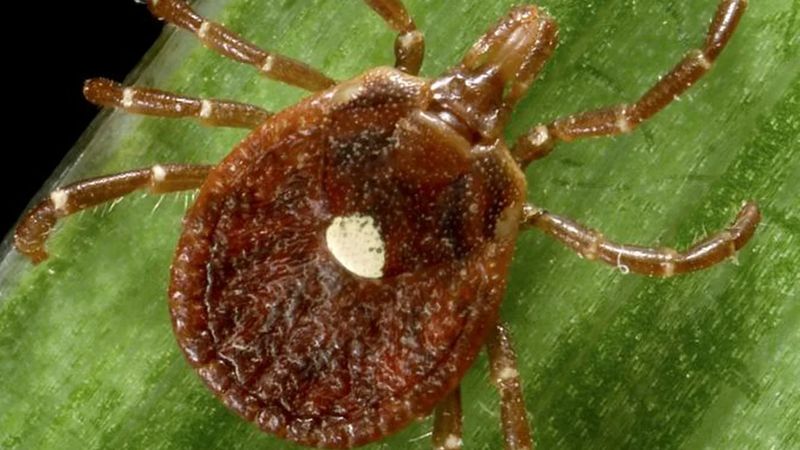
Some homeowners hear that lizards can host ticks and immediately worry. Others go further and hope the skink will reduce their tick exposure.
Both reactions stretch further than the evidence allows. A Florida study on reptile host associations with Ixodes scapularis documented tick associations with some Plestiodon skinks, including five-lined and southeastern five-lined skinks.
That finding is specific to Florida conditions and to the tick species and pathogen dynamics studied there.
Applying those results to a North Carolina patio skink is not warranted. Tick-host relationships and disease transmission effects depend on the tick species involved, the pathogen, the geographic location, the host’s immune competence, and local ecological conditions.
None of those variables can be inferred from a skink crossing a patio in Raleigh or Asheville.
The skink is not a tick magnet you need to remove, and it is not a tick-reduction service you can rely on either. A sighting does not predict that your yard has elevated tick activity, and it does not mean your tick risk is lower.
Those are separate questions that require separate attention.
CDC guidance on Lyme disease and CDC’s tickborne disease information both emphasize preventing tick bites through personal protective measures: wearing appropriate clothing, using repellents, and checking yourself, your children, and your pets after time outdoors. A resident skink is not a substitute for any of those steps, and treating it as one creates a false sense of security.
Keep up standard tick checks regardless of what wildlife you notice in the yard.
Treat the sighting as an invitation to coexist
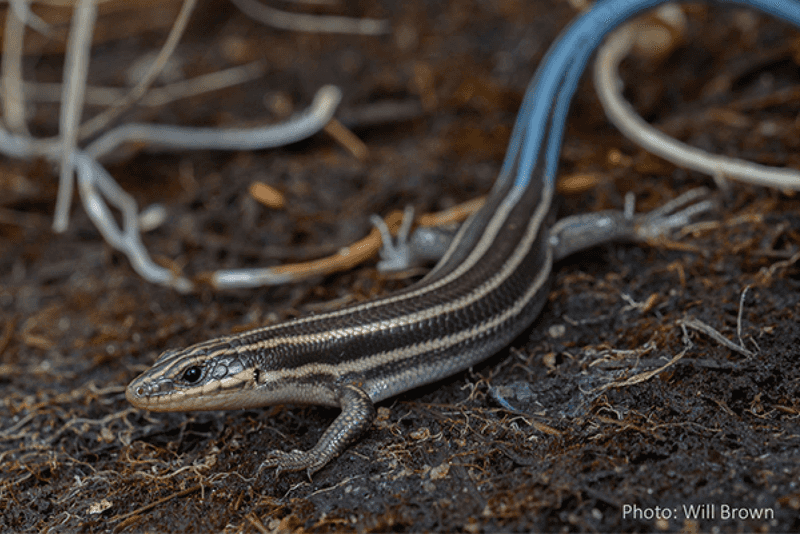
A skink crossing your patio carries a modest but clear message: one animal found a warm surface and workable shelter nearby, so it keeps coming back. That is a reasonable thing to know about your yard.
It does not mean the whole property is teeming with insects, ecologically exceptional, or free of problems. It means one small reptile found a usable corridor.
NC Wildlife describes these skinks as beneficial, nonvenomous insect-eaters that generally coexist well with people when left alone. The practical response is simple: protect safe habitat features, keep cats away from wildlife-rich areas, avoid unnecessary pesticide use, and let the animal move through undisturbed.
No intervention is required.
A backyard that supports even one native lizard is doing something right. The skink did not choose your patio by accident, and the best thing you can do for it is stay out of its way.