
The Most Underrated North Carolina Native Plant That Keeps Fireflies Glowing In Your Yard All Summer

On a warm June evening in North Carolina, few things feel more magical than watching fireflies blink across a dark yard. But those tiny lights depend on healthy ground-level habitat, and many yards are quietly losing the cool, sheltered spaces fireflies need.
Common wild ginger, a low-growing native plant, may be one of the most overlooked tools a North Carolina homeowner has for improving that shady corner where fireflies like to rest and hunt. Understanding what this plant can and cannot do, and pairing it with a few smart yard habits, is the real story worth telling.
Common wild ginger is a promising groundcover for firefly-friendly yards
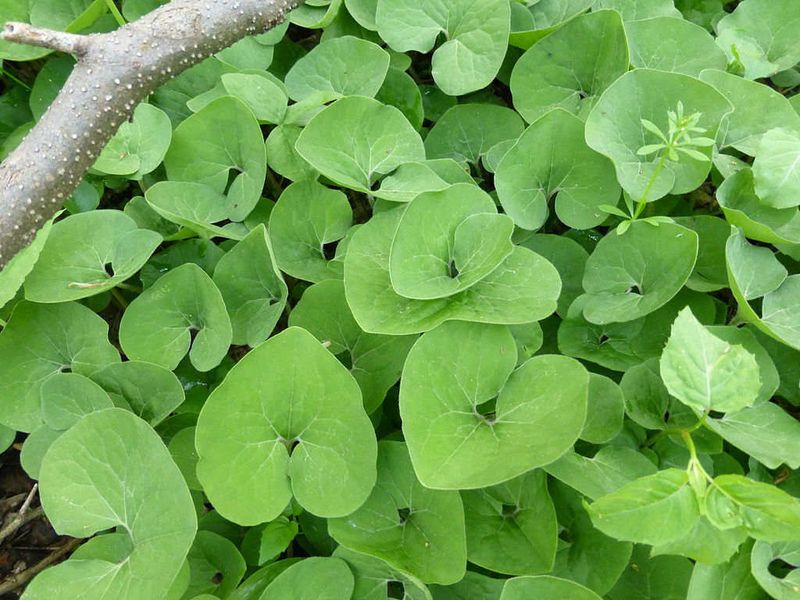
Asarum canadense, commonly called common wild ginger, is a low-growing native herbaceous plant that spreads quietly across the forest floor, forming a dense mat of broad, heart-shaped leaves that rarely climbs above six to twelve inches. According to the NC Extension Gardener Plant Toolbox, it is native across North Carolina’s Coastal Plain, Piedmont, and mountains, making it a genuinely local plant rather than a regional specialty.
For a shady, moist corner of a residential yard, wild ginger can create the kind of sheltered, low ground cover that feels like the edge of a woodland. That quality is worth noticing, because fireflies generally benefit from cool, shaded, relatively undisturbed ground-level habitat where moisture stays consistent and prey such as snails, slugs, and earthworms can persist.
The connection between wild ginger and fireflies is an inference drawn from overlapping habitat traits, not a documented cause-and-effect relationship, and that distinction matters.
No research shows that planting common wild ginger guarantees firefly presence, increases their numbers, or extends the season. What the plant can reasonably do is contribute one useful piece of a larger habitat puzzle by providing low summer cover beneath deciduous trees or along a shaded, moist woodland edge.
The NC Native Plant Society’s native groundcovers guide lists it as suitable for shaded conditions and moist-to-average soil across all three of North Carolina’s major regions.
Calling it the single best or most underrated native plant in the state would be a stretch, since plant suitability depends heavily on the specific site. Think of wild ginger as a promising choice for one particular kind of yard corner, one that happens to align well with conditions that support firefly habitat, rather than a ranked statewide winner.
Why the ground beneath the flashes matters
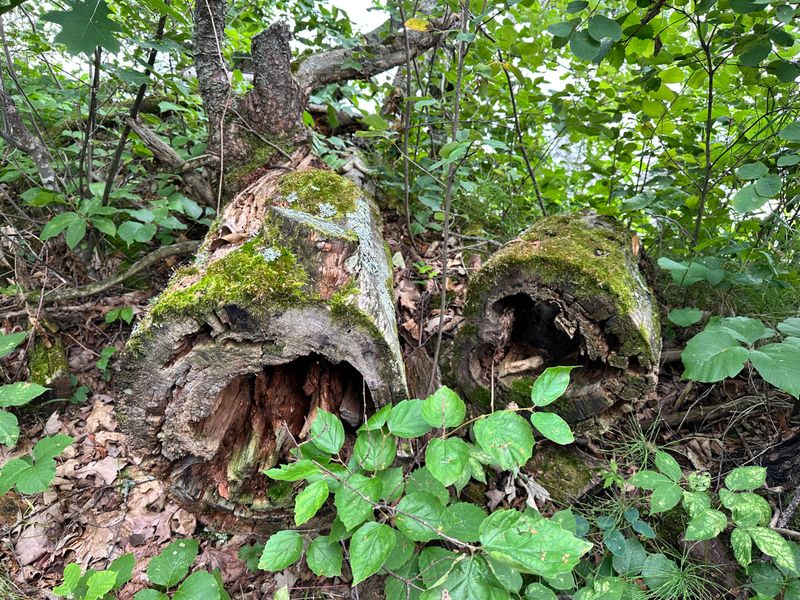
Most of a firefly’s life happens out of sight. Adults may flash for only a few weeks each summer, but larvae spend months or even years crawling through moist soil and leaf litter, hunting snails, slugs, earthworms, and other small invertebrates.
Xerces Society firefly habitat guidelines identify leaf litter, trees, and underground areas as critical shelter and overwintering sites for fireflies and their prey.
Moisture is central to this picture. Firefly larvae are sensitive to dry conditions, and the prey they depend on also requires consistently moist soil.
A yard corner that stays cool and damp under a canopy of deciduous trees creates the kind of microclimate where these conditions can persist through summer heat. Wild ginger thrives in exactly those conditions, preferring moist, organic soil and light to deep shade, which is why its habitat profile overlaps so naturally with what fireflies and their prey need at ground level.
Still, no single plant controls whether fireflies show up. Firefly species vary considerably in their habitat preferences: some favor wetland or aquatic edges, some use grassland margins, and some move through residential yards with enough shelter and prey.
A peer-reviewed review of firefly ecology and conservation confirms that firefly activity reflects a combination of moisture, prey availability, habitat connectivity, pesticide exposure, and surrounding land management rather than the presence of any particular plant species.
Research published in a study on firefly population pressures reinforces that weather, rainfall patterns, and local species composition all shape what a homeowner sees on a given summer evening. Wild ginger can help maintain the ground-level shelter piece of that equation, but it cannot substitute for the full habitat picture.
Find the right North Carolina corner before you plant
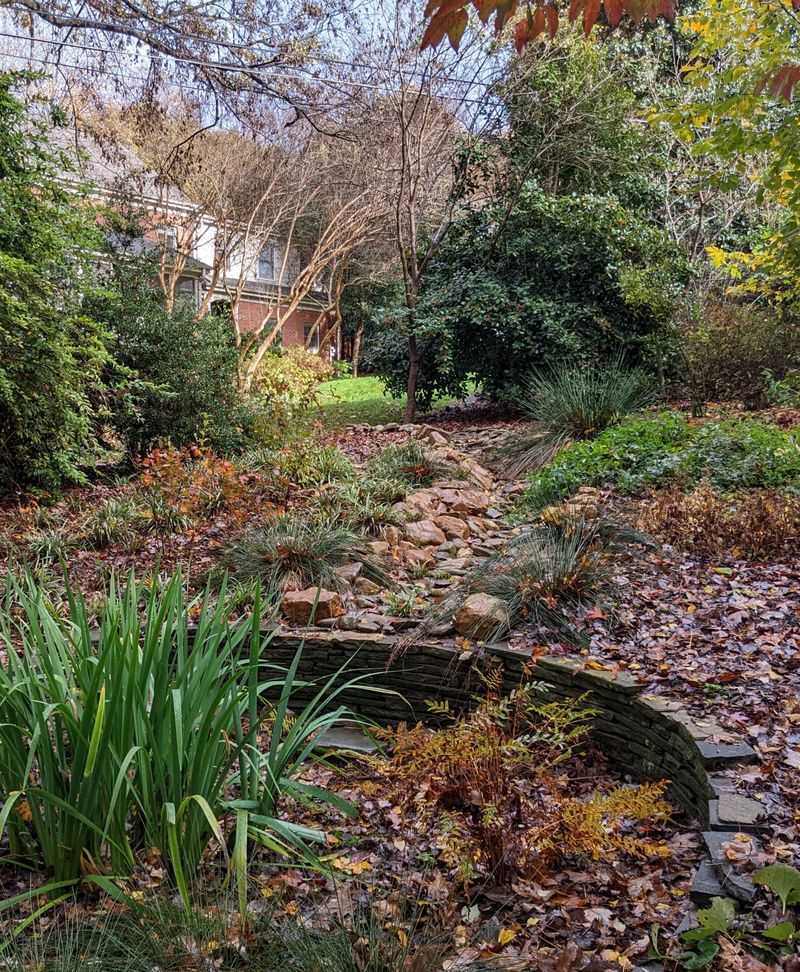
Before buying a single plant, walk your yard and look for the spot that already feels a little like the woods. You want a place where the soil stays moist without standing water, where a tree canopy blocks most of the direct sun, and where fallen leaves tend to collect naturally.
That description fits a classic wild ginger site, and it also describes the kind of microhabitat fireflies and their soil-dwelling prey are drawn to.
The NC Extension Gardener Plant Toolbox entry for common wild ginger is clear that the plant performs best in light to deep shade with moist, organic soil and has poor drought tolerance. That last detail matters more than it might seem.
A yard edge that bakes in afternoon sun, drains quickly after rain, or sits on compacted clay without consistent moisture is not a good candidate, regardless of how much shade a nearby tree provides in the morning.
Wild ginger grows across all three of North Carolina’s main regions, from the Coastal Plain to the Piedmont to the mountains, as confirmed by both the NC Extension Toolbox and the NC Native Plant Society’s groundcover recommendations. But native range does not mean the plant thrives everywhere within those regions.
Soil drainage, deer pressure, available organic matter, and the depth and duration of shade all influence how well it establishes and spreads.
A helpful starting point is the NC Extension Gardener Plant Toolbox, which lets you search by region, soil type, and light conditions. The NC Extension plant help resources can also connect you with local expertise if your site feels borderline.
Matching plant to place first saves time, money, and the disappointment of watching a stressed planting fail to fill in.
Establish a patient planting without clearing the habitat
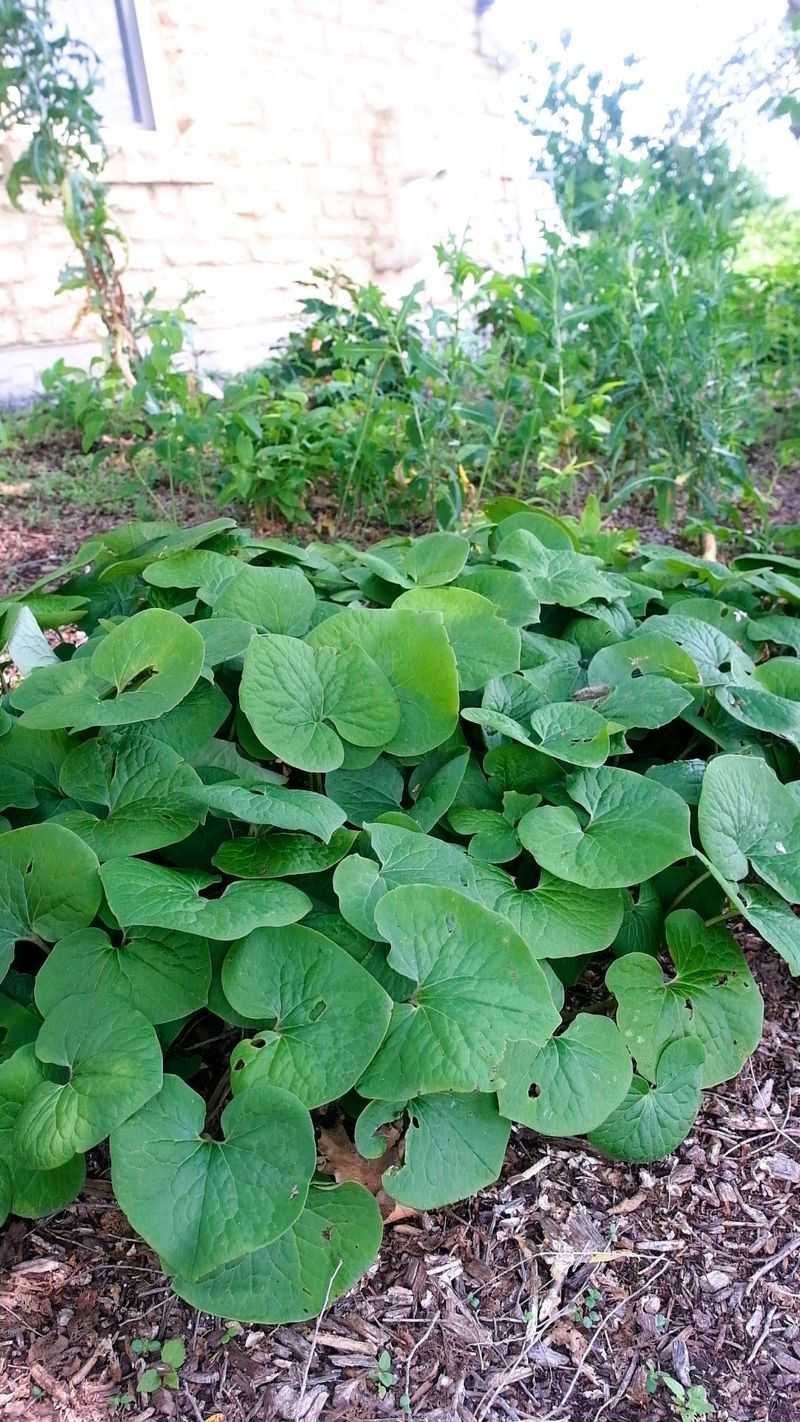
Patience is probably the most useful trait a gardener can bring to a wild ginger planting. The NC Native Plant Society’s guide to North Carolina gingers describes common wild ginger as spreading moderately, which means you can expect gradual colony growth rather than quick ground coverage.
Plan for that timeline from the start rather than being surprised when the patch looks sparse through the first full season.
Start by purchasing nursery-grown specimens from a reputable native plant nursery. Wild-collected plants can stress the population they came from, and several related North Carolina gingers are uncommon or rare, so sourcing from a grower protects what remains in natural areas.
When you are ready to plant, prepare only the spots where each plant will go, digging individual holes rather than turning over the entire bed. Wholesale tilling or clearing removes the existing leaf litter, breaks up soil structure, and can displace the very organisms that make the habitat worth building.
Leave as many fallen leaves as possible beneath and around each new transplant. Xerces Society firefly habitat guidelines specifically identify leaf litter as important shelter and overwintering habitat for fireflies and their prey.
Raking it away to create a tidy appearance works against the habitat you are trying to build.
Commercial mulch can help retain moisture around new transplants, but it is not an equivalent substitute for natural leaf litter as firefly habitat. Use it sparingly to stabilize planting holes if needed, then allow leaves to accumulate naturally over time.
The Xerces firefly conservation guide recommends avoiding disturbance of the entire habitat patch at once, so if you are expanding an existing planting, work in sections across different seasons rather than clearing and replanting everything at the same time.
Three yard habits that protect firefly habitat
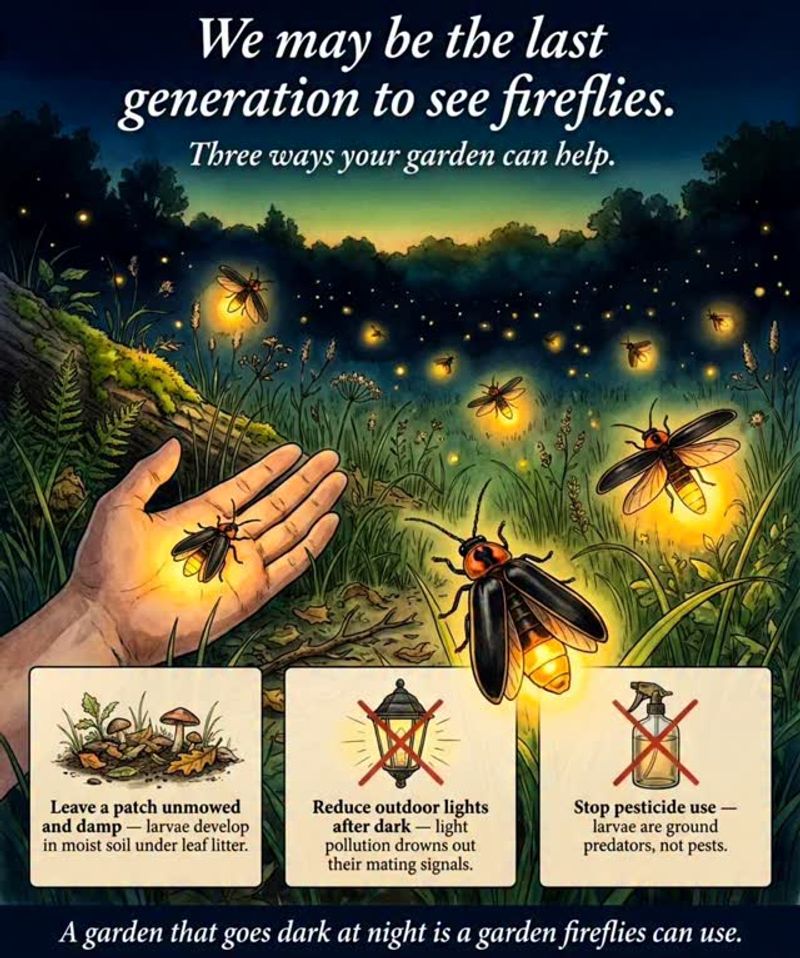
Planting wild ginger is one step. What happens around the planting often matters just as much.
Three habits in particular can protect the ground-level habitat you are building, and each one addresses a real threat to firefly larvae and the prey they depend on.
First, skip the insecticides, especially routine mosquito spray programs. Firefly larvae and prey species like snails, slugs, and earthworms live at or below the soil surface, where they can be exposed to pesticides even when adult fireflies are not visible on any plant.
Xerces Society’s overview of firefly threats identifies pesticide use as a major conservation concern, and the Xerces protect-fireflies-at-home factsheet warns specifically against broadcast insecticide applications near firefly habitat. The assumption that spraying is harmless as long as it avoids visible flowers is not a safe one when soil-dwelling larvae are present.
Second, mow less often in at least one section of the yard, and raise the mower height when you do mow. The Xerces firefly conservation guidelines recommend reducing mowing frequency, raising mower height, and avoiding disturbing the entire habitat patch at once.
A shaded, unmowed edge beside a wild ginger planting gives larvae more room to move and reduces the chance of mechanical disruption to their hunting and overwintering activity.
Third, reduce unnecessary artificial light near the habitat area at night. Firefly adults communicate almost entirely through bioluminescent flashing, and bright outdoor lighting can interfere with that process.
A peer-reviewed analysis of firefly conservation priorities lists artificial light at night among the major suspected threats to North American firefly populations. Shielding porch lights, switching off decorative path lights during peak firefly season, or replacing bright white bulbs with warm amber ones near the habitat patch are practical steps any homeowner can take without a major renovation.
Set realistic expectations for summer and winter
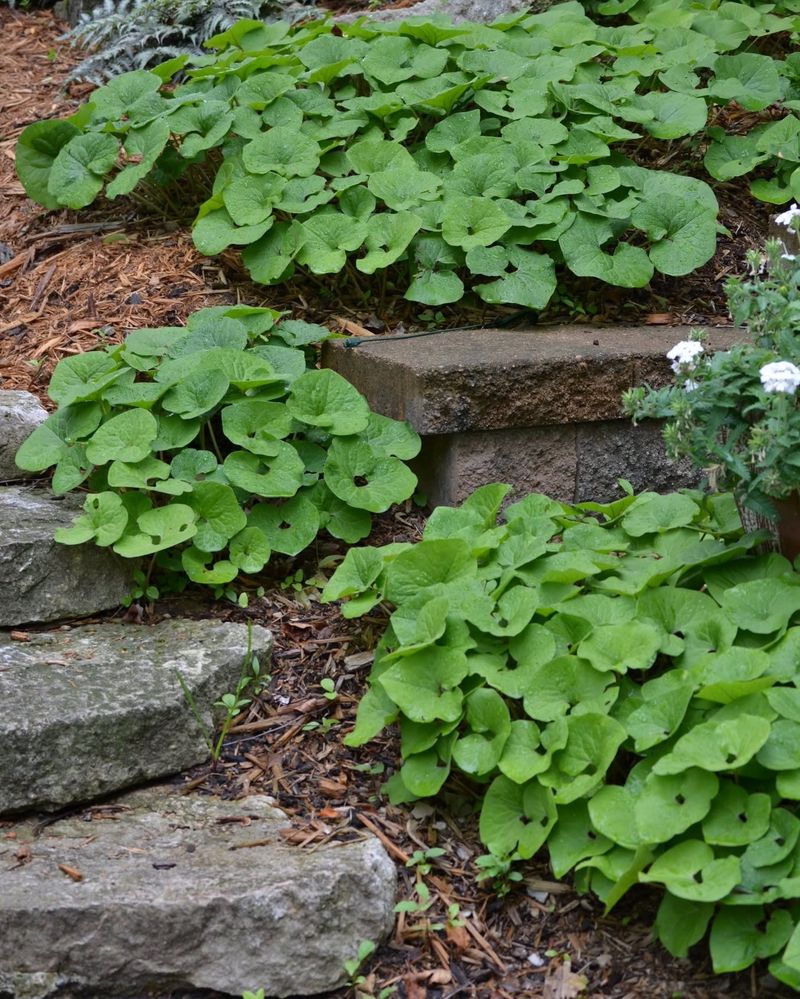
Common wild ginger earns its keep during the growing season, when its broad leaves spread low across the soil surface and create that cool, shaded, sheltered layer that overlaps with firefly habitat needs. Come fall, the foliage dies back entirely, because this is a deciduous plant, not an evergreen one.
The NC Extension Gardener Plant Toolbox confirms its deciduous habit, and the NC Native Plant Society’s ginger overview reinforces this seasonal rhythm.
When the leaves are gone, the habitat does not disappear, but it does shift. Leaf litter becomes the primary ground-level feature through fall and winter, which is exactly why retaining fallen leaves matters so much beyond the growing season.
Firefly larvae continue hunting and overwintering in the soil and leaf layer long after the summer flash shows are finished, so the value of an undisturbed, leafy ground surface extends well past the last warm evening of July.
Expect firefly activity to respond slowly to habitat changes, if it responds visibly at all in the short term. Weather, seasonal rainfall, the firefly species already present in your neighborhood, habitat connectivity to nearby natural areas, prey populations, and surrounding land management all shape what you see on any given summer night.
A comprehensive review of firefly ecology and research on firefly population pressures both emphasize that habitat quality improvements may take multiple seasons to show measurable effects.
For a yard corner that gets more sun or stays consistently wet, river oats (Chasmanthium latifolium) is worth considering as a conditional alternative. The NC Extension Toolbox entry for river oats notes that it tolerates moist-to-occasionally-wet soil and partial shade and provides taller summer and fall vegetation.
The important disclosure: river oats can self-seed and spread aggressively, so it needs active management in a residential yard and is not a set-and-forget planting.
Source the plant responsibly and do not eat it
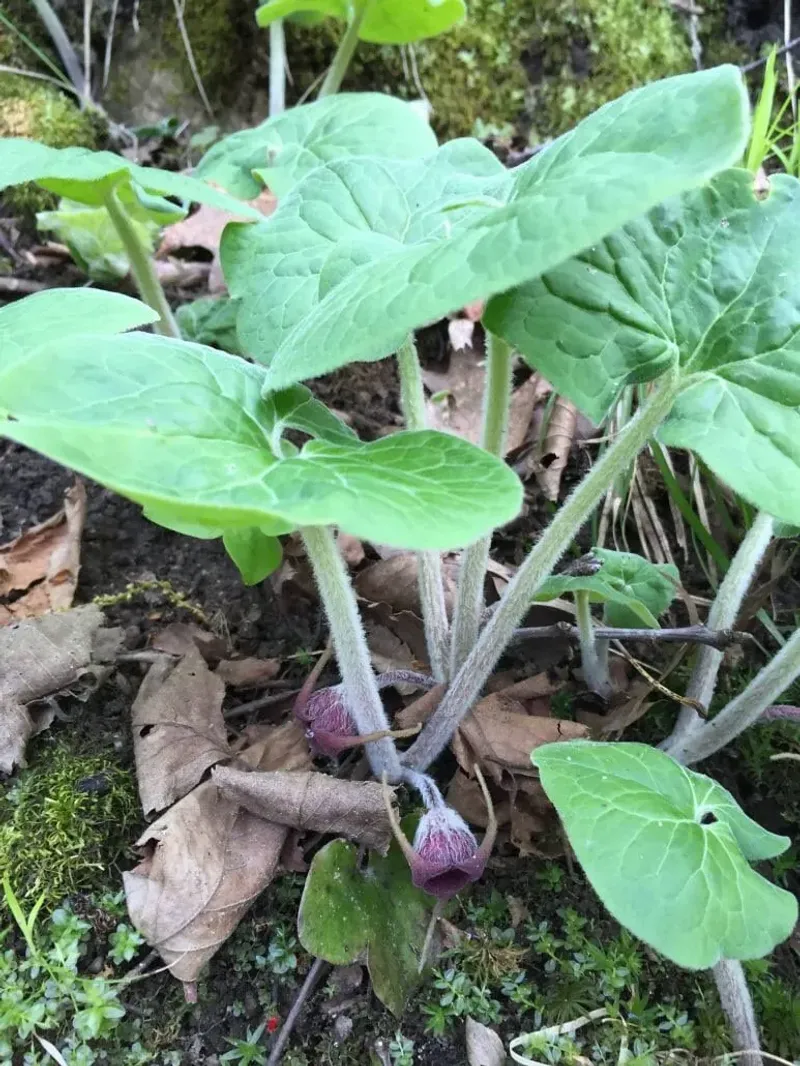
Buying from a reputable native plant nursery protects both your yard and North Carolina’s natural areas. Common wild ginger is commercially available, but some gardeners are tempted to collect plants from roadsides or wooded areas, especially when they spot a healthy colony.
The NC Native Plant Society’s ginger overview explains that while common wild ginger is widespread, several related North Carolina gingers in the Hexastylis genus are uncommon or rare. Because these species can look similar to an untrained eye, collecting from the wild risks removing plants that may be more ecologically vulnerable than they appear.
There is also a safety issue that deserves plain language: common wild ginger is not edible. The name sounds culinary, and the roots carry a faint ginger-like scent, but the plant should never be consumed or presented as a substitute for culinary ginger.
The NC State Extension poisoning warning for Asarum gives the genus a medium poisoning severity rating and specifically flags aristolochic acid, a compound that is nephrotoxic and carcinogenic. That warning applies to the roots and leaves, and it is not a minor caution to set aside.
When you shop for wild ginger, look for Asarum canadense specifically labeled as nursery-grown stock. Ask the seller about the plant’s origin if it is not labeled clearly.
NC native plant sales hosted by botanical gardens, conservation organizations, and reputable independent nurseries are reliable sources. Bringing home a plant with a known, ethical origin is the right start for a habitat planting that is supposed to protect living things.
Start with one suitable patch
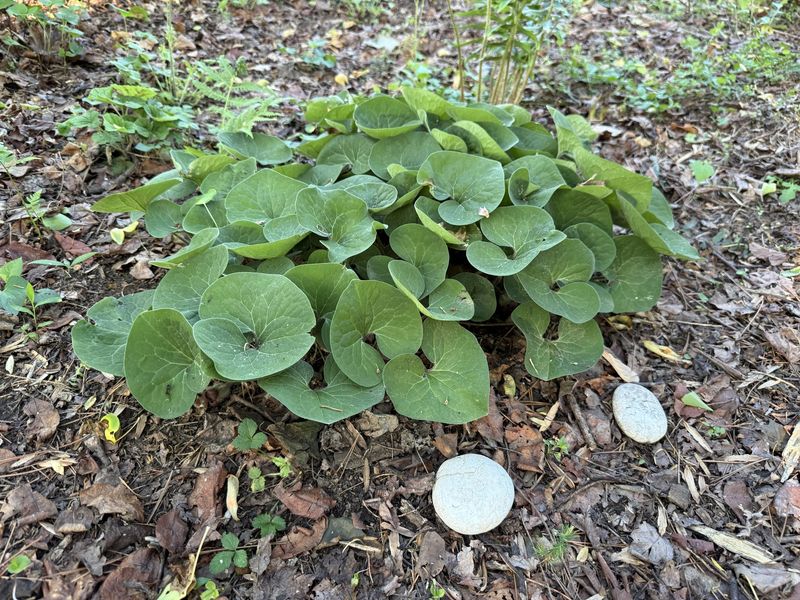
Pick one shady, moist corner of your yard and treat it as a long-term habitat project. Plant a few nursery-grown wild ginger specimens, leave the fallen leaves where they land, skip the pesticide applications nearby, and let the mower pass that section by.
Those combined steps give the ground layer a real chance to function as shelter and hunting ground for firefly larvae and their prey.
The NC Extension Gardener Plant Toolbox can help you confirm the site conditions before you buy, and the Xerces firefly habitat guidelines and Xerces protect-fireflies-at-home factsheet lay out the broader habitat recipe in detail. No plant controls when fireflies arrive or how long they stay, but a well-tended, undisturbed, dark corner of a North Carolina yard is exactly the kind of place worth giving them.