
Why Your Hydrangeas Suddenly Quit Flowering – And The One Care Habit Behind It
You walked outside expecting a cloud of blooms, and instead your hydrangea is a wall of green leaves with nothing to show for itself. Before you start second-guessing everything you did last fall or last spring, take a breath – the plant is most likely still healthy, and the fix is simpler than you think.
For many traditional bigleaf and oakleaf hydrangeas, a single pruning habit at the wrong time of year quietly removes the buds that were already forming for the coming season. Understanding why that happens, and whether it actually applies to your specific plant, is the first step toward getting flowers back.
A leafy hydrangea may have lost its flower buds, not its health
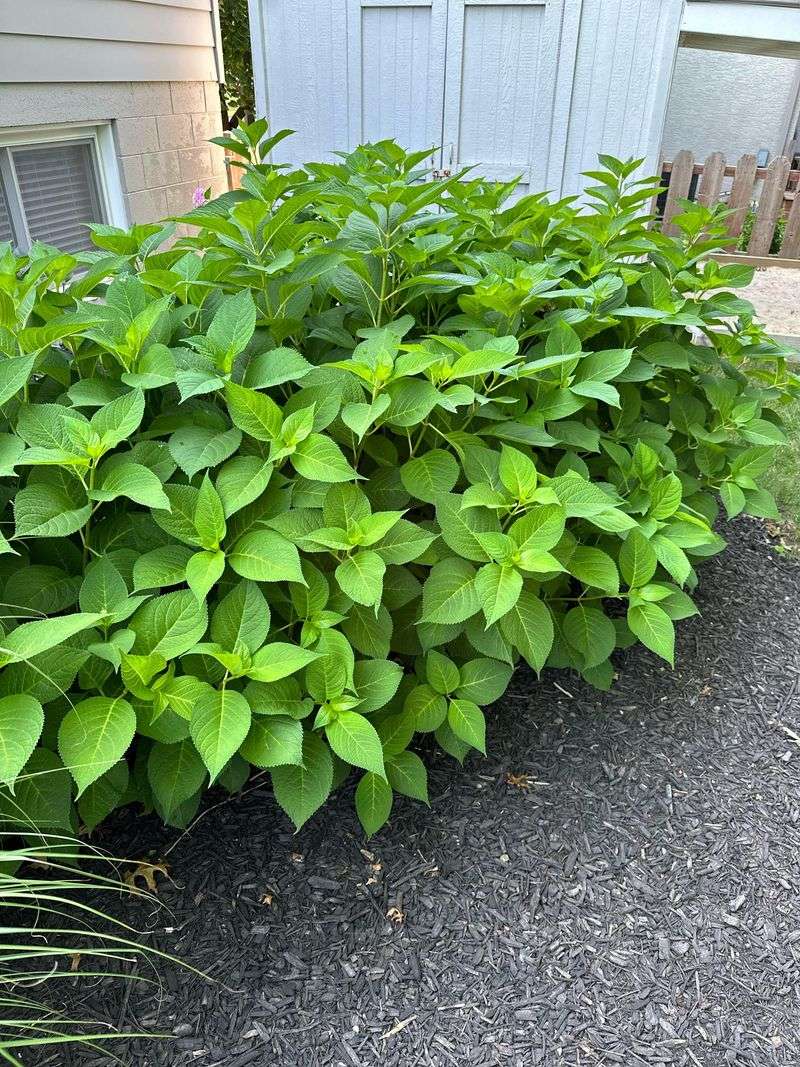
Plenty of gardeners assume a flowerless hydrangea means something is fundamentally wrong with the plant – poor soil, disease, or a slow decline. The more likely explanation, especially for traditional bigleaf and oakleaf types, is that the flower buds were removed or killed before they ever had a chance to open, while the plant itself stayed perfectly healthy underneath.
Here is the key to understanding why: University of Minnesota Extension guidance on pruning hydrangeas explains that traditional bigleaf hydrangeas set next season’s flower buds on old wood, meaning stems that grew during the previous season. Those buds form in late summer or early fall and sit quietly on the plant through winter, waiting to open the following year.
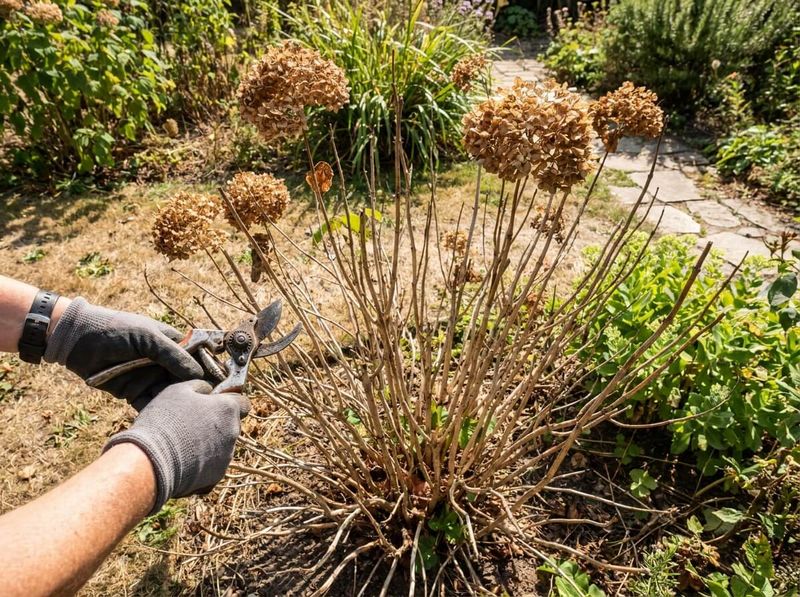
A fall cleanup, a tidy-up cut in late winter, or an enthusiastic spring prune can remove every one of those buds while leaving the plant’s roots and foliage completely unaffected.
Old wood does not mean brown wood or dead-looking wood. Old wood simply refers to stems that grew last season, regardless of their color or texture.
A stem that looks green and alive in spring can still be old wood carrying this year’s buds – and cutting it removes the bloom.
Penn State Extension notes that the same general issue applies to oakleaf hydrangeas, which also flower on old wood and respond poorly to dormant-season pruning. The foliage emerges vigorously because the plant’s energy and root system are intact.
Flowers are missing because the structures that would have produced them are gone.
The realistic promise here is a measured one. A plant that lost its buds to pruning or a hard freeze is not doomed, but it cannot be talked back into blooming the same season through extra watering, fertilizer, or any other quick treatment.
The goal is protecting what the plant will build next, not recovering what is already lost. Oregon State University Extension reinforces this point, noting that a hydrangea can remain vigorous and leafy for an entire season after bud loss without any sign that something is wrong.
Identify the hydrangea before you decide when to prune
Before any pruning decision makes sense, you need to know what kind of hydrangea you are actually working with. The species and cultivar determine whether the plant blooms on old wood, new wood, or both – and that single fact changes everything about when and whether you should cut.
Start with the plant tag if you still have it, or check any nursery records or receipts. Cultivar names matter more than you might expect.
Penn State Extension’s guide to pruning by species lays out clear distinctions: traditional bigleaf mopheads and lacecaps (Hydrangea macrophylla), as well as oakleaf hydrangeas (H. quercifolia), generally bloom on old wood, while panicle (H. paniculata) and smooth hydrangeas (H. arborescens) bloom on new wood. Those two groups follow nearly opposite pruning calendars.
If the tag is long gone, flower form and leaf shape can offer clues. Mophead bigleaf types produce large, globe-shaped flower clusters; lacecaps have flat, open blooms with small fertile flowers at the center.
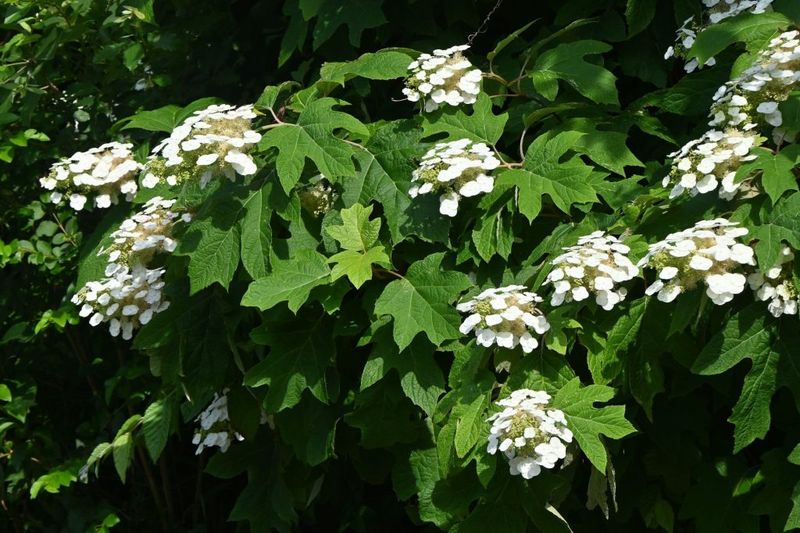
Oakleaf hydrangeas have distinctive lobed leaves that resemble oak foliage and cone-shaped flower clusters. Panicle types also produce cone-shaped clusters but on more upright, tree-like shrubs with smaller, less dramatic leaves.
Appearance alone cannot settle every identification question, particularly among cultivars. University of Minnesota Extension advises that when you cannot confirm what type you have, the safest approach is to avoid hard pruning until the plant’s bloom timing and growth habit become clear over a season or two.
Reblooming bigleaf cultivars deserve special attention here. Brands such as Endless Summer and Let’s Dance were bred to flower on both old and new wood, which makes them more forgiving of timing errors.
University of Georgia Cooperative Extension notes that these cultivars can still produce flowers on current-season growth even after winter damage or a mistimed cut removes the early flush. Even so, they are not immune to bud loss – they are simply more likely to recover within the same season than a traditional mophead.
Timing matters for traditional bigleaf and oakleaf hydrangeas
For gardeners growing traditional bigleaf mopheads, lacecaps, or oakleaf hydrangeas, the single most consequential pruning decision is not how much to cut – it is when. University of Minnesota Extension explains that these plants begin setting flower buds for the following year in late summer or early fall, while the current season’s blooms are still fading.
Any cut made after that process begins risks removing buds that will not be replaced until the plant goes through another full growing cycle.
The practical window for pruning these types is immediately after flowering, while the plant has finished its current bloom but has not yet started building next year’s buds. This is not a narrow, panic-inducing deadline – it is simply a matter of following the plant’s own rhythm rather than working against it.
Prune because the plant genuinely needs shaping or because you are removing dead or crossing stems, not as a routine seasonal task. Penn State Extension is direct on this point: unnecessary cuts are one of the most common reasons traditional bigleaf hydrangeas show up lush and leafy with no flowers the following year.
Oakleaf hydrangeas follow the same old-wood rule, and they deserve an additional note. University of Wisconsin Horticulture’s shrub pruning chart points out that oakleaf hydrangeas often need very little routine pruning at all.
Cutting them back simply because they look untidy in late fall or early spring is one of the most reliable ways to eliminate the next season’s flowers.
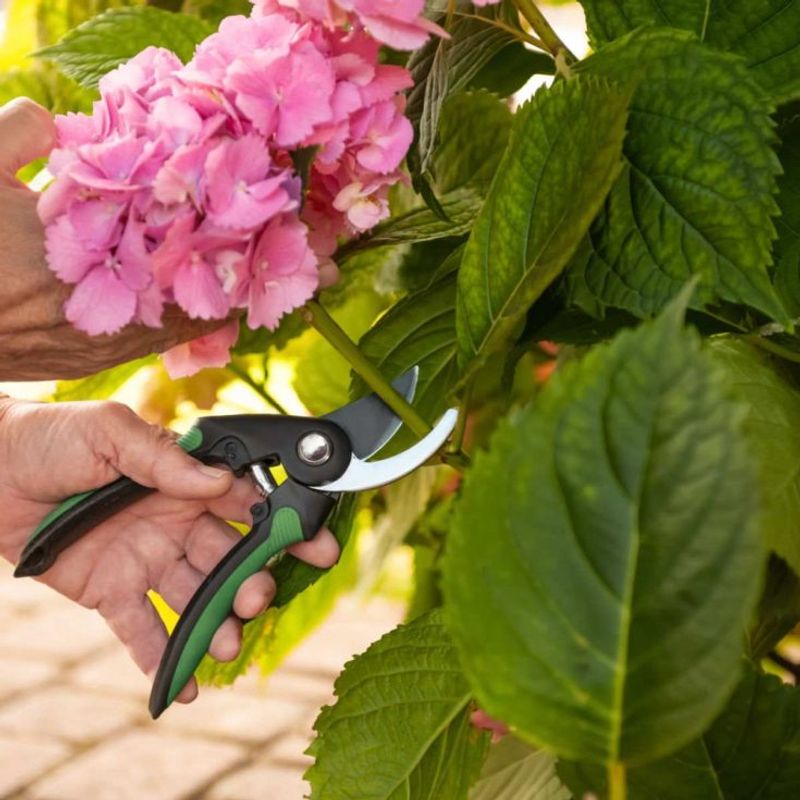
Deadheading – removing spent flower heads after they fade – is not the same as corrective pruning, but it carries its own risk on old-wood types. When you remove a faded bloom, the cut should stay high on the stem, taking only the spent flower head itself.
Cutting lower can accidentally remove developing buds that sit just below the old flower. A light snip above the first set of healthy leaves is usually enough to tidy the plant without sacrificing anything important.
Regional timing varies enough that a single national calendar date cannot cover every climate. The safest guidance is to prune old-wood types only when genuinely needed, right after flowering ends, and to check with your local cooperative extension office for advice specific to your region and growing season.
New-wood and reblooming hydrangeas change the answer
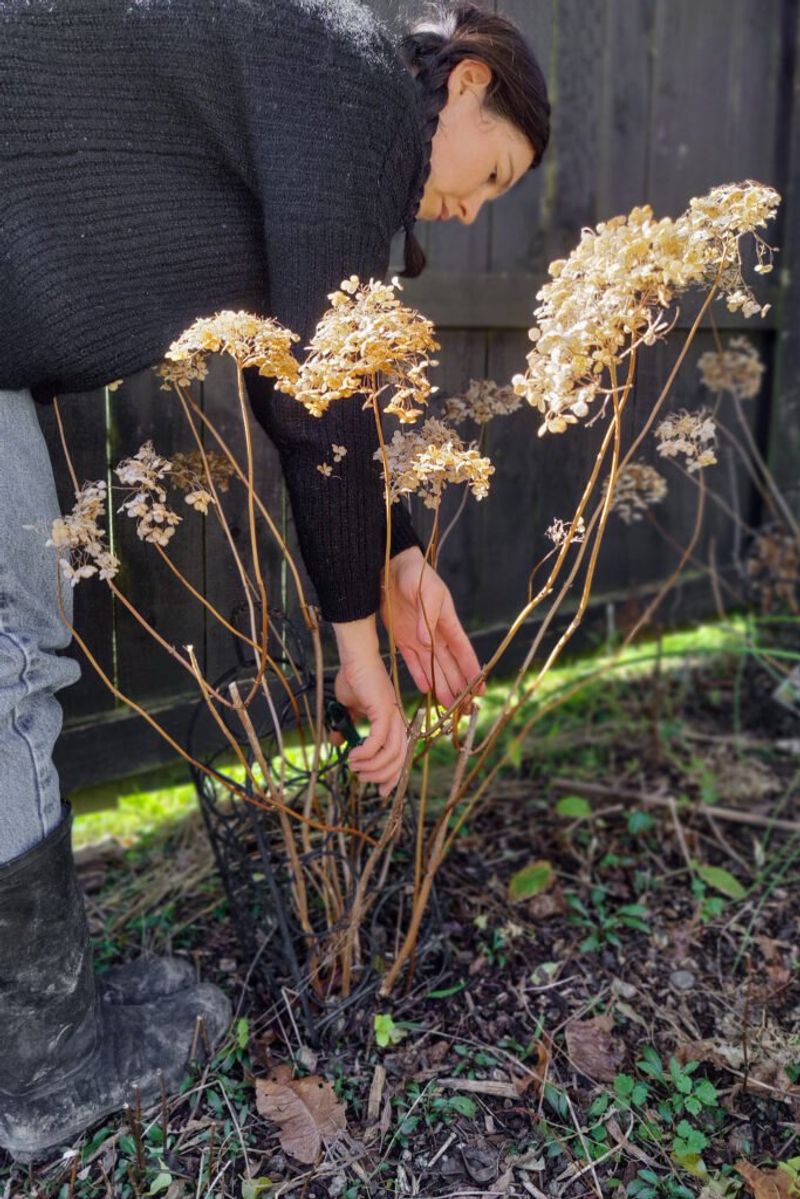
The old-wood pruning warning does not apply to every hydrangea in your yard, and treating it as a universal rule can lead to a different kind of mistake – leaving panicle or smooth hydrangeas unpruned when a well-timed cut would actually improve their performance.
Panicle hydrangeas (Hydrangea paniculata) and smooth hydrangeas (H. arborescens) bloom on new wood, meaning stems produced during the current growing season. Penn State Extension’s species-by-species pruning guide confirms that late-winter or early-spring pruning, before new growth begins, is generally appropriate for both types.
Cutting them back at that time encourages strong new stems that will carry the season’s blooms.
Smooth hydrangeas, which include the popular ‘Annabelle’ cultivar, are especially forgiving. University of Illinois Extension notes that even significant winter dieback does not necessarily prevent a smooth hydrangea from flowering, because new stems that emerge in spring are capable of producing that season’s blooms.
A plant that looks cut to the ground after a hard winter may still flower well once warm weather pushes fresh growth.
University of Wisconsin Horticulture reinforces that spring dormant pruning is the right moment for new-wood types, while old-wood types should be left alone until after they bloom. Getting the two groups mixed up is a surprisingly easy mistake, especially if you are managing several different hydrangeas in the same bed.
Reblooming bigleaf cultivars occupy a middle ground that is worth understanding separately. Varieties in the Endless Summer and Let’s Dance lines were bred to flower on both old and new wood.
University of Georgia Cooperative Extension explains that even when a harsh winter or a mistimed cut removes the early flush of blooms, current-season growth may still produce a later round of flowers on these cultivars. That second chance is genuinely useful, but it is not a guarantee – bud loss still reduces the overall flower display, and old-wood protection still matters for the earliest and most abundant bloom.
When a cultivar’s behavior is uncertain, the plant tag and breeder information are more reliable than guessing based on flower shape alone.
Winter damage and growing conditions can mimic a pruning mistake
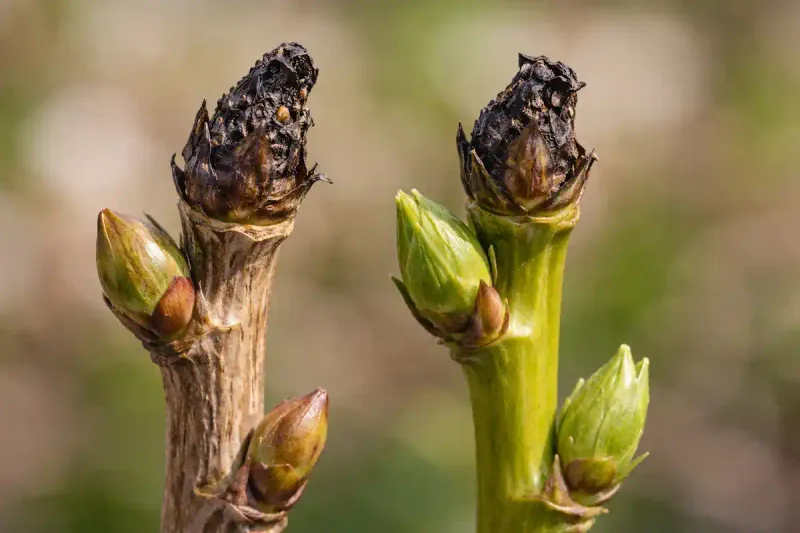
A hydrangea that comes through winter looking healthy but produces no flowers has not necessarily been pruned wrong. In many parts of the country, the real culprit is cold – specifically, the combination of harsh winters, sudden temperature swings, and late spring freezes that can kill bigleaf flower buds or damage stem tips while leaving the rest of the plant completely intact.
Penn State Extension lists weather damage alongside poor pruning as one of the most common explanations for a flowerless bigleaf hydrangea. The buds that were carefully preserved through fall and early winter can still be killed by a single hard freeze in March or April.
The plant leafs out normally because its root system and lower stems survived, but the flowering wood took the damage invisibly.
Light is another factor worth checking before reaching for the pruning shears or a fertilizer bag. University of Illinois Extension notes that hydrangeas generally perform best with morning sun and afternoon shade, though the exact preference varies by species and climate.
A plant that has been gradually shaded out by a growing tree, or one sitting in full hot afternoon sun in a southern climate, may reduce flower production even when pruning and winter damage are not factors. Adjusting light conditions should be done gradually and thoughtfully, not by suddenly moving or severely cutting back surrounding plants.
Soil moisture matters too. Oregon State University Extension recommends evenly moist, well-drained soil for hydrangeas.
Persistent drought stress can weaken a plant’s ability to set buds, while constantly soggy soil can damage roots in ways that produce symptoms resembling drought – wilting, poor growth, and reduced flowering.
Excess nitrogen is a quieter problem that often goes unnoticed. University of Missouri Extension’s Master Gardener guide cautions that too much nitrogen pushes leafy, vegetative growth at the expense of flowers.
A hydrangea growing in a lawn that receives heavy nitrogen fertilization, or one that has been repeatedly treated with high-nitrogen fertilizers, may look lush and green precisely because it has been steered away from flowering. A soil test gives you a clearer picture than applying more product and hoping for the best.
University of Missouri Extension’s herbaceous ornamentals guidance echoes that point for ornamental plants generally.
The practical rescue is restraint, not a bloom booster
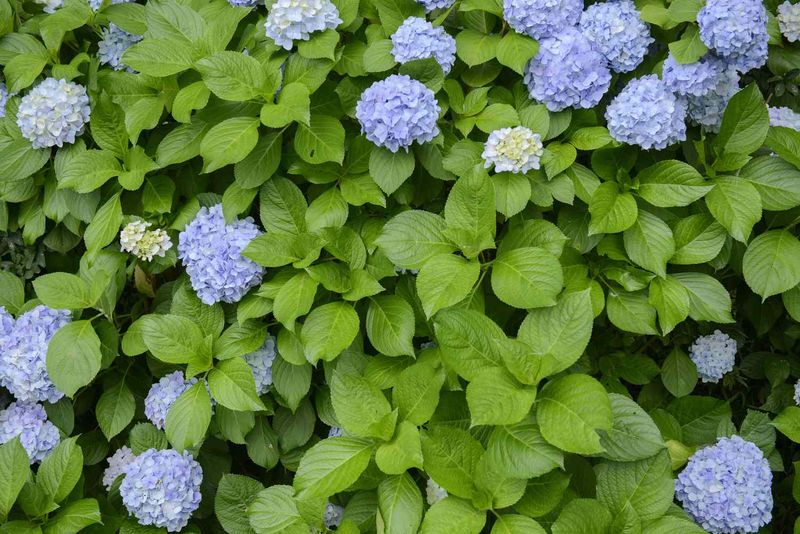
Once you have accepted that lost buds cannot be restored mid-season, the current-season action plan becomes straightforward: stop cutting healthy stems in an attempt to force flowers, and focus instead on keeping the plant in good condition so it can build strong flowering wood for next year.
Start by identifying the plant type if you have not already. Then inspect the stems carefully.
Scratch a small spot on a stem with your fingernail – if you see green beneath the bark, the stem is alive. University of Minnesota Extension advises removing only wood that is clearly dead or damaged, cutting back to living tissue.
Healthy old stems on a bigleaf or oakleaf hydrangea should be left alone even if they look bare or awkward right now, because those stems may carry buds for next season.
Consistent moisture in well-drained soil supports recovery without creating new problems. University of Minnesota Extension guidance on watering makes the point that saturated soil can damage plant roots just as effectively as drought.
Water deeply and allow the soil to approach dryness at the surface before watering again, rather than keeping the root zone perpetually wet. Extra watering beyond what the plant needs cannot replace buds that were pruned or frozen off.
Oregon State University Extension confirms that appropriate, consistent moisture supports overall plant health but does not substitute for intact flowering wood.
Resist the pull of bloom-booster fertilizers as a first response to missing flowers. Penn State Extension specifically cautions that excess nitrogen encourages leafy growth over flowering – and many general-purpose fertilizers are nitrogen-heavy.
University of Missouri Extension supports the same position for ornamental plants broadly: a soil test is a more defensible starting point than repeated applications of a product you may not need.
Set honest expectations for yourself. When an old-wood hydrangea has lost its buds to pruning or cold, the realistic goal this season is protecting what survives and giving the plant the conditions it needs to set new buds before fall.
That means no unnecessary cuts, no excessive fertilizing, and no panic-driven interventions. The plant is almost certainly not dying – it simply needs time and a cleaner approach going forward.
Use the hydrangea’s bloom type to plan next season
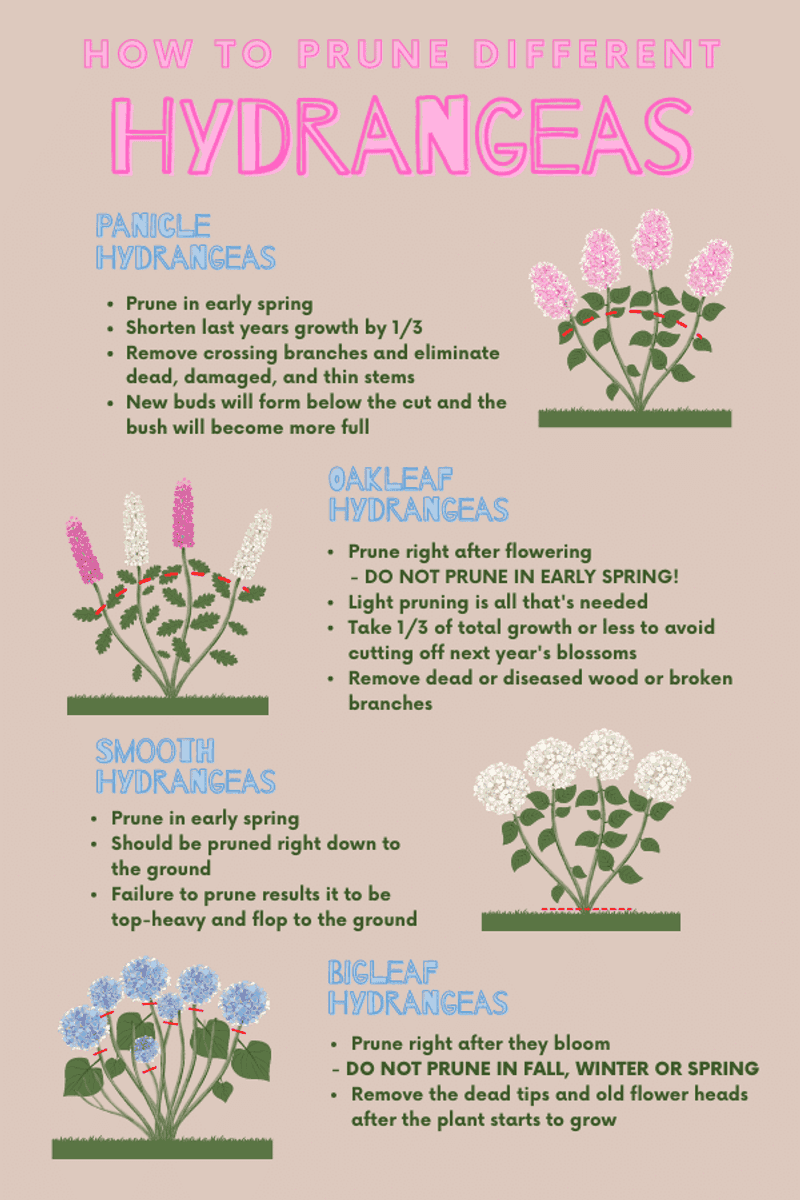
One flowerless season does not write off a hydrangea. A plant that looked perfect in foliage but produced nothing this year is very likely still building toward a better outcome next cycle, as long as you give it the right conditions and stop repeating whatever removed or damaged the buds in the first place.
The repeatable rule is simple: identify the type, determine whether it flowers on old wood, new wood, or both, and prune only when there is a genuine reason to cut. University of Minnesota Extension and Penn State Extension’s species pruning guide both frame the core advice the same way: match your pruning timing to the plant’s bloom wood, and avoid cuts that are not clearly necessary.
For old-wood types heading into fall and winter, protecting the stems that carry next season’s buds matters more than any product or amendment. Avoid cutting back bigleaf or oakleaf hydrangeas as a winterizing habit.
In cold climates, some gardeners use a loose layer of straw or evergreen boughs around the base to buffer temperature swings, but the most important protection is simply leaving the stems intact.
A few other things are worth keeping separate in your mind. Deadheading, soil pH adjustments, and aluminum sulfate applications each address specific and different concerns – none of them can replace flower buds that were removed or killed.
University of Georgia Cooperative Extension notes that flower color in bigleaf hydrangeas responds to soil chemistry, but color and bloom production are entirely separate issues. Changing pH will not bring back missing flowers.
The plant that blooms reliably year after year is usually the one whose owner learned to prune less, identify more, and let the shrub follow its own calendar.