
What It Really Means When A Ruby-Throated Hummingbird Keeps Returning To Your North Carolina Yard
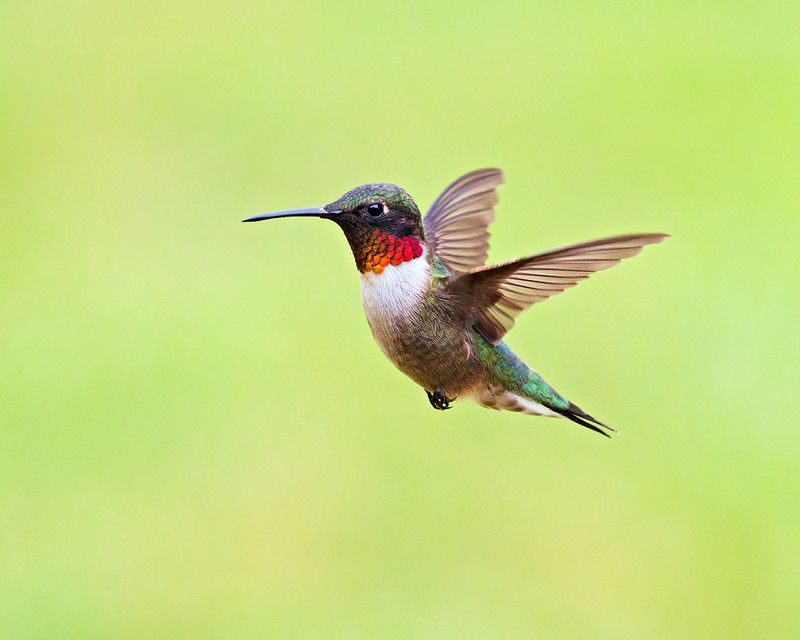
Spotting a ruby-throated hummingbird zip through your yard once is exciting, but watching one come back again and again feels like something more. North Carolina homeowners from the mountains to the coast often wonder what those repeat visits actually mean about their yard and the bird itself.
The answer is more nuanced than most people expect, and understanding it can help you become a genuinely better steward for one of the state’s most beloved summer visitors.
A repeat visit shows that the bird has found a usable resource

Probably the most satisfying thing about watching a hummingbird return to your yard is the instinct to read it as a stamp of approval. Your yard must be doing something right, the thinking goes.
That instinct points in a useful direction, but the real picture is a bit narrower and, honestly, more actionable.
When a ruby-throated hummingbird keeps showing up in your North Carolina yard, the most reliable conclusion you can draw is that the bird has found something worth using. That something is usually flower nectar, a properly maintained feeder, or both.
NC State Extension guidance on urban bird habitat identifies nectar sources and feeders as the primary attractants for ruby-throated hummingbirds in residential settings. The bird keeps coming back because the resource is still there and still accessible.
Perches, nearby cover, small insects, and surrounding vegetation may also play a role. A yard with dense native shrubs, open branches for resting, and a healthy insect population offers more than just a quick energy stop.
But here is the important qualifier: repeated visits do not prove that all of those resources exist in your yard, and they certainly do not certify the entire property as a thriving wildlife habitat.
A single feeder hung near an otherwise plain patio can attract a hummingbird just as reliably as a carefully planted native garden. The bird is responding to what it can find and use right now, not issuing a grade on your landscaping.
Hilton Pond Center’s research on hummingbird site fidelity reinforces this point: the defensible interpretation of repeated sightings is that the yard is currently providing a resource the bird is choosing to use. Treat that as your starting point rather than a finish line, and you have a clear, practical reason to keep improving what you offer.
Separate frequent visits from a true return
Counting hummingbird visits sounds simple until you realize that “keeps returning” can mean three very different things, each with its own set of reasonable conclusions. Sorting them out helps you avoid reading too much into what you see.
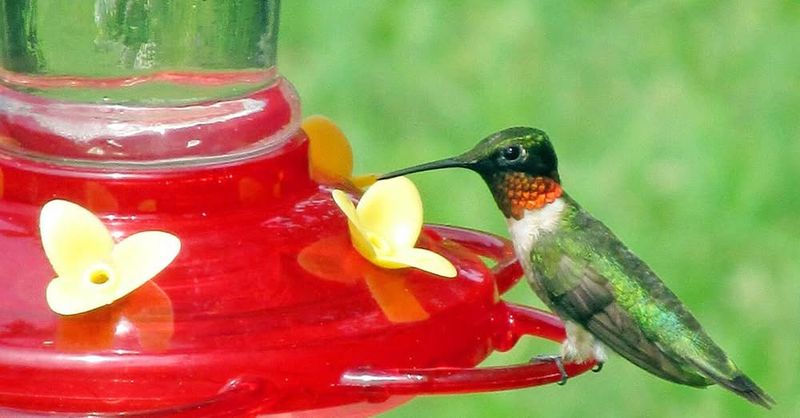
Multiple visits within a single day almost always mean the bird is actively working a food source. Hummingbirds feed frequently throughout daylight hours because of their exceptionally high metabolic rate.
Seeing the same flash of green and red at your salvia every twenty minutes tells you the plant or feeder is productive enough to keep the bird on a circuit. That is genuinely useful information about your yard’s immediate value, but it says nothing about whether the same bird will be back tomorrow.
Repeated sightings spread across an entire season suggest something stronger: the yard has become part of a regular territory or foraging route. This kind of seasonal consistency is meaningful because it indicates that your resource has held up over weeks rather than just one good afternoon.
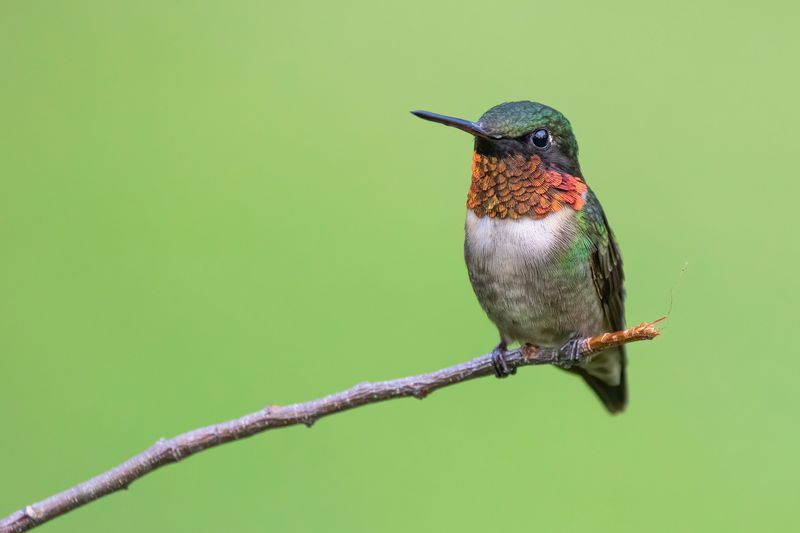
Still, even here, you cannot be certain you are watching one bird. Ruby-throated hummingbirds are small, fast, and largely identical in plumage except for the adult male’s iridescent red throat patch.
Multiple birds using the same yard on rotating schedules can look like one very busy individual.
Year-to-year appearances raise the most intriguing possibility: individual site fidelity. Hilton Pond Center’s banding data on ruby-throat site fidelity documents that some individuals do return to the same locations in later seasons, but confirming that requires banding or some other distinctive documentation.
Ordinary backyard observation cannot establish it.
The most productive habit you can build is keeping a simple log. Note the date, time, location in the yard, and any distinctive behavior or markings.
Over time, patterns emerge that are far more informative than memory alone, and you will be better positioned to spot something genuinely unusual without jumping to conclusions.
Late-summer activity may include residents, juveniles, and migrants
August and September bring some of the most active hummingbird watching of the year in North Carolina, and the birds you see during those weeks may not all be the same type of visitor. Understanding who might be in your yard helps you appreciate the late-season rush without misreading it as a countdown clock.
Resident adult ruby-throats, the birds that nested and raised young in or near your area during summer, are still present through late summer. Alongside them, newly independent juveniles are beginning to explore on their own for the first time.
These young birds look similar to adult females and can be surprisingly bold at feeders and flowers as they learn to find food. Then there are southbound migrants: ruby-throats from breeding grounds farther north that pass through North Carolina on their way to wintering areas in Central America and Mexico, stopping to refuel wherever they find suitable nectar.
All three groups can overlap in your yard during the same week, and separating them through casual observation is genuinely difficult. A sudden spike in hummingbird activity at your feeder in mid-August does not necessarily mean your resident bird multiplied; it may mean migrants have begun moving through.
Timing varies more than most people realize. NC State Extension’s bird habitat guidance notes that most individual ruby-throated hummingbirds leave North Carolina by approximately mid-October, with a general return in late March.
But “approximately mid-October” is not a statewide deadline. Mountain yards in the western part of the state may see birds depart earlier as temperatures drop faster, while Coastal Plain yards sometimes host late-lingering individuals into November in mild years.
Weather, food availability, and year-to-year variation all shift the timing. A late-summer visit does not signal that migration begins tomorrow; it signals that the season is active and your yard is part of a larger landscape that hummingbirds are moving through and using right now.
A useful yard offers more than a feeder
Frequent feeder visits are easy to count, but they can create a misleading picture of what a hummingbird actually needs. A yard where a ruby-throat appears every twenty minutes at a plastic feeder may be meeting one need very efficiently while leaving others unmet.
Ruby-throated hummingbirds eat both nectar and arthropods. Small insects and spiders supply protein, fat, and nutrients that sugar water simply cannot provide, and they are especially critical for growing nestlings and for birds building fat reserves before migration.
A feeder-heavy yard can generate impressive sighting numbers without offering anything close to complete habitat.
Native plants contribute in ways that go beyond producing nectar. Many support the insects that hummingbirds also hunt.
NC State Extension’s native landscaping guidance explains that locally adapted plants tend to host more diverse insect communities than non-native ornamentals, which makes them doubly valuable to a hummingbird working your yard. Reducing broad insecticide use protects that insect supply.
Pesticides applied broadly, even those marketed for specific pests, can reduce the arthropod populations that hummingbirds depend on and may expose the birds directly to harmful chemicals.
Cover and perches matter too, though their presence cannot be inferred from visit frequency alone. Hummingbirds rest frequently between feeding bouts and prefer exposed perches with good sight lines.
Dense shrubs or small trees nearby provide shelter from weather and from predators. NC Wildlife’s backyard sanctuary guidance and NC Wildlife’s suburban backyard habitat resources both emphasize layered vegetation as a foundation for residential wildlife habitat.
One practical note: hummingbirds do consume small insects, but there is no basis for treating them as meaningful mosquito, tick, or garden-pest control. Their arthropod diet is real and nutritionally important to them, but it is not a pest-management service for you.
Penn State Extension’s hummingbird attraction guidance is clear on this point. Value the birds for what they are, not for pest-control work they are not doing.
Choose identified plants that extend nectar through the season
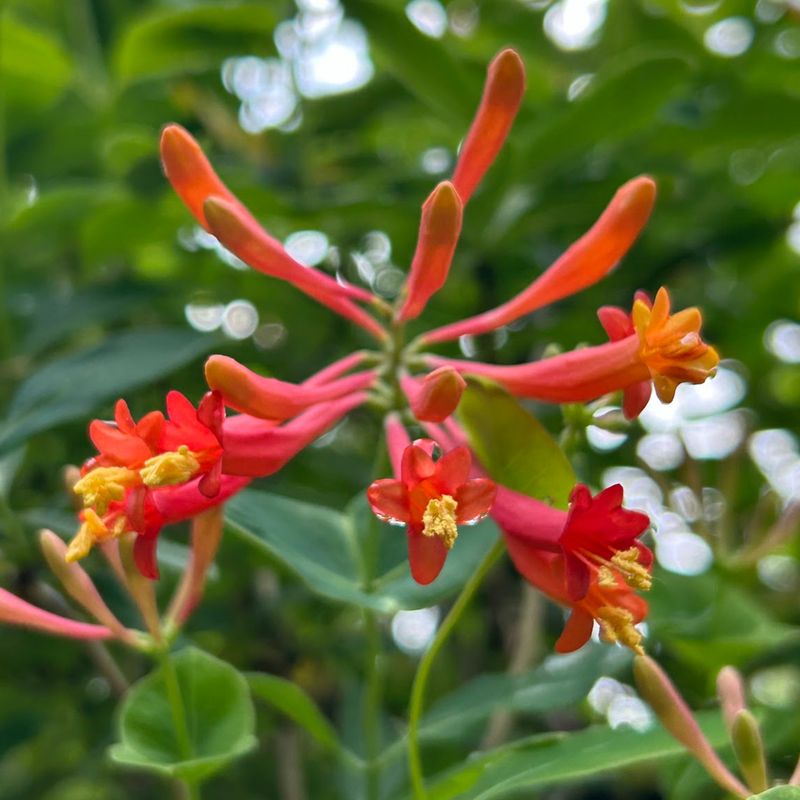
Planting for hummingbirds works best when you think in terms of a relay race rather than a single event. The goal is a sequence of blooms that carries nectar production from spring through fall, so the birds always have something worth visiting regardless of what week it is.
For late-season nectar, several plants stand out in North Carolina yards. Cardinal flower, Lobelia cardinalis, blooms from midsummer into fall and thrives in moist to wet conditions across the Mountains, Piedmont, and Coastal Plain.
Its intensely red, tubular flowers are well suited to hummingbird feeding. Trumpet vine, Campsis radicans, is a vigorous native climber with orange-red blooms that persist into late summer; it can spread aggressively, so site it where you can manage it.
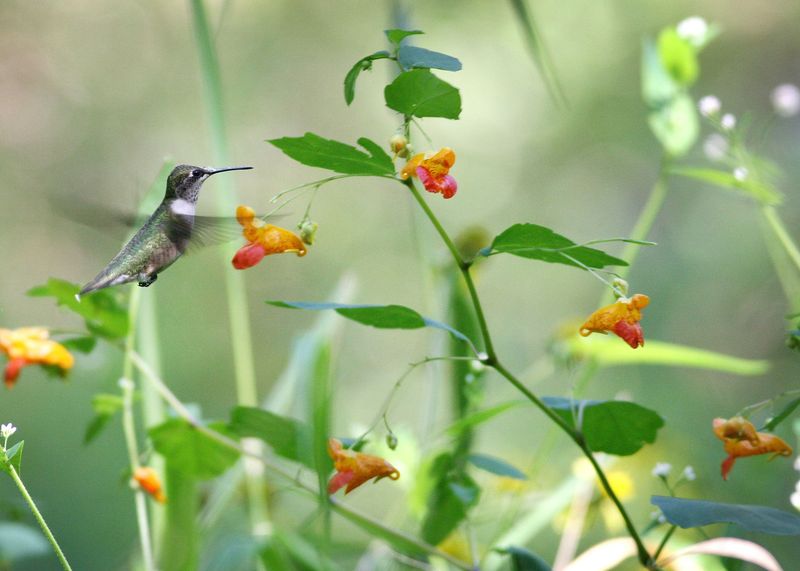
Jewelweed, Impatiens capensis, grows naturally in moist, shaded spots and produces nectar-rich orange flowers that overlap with late-summer migration. NC State Extension’s urban bird habitat guide lists all three among plants that extend nectar availability into September and October.
Earlier in the season, bee balm, Monarda didymaMonarda fistulosaAquilegia canadensis or depending on your moisture and light conditions, blooms in midsummer and attracts both hummingbirds and native bees. Wild columbine, , provides early spring nectar and suits shaded spots in the Mountains and Piedmont.
Red buckeye, Aesculus paviaBignonia capreolata, flowers in early spring right when ruby-throats return and works well as a small understory tree in the Piedmont and Coastal Plain. Crossvine, , is a semi-evergreen climber suited to the Piedmont and Coastal Plain with orange-red spring blooms.
NC State Extension’s hummingbirds and butterflies resource and NC Wildlife’s suburban backyard habitat page both support region-matched native selections over generic plant lists.
On the honeysuckle question, the common name alone is not enough. Coral honeysuckle, Lonicera sempervirens, is a North Carolina native with red tubular flowers that hummingbirds readily use; the NC State Extension Plant Toolbox entry for Lonicera sempervirens confirms its native status and suitability across much of the state.
Japanese honeysuckle, Lonicera japonica, is a different plant entirely: an invasive species that the NC Forest Service’s invasive plant list identifies as a significant threat to native ecosystems in North Carolina.
Never recommend an unspecified plant called simply “honeysuckle.”
Flower color is a starting point, not the whole story. Tubular shape, bloom timing, plant abundance relative to your site’s light and moisture, and the absence of pesticide contamination all affect whether a plant actually serves hummingbirds in your specific yard.
Maintain feeders without disrupting migration
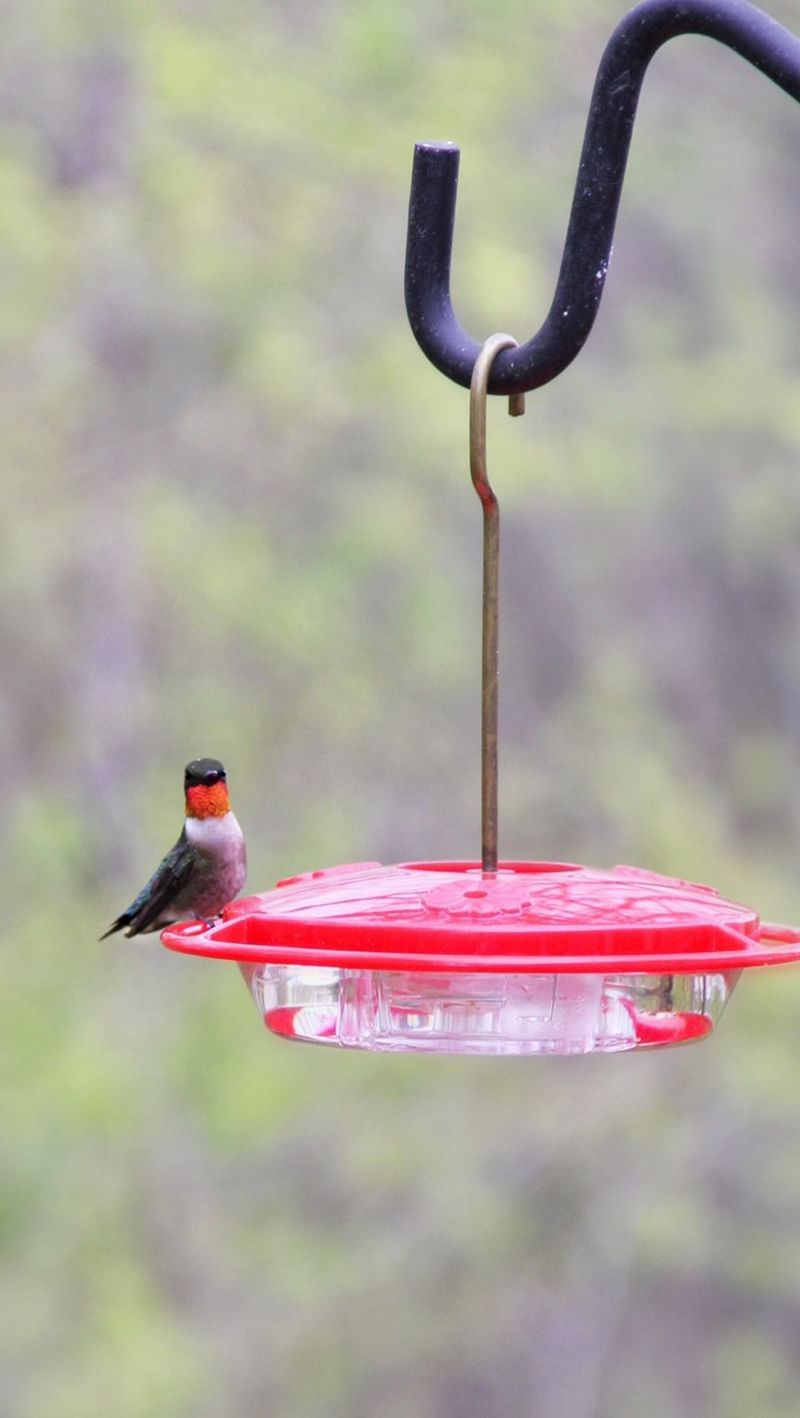
Getting feeder maintenance right matters more than most people realize, and two persistent myths make it harder. The first is that you need red food coloring to attract hummingbirds.
The second is that leaving a feeder up in fall will cause birds to miss their migration window. Both are wrong, and correcting them makes your feeder genuinely more useful and safer.
Standard nectar is one part plain white sugar dissolved in four parts water. That ratio approximates the sugar concentration in many natural flower nectars.
Penn State Extension’s hummingbird guidance and NC State Extension both advise against honey, which can promote dangerous fungal growth, and against red food coloring, artificial sweeteners, brown sugar, vitamins, or any other additive. Plain white sugar and water, nothing else.
Cleanliness is not optional. Nectar left in a warm feeder spoils quickly, and cloudy or discolored solution should be discarded immediately rather than topped off with fresh nectar.
Audubon’s hummingbird yard guidance recommends cleaning feeders thoroughly every few days to once a week under ordinary conditions, and more frequently during hot weather. Choose a feeder that fully disassembles so you can scrub every surface.
Hanging the feeder in shade rather than direct sun slows nectar spoilage noticeably. During the hottest weeks, preparing smaller quantities means you replace the solution more often and waste less.
For pest problems, a moat-style ant guard placed above the feeder port keeps ants out without chemicals. Bees and wasps are drawn to yellow feeder components, so choosing a feeder without yellow parts or adding bee guards helps.
NC State Extension’s bird habitat resource and the NC State hummingbirds and butterflies guide both recommend against applying pesticides anywhere near feeding areas.
On the migration myth: ruby-throated hummingbirds migrate in response to day length and internal biological cues, not feeder availability. Missouri Department of Conservation’s ruby-throat field guide confirms that feeders do not override the birds’ migratory cycle.
Keeping a clean, well-maintained feeder available after your local birds have departed may benefit a late migrant passing through. No single removal date applies across all of North Carolina; the obligation is simply to keep the nectar fresh for as long as the feeder stays up.
Improve the conditions without overinterpreting the bird
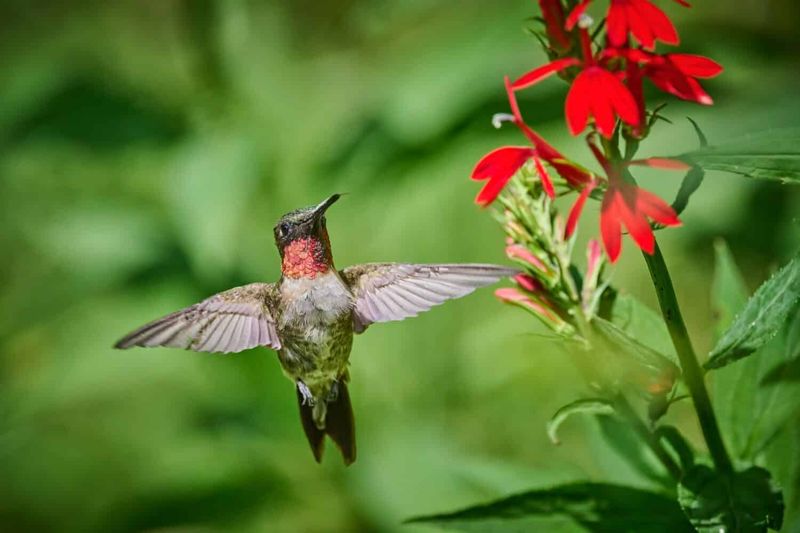
Watching a ruby-throated hummingbird return to your yard is a genuinely good sign, but the most honest reading is also the most useful one: something in your yard is worth using, and you have an opportunity to make more of it worth using.
A practical stewardship checklist starts with what you already have. Preserve any existing shrubs, small trees, or dense vegetation that provide cover and perching spots, even if they do not produce nectar.
These structural features support the birds and other wildlife whether or not you can directly observe hummingbirds using them.
Support insects deliberately. Native plants chosen for your specific region and site conditions, as described in the planting section above, tend to host more diverse arthropod communities than non-native ornamentals.
Reducing broad insecticide applications protects that food supply. Penn State Extension and NC State Extension’s native landscaping guidance both point to insect availability as a meaningful part of hummingbird habitat that feeder use alone cannot replace.
Keep cats indoors or prevent their access to areas near feeders and flowering plants. Predation risk is real and entirely preventable.
Maintain any feeder you put up consistently: fresh nectar, regular cleaning, and pest management without pesticides near the feeding area.
None of these actions guarantee that a hummingbird will visit or return. They simply make your yard a more complete and safer place for a bird that has already shown it is willing to stop there.
Observe the seasonal pattern over several years, note what changes, and accept that you may never know for certain whether it is the same individual or a new bird finding the same good resource.
A hummingbird that keeps coming back has found something worth having. Your job is to keep it there and keep adding to it, one season at a time.