
North Carolina Garlic Needs Regionally Timed Fall Planting, and Late Harvest, Not Just Late Planting, Is What Makes Bulbs Split Apart
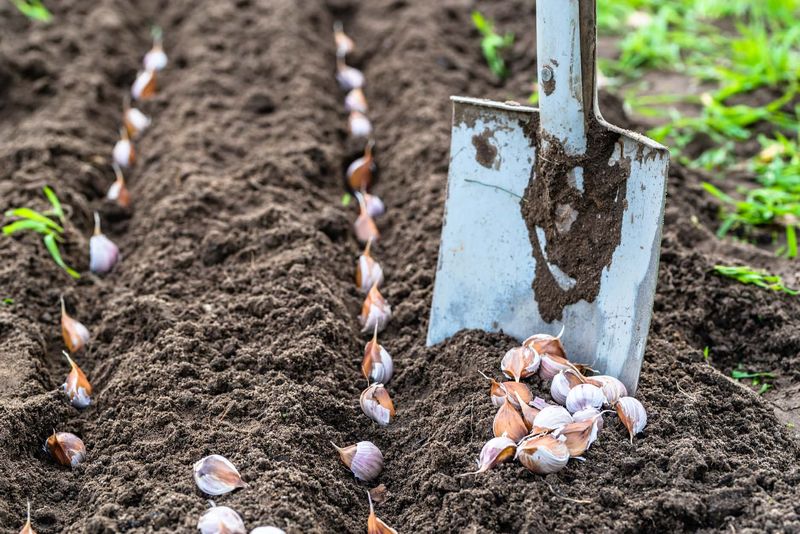
Garlic is one of the most rewarding crops a North Carolina gardener can grow, but getting the timing right takes a little more thought than most people expect. Fall is the season to act, and if you plant adapted cloves during the right window for your part of the state, you give them the cool conditions and root-growing time they need to form full, healthy bulbs by summer.
Miss that window or wait too long at harvest, and you may end up with smaller bulbs or cloves that have pushed right through their wrappers. Knowing your local planting range and watching your crop closely at harvest are the two habits that separate a great garlic year from a disappointing one.
North Carolina Garlic Has a Window, Not One Deadline
Garlic growers across North Carolina often hear that there is one hard cutoff date to plant in fall, but that idea does not hold up when you look at the state’s actual geography. North Carolina stretches from sea-level barrier islands to mountain peaks above 6,000 feet, and the right planting window shifts considerably depending on where you live.
Using someone else’s deadline, especially one from a colder or warmer part of the state, is a reliable way to either rush your planting unnecessarily or miss your best window entirely.
Published extension guidance breaks the state into distinct regions with different recommended ranges. The NC State Central North Carolina planting calendar places the garlic window roughly from September 15 through November 30 for central parts of the state.
The NC State Piedmont planting guide narrows that range to September 15 through November 1 for Piedmont locations. Eastern North Carolina gardeners have a window of approximately September 15 through November 10, while western mountain gardeners should target August 15 through October 15, according to the 2026 Southeastern U.S.
Vegetable Crop Handbook. The mountains see winter arrive earlier and harder, so earlier planting matters more there than in the Coastal Plain.
Southern NC locations may have even more flexibility. The NC State Extension Plant Toolbox notes that some southern locations could plant into December, reflecting the milder winters near the state’s southern border.
Missing the regional window does not automatically ruin a crop. A late planting can still produce usable garlic, but the bulbs tend to be smaller or less fully developed because the plants have less time to establish roots and build vegetative growth before spring heat pushes them toward maturity.
The failure most gardeners worry about, cloves splitting apart, is more closely tied to harvest timing than planting timing, and that distinction matters a great deal when planning your season. Use your local extension office or regional planting calendar as your reference, and treat the window as a range shaped by your elevation, your cultivar, and that year’s weather, not as a single non-negotiable date.
Cool Weather Starts the Bulb-Building Process
Garlic is not a crop that responds well to being planted and left to fend for itself through winter without any preparation. The plant actually depends on a period of cool soil temperatures to trigger the internal process that eventually produces a multi-clove bulb.
Without enough chilling, the plant may grow leaves but struggle to shift into the bulb-formation stage that makes garlic worth harvesting.
Fall planting gives cloves time to push roots down into the soil before the ground cools too much for active growth. Those roots matter because they position the plant to take off quickly when temperatures warm in late winter and early spring.
UGA Cooperative Extension’s garlic production guide explains that garlic needs this combination of cool conditions and established root growth to develop properly, and that fall planting provides the head start that spring planting cannot reliably replicate in the Southeast. Research on garlic’s response to temperature and day length confirms that both chilling and photoperiod cues interact to trigger bulbing, making the timing of planting genuinely consequential for bulb quality.
Planting too early creates its own risk, though. If a gardener in the western foothills plants in August hoping to get ahead of schedule, warm soil temperatures can push cloves into producing excessive leafy top growth before winter arrives.
University of Connecticut Extension notes that too much shoot growth before hard frost can increase the plant’s vulnerability to cold injury. The goal is not to plant as early as possible but to land within the window where the soil has cooled enough to slow excessive shoot growth while still allowing roots to establish before the ground freezes or becomes dormant.
For most North Carolina gardeners, this means watching soil temperatures in addition to the calendar. When soil in your garden beds has dropped into the 50s Fahrenheit and nighttime lows are consistently cool, your window is open.
That moment arrives weeks earlier in the mountains than in the Coastal Plain, which is exactly why regional guidance exists in the first place.
Start With Adapted Cloves and Well-Drained Soil
Seed selection is where a good garlic crop either begins or falls apart before anything goes in the ground. Many first-time growers grab a bulb from the grocery store, break it apart, and plant the cloves, not realizing that commercially sold garlic is often treated with sprout inhibitors and may come from varieties bred for shelf stability rather than garden performance in the Southeast.
NC State Extension’s Pender County guidance recommends buying seed garlic from a reputable local grower or supplier rather than relying on grocery store bulbs, which may not be adapted to North Carolina conditions and may sprout unreliably or not at all.
Choosing between hardneck and softneck cultivars matters more than many gardeners realize. The 2026 Southeastern Vegetable Crop Handbook notes that hardneck types have shown better winter hardiness and yields than softneck types in Kentucky and North Carolina research, though those results do not necessarily apply to every location across the state.
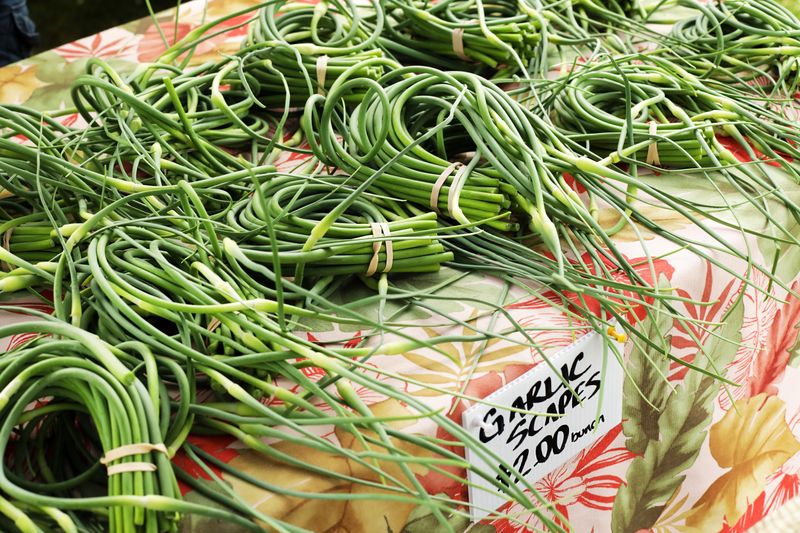
Hardneck varieties also produce scapes, the curling flower stalks that are edible and often sold at farmers markets, and they tend to have fewer but larger cloves per bulb. Softneck types generally store longer and may suit milder coastal locations better.
Ask your local extension office or a nearby seed garlic supplier which cultivars have performed well in your county before committing to a large planting.
Whatever cloves you choose, inspect each one before it goes in the ground. Firm, plump cloves with intact papery skin are the ones most likely to establish quickly and produce a full bulb.
Soft, shriveled, or moldy cloves should be discarded. Separate the bulb into individual cloves shortly before planting rather than days ahead, which helps preserve the basal plate and reduces the chance of damage or disease entry.
Soil preparation deserves as much attention as seed selection. UGA Extension’s garlic production guide is clear that garlic performs poorly in saturated soil, and that heavy or poorly prepared ground increases the risk of misshapen bulbs and disease.
Work compost into your bed, check that drainage is adequate, and avoid low spots where water pools after rain. A raised bed is a practical solution for gardeners with heavy clay soils common across the NC Piedmont.
Plant Each Clove for Strong Establishment
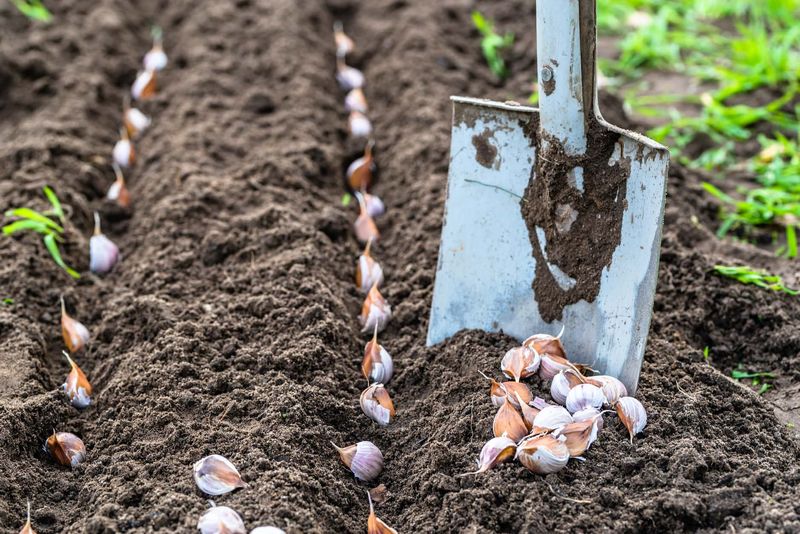
Garlic planting is a straightforward process, but a few small details make a meaningful difference in how well each clove establishes. Break your seed bulb into individual cloves the day you plan to plant, keeping the papery wrapper on each clove intact until it goes into the soil.
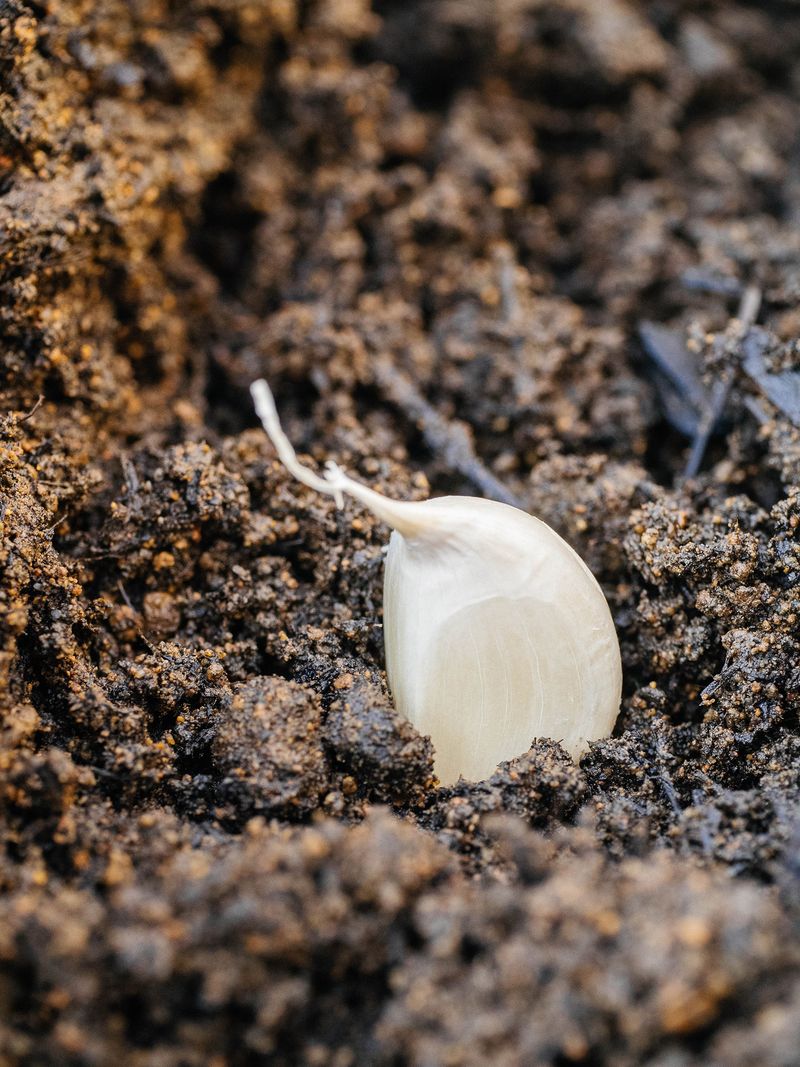
Each clove has a pointed tip at the top and a slightly flattened basal plate at the bottom where the roots will emerge. Placing the clove with the pointed end up and the basal plate down is not optional: cloves planted sideways or upside down can still sprout, but they waste energy correcting their orientation underground, which slows establishment.
Planting depth is one area where extension recommendations genuinely vary, so no single number works for every situation. NC State Extension’s Pender County garlic guidance commonly references a planting depth of about 1 inch for North Carolina conditions, while other university recommendations suggest 2 to 3 inches, particularly in colder climates or when planting without mulch.
In practice, your soil type, cultivar size, and whether you plan to apply mulch should guide your decision. Gardeners planting in sandy coastal soils with a thick mulch layer may plant slightly deeper to keep cloves anchored.
Those in heavy clay soils might plant a bit shallower to prevent cloves from sitting in waterlogged ground.
Spacing affects both ease of harvest and final bulb size. The Central North Carolina planting calendar from NC State and related extension resources suggest roughly 4 to 6 inches between cloves for home garden production, with wider spacing tending to produce larger individual bulbs.
Rows are typically spaced 12 to 18 inches apart to allow room for weeding and airflow.
Once each clove is placed correctly and covered, firm the soil gently over the top to eliminate air pockets around the basal plate. UGA Extension’s garlic production guidance supports this step as part of ensuring good soil-to-clove contact, which speeds rooting.
Plant within your regional fall window rather than waiting for a date that may not apply to your elevation or county.
Use Mulch and Balanced Moisture Through the Season
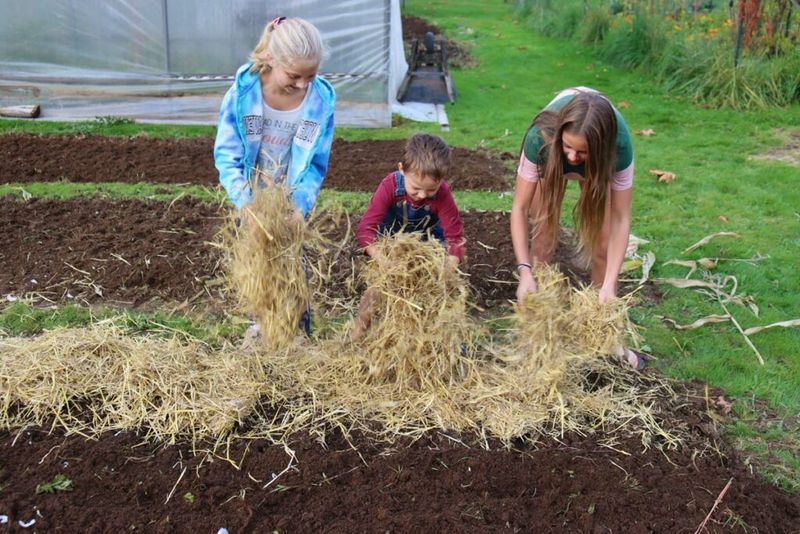
Once your cloves are in the ground, a layer of weed-free mulch is one of the most practical steps you can take to protect them through the winter and set up a strong spring. Mulch moderates soil temperature swings that can heave shallow-planted cloves out of the ground during freeze-thaw cycles, conserves moisture during dry winter and spring stretches, and suppresses the weed competition that can crowd garlic and reduce bulb size.
NC State Extension’s winterizing guide for herb gardens supports mulching as a standard protective practice for fall-planted alliums in North Carolina beds.
How much mulch to apply depends on the material and your local conditions. Straw is a common choice because it is light, allows good airflow, and breaks down into the soil over the season.
Some extension sources suggest a light mulch layer for NC conditions, while others recommend 3 to 4 inches for regions with harder winters. In the mountains, a thicker layer makes more sense to buffer against repeated hard freezes.
In the Coastal Plain, a lighter application that still covers the soil surface is usually sufficient. Garlic shoots will push through straw on their own in late winter, so you do not need to remove the mulch when green tips appear.
Moisture management through the growing season requires a steady hand. UGA Extension’s garlic production guide recommends maintaining consistent soil moisture during active growth, with approximately 1 inch of water per week during dry periods as a general benchmark.
Sandy soils in eastern North Carolina may need more frequent watering because they drain quickly. Clay soils in the Piedmont hold moisture longer, so gardeners there need to be more cautious about overwatering.
Saturated soil encourages fungal diseases and bulb rots that can ruin a crop regardless of how well the planting went.
As summer approaches and the lower leaves on your garlic plants begin to brown and dry, pull back on irrigation. Continuing to water heavily while the plant is entering its ripening phase can stain the wrappers, encourage rot, and shorten storage life considerably.
Letting the soil dry down gradually in the weeks before harvest is a standard recommendation from extension sources and one that most gardeners overlook until they notice their stored bulbs going soft too quickly.
Late Harvest, Not Just Late Planting, Causes Wrapper Splitting
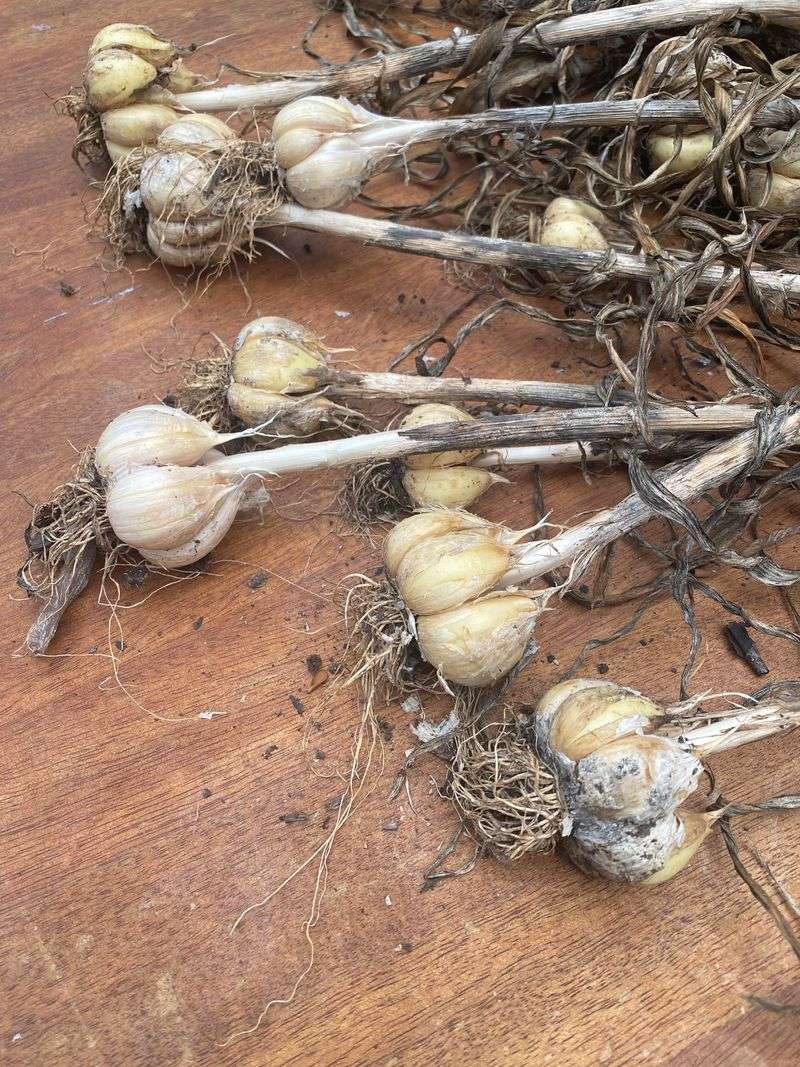
The most common misunderstanding about garlic failure in North Carolina gardens is the assumption that planting at the wrong time in fall is what makes bulbs split apart. Planting late does carry real consequences, mostly smaller or less complete bulbs, but the splitting that gardeners discover at harvest is a different problem with a different cause.
Understanding the distinction can save a season.
A single planted clove naturally develops into a multi-clove bulb over the course of the growing season. That is normal garlic biology, not a problem.
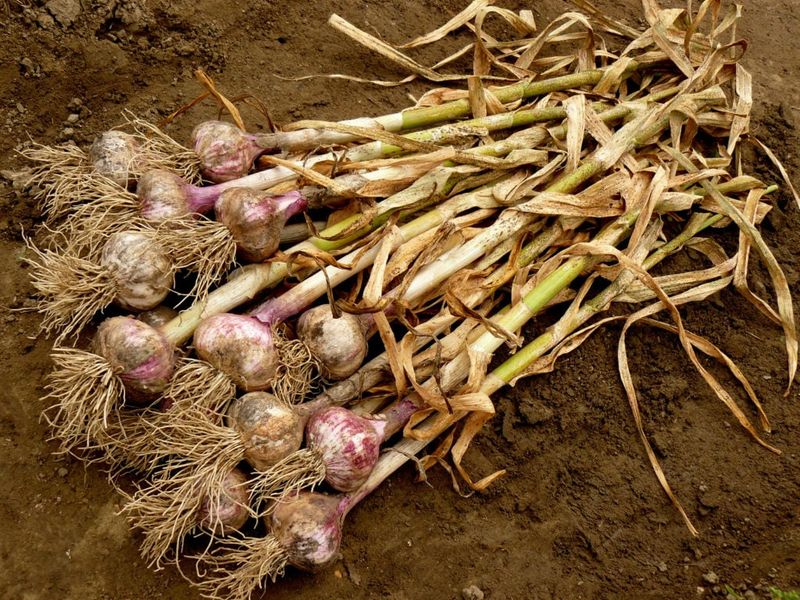
The kind of splitting that damages a crop happens when a gardener waits too long to pull the bulbs. As the plant completes its life cycle and the tops die back, the papery wrappers that hold the bulb together begin to break down.
Once those wrappers deteriorate, individual cloves can push outward or separate from the bulb entirely. Penn State Extension’s garlic production resource explains that harvesting too late allows wrappers to break down and cloves to split out, reducing both the quality and the storage life of the crop.
Knowing when to harvest is therefore just as important as knowing when to plant. The standard signal to watch for is browning of the lower leaves while several upper leaves remain green.
At that point, dig one test bulb and examine it. If the cloves are distinct and well-formed and the wrapper is still papery and intact, harvest the rest of the bed promptly.
Penn State’s guide on growing and using garlic cautions against waiting until every leaf has turned brown, which is a common mistake that leads directly to wrapper breakdown.
Other factors can also produce abnormal or loose-clove development that gets labeled as splitting. Ask Extension’s garlic plant FAQ identifies drought stress, moisture fluctuations, poor soil structure, weed competition, disease pressure, and cultivar characteristics as possible contributors to bulb irregularities.
Not every split bulb traces back to a single cause, and blaming only planting time misses the full picture. Diagnosing your specific situation, whether it was a dry spring, a weedy bed, a disease-prone cultivar, or simply a harvest that ran a week too long, helps you make a more targeted correction for next year.
Finish With Timely Harvest and Proper Curing
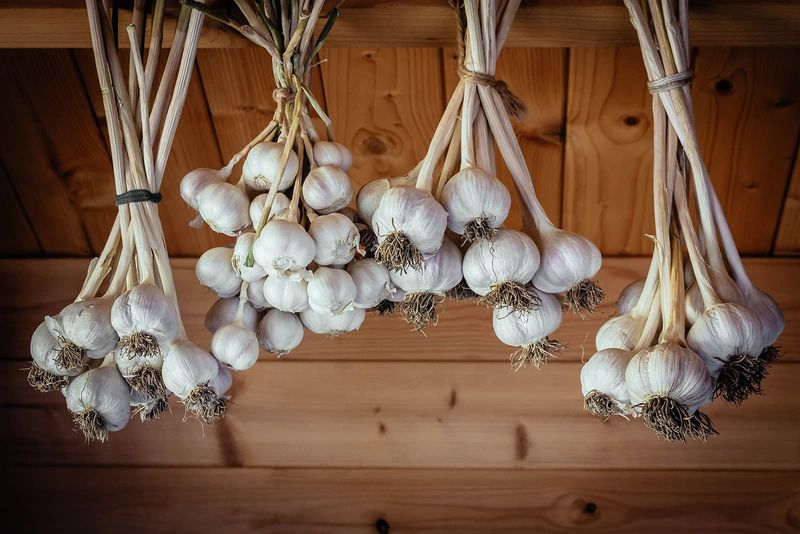
A season of good garlic work can still be undone in the final steps if curing and storage are rushed. After digging your bulbs, brush off loose soil gently without washing the bulbs, which introduces moisture that encourages rot.
Move the harvest to a shaded, dry, well-ventilated space right away, because direct sun can bleach and damage wrappers quickly.
Washington State University Extension’s home garlic guide recommends curing harvested garlic in a shaded, airy location for roughly two to four weeks before trimming the tops and roots and moving bulbs into storage. During curing, the outer wrappers dry and tighten around the bulb, which is what gives properly cured garlic its firm feel and long shelf life.
A barn, covered porch, or garage with good airflow works well for most North Carolina gardeners. Avoid anywhere humid or poorly ventilated, which is a real concern during the warm, moist summers in the Coastal Plain and Piedmont.
If you are growing hardneck varieties, there is one optional mid-season step worth considering. NC State Extension’s Lee County guide on growing garlic in the South notes that removing scapes while they are still young and curled may help direct more of the plant’s energy toward bulb development rather than seed production.
Scapes are fully edible and quite good sauteed or used raw, so removing them is not a loss. Whether the bulb-size benefit is significant in your specific garden depends on cultivar, soil fertility, and growing conditions, so treat it as a practice worth trying rather than a guaranteed yield booster.
Across every North Carolina region, the pattern is the same: identify your local planting window, put adapted and firm seed cloves in well-drained soil within that window, mulch and water consistently through the growing season, and pull the bulbs when the lower leaves brown but the upper leaves are still green. Both planting timing and harvest timing shape the final crop, and neither one creates a simple pass-or-fail deadline.
Get the window right, watch the plant, and the bulbs will tell you exactly when they are ready.